ASC 330-905
Agriculture
330 Inventory
Source downloaded: .Record version 7b4bb2437434. Effective date must be checked in the source.
ASC 330-905 applies Inventory guidance to the agricultural industry, covering producers (growing crops, developing animals, harvested crops, livestock held for sale, secondary products), pooling cooperatives, and cooperative patrons. Direct and indirect costs of growing crops are accumulated until harvest, with pre-planting costs deferred and post-harvest cultural costs estimated and accrued to the harvested crop. Harvested crops and animals held for sale may be carried at net realizable value if they have a reliable, readily determinable market price, insignificant and predictable disposal costs, and immediate availability for delivery; otherwise Subtopic 330-10 measurement applies.
Key points (7)
- All direct and indirect costs of growing crops shall be accumulated until harvest; pre-planting costs such as soil preparation are deferred and allocated to the growing crop, and crops requiring more than one year to mature have costs deferred until harvest (330-905-25-1 through 25-2).
- Post-harvest cultural practices (e.g., clearing residue, special tillage, chopping, or burning to overcome a physical or noxious condition) shall be estimated and accrued as costs of the harvested crop (330-905-25-2; 330-905-30-2).
- Animals held for sale and harvested crops are valued under Subtopic 330-10 or at net realizable value if the product has a reliable, readily determinable, and realizable market price, relatively insignificant and predictable disposal costs, and is available for immediate delivery (330-905-35-3 through 35-4).
- A market basis (quoted market prices less estimated direct costs of disposal) is acceptable where a cost basis is not practicable and the products have immediate marketability at prices the producer cannot influence, unit interchangeability, and insignificant disposal costs—e.g., freshly dressed meats (330-905-30-1).
- Animals with short productive lives, such as poultry flocks, may be classified as inventory; other developing, breeding, and production animals are addressed in Subtopic 905-360 (330-905-25-3 through 25-4).
- For pooling cooperatives, board-assigned amounts approximating estimated market for unprocessed patron products are treated as cost and charged to cost of goods sold; if no such amounts are assigned, inventories are accounted for at net realizable value and cost of goods sold includes no charge for unprocessed products (330-905-25-5, 25-7, 35-5).
- Pooling cooperatives shall not use the cash advance method to account for inventories, and the method used and dollar amounts assigned to members' products shall be disclosed (330-905-25-8; 330-905-50-1).
For students. Agriculture is one of the few industries where GAAP permits carrying inventory above cost at net realizable value, but only when the three conditions in 330-905-35-3(b) are all met—students often assume NRV is freely elective. Also watch the cooperative rules: assigned amounts function as cost, and the cash advance method is prohibited.
Machine-generated study aid for ASC 330-905. Check the source paragraphs below.
330-905-00Status
Source downloaded: .Record version b3fcdc0cc770. Effective date must be checked in the source.
330-905-05Overview and Background
Source downloaded: .Record version 38b23c933df0. Effective date must be checked in the source.
- aGeneral
- bCooperatives
- cCooperatives—Patrons.
Cooperatives
Cooperatives—Patrons
330-905-15Scope and Scope Exceptions
Source downloaded: .Record version 04cf9584b2b8. Effective date must be checked in the source.
Overall Guidance
Cooperatives
Cooperatives—Patrons
330-905-25Recognition
Source downloaded: .Record version 8733a5b9282f. Effective date must be checked in the source.
Growing Crops
Production Animals
Cooperatives
330-905-30Initial Measurement
Source downloaded: .Record version 3b70e7887f70. Effective date must be checked in the source.
- aThey have immediate marketability at quoted market prices that cannot be influenced by the producer.
- bThey have characteristics of unit interchangeability.
- cThey have relatively insignificant costs of disposal.
Harvested Crops
Cooperatives
330-905-35Subsequent Measurement
Source downloaded: .Record version 1c6418cbe5b8. Effective date must be checked in the source.
Growing Crops
Developing Animals
Animals Available and Held for Sale
- aThe amount determined using the measurement guidance in Subtopic 330-10
- bNet realizable value, if all the following conditions exist:
- 1The product has a reliable, readily determinable, and realizable market price.
- 2The product has relatively insignificant and predictable costs of disposal.
- 3The product is available for immediate delivery.
- 1
Harvested Crops
Cooperatives
- aThe amount determined using the measurement guidance in Subtopic 330-10
- b
330-905-40Derecognition
Source downloaded: .Record version 1f7ed93e8c7c. Effective date must be checked in the source.
Cooperatives—Patrons
330-905-50Disclosure
Source downloaded: .Record version 19267d9e6ccd. Effective date must be checked in the source.
Cooperatives
330-905-55Implementation Guidance and Illustrations
Source downloaded: .Record version 5c897eda7689. Effective date must be checked in the source.
Cooperatives
Illustrations
-
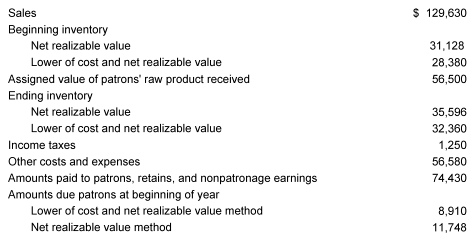 Sales " $129,630 " Beginning inventory Net realizable value " 31,128 " Lower of cost and net realizable value " 28,380 " Assigned value of patrons' raw product received " 56,500 " Ending inventory Net realizable value " 35,596 " Lower of cost and net realizable value " 32,360 " Income taxes " 1,250 " Other costs and expenses " 56,580 " "Amounts paid to patrons, retains, and nonpatronage earnings" " 74,430 " Amounts due patrons at beginning of year Lower of cost and net realizable value method " 8,910 " Net realizable value method " 11,748 "
-
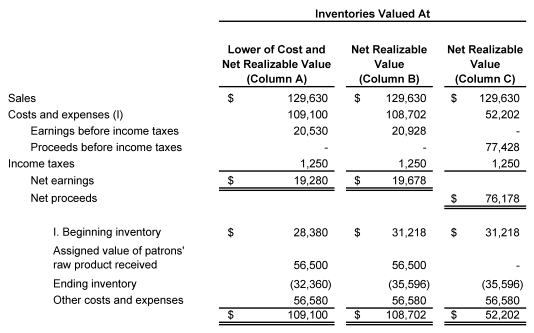 Inventories Valued At Lower of Cost and Net Realizable Value (Column A) "Net Realizable Value (Column B)" "Net Realizable Value (Column C)" Sales " $129,630 " " $129,630 " " $129,630 " Costs and expenses (I) " 109,100 " " 108,702 " " 52,202 " Earnings before income taxes " 20,530 " " 20,928 " - Proceeds before income taxes - - " 77,428 " Income taxes " 1,250 " " 1,250 " " 1,250 " Net earnings " $19,280 " " $19,678 " Net proceeds " $76,178 " I. Beginning inventory " $28,380 " " $31,218 " " $31,218 " Assigned value of patrons' raw product received " 56,500 " " 56,500 " - Ending inventory " (32,360)" " (35,596)" " (35,596)" Other costs and expenses " 56,580 " " 56,580 " " 56,580 " " $109,100 " " $108,702 " " $52,202 "
 -
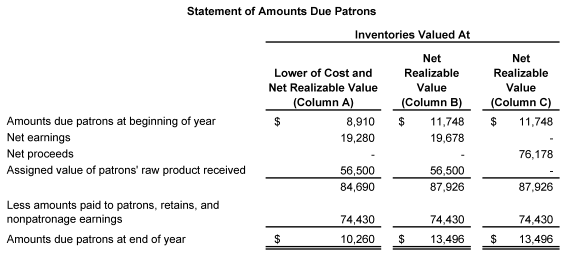 Statement of Amounts Due Patrons Inventories Valued At Lower of Cost and Net Realizable Value (Column A) Net Realizable Value (Column B) Net Realizable Value (Column C) Amounts due patrons at beginning of year " $8,910 " " $11,748 " " $11,748 " Net earnings " 19,280 " " 19,678 " - Net proceeds - - " 76,178 " Assigned value of patrons' raw product received " 56,500 " " 56,500 " - " 84,690 " " 87,926 " " 87,926 " "Less amounts paid to patrons, retains, and nonpatronage earnings" " 74,430 " " 74,430 " " 74,430 " Amounts due patrons at end of year " $10,260 " " $13,496 " " $13,496 "
-
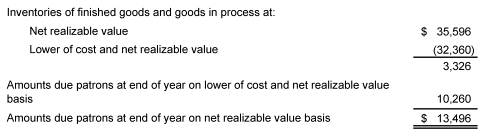 Inventories of finished goods and goods in process at: Net realizable value " $35,596 " Lower of cost and net realizable value " (32,360)" " 3,326 " Amounts due patrons at end of year on lower of cost and net realizable value basis " 10,260 " Amounts due patrons at end of year on net realizable value basis " $13,496 "