ASC 842-50
Leveraged Lease Arrangements
842 Leases
Source downloaded: .Record version af08ac5b826a. Effective date must be checked in the source.
ASC 842-50 preserves the legacy leveraged lease accounting model, but only for leases that existed at the ASC 842 transition date and meet the criteria in 842-10-65-1(z) — no new leveraged leases may be created. A lessor records a single net investment consisting of rentals receivable (net of nonrecourse debt service), investment-tax-credit receivable, estimated residual value, and unearned/deferred income (842-50-25-1; 842-50-30-1), and recognizes income only in years when the net investment (less related deferred taxes) is positive, using the rate of return that distributes total net income to those years (842-50-35-2). Important assumptions, including residual value and the projected timing of income tax cash flows, must be reviewed at least annually, with any change triggering recalculation from lease inception and immediate gain or loss recognition (842-50-35-6 through 35-8).
Key points (7)
- The Subtopic applies only to leases meeting transition paragraph 842-10-65-1(z); exercise of a previously not-reasonably-assured extension option is treated as a lease modification under that paragraph (842-50-15-1).
- The lessor's net investment in a leveraged lease is the net of rentals receivable (net of the portion applicable to principal and interest on the nonrecourse debt), the investment-tax-credit receivable, the estimated residual value, and unearned and deferred income (842-50-25-1; 842-50-30-1).
- Periodic income is computed on the net investment less related deferred taxes, using a rate of return — distinct from the interest rate implicit in the lease — applied only in years in which the net investment is positive (842-50-35-2).
- Net income comprises pretax lease income (or loss), investment tax credit, and the tax effect of pretax lease income (or loss); any loss that the method would allocate to future years must be recognized immediately (842-50-35-3 through 35-5).
- Residual value and other important assumptions (including the projected timing of income tax cash flows) must be reviewed at least annually; a decline in residual value that is other than temporary, or a change in total estimated net income, requires recalculation from inception with a gain or loss recognized in the year of the change, and upward adjustments of estimated residual value are prohibited (842-50-35-6 through 35-9; 35-19).
- Recalculations reflect tax positions under 740-10-25-6, 740-10-30-7, and 740-10-40-2, exclude interest and penalties, and treat advance payments/deposits with a taxing authority as part of the projected settlement amount rather than actual cash flows (842-50-35-12 through 35-15).
- Presentation requires related deferred taxes to be shown separately from the net investment on the balance sheet, and pretax leveraged lease income, its tax effect, and investment tax credit recognized to be shown separately in the income statement or notes; components of the net investment are disclosed if leveraged leasing is a significant part of the lessor's business (842-50-45-1; 842-50-50-1).
For students. This is grandfathered legacy guidance: ASC 842 prohibits new leveraged leases, so 842-50 applies only to pre-transition arrangements that were not modified. The classic exam trap is the asymmetry in residual value — an other-than-temporary decline forces a recalculation from lease inception with immediate gain/loss, but upward revisions of estimated residual value are never permitted (842-50-35-8(c)).
Machine-generated study aid for ASC 842-50. Check the source paragraphs below.
842-50-00Status
Source downloaded: .Record version 32e8ff10f152. Effective date must be checked in the source.
842-50-05Overview and Background
Source downloaded: .Record version ec196847912d. Effective date must be checked in the source.
842-50-15Scope and Scope Exceptions
Source downloaded: .Record version 9091a875609c. Effective date must be checked in the source.
842-50-25Recognition
Source downloaded: .Record version d6d6d1aff1ea. Effective date must be checked in the source.
- a Rentals receivable
- b Investment-tax-credit receivable
- c Estimated residual value of the leased asset
- d Unearned and deferred income.
Leveraged Lease Acquired in a Business Combination or an Acquisition by a Not-for-Profit Entity
842-50-30Initial Measurement
Source downloaded: .Record version a32f47f93a93. Effective date must be checked in the source.
- a Rentals receivable, net of that portion of the rental applicable to principal and interest on the nonrecourse debt.
- b A receivable for the amount of the investment tax credit to be realized on the transaction.
- c The estimated residual value of the leased asset. The estimated residual value shall not exceed the amount estimated at lease inception except if the lease agreement includes a provision to escalate minimum lease payments either for increases in construction or acquisition cost of the leased property or for increases in some other measure of cost or value (such as general price levels) during the construction or preacquisition period. In that case, the effect of any increases that have occurred shall be considered in the determination of the estimated residual value of the underlying asset at lease inception.
- d Unearned and deferred income consisting of both of the following:
- 1 The estimated pretax lease income (or loss), after deducting initial direct costs, remaining to be allocated to income over the lease term.
- 2 The investment tax credit remaining to be allocated to income over the lease term.
- 1
Leveraged Lease Acquired in a Business Combination or an Acquisition by a Not-for-Profit Entity
842-50-35Subsequent Measurement
Source downloaded: .Record version 6bdb3ce916d3. Effective date must be checked in the source.
Leveraged Lease Acquired in a Business Combination or an Acquisition by a Not-for-Profit Entity
Income Recognition on a Leveraged Lease
- a Pretax lease income (or loss)
- b Investment tax credit
- c Tax effect of pretax lease income (or loss).
- a The estimate of the residual value is determined to be excessive, and the decline in the residual value is judged to be other than temporary.
- b The revision of another important assumption changes the estimated total net income from the lease.
- c The projected timing of the income tax cash flows is revised.
- a The pretax gain or loss shall be included in income from continuing operations before income taxes in the same line item in which leveraged lease income is recognized.
- b The tax effect of the gain or loss shall be included in the income tax line item.
- c An upward adjustment of the estimated residual value (including any guaranteed portion) shall not be made.
- a An interpretation of the tax law
- b A change in the lessor's assessment of the likelihood of prevailing in a challenge by the taxing authority
- c A change in the lessor's expectations about settlement with the taxing authority.
Effect of Alternative Minimum Tax
Transfer of Minimum Rental Payments
842-50-45Other Presentation Matters
Source downloaded: .Record version 4ae6b4ec48a9. Effective date must be checked in the source.
Income Taxes and Leveraged Leases
842-50-50Disclosure
Source downloaded: .Record version 232fad3c6f33. Effective date must be checked in the source.
842-50-55Implementation Guidance and Illustrations
Source downloaded: .Record version 0ddd20b3dc68. Effective date must be checked in the source.
Implementation Guidance
- a The accounting for a leveraged lease requires recognition of deferred tax credits.
- b The guidance in Topic 740 limits the recognition of a tax benefit for deductible temporary differences and carryforwards not related to the leveraged lease.
- c Unrecognized tax benefits in this paragraph could offset taxable amounts that result from future recovery of the net investment in the leveraged lease.
Illustrations
- a Cash flow analysis by years (see paragraph 842-50-55-8)
- b Allocation of annual cash flow to investment and income (see paragraph 842-50-55-9)
- c Journal entries for lessor's initial investment and first year of operation (see paragraph 842-50-55-10)
- d Financial statements including notes at end of second year (see paragraph 842-50-55-11)
- e Accounting for a revision in the estimated residual value of the leased asset assumed to occur in the eleventh year of the lease (from $200,000 to $120,000):
- 1 Revised allocation of annual cash flow to investment and income (see paragraph 842-50-55-12)
- 2 Balances in investment accounts at beginning of the eleventh year before revised estimate (see paragraph 842-50-55-13)
- 3 Journal entries (see paragraph 842-50-55-14)
- 4 Adjustment of investment accounts (see paragraph 842-50-55-15).
- 1
-
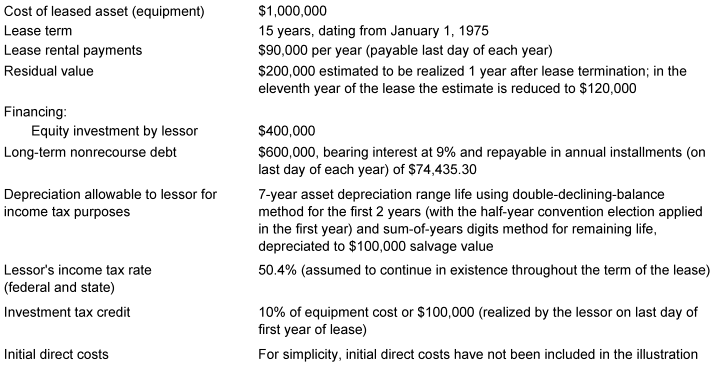 Cost of leased asset (equipment) "$1,000,000 " Lease term "15 years, dating from January 1, 1975" Lease rental payments "$90,000 per year (payable last day of each year)" Residual value "$200,000 estimated to be realized 1 year after lease termination; in the eleventh year of the lease the estimate is reduced to $120,000" Financing: Equity investment by lessor "$400,000 " Long-term nonrecourse debt "$600,000, bearing interest at 9% and repayable in annual installments (on last day of each year) of $74,435.30" Depreciation allowable to lessor for income tax purposes "7-year asset depreciation range life using double-declining-balance method for the first 2 years (with the half-year convention election applied in the first year) and sum-of-years digits method for remaining life, depreciated to $100,000 salvage value" "Lessor's income tax rate (federal and state)" 50.4% (assumed to continue in existence throughout the term of the lease) Investment tax credit "10% of equipment cost or $100,000 (realized by the lessor on last day of first year of lease)" Initial direct costs "For simplicity, initial direct costs have not been included in the illustration"
-
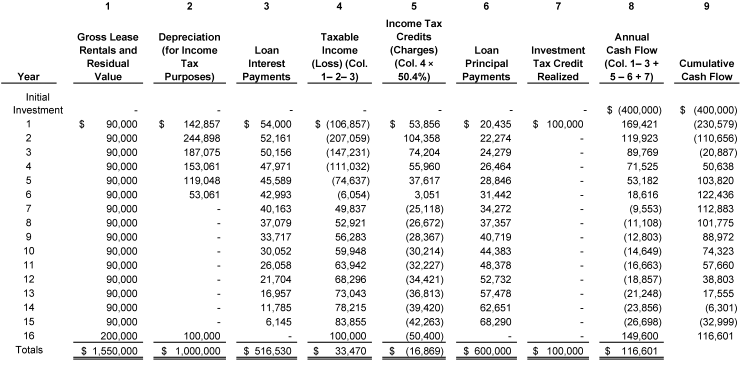 1 2 3 4 5 6 7 8 9 Year Gross Lease Rentals and Residual Value Depreciation (for Income Tax Purposes) Loan Interest Payments Taxable Income (Loss) (Col. 1- 2- 3) Income Tax Credits (Charges) (Col. 4 × 50.4%) Loan Principal Payments Investment Tax Credit Realized Annual Cash Flow (Col. 1- 3 + 5 - 6 + 7) Cumulative Cash Flow Initial Investment - - - - - - - " $(400,000)" " $(400,000)" 1 " $90,000 " " $142,857 " " $54,000 " " $(106,857)" " $53,856 " " $20,435 " " $100,000 " " 169,421 " " (230,579)" 2 " 90,000 " " 244,898 " " 52,161 " " (207,059)" " 104,358 " " 22,274 " - " 119,923 " " (110,656)" 3 " 90,000 " " 187,075 " " 50,156 " " (147,231)" " 74,204 " " 24,279 " - " 89,769 " " (20,887)" 4 " 90,000 " " 153,061 " " 47,971 " " (111,032)" " 55,960 " " 26,464 " - " 71,525 " " 50,638 " 5 " 90,000 " " 119,048 " " 45,589 " " (74,637)" " 37,617 " " 28,846 " - " 53,182 " " 103,820 " 6 " 90,000 " " 53,061 " " 42,993 " " (6,054)" " 3,051 " " 31,442 " - " 18,616 " " 122,436 " 7 " 90,000 " - " 40,163 " " 49,837 " " (25,118)" " 34,272 " - " (9,553)" " 112,883 " 8 " 90,000 " - " 37,079 " " 52,921 " " (26,672)" " 37,357 " - " (11,108)" " 101,775 " 9 " 90,000 " - " 33,717 " " 56,283 " " (28,367)" " 40,719 " - " (12,803)" " 88,972 " 10 " 90,000 " - " 30,052 " " 59,948 " " (30,214)" " 44,383 " - " (14,649)" " 74,323 " 11 " 90,000 " - " 26,058 " " 63,942 " " (32,227)" " 48,378 " - " (16,663)" " 57,660 " 12 " 90,000 " - " 21,704 " " 68,296 " " (34,421)" " 52,732 " - " (18,857)" " 38,803 " 13 " 90,000 " - " 16,957 " " 73,043 " " (36,813)" " 57,478 " - " (21,248)" " 17,555 " 14 " 90,000 " - " 11,785 " " 78,215 " " (39,420)" " 62,651 " - " (23,856)" " (6,301)" 15 " 90,000 " - " 6,145 " " 83,855 " " (42,263)" " 68,290 " - " (26,698)" " (32,999)" 16 " 200,000 " " 100,000 " - " 100,000 " " (50,400)" - - " 149,600 " " 116,601 " Totals " $1,550,000 " " $1,000,000 " " $516,530 " " $33,470 " " $(16,869)" " $600,000 " " $100,000 " " $116,601 "
-
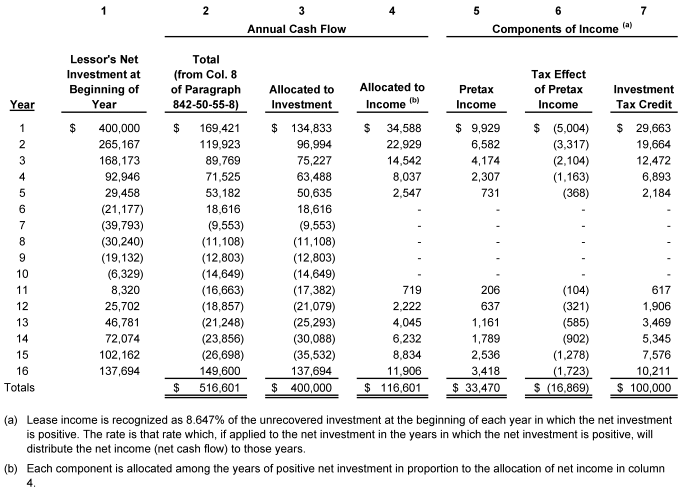 1 2 3 4 5 6 7 Annual Cash Flow Components of Income (a) Year Lessor's Net Investment at Beginning of Year "Total (from Col. 8 of Paragraph 842-50-55-8)" Allocated to Investment Allocated to Income (b) Pretax Income Tax Effect of Pretax Income Investment Tax Credit 1 " $400,000 " " $169,421 " " $134,833 " " $34,588 " " $9,929 " " $(5,004)" " $29,663 " 2 " 265,167 " " 119,923 " " 96,994 " " 22,929 " " 6,582 " " (3,317)" " 19,664 " 3 " 168,173 " " 89,769 " " 75,227 " " 14,542 " " 4,174 " " (2,104)" " 12,472 " 4 " 92,946 " " 71,525 " " 63,488 " " 8,037 " " 2,307 " " (1,163)" " 6,893 " 5 " 29,458 " " 53,182 " " 50,635 " " 2,547 " 731 (368) " 2,184 " 6 " (21,177)" " 18,616 " " 18,616 " - - - - 7 " (39,793)" " (9,553)" " (9,553)" - - - - 8 " (30,240)" " (11,108)" " (11,108)" - - - - 9 " (19,132)" " (12,803)" " (12,803)" - - - - 10 " (6,329)" " (14,649)" " (14,649)" - - - - 11 " 8,320 " " (16,663)" " (17,382)" 719 206 (104) 617 12 " 25,702 " " (18,857)" " (21,079)" " 2,222 " 637 (321) " 1,906 " 13 " 46,781 " " (21,248)" " (25,293)" " 4,045 " " 1,161 " (585) " 3,469 " 14 " 72,074 " " (23,856)" " (30,088)" " 6,232 " " 1,789 " (902) " 5,345 " 15 " 102,162 " " (26,698)" " (35,532)" " 8,834 " " 2,536 " " (1,278)" " 7,576 " 16 " 137,694 " " 149,600 " " 137,694 " " 11,906 " " 3,418 " " (1,723)" " 10,211 " Totals " $516,601 " " $400,000 " " $116,601 " " $33,470 " " $(16,869)" " $100,000 " (a) "Lease income is recognized as 8.647% of the unrecovered investment at the beginning of each year in which the net investment is positive. The rate is that rate which, if applied to the net investment in the years in which the net investment is positive, will distribute the net income (net cash flow) to those years." (b) Each component is allocated among the years of positive net investment in proportion to the allocation of net income in column 4.
-
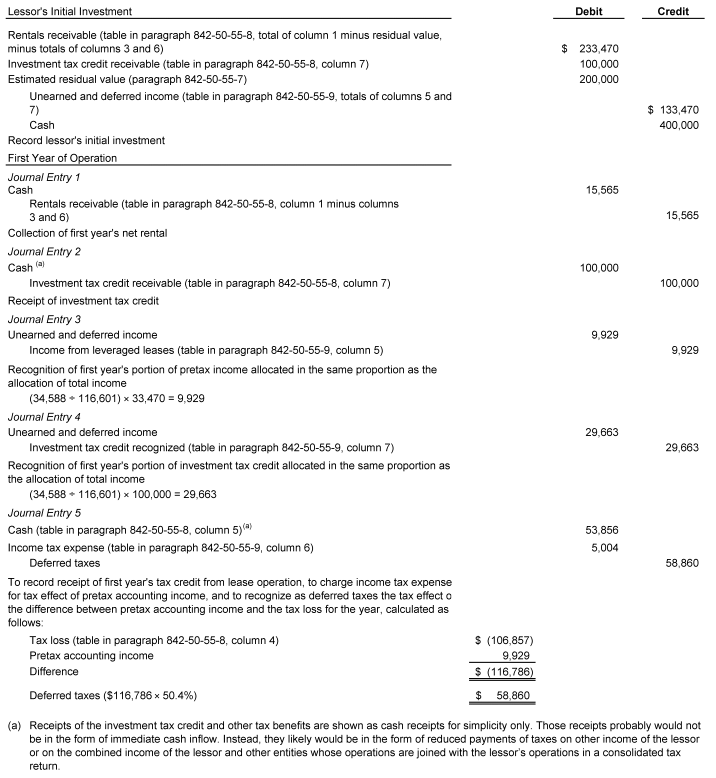 Lessor's Initial Investment Debit Credit "Rentals receivable (table in paragraph 842-50-55-8, total of column 1 minus residual value, minus totals of columns 3 and 6)" " $233,470 " "Investment tax credit receivable (table in paragraph 842-50-55-8, column 7)" " 100,000 " Estimated residual value (paragraph 842-50-55-7) " 200,000 " "Unearned and deferred income (table in paragraph 842-50-55-9, totals of columns 5 and 7)" " $133,470 " Cash " 400,000 " Record lessor's initial investment First Year of Operation Journal Entry 1 Cash " 15,565 " "Rentals receivable (table in paragraph 842-50-55-8, column 1 minus columns 3 and 6)" " 15,565 " Collection of first year's net rental Journal Entry 2 Cash (a) " 100,000 " "Investment tax credit receivable (table in paragraph 842-50-55-8, column 7)" " 100,000 " Receipt of investment tax credit Journal Entry 3 Unearned and deferred income " 9,929 " "Income from leveraged leases (table in paragraph 842-50-55-9, column 5)" " 9,929 " Recognition of first year's portion of pretax income allocated in the same proportion as the allocation of total income "(34,588 ÷ 116,601) × 33,470 = 9,929 " Journal Entry 4 Unearned and deferred income " 29,663 " "Investment tax credit recognized (table in paragraph 842-50-55-9, column 7)" " 29,663 " Recognition of first year's portion of investment tax credit allocated in the same proportion as the allocation of total income "(34,588 ÷ 116,601) × 100,000 = 29,663" Journal Entry 5 "Cash (table in paragraph 842-50-55-8, column 5) (a)" " 53,856 " "Income tax expense (table in paragraph 842-50-55-9, column 6)" " 5,004 " Deferred taxes " 58,860 " "To record receipt of first year's tax credit from lease operation, to charge income tax expense for tax effect of pretax accounting income, and to recognize as deferred taxes the tax effect of the difference between pretax accounting income and the tax loss for the year, calculated as follows:" "Tax loss (table in paragraph 842-50-55-8, column 4)" " $(106,857)" Pretax accounting income " 9,929 " Difference " $(116,786)" "Deferred taxes ($116,786 × 50.4%)" " $58,860 " (a) "Receipts of the investment tax credit and other tax benefits are shown as cash receipts for simplicity only. Those receipts probably would not be in the form of immediate cash inflow. Instead, they likely would be in the form of reduced payments of taxes on other income of the lessor or on the combined income of the lessor and other entities whose operations are joined with the lessor's operations in a consolidated tax return."
-
 BALANCE SHEET ASSETS LIABILITIES "December 31," "December 31," 1976 1975 1976 1975 Investment in leveraged leases " $334,708 " " $324,027 " Deferred taxes arising from leveraged leases " $166,535 " " $58,860 "
-
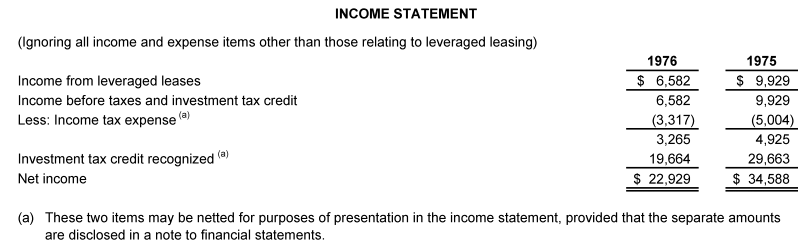 INCOME STATEMENT (Ignoring all income and expense items other than those relating to leveraged leasing) 1976 1975 Income from leveraged leases " $6,582 " " $9,929 " Income before taxes and investment tax credit " 6,582 " " 9,929 " Less: Income tax expense (a) " (3,317)" " (5,004)" " 3,265 " " 4,925 " Investment tax credit recognized (a) " 19,664 " " 29,663 " Net income " $22,929 " " $34,588 " (a) "These two items may be netted for purposes of presentation in the income statement, provided that the separate amounts are disclosed in a note to financial statements."
- Investment in Leveraged Leases
- Entity is the lessor in a leveraged lease agreement entered into in 1975 under which mining equipment having an estimated economic life of 18 years was leased for a term of 15 years. Entity's equity investment represented 40 percent of the purchase price; the remaining 60 percent was furnished by third-party financing in the form of long-term debt that provides for no recourse against Entity and is secured by a first lien on the property. At the end of the lease term, the equipment is turned back to Entity. The residual value at that time is estimated to be 20 percent of cost. For federal income tax purposes, Entity receives the investment tax credit and has the benefit of tax deductions for depreciation on the entire leased asset and for interest on the long-term debt. During the early years of the lease, those deductions exceed the lease rental income, and substantial excess deductions are available to be applied against Entity's other income. In the later years of the lease, rental income will exceed the deductions and taxes will be payable. Deferred taxes are provided to reflect this reversal. Entity's net investment in leveraged leases is composed of the following elements.
-
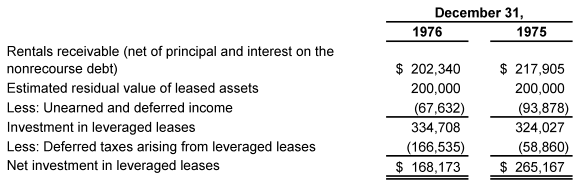 "December 31," 1976 1975 Rentals receivable (net of principal and interest on the nonrecourse debt) " $202,340 " " $217,905 " Estimated residual value of leased assets " 200,000 " " 200,000 " Less: Unearned and deferred income " (67,632)" " (93,878)" Investment in leveraged leases " 334,708 " " 324,027 " Less: Deferred taxes arising from leveraged leases " (166,535)" " (58,860)" Net investment in leveraged leases " $168,173 " " $265,167 "
-
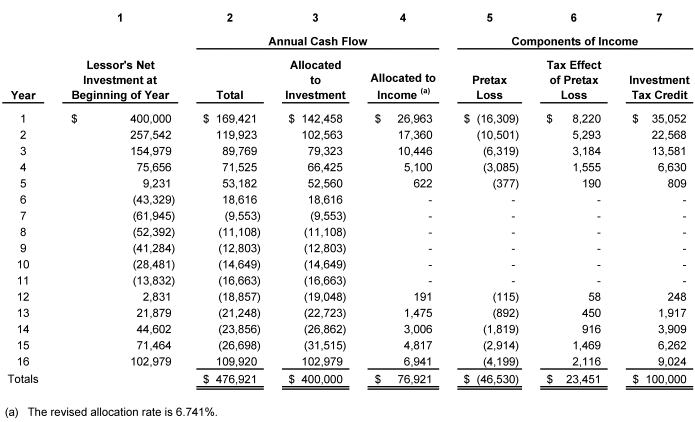 Annual Cash Flow Components of Income Year Lessor's Net Investment at Beginning of Year Total Allocated to Investment Allocated to Income (a) Pretax Loss Tax Effect of Pretax Loss Investment Tax Credit 1 " $400,000 " " $169,421 " " $142,458 " " $26,963 " " $(16,309)" " $8,220 " " $35,052 " 2 " 257,542 " " 119,923 " " 102,563 " " 17,360 " " (10,501)" " 5,293 " " 22,568 " 3 " 154,979 " " 89,769 " " 79,323 " " 10,446 " " (6,319)" " 3,184 " " 13,581 " 4 " 75,656 " " 71,525 " " 66,425 " " 5,100 " " (3,085)" " 1,555 " " 6,630 " 5 " 9,231 " " 53,182 " " 52,560 " 622 (377) 190 809 6 " (43,329)" " 18,616 " " 18,616 " - - - - 7 " (61,945)" " (9,553)" " (9,553)" - - - - 8 " (52,392)" " (11,108)" " (11,108)" - - - - 9 " (41,284)" " (12,803)" " (12,803)" - - - - 10 " (28,481)" " (14,649)" " (14,649)" - - - - 11 " (13,832)" " (16,663)" " (16,663)" - - - - 12 " 2,831 " " (18,857)" " (19,048)" 191 (115) 58 248 13 " 21,879 " " (21,248)" " (22,723)" " 1,475 " (892) 450 " 1,917 " 14 " 44,602 " " (23,856)" " (26,862)" " 3,006 " " (1,819)" 916 " 3,909 " 15 " 71,464 " " (26,698)" " (31,515)" " 4,817 " " (2,914)" " 1,469 " " 6,262 " 16 " 102,979 " " 109,920 " " 102,979 " " 6,941 " " (4,199)" " 2,116 " " 9,024 " Totals " $476,921 " " $400,000 " " $76,921 " " $(46,530)" " $23,451 " " $100,000 " (a) The revised allocation rate is 6.741%.
-
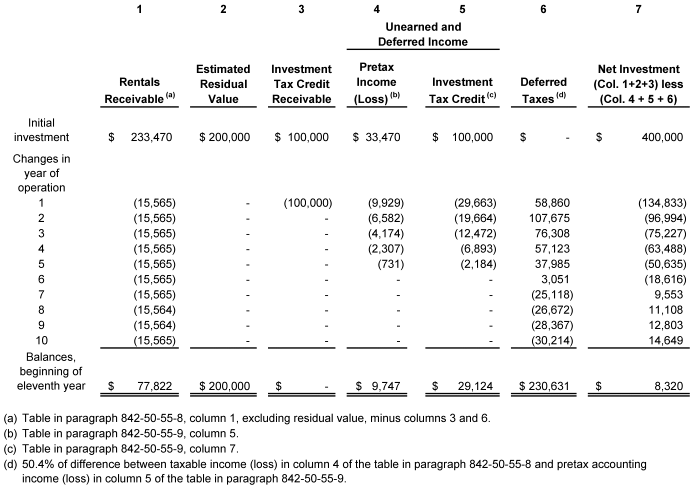 1 2 3 4 5 6 7 "Unearned and Deferred Income" Rentals Receivable (a) Estimated Residual Value Investment Tax Credit Receivable Pretax Income (Loss) (b) Investment Tax Credit (c) Deferred Taxes (d) Net Investment (Col. 1+2+3) less (Col. 4 + 5 + 6) Initial investment " $233,470 " " $200,000 " " $100,000 " " $33,470 " " $100,000 " $- " $400,000 " Changes in year of operation 1 " (15,565)" - " (100,000)" " (9,929)" " (29,663)" " 58,860 " " (134,833)" 2 " (15,565)" - - " (6,582)" " (19,664)" " 107,675 " " (96,994)" 3 " (15,565)" - - " (4,174)" " (12,472)" " 76,308 " " (75,227)" 4 " (15,565)" - - " (2,307)" " (6,893)" " 57,123 " " (63,488)" 5 " (15,565)" - - (731) " (2,184)" " 37,985 " " (50,635)" 6 " (15,565)" - - - - " 3,051 " " (18,616)" 7 " (15,565)" - - - - " (25,118)" " 9,553 " 8 " (15,564)" - - - - " (26,672)" " 11,108 " 9 " (15,564)" - - - - " (28,367)" " 12,803 " 10 " (15,565)" - - - - " (30,214)" " 14,649 " "Balances, beginning of eleventh year" " $77,822 " " $200,000 " $- " $9,747 " " $29,124 " " $230,631 " " $8,320 " (a) "Table in paragraph 842-50-55-8, column 1, excluding residual value, minus columns 3 and 6." (b) "Table in paragraph 842-50-55-9, column 5." (c) "Table in paragraph 842-50-55-9, column 7." (d) 50.4% of difference between taxable income (loss) in column 4 of the table in paragraph 842-50-55-8 and pretax accounting income (loss) in column 5 of the table in paragraph 842-50-55-9.
-
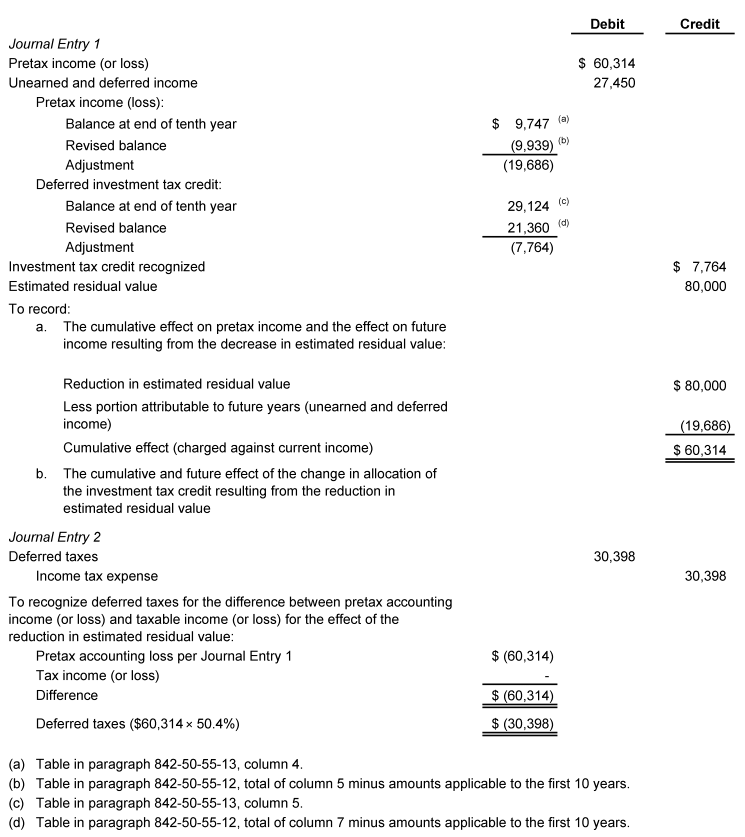 Debit Credit Journal Entry 1 Pretax income (or loss) " $60,314 " Unearned and deferred income " 27,450 " Pretax income (loss): Balance at end of tenth year " $9,747 " (a) Revised balance " (9,939)" (b) Adjustment " (19,686)" Deferred investment tax credit: Balance at end of tenth year " 29,124 " (c) Revised balance " 21,360 " (d) Adjustment " (7,764)" Investment tax credit recognized " $7,764 " Estimated residual value " 80,000 " To record: a. The cumulative effect on pretax income and the effect on future income resulting from the decrease in estimated residual value: Reduction in estimated residual value " $80,000 " Less portion attributable to future years (unearned and deferred income) " (19,686)" Cumulative effect (charged against current income) " $60,314 " b. The cumulative and future effect of the change in allocation of the investment tax credit resulting from the reduction in estimated residual value Journal Entry 2 Deferred taxes " 30,398 " Income tax expense " 30,398 " To recognize deferred taxes for the difference between pretax accounting income (or loss) and taxable income (or loss) for the effect of the reduction in estimated residual value: Pretax accounting loss per Journal Entry 1 " $(60,314)" Tax income (or loss) - Difference " $(60,314)" "Deferred taxes ($60,314 × 50.4%)" " $(30,398)" (a) "Table in paragraph 842-50-55-13, column 4." (b) "Table in paragraph 842-50-55-12, total of column 5 minus amounts applicable to the first 10 years." (c) "Table in paragraph 842-50-55-13, column 5." (d) "Table in paragraph 842-50-55-12, total of column 7 minus amounts applicable to the first 10 years."
-
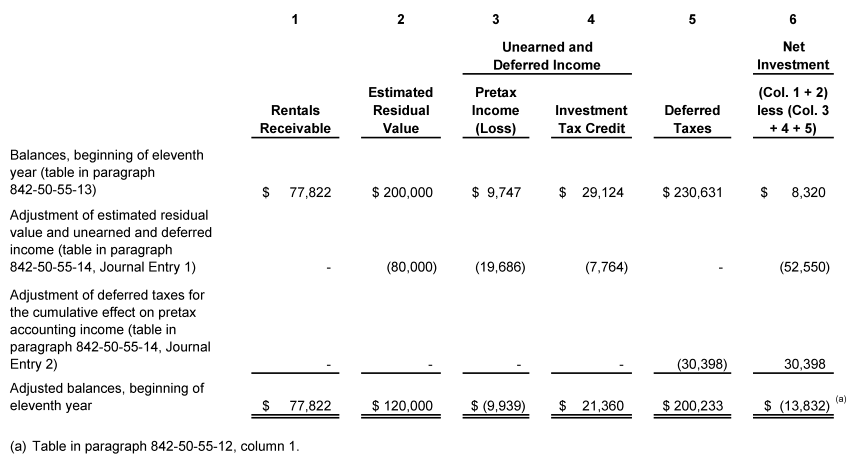 "Unearned and Deferred Income" Net Investment Rentals Receivable Estimated Residual Value Pretax Income (Loss) Investment Tax Credit Deferred Taxes (Col. 1 + 2) less (Col. 3 + 4 + 5) "Balances, beginning of eleventh year (table in paragraph 842-50-55-13)" " $77,822 " " $200,000 " " $9,747 " " $29,124 " " $230,631 " " $8,320 " "Adjustment of estimated residual value and unearned and deferred income (table in paragraph 842-50-55-14, Journal Entry 1)" - " (80,000)" " (19,686)" " (7,764)" - " (52,550)" "Adjustment of deferred taxes for the cumulative effect on pretax accounting income (table in paragraph 842-50-55-14, Journal Entry 2)" - - - - " (30,398)" " 30,398 " "Adjusted balances, beginning of eleventh year" " $77,822 " " $120,000 " " $(9,939)" " $21,360 " " $200,233 " " $(13,832)" (a) (a) "Table in paragraph 842-50-55-12, column 1."
-
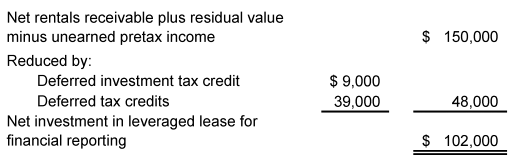 Net rentals receivable plus residual value minus unearned pretax income " $150,000 " Reduced by: Deferred investment tax credit " $9,000 " Deferred tax credits " 39,000 " " 48,000 " Net investment in leveraged lease for financial reporting " $102,000 "
-
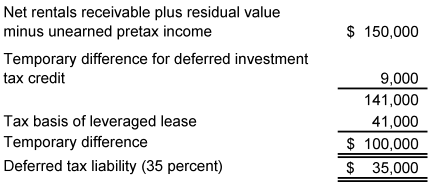 Net rentals receivable plus residual value minus unearned pretax income " $150,000 " Temporary difference for deferred investment tax credit " 9,000 " " 141,000 " Tax basis of leveraged lease " 41,000 " Temporary difference " $100,000 " Deferred tax liability (35 percent) " $35,000 "
- a Acquiring entity's cash flow analysis by years (see paragraph 842-50-55-29)
- b Acquiring entity's valuation of investment in the leveraged lease (see paragraph 842-50-55-30)
- c Acquiring entity's allocation of annual cash flow to investment and income (see paragraph 842-50-55-31)
- d Journal entry for recording allocation of purchase price to net investment in the leveraged lease (see paragraph 842-50-55-32)
- e Journal entries for the year ending December 31, 1984 (Year 10 of the lease) (see paragraph 842-50-55-33).
-
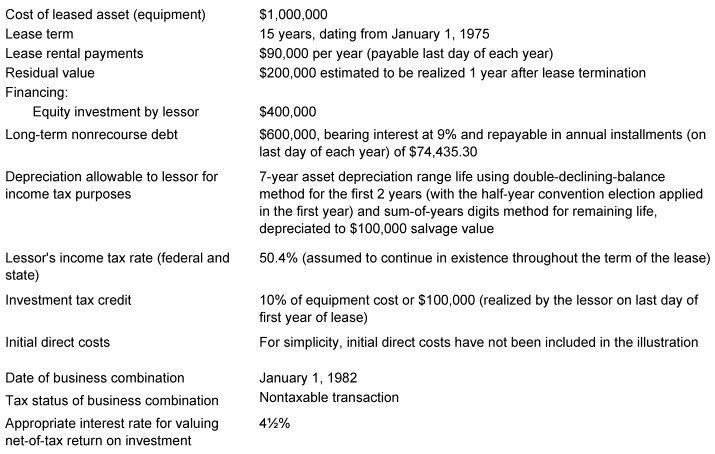 Cost of leased asset (equipment) "$1,000,000" Lease term "15 years, dating from January 1, 1975" Lease rental payments "$90,000 per year (payable last day of each year)" Residual value "$200,000 estimated to be realized 1 year after lease termination" Financing: Equity investment by lessor "$400,000" Long-term nonrecourse debt "$600,000, bearing interest at 9% and repayable in annual installments (on last day of each year) of $74,435.30" Depreciation allowable to lessor for income tax purposes "7-year asset depreciation range life using double-declining-balance method for the first 2 years (with the half-year convention election applied in the first year) and sum-of-years digits method for remaining life, depreciated to $100,000 salvage value" Lessor's income tax rate (federal and state) 50.4% (assumed to continue in existence throughout the term of the lease) Investment tax credit "10% of equipment cost or $100,000 (realized by the lessor on last day of first year of lease)" Initial direct costs "For simplicity, initial direct costs have not been included in the illustration" Date of business combination "January 1, 1982" Nontaxable transaction Tax status of business combination Appropriate interest rate for valuing net-of-tax return on investment 4½%
-
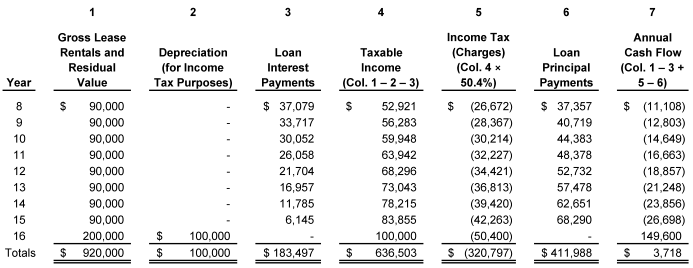 1 2 3 4 5 6 7 Year Gross Lease Rentals and Residual Value Depreciation (for Income Tax Purposes) Loan Interest Payments "Taxable Income (Col. 1 - 2 - 3)" Income Tax (Charges) (Col. 4 × 50.4%) Loan Principal Payments Annual Cash Flow (Col. 1 - 3 + 5 - 6) 8 " $90,000 " - " $37,079 " " $52,921 " " $(26,672)" " $37,357 " " $(11,108)" 9 " 90,000 " - " 33,717 " " 56,283 " " (28,367)" " 40,719 " " (12,803)" 10 " 90,000 " - " 30,052 " " 59,948 " " (30,214)" " 44,383 " " (14,649)" 11 " 90,000 " - " 26,058 " " 63,942 " " (32,227)" " 48,378 " " (16,663)" 12 " 90,000 " - " 21,704 " " 68,296 " " (34,421)" " 52,732 " " (18,857)" 13 " 90,000 " - " 16,957 " " 73,043 " " (36,813)" " 57,478 " " (21,248)" 14 " 90,000 " - " 11,785 " " 78,215 " " (39,420)" " 62,651 " " (23,856)" 15 " 90,000 " - " 6,145 " " 83,855 " " (42,263)" " 68,290 " " (26,698)" 16 " 200,000 " " $100,000 " - " 100,000 " " (50,400)" - " 149,600 " Totals " $920,000 " " $100,000 " " $183,497 " " $636,503 " " $(320,797)" " $411,988 " " $3,718 "
-
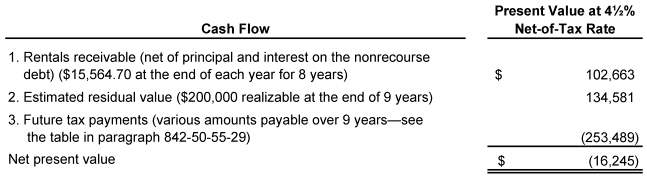 Cash Flow Present Value at 4½% Net-of-Tax Rate "1. Rentals receivable (net of principal and interest on the nonrecourse debt) ($15,564.70 at the end of each year for 8 years)" " $102,663 " "2. Estimated residual value ($200,000 realizable at the end of 9 years)" " 134,581 " "3. Future tax payments (various amounts payable over 9 years—see the table in paragraph 842-50-55-29)" " (253,489)" Net present value " $(16,245)"
-
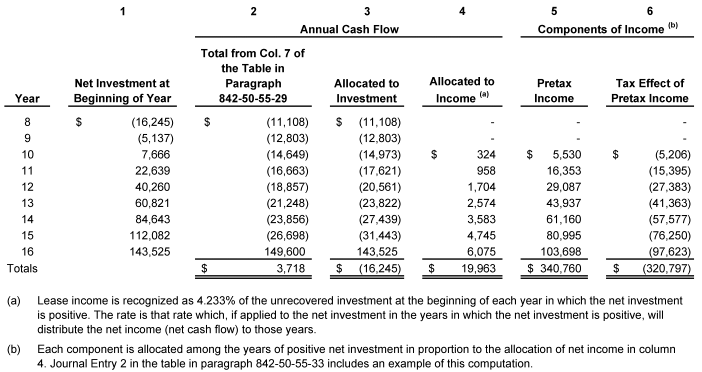 1 2 3 4 5 6 Annual Cash Flow Components of Income (b) Year Net Investment at Beginning of Year "Total from Col. 7 of the Table in Paragraph 842-50-55-29" Allocated to Investment Allocated to Income (a) Pretax Income Tax Effect of Pretax Income 8 " $(16,245)" " $(11,108)" " $(11,108)" - - - 9 " (5,137)" " (12,803)" " (12,803)" - - - 10 " 7,666 " " (14,649)" " (14,973)" $324 " $5,530 " " $(5,206)" 11 " 22,639 " " (16,663)" " (17,621)" 958 " 16,353 " " (15,395)" 12 " 40,260 " " (18,857)" " (20,561)" " 1,704 " " 29,087 " " (27,383)" 13 " 60,821 " " (21,248)" " (23,822)" " 2,574 " " 43,937 " " (41,363)" 14 " 84,643 " " (23,856)" " (27,439)" " 3,583 " " 61,160 " " (57,577)" 15 " 112,082 " " (26,698)" " (31,443)" " 4,745 " " 80,995 " " (76,250)" 16 " 143,525 " " 149,600 " " 143,525 " " 6,075 " " 103,698 " " (97,623)" Totals " $3,718 " " $(16,245)" " $19,963 " " $340,760 " " $(320,797)" (a) "Lease income is recognized as 4.233% of the unrecovered investment at the beginning of each year in which the net investment is positive. The rate is that rate which, if applied to the net investment in the years in which the net investment is positive, will distribute the net income (net cash flow) to those years. " (b) Each component is allocated among the years of positive net investment in proportion to the allocation of net income in column 4. Journal Entry 2 in the table in paragraph 842-50-55-33 includes an example of this computation.
-
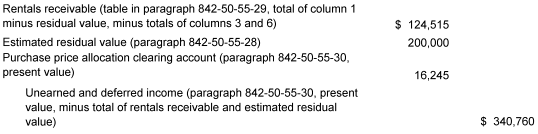 "Rentals receivable (table in paragraph 842-50-55-29, total of column 1 minus residual value, minus totals of columns 3 and 6)" " $124,515 " Estimated residual value (paragraph 842-50-55-28) " 200,000 " "Purchase price allocation clearing account (paragraph 842-50-55-30, present value)" " 16,245 " "Unearned and deferred income (paragraph 842-50-55-30, present value, minus total of rentals receivable and estimated residual value)" " $340,760 "
-
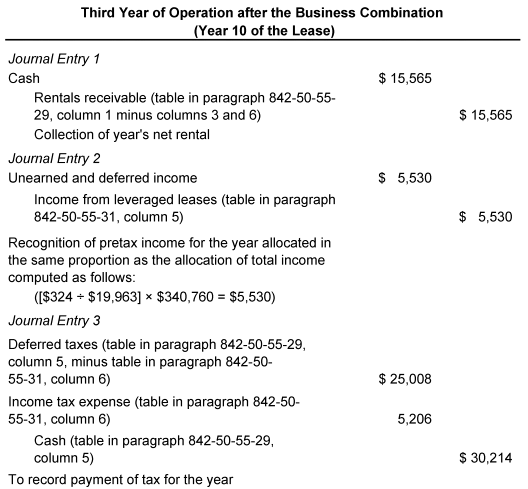 "Third Year of Operation after the Business Combination (Year 10 of the Lease)" Journal Entry 1 Cash " $15,565 " "Rentals receivable (table in paragraph 842-50-55-29, column 1 minus columns 3 and 6)" " $15,565 " Collection of year's net rental Journal Entry 2 Unearned and deferred income " $5,530 " "Income from leveraged leases (table in paragraph 842-50-55-31, column 5)" " $5,530 " Recognition of pretax income for the year allocated in the same proportion as the allocation of total income computed as follows: "([$324 ÷ $19,963] × $340,760 = $5,530)" Journal Entry 3 "Deferred taxes (table in paragraph 842-50-55-29, column 5, minus table in paragraph 842-50- 55-31, column 6)" " $25,008 " "Income tax expense (table in paragraph 842-50- 55-31, column 6)" " 5,206 " "Cash (table in paragraph 842-50-55-29, column 5)" " $30,214 " To record payment of tax for the year
842-50-S00StatusSEC
Source downloaded: .Record version 305fac1c53f6. Effective date must be checked in the source.
| Paragraph | Action | Accounting Standards Update | Date |
| 842-50-S35-1 | Added | Accounting Standards Update No. 2017-13 | 09/29/2017 |
| 842-50-S99-1 | Added | Accounting Standards Update No. 2017-13 | 09/29/2017 |
842-50-S35Subsequent MeasurementSEC
Source downloaded: .Record version 2e61f01ef564. Effective date must be checked in the source.
Effect of a Change in Tax Law or Rates on Leveraged Leases
842-50-S99SEC MaterialsSEC
Source downloaded: .Record version d60fdb789b4a. Effective date must be checked in the source.
SEC Staff Guidance
- Section 842-50-35 requires that all components of a leveraged lease be recalculated from inception of the lease based on the revised after-tax cash flows arising from the change in the tax law, including revised tax rates. The difference between the amounts originally recorded and the recalculated amounts must be included in income of the year in which the tax law is enacted.
- This accounting may have distortive effects on the ratio of earnings to fixed charges ("the ratio") as calculated. For example, a favorable after-tax effect might consist of an unfavorable adjustment to pretax income that is more than offset by a favorable adjustment to income tax expense. In those circumstances, despite the overall favorable effect, the ratio as calculated pursuant to the applicable instructions to Item 503(d) of Regulation S-K would be affected negatively because the "earnings" component of the ratio is based on pretax income.
- In filings with the Commission the SEC staff will expect the cumulative effect on pretax income and income tax expense, if material, to be reported as separate line items in the income statement. SEC staff will not object to exclusion of an unfavorable pretax adjustment from the "earnings" component of the ratio, in cases in which the after-tax effect is favorable, provided that (1) such exclusion is adequately identified and explained in connection with all disclosures and discussions relating to the ratio and (2) supplemental disclosure is made of the ratio as calculated in accordance with the applicable instructions.