ASC

ASC 842-20

Lessee

842 Leases

Source downloaded: .Record version a61affa44d94. Effective date must be checked in the source.

ASC 842-20 governs how a lessee accounts for leases already classified as finance or operating leases under 842-10. At commencement the lessee recognizes a right-of-use asset and lease liability measured at the present value of unpaid lease payments (842-20-25-1; 30-1); thereafter finance leases produce separate amortization and interest (842-20-25-5), while operating leases produce a single straight-line lease cost (842-20-25-6). It also covers short-term lease policy elections, remeasurement, ROU asset impairment, leasehold improvements, subleases, terminations, and extensive presentation and disclosure requirements.

Key points (7)
  • At the commencement date a lessee recognizes a right-of-use asset and a lease liability (842-20-25-1); the liability is the present value of lease payments not yet paid using the rate implicit in the lease if readily determinable, otherwise the incremental borrowing rate (a non-public business entity may elect a risk-free rate by class of underlying asset) (842-20-30-1 through 30-3).
  • The ROU asset's initial cost equals the lease liability plus prepayments to the lessor less lease incentives received plus initial direct costs (842-20-30-5).
  • A lessee may elect, by class of underlying asset, not to recognize ROU assets and lease liabilities for short-term leases and instead recognize lease payments straight-line over the lease term (842-20-25-2); the lease ceases to be short term if a change extends the remaining term more than 12 months or a purchase option becomes reasonably certain (842-20-25-3).
  • For finance leases, the lessee recognizes amortization of the ROU asset plus interest on the liability using a constant periodic discount rate (842-20-25-5; 35-1); for operating leases, the lessee recognizes a single lease cost allocating the remaining cost of the lease (total lease payments plus initial direct costs less cost already recognized) straight-line over the remaining lease term (842-20-25-6(a); 25-8).
  • Variable lease payments not included in the liability are recognized in the period the obligation is incurred, but are accrued before the target is achieved when achievement is probable and reversed when it becomes probable the target will not be met (842-20-25-5(b); 55-1 through 55-2).
  • Remeasurement of the lease liability is recorded as an adjustment to the ROU asset (with any excess in profit or loss once the asset is zero), and the discount rate is updated at remeasurement except in the circumstances listed in 842-20-35-5 (842-20-35-4 through 35-5).
  • ROU assets are tested for impairment under Section 360-10-35; after impairment an operating lease ROU asset is amortized straight-line with separate accretion of the liability (842-20-25-7; 35-9 through 35-10), and leasehold improvements are amortized over the shorter of their useful life and the remaining lease term, with special common-control rules in 842-20-35-12A.

For students. This is the heart of the lessee model tested on the CPA exam: both lease types put an asset and liability on the balance sheet, and only the income statement pattern differs (front-loaded amortization plus interest for finance leases versus a level single lease cost for operating leases). The most common misunderstanding is thinking an operating lease ROU asset is amortized like a fixed asset — it is instead plugged to the lease liability adjusted for prepaid/accrued rent, unamortized initial direct costs, and remaining lease incentives, unless it has been impaired.

Machine-generated study aid for ASC 842-20. Check the source paragraphs below.

842-20-00Status

Source downloaded: .Record version 53d4fd983f52. Effective date must be checked in the source.

842-20-00-1
The following table identifies the changes made to this Subtopic.
ParagraphActionAccounting Standards UpdateDate
AcquireeAddedAccounting Standards Update No. 2016-0202/25/2016
AcquirerAmendedAccounting Standards Update No. 2025-0305/12/2025
AcquirerAddedAccounting Standards Update No. 2016-0202/25/2016
Acquisition by a Not-for-Profit EntityAddedAccounting Standards Update No. 2016-0202/25/2016
BusinessAmendedAccounting Standards Update No. 2017-0101/05/2017
BusinessAddedAccounting Standards Update No. 2016-0202/25/2016
Business CombinationAddedAccounting Standards Update No. 2016-0202/25/2016
Commencement Date of the Lease (Commencement Date)AddedAccounting Standards Update No. 2016-0202/25/2016
ContractAddedAccounting Standards Update No. 2016-0202/25/2016
Corporate Joint VentureAddedAccounting Standards Update No. 2023-0508/23/2023
Direct Financing LeaseAmendedAccounting Standards Update No. 2021-0507/19/2021
Direct Financing LeaseAddedAccounting Standards Update No. 2016-0202/25/2016
Discount Rate for the LeaseAddedAccounting Standards Update No. 2016-0202/25/2016
Fair Value (2nd def.)AddedAccounting Standards Update No. 2016-0202/25/2016
Finance LeaseAddedAccounting Standards Update No. 2016-0202/25/2016
Incremental Borrowing RateAddedAccounting Standards Update No. 2016-0202/25/2016
Initial Direct CostsAddedAccounting Standards Update No. 2016-0202/25/2016
Joint VentureAddedAccounting Standards Update No. 2023-0508/23/2023
LeaseAddedAccounting Standards Update No. 2016-0202/25/2016
Lease LiabilityAddedAccounting Standards Update No. 2016-0202/25/2016
Lease ModificationAddedAccounting Standards Update No. 2016-0202/25/2016
Lease PaymentsAddedAccounting Standards Update No. 2016-0202/25/2016
Lease TermAddedAccounting Standards Update No. 2016-0202/25/2016
Legal EntityAddedAccounting Standards Update No. 2016-0202/25/2016
LesseeAddedAccounting Standards Update No. 2016-0202/25/2016
LessorAddedAccounting Standards Update No. 2016-0202/25/2016
Market ParticipantsAddedAccounting Standards Update No. 2016-0202/25/2016
Monetary LiabilityAddedAccounting Standards Update No. 2016-0202/25/2016
Not-for-Profit EntityAddedAccounting Standards Update No. 2016-0202/25/2016
Operating LeaseAddedAccounting Standards Update No. 2016-0202/25/2016
Orderly TransactionAddedAccounting Standards Update No. 2016-0202/25/2016
Probable (2nd def.)AddedAccounting Standards Update No. 2016-0202/25/2016
Rate Implicit in the LeaseAmendedAccounting Standards Update No. 2018-1007/18/2018
Rate Implicit in the LeaseAddedAccounting Standards Update No. 2016-0202/25/2016
Related PartiesAddedAccounting Standards Update No. 2016-0202/25/2016
Residual Value GuaranteeAddedAccounting Standards Update No. 2016-0202/25/2016
Right-of-Use AssetAddedAccounting Standards Update No. 2016-0202/25/2016
Sales-Type LeaseAmendedAccounting Standards Update No. 2021-0507/19/2021
Sales-Type LeaseAddedAccounting Standards Update No. 2016-0202/25/2016
Short-Term LeaseAddedAccounting Standards Update No. 2016-0202/25/2016
SubleaseAddedAccounting Standards Update No. 2016-0202/25/2016
Underlying AssetAddedAccounting Standards Update No. 2016-0202/25/2016
Useful LifeAddedAccounting Standards Update No. 2016-0202/25/2016
Variable Interest EntitySupersededAccounting Standards Update No. 2025-0305/12/2025
Variable Interest EntityAddedAccounting Standards Update No. 2016-0202/25/2016
Variable Lease PaymentsAddedAccounting Standards Update No. 2016-0202/25/2016
842-20-05-1AddedAccounting Standards Update No. 2016-0202/25/2016
842-20-15-1AddedAccounting Standards Update No. 2016-0202/25/2016
AddedAccounting Standards Update No. 2016-0202/25/2016
842-20-30-3AmendedAccounting Standards Update No. 2021-0911/11/2021
AddedAccounting Standards Update No. 2016-0202/25/2016
842-20-35-12AmendedAccounting Standards Update No. 2023-0103/27/2023
AddedAccounting Standards Update No. 2023-0103/27/2023
842-20-35-13AmendedAccounting Standards Update No. 2023-0508/23/2023
AddedAccounting Standards Update No. 2016-0202/25/2016
842-20-50-1AmendedAccounting Standards Update No. 2021-0911/11/2021
AddedAccounting Standards Update No. 2016-0202/25/2016
842-20-50-4AmendedAccounting Standards Update No. 2024-0311/04/2024
842-20-50-7AAddedAccounting Standards Update No. 2023-0103/27/2023
842-20-50-10AddedAccounting Standards Update No. 2021-0911/11/2021
AddedAccounting Standards Update No. 2016-0202/25/2016

842-20-05Overview and Background

Source downloaded: .Record version bba731731128. Effective date must be checked in the source.

842-20-05-1
This Subtopic addresses accounting by lessees for leases that have been classified as finance leases or operating leases in accordance with the requirements in Subtopic 842-10. Lessees shall follow the requirements in this Subtopic as well as those in Subtopic 842-10.

842-20-15Scope and Scope Exceptions

Source downloaded: .Record version 41cd1fb96ce4. Effective date must be checked in the source.

842-20-15-1
This Subtopic follows the same Scope and Scope Exceptions as outlined in the Overall Subtopic.

842-20-25Recognition

Source downloaded: .Record version 5499017552d3. Effective date must be checked in the source.

Short-Term Leases

842-20-25-2
As an accounting policy, a lessee may elect not to apply the recognition requirements in this Subtopic to short-term leases. Instead, a lessee may recognize the lease payments in profit or loss on a straight-line basis over the lease term and variable lease payments in the period in which the obligation for those payments is incurred (consistent with paragraphs ). The accounting policy election for short-term leases shall be made by class of underlying asset to which the right of use relates.
842-20-25-3
If the lease term or the assessment of a lessee option to purchase the underlying asset changes such that, after the change, the remaining lease term extends more than 12 months from the end of the previously determined lease term or the lessee is reasonably certain to exercise its option to purchase the underlying asset, the lease no longer meets the definition of a short-term lease and the lessee shall apply the remainder of the guidance in this Topic as if the date of the change in circumstances is the commencement date.
842-20-25-4
See Example 1 (paragraphs ) for an illustration of the requirements on short-term leases.

Finance Leases

842-20-25-5
After the commencement date, a lessee shall recognize in profit or loss, unless the costs are included in the carrying amount of another asset in accordance with other Topics:
  1. a
    Amortization of the right-of-use asset and interest on the lease liability
  2. b
    Variable lease payments not included in the lease liability in the period in which the obligation for those payments is incurred (see paragraphs )
  3. c
    Any impairment of the right-of-use asset determined in accordance with paragraph 842-20-35-9.

Operating Leases

842-20-25-6
After the commencement date, a lessee shall recognize all of the following in profit or loss, unless the costs are included in the carrying amount of another asset in accordance with other Topics:
  1. a
    A single lease cost, calculated so that the remaining cost of the lease (as described in paragraph 842-20-25-8) is allocated over the remaining lease term on a straight-line basis unless another systematic and rational basis is more representative of the pattern in which benefit is expected to be derived from the right to use the underlying asset (see paragraph 842-20-55-3), unless the right-of-use asset has been impaired in accordance with paragraph 842-20-35-9, in which case the single lease cost is calculated in accordance with paragraph 842-20-25-7
  2. b
    Variable lease payments not included in the lease liability in the period in which the obligation for those payments is incurred (see paragraphs )
  3. c
    Any impairment of the right-of-use asset determined in accordance with paragraph 842-20-35-9.
842-20-25-7
After a right-of-use asset has been impaired in accordance with paragraph 842-20-35-9, the single lease cost described in paragraph 842-20-25-6(a) shall be calculated as the sum of the following:
  1. a
    Amortization of the remaining balance of the right-of-use asset after the impairment on a straight-line basis, unless another systematic basis is more representative of the pattern in which the lessee expects to consume the remaining economic benefits from its right to use the underlying asset
  2. b
    Accretion of the lease liability, determined for each remaining period during the lease term as the amount that produces a constant periodic discount rate on the remaining balance of the liability.
842-20-25-8
Throughout the lease term, the remaining cost of an operating lease for which the right-of-use asset has not been impaired consists of the following:
  1. a
    The total lease payments (including those paid and those not yet paid), reflecting any adjustment to that total amount resulting from either a remeasurement in accordance with paragraphs or a lease modification; plus
  2. b
    The total initial direct costs attributable to the lease; minus
  3. c
    The periodic lease cost recognized in prior periods.

842-20-30Initial Measurement

Source downloaded: .Record version 7f4378b2ab0b. Effective date must be checked in the source.

842-20-30-1
At the commencement date, a lessee shall measure both of the following:
  1. a
    The lease liability at the present value of the lease payments not yet paid, discounted using the discount rate for the lease at lease commencement (as described in paragraphs )
  2. b
    The right-of-use asset as described in paragraph 842-20-30-5.

Discount Rate for the Lease

842-20-30-2
The discount rate for the lease initially used to determine the present value of the lease payments for a lessee is calculated on the basis of information available at the commencement date.
842-20-30-3
A lessee should use the rate implicit in the lease whenever that rate is readily determinable. If the rate implicit in the lease is not readily determinable, a lessee uses its incremental borrowing rate. A lessee that is not a public business entity is permitted to use a risk-free discount rate for the lease instead of its incremental borrowing rate, determined using a period comparable with that of the lease term, as an accounting policy election made by class of underlying asset.
842-20-30-4
See Example 2 (paragraphs ) for an illustration of the requirements on the discount rate.

Initial Measurement of the Right-of-Use Asset

842-20-30-5
At the commencement date, the cost of the right-of-use asset shall consist of all of the following:
  1. a
    The amount of the initial measurement of the lease liability
  2. b
    Any lease payments made to the lessor at or before the commencement date, minus any lease incentives received
  3. c
    Any initial direct costs incurred by the lessee (as described in paragraphs ).
842-20-30-6
See Example 3 (paragraphs ) for an illustration of the requirements on lessee measurement of the lease term.

842-20-35Subsequent Measurement

Source downloaded: .Record version c0bf02335b8a. Effective date must be checked in the source.

842-20-35-1
After the commencement date, for a finance lease, a lessee shall measure both of the following:
  1. a
    The lease liability by increasing the carrying amount to reflect interest on the lease liability and reducing the carrying amount to reflect the lease payments made during the period. The lessee shall determine the interest on the lease liability in each period during the lease term as the amount that produces a constant periodic discount rate on the remaining balance of the liability, taking into consideration the reassessment requirements in paragraphs .
  2. b
    The right-of-use asset at cost less any accumulated amortization and any accumulated impairment losses, taking into consideration the reassessment requirements in paragraphs .
842-20-35-2
A lessee shall recognize amortization of the right-of-use asset and interest on the lease liability for a finance lease in accordance with paragraph 842-20-25-5.
842-20-35-3
After the commencement date, for an operating lease, a lessee shall measure both of the following:
  1. a
    The lease liability at the present value of the lease payments not yet paid discounted using the discount rate for the lease established at the commencement date (unless the rate has been updated after the commencement date in accordance with paragraph 842-20-35-5, in which case that updated rate shall be used)
  2. b
    The right-of-use asset at the amount of the lease liability, adjusted for the following, unless the right-of-use asset has been previously impaired, in which case the right-of-use asset is measured in accordance with paragraph 842-20-35-10 after the impairment:
    1. 1
      Prepaid or accrued lease payments
    2. 2
      The remaining balance of any lease incentives received, which is the amount of the gross lease incentives received net of amounts recognized previously as part of the single lease cost described in paragraph 842-20-25-6(a)
    3. 3
    4. 4
      Impairment of the right-of-use asset.

Remeasurement of the Lease Liability

842-20-35-4
After the commencement date, a lessee shall remeasure the lease liability to reflect changes to the lease payments as described in paragraphs . A lessee shall recognize the amount of the remeasurement of the lease liability as an adjustment to the right-of-use asset. However, if the carrying amount of the right-of-use asset is reduced to zero, a lessee shall recognize any remaining amount of the remeasurement in profit or loss.
842-20-35-5
If there is a remeasurement of the lease liability in accordance with paragraph 842-20-35-4, the lessee shall update the discount rate for the lease at the date of remeasurement on the basis of the remaining lease term and the remaining lease payments unless the remeasurement of the lease liability is the result of one of the following:
  1. a
    A change in the lease term or the assessment of whether the lessee will exercise an option to purchase the underlying asset and the discount rate for the lease already reflects that the lessee has an option to extend or terminate the lease or to purchase the underlying asset.
  2. b
    A change in amounts probable of being owed by the lessee under a residual value guarantee (see paragraph 842-10-35-4(c)(3)).
  3. c
    A change in the lease payments resulting from the resolution of a contingency upon which some or all of the variable lease payments that will be paid over the remainder of the lease term are based (see paragraph 842-10-35-4(b)).
842-20-35-6
See Examples 3 and 4 (paragraphs ) for an illustration of the requirements on lessee subsequent measurement.

Amortization of the Right-of-Use Asset for a Finance Lease

842-20-35-7
A lessee shall amortize the right-of-use asset on a straight-line basis, unless another systematic basis is more representative of the pattern in which the lessee expects to consume the right-of-use asset's future economic benefits. When the lease liability is remeasured and the right-of-use asset is adjusted in accordance with paragraph 842-20-35-4, amortization of the right-of-use asset shall be adjusted prospectively from the date of remeasurement.
842-20-35-8
A lessee shall amortize the right-of-use asset from the commencement date to the earlier of the end of the useful life of the right-of-use asset or the end of the lease term. However, if the lease transfers ownership of the underlying asset to the lessee or the lessee is reasonably certain to exercise an option to purchase the underlying asset, the lessee shall amortize the right-of-use asset to the end of the useful life of the underlying asset.

Impairment of a Right-of-Use Asset

842-20-35-9
A lessee shall determine whether a right-of-use asset is impaired and shall recognize any impairment loss in accordance with Section 360-10-35 on impairment or disposal of long-lived assets.
842-20-35-10
If a right-of-use asset is impaired in accordance with paragraph 842-20-35-9, after the impairment, it shall be measured at its carrying amount immediately after the impairment less any accumulated amortization. A lessee shall amortize, in accordance with paragraph 842-20-25-7 (for an operating lease) or paragraph 842-20-35-7 (for a finance lease), the right-of-use asset from the date of the impairment to the earlier of the end of the useful life of the right-of-use asset or the end of the lease term.
842-20-35-11
See Example 5 (paragraphs ) for an illustration of the requirements for impairment of a right-of-use asset.

Amortization of Leasehold Improvements

842-20-35-12
Leasehold improvements, other than those accounted for in accordance with paragraph 842-20-35-12A, shall be amortized over the shorter of the useful life of those leasehold improvements and the remaining lease term, unless the lease transfers ownership of the underlying asset to the lessee or the lessee is reasonably certain to exercise an option to purchase the underlying asset, in which case the lessee shall amortize the leasehold improvements to the end of their useful life.
842-20-35-12A
Leasehold improvements associated with a lease between entities under common control shall be:
  1. a
    Amortized over the useful life of those improvements to the common control group as long as the lessee controls the use of the underlying asset through a lease. If the lessor obtained the right to control the use of the underlying asset through a lease with another entity not within the same common control group, the amortization period shall not exceed the amortization period of the common control group determined in accordance with paragraph 842-20-35-12.
  2. b
    Accounted for as a transfer between entities under common control through an adjustment to equity (net assets for a not-for-profit entity) when the lessee no longer controls the use of the underlying asset.
842-20-35-12B
An entity with leasehold improvements accounted for in accordance with paragraph 842-20-35-12A shall apply the impairment requirements in paragraph 360-10-40-4, considering the useful life to the common control group.
842-20-35-12C
If after the commencement date the lessee and lessor become within the same common control group or are no longer within the same common control group, any change in the required amortization period for leasehold improvements shall be accounted for prospectively as a change in accounting estimate in accordance with paragraph 250-10-45-17.
842-20-35-13
Leasehold improvements acquired in a business combination, acquired in an acquisition by a not-for-profit entity, or recognized by a joint venture upon formation shall be amortized over the shorter of the useful life of the assets and the remaining lease term at the date of acquisition.

Subleases

842-20-35-14
If the nature of a sublease is such that the original lessee is not relieved of the primary obligation under the original lease, the original lessee (as sublessor) shall continue to account for the original lease in one of the following ways:
  1. a
    If the sublease is classified as an operating lease, the original lessee shall continue to account for the original lease as it did before commencement of the sublease. If the lease cost for the term of the sublease exceeds the anticipated sublease income for that same period, the original lessee shall treat that circumstance as an indicator that the carrying amount of the right-of-use asset associated with the original lease may not be recoverable in accordance with paragraph 360-10-35-21.
  2. b
    If the original lease is classified as a finance lease and the sublease is classified as a sales-type lease or a direct financing lease, the original lessee shall derecognize the original right-of-use asset in accordance with paragraph 842-30-40-1 and continue to account for the original lease liability as it did before commencement of the sublease. The original lessee shall evaluate its investment in the sublease for impairment in accordance with paragraph 842-30-35-3.
  3. c
    If the original lease is classified as an operating lease and the sublease is classified as a sales-type lease or a direct financing lease, the original lessee shall derecognize the original right-of-use asset in accordance with paragraph 842-30-40-1 and, from the sublease commencement date, account for the original lease liability in accordance with paragraphs . The original lessee shall evaluate its investment in the sublease for impairment in accordance with paragraph 842-30-35-3.
842-20-35-15
The original lessee (as sublessor) in a sublease shall use the rate implicit in the lease to determine the classification of the sublease and to measure the net investment in the sublease if the sublease is classified as a sales-type or a direct financing lease unless that rate cannot be readily determined. If the rate implicit in the lease cannot be readily determined, the original lessee may use the discount rate for the lease established for the original (or head) lease.

842-20-40Derecognition

Source downloaded: .Record version 309b912d5a73. Effective date must be checked in the source.

Lease Termination

842-20-40-1
A termination of a lease before the expiration of the lease term shall be accounted for by the lessee by removing the right-of-use asset and the lease liability, with profit or loss recognized for the difference.
842-20-40-2
The termination of a lease that results from the purchase of an underlying asset by the lessee is not the type of termination of a lease contemplated by paragraph 842-20-40-1 but, rather, is an integral part of the purchase of the underlying asset. If the lessee purchases the underlying asset, any difference between the purchase price and the carrying amount of the lease liability immediately before the purchase shall be recorded by the lessee as an adjustment of the carrying amount of the asset. However, this paragraph does not apply to underlying assets acquired in a business combination, which are initially measured at fair value in accordance with paragraph 805-20-30-1.

Subleases

842-20-40-3
If the nature of a sublease is such that the original lessee is relieved of the primary obligation under the original lease, the transaction shall be considered a termination of the original lease. Paragraph 842-20-35-14 addresses subleases in which the original lessee is not relieved of the primary obligation under the original lease. Any consideration paid or received upon termination that was not already included in the lease payments (for example, a termination payment that was not included in the lease payments based on the lease term) shall be included in the determination of profit or loss to be recognized in accordance with paragraph 842-20-40-1. If a sublease is a termination of the original lease and the original lessee is secondarily liable, the guarantee obligation shall be recognized by the lessee in accordance with paragraph 405-20-40-2.

842-20-45Other Presentation Matters

Source downloaded: .Record version a731fd98b6e5. Effective date must be checked in the source.

Statement of Financial Position

842-20-45-1
A lessee shall either present in the statement of financial position or disclose in the notes all of the following:
  1. a
    Finance lease right-of-use assets and operating lease right-of-use assets separately from each other and from other assets
  2. b
    Finance lease liabilities and operating lease liabilities separately from each other and from other liabilities.
Right-of-use assets and lease liabilities shall be subject to the same considerations as other nonfinancial assets and financial liabilities in classifying them as current and noncurrent in classified statements of financial position.
842-20-45-2
If a lessee does not present finance lease and operating lease right-of-use assets and lease liabilities separately in the statement of financial position, the lessee shall disclose which line items in the statement of financial position include those right-of-use assets and lease liabilities.
842-20-45-3
In the statement of financial position, a lessee is prohibited from presenting both of the following:
  1. a
    Finance lease right-of-use assets in the same line item as operating lease right-of-use assets
  2. b
    Finance lease liabilities in the same line item as operating lease liabilities.

Statement of Comprehensive Income

842-20-45-4
In the statement of comprehensive income, a lessee shall present both of the following:
  1. a
    For finance leases, the interest expense on the lease liability and amortization of the right-of-use asset are not required to be presented as separate line items and shall be presented in a manner consistent with how the entity presents other interest expense and depreciation or amortization of similar assets, respectively
  2. b
    For operating leases, lease expense shall be included in the lessee's income from continuing operations.

Statement of Cash Flows

842-20-45-5
In the statement of cash flows, a lessee shall classify all of the following:
  1. a
    Repayments of the principal portion of the lease liability arising from finance leases within financing activities
  2. b
    Interest on the lease liability arising from finance leases in accordance with the requirements relating to interest paid in Topic 230 on cash flows
  3. c
    Payments arising from operating leases within operating activities, except to the extent that those payments represent costs to bring another asset to the condition and location necessary for its intended use, which should be classified within investing activities
  4. d
    Variable lease payments and short-term lease payments not included in the lease liability within operating activities.

842-20-50Disclosure

Source downloaded: .Record version 81f66780108f. Effective date must be checked in the source.

842-20-50-1
The objective of the disclosure requirements is to enable users of financial statements to assess the amount, timing, and uncertainty of cash flows arising from leases. To achieve that objective, a lessee shall disclose qualitative and quantitative information about all of the following:
  1. a
    Its leases (as described in paragraphs 842-20-50-3(a) through (b) and )
  2. b
    The significant judgments made in applying the requirements in this Topic to those leases (as described in paragraph 842-20-50-3(c))
  3. c
    The amounts recognized in the financial statements relating to those leases (as described in paragraphs 842-20-50-4 and 842-20-50-6).
842-20-50-2
A lessee shall consider the level of detail necessary to satisfy the disclosure objective and how much emphasis to place on each of the various requirements. A lessee shall aggregate or disaggregate disclosures so that useful information is not obscured by including a large amount of insignificant detail or by aggregating items that have different characteristics.
842-20-50-3
A lessee shall disclose all of the following:
  1. a
    Information about the nature of its leases, including:
    1. 1
      A general description of those leases.
    2. 2
      The basis and terms and conditions on which variable lease payments are determined.
    3. 3
      The existence and terms and conditions of options to extend or terminate the lease. A lessee should provide narrative disclosure about the options that are recognized as part of its right-of-use assets and lease liabilities and those that are not.
    4. 4
      The existence and terms and conditions of residual value guarantees provided by the lessee.
    5. 5
      The restrictions or covenants imposed by leases, for example, those relating to dividends or incurring additional financial obligations.
    A lessee should identify the information relating to subleases included in the disclosures provided in (1) through (5), as applicable.
  2. b
    Information about leases that have not yet commenced but that create significant rights and obligations for the lessee, including the nature of any involvement with the construction or design of the underlying asset.
  3. c
    Information about significant assumptions and judgments made in applying the requirements of this Topic, which may include the following:
    1. 1
      The determination of whether a contract contains a lease (as described in paragraphs )
    2. 2
      The allocation of the consideration in a contract between lease and nonlease components (as described in paragraphs )
    3. 3
      The determination of the discount rate for the lease (as described in paragraphs ).
842-20-50-4
For each period presented in the financial statements, a lessee shall disclose the following amounts relating to a lessee's total lease cost, which includes both amounts recognized in profit or loss during the period and any amounts capitalized as part of the cost of another asset in accordance with other Topics, and the cash flows arising from lease transactions:
  1. a
    Finance lease cost, segregated between the amortization of the right-of-use assets and interest on the lease liabilities.
  2. b
    Operating lease cost determined in accordance with paragraphs 842-20-25-6(a) and 842-20-25-7.
  3. c
    Short-term lease cost, excluding expenses relating to leases with a lease term of one month or less, determined in accordance with paragraph 842-20-25-2.
  4. d
    Variable lease cost determined in accordance with paragraphs 842-20-25-5(b) and 842-20-25-6(b).
  5. e
    Sublease income, disclosed on a gross basis, separate from the finance or operating lease expense.
  6. f
    Net gain or loss recognized from sale and leaseback transactions in accordance with paragraph 842-40-25-4.
  7. g
    Amounts segregated between those for finance and operating leases for the following items:
    1. 1
      Cash paid for amounts included in the measurement of lease liabilities, segregated between operating and financing cash flows
    2. 2
      Supplemental noncash information on lease liabilities arising from obtaining right-of-use assets
    3. 3
      Weighted-average remaining lease term
    4. 4
      Weighted-average discount rate.
Transition date:(P) December 16, 2026; (N) December 16, 2026Transition guidance:
220-40-65-1For each period presented in the financial statements, a lessee shall disclose the following amounts relating to a lessee's total lease cost, which includes both amounts recognized in profit or loss during the period and any amounts capitalized as part of the cost of another asset in accordance with other Topics, and the cash flows arising from lease transactions:
  1. a
    Finance lease cost, segregated between the amortization of the right-of-use assets and interest on the lease liabilities.
  2. b
    Operating lease cost determined in accordance with paragraphs 842-20-25-6(a) and 842-20-25-7.
  3. c
    Short-term lease cost, excluding expenses relating to leases with a lease term of one month or less, determined in accordance with paragraph 842-20-25-2.
  4. d
    Variable lease cost determined in accordance with paragraphs 842-20-25-5(b) and 842-20-25-6(b).
  5. e
    Sublease income, disclosed on a gross basis, separate from the finance or operating lease expense.
  6. f
    Net gain or loss recognized from sale and leaseback transactions in accordance with paragraph 842-40-25-4.
  7. g
    Amounts segregated between those for finance and operating leases for the following items:
    1. 1
      Cash paid for amounts included in the measurement of lease liabilities, segregated between operating and financing cash flows
    2. 2
      Supplemental noncash information on lease liabilities arising from obtaining right-of-use assets
    3. 3
      Weighted-average remaining lease term
    4. 4
      Weighted-average discount rate.
See paragraphs for additional disclosure requirements.
842-20-50-5
See paragraphs for implementation guidance on preparing the weighted-average remaining lease term and the weighted-average discount rate disclosures. See Example 6 (paragraphs ) for an illustration of the lessee quantitative disclosure requirements in paragraph 842-20-50-4.
842-20-50-6
A lessee shall disclose a maturity analysis of its finance lease liabilities and its operating lease liabilities separately, showing the undiscounted cash flows on an annual basis for a minimum of each of the first five years and a total of the amounts for the remaining years. A lessee shall disclose a reconciliation of the undiscounted cash flows to the finance lease liabilities and operating lease liabilities recognized in the statement of financial position.
842-20-50-7
A lessee shall disclose lease transactions between related parties in accordance with paragraphs .
842-20-50-7A
When the useful life of leasehold improvements to the common control group determined in accordance with paragraph 842-20-35-12A exceeds the related lease term, a lessee shall disclose the following information:
  1. a
    The unamortized balance of the leasehold improvements at the balance sheet date
  2. b
    The remaining useful life of the leasehold improvements to the common control group
  3. c
    The remaining lease term.
842-20-50-8
A lessee that accounts for short-term leases in accordance with paragraph 842-20-25-2 shall disclose that fact. If the short-term lease expense for the period does not reasonably reflect the lessee's short-term lease commitments, a lessee shall disclose that fact and the amount of its short-term lease commitments.
842-20-50-9
A lessee that elects the practical expedient on not separating lease components from nonlease components in paragraph 842-10-15-37 shall disclose its accounting policy election and which class or classes of underlying assets it has elected to apply the practical expedient.
842-20-50-10
A lessee that makes the accounting policy election in paragraph 842-20-30-3 to use a risk-free rate as the discount rate shall disclose its election and the class or classes of underlying assets to which the election has been applied.

842-20-55Implementation Guidance and Illustrations

Source downloaded: .Record version eda07bdf5139. Effective date must be checked in the source.

Implementation Guidance

842-20-55-1
A lessee should recognize costs from variable lease payments (in annual periods as well as in interim periods) before the achievement of the specified target that triggers the variable lease payments, provided the achievement of that target is considered probable.
842-20-55-2
Variable lease costs recognized in accordance with paragraph 842-20-55-1 should be reversed at such time that it is probable that the specified target will not be met.
842-20-55-3
This Subtopic considers the right to control the use of the underlying asset as the equivalent of physical use. If the lessee controls the use of the underlying asset, recognition of lease cost in accordance with paragraph 842-20-25-6(a) or amortization of the right-of-use asset in accordance with paragraph 842-20-35-7 should not be affected by the extent to which the lessee uses the underlying asset.
842-20-55-4
Under certain leases (for example, certain equipment leases), a lessee is legally or contractually responsible for repair and maintenance of the underlying asset throughout the lease term. Additionally, certain lease agreements include provisions requiring the lessee to make deposits to the lessor to financially protect the lessor in the event the lessee does not properly maintain the underlying asset. Lease agreements often refer to these deposits as maintenance reserves or supplemental rent. However, the lessor is required to reimburse the deposits to the lessee on the completion of maintenance activities that the lessee is contractually required to perform under the lease agreement.
842-20-55-5
Under a typical arrangement, maintenance deposits are calculated on the basis of a performance measure, such as hours of use of the underlying asset, and are contractually required under the terms of the lease agreement to be used to reimburse the lessee for required maintenance of the underlying asset on the completion of that maintenance. The lessor is contractually required to reimburse the lessee for the maintenance costs paid by the lessee, to the extent of the amounts on deposit.
842-20-55-6
In some cases, the total cost of cumulative maintenance events over the term of the lease is less than the cumulative deposits, which results in excess amounts on deposit at the expiration of the lease. In those cases, some lease agreements provide that the lessor is entitled to retain such excess amounts, whereas other agreements specifically provide that, at the expiration of the lease agreement, such excess amounts are returned to the lessee (refundable maintenance deposit).
842-20-55-7
The guidance in paragraphs does not apply to payments to a lessor that are not substantively and contractually related to maintenance of the leased asset. If at the commencement date a lessee determines that it is less than probable that the total amount of payments will be returned to the lessee as a reimbursement for maintenance activities, the lessee should consider that when determining the portion of each payment that is not addressed by the guidance in paragraphs .
842-20-55-8
Maintenance deposits paid by a lessee under an arrangement accounted for as a lease that are refunded only if the lessee performs specified maintenance activities should be accounted for as a deposit asset.
842-20-55-9
A lessee should evaluate whether it is probable that an amount on deposit recognized under paragraph 842-20-55-8 will be returned to reimburse the costs of the maintenance activities incurred by the lessee. When an amount on deposit is less than probable of being returned, it should be recognized in the same manner as variable lease expense. When the underlying maintenance is performed, the maintenance costs should be expensed or capitalized in accordance with the lessee's maintenance accounting policy.
842-20-55-10
The right-of-use asset is a nonmonetary asset while the lease liability is a monetary liability. Therefore, in accordance with Subtopic 830-10 on foreign currency matters, when accounting for a lease that is denominated in a foreign currency, if remeasurement into the lessee's functional currency is required, the lease liability is remeasured using the current exchange rate, while the right-of-use asset is remeasured using the exchange rate as of the commencement date.
842-20-55-11
The lessee should calculate the weighted-average remaining lease term on the basis of the remaining lease term and the lease liability balance for each lease as of the reporting date.
842-20-55-12
The lessee should calculate the weighted-average discount rate on the basis of both of the following:
  1. a
    The discount rate for the lease that was used to calculate the lease liability balance for each lease as of the reporting date
  2. b
    The remaining balance of the lease payments for each lease as of the reporting date.

Illustrations

842-20-55-13
Example 1 illustrates the assessment of whether a lease is a short-term lease.
842-20-55-14
Lessee has made an accounting policy election not to recognize right-of-use assets and lease liabilities that arise from short-term leases for any class of underlying asset.
842-20-55-15
Lessee enters into a 12-month lease of a vehicle, with an option to extend for another 12 months. Lessee has considered all relevant factors and determined that it is not reasonably certain to exercise the option to extend. Because at lease commencement Lessee is not reasonably certain to exercise the option to extend, the lease term is 12 months.
842-20-55-16
The lease meets the definition of a short-term lease because the lease term is 12 months or less. Consequently, consistent with Lessee's accounting policy election, Lessee does not recognize the right-of-use asset and the lease liability arising from this lease.
842-20-55-17
Example 2 illustrates the determination of the discount rate for the lease.
842-20-55-18
Lessee, a public entity, is the parent of several consolidated subsidiaries. During the current period, 2 subsidiaries entered into a total of 400 individual leases of large computer servers, each with terms ranging between 4 and 5 years and annual payments ranging between $60,000 and $100,000, depending on the hardware capacity of the servers. In aggregate, total lease payments for these leases amount to $30 million.
842-20-55-19
The individual lease contracts do not provide information about the rate implicit in the lease. Lessee is BBB credit rated and actively raises debt in the corporate bond market. Both subsidiaries are unrated and do not actively engage in treasury operations in their respective markets. On the basis of its credit rating and the collateral represented by the leased servers, Lessee's incremental borrowing rate on $60,000 through $100,000 (the range of lease payments on each of the 400 leases) would be approximately 4 percent. Lessee notes that 5-year zero-coupon U.S. Treasury instruments are currently yielding 1.7 percent (a risk-free rate). Because Lessee conducts its treasury operations centrally (that is, at the consolidated group level), it is reasonably assumed that consideration of the group credit standing factored into how each lease was priced.
842-20-55-20
Lessee may determine the discount rate for the lease for the 400 individual leases entered into on different dates throughout the current period by using a portfolio approach. That is, Lessee can apply a single discount rate to the portfolio of new leases. This is because during the period, the new leases are all of similar terms (four to five years), and Lessee's credit rating and the interest rate environment are stable. Because the pricing of the lease is influenced by the credit standing and profile of Lessee rather than the subsidiaries (that is, because Lessee conducts treasury operations for the consolidated group), Lessee concludes that its incremental borrowing rate of 4 percent is an appropriate discount rate for each of the 400 leases entered into by Lessee's 2 subsidiaries during the period. Because Lessee is a public entity, it is not permitted to use a risk-free discount rate.
842-20-55-21
Example 3 illustrates how a lessee would initially and subsequently measure right-of-use assets and lease liabilities and how a lessee would account for a change in the lease term.
842-20-55-22
Lessee enters into a 10-year lease of an asset, with an option to extend for an additional 5 years. Lease payments are $50,000 per year during the initial term and $55,000 per year during the optional period, all payable at the beginning of each year. Lessee incurs initial direct costs of $15,000.
842-20-55-23
At the commencement date, Lessee concludes that it is not reasonably certain to exercise the option to extend the lease and, therefore, determines the lease term to be 10 years.
842-20-55-24
The rate implicit in the lease is not readily determinable. Lessee's incremental borrowing rate is 5.87 percent, which reflects the fixed rate at which Lessee could borrow a similar amount in the same currency, for the same term, and with similar collateral as in the lease at the commencement date.
842-20-55-25
At the commencement date, Lessee makes the lease payment for the first year, incurs initial direct costs, and measures the lease liability at the present value of the remaining 9 payments of $50,000, discounted at the rate of 5.87 percent, which is $342,017. Lessee also measures a right-of-use asset of $407,017 (the initial measurement of the lease liability plus the initial direct costs and the lease payment for the first year).
842-20-55-26
During the first year of the lease, Lessee recognizes lease expense depending on how the lease is classified. Paragraphs illustrate the lease expense depending on whether the lease is classified as a finance lease or as an operating lease.
842-20-55-27
Lessee depreciates its owned assets on a straight-line basis. Therefore, the right-of-use asset would be amortized on a straight-line basis over the 10-year lease term. The lease liability is increased to reflect the Year 1 interest on the lease liability in accordance with the interest method. As such, in Year 1 of the lease, Lessee recognizes the amortization expense of $40,702 ($407,017 ÷ 10) and the interest expense of $20,076 (5.87% × $342,017).
842-20-55-28
At the end of the first year of the lease, the carrying amount of Lessee's lease liability is $362,093 ($342,017 + $20,076), and the carrying amount of the right-of-use asset is $366,315 ($407,017 - $40,702).
842-20-55-29
Lessee determines the cost of the lease to be $515,000 (sum of the lease payments for the lease term and initial direct costs incurred by Lessee). The annual lease expense to be recognized is therefore $51,500 ($515,000 ÷ 10 years).
842-20-55-30
At the end of the first year of the lease, the carrying amount of Lessee's lease liability is $362,093 ($342,017 + $20,076), and the carrying amount of the right-of-use asset is $375,593 (the carrying amount of the lease liability plus the remaining initial direct costs, which equal $13,500).
842-20-55-31
At the end of Year 6 of the lease, Lessee makes significant leasehold improvements. Those improvements are expected to have significant economic value for Lessee at the end of the original lease term of 10 years. The improvements result in the underlying asset having greater utility to Lessee than alternative assets that could be leased for a similar amount and that are expected to have significant economic life beyond the original lease term. Consequently, construction of the leasehold improvements is deemed a significant event or significant change in circumstances that directly affects whether Lessee is reasonably certain to exercise the option to extend the lease and triggers a reassessment of the lease term. Upon reassessing the lease term, at the end of Year 6, Lessee concludes that it is reasonably certain to exercise the option to extend the lease for five years. Taking into consideration the extended remaining lease term, Lessee's incremental borrowing rate at the end of Year 6 is 7.83 percent. As a result of Lessee's remeasuring the remaining lease term to nine years, Lessee also would remeasure any variable lease payments that depend on an index or a rate; however, in this Example, there are no variable lease payments that depend on an index or a rate. In accordance with paragraph 842-10-25-1, Lessee reassesses the lease classification as a result of the change in the lease term. Assume for purposes of this Example that the reassessment does not change the classification of the lease from that determined at the commencement date.
842-20-55-32
At the end of Year 6, before accounting for the change in the lease term, the lease liability is $183,973 (present value of 4 remaining payments of $50,000, discounted at the rate of 5.87 percent). Lessee's right-of-use asset is $162,807 if the lease is classified as a finance lease or $189,973 if the lease is classified as an operating lease (the balance of the remeasured lease liability at the end of Year 6 plus the remaining initial direct costs of $6,000).
842-20-55-33
Lessee remeasures the lease liability, which is now equal to the present value of 4 payments of $50,000 followed by 5 payments of $55,000, all discounted at the rate of 7.83 percent, which is $355,189. Lessee increases the lease liability by $171,216, representing the difference between the remeasured liability and its current carrying amount ($355,189 - $183,973). The corresponding adjustment is made to the right-of-use asset to reflect the cost of the additional rights.
842-20-55-34
Following the adjustment, the carrying amount of Lessee's right-of-use asset is $334,023 if the lease is a finance lease (that is, $162,807 + $171,216) or $361,189 if the lease is an operating lease (that is, $189,973 + $171,216).
842-20-55-35
Lessee then makes the $50,000 lease payment for Year 7, reducing the lease liability to $305,189 ($355,189 - $50,000), regardless of how the lease is classified.
842-20-55-36
Lessee recognizes lease expense in Year 7 as follows, depending on how the lease had been classified at the commencement date.
842-20-55-37
Lessee depreciates its owned assets on a straight-line basis. Therefore, the right-of-use asset will be amortized on a straight-line basis over the lease term. The lease liability will be reduced in accordance with the interest method. As such, in Year 7 (the first year following the remeasurement), Lessee recognizes amortization expense of $37,114 ($334,023 ÷ 9) and interest expense of $23,896 (7.83% × $305,189).
842-20-55-38
Lessee determines the remaining cost of the lease as the sum of the following:
  1. a
    The total lease payments, as adjusted for the remeasurement, which is the sum of $500,000 (10 payments of $50,000 during the initial lease term) and $275,000 (5 payments of $55,000 during the term of the lease extension); plus
  2. b
    The total initial direct costs attributable to the lease of $15,000; minus
  3. c
    The periodic lease cost recognized in prior periods of $309,000.
842-20-55-39
The amount of the remaining cost of the lease is therefore $481,000 ($775,000 + $15,000 - $309,000). Consequently, Lessee determines that the annual expense to be recognized throughout the remainder of the lease term is $53,444 ($481,000 ÷ the remaining lease term of 9 years).
842-20-55-40
Example 4 illustrates how a lessee would recognize lease cost in an operating lease and initially and subsequently measure right-of-use assets and lease liabilities for that lease.
842-20-55-41
Lessee enters into a 10-year lease for 5,000 square feet of office space. The annual lease payment is $10,000, paid in arrears, and increases 5 percent each year during the lease term. Lessee's incremental borrowing rate at lease commencement is 6 percent. Lessee classifies the lease as an operating lease in accordance with paragraphs . Lessee incurs initial direct costs of $5,000.
842-20-55-42
At the commencement date, Lessee receives a $10,000 cash payment from Lessor that Lessee accounts for as a lease incentive. Lessee measures the lease liability at the present value of the 10 remaining lease payments ($10,000 in Year 1, increasing by 5 percent each year thereafter), discounted at the rate of 6 percent, which is $90,434. Lessee also measures a right-of-use asset of $85,434 (the initial measurement of the lease liability + the initial direct costs of $5,000 - the lease incentive of $10,000).
842-20-55-43
During the first year of the lease, Lessee determines the remaining cost of the lease as the sum of the following:
  1. a
    The total lease payments of $115,779 (the sum of the 10 escalating payments to Lessor during the lease term of $125,779 − the lease incentive paid to Lessee at the commencement date of $10,000)
  2. b
    The total initial direct costs attributable to the lease of $5,000.
The amount of the remaining lease cost is therefore $120,779 ($115,779 + $5,000). Consequently, Lessee determines that the single lease cost to be recognized every year throughout the lease term is $12,078 ($120,779 ÷ 10 years). This assumes that there are no remeasurements of the lease liability or modifications to the lease throughout the lease term.
842-20-55-44
At the end of Year 1, the carrying amount of the lease liability is $85,860 (9 remaining lease payments, discounted at the rate of 6 percent), and the carrying amount of the right-of-use asset is the amount of the liability, adjusted for the following:
  1. a
    Accrued lease payments of $2,578 (the amount of payments to Lessor to be recognized as part of the single lease cost each year during the lease of $12,578 [total payments to Lessor of $125,779 ÷ 10 years] − the first year's lease payment of $10,000)
  2. b
    Unamortized initial direct costs of $4,500 (gross initial direct costs of $5,000 - amounts recognized previously as part of the single lease cost of $500 [total initial direct costs of $5,000 ÷ 10 years])
  3. c
    The remaining balance of the lease incentive of $9,000 (gross lease incentive of $10,000 - amounts recognized previously as part of the single lease cost of $1,000 [total lease incentives of $10,000 ÷ 10 years]).
Therefore, at the end of Year 1, Lessee measures the right-of-use asset at the amount of $78,782 ($85,860 - $2,578 + $4,500 - $9,000).
842-20-55-45
At the beginning of Year 2, Lessee determines the remaining cost of the lease to be $108,701 (the total lease payments of $115,779 + the total initial direct costs of $5,000 - the single lease cost recognized in Year 1 of $12,078). The single lease cost to be recognized in Year 2 is still $12,078 ($108,701 ÷ 9 years). For the purposes of the Example, only the first two years' determination of the single lease cost are shown. However, the single lease cost will be determined in the same way as in Years 1 and 2 for the remainder of the lease and, in this Example, will continue to equal $12,078 every period for the remainder of the lease term assuming that there are no remeasurements of the lease liability or modifications to the lease.
842-20-55-46
At the end of Year 2, the carrying amount of the lease liability is $80,511, and the carrying amount of the right-of-use asset is $71,855 (the carrying amount of the lease liability of $80,511 - the accrued lease payments of $4,656 + the unamortized initial direct costs of $4,000 - the remaining balance of the lease incentive received of $8,000). For the purposes of the Example, the subsequent measurement of the lease liability and the subsequent measurement of the right-of-use asset are shown only for the first two years. However, Lessee will continue to measure the lease liability and the right-of-use asset for this lease in the same manner throughout the remainder of the lease term.
842-20-55-47
Example 5 illustrates impairment of a right-of-use asset.
842-20-55-48
Lessee enters into a 10-year lease of a nonspecialized asset. Lease payments are $10,000 per year, payable in arrears. The lease does not transfer ownership of the underlying asset or grant Lessee an option to purchase the underlying asset. At lease commencement, the remaining economic life of the underlying asset is 50 years, and the fair value of the underlying asset is $600,000. Lessee does not incur any initial direct costs as a result of the lease. Lessee's incremental borrowing rate is 7 percent, which reflects the fixed rate at which Lessee could borrow the amount of the lease payments in the same currency, for the same term, and with similar collateral as in the lease at commencement. The lease is classified as an operating lease.
842-20-55-49
At the commencement date, Lessee recognizes the lease liability of $70,236 (the present value of the 10 lease payments of $10,000, discounted at the rate of 7 percent). Lessee also recognizes a right-of-use asset of $70,236 (the initial measurement of the lease liability). Lessee determines the cost of the lease to be $100,000 (the total lease payments for the lease term). The annual lease expense to be recognized is therefore $10,000 ($100,000 ÷ 10 years).
842-20-55-50
At the end of Year 3, when the carrying amount of the lease liability and the right-of-use asset are both $53,893, Lessee determines that the right-of-use asset is impaired in accordance with Section 360-10-35 and recognizes an impairment loss of $35,000. The right-of-use asset is part of an asset group that Lessee tested for recoverability because of a significant adverse change in the business climate that affects Lessee's ability to derive benefit from the assets within the asset group. The portion of the total impairment loss for the asset group allocated to the right-of-use asset in accordance with paragraph 360-10-35-28 is $35,000. After the impairment charge, the carrying amount of the right-of-use asset at the end of Year 3 is $18,893 ($53,893 - $35,000). Because of the impairment, the total expense recognized in Year 3 is $45,000 ($10,000 in lease expense + the $35,000 impairment charge). Beginning in Year 4, and for the remainder of the lease term, the single lease cost recognized by Lessee in accordance with paragraphs 842-20-25-6(a) and 842-20-25-7 will equal the sum of the following:
  1. a
    Amortization of the right-of-use asset remaining after the impairment ($18,893 ÷ 7 years = $2,699 per year)
  2. b
    Accretion of the lease liability. For example, in Year 4, the accretion is $3,773 ($53,893 × 7%) and, in Year 5, the accretion is $3,337 ($47,665 × 7%).
842-20-55-51
Consequently, at the end of Year 4, the carrying amount of the lease liability is $47,665 (that is, calculated as either the present value of the remaining lease payments, discounted at 7 percent, or the previous balance of $53,893 - $10,000 Year 4 lease payment + the $3,773 accretion of the lease liability). The carrying amount of the right-of-use asset is $16,194 (the previous balance of $18,893 - $2,699 amortization). Lessee measures the lease liability and the right-of-use asset in this manner throughout the remainder of the lease term.
842-20-55-52
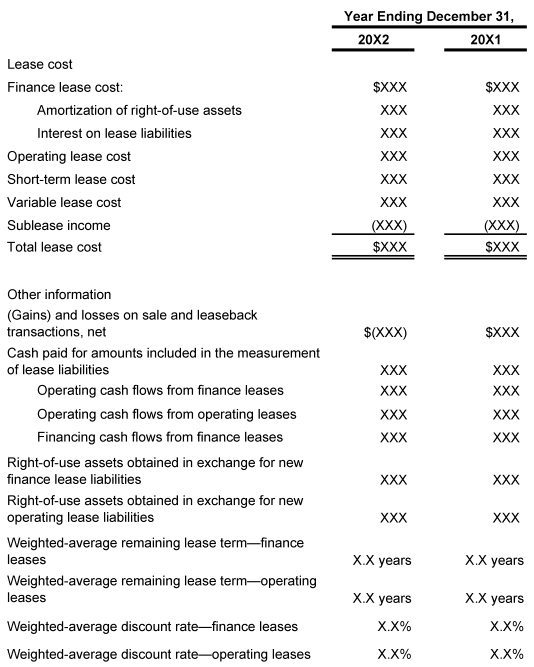
Example 6 illustrates how a lessee may meet the quantitative disclosure requirements in paragraph 842-20-50-4.
842-20-55-53
The following Example illustrates how a lessee may meet the quantitative disclosure requirements in paragraph 842-20-50-4.
  • "Year Ending December 31," 20X2 20X1 Lease cost Finance lease cost: $XXX $XXX Amortization of right-of-use assets XXX XXX Interest on lease liabilities XXX XXX Operating lease cost XXX XXX Short-term lease cost XXX XXX Variable lease cost XXX XXX Sublease income (XXX) (XXX) Total lease cost $XXX $XXX Other information "(Gains) and losses on sale and leaseback transactions, net" $(XXX) $XXX Cash paid for amounts included in the measurement of lease liabilities XXX XXX Operating cash flows from finance leases XXX XXX Operating cash flows from operating leases XXX XXX Financing cash flows from finance leases XXX XXX Right-of-use assets obtained in exchange for new finance lease liabilities XXX XXX Right-of-use assets obtained in exchange for new operating lease liabilities XXX XXX Weighted-average remaining lease term—finance leases X.X years X.X years Weighted-average remaining lease term—operating leases X.X years X.X years Weighted-average discount rate—finance leases X.X% X.X% Weighted-average discount rate—operating leases X.X% X.X%

Related subtopics