ASC 410-20
Asset Retirement Obligations
410 Asset Retirement and Environmental Obligations
Source downloaded: .Record version af056de0675e. Effective date must be checked in the source.
ASC 410-20 governs legal obligations associated with the retirement of tangible long-lived assets that arise from acquisition, construction, development, and/or normal operation of the asset, including environmental remediation resulting from normal operations. An entity recognizes the fair value of the ARO liability in the period incurred if fair value can be reasonably estimated, and simultaneously capitalizes an equal asset retirement cost in the carrying amount of the related long-lived asset (410-20-25-4; 410-20-25-5). Fair value is normally measured with an expected present value technique discounted at a credit-adjusted risk-free rate, with later changes recognized as accretion expense and as revisions to estimated cash flows (410-20-30-1; 410-20-35-3).
Key points (7)
- An entity recognizes an ARO at fair value in the period incurred if a reasonable estimate can be made; otherwise recognition is deferred until a reasonable estimate is possible, and an ARO on an acquired asset is recognized at the acquisition date as if incurred then (410-20-25-4; 410-20-25-16).
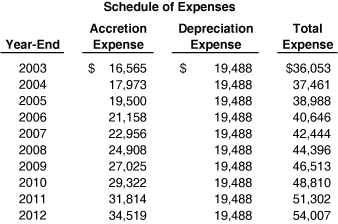
- Upon initial recognition, the entity capitalizes an asset retirement cost by increasing the carrying amount of the related long-lived asset by the same amount as the liability, and allocates that cost to expense over the asset's useful life using a systematic and rational method (410-20-25-5; 410-20-35-2).
- A conditional ARO must be recognized before the event requiring or waiving performance occurs; the obligation to stand ready is unconditional, and uncertainty about timing/method and about whether performance will be enforced affects measurement, not recognition (410-20-25-7; 410-20-25-13 through 25-15); when the conditional aspect has two outcomes and no information on which is more probable, 50 percent is used for each (410-20-25-14).
- Fair value is usually measured with an expected present value technique, discounting expected cash flows (including third-party costs, overhead, profit margin, inflation, and a market-risk premium) at a credit-adjusted risk-free rate (410-20-30-1; 410-20-55-13).
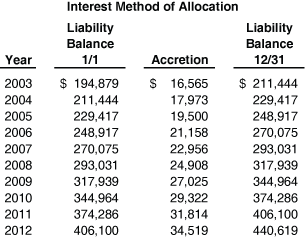
- Subsequent changes arise from (a) passage of time, measured by the interest method using the credit-adjusted risk-free rate in effect when that layer was initially measured and recognized as accretion expense (an operating item), and (b) revisions to timing or amount of undiscounted cash flows, measured before which accretion must first be recorded (410-20-35-3 through 35-5; 410-20-45-1).
- Upward revisions in undiscounted estimated cash flows are discounted at the current credit-adjusted risk-free rate; downward revisions are discounted at the rate that existed when the original liability was recognized (or a weighted-average rate if the layer cannot be identified) (410-20-35-8).
- Required disclosures include a description of the AROs and related assets, the fair value of assets legally restricted for settling AROs, and a reconciliation of the beginning and ending carrying amount showing liabilities incurred, liabilities settled, accretion expense, and revisions in estimated cash flows; if fair value cannot be reasonably estimated, that fact and the reasons must be disclosed (410-20-50-1; 410-20-50-2).
For students. Exams love the conditional ARO trap: a low likelihood of enforcement or an indefinitely deferrable obligation still requires recognition (uncertainty goes into measurement, not recognition) — the only true recognition deferral is when fair value cannot be reasonably estimated. Also memorize the asymmetric rate rule: upward cash flow revisions use the current credit-adjusted risk-free rate, downward revisions use the original (or weighted-average) rate.
Machine-generated study aid for ASC 410-20. Check the source paragraphs below.
410-20-00Status
Source downloaded: .Record version 2656223cf3fc. Effective date must be checked in the source.
410-20-05Overview and Background
Source downloaded: .Record version 586115292b63. Effective date must be checked in the source.
410-20-15Scope and Scope Exceptions
Source downloaded: .Record version e49e30da13f7. Effective date must be checked in the source.
Entities
Transactions
- aLegal obligations associated with the retirementof a tangible long-lived asset that result from the acquisition, construction, or development and (or) the normal operation of a long-lived asset, including any legal obligations that require disposal of a replaced part that is a component of a tangible long-lived asset.
- bAn environmental remediation liability that results from the normal operation of a long-lived asset and that is associated with the retirement of that asset. The fact that partial settlement of an obligation is required or performed before full retirement of an asset does not remove that obligation from the scope of this Subtopic. If environmental contamination is incurred in the normal operation of a long-lived asset and is associated with the retirement of that asset, then this Subtopic will apply (and Subtopic 410-30 will not apply) if the entity is legally obligated to treat the contamination.
- cA conditional obligation to perform a retirement activity. Uncertainty about the timing of settlement of the asset retirement obligation does not remove that obligation from the scope of this Subtopic but will affect the measurement of a liability for that obligation (see paragraph 410-20-25-10).
- dObligations of a lessor in connection with an underlying asset that meet the provisions in (a).
- eThe costs associated with the retirement of a specified asset that qualifies as historical waste equipment as defined by EU Directive 2002/96/EC. (See paragraphs and Example 4 [paragraph 410-20-55-63] for illustration of this guidance.) Paragraph 410-20-55-24 explains how the Directive distinguishes between new and historical waste and provides related implementation guidance.
- aObligations that arise solely from a plan to sell or otherwise dispose of a long-lived asset covered by Subtopic 360-10.
- bAn environmental remediation liability that results from the improper operation of a long-lived asset (see Subtopic 410-30). Obligations resulting from improper operations do not represent costs that are an integral part of the tangible long-lived asset and therefore should not be accounted for as part of the cost basis of the asset. For example, a certain amount of spillage may be inherent in the normal operations of a fuel storage facility, but a catastrophic accident caused by noncompliance with an entity's safety procedures is not. The obligation to clean up the spillage resulting from the normal operation of the fuel storage facility is within the scope of this Subtopic. The obligation to clean up after the catastrophic accident results from the improper use of the facility and is not within the scope of this Subtopic.
- cActivities necessary to prepare an asset for an alternative use as they are not associated with the retirement of the asset.
- dHistorical waste held by private households. (The guidance in this paragraph does not pertain to an asset retirement obligation in the scope of this Subtopic.) For guidance on accounting for historical electronic equipment waste held by private households for obligations associated with Directive 2002/96/EC on Waste Electrical and Electronic Equipment adopted by the European Union, see Subtopic 720-40.
- eObligations of a lessee in connection with an underlying asset, whether imposed by a lease or by a party other than the lessor, that meet the definition of either lease payments or variable lease payments in Subtopic 842-10. Those obligations shall be accounted for by the lessee in accordance with the requirements of Subtopic 842-10. However, if obligations of a lessee in connection with an underlying asset, whether imposed by a lease or by a party other than the lessor, meet the provisions in paragraph 410-20-15-2 but do not meet the definition of either lease payments or variable lease payments in Subtopic 842-10, those obligations shall be accounted for by the lessee in accordance with the requirements of this Subtopic.
- fAn obligation for asbestos removal that results from the other-than-normal operation of an asset. Such an obligation may be subject to the provisions of Subtopic 410-30.
- gCosts associated with complying with funding or assurance provisions. Paragraph 410-20-35-9 otherwise addresses the measurement effects of funding and assurance provisions.
- hObligations associated with maintenance, rather than retirement, of a long-lived asset.
- iThe cost of a replacement part that is a component of a long-lived asset.
410-20-25Recognition
Source downloaded: .Record version 5edcadf30368. Effective date must be checked in the source.
Background for Recognition
- Liabilities are probable future sacrifices of economic benefits arising from present obligations of a particular entity to transfer assets or provide services to other entities in the future as a result of past transactions or events.
| Editor's Note: Paragraph 410-20-25-1 will be will be superseded upon transition, together with its heading. |
| > Background for Recognition |
Fair Value Is Reasonably Estimated
- a It is evident that the fair value of the obligation is embodied in the acquisition price of the asset.
- b An active market exists for the transfer of the obligation.
- c Sufficient information exists to apply an expected present value technique.
Obligations with Uncertainty in Timing or Method of Settlement
- a The settlement date and method of settlement for the obligation have been specified by others. For example, the law, regulation, or contract that gives rise to the legal obligation specifies the settlement date and method of settlement. In this situation, the settlement date and method of settlement are known and therefore the only uncertainty is whether the obligation will be enforced (that is, whether performance will be required). In certain cases, determining the settlement date for the obligation that has been specified by others is a matter of judgment that depends on the relevant facts and circumstances. For example, a contract that provides the entity with an ability to extend its term through renewal should be evaluated to determine whether the settlement date should take into consideration renewal periods. Uncertainty about whether performance will be required does not defer the recognition of an asset retirement obligation because a legal obligation to stand ready to perform the retirement activities still exists, and it does not prevent the determination of a reasonable estimate of fair value because the only uncertainty is whether performance will be required.
- b The information is available to reasonably estimate all of the following:
- 1 The settlement date or the range of potential settlement dates
- 2 The method of settlement or potential methods of settlement (The term potential methods of settlement refers to methods of settling the obligation that are currently available to the entity. Therefore, uncertainty about future methods yet to be developed would not prevent the entity from estimating the fair value of the asset retirement obligation.)
- 3 The probabilities associated with the potential settlement dates and potential methods of settlement. (The entity should have a reasonable basis for assigning probabilities to the potential settlement dates and potential methods of settlement to reasonably estimate the fair value of the asset retirement obligation. If the entity does not have a reasonable basis of assigning probabilities, it is expected that the entity would still be able to reasonably estimate fair value when the range of time over which the entity may settle the obligation is so narrow and (or) the cash flows associated with each potential method of settlement are so similar that assigning probabilities without having a reasonable basis for doing so would not have a material impact on the fair value of the asset retirement obligation.)
- 1
Uncertainty in Performance Obligations
Acquired Asset Retirement Obligations
410-20-30Initial Measurement
Source downloaded: .Record version ec6dfb6660ea. Effective date must be checked in the source.
Determination of a Reasonable Estimate of Fair Value
410-20-35Subsequent Measurement
Source downloaded: .Record version 7e5ba5e8eb1b. Effective date must be checked in the source.
Allocation of Asset Retirement Cost
- a The passage of time
- b Revisions to either the timing or the amount of the original estimate of undiscounted cash flows.
Change in Estimate
Effects of Funding and Assurance Provisions
410-20-40Derecognition
Source downloaded: .Record version cc25d78bfa76. Effective date must be checked in the source.
Settlement of an Asset Retirement Obligation
410-20-45Other Presentation Matters
Source downloaded: .Record version c85f95bf4718. Effective date must be checked in the source.
Classification of Accretion Expense
Statement of Cash Flows
410-20-50Disclosure
Source downloaded: .Record version e3e50198f649. Effective date must be checked in the source.
- aA general description of the asset retirement obligations and the associated long-lived assets
- bThe fair value of assets that are legally restricted for purposes of settling asset retirement obligations
- cA reconciliation of the beginning and ending aggregate carrying amount of asset retirement obligations showing separately the changes attributable to the following components, whenever there is a significant change in any of these components during the reporting period:
- 1Liabilities incurred in the current period
- 2Liabilities settled in the current period
- 3
- 4Revisions in estimated cash flows.
- 1
- aA general description of the asset retirement obligations and the associated long-lived assets
- bThe fair value of assets that are legally restricted for purposes of settling asset retirement obligations
- cA reconciliation of the beginning and ending aggregate carrying amount of asset retirement obligations showing separately the changes attributable to the following components, whenever there is a significant change in any of these components during the reporting period:
- 1Liabilities incurred in the current period
- 2Liabilities settled in the current period
- 3
- 4Revisions in estimated cash flows.
- 1
410-20-55Implementation Guidance and Illustrations
Source downloaded: .Record version f3ef0ea8516b. Effective date must be checked in the source.
Implementation Guidance
- aThe costs that a third party would incur in performing the tasks necessary to retire the asset
- bOther amounts that a third party would include in determining the price of the transfer, including, for example, inflation, overhead, equipment charges, profit margin, and advances in technology
- cThe extent to which the amount of a third party's costs or the timing of its costs would vary under different future scenarios and the relative probabilities of those scenarios
- dThe price that a third party would demand and could expect to receive for bearing the uncertainties and unforeseeable circumstances inherent in the obligation, sometimes referred to as a market-risk premium.
Illustrations
- aThe market price and the credit-adjusted risk-free interest rate are used to impute the undiscounted cash flows embedded in the market price.
- bThe undiscounted cash flows from (a) are discounted at the initial credit-adjusted risk-free rate of 8 percent to arrive at the ending balance of the asset retirement obligation liability per the provisions of this Subtopic.
- cThe beginning balance of the asset retirement obligation liability is multiplied by the initial credit-adjusted risk-free rate of 8 percent to arrive at the amount of accretion expense per the provisions of this Subtopic.
- dThe difference between the undiscounted cash flows at the beginning of the period and the undiscounted cash flows at the end of the period represents the revision in cash flow estimates that occurred during the period. If that change is an upward revision to the undiscounted estimated cash flows, it is discounted at the current credit-adjusted risk-free rate. If that change is a downward revision, it is discounted at the historical weighted-average rate because it is not practicable to separately identify the period to which the downward revision relates.
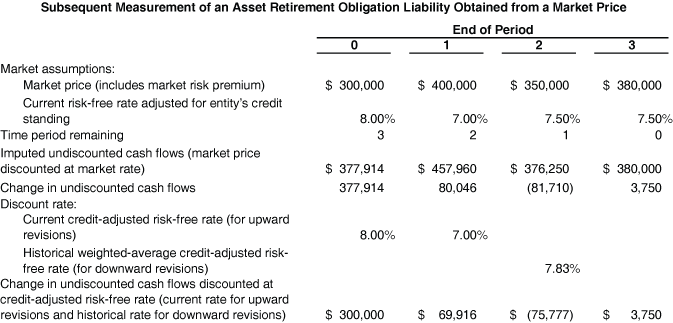 Subsequent Measurement of an Asset Retirement Obligation Liability Obtained from a Market Price End of Period 0 1 2 3 Market assumptions: Market price (includes market risk premium) " $300,000 " " $400,000 " " $350,000 " " $380,000 " Current risk-free rate adjusted for entity's credit standing 8.00% 7.00% 7.50% 7.50% Time period remaining 3 2 1 0 Imputed undiscounted cash flows (market price discounted at market rate) " $377,914 " " $457,960 " " $376,250 " " $380,000 " Change in undiscounted cash flows " 377,914 " " 80,046 " " (81,710)" " 3,750 " Discount rate: Current credit-adjusted risk-free rate (for upward revisions) 8.00% 7.00% Historical weighted-average credit-adjusted risk-free rate (for downward revisions) 7.83% Change in undiscounted cash flows discounted at credit-adjusted risk-free rate (current rate for upward revisions and historical rate for downward revisions) " $300,000 " " $69,916 " " $(75,777)" " $3,750 "
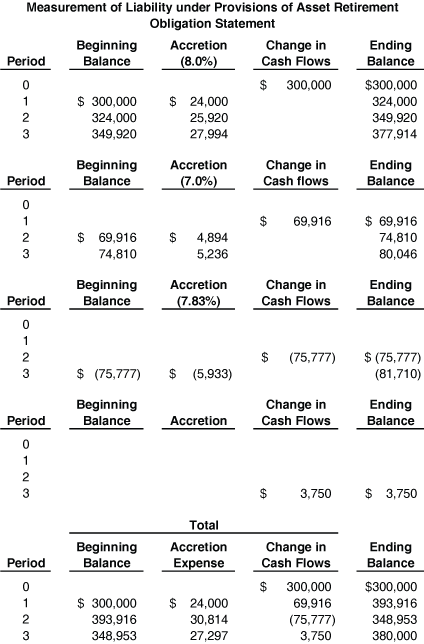 Measurement of Liability under Provisions of Asset Retirement Obligation Statement Period Beginning Balance Accretion (8.0%) Change in Cash Flows Ending Balance 0 " $300,000 " " $300,000 " 1 " $300,000 " " $24,000 " " 324,000 " 2 " 324,000 " " 25,920 " " 349,920 " 3 " 349,920 " " 27,994 " " 377,914 " Period Beginning Balance Accretion (7.0%) Change in Cash flows Ending Balance 0 1 " $69,916 " " $69,916 " 2 " $69,916 " " $4,894 " " 74,810 " 3 " 74,810 " " 5,236 " " 80,046 " Period Beginning Balance Accretion (7.83%) Change in Cash Flows Ending Balance 0 1 2 " $(75,777)" " $(75,777)" 3 " $(75,777)" " $(5,933)" " (81,710)" Period Beginning Balance Accretion Change in Cash Flows Ending Balance 0 1 2 3 " $3,750 " " $3,750 " Total Period Beginning Balance Accretion Expense Change in Cash Flows Ending Balance 0 " $300,000 " " $300,000 " 1 " $300,000 " " $24,000 " " 69,916 " " 393,916 " 2 " 393,916 " " 30,814 " " (75,777)" " 348,953 " 3 " 348,953 " " 27,297 " " 3,750 " " 380,000 "
- aInitial measurement of a liability for an asset retirement obligation using an expected present value technique, subsequent measurement assuming that there are no changes in expected cash flows, and settlement of the asset retirement obligation liability at the end of its term (Case A)
- bSubsequent measurement of an asset retirement obligation liability after a change in expected cash flows (Case B)
- cRecognition and measurement of an asset retirement obligation liability that is incurred over more than one reporting period (Case C)
- dAccounting for asset retirement obligations that are conditional and that have a low likelihood of enforcement (Case D).
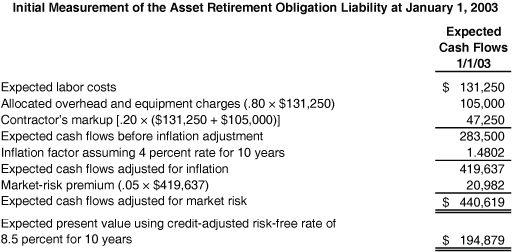
- aLabor costs are based on current marketplace wages required to hire contractors to dismantle and remove offshore oil platforms. The entity assigns probability assessments to a range of cash flow estimates as follows.
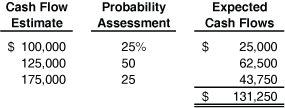 Cash Flow Estimate Probability Assessment Expected Cash Flows " $100,000 " 25% " $25,000 " " 125,000 " 50 " 62,500 " " 175,000 " 25 " 43,750 " " $131,250 "
- bThe entity estimates allocated overhead and equipment charges using the rate it applies to labor costs for transfer pricing (80 percent). The entity has no reason to believe that its overhead rate differs from those used by contractors in the industry.
- cA contractor typically adds a markup on labor and allocated internal costs to provide a profit margin on the job. The rate used (20 percent) represents the entity's understanding of the profit that contractors in the industry generally earn to dismantle and remove offshore oil platforms.
- dA contractor would typically demand and receive a premium (market risk premium) for bearing the uncertainty and unforeseeable circumstances inherent in locking in today's price for a project that will not occur for 10 years. The entity estimates the amount of that premium to be 5 percent of the expected cash flows adjusted for inflation.
- eThe risk-free rate of interest on January 1, 2003, is 5 percent. The entity adjusts that rate by 3.5 percent to reflect the effect of its credit standing. Therefore, the credit-adjusted risk-free rate used to compute expected present value is 8.5 percent.
- fThe entity assumes a rate of inflation of 4 percent over the 10-year period.
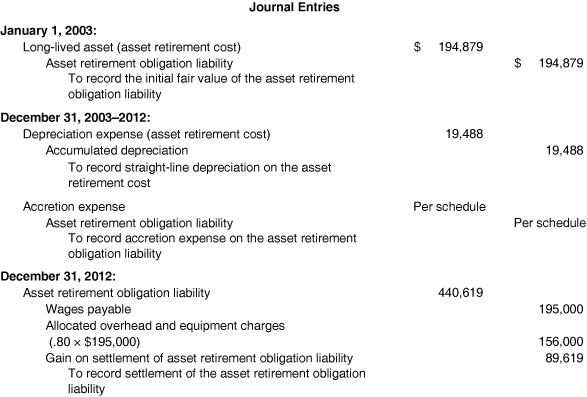
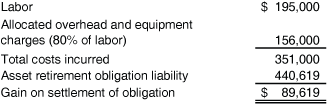 Labor " $195,000 " Allocated overhead and equipment charges (80% of labor) " 156,000 " Total costs incurred " 351,000 " Asset retirement obligation liability " 440,619 " Gain on settlement of obligation " $89,619 "
 "Initial Measurement of the Asset Retirement Obligation Liability at January 1, 2003" Expected Cash Flows 1/1/03 Expected labor costs " $131,250 " "Allocated overhead and equipment charges (.80 × $131,250)" " 105,000 " "Contractor's markup [.20 × ($131,250 + $105,000)]" " 47,250 " Expected cash flows before inflation adjustment " 283,500 " Inflation factor assuming 4 percent rate for 10 years 1.4802 Expected cash flows adjusted for inflation " 419,637 " "Market-risk premium (.05 × $419,637)" " 20,982 " Expected cash flows adjusted for market risk " $440,619 " Expected present value using credit-adjusted risk-free rate of 8.5 percent for 10 years " $194,879 "
 Interest Method of Allocation Year Liability Balance 1/1 Accretion Liability Balance 12/31 2003 " $194,879 " " $16,565 " " $211,444 " 2004 " 211,444 " " 17,973 " " 229,417 " 2005 " 229,417 " " 19,500 " " 248,917 " 2006 " 248,917 " " 21,158 " " 270,075 " 2007 " 270,075 " " 22,956 " " 293,031 " 2008 " 293,031 " " 24,908 " " 317,939 " 2009 " 317,939 " " 27,025 " " 344,964 " 2010 " 344,964 " " 29,322 " " 374,286 " 2011 " 374,286 " " 31,814 " " 406,100 " 2012 " 406,100 " " 34,519 " " 440,619 "
 Schedule of Expenses Year-End Accretion Expense Depreciation Expense Total Expense 2003 " $16,565 " " $19,488 " " $36,053 " 2004 " 17,973 " " 19,488 " " 37,461 " 2005 " 19,500 " " 19,488 " " 38,988 " 2006 " 21,158 " " 19,488 " " 40,646 " 2007 " 22,956 " " 19,488 " " 42,444 " 2008 " 24,908 " " 19,488 " " 44,396 " 2009 " 27,025 " " 19,488 " " 46,513 " 2010 " 29,322 " " 19,488 " " 48,810 " 2011 " 31,814 " " 19,488 " " 51,302 " 2012 " 34,519 " " 19,488 " " 54,007 "
 Journal Entries "January 1, 2003:" Long-lived asset (asset retirement cost) " $194,879 " Asset retirement obligation liability " $194,879 " To record the initial fair value of the asset retirement obligation liability "December 31, 2003-2012:" Depreciation expense (asset retirement cost) " 19,488 " Accumulated depreciation " 19,488 " To record straight-line depreciation on the asset retirement cost Accretion expense Per schedule Asset retirement obligation liability Per schedule To record accretion expense on the asset retirement obligation liability "December 31, 2012:" Asset retirement obligation liability " 440,619 " Wages payable " 195,000 " Allocated overhead and equipment charges " (.80 × $195,000)" " 156,000 " Gain on settlement of asset retirement obligation liability " 89,619 " To record settlement of the asset retirement obligation liability
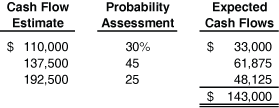 Cash Flow Estimate Probability Assessment Expected Cash Flows " $110,000 " 30% " $33,000 " " 137,500 " 45 " 61,875 " " 192,500 " 25 " 48,125 " " $143,000 "
 Asset retirement obligation liability " $477,091 " Outside contractor " 463,000 " Gain on settlement of obligation " $14,091 "
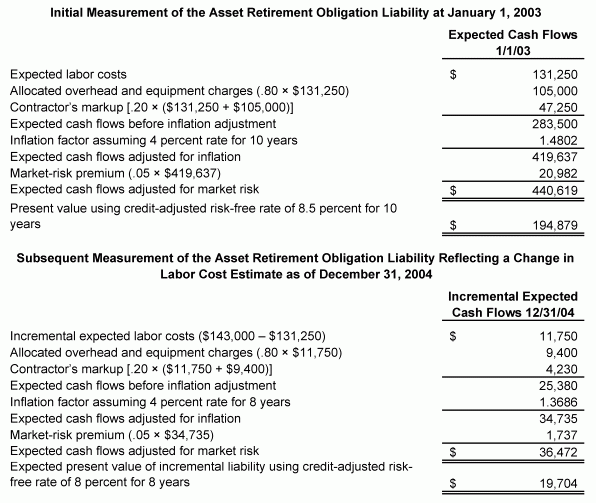 "Initial Measurement of the Asset Retirement Obligation Liability at January 1, 2003" Expected Cash Flows 1/1/03 Expected labor costs " $131,250 " "Allocated overhead and equipment charges (.80 × $131,250)" " 105,000 " "Contractor's markup [.20 × ($131,250 + $105,000)]" " 47,250 " Expected cash flows before inflation adjustment " 283,500 " Inflation factor assuming 4 percent rate for 10 years 1.4802 Expected cash flows adjusted for inflation " 419,637 " "Market-risk premium (.05 × $419,637)" " 20,982 " Expected cash flows for market risk " $440,619 " Present value using credit-adjusted risk-free rate of 8.5 percent for 10 years " $194,879 " "Subsequent Measurement of the Asset Retirement Obligation Liability Reflecting a Change in Labor Cost Estimate as of December 31, 2004" Incremental Expected Cash Flows 12/31/04 "Incremental expected labor costs ($143,000 - $131,250)" " $11,750 " "Allocated overhead and equipment charges (.80 × $11,750)" " 9,400 " "Contractor's markup [.20 × ($11,750 + $9,400)]" " 4,230 " Expected cash flows before inflation adjustment " 25,380 " Inflation factor assuming 4 percent rate for 8 years 1.3686 Expected cash flows adjusted for inflation " 34,735 " "Market-risk premium (.05 × $34,735)" " 1,737 " Expected cash flows adjusted for market risk " $36,472 " Expected present value of incremental liability using credit-adjusted risk-free rate of 8 percent for 8 years " $19,704 "
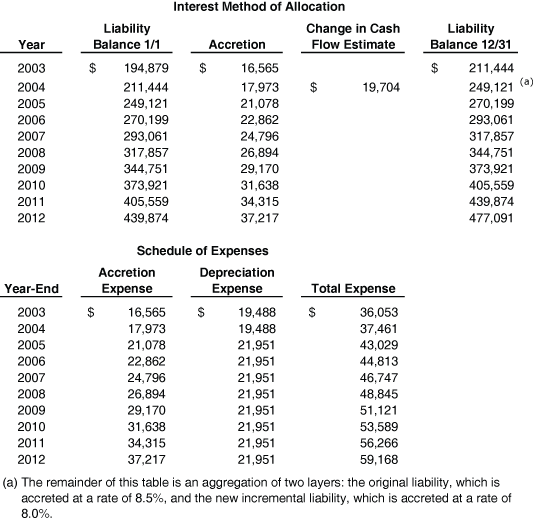 Interest Method of Allocation Year Liability Balance 1/1 Accretion Change in Cash Flow Estimate Liability Balance 12/31 2003 " $194,879 " " $16,565 " " $211,444 " 2004 " 211,444 " " 17,973 " " $19,704 " " 249,121 " (a) 2005 " 249,121 " " 21,078 " " 270,199 " 2006 " 270,199 " " 22,862 " " 293,061 " 2007 " 293,061 " " 24,796 " " 317,857 " 2008 " 317,857 " " 26,894 " " 344,751 " 2009 " 344,751 " " 29,170 " " 373,921 " 2010 " 373,921 " " 31,638 " " 405,559 " 2011 " 405,559 " " 34,315 " " 439,874 " 2012 " 439,874 " " 37,217 " " 477,091 " Schedule of Expenses Year-End Accretion Expense Depreciation Expense Total Expense 2003 " $16,565 " " $19,488 " " $36,053 " 2004 " 17,973 " " 19,488 " " 37,461 " 2005 " 21,078 " " 21,951 " " 43,029 " 2006 " 22,862 " " 21,951 " " 44,813 " 2007 " 24,796 " " 21,951 " " 46,747 " 2008 " 26,894 " " 21,951 " " 48,845 " 2009 " 29,170 " " 21,951 " " 51,121 " 2010 " 31,638 " " 21,951 " " 53,589 " 2011 " 34,315 " " 21,951 " " 56,266 " 2012 " 37,217 " " 21,951 " " 59,168 " (a) "The remainder of this table is an aggregation of 2 layers: the original liability, which is accreted at a rate of 8.5%, and the new incremental liability, which is accreted at a rate of 8.0%."
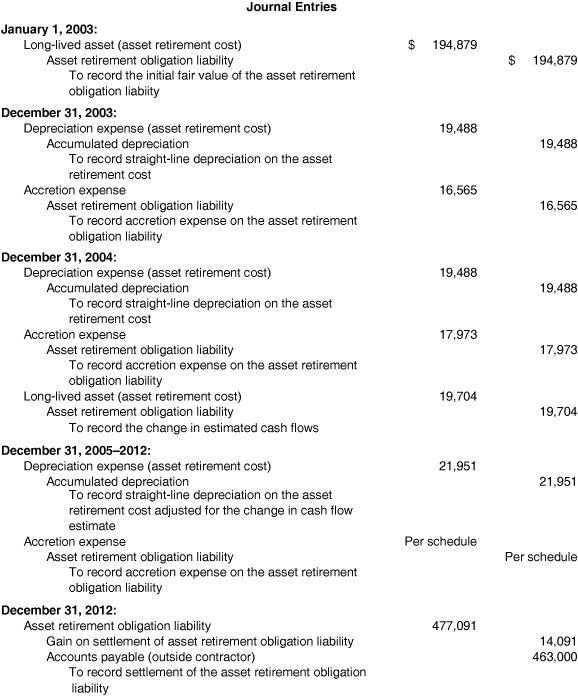 Journal Entries "January 1, 2003:" Long-lived asset (asset retirement cost) " $194,879 " Asset retirement obligation liability " $194,879 " To record the initial fair value of the asset retirement obligation liabiity "December 31, 2003:" Depreciation expense (asset retirement cost) " 19,488 " Accumulated depreciation " 19,488 " To record straight-line depreciation on the asset retirement cost Accretion expense " 16,565 " Asset retirement obligation liability " 16,565 " To record accretion expense on the asset retirement obligation liability "December 31, 2004:" Depreciation expense (asset retirement cost) " 19,488 " Accumulated depreciation " 19,488 " To record straight-line depreciation on the asset retirement cost Accretion expense " 17,973 " Asset retirement obligation liability " 17,973 " To record accretion expense on the asset retirement obligation liability Long-lived asset (asset retirement cost) " 19,704 " Asset retirement obligation liability " 19,704 " To record the change in estimated cash flows "December 31, 2005-2012:" Depreciation expense (asset retirement cost) " 21,951 " Accumulated depreciation " 21,951 " To record straight-line depreciation on the asset retirement cost adjusted for the change in cash flow estimate Accretion expense Per schedule Asset retirement obligation liability Per schedule To record accretion expense on the asset retirement obligation liability "December 31, 2012:" Asset retirement obligation liability " 477,091 " Gain on settlement of asset retirement obligation liability " 14,091 " Accounts payable (outside contractor) " 463,000 " To record settlement of the asset retirement obligation liability
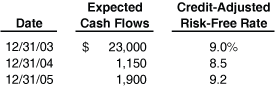 Date Expected Cash Flows Credit-Adjusted Risk-Free Rate 12/31/03 " $23,000 " 9.0% 12/31/04 " 1,150 " 8.5 12/31/05 " 1,900 " 9.2
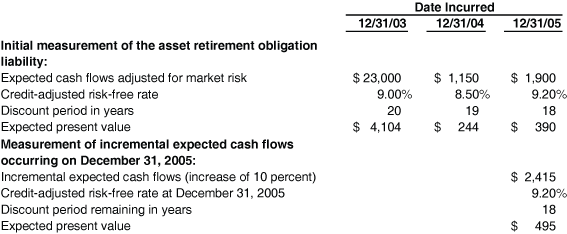 Date Incurred 12/31/03 12/31/04 12/31/05 Initial measurement of the asset retirement obligation liability: Expected cash flows adjusted for market risk " $23,000 " " $1,150 " " $1,900 " Credit-adjusted risk-free rate 9.00% 8.50% 9.20% Discount period in years 20 19 18 Expected present value " $4,104 " $244 $390 "Measurement of incremental expected cash flows occurring on December 31, 2005:" Incremental expected cash flows (increase of 10 percent) " $2,415 " "Credit-adjusted risk-free rate at December 31, 2005" 9.20% Discount period remaining in years 18 Expected present value $495
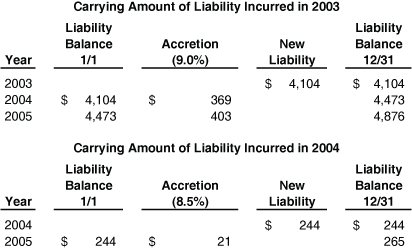 Carrying Amount of Liability Incurred in 2003 Year Liability Balance 1/1 Accretion (9.0%) New Liability Liability Balance 12/31 2003 " $4,104 " " $4,104 " 2004 " $4,104 " $369 " 4,473 " 2005 " 4,473 " 403 " 4,876 " Carrying Amount of Liability Incurred in 2004 Year Liability Balance 1/1 Accretion (8.5%) New Liability Liability Balance 12/31 2004 $244 $244 2005 $244 $21 265
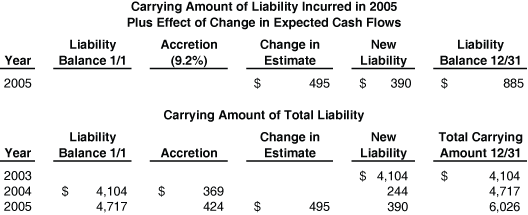 "Carrying Amount of Liability Incurred in 2005 Plus Effect of Change in Expected Cash Flows" Year Liability Balance 1/1 Accretion (9.2%) Change in Estimate New Liability Liability Balance 12/31 2005 $495 $390 $885 Carrying Amount of Total Liability Year Liability Balance 1/1 Accretion Change in Estimate New Liability Total Carrying Amount 12/31 2003 " $4,104 " " $4,104 " 2004 " $4,104 " $369 244 " 4,717 " 2005 " 4,717 " 424 $495 390 " 6,026 "
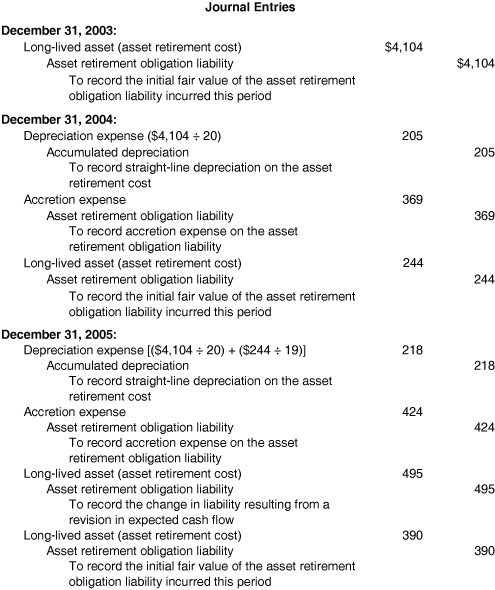 Journal Entries "December 31, 2003:" Long-lived asset (asset retirement cost) " $4,104 " Asset retirement obligation liability " $4,104 " To record the initial fair value of the asset retirement obligation liability incurred this period "December 31, 2004:" "Depreciation expense ($4,104 ÷ 20)" 205 Accumulated depreciation 205 To record straight-line depreciation on the asset retirement cost Accretion expense 369 Asset retirement obligation liability 369 To record accretion expense on the asset retirement obligation liability Long-lived asset (asset retirement cost) 244 Asset retirement obligation liability 244 To record the initial fair value of the asset retirement obligation liability incurred this period "December 31, 2005:" "Depreciation expense [($4,104 ÷ 20) + ($244 ÷ 19)]" 218 Accumulated depreciation 218 To record straight-line depreciation on the asset retirement cost Accretion expense 424 Asset retirement obligation liability 424 To record accretion expense on the asset retirement obligation liability Long-lived asset (asset retirement cost) 495 Asset retirement obligation liability 495 To record the change in liability resulting from a revision in expected cash flow Long-lived asset (asset retirement cost) 390 Asset retirement obligation liability 390 To record the initial fair value of the asset retirement obligation liability incurred this period
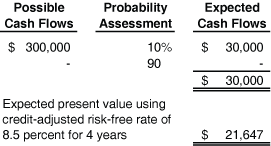 Possible Cash Flows Probability Assessment Expected Cash Flows " $300,000 " 10% " $30,000 " - 90 - " $30,000 " Expected present value using credit-adjusted risk-free rate of 8.5 percent for 4 years " $21,647 "
- aAn entity has sufficient information to reasonably estimate the fair value of an asset retirement obligation at the time the obligation is incurred (Cases A and B).
- bAn entity does not have sufficient information to reasonably estimate the fair value of an asset retirement obligation at the time the obligation is incurred (Case C).
- cAn entity initially does not have sufficient information and later has sufficient information to reasonably estimate the fair value of an asset retirement obligation (Case D).
410-20-60Relationships
Source downloaded: .Record version 539e4659edfd. Effective date must be checked in the source.
Interest
Related subtopics
- 410-980 Regulated OperationsAsset Retirement and Environmental Obligations
- 860-50 Servicing Assets and LiabilitiesTransfers and Servicing
- 715-60 Defined Benefit Plans—Other PostretirementCompensation—Retirement Benefits
- 715-980 Regulated OperationsCompensation—Retirement Benefits
- 820-10 OverallFair Value Measurement
- 715-30 Defined Benefit Plans—PensionCompensation—Retirement Benefits