ASC 715-30
Defined Benefit Plans—Pension
715 Compensation—Retirement Benefits
Source downloaded: .Record version 61b6e84778c7. Effective date must be checked in the source.
ASC 715-30 governs an employer's accounting for single-employer defined benefit pension plans: it requires the employer to recognize the plan's funded status (projected benefit obligation versus fair value of plan assets) on the balance sheet and to recognize net periodic pension cost made up of service cost, interest cost, actual return on plan assets, and amortization of prior service cost/credit, net gain or loss, and any remaining transition asset or obligation. Gains, losses, and prior service cost are first recognized in other comprehensive income and amortized into net periodic pension cost over time (subject to the 10 percent corridor for net gains and losses). Separate Subsections govern settlements, curtailments, and certain termination benefits, which accelerate recognition in earnings of amounts sitting in accumulated other comprehensive income.
Key points (7)
- An employer recognizes an asset for an overfunded plan and a liability for an underfunded plan equal to the difference between the projected benefit obligation and the fair value of plan assets, aggregating all overfunded plans and, separately, all underfunded plans (715-30-25-1 through 25-2); each plan is accounted for separately and an asset of one plan may not offset a liability of another (715-30-25-6).
- Net periodic pension cost comprises service cost, interest cost, actual return on plan assets, amortization of prior service cost or credit, gain or loss, and amortization of any remaining transition asset or obligation (715-30-35-4), and only the service cost component may be capitalized into inventory or other assets (715-30-35-7A).
- The projected benefit obligation reflects assumed future compensation levels where the benefit formula is pay-related, while the accumulated benefit obligation uses only current and past compensation (715-30-35-1A through 35-2); benefits are attributed to service periods based on the plan's benefit formula (715-30-35-36), with ratable attribution required where the formula back-loads benefits (715-30-35-38).
- Prior service cost from a retroactive plan amendment is charged to other comprehensive income at the amendment date and amortized to net periodic pension cost over the future service periods of active employees expected to receive benefits (715-30-35-11); a retroactive benefit reduction creates a prior service credit applied first against remaining prior service cost (715-30-35-17).
- Gains and losses need not be recognized as they arise; at a minimum, the net gain or loss in accumulated other comprehensive income exceeding 10 percent of the greater of the projected benefit obligation or the market-related value of plan assets must be amortized over the average remaining service period (715-30-35-24), though immediate or other systematic methods are permitted if applied consistently (715-30-35-20, 35-25).
- Assumptions must be explicit best estimates; assumed discount rates reflect the rates at which the pension benefits could be effectively settled and must be reevaluated at each measurement date, and the expected long-term rate of return reflects only existing plan assets and current-year contributions (715-30-35-42 through 35-49).
- On settlement, the maximum gain or loss recognized in earnings is the net gain or loss plus any remaining transition asset in accumulated other comprehensive income, recognized pro rata for a partial settlement (715-30-35-79), and recognition is required only if the cost of all settlements exceeds service cost plus interest cost for the year (715-30-35-82); curtailment losses are recognized when probable and estimable and curtailment gains when employees terminate or the amendment is adopted (715-30-35-94), while special termination benefits are recognized when employees accept the offer (715-30-25-10).
For students. Pension accounting is a classic exam trap because two different numbers move at once: the balance sheet reports the full funded status immediately, while the income statement smooths gains, losses, and prior service cost through OCI amortization, with the difference each period running through other comprehensive income. Students commonly confuse the projected benefit obligation (includes future salary assumptions) with the accumulated benefit obligation (does not), and forget that only service cost is eligible for capitalization after ASU 2017-07.
Machine-generated study aid for ASC 715-30. Check the source paragraphs below.
715-30-00Status
Source downloaded: .Record version e8ba3f52dfb4. Effective date must be checked in the source.
715-30-05Overview and Background
Source downloaded: .Record version 685d8efa06b5. Effective date must be checked in the source.
- aGeneral
- bSettlements, Curtailments, and Certain Termination Benefits.
Settlements, Curtailments, and Certain Termination Benefits
- a
- b
- c
- d
- e
- f
715-30-15Scope and Scope Exceptions
Source downloaded: .Record version da6f0070ee8e. Effective date must be checked in the source.
Overall Guidance
Transactions
- aCash balance plans
- bBenefits provided in the event of a voluntary or involuntary severance of employment (also called termination indemnities) if such an arrangement is in substance a pension plan (for example, if the benefits are paid for virtually all terminations).
- aLife insurance benefits provided outside a pension plan or other postretirement health and welfare benefits
- bHealth care benefits provided through a pension plan. The accounting for those benefits is set forth in Subtopic 715-60.
Plans with Characteristics of both a Defined Contribution and a Defined Benefit Plan
Settlements, Curtailments, and Certain Termination Benefits
Overall Guidance
Transactions
- aIf all or part of the plan's pension benefit obligation is settled or the plan is curtailed:
- 1Plan settlements. Examples of transactions that constitute a settlement include making lump-sum cash payments to plan participants in exchange for their rights to receive specified pension benefits and purchasing nonparticipating annuity contracts to cover vested benefits.
- 2Plan curtailments, which include:
- iTermination of employees' services earlier than expected, which may or may not involve closing a facility or discontinuing a component of an entity.
- iiTermination or suspension of a plan so that employees do not earn additional defined benefits for future services. In the latter situation, future service may be counted toward vesting of benefits accumulated based on past service.
- i
- 1
- bTermination benefits provided under an ongoing defined benefit pension arrangement.
- cOther termination benefits not otherwise addressed in the following:
715-30-25Recognition
Source downloaded: .Record version df39fddb8cb3. Effective date must be checked in the source.
Recognition of Liabilities and Assets
Participation Rights
Settlements, Curtailments, and Certain Termination Benefits
Certain Termination Benefits
715-30-35Subsequent Measurement
Source downloaded: .Record version a9e94e78a36a. Effective date must be checked in the source.
Use of Reasonable Approximations
Benefit Obligations
Components of Net Periodic Pension Cost
- a
- b
- cActual return on plan assets, if any
- dAmortization of any prior service cost or credit included in accumulated other comprehensive income
- eGain or loss (including the effects of changes in assumptions), which includes, to the extent recognized (see paragraph 715-30-35-26), amortization of the net gain or loss included in accumulated other comprehensive income
- fAmortization of any net transition asset or obligation existing at the date of initial application of this Subtopic and remaining in accumulated other comprehensive income.
- aThe minimum is used in any period in which the minimum amortization is greater (reduces the net balance included in accumulated other comprehensive income by more).
- bThe method is applied consistently.
- cThe method is applied similarly to both gains and losses.
- aThe difference between the actual return on plan assets and the expected return on plan assets
- bAmortization of the net gain or loss included in accumulated other comprehensive income.
Measurement of Costs and Obligations
- aIncreased benefits that are granted provided a specified number of years of service are rendered (for example, a pension benefit that is increased from $9 per month to $10 per month for each year of service if 20 or more years of service are rendered)
- bEarly retirement benefits
- cDeath benefits
- dDisability benefits.
- aFor benefits of a type includable in vested benefits(for example, a supplemental early retirement benefit that is a vested benefit after a stated number of years), in proportion to the ratio of the number of completed years of service to the number that will have been completed when the benefit is first fully vested
- bFor benefits of a type not includable in vested benefits (for example, a death or disability benefit that is payable only if death or disability occurs during active service), in proportion to the ratio of completed years of service to total projected years of service.
Assumptions
Measurement of Plan Assets
Annuity and Other Contracts
Timing of Measurement
- aThe plan is sponsored by a subsidiary that is consolidated using a fiscal period that differs from its parent's, as permitted by paragraph 810-10-45-12.
- bThe plan is sponsored by an investee that is accounted for using the equity method of accounting under paragraph 323-10-35-6, using financial statements of the investee for a fiscal period that is different from the investor's, as permitted by that Subtopic.
- aSubsequent accruals of net periodic pension cost that exclude the amortization of amounts previously recognized in other comprehensive income (for example, subsequent accruals of service cost, interest cost, and return on plan assets)
- bContributions to a funded plan, or benefit payments.
Employers with Two or More Plans
Multiple-Employer Plans
Cash Balance Plans
Transfer of Excess Pension Assets to a Retiree Health Care Benefits Account
Settlements, Curtailments, and Certain Termination Benefits
Relationship of Settlements and Curtailments to Other Events
Settlements
- a For a cash settlement, the amount of cash paid to employees
- b For a settlement using nonparticipating annuity contracts, the cost of the contracts
- c For a settlement using participating annuity contracts, the cost of the contracts less the amount attributed to participation rights. See paragraph 715-30-35-57.
Curtailments
715-30-45Other Presentation Matters
Source downloaded: .Record version 99e5cab3cd42. Effective date must be checked in the source.
715-30-50Disclosure
Source downloaded: .Record version 040081ac80b3. Effective date must be checked in the source.
Settlements, Curtailments, and Certain Termination Benefits
715-30-55Implementation Guidance and Illustrations
Source downloaded: .Record version cac4fc1378e8. Effective date must be checked in the source.
Implementation Guidance
- aNet periodic pension cost
- bAttribution
- cSubstantive commitment
- dAssumptions
- eSelection of discount rates
- fPlan assets
- gInsurance contracts
- hAmounts included in accumulated other comprehensive income
- iTiming of measurements
- jMultiemployer, multiple-employer, and single-employer plans
- kPension arrangements outside the United States
- lCombining and dividing plans.
- aAn expected return-on-plan asset component based on the beginning-of-year market-related value of plan assets, cash flow during the year, and the expected long-term rate of return on plan assets
- bAn amount equal to the change in the accumulated benefit obligation that resulted from any change during the year in the assumed discount rates used to determine the accumulated benefit obligation (The amount is reduced pro rata if plan assets are less than the accumulated benefit obligation.)
- cA variance component equal to a percentage (for example, 20 percent if a 5-year-averaging period is used) of the difference between the actual return on plan assets based on the fair values of those plan assets and the expected return on plan assets derived from component layers (a) and (b).
- a A substitutional portion based on the pay-related part of the old-age pension benefits prescribed by Japanese Welfare Pension Insurance Law (similar to social security benefits in the United States)
- b An entity portion based on a contributory defined benefit pension arrangement established at the discretion of each employer.
- a Phase 1—An employer/Employees' Pension Fund makes an application to the Japanese government for an exemption from the obligation to pay benefits for future employee service related to the substitutional portion. As a prerequisite to making that application, the representative of the employees covered by the plan must agree to the separation.
- b Phase 2—On or after April 1, 2002 (when the June 2001 amendment to the Japanese Welfare Pension Insurance Law became effective), the Japanese government gives each employer/Employees' Pension Fund an approval of exemption from the obligation for benefits related to future employee service under the substitutional portion. Once that approval is obtained, the employer begins making Japanese Pension Insurance payments directly to the government.
- c Phase 3—After obtaining an approval of exemption from the obligation for benefits related to future employee service under the substitutional portion, the employer/Employees' Pension Fund must make another application for separation of the remaining substitutional portion (that is, the benefit obligation related to past services).
- d Phase 4—Within two and a half years from the enactment date of the Japanese Welfare Pension Insurance Law amendment (June 15, 2001), the Japanese government will grant each employer/Employees' Pension Fund the final approval of separation. On obtaining that approval, the remaining benefit obligation of the substitutional portion (that amount earned by past services) as well as the related government-specified portion of the plan assets of the Employees' Pension Fund will be transferred to Japanese Pension Insurance.
- a To enroll in an Altersteilzeit arrangement, an employee must sign an Altersteilzeit contract with the employer. The employee can sign the Altersteilzeit contract before being eligible to begin working under the Altersteilzeit arrangement. An employee may begin working under the Altersteilzeit arrangement only upon attaining the age such that upon completion of the Altersteilzeit period he or she will be eligible for the normal government retirement benefits (typically 63 years old for men and 62 years old for women). The Altersteilzeit period consists of the period from when the employee begins to work under the Altersteilzeit arrangement until the employee is no longer under a legal work arrangement with the employer (terminated from the entity). This period is generally one to six years, depending on the specific Altersteilzeit arrangement and the age of the participant.
- b An employer is required to allow participation in the Altersteilzeit arrangement without restriction until participation reaches 5 percent of the total work force. After 5 percent participation is achieved, an employer has, at its discretion, the right to determine whether employees are accepted into the Altersteilzeit arrangement. However, in some situations, a lower mandatory participation cap is agreed to between an employer and the workers' council.
- c In most cases, an employee is required to work for a minimum period of time with any employer before being eligible for the Altersteilzeit arrangement; prior employment with the present employer is not necessary.
- d The arrangement typically offers two alternative arrangements for participating employees:
- 1 Type I: participant works 50 percent of the normal full-time schedule for each year of the entire Altersteilzeit period and receives 50 percent of his or her salary each year.
- 2 Type II: participant works full-time for half of the Altersteilzeit period, the active period, and then does not work for the remaining half, the inactive period, and receives 50 percent of his or her salary each year during the entire Altersteilzeit period.
Under both alternatives, participants receive an annual bonus, which varies by employer, but will generally equal 10-15 percent of their most recent regular pay before the start of the Altersteilzeit period; thus, the regular combined paid compensation will normally equal about 60-65 percent of the participant's most recent regular pay before the start of the Altersteilzeit period. The employer also will make additional contributions into the German government pension scheme for participants (to compensate for the fact that the employee has not been working at his or her previous level during the Altersteilzeit period) during the entire Altersteilzeit period. Contributions into the German government pension scheme (as well as length of service) determine the amount of pension benefits the employee will receive from that scheme. Therefore, by making additional contributions into the German government pension scheme during the entire Altersteilzeit period, the pension benefits paid to the employees will be higher than they would have been had the contributions been based solely on the employees' active service during the Altersteilzeit period. - 1
- e Employees must provide service to the employer for the required portion of the Altersteilzeit period (the active period) to receive the full bonus. If a participant dies, voluntarily leaves the entity, or is otherwise terminated before fulfilling the service period requirement, the Altersteilzeit contract will be unwound and the total compensation received by the participant will be adjusted to the amount that the participant would have received if he or she had not participated in the Altersteilzeit arrangement (salary is contractually set at the amount the employee earned just before the Altersteilzeit period). For example, if an employee enters into a four-year Type II Altersteilzeit arrangement and leaves the entity after one year, the employee will receive (for the one year worked) all of his or her pre-Altersteilzeit period annual salary and will not receive any Altersteilzeit bonus.
- f During the inactive period under the Type II Altersteilzeit arrangement, participants are legally under a work contract with the employer (considered employees); however, an employee is not permitted to return to active work. Otherwise, the employer would lose any government subsidy.
- g Under the Type I arrangement, the employer can claim the subsidy for a replacement worker hired during the entire Altersteilzeit period. Under the Type II arrangement, an employer could only claim the subsidy for a replacement worker hired during the inactive Altersteilzeit period. Therefore, under the Type II arrangement, the reimbursement each year during the inactive period would be equivalent to two years of bonus payments and additional contributions made into the German government pension scheme.
Illustrations
- aAssignment of equal amounts of cost to future years of service (Case A)
- bUse of straight line amortization to assign costs over average remaining service period (Case B).
-
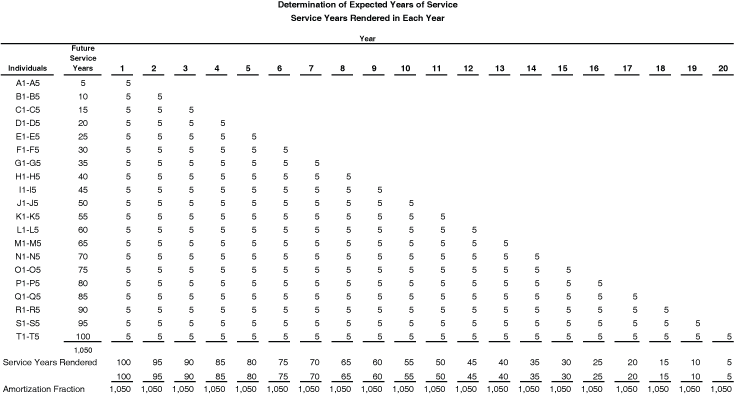 Determination of Expected Years of Service Service Years Rendered in Each Year Year Individuals Future Service Years 1 2 3 4 5 6 7 8 9 10 11 12 13 14 15 16 17 18 19 20 A1-A5 5 5 B1-B5 10 5 5 C1-C5 15 5 5 5 D1-D5 20 5 5 5 5 E1-E5 25 5 5 5 5 5 F1-F5 30 5 5 5 5 5 5 G1-G5 35 5 5 5 5 5 5 5 H1-H5 40 5 5 5 5 5 5 5 5 I1-I5 45 5 5 5 5 5 5 5 5 5 J1-J5 50 5 5 5 5 5 5 5 5 5 5 K1-K5 55 5 5 5 5 5 5 5 5 5 5 5 L1-L5 60 5 5 5 5 5 5 5 5 5 5 5 5 M1-M5 65 5 5 5 5 5 5 5 5 5 5 5 5 5 N1-N5 70 5 5 5 5 5 5 5 5 5 5 5 5 5 5 O1-O5 75 5 5 5 5 5 5 5 5 5 5 5 5 5 5 5 P1-P5 80 5 5 5 5 5 5 5 5 5 5 5 5 5 5 5 5 Q1-Q5 85 5 5 5 5 5 5 5 5 5 5 5 5 5 5 5 5 5 R1-R5 90 5 5 5 5 5 5 5 5 5 5 5 5 5 5 5 5 5 5 S1-S5 95 5 5 5 5 5 5 5 5 5 5 5 5 5 5 5 5 5 5 5 T1-T5 100 5 5 5 5 5 5 5 5 5 5 5 5 5 5 5 5 5 5 5 5 "1,050" Service Years Rendered 100 95 90 85 80 75 70 65 60 55 50 45 40 35 30 25 20 15 10 5 100 95 90 85 80 75 70 65 60 55 50 45 40 35 30 25 20 15 10 5 Amortization Fraction "1,050" "1,050" "1,050" "1,050" "1,050" "1,050" "1,050" "1,050" "1,050" "1,050" "1,050" "1,050" "1,050" "1,050" "1,050" "1,050" "1,050" "1,050" "1,050" "1,050"
-
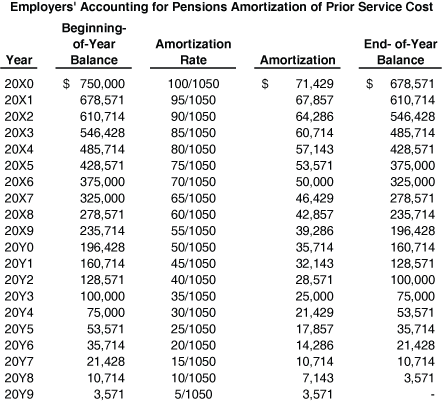 Employers' Accounting for Pensions Amortization of Prior Service Cost Year Beginning- of-Year Balance Amortization Rate Amortization End- of-Year Balance 20X0 " $750,000 " 100/1050 " $71,429 " " $678,571 " 20X1 " 678,571 " 95/1050 " 67,857 " " 610,714 " 20X2 " 610,714 " 90/1050 " 64,286 " " 546,428 " 20X3 " 546,428 " 85/1050 " 60,714 " " 485,714 " 20X4 " 485,714 " 80/1050 " 57,143 " " 428,571 " 20X5 " 428,571 " 75/1050 " 53,571 " " 375,000 " 20X6 " 375,000 " 70/1050 " 50,000 " " 325,000 " 20X7 " 325,000 " 65/1050 " 46,429 " " 278,571 " 20X8 " 278,571 " 60/1050 " 42,857 " " 235,714 " 20X9 " 235,714 " 55/1050 " 39,286 " " 196,428 " 20Y0 " 196,428 " 50/1050 " 35,714 " " 160,714 " 20Y1 " 160,714 " 45/1050 " 32,143 " " 128,571 " 20Y2 " 128,571 " 40/1050 " 28,571 " " 100,000 " 20Y3 " 100,000 " 35/1050 " 25,000 " " 75,000 " 20Y4 " 75,000 " 30/1050 " 21,429 " " 53,571 " 20Y5 " 53,571 " 25/1050 " 17,857 " " 35,714 " 20Y6 " 35,714 " 20/1050 " 14,286 " " 21,428 " 20Y7 " 21,428 " 15/1050 " 10,714 " " 10,714 " 20Y8 " 10,714 " 10/1050 " 7,143 " " 3,571 " 20Y9 " 3,571 " 5/1050 " 3,571 " -
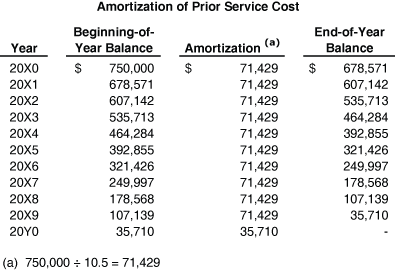 Amortization of Prior Service Cost Year Beginning-of-Year Balance Amortization (a) End-of-Year Balance 20X0 " $750,000 " " $71,429 " " $678,571 " 20X1 " 678,571 " " 71,429 " " 607,142 " 20X2 " 607,142 " " 71,429 " " 535,713 " 20X3 " 535,713 " " 71,429 " " 464,284 " 20X4 " 464,284 " " 71,429 " " 392,855 " 20X5 " 392,855 " " 71,429 " " 321,426 " 20X6 " 321,426 " " 71,429 " " 249,997 " 20X7 " 249,997 " " 71,429 " " 178,568 " 20X8 " 178,568 " " 71,429 " " 107,139 " 20X9 " 107,139 " " 71,429 " " 35,710 " 20Y0 " 35,710 " " 35,710 " - (a) "750,000 ÷ 10.5 = 71,429"
- aLiability loss (Case A)
- bAsset gain (Case B)
- cAsset loss and liability gain (Case C).
-
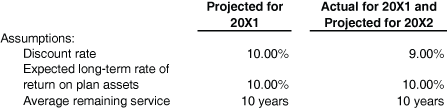 Projected for 20X1 Actual for 20X1 and Projected for 20X2 Assumptions: Discount rate 10.00% 9.00% Expected long-term rate of return on plan assets 10.00% 10.00% Average remaining service 10 years 10 years
 -
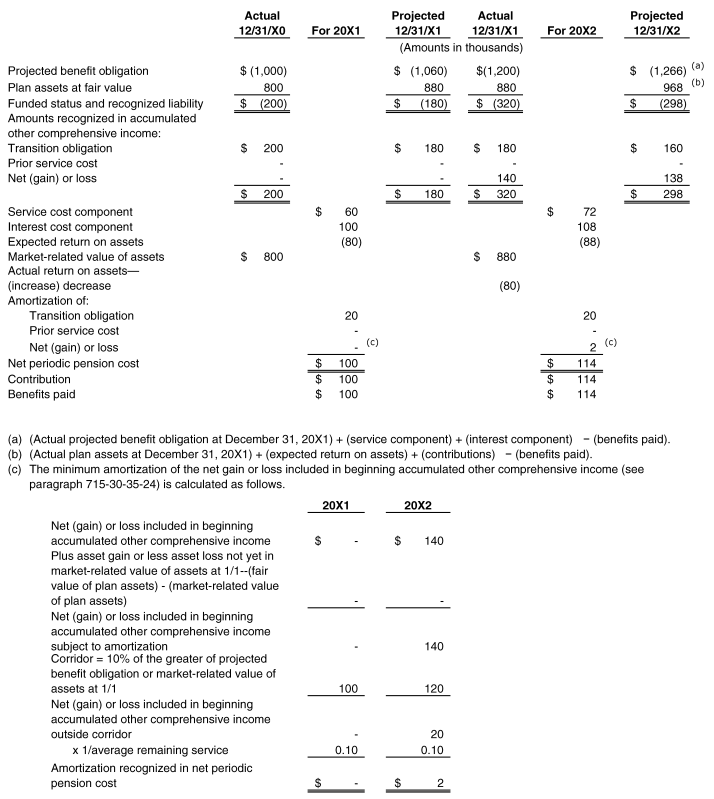 Actual 12/31/X0 For 20X1 Projected 12/31/X1 Actual 12/31/X1 For 20X2 Projected 12/31/X2 (Amounts in thousands) Projected benefit obligation " $(1,000)" " $(1,060)" " $(1,200)" " $(1,266)" (a) Plan assets at fair value 800 880 880 968 (b) Funded status and recognized liability $(200) $(180) $(320) $(298) Amounts recognized in accumulated other comprehensive income: Transition obligation $200 $180 $180 $160 Prior service cost - - - - Net (gain) or loss - - 140 138 $200 $180 $320 $298 Service cost component $60 $72 Interest cost component 100 108 Expected return on assets (80) (88) Market-related value of assets $800 $880 "Actual return on assets— (increase) decrease" (80) Amortization of: Transition obligation 20 20 Prior service cost - - Net (gain) or loss - (c) 2 (c) Net periodic pension cost $100 $114 Contribution $100 $114 Benefits paid $100 $114 (a) "(Actual projected benefit obligation at December 31, 20X1) + (service component) + (interest component) − (benefits paid)." (b) "(Actual plan assets at December 31, 20X1) + (expected return on assets) + (contributions) − (benefits paid)." (c) The minimum amortization of the net gain or loss included in beginning accumulated other comprehensive income (see paragraph 715-30-35-24) is calculated as follows. 20X1 20X2 Net (gain) or loss included in beginning accumulated other comprehensive income $- $140 Plus asset gain or less asset loss not yet in market-related value of assets at 1/1--(fair value of plan assets) - (market-related value of plan assets) - - Net (gain) or loss included in beginning accumulated other comprehensive income subject to amortization - 140 Corridor = 10% of the greater of projected benefit obligation or market-related value of assets at 1/1 100 120 Net (gain) or loss included in beginning accumulated other comprehensive income outside corridor - 20 x 1/average remaining service 0.10 0.10 Amortization recognized in net periodic pension cost $- $2
-
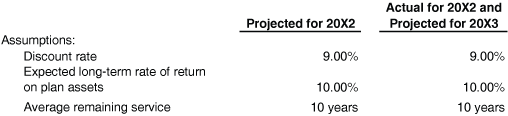 Projected for 20X2 Actual for 20X2 and Projected for 20X3 Assumptions: Discount rate 9.00% 9.00% Expected long-term rate of return on plan assets 10.00% 10.00% Average remaining service 10 years 10 years
 -
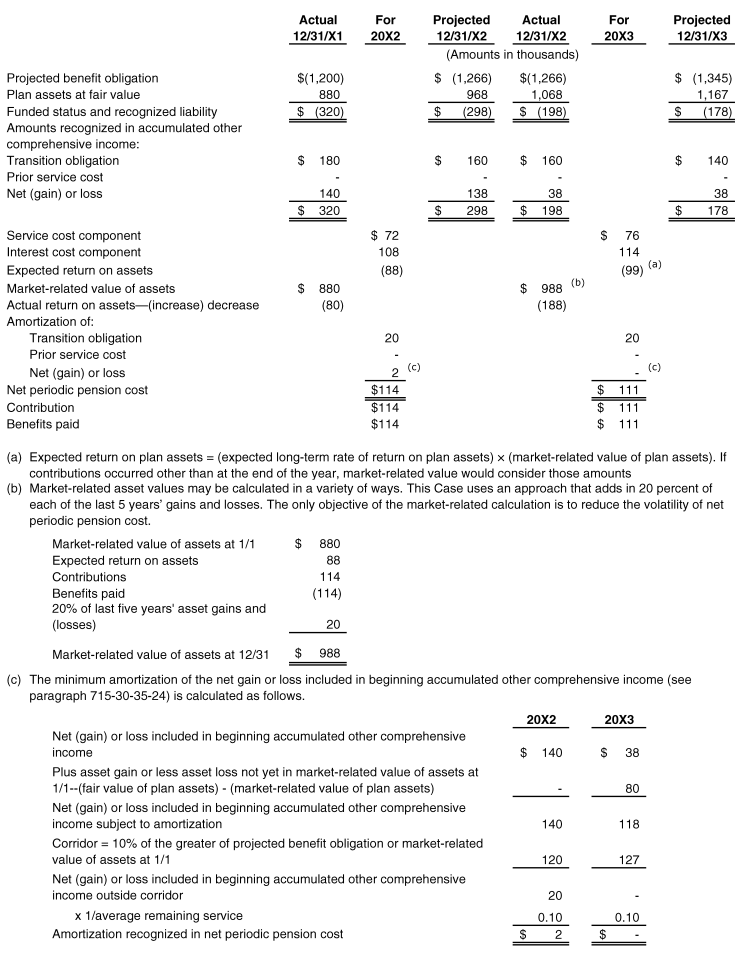 Actual 12/31/X1 For 20X2 Projected 12/31/X2 Actual 12/31/X2 For 20X3 Projected 12/31/X3 (Amounts in thousands) Projected benefit obligation " $(1,200)" " $(1,266)" " $(1,266)" " $(1,345)" Plan assets at fair value 880 968 " 1,068 " " 1,167 " Funded status and recognized liability $(320) $(298) $(198) $(178) Amounts recognized in accumulated other comprehensive income: Transition obligation $180 $160 $160 $140 Prior service cost - - - - Net (gain) or loss 140 138 38 38 $320 $298 $198 $178 Service cost component $72 $76 Interest cost component 108 114 Expected return on assets (88) (99) (a) Market-related value of assets $880 $988 (b) Actual return on assets—(increase) decrease (80) (188) Amortization of: Transition obligation 20 20 Prior service cost - - Net (gain) or loss 2 (c) - (c) Net periodic pension cost $114 $111 Contribution $114 $111 Benefits paid $114 $111 (a) "Expected return on plan assets = (expected long-term rate of return on plan assets) × (market-related value of plan assets). If contributions occurred other than at the end of the year, market-related value would consider those amounts." (b) Market-related asset values may be calculated in a variety of ways. This Case uses an approach that adds in 20 percent of each of the last 5 years' gains and losses. The only objective of the market-related calculation is to reduce the volatility of net periodic pension cost. Market-related value of assets at 1/1 $880 Expected return on assets 88 Contributions 114 Benefits paid (114) 20% of last five years' asset gains and (losses) 20 Market-related value of assets at 12/31 $988 (c) The minimum amortization of the net gain or loss included in beginning accumulated other comprehensive income (see paragraph 715-30-35-24) is calculated as follows. 20X2 20X3 Net (gain) or loss included in beginning accumulated other comprehensive income $140 $38 Plus asset gain or less asset loss not yet in market-related value of assets at 1/1--(fair value of plan assets) - (market-related value of plan assets) - 80 Net (gain) or loss included in beginning accumulated other comprehensive income subject to amortization 140 118 Corridor = 10% of the greater of projected benefit obligation or market-related value of assets at 1/1 120 127 Net (gain) or loss included in beginning accumulated other comprehensive income outside corridor 20 - x 1/average remaining service 0.10 0.10 Amortization recognized in net periodic pension cost $2 $-
-
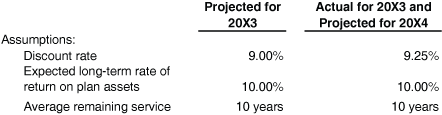 Projected for 20X3 Actual for 20X3 and Projected for 20X4 Assumptions: Discount rate 9.00% 9.25% Expected long-term rate of return on plan assets 10.00% 10.00% Average remaining service 10 years 10 years
 -
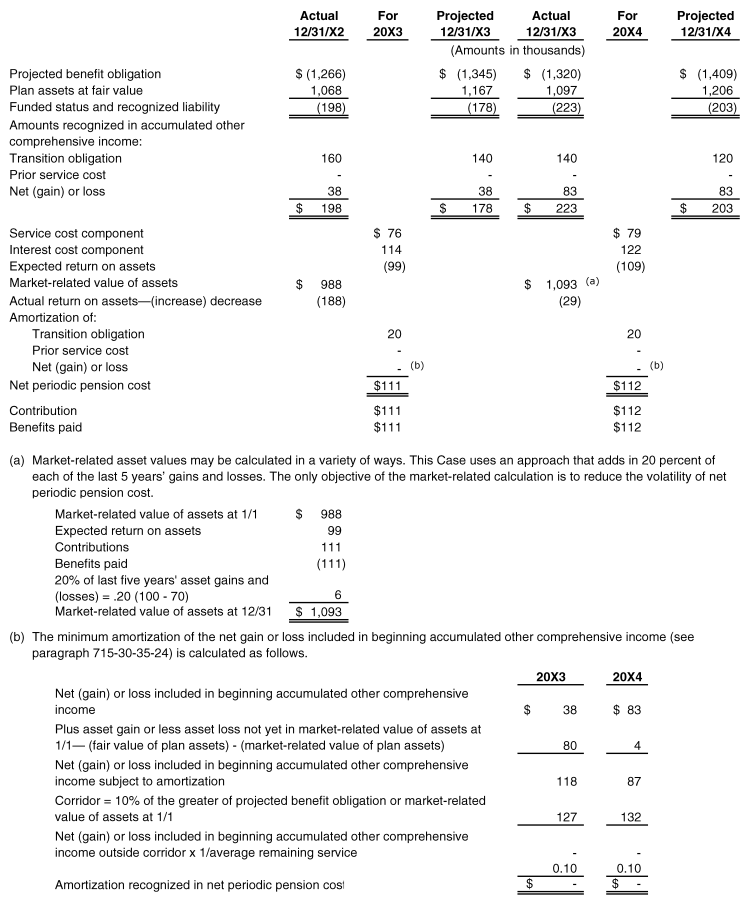 Actual 12/31/X2 For 20X3 Projected 12/31/X3 Actual 12/31/X3 For 20X4 Projected 12/31/X4 (Amounts in thousands) Projected benefit obligation " $(1,266)" " $(1,345)" " $(1,320)" " $(1,409)" Plan assets at fair value " 1,068 " " 1,167 " " 1,097 " " 1,206 " Funded status and recognized liability (198) (178) (223) (203) Amounts recognized in accumulated other comprehensive income: Transition obligation 160 140 140 120 Prior service cost - - - - Net (gain) or loss 38 38 83 83 $198 $178 $223 $203 Service cost component $76 $79 Interest cost component 114 122 Expected return on assets (99) (109) Market-related value of assets $988 " $1,093 " (a) Actual return on assets—(increase) decrease (188) (29) Amortization of: Transition obligation 20 20 Prior service cost - - Net (gain) or loss - (b) - (b) Net periodic pension cost $111 $112 Contribution $111 $112 Benefits paid $111 $112 (a) Market-related asset values may be calculated in a variety of ways. This Case uses an approach that adds in 20 percent of each of the last 5 years' gains and losses. The only objective of the market-related calculation is to reduce the volatility of net periodic pension cost. Market-related value of assets at 1/1 $988 Expected return on assets 99 Contributions 111 Benefits paid (111) 20% of last five years' asset gains and (losses) = .20 (100 - 70) 6 Market-related value of assets at 12/31 " $1,093 " (b) The minimum amortization of the net gain or loss included in beginning accumulated other comprehensive income (see paragraph 715-30-35-24) is calculated as follows. 20X3 20X4 Net (gain) or loss included in beginning accumulated other comprehensive income $38 $83 Plus asset gain or less asset loss not yet in market-related value of assets at 1/1— (fair value of plan assets) - (market-related value of plan assets) 80 4 Net (gain) or loss included in beginning accumulated other comprehensive income subject to amortization 118 87 Corridor = 10% of the greater of projected benefit obligation or market-related value of assets at 1/1 127 132 Net (gain) or loss included in beginning accumulated other comprehensive income outside corridor x 1/average remaining service - - 0.10 0.10 Amortization recognized in net periodic pension cost $- $-
- a30-year assumed service period (Case A)
- b20-year assumed service period (Case B)
- c40-year assumed service period (Case C).
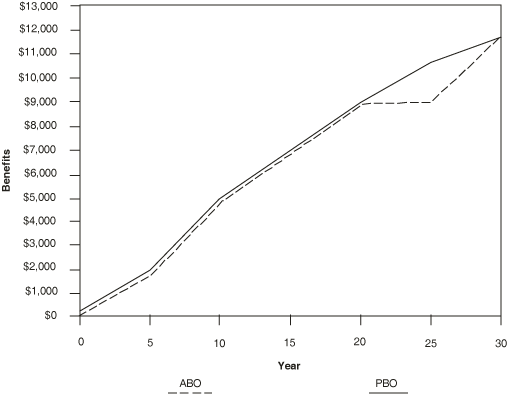
- Chart I
- Attribution
- Formula A versus Formula B
-
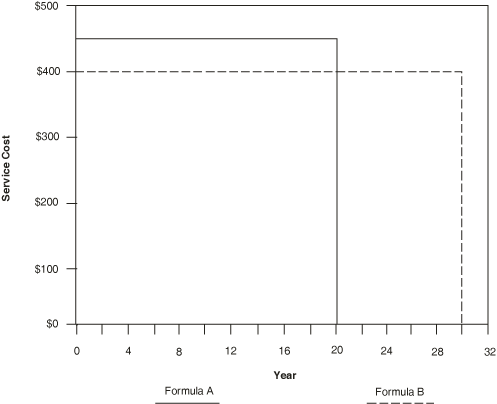
- Chart II
- Accumulated and Projected Benefit Obligation
- Formula A versus Formula B
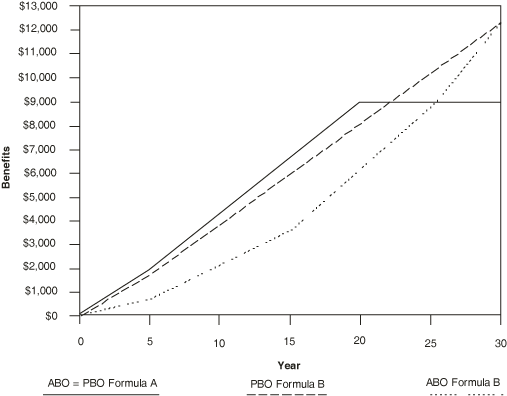
- Chart III
- Attribution of Benefits over Service
-
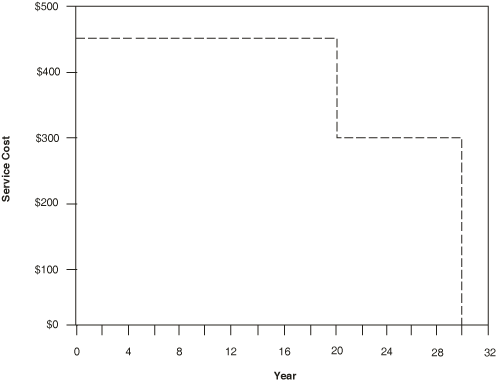
- Chart IV
- Accumulated and Projected Benefit Obligation
- Greater of Benefit under Formulas A and B
-
-
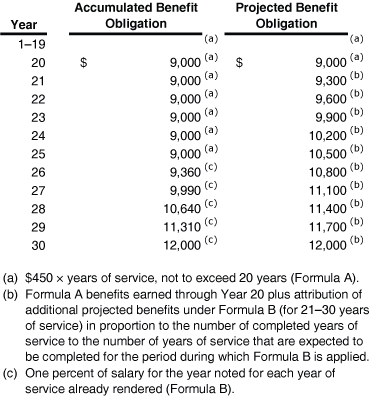 Year Accumulated Benefit Obligation Projected Benefit Obligation 1-19 (a) (a) 20 " $9,000 " (a) " $9,000 " (a) 21 " 9,000 " (a) " 9,300 " (b) 22 " 9,000 " (a) " 9,600 " (b) 23 " 9,000 " (a) " 9,900 " (b) 24 " 9,000 " (a) " 10,200 " (b) 25 " 9,000 " (a) " 10,500 " (b) 26 " 9,360 " (c) " 10,800 " (b) 27 " 9,990 " (c) " 11,100 " (b) 28 " 10,640 " (c) " 11,400 " (b) 29 " 11,310 " (c) " 11,700 " (b) 30 " 12,000 " (c) " 12,000 " (b) (a) "$450 × years of service, not to exceed 20 years (Formula A)." (b) Formula A benefits earned through Year 20 plus attribution of additional projected benefits under Formula B (for 21-30 years of service) in proportion to the number of completed years of service to the number of years of service that are expected to be completed for the period during which Formula B is applied. (c) One percent of salary for the year noted for each year of service already rendered (Formula B).
-
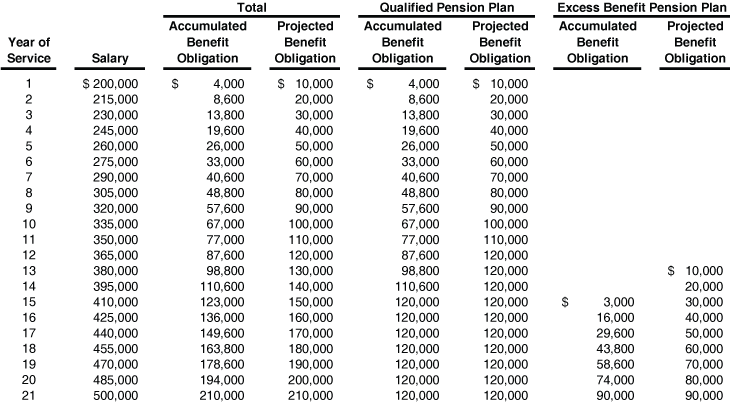 Total Qualified Pension Plan Excess Benefit Pension Plan Year of Service Salary Accumulated Benefit Obligation Projected Benefit Obligation Accumulated Benefit Obligation Projected Benefit Obligation Accumulated Benefit Obligation Projected Benefit Obligation 1 " $200,000 " " $4,000 " " $10,000 " " $4,000 " " $10,000 " 2 " 215,000 " " 8,600 " " 20,000 " " 8,600 " " 20,000 " 3 " 230,000 " " 13,800 " " 30,000 " " 13,800 " " 30,000 " 4 " 245,000 " " 19,600 " " 40,000 " " 19,600 " " 40,000 " 5 " 260,000 " " 26,000 " " 50,000 " " 26,000 " " 50,000 " 6 " 275,000 " " 33,000 " " 60,000 " " 33,000 " " 60,000 " 7 " 290,000 " " 40,600 " " 70,000 " " 40,600 " " 70,000 " 8 " 305,000 " " 48,800 " " 80,000 " " 48,800 " " 80,000 " 9 " 320,000 " " 57,600 " " 90,000 " " 57,600 " " 90,000 " 10 " 335,000 " " 67,000 " " 100,000 " " 67,000 " " 100,000 " 11 " 350,000 " " 77,000 " " 110,000 " " 77,000 " " 110,000 " 12 " 365,000 " " 87,600 " " 120,000 " " 87,600 " " 120,000 " 13 " 380,000 " " 98,800 " " 130,000 " " 98,800 " " 120,000 " " $10,000 " 14 " 395,000 " " 110,600 " " 140,000 " " 110,600 " " 120,000 " " 20,000 " 15 " 410,000 " " 123,000 " " 150,000 " " 120,000 " " 120,000 " " $3,000 " " 30,000 " 16 " 425,000 " " 136,000 " " 160,000 " " 120,000 " " 120,000 " " 16,000 " " 40,000 " 17 " 440,000 " " 149,600 " " 170,000 " " 120,000 " " 120,000 " " 29,600 " " 50,000 " 18 " 455,000 " " 163,800 " " 180,000 " " 120,000 " " 120,000 " " 43,800 " " 60,000 " 19 " 470,000 " " 178,600 " " 190,000 " " 120,000 " " 120,000 " " 58,600 " " 70,000 " 20 " 485,000 " " 194,000 " " 200,000 " " 120,000 " " 120,000 " " 74,000 " " 80,000 " 21 " 500,000 " " 210,000 " " 210,000 " " 120,000 " " 120,000 " " 90,000 " " 90,000 "
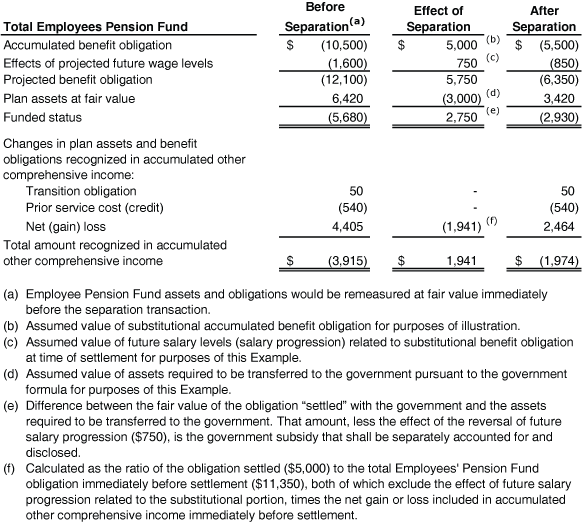 Total Employees Pension Fund Before Separation(a) Effect of Separation After Separation Accumulated benefit obligation " $(10,500)" " $5,000 " (b) " $(5,500)" Effects of projected future wage levels " (1,600)" 750 (c) (850) Projected benefit obligation " (12,100)" " 5,750 " " (6,350)" Plan assets at fair value " 6,420 " " (3,000)" (d) " 3,420 " Funded status " (5,680)" " 2,750 " (e) " (2,930)" Changes in plan assets and benefit obligations recognized in accumulated other comprehensive income: Transition obligation 50 - 50 Prior service cost (credit) (540) - (540) Net (gain) loss " 4,405 " " (1,941)" (f) " 2,464 " Total amount recognized in accumulated other comprehensive income " $(3,915)" " $1,941 " " $(1,974)" (a) Employee Pension Fund assets and obligations would be remeasured at fair value immediately before the separation transaction. (b) Assumed value of substitutional accumulated benefit obligation for purposes of illustration. (c) Assumed value of future salary levels (salary progression) related to substitutional benefit obligation at time of settlement for purposes of this Example. (d) Assumed value of assets required to be transferred to the government pursuant to the government formula for purposes of this Example. (e) "Difference between the fair value of the obligation "settled" with the government and the assets required to be transferred to the government. That amount, less the effect of the reversal of future salary progression ($750), is the government subsidy that shall be separately accounted for and disclosed." (f) "Calculated as the ratio of the obligation settled ($5,000) to the total Employees' Pension Fund obligation immediately before settlement ($11,350), both of which exclude the effect of future salary progression related to the substitutional portion, times the net gain or loss included in accumulated other comprehensive income immediately before settlement."
- December 31, 20X0—Before Combination of Plan A and Plan B
-
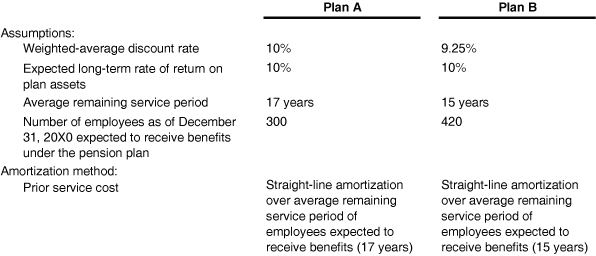 Plan A Plan B Assumptions: Weighted-average discount rate 10% 9.25% Expected long-term rate of return on plan assets 10% 10% Average remaining service period 17 years 15 years "Number of employees as of December 31, 20X0 expected to receive benefits under the pension plan" 300 420 Amortization method: Prior service cost Straight-line amortization over average remaining service period of employees expected to receive benefits (17 years) Straight-line amortization over average remaining service period of employees expected to receive benefits (15 years)
 -
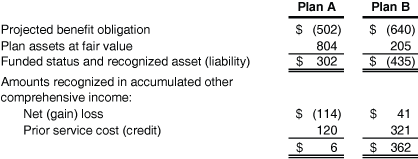 Plan A Plan B Projected benefit obligation $(502) $(640) Plan assets at fair value 804 205 Funded status and recognized asset (liability) $302 $(435) Amounts recognized in accumulated other comprehensive income: Net (gain) loss $(114) $41 Prior service cost (credit) 120 321 $6 $362
 - December 31, 20X0—After Combination of Plan A and Plan B
-
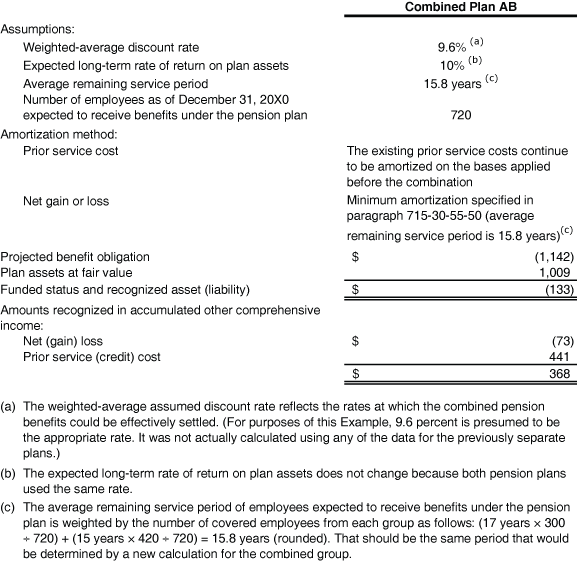 Combined Plan AB Assumptions: Weighted-average discount rate 9.6% (a) Expected long-term rate of return on plan assets 10% (b) Average remaining service period 15.8 years (c) "Number of employees as of December 31, 20X0 expected to receive benefits under the pension plan" 720 Amortization method: Prior service cost The existing prior service costs continue to be amortized on the bases applied before the combination Net gain or loss Minimum amortization specified in paragraph 715-30-55-50 (average remaining service period is 15.8 years)(c) Projected benefit obligation " $(1,142)" Plan assets at fair value " 1,009 " Funded status and recognized asset (liability) $(133) Amounts recognized in accumulated other comprehensive income: Net (gain) loss $(73) Prior service (credit) cost 441 $368 (a) "The weighted-average assumed discount rate reflects the rates at which the combined pension benefits could be effectively settled. (For purposes of this Example, 9.6 percent is presumed to be the appropriate rate. It was not actually calculated using any of the data for the previously separate plans.)" (b) The expected long-term rate of return on plan assets does not change because both pension plans used the same rate. (c) The average remaining service period of employees expected to receive benefits under the pension plan is weighted by the number of covered employees from each group as follows: (17 years × 300 ÷ 720) + (15 years × 420 ÷ 720) = 15.8 years (rounded). That should be the same period that would be determined by a new calculation for the combined group.
-
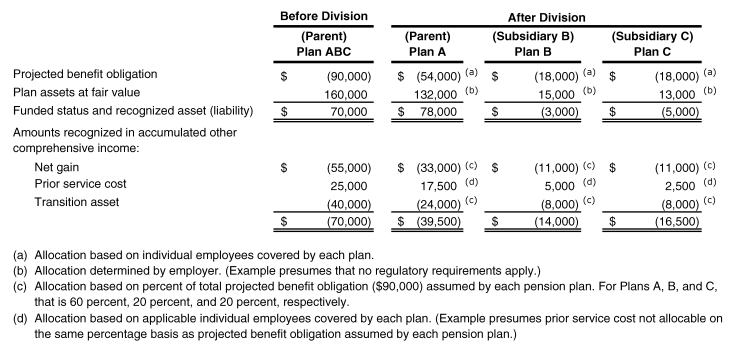 Before Division After Division "(Parent) Plan ABC" (Parent) Plan A (Subsidiary B) Plan B (Subsidiary C) Plan C Projected benefit obligation " $(90,000)" " $(54,000)" (a) " $(18,000)" (a) " $(18,000)" (a) Plan assets at fair value " 160,000 " " 132,000 " (b) " 15,000 " (b) " 13,000 " (b) Funded status and recognized asset (liability) " $70,000 " " $78,000 " " $(3,000)" " $(5,000)" Amounts recognized in accumulated other comprehensive income: Net gain " $(55,000)" " $(33,000)" (c) " $(11,000)" (c) " $(11,000)" (c) Prior service cost " 25,000 " " 17,500 " (d) " 5,000 " (d) " 2,500 " (d) Transition asset " (40,000)" " (24,000)" (c) " (8,000)" (c) " (8,000)" (c) " $(70,000)" " $(39,500)" " $(14,000)" " $(16,500)" (a) Allocation based on individual employees covered by each plan. (b) Allocation determined by employer. (Example presumes that no regulatory requirements apply.) (c) "Allocation based on percent of total projected benefit obligation ($90,000) assumed by each pension plan. For Plans A, B, and C, that is 60 percent, 20 percent, and 20 percent, respectively." (d) Allocation based on applicable individual employees covered by each plan. (Example presumes prior service cost not allocable on the same percentage basis as projected benefit obligation assumed by each pension plan.)
- Parent Entity
-
 Pension asset " $8,000 " Accumulated other comprehensive income " 30,500 " Investment in Subsidiary B " $17,000 " Investment in Subsidiary C " 21,500 "
 - To record the transfer of pension assets, obligations, and amounts included in accumulated other comprehensive income from the parent entity to Subsidiaries B and C.
- Subsidiary B
-
 Stockholder's equity (a) " $17,000 " Pension liability " $3,000 " Accumulated other comprehensive income " 14,000 " (a) The accounting within the equity section is not addressed in this Example.
 - To record the receipt of pension assets, obligations, and amounts included in accumulated other comprehensive income from the parent entity.
- Subsidiary C
-
 Stockholder's equity (a) " $21,500 " Pension liability " $5,000 " Accumulated other comprehensive income " 16,500 " (a) The accounting within the equity section is not addressed in this Example.
 - To record the receipt of pension assets, obligations, and amounts included in accumulated other comprehensive income from the parent entity.
- a A defined principal-crediting rate as a percentage of salary
- b A defined, noncontingent interest-crediting rate that entitles participants to future interest credits at a stated, fixed rate until retirement.
Settlements, Curtailments, and Certain Termination Benefits
Implementation Guidance
- aRelationship of settlements and curtailments to other events
- bSettlements
- cCurtailments
- dCertain termination benefits
- ePresentation matters.
- aThe new plan's pension benefit formula or the amendment or amendments to the existing pension plan(s) provide for accrual of only insignificant defined pension benefits for those employees.
- bThe new or existing pension plan or plans cover only an insignificant number of employees previously covered by the old plan.
- aMeeting the criteria for settlement
- bSettlement measurement issues
- cApplication of accounting policy.
- a The employer decides to terminate a pension plan and establish a successor pension plan.
- b A nonparticipating annuity contract for the vested benefits of all plan participants is purchased but can be rescinded if certain regulatory approvals for the termination of the pension plan are not obtained.
- c It is determined that the regulatory approvals are probable.
- a An employer (or the pension plan) irrevocably purchases an insurance contract that guarantees payment of those pension benefits vested as of the date of the purchase.
- b The purchase price of the insurance contract significantly exceeds the purchase price of a nonparticipating annuity contract covering the same pension benefits.
- c The insurance entity receives an annual fee based on a percentage of the actuarial present value of the covered pension benefits to compensate it for the risk of guaranteeing those pension benefits.
- d If a specified ratio of assets to the covered pension benefit obligation is maintained, the employer (or the pension plan) continues to manage the assets used to effect the purchase; however, the insurance contract requires that a certain percentage of the assets be invested in high-quality bonds or a dedicated bond portfolio, depending on the ratio of assets to the covered pension benefit obligation.
- e Upon final satisfaction of all of the pension benefit obligation covered by the insurance contract and payment of all of the contract's administrative fees due to the insurance entity, the insurance entity will remit to the employer (or the pension plan) any amounts remaining in the insurance contract's account balance. Interim withdrawals from the account by the employer (or the pension plan) are also permitted with prior notification to the insurance entity unless a withdrawal causes the ratio of assets to the covered pension benefit obligation to drop below a specified percentage.
- aInitially to the transition asset remaining in accumulated other comprehensive income
- bInitially to the net gain included in accumulated other comprehensive income
- cOn a pro rata basis to the transition asset remaining in accumulated other comprehensive income and the net gain included in accumulated other comprehensive income.
- a It is estimated at the beginning of the year that the cost of all settlements during the year will not exceed the threshold amount described.
- b A pension benefit obligation is settled during the first quarter and a settlement gain or loss is not recognized.
- c In the second quarter and after the issuance of the first quarter's interim report, it is determined that the cost of all settlements during the year will exceed the threshold amount.
- aMeeting the criteria for curtailment
- bCurtailment measurement issues.
- a The employer temporarily lays off a significant number of present employees covered by a pension plan.
- b The employer temporarily suspends a pension plan so that employees covered by the pension plan do not earn additional pension benefits for some or all of their future services.
- a A successor pension plan that covers only half of the employees previously covered by the terminated pension plan. The reference to half of the employees in this example is for illustrative purposes only and is not intended to be indicative of the minimum coverage necessary to qualify a pension plan as a successor pension plan. See paragraph 715-30-55-130.
- b A successor pension plan that does not provide for the accrual of additional defined pension benefits for certain years of future services. To illustrate this situation, assume a pension plan provides a flat benefit of $1,500 per year of service. At the end of 20X0, the employer terminates that pension plan and establishes a successor pension plan that provides a flat benefit of $1,000 per year for all years of service, including service under the terminated pension plan. Pension benefits earned under the successor pension plan are reduced by the pension benefits earned under the terminated pension plan. At the end of 20X0, Employee A with 5 years of service has an accumulated pension benefit of $7,500 per year under the terminated pension plan ($1,500 x 5 years of service). For years 20X1, 20X2, and the first half of 20X3, Employee A will accrue no additional pension benefits. The accrual of additional pension benefits will commence in the second half of 20X3. If a significant number of employees will not accrue additional pension benefits for some or all of their future services (as is the situation for Employee A), a curtailment occurs.
- a Initially against the transition asset remaining in accumulated other comprehensive income
- b Initially against the net gain included in accumulated other comprehensive income
- c Against both on a pro rata basis.
- a A pension plan termination resulting in recognition in earnings of all net pension amounts included in accumulated other comprehensive income
- b A contribution of assets to a defined contribution pension plan resulting in recognition of net periodic pension cost equal to the amount contributed and allocated.
Illustrations
-
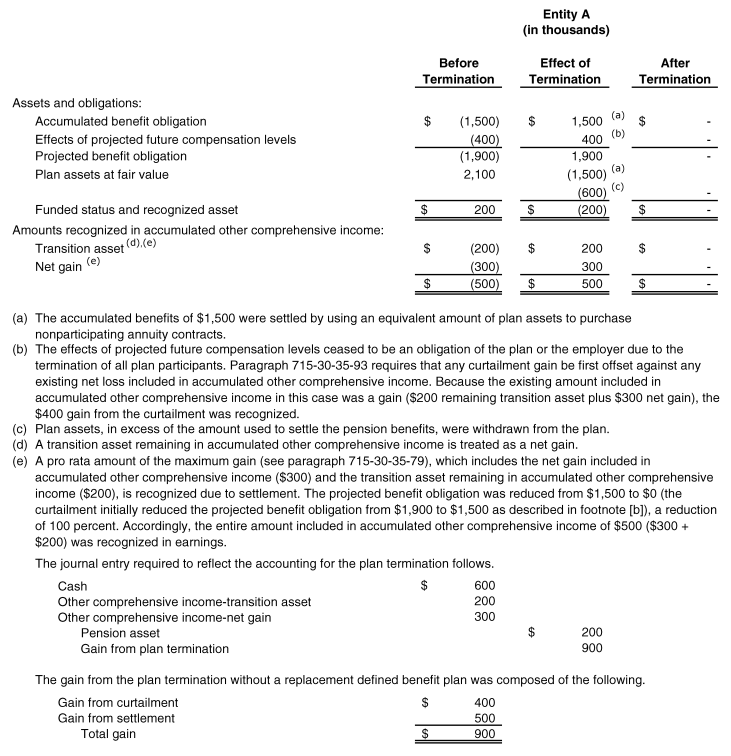 Entity A (in thousands) Before Termination Effect of Termination After Termination Assets and obligations: Accumulated benefit obligation " $(1,500)" " $1,500 " (a) $- Effects of projected future compensation levels (400) 400 (b) - Projected benefit obligation " (1,900)" " 1,900 " - Plan assets at fair value " 2,100 " " (1,500)" (a) (600) (c) - Funded status and recognized asset $200 $(200) $- Amounts recognized in accumulated other comprehensive income: "Transition asset (d),(e)" $(200) $200 $- Net gain (e) (300) 300 - $(500) $500 $- (a) "The accumulated benefits of $1,500 were settled by using an equivalent amount of plan assets to purchase nonparticipating annuity contracts." (b) "The effects of projected future compensation levels ceased to be an obligation of the plan or the employer due to the termination of all plan participants. Paragraph 715-30-35-93 requires that any curtailment gain be first offset against any existing net loss included in accumulated other comprehensive income. Because the existing amount included in accumulated other comprehensive income in this case was a gain ($200 remaining transition asset plus $300 net gain), the $400 gain from the curtailment was recognized." (c) "Plan assets, in excess of the amount used to settle the pension benefits, were withdrawn from the plan." (d) A transition asset remaining in accumulated other comprehensive income is treated as a net gain. (e) "A pro rata amount of the maximum gain (see paragraph 715-30-35-79), which includes the net gain included in accumulated other comprehensive income ($300) and the transition asset remaining in accumulated other comprehensive income ($200), is recognized due to settlement. The projected benefit obligation was reduced from $1,500 to $0 (the curtailment initially reduced the projected benefit obligation from $1,900 to $1,500 as described in footnote [b]), a reduction of 100 percent. Accordingly, the entire amount included in accumulated other comprehensive income of $500 ($300 + $200) was recognized in earnings." The journal entry required to reflect the accounting for the plan termination follows. Cash $600 Other comprehensive income-transition asset 200 Other comprehensive income-net gain 300 Pension asset $200 Gain from plan termination 900 The gain from the plan termination without a replacement defined benefit plan was composed of the following. Gain from curtailment $400 Gain from settlement 500 Total gain $900
- aThe projected benefit obligation exceeds plan assets (Case A).
- bPlan assets exceed the projected benefit obligation (Case B).
- cPlan assets exceed the projected benefit obligation and a participating annuity contract is purchased to settle benefits (Case C).
-
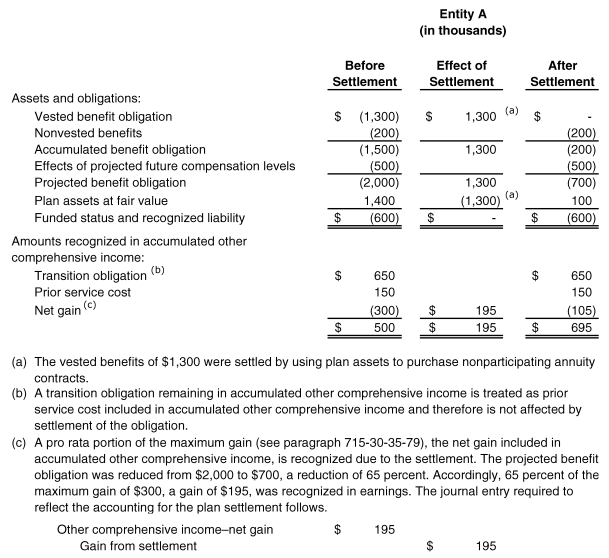 Entity A (in thousands) Before Settlement Effect of Settlement After Settlement Assets and obligations: Vested benefit obligation " $(1,300)" " $1,300 " (a) $- Nonvested benefits (200) (200) Accumulated benefit obligation " (1,500)" " 1,300 " (200) Effects of projected future compensation levels (500) (500) Projected benefit obligation " (2,000)" " 1,300 " (700) Plan assets at fair value " 1,400 " " (1,300)" (a) 100 Funded status and recognized liability $(600) $- $(600) Amounts recognized in accumulated other comprehensive income: Transition obligation (b) $650 $650 Prior service cost 150 150 Net gain (c) (300) $195 (105) $500 $195 $695 (a) "The vested benefits of $1,300 were settled by using plan assets to purchase nonparticipating annuity contracts." (b) A transition obligation remaining in accumulated other comprehensive income is treated as prior service cost included in accumulated other comprehensive income and therefore is not affected by settlement of the obligation. (c) "A pro rata portion of the maximum gain (see paragraph 715-30-35-79), the net gain included in accumulated other comprehensive income, is recognized due to the settlement. The projected benefit obligation was reduced from $2,000 to $700, a reduction of 65 percent. Accordingly, 65 percent of the maximum gain of $300, a gain of $195, was recognized in earnings. The journal entry required to reflect the accounting for the plan settlement follows." Other comprehensive income-net gain $195 Gain from settlement $195
-
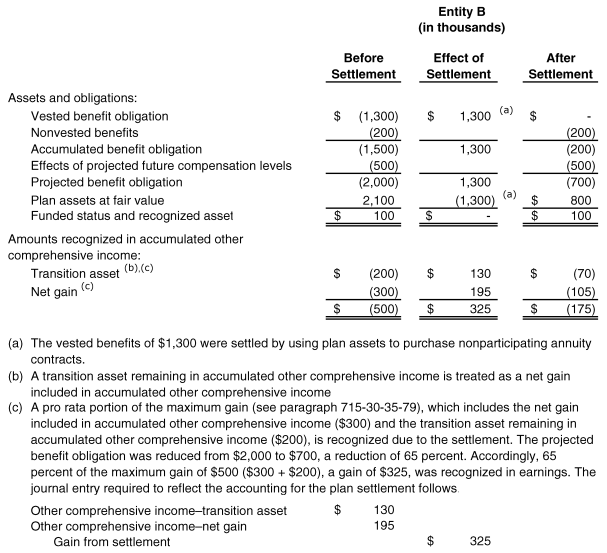 Entity B (in thousands) Before Settlement Effect of Settlement After Settlement Assets and obligations: Vested benefit obligation " $(1,300)" " $1,300 " (a) $- Nonvested benefits (200) (200) Accumulated benefit obligation " (1,500)" " 1,300 " (200) Effects of projected future compensation levels (500) (500) Projected benefit obligation " (2,000)" " 1,300 " (700) Plan assets at fair value " 2,100 " " (1,300)" (a) $800 Funded status and recognized asset $100 $- $100 Amounts recognized in accumulated other comprehensive income: "Transition asset (b),(c)" $(200) $130 $(70) Net gain (c) (300) 195 (105) $(500) $325 $(175) (a) "The vested benefits of $1,300 were settled by using plan assets to purchase nonparticipating annuity contracts." (b) A transition asset remaining in accumulated other comprehensive income is treated as a net gain included in accumulated other comprehensive income. (c) "A pro rata portion of the maximum gain (see paragraph 715-30-35-79), which includes the net gain included in accumulated other comprehensive income ($300) and the transition asset remaining in accumulated other comprehensive income ($200), is recognized due to the settlement. The projected benefit obligation was reduced from $2,000 to $700, a reduction of 65 percent. Accordingly, 65 percent of the maximum gain of $500 ($300 + $200), a gain of $325, was recognized in earnings. The journal entry required to reflect the accounting for the plan settlement follows." Other comprehensive income-transition asset $130 Other comprehensive income-net gain 195 Gain from settlement $325
-
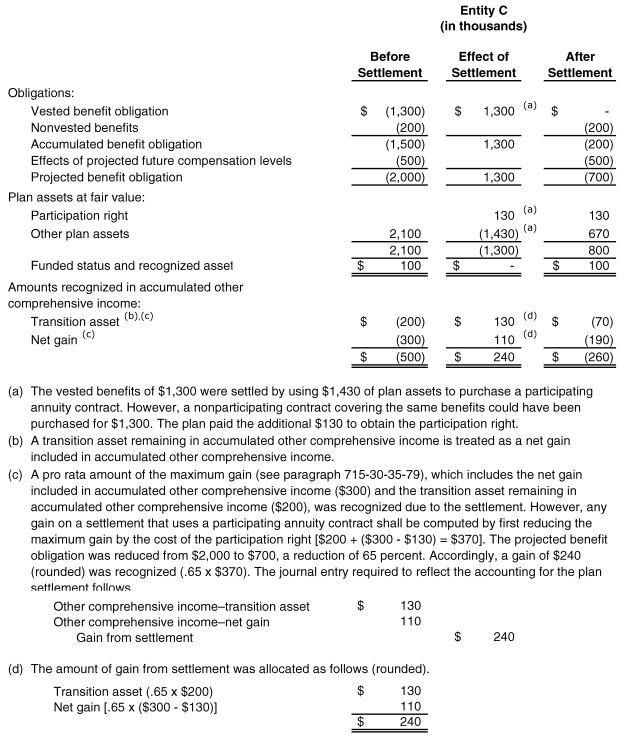 Entity C (in thousands) Before Settlement Effect of Settlement After Settlement Obligations: Vested benefit obligation " $(1,300)" " $1,300 " (a) $- Nonvested benefits (200) (200) Accumulated benefit obligation " (1,500)" " 1,300 " (200) Effects of projected future compensation levels (500) (500) Projected benefit obligation " (2,000)" " 1,300 " (700) Plan assets at fair value: Participation right 130 (a) 130 Other plan assets " 2,100 " " (1,430)" (a) 670 " 2,100 " " (1,300)" 800 Funded status and recognized asset $100 $- $100 "Amounts recognized in accumulated other comprehensive income:" "Transition asset (b),(c)" $(200) $130 (d) $(70) Net gain (c) (300) 110 (d) (190) $(500) $240 $(260) (a) "The vested benefits of $1,300 were settled by using $1,430 of plan assets to purchase a participating annuity contract. However, a nonparticipating contract covering the same benefits could have been purchased for $1,300. The plan paid the additional $130 to obtain the participation right." (b) A transition asset remaining in accumulated other comprehensive income is treated as a net gain included in accumulated other comprehensive income. (c) "A pro rata amount of the maximum gain (see paragraph 715-30-35-79), which includes the net gain included in accumulated other comprehensive income ($300) and the transition asset remaining in accumulated other comprehensive income ($200), was recognized due to the settlement. However, any gain on a settlement that uses a participating annuity contract shall be computed by first reducing the maximum gain by the cost of the participation right [$200 + ($300 - $130) = $370]. The projected benefit obligation was reduced from $2,000 to $700, a reduction of 65 percent. Accordingly, a gain of $240 (rounded) was recognized (.65 x $370). The journal entry required to reflect the accounting for the plan settlement follows." Other comprehensive income-transition asset $130 Other comprehensive income-net gain 110 Gain from settlement $240 (d) The amount of gain from settlement was allocated as follows (rounded). Transition asset (.65 x $200) $130 Net gain [.65 x ($300 - $130)] 110 $240
-
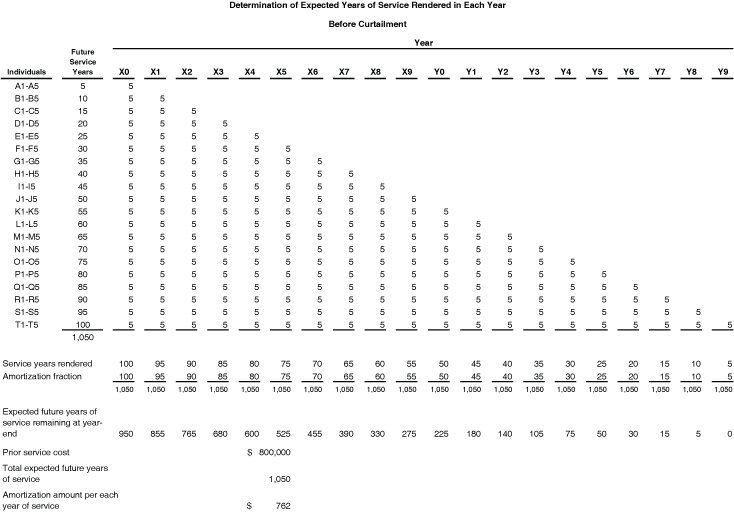 Determination of Expected Years of Service Rendered in Each Year Before Curtailment Year Individuals Future Service Years X0 X1 X2 X3 X4 X5 X6 X7 X8 X9 Y0 Y1 Y2 Y3 Y4 Y5 Y6 Y7 Y8 Y9 A1-A5 5 5 B1-B5 10 5 5 C1-C5 15 5 5 5 D1-D5 20 5 5 5 5 E1-E5 25 5 5 5 5 5 F1-F5 30 5 5 5 5 5 5 G1-G5 35 5 5 5 5 5 5 5 H1-H5 40 5 5 5 5 5 5 5 5 I1-I5 45 5 5 5 5 5 5 5 5 5 J1-J5 50 5 5 5 5 5 5 5 5 5 5 K1-K5 55 5 5 5 5 5 5 5 5 5 5 5 L1-L5 60 5 5 5 5 5 5 5 5 5 5 5 5 M1-M5 65 5 5 5 5 5 5 5 5 5 5 5 5 5 N1-N5 70 5 5 5 5 5 5 5 5 5 5 5 5 5 5 O1-O5 75 5 5 5 5 5 5 5 5 5 5 5 5 5 5 5 P1-P5 80 5 5 5 5 5 5 5 5 5 5 5 5 5 5 5 5 Q1-Q5 85 5 5 5 5 5 5 5 5 5 5 5 5 5 5 5 5 5 R1-R5 90 5 5 5 5 5 5 5 5 5 5 5 5 5 5 5 5 5 5 S1-S5 95 5 5 5 5 5 5 5 5 5 5 5 5 5 5 5 5 5 5 5 T1-T5 100 5 5 5 5 5 5 5 5 5 5 5 5 5 5 5 5 5 5 5 5 "1,050" Service years rendered 100 95 90 85 80 75 70 65 60 55 50 45 40 35 30 25 20 15 10 5 Amortization fraction 100 95 90 85 80 75 70 65 60 55 50 45 40 35 30 25 20 15 10 5 "1,050" "1,050" "1,050" "1,050" "1,050" "1,050" "1,050" "1,050" "1,050" "1,050" "1,050" "1,050" "1,050" "1,050" "1,050" "1,050" "1,050" "1,050" "1,050" "1,050" Expected future years of service remaining at year-end 950 855 765 680 600 525 455 390 330 275 225 180 140 105 75 50 30 15 5 0 Prior service cost " $800,000 " Total expected future years of service " 1,050 " Amortization amount per each year of service $762
-
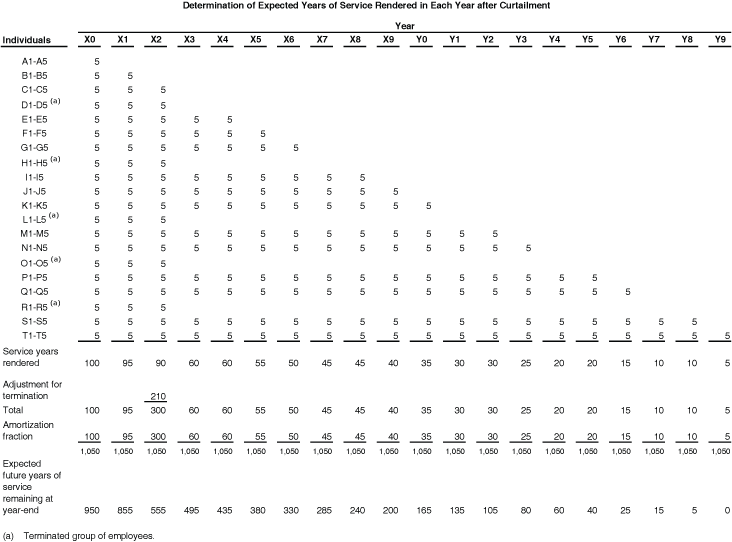 Determination of Expected Years of Service Rendered in Each Year after Curtailment Year Individuals X0 X1 X2 X3 X4 X5 X6 X7 X8 X9 Y0 Y1 Y2 Y3 Y4 Y5 Y6 Y7 Y8 Y9 A1-A5 5 B1-B5 5 5 C1-C5 5 5 5 D1-D5 (a) 5 5 5 E1-E5 5 5 5 5 5 F1-F5 5 5 5 5 5 5 G1-G5 5 5 5 5 5 5 5 H1-H5 (a) 5 5 5 I1-I5 5 5 5 5 5 5 5 5 5 J1-J5 5 5 5 5 5 5 5 5 5 5 K1-K5 5 5 5 5 5 5 5 5 5 5 5 L1-L5 (a) 5 5 5 M1-M5 5 5 5 5 5 5 5 5 5 5 5 5 5 N1-N5 5 5 5 5 5 5 5 5 5 5 5 5 5 5 O1-O5 (a) 5 5 5 P1-P5 5 5 5 5 5 5 5 5 5 5 5 5 5 5 5 5 Q1-Q5 5 5 5 5 5 5 5 5 5 5 5 5 5 5 5 5 5 R1-R5 (a) 5 5 5 S1-S5 5 5 5 5 5 5 5 5 5 5 5 5 5 5 5 5 5 5 5 T1-T5 5 5 5 5 5 5 5 5 5 5 5 5 5 5 5 5 5 5 5 5 Service years rendered 100 95 90 60 60 55 50 45 45 40 35 30 30 25 20 20 15 10 10 5 Adjustment for termination 210 Total 100 95 300 60 60 55 50 45 45 40 35 30 30 25 20 20 15 10 10 5 Amortization fraction 100 95 300 60 60 55 50 45 45 40 35 30 30 25 20 20 15 10 10 5 "1,050" "1,050" "1,050" "1,050" "1,050" "1,050" "1,050" "1,050" "1,050" "1,050" "1,050" "1,050" "1,050" "1,050" "1,050" "1,050" "1,050" "1,050" "1,050" "1,050" Expected future years of service remaining at year-end 950 855 555 495 435 380 330 285 240 200 165 135 105 80 60 40 25 15 5 0 (a) Terminated group of employees.
- aTransition asset remaining in accumulated other comprehensive income is less than net loss included in accumulated other comprehensive income (Case A).
- bTransition asset remaining in accumulated other comprehensive income exceeds net loss included in accumulated other comprehensive income (Case B).
-
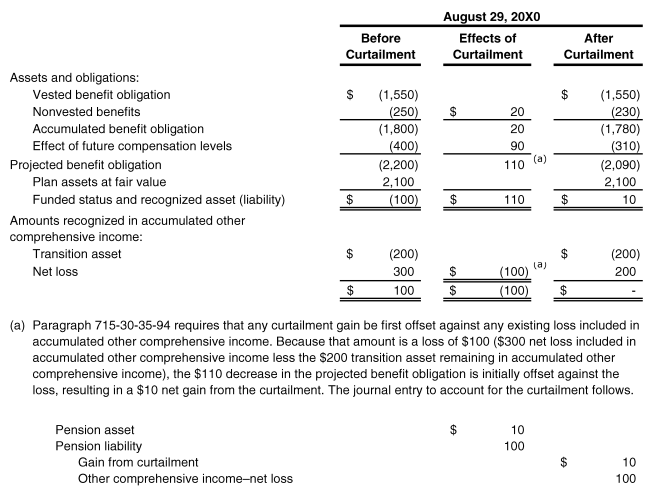 "August 29, 20X0" Before Curtailment Effects of Curtailment After Curtailment Assets and obligations: Vested benefit obligation " $(1,550)" " $(1,550)" Nonvested benefits (250) $20 (230) Accumulated benefit obligation " (1,800)" 20 " (1,780)" Effect of future compensation levels (400) 90 (310) Projected benefit obligation " (2,200)" 110 (a) " (2,090)" Plan assets at fair value " 2,100 " " 2,100 " Funded status and recognized asset (liability) $(100) $110 $10 Amounts recognized in accumulated other comprehensive income: Transition asset $(200) $(200) Net loss 300 $(100) (a) 200 $100 $(100) $- (a) "Paragraph 715-30-35-94 requires that any curtailment gain be first offset against any existing loss included in accumulated other comprehensive income. Because that amount is a loss of $100 ($300 net loss included in accumulated other comprehensive income less the $200 transition asset remaining in accumulated other comprehensive income), the $110 decrease in the projected benefit obligation is initially offset against the loss, resulting in a $10 net gain from the curtailment. The journal entry to account for the curtailment follows." Pension asset $10 Pension liability 100 Gain from curtailment $10 Other comprehensive income-net loss 100
-
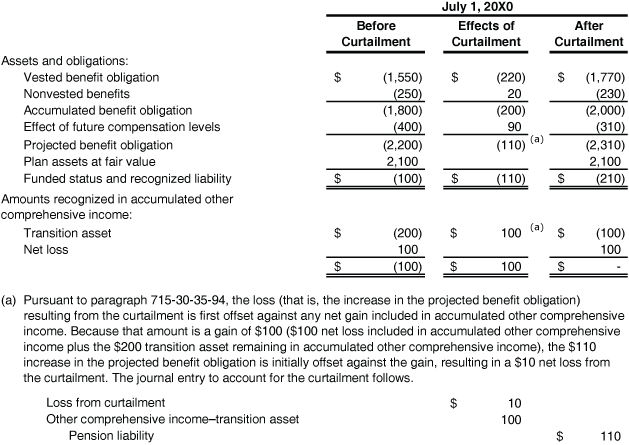 "July 1, 20X0" Before Curtailment Effects of Curtailment After Curtailment Assets and obligations: Vested benefit obligation " $(1,550)" $(220) " $(1,770)" Nonvested benefits (250) 20 (230) Accumulated benefit obligation " (1,800)" (200) " (2,000)" Effect of future compensation levels (400) 90 (310) Projected benefit obligation " (2,200)" (110) (a) " (2,310)" Plan assets at fair value " 2,100 " " 2,100 " Funded status and recognized liability $(100) $(110) $(210) Amounts recognized in accumulated other comprehensive income: Transition asset $(200) $100 (a) $(100) Net loss 100 100 $(100) $100 $- (a) "Pursuant to paragraph 715-30-35-94, the loss (that is, the increase in the projected benefit obligation) resulting from the curtailment is first offset against any net gain included in accumulated other comprehensive income. Because that amount is a gain of $100 ($100 net loss included in accumulated other comprehensive income plus the $200 transition asset remaining in accumulated other comprehensive income), the $110 increase in the projected benefit obligation is initially offset against the gain, resulting in a $10 net loss from the curtailment. The journal entry to account for the curtailment follows." Loss from curtailment $10 Other comprehensive income-transition asset 100 Pension liability $110
-
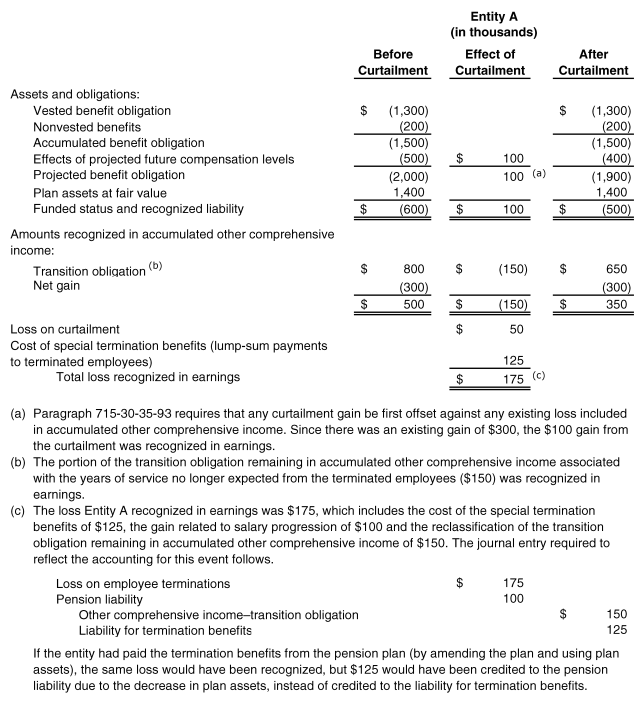 Entity A (in thousands) Before Curtailment Effect of Curtailment After Curtailment Assets and obligations: Vested benefit obligation " $(1,300)" " $(1,300)" Nonvested benefits (200) (200) Accumulated benefit obligation " (1,500)" " (1,500)" Effects of projected future compensation levels (500) $100 (400) Projected benefit obligation " (2,000)" 100 (a) " (1,900)" Plan assets at fair value " 1,400 " " 1,400 " Funded status and recognized liability $(600) $100 $(500) Amounts recognized in accumulated other comprehensive income: Transition obligation (b) $800 $(150) $650 Net gain (300) (300) $500 $(150) $350 Loss on curtailment $50 Cost of special termination benefits (lump-sum payments to terminated employees) 125 Total loss recognized in earnings $175 (c) (a) "Paragraph 715-30-35-93 requires that any curtailment gain be first offset against any existing loss included in accumulated other comprehensive income. Since there was an existing gain of $300, the $100 gain from the curtailment was recognized in earnings." (b) The portion of the transition obligation remaining in accumulated other comprehensive income associated with the years of service no longer expected from the terminated employees ($150) was recognized in earnings. (c) "The loss Entity A recognized in earnings was $175, which includes the cost of the special termination benefits of $125, the gain related to salary progression of $100 and the reclassification of the transition obligation remaining in accumulated other comprehensive income of $150. The journal entry required to reflect the accounting for this event follows." Loss on employee terminations $175 Pension liability 100 Other comprehensive income-transition obligation $150 Liability for termination benefits 125 "If the entity had paid the termination benefits from the pension plan (by amending the plan and using plan assets), the same loss would have been recognized, but $125 would have been credited to the pension liability due to the decrease in plan assets, instead of credited to the liability for termination benefits."
-
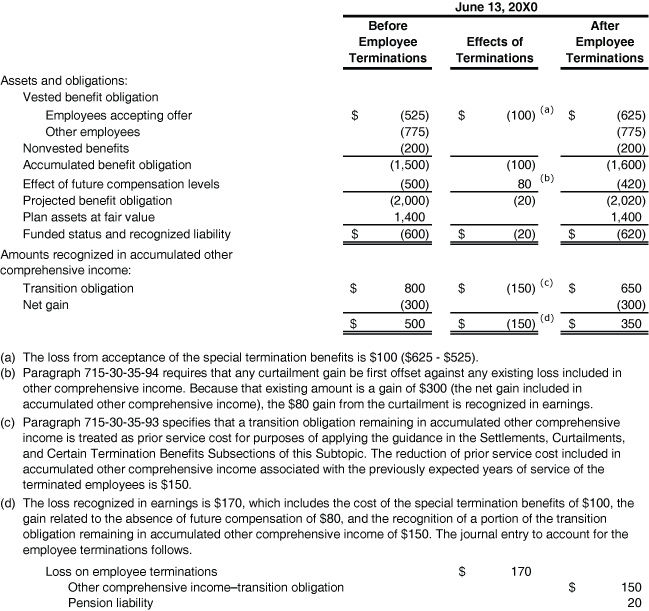 "June 13, 20X0" Before Employee Terminations Effects of Terminations After Employee Terminations Assets and obligations: Vested benefit obligation Employees accepting offer $(525) $(100) (a) $(625) Other employees (775) (775) Nonvested benefits (200) (200) Accumulated benefit obligation " (1,500)" (100) " (1,600)" Effect of future compensation levels (500) 80 (b) (420) Projected benefit obligation " (2,000)" (20) " (2,020)" Plan assets at fair value " 1,400 " " 1,400 " Funded status and recognized liability $(600) $(20) $(620) "Amounts recognized in accumulated other comprehensive income:" Transition obligation $800 $(150) (c) $650 Net gain (300) (300) $500 $(150) (d) $350 (a) The loss from acceptance of the special termination benefits is $100 ($625 - $525). (b) "Paragraph 715-30-35-94 requires that any curtailment gain be first offset against any existing loss included in other comprehensive income. Because that existing amount is a gain of $300 (the net gain included in accumulated other comprehensive income), the $80 gain from the curtailment is recognized in earnings." (c) "Paragraph 715-30-35-93 specifies that a transition obligation remaining in accumulated other comprehensive income is treated as prior service cost for purposes of applying the guidance in the Settlements, Curtailments, and Certain Termination Benefits Subsections of this Subtopic. The reduction of prior service cost included in accumulated other comprehensive income associated with the previously expected years of service of the terminated employees is $150." (d) "The loss recognized in earnings is $170, which includes the cost of the special termination benefits of $100, the gain related to the absence of future compensation of $80, and the recognition of a portion of the transition obligation remaining in accumulated other comprehensive income of $150. The journal entry to account for the employee terminations follows." Loss on employee terminations $170 Other comprehensive income-transition obligation $150 Pension liability 20
- a Curtailment with a transition obligation and a retroactive plan amendment (Case A)
- b Curtailment with a transition asset (Case B).
-
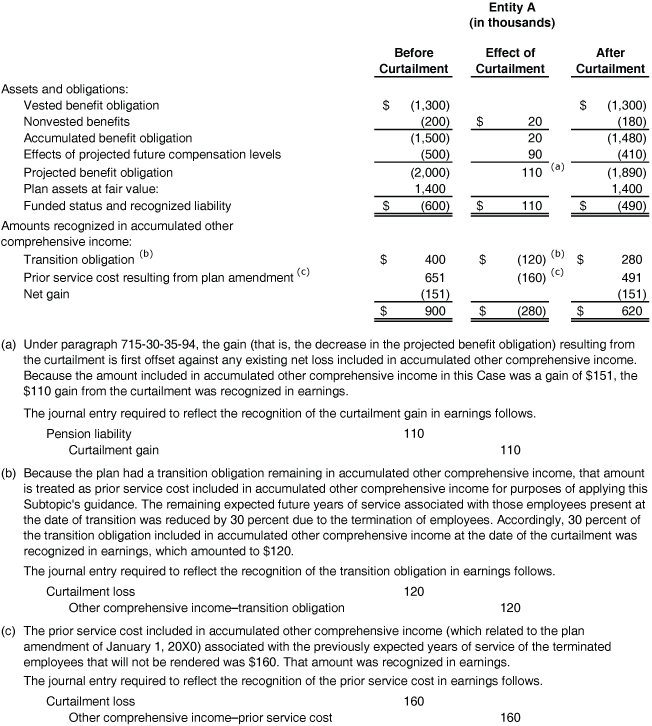 Entity A (in thousands) Before Curtailment Effect of Curtailment After Curtailment Assets and obligations: Vested benefit obligation " $(1,300)" " $(1,300)" Nonvested benefits (200) $20 (180) Accumulated benefit obligation " (1,500)" 20 " (1,480)" Effects of projected future compensation levels (500) 90 (410) Projected benefit obligation " (2,000)" 110 (a) " (1,890)" Plan assets at fair value: " 1,400 " " 1,400 " Funded status and recognized liability $(600) $110 $(490) "Amounts recognized in accumulated other comprehensive income:" Transition obligation (b) $400 $(120) (b) $280 Prior service cost resulting from plan amendment (c) 651 (160) (c) 491 Net gain (151) (151) $900 $(280) $620 (a) "Under paragraph 715-30-35-94, the gain (that is, the decrease in the projected benefit obligation) resulting from the curtailment is first offset against any existing net loss included in accumulated other comprehensive income. Because the amount included in accumulated other comprehensive income in this Case was a gain of $151, the $110 gain from the curtailment was recognized in earnings." The journal entry required to reflect the recognition of the curtailment gain in earnings follows. Pension liability 110 Curtailment gain 110 (b) "Because the plan had a transition obligation remaining in accumulated other comprehensive income, that amount is treated as prior service cost included in accumulated other comprehensive income for purposes of applying this Subtopic's guidance. The remaining expected future years of service associated with those employees present at the date of transition was reduced by 30 percent due to the termination of employees. Accordingly, 30 percent of the transition obligation included in accumulated other comprehensive income at the date of the curtailment was recognized in earnings, which amounted to $120." The journal entry required to reflect the recognition of the transition obligation in earnings follows. Curtailment loss 120 Other comprehensive income-transition obligation 120 (c) "The prior service cost included in accumulated other comprehensive income (which related to the plan amendment of January 1, 20X0) associated with the previously expected years of service of the terminated employees that will not be rendered was $160. That amount was recognized in earnings." The journal entry required to reflect the recognition of the prior service cost in earnings follows. Curtailment loss 160 Other comprehensive income-prior service cost 160
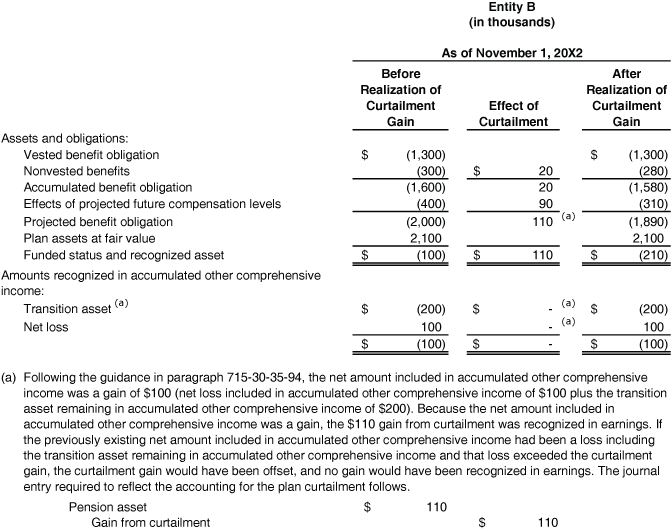 Entity B (in thousands) "As of November 1, 20X2" Before Realization of Curtailment Gain Effect of Curtailment After Realization of Curtailment Gain Assets and obligations: Vested benefit obligation " $(1,300)" " $(1,300)" Nonvested benefits (300) $20 (280) Accumulated benefit obligation " (1,600)" 20 " (1,580)" Effects of projected future compensation levels (400) 90 (310) Projected benefit obligation " (2,000)" 110 (a) " (1,890)" Plan assets at fair value " 2,100 " " 2,100 " Funded status and recognized asset $(100) $110 $(210) Amounts recognized in accumulated other comprehensive income: Transition asset (a) $(200) $- (a) $(200) Net loss 100 - (a) 100 $(100) $- $(100) (a) "Following the guidance in paragraph 715-30-35-94, the net amount included in accumulated other comprehensive income was a gain of $100 (net loss included in accumulated other comprehensive income of $100 plus the transition asset remaining in accumulated other comprehensive income of $200). Because the net amount included in accumulated other comprehensive income was a gain, the $110 gain from curtailment was recognized in earnings. If the previously existing net amount included in accumulated other comprehensive income had been a loss including the transition asset remaining in accumulated other comprehensive income and that loss exceeded the curtailment gain, the curtailment gain would have been offset, and no gain would have been recognized in earnings. The journal entry required to reflect the accounting for the plan curtailment follows." Pension asset $110 Gain from curtailment $110
- Table 1- The Curtailment (in thousands)
-
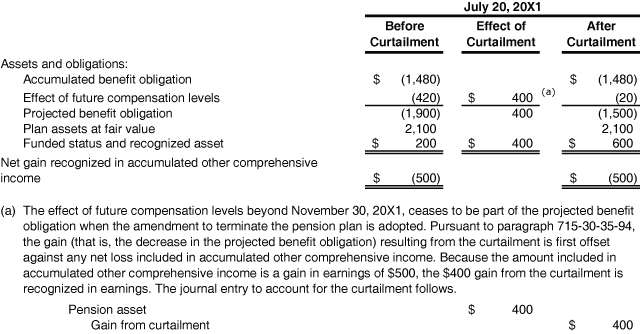 "July 20, 20X1" Before Curtailment Effect of Curtailment After Curtailment Assets and obligations: Accumulated benefit obligation " $(1,480)" " $(1,480)" Effect of future compensation levels (420) $400 (a) (20) Projected benefit obligation " (1,900)" 400 " (1,500)" Plan assets at fair value " 2,100 " " 2,100 " Funded status and recognized asset $200 $400 $600 Net gain recognized in accumulated other comprehensive income $(500) $(500) (a) "The effect of future compensation levels beyond November 30, 20X1, ceases to be part of the projected benefit obligation when the amendment to terminate the pension plan is adopted. Pursuant to paragraph 715-30-35-94, the gain (that is, the decrease in the projected benefit obligation) resulting from the curtailment is first offset against any net loss included in accumulated other comprehensive income. Because the amount included in accumulated other comprehensive income is a gain in earnings of $500, the $400 gain from the curtailment is recognized in earnings. The journal entry to account for the curtailment follows." Pension asset $400 Gain from curtailment $400
 - Table 2- The Settlement (in thousands)
-
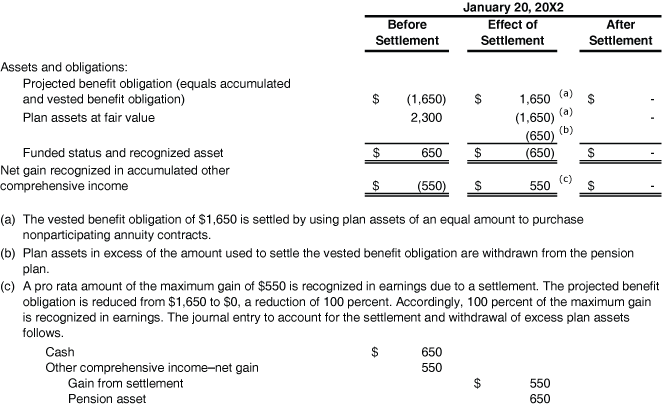 "January 20, 20X2" Before Settlement Effect of Settlement After Settlement Assets and obligations: "Projected benefit obligation (equals accumulated and vested benefit obligation)" " $(1,650)" " $1,650 " (a) $- Plan assets at fair value " 2,300 " " (1,650)" (a) - (650) (b) Funded status and recognized asset $650 $(650) $- "Net gain recognized in accumulated other comprehensive income" $(550) $550 (c) $- (a) "The vested benefit obligation of $1,650 is settled by using plan assets of an equal amount to purchase nonparticipating annuity contracts." (b) Plan assets in excess of the amount used to settle the vested benefit obligation are withdrawn from the pension plan. (c) "A pro rata amount of the maximum gain of $550 is recognized in earnings due to a settlement. The projected benefit obligation is reduced from $1,650 to $0, a reduction of 100 percent. Accordingly, 100 percent of the maximum gain is recognized in earnings. The journal entry to account for the settlement and withdrawal of excess plan assets follows." Cash $650 Other comprehensive income-net gain 550 Gain from settlement $550 Pension asset 650
- aCurtailment and settlement recognized in different interim periods (Case A)
- bCurtailment and settlement recognized in the same interim period (Case B).
- a Certain employees cease to be employed by the selling employer, which results in a significant reduction in the number of present employees accumulating pension benefits under the selling employer's pension plan (Plan A).
- b The terminated employees are hired by the acquiring employer.
- c The acquiring employer, through its pension plan (Plan B), agrees to assume the accumulated benefit obligation ($200,000) related to the terminated employees.
- d Plan assets of $250,000 ($200,000 for the settlement of the accumulated benefit obligation and $50,000 as an excess contribution) are transferred from Plan A to Plan B.
-
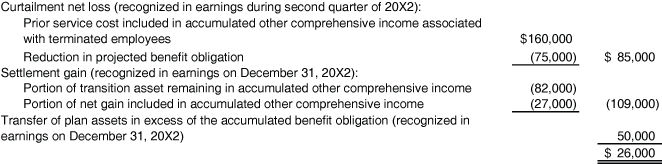 Curtailment net loss (recognized in earnings during second quarter of 20X2): Prior service cost included in accumulated other comprehensive income associated with terminated employees " $160,000 " Reduction in projected benefit obligation " (75,000)" " $85,000 " "Settlement gain (recognized in earnings on December 31, 20X2):" Portion of transition asset remaining in accumulated other comprehensive income " (82,000)" Portion of net gain included in accumulated other comprehensive income " (27,000)" " (109,000)" "Transfer of plan assets in excess of the accumulated benefit obligation (recognized in earnings on December 31, 20X2)" " 50,000 " " $26,000 "
- Table 1—The Curtailment (in thousands)
-
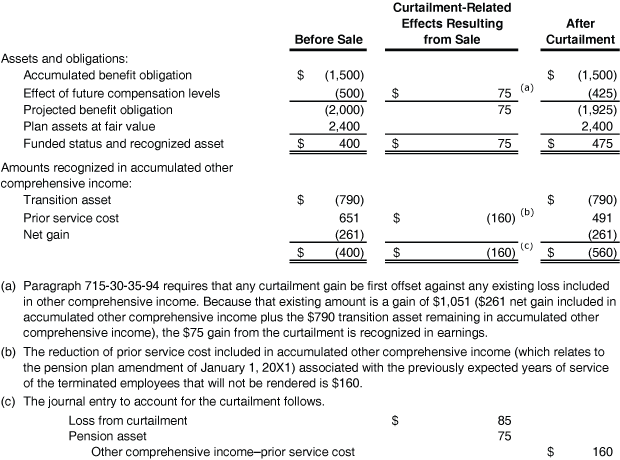 Before Sale Curtailment-Related Effects Resulting from Sale After Curtailment Assets and obligations: Accumulated benefit obligation " $(1,500)" " $(1,500)" Effect of future compensation levels (500) $75 (a) (425) Projected benefit obligation " (2,000)" 75 " (1,925)" Plan assets at fair value " 2,400 " " 2,400 " Funded status and recognized asset $400 $75 $475 Amounts recognized in accumulated other comprehensive income: Transition asset $(790) $(790) Prior service cost 651 $(160) (b) 491 Net gain (261) (261) $(400) $(160) (c) $(560) (a) "Paragraph 715-30-35-94 requires that any curtailment gain be first offset against any existing loss included in other comprehensive income. Because that existing amount is a gain of $1,051 ($261 net gain included in accumulated other comprehensive income plus the $790 transition asset remaining in accumulated other comprehensive income), the $75 gain from the curtailment is recognized in earnings." (b) "The reduction of prior service cost included in accumulated other comprehensive income (which relates to the pension plan amendment of January 1, 20X1) associated with the previously expected years of service of the terminated employees that will not be rendered is $160." (c) The journal entry to account for the curtailment follows. Loss from curtailment $85 Pension asset 75 Other comprehensive income-prior service cost $160
- Table 2 -The Settlement (in thousands)
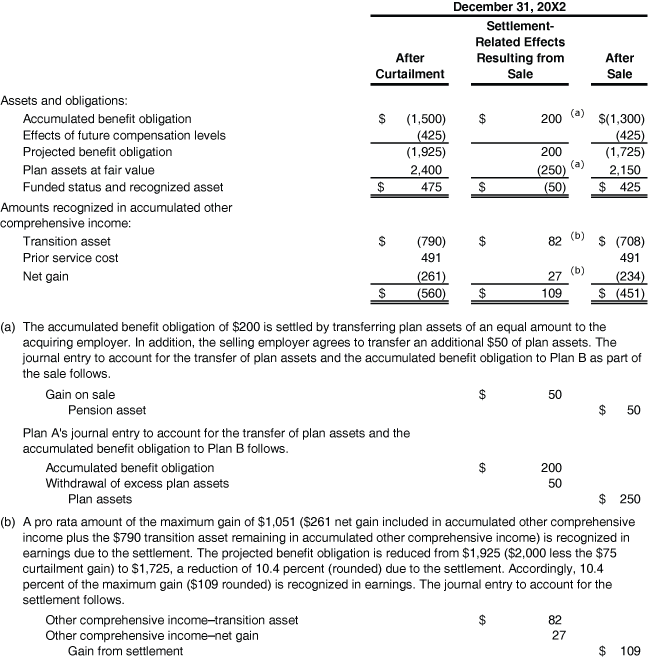 "December 31, 20X2" After Curtailment Settlement- Related Effects Resulting from Sale After Sale Assets and obligations: Accumulated benefit obligation " $(1,500)" $200 (a) " $(1,300)" Effects of future compensation levels (425) (425) Projected benefit obligation " (1,925)" 200 " (1,725)" Plan assets at fair value " 2,400 " (250) (a) " 2,150 " Funded status and recognized asset $475 $(50) $425 "Amounts recognized in accumulated other comprehensive income:" Transition asset $(790) $82 (b) $(708) Prior service cost 491 491 Net gain (261) 27 (b) (234) $(560) $109 $(451) (a) "The accumulated benefit obligation of $200 is settled by transferring plan assets of an equal amount to the acquiring employer. In addition, the selling employer agrees to transfer an additional $50 of plan assets. The journal entry to account for the transfer of plan assets and the accumulated benefit obligation to Plan B as part of the sale follows." Gain on sale $50 Pension asset $50 Plan A's journal entry to account for the transfer of plan assets and the accumulated benefit obligation to Plan B follows. Accumulated benefit obligation $200 Withdrawal of excess plan assets 50 Plan assets $250 (b) "A pro rata amount of the maximum gain of $1,051 ($261 net gain included in accumulated other comprehensive income plus the $790 transition asset remaining in accumulated other comprehensive income) is recognized in earnings due to the settlement. The projected benefit obligation is reduced from $1,925 ($2,000 less the $75 curtailment gain) to $1,725, a reduction of 10.4 percent (rounded) due to the settlement. Accordingly, 10.4 percent of the maximum gain ($109 rounded) is recognized in earnings. The journal entry to account for the settlement follows." Other comprehensive income-transition asset $82 Other comprehensive income-net gain 27 Gain from settlement $109
715-30-60Relationships
Source downloaded: .Record version e2233d951d46. Effective date must be checked in the source.
Comprehensive Income
Inventory
Exit or Disposal Cost Obligations
Income Taxes
Business Combinations
Consolidation
Nonmonetary Transactions
Not-for-Profit Entities
Regulated Operations
715-30-65Transition and Open Effective Date Information
Source downloaded: .Record version c8e713865ba0. Effective date must be checked in the source.
Related subtopics
- 715-60 Defined Benefit Plans—Other PostretirementCompensation—Retirement Benefits
- 960-20 Accumulated Plan BenefitsPlan Accounting—Defined Benefit Pension Plans
- 715-980 Regulated OperationsCompensation—Retirement Benefits
- 965-30 Plan Benefit ObligationsPlan Accounting—Health and Welfare Benefit Plans
- 715-70 Defined Contribution PlansCompensation—Retirement Benefits
- 715-20 Defined Benefit Plans—GeneralCompensation—Retirement Benefits