ASC 810-10
Overall
810 Consolidation
Source downloaded: .Record version 165badb9b018. Effective date must be checked in the source.
ASC 810-10 sets out the pervasive framework for determining whether one reporting entity must consolidate another legal entity, and it is organized into three Subsections: General (voting interest model), Variable Interest Entities (VIE model), and Consolidation of Entities Controlled by Contract. Consolidation is required when a reporting entity has a "controlling financial interest" — usually ownership of a majority voting interest (or, for limited partnerships, a majority of kick-out rights through voting interests) under the General Subsections, or, for a VIE, both power over the activities that most significantly impact the VIE's economic performance and exposure to potentially significant losses/benefits. A reporting entity must first test whether the other entity is a VIE (810-10-15-14); only if it is not does the voting-interest or contractual-control analysis apply.
Key points (7)
- Consolidated financial statements are presumed more meaningful and are usually necessary for fair presentation when one entity directly or indirectly has a controlling financial interest in the others (810-10-10-1).
- Order of analysis: apply the VIE Subsections first if the entity is in their scope (810-10-15-3(a) and 810-10-15-14); if not a VIE, use only the General Subsections, or the Consolidation of Entities Controlled by Contract Subsections for contractual management relationships (810-10-15-3(b)-(c)).
- The usual condition for a controlling financial interest is ownership of more than 50 percent of outstanding voting shares (810-10-15-8), and for limited partnerships, ownership of more than 50 percent of kick-out rights through voting interests (810-10-15-8A); control may also exist by contract, lease, agreement, or court decree.
- A legal entity is a VIE if, by design, equity at risk is insufficient to finance activities without additional subordinated financial support, or the equity holders as a group lack power through voting rights, the obligation to absorb expected losses, or the right to receive expected residual returns, or if voting rights are disproportionate and substantially all activities are conducted on behalf of the disproportionately low-vote investor (810-10-15-14).
- The primary beneficiary consolidates a VIE; it is the single party with both (a) power to direct the activities that most significantly impact the VIE's economic performance and (b) the obligation to absorb potentially significant losses or right to receive potentially significant benefits (810-10-25-38A); if power is shared among unrelated parties, no party is the primary beneficiary (810-10-25-38D).
- A majority-owned subsidiary is not consolidated where control does not rest with the majority owner (legal reorganization, bankruptcy, severe foreign exchange restrictions, or substantive noncontrolling participating rights) (810-10-15-10(a)(1)); protective rights do not overcome the consolidation presumption but substantive participating rights do (810-10-25-7, 25-10, 25-11).
- Scope exceptions include employee benefit plans, investment company investees, governmental organizations, money market funds operating under Rule 2a-7-like requirements (810-10-15-12), NFPs, insurance separate accounts, pre-2003 entities where information is unobtainable, certain businesses (810-10-15-17), and a private company common-control accounting alternative (810-10-15-17AD).
For students. This is the gateway subtopic for every consolidation question, and the most common mistake is jumping straight to the majority-voting-interest test — you must always screen for VIE status first, and remember that for limited partnerships the analogue of voting rights is kick-out rights. Also do not confuse protective rights (which never defeat consolidation) with substantive participating rights (which do).
Machine-generated study aid for ASC 810-10. Check the source paragraphs below.
810-10-00Status
Source downloaded: .Record version a1186c62b67d. Effective date must be checked in the source.
810-10-05Overview and Background
Source downloaded: .Record version e5c60c342d75. Effective date must be checked in the source.
- aOverall
- b
- cResearch and Development Arrangements.
- aGeneral
- bVariable Interest Entities
- cConsolidation of Entities Controlled by Contract
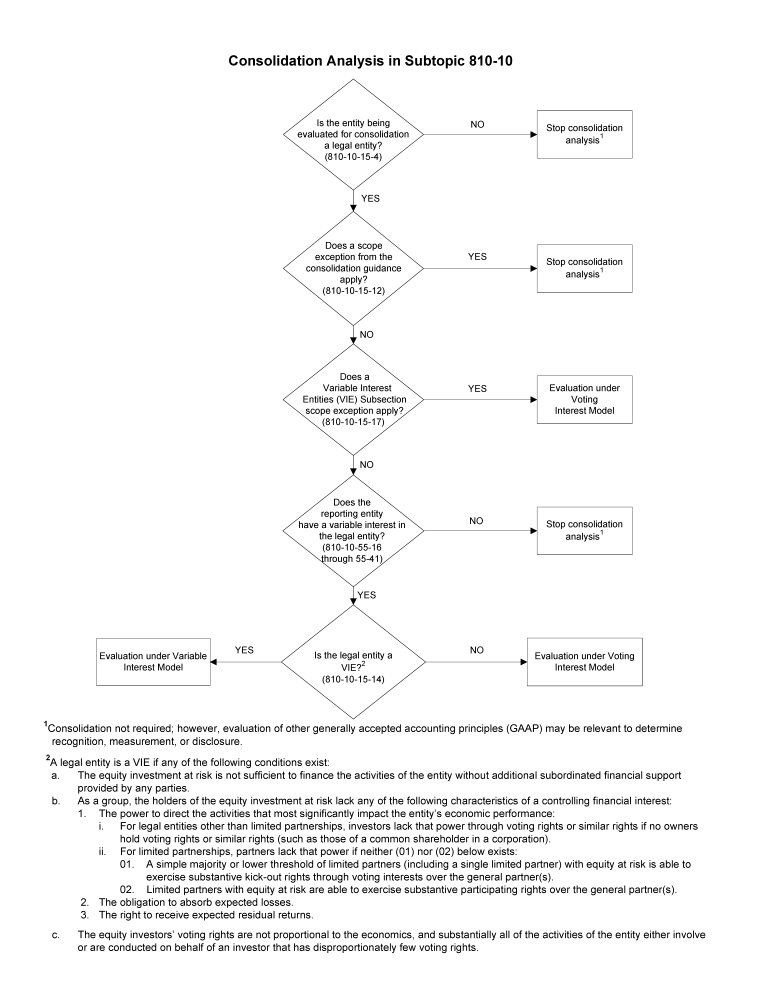
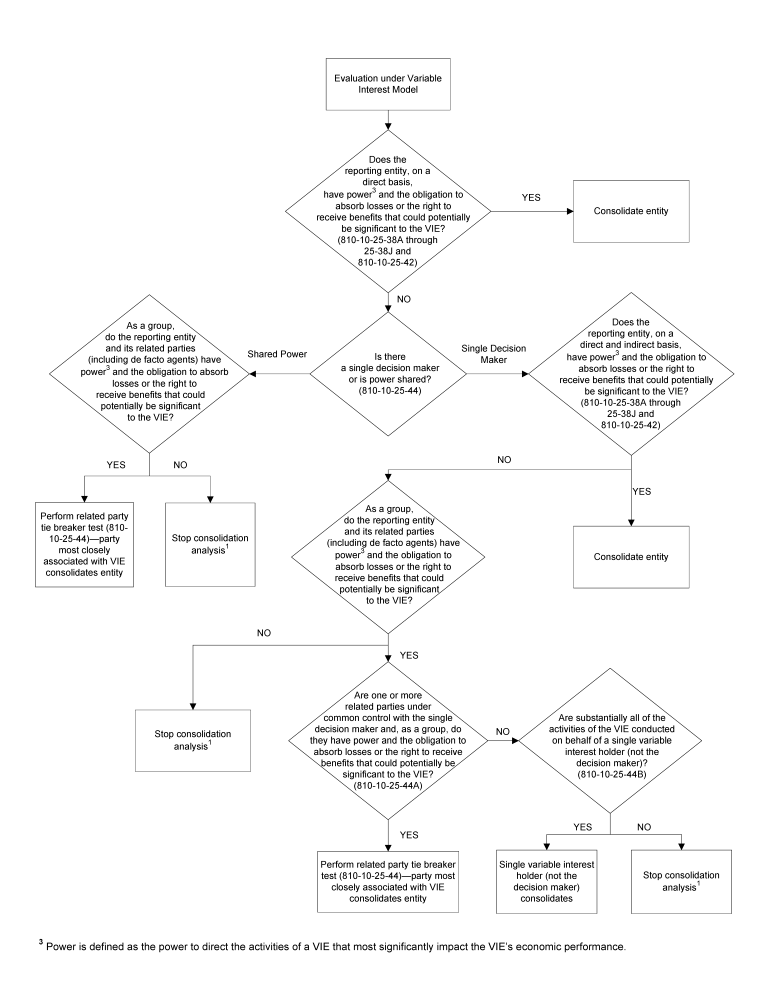
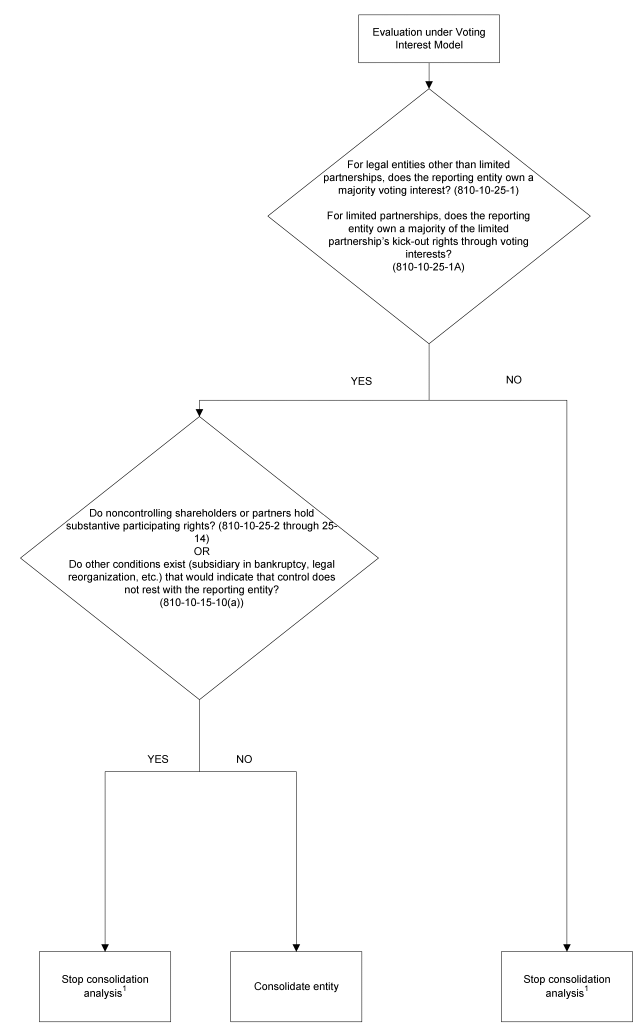 Text only report Displayed Text Consolidation Analysis in Subtopic 810-10 "Does a Variable Interest Entities (VIE) Subsection scope exception apply? (810-10-15-17)" "Does a scope exception from the consolidation guidance apply? (810-10-15-12)" NO "Does the reporting entity have a variable interest in the legal entity? (810-10-55-16 through 55-41)" NO "Is the legal entity a VIE?2 (810-10-15-14)" YES YES YES NO NO YES Stop consolidation analysis1 "Is the entity being evaluated for consolidation a legal entity? (810-10-15-4)" YES Stop consolidation analysis1 NO Evaluation under Voting Interest Model Evaluation under Variable Interest Model "1Consolidation not required; however, evaluation of other generally accepted accounting principles (GAAP) may be relevant to determine recognition, measurement, or disclosure. 2A legal entity is a VIE if any of the following conditions exist: a. The equity investment at risk is not sufficient to finance the activities of the entity without additional subordinated financial support provided by any parties. b. As a group, the holders of the equity investment at risk lack any of the following characteristics of a controlling financial interest: 1. The power to direct the activities that most significantly impact the entity's economic performance: i. For legal entities other than limited partnerships, investors lack that power through voting rights or similar rights if no owners hold voting rights or similar rights (such as those of a common shareholder in a corporation). ii. For limited partnerships, partners lack that power if neither (01) nor (02) below exists: 01. A simple majority or lower threshold of limited partners (including a single limited partner) with equity at risk is able to exercise substantive kick-out rights through voting interests over the general partner(s). 02. Limited partners with equity at risk are able to exercise substantive participating rights over the general partner(s). 2. The obligation to absorb expected losses. 3. The right to receive expected residual returns. c. The equity investors' voting rights are not proportional to the economics, and substantially all of the activities of the entity either involve or are conducted on behalf of an investor that has disproportionately few voting rights." "Evaluation under Voting Interest Model" Stop consolidation analysis1 3 Power is defined as the power to direct the activities of a VIE that most significantly impact the VIE's economic performance. "Does the reporting entity, on a direct basis, have power3 and the obligation to absorb losses or the right to receive benefits that could potentially be significant to the VIE? (810-10-25-38A through 25-38J and 810-10-25-42)" "Are one or more related parties under common control with the single decision maker and, as a group, do they have power and the obligation to absorb losses or the right to receive benefits that could potentially be significant to the VIE? (810-10-25-44A)" Consolidate entity Consolidate entity YES NO YES "Is there a single decision maker or is power shared? (810-10-25-44)" NO "Single Decision Maker" Perform related party tie breaker test (810-10-25-44)—party most closely associated with VIE consolidates entity NO "As a group, do the reporting entity and its related parties (including de facto agents) have power3 and the obligation to absorb losses or the right to receive benefits that could potentially be significant to the VIE?" YES Shared Power NO Single variable interest holder (not the decision maker) consolidates Stop consolidation analysis1 YES "Evaluation under Variable Interest Model" "Are substantially all of the activities of the VIE conducted on behalf of a single variable interest holder (not the decision maker)? (810-10-25-44B)" "As a group, do the reporting entity and its related parties (including de facto agents) have power3 and the obligation to absorb losses or the right to receive benefits that could potentially be significant to the VIE?" "Does the reporting entity, on a direct and indirect basis, have power3 and the obligation to absorb losses or the right to receive benefits that could potentially be significant to the VIE? (810-10-25-38A through 25-38J and 810-10-25-42)" Perform related party tie breaker test (810-10-25-44)—party most closely associated with VIE consolidates entity YES Stop consolidation analysis1 NO YES Stop consolidation analysis1 NO "For legal entities other than limited partnerships, does the reporting entity own a majority voting interest? (810-10-25-1) For limited partnerships, does the reporting entity own a majority of the limited partnership's kick-out rights through voting interests? (810-10-25-1A)" "Evaluation under Voting Interest Model" YES "Do noncontrolling shareholders or partners hold substantive participating rights? (810-10-25-2 through 25-13A) OR Do other conditions exist (subsidiary in bankruptcy, legal reorganization, etc.) that would indicate that control does not rest with the reporting entity? (810-10-15-10(a))" NO Stop consolidation analysis1 Consolidate entity YES NO Stop consolidation analysis1
Variable Interest Entities
Consolidation of VIEs
- aThe power, through voting rights or similar rights, to direct the activities of a legal entity that most significantly impact the entity's economic performance
- bThe obligation to absorb the expected losses of the legal entity
- cThe right to receive the expected residual returns of the legal entity.
- aThe power to direct the activities of a VIE that most significantly impact the VIE's economic performance
- bThe obligation to absorb losses of the VIE that could potentially be significant to the VIE or the right to receive benefits from the VIE that could potentially be significant to the VIE.
Consolidation of Entities Controlled by Contract
810-10-10Objectives
Source downloaded: .Record version b4229d819f21. Effective date must be checked in the source.
810-10-15Scope and Scope Exceptions
Source downloaded: .Record version 326e7b2466a3. Effective date must be checked in the source.
Overall Guidance
Entities
- aIf the reporting entity has an interest in an entity, it must determine whether that entity is within the scope of the Variable Interest Entities Subsections in accordance with paragraph 810-10-15-14. If that entity is within the scope of the Variable Interest Entities Subsections, the reporting entity should first apply the guidance in those Subsections. Paragraph 810-10-15-17 provides specific exceptions to applying the guidance in the Variable Interest Entities Subsections.
- bIf the reporting entity has an interest in an entity that is not within the scope of the Variable Interest Entities Subsections and is not within the scope of the Subsections mentioned in paragraph 810-10-15-3(c), the reporting entity should use only the guidance in the General Subsections to determine whether that interest constitutes a controlling financial interest.
- cIf the reporting entity has a contractual management relationship with another entity that is not within the scope of the Variable Interest Entities Subsections, the reporting entity should use the guidance in the Consolidation of Entities Controlled by Contract Subsections to determine whether the arrangement constitutes a controlling financial interest.
- aAll majority-owned subsidiaries—all entities in which a parent has a controlling financial interest—shall be consolidated. However, there are exceptions to this general rule.
- 1A majority-owned subsidiary shall not be consolidated if control does not rest with the majority owner—for instance, if any of the following are present:
- iThe subsidiary is in legal reorganization
- iiThe subsidiary is in bankruptcy
- iiiThe subsidiary operates under foreign exchange restrictions, controls, or other governmentally imposed uncertainties so severe that they cast significant doubt on the parent's ability to control the subsidiary.
- ivIn some instances, the powers of a shareholder with a majority voting interest or limited partner with a majority of kick-out rights through voting interests to control the operations or assets of the investee are restricted in certain respects by approval or veto rights granted to the noncontrolling shareholder or limited partner (hereafter referred to as noncontrolling rights). In paragraphs , the term noncontrolling shareholder refers to one or more noncontrolling shareholders and the terms limited partner and general partner refer to one or more limited or general partners. Those noncontrolling rights may have little or no impact on the ability of a shareholder with a majority voting interest or limited partner with a majority of kick-out rights through voting interests to control the investee's operations or assets, or, alternatively, those rights may be so restrictive as to call into question whether control rests with the majority owner.
- vControl exists through means other than through ownership of a majority voting interest or a majority of kick-out rights through voting interests, for example as described in (c) through (e).
- i
- 2A majority-owned subsidiary in which a parent has a controlling financial interest shall not be consolidated if the parent is a broker-dealer within the scope of Topic 940 and control is likely to be temporary.
- 3
- 1
- b
- cSubtopic 810-30 shall be applied to determine the consolidation status of a research and development arrangement.
- dThe Consolidation of Entities Controlled by Contract Subsections of this Subtopic shall be applied to determine whether a contractual management relationship represents a controlling financial interest.
- eParagraph 710-10-45-1 addresses the circumstances in which the accounts of a rabbi trust that is not a VIE (see the Variable Interest Entities Subsections for guidance on VIEs) shall be consolidated with the accounts of the employer in the financial statements of the employer.
- a
- b
- c
- dExcept as discussed in paragraph 946-810-45-3, an investment company within the scope of Topic 946 shall not consolidate an investee that is not an investment company.
- eA reporting entity shall not consolidate a governmental organization and shall not consolidate a financing entity established by a governmental organization unless the financing entity meets both of the following conditions:
- 1Is not a governmental organization
- 2Is used by the business entity in a manner similar to a VIE in an effort to circumvent the provisions of the Variable Interest Entities Subsections.
- 1
- fA reporting entity shall not consolidate a legal entity that is required to comply with or operate in accordance with requirements that are similar to those included in Rule 2a-7 of the Investment Company Act of 1940 for registered money market funds.
- 1A legal entity that is not required to comply with Rule 2a-7 of the Investment Company Act of 1940 qualifies for this exception if it is similar in its purpose and design, including the risks that the legal entity was designed to create and pass through to its investors, as compared with a legal entity required to comply with Rule 2a-7.
- 2A reporting entity subject to this scope exception shall disclose any explicit arrangements to provide financial support to legal entities that are required to comply with or operate in accordance with requirements that are similar to those included in Rule 2a-7, as well as any instances of such support provided for the periods presented in the performance statement. For purposes of applying this disclosure requirement, the types of support that should be considered include, but are not limited to, any of the following:
- iCapital contributions (except pari passu investments)
- iiStandby letters of credit
- iiiGuarantees of principal and interest on debt investments held by the legal entity
- ivAgreements to purchase financial assets for amounts greater than fair value (for instance, at amortized cost or par value when the financial assets experience significant credit deterioration)
- vWaivers of fees, including management fees.
- i
- 1
Variable Interest Entities
Overall Guidance
- aA legal entity's status as a variable interest entity (VIE)
- bA reporting entity's power over a VIE
- cA reporting entity's obligation to absorb losses or its right to receive benefits of the legal entity.
Entities
- aThe total equity investment (equity investments in a legal entity are interests that are required to be reported as equity in that entity's financial statements) at risk is not sufficient to permit the legal entity to finance its activities without additional subordinated financial support provided by any parties, including equity holders. For this purpose, the total equity investment at risk has all of the following characteristics:
- 1Includes only equity investments in the legal entity that participate significantly in profits and losses even if those investments do not carry voting rights
- 2Does not include equity interests that the legal entity issued in exchange for subordinated interests in other VIEs
- 3Does not include amounts provided to the equity investor directly or indirectly by the legal entity or by other parties involved with the legal entity (for example, by fees, charitable contributions, or other payments), unless the provider is a parent, subsidiary, or affiliate of the investor that is required to be included in the same set of consolidated financial statements as the investor
- 4Does not include amounts financed for the equity investor (for example, by loans or guarantees of loans) directly by the legal entity or by other parties involved with the legal entity, unless that party is a parent, subsidiary, or affiliate of the investor that is required to be included in the same set of consolidated financial statements as the investor.
Paragraphs discuss the amount of the total equity investment at risk that is necessary to permit a legal entity to finance its activities without additional subordinated financial support. - 1
- bAs a group the holders of the equity investment at risk lack any one of the following three characteristics:
- 1The power, through voting rights or similar rights, to direct the activities of a legal entity that most significantly impact the entity's economic performance.
- iFor legal entities other than limited partnerships, investors lack that power through voting rights or similar rights if no owners hold voting rights or similar rights (such as those of a common shareholder in a corporation). Legal entities that are not controlled by the holder of a majority voting interest because of noncontrolling shareholder veto rights (participating rights) as discussed in paragraphs are not VIEs if the holders of the equity investment at risk as a group have the power to control the entity and the equity investment meets the other requirements of the Variable Interest Entities Subsections.
- 01If no owners hold voting rights or similar rights (such as those of a common shareholder in a corporation) over the activities of a legal entity that most significantly impact the entity's economic performance, kick-out rights or participating rights (according to their VIE definitions) held by the holders of the equity investment at risk shall not prevent interests other than the equity investment from having this characteristic unless a single equity holder (including its related parties and de facto agents) has the unilateral ability to exercise such rights. Alternatively, interests other than the equity investment at risk that provide the holders of those interests with kick-out rights or participating rights shall not prevent the equity holders from having this characteristic unless a single reporting entity (including its related parties and de facto agents) has the unilateral ability to exercise those rights. A decision maker also shall not prevent the equity holders from having this characteristic unless the fees paid to the decision maker represent a variable interest based on paragraphs .
- 01
- iiFor limited partnerships, partners lack that power if neither (01) nor (02) below exists. The guidance in this subparagraph does not apply to entities in industries (see paragraphs 910-810-45-1 and 932-810-45-1) in which it is appropriate for a general partner to use the pro rata method of consolidation for its investment in a limited partnership (see paragraph 810-10-45-14).
- 01A simple majority or lower threshold of limited partners (including a single limited partner) with equity at risk is able to exercise substantive kick-out rights (according to their voting interest entity definition) through voting interests over the general partner(s).
- AFor purposes of evaluating the threshold in (01) above, a general partner's kick-out rights held through voting interests shall not be included. Kick-out rights through voting interests held by entities under common control with the general partner or other parties acting on behalf of the general partner also shall not be included.
- A
- 02Limited partners with equity at risk are able to exercise substantive participating rights (according to their voting interest entity definition) over the general partner(s).
- 03For purposes of (01) and (02) above, evaluation of the substantiveness of participating rights and kick-out rights shall be based on the guidance included in paragraphs 810-10-25-2 through 25-14C.
- 01
- i
- 2The obligation to absorb the expected losses of the legal entity. The investor or investors do not have that obligation if they are directly or indirectly protected from the expected losses or are guaranteed a return by the legal entity itself or by other parties involved with the legal entity. See paragraphs and Example 1 (see paragraph 810-10-55-42) for a discussion of expected losses.
- 3The right to receive the expected residual returns of the legal entity. The investors do not have that right if their return is capped by the legal entity's governing documents or arrangements with other variable interest holders or the legal entity. For this purpose, the return to equity investors is not considered to be capped by the existence of outstanding stock options, convertible debt, or similar interests because if the options in those instruments are exercised, the holders will become additional equity investors.
If interests other than the equity investment at risk provide the holders of that investment with these characteristics or if interests other than the equity investment at risk prevent the equity holders from having these characteristics, the entity is a VIE. - 1
- cThe equity investors as a group also are considered to lack the characteristic in (b)(1) if both of the following conditions are present:
- 1The voting rights of some investors are not proportional to their obligations to absorb the expected losses of the legal entity, their rights to receive the expected residual returns of the legal entity, or both.
- 2Substantially all of the legal entity's activities (for example, providing financing or buying assets) either involve or are conducted on behalf of an investor that has disproportionately few voting rights. This provision is necessary to prevent a primary beneficiary from avoiding consolidation of a VIE by organizing the legal entity with nonsubstantive voting interests. Activities that involve or are conducted on behalf of the related parties of an investor with disproportionately few voting rights shall be treated as if they involve or are conducted on behalf of that investor. The term related parties in this paragraph refers to all parties identified in paragraph 810-10-25-43, except for de facto agents under paragraph 810-10-25-43(d).
For purposes of applying this requirement, reporting entities shall consider each party's obligations to absorb expected losses and rights to receive expected residual returns related to all of that party's interests in the legal entity and not only to its equity investment at risk. - 1
- aNot-for-profit entities (NFPs) are not subject to the Variable Interest Entities Subsections, except that they may be related parties for purposes of applying paragraphs . In addition, if an NFP is used by business reporting entities in a manner similar to a VIE in an effort to circumvent the provisions of the Variable Interest Entities Subsections, that NFP shall be subject to the guidance in the Variable Interest Entities Subsections.
- bSeparate accounts of life insurance entities as described in Topic 944 are not subject to consolidation according to the requirements of the Variable Interest Entities Subsections.
- cA reporting entity with an interest in a VIE or potential VIE created before December 31, 2003, is not required to apply the guidance in the Variable Interest Entities Subsections to that VIE or legal entity if the reporting entity, after making an exhaustive effort, is unable to obtain the information necessary to do any one of the following:
- 1Determine whether the legal entity is a VIE
- 2Determine whether the reporting entity is the VIE's primary beneficiary
- 3Perform the accounting required to consolidate the VIE for which it is determined to be the primary beneficiary.
This inability to obtain the necessary information is expected to be infrequent, especially if the reporting entity participated significantly in the design or redesign of the legal entity. The scope exception in this provision applies only as long as the reporting entity continues to be unable to obtain the necessary information. Paragraph 810-10-50-6 requires certain disclosures to be made about interests in VIEs subject to this provision. Paragraphs provide transition guidance for a reporting entity that subsequently obtains the information necessary to apply the Variable Interest Entities Subsections to a VIE subject to this exception. - 1
- dA legal entity that is deemed to be a business need not be evaluated by a reporting entity to determine if the legal entity is a VIE under the requirements of the Variable Interest Entities Subsections unless any of the following conditions exist (however, for legal entities that are excluded by this provision, other generally accepted accounting principles [GAAP] should be applied):
- 1The reporting entity, its related parties (all parties identified in paragraph 810-10-25-43, except for de facto agents under paragraph 810-10-25-43(d)), or both participated significantly in the design or redesign of the legal entity. However, this condition does not apply if the legal entity is an operating joint venture under joint control of the reporting entity and one or more independent parties or a franchisee.
- 2The legal entity is designed so that substantially all of its activities either involve or are conducted on behalf of the reporting entity and its related parties.
- 3The reporting entity and its related parties provide more than half of the total of the equity, subordinated debt, and other forms of subordinated financial support to the legal entity based on an analysis of the fair values of the interests in the legal entity.
- 4The activities of the legal entity are primarily related to securitizations or other forms of asset-backed financings or single-lessee leasing arrangements.
A legal entity that previously was not evaluated to determine if it was a VIE because of this provision need not be evaluated in future periods as long as the legal entity continues to meet the conditions in (d). - 1
Accounting Alternative for Entities under Common Control
- aThe reporting entity and the legal entity are under common control.
- bThe reporting entity and the legal entity are not under common control of a public business entity.
- cThe legal entity under common control is not a public business entity.
- dThe reporting entity does not directly or indirectly have a controlling financial interest in the legal entity when considering the General Subsections of this Topic. The Variable Interest Entities Subsections shall not be applied when making this determination.
Collateralized Financing Entities
- aAll of the financial assets and the financial liabilities of the collateralized financing entity are measured at fair value in the consolidated financial statements under other applicable Topics, other than financial assets and financial liabilities that are incidental to the operations of the collateralized financing entity and have carrying values that approximate fair value (for example, cash, broker receivables, or broker payables).
- bThe changes in the fair values of those financial assets and financial liabilities are reflected in earnings.
Consolidation of Entities Controlled by Contract
Overall Guidance
Entities
Transactions
- a Relationships between entities that operate in the health care industry including the practices of medicine, dentistry, veterinary science, and chiropractic medicine (for convenience, entities engaging in these practices are collectively referred to as physician practices)
- b Relationships in which the physician practice management entity does not own the majority of the outstanding voting equity instruments of the physician practice, whether because the physician practice management entity is precluded by law from owning those equity instruments or because the physician practice management entity has elected not to own those equity instruments.
- a Term. The contractual arrangement between the physician practice management entity and the physician practice has both of the following characteristics:
- 1 Has a term that is either the entire remaining legal life of the physician practice entity or a period of 10 years or more
- 2 Is not terminable by the physician practice except in the case of gross negligence, fraud, or other illegal acts by the physician practice management entity, or bankruptcy of the physician practice management entity.
- 1
- b Control. The physician practice management entity has exclusive authority over all decision making related to both of the following:
- 1 Ongoing, major, or central operations of the physician practice, except for the dispensing of medical services. This must include exclusive decision-making authority over scope of services, patient acceptance policies and procedures, pricing of services, negotiation and execution of contracts, and establishment and approval of operating and capital budgets. This authority also must include exclusive decision-making authority over issuance of debt if debt financing is an ongoing, major, or central source of financing for the physician practice.
- 2 Total practice compensation of the licensed medical professionals as well as the ability to establish and implement guidelines for the selection, hiring, and firing of them.
- 1
- c Financial interest. The physician practice management entity must have a significant financial interest in the physician practice that meets both of the following criteria:
- 1 Is unilaterally saleable or transferable by the physician practice management entity
- 2 Provides the physician practice management entity with the right to receive income, both as ongoing fees and as proceeds from the sale of its interest in the physician practice, in an amount that fluctuates based on the performance of the operations of the physician practice and the change in the fair value thereof.
- 1
810-10-25Recognition
Source downloaded: .Record version 7d0bb74d4eb7. Effective date must be checked in the source.
The Effect of Noncontrolling Rights on Consolidation
- a Investments in which the investor has a majority voting interest in investees that are corporations or analogous entities (such as limited liability companies that have governing provisions that are the functional equivalent of regular corporations), or investments in which a limited partner has a majority of kick-out rights through voting interests in a limited partnership
- b Other circumstances in which legal entities would be consolidated in accordance with generally accepted accounting principles (GAAP), absent the existence of certain approval or veto rights held by noncontrolling shareholders or limited partners.
- aEntities that, in accordance with GAAP, carry substantially all of their assets, including investments in controlled entities, at fair value with changes in value reported in a statement of net income or financial performance
- bInvestments in variable interest entities (VIEs) (see the Variable Interest Entities Subsection of Section 810-10-15).
- aProtective rights
- bParticipating rights
- cFactors to consider in evaluating whether noncontrolling rights are substantive participating rights.
- a Amendments to articles of incorporation or partnership agreements of the investee
- b Pricing on transactions between the owner of a majority voting interest or limited partner with a majority of kick-out rights through voting interests and the investee and related self-dealing transactions
- c Liquidation of the investee in the context of Topic 852 on reorganizations or a decision to cause the investee to enter bankruptcy or other receivership
- d Acquisitions and dispositions of assets that are not expected to be undertaken in the ordinary course of business (noncontrolling rights relating to acquisitions and dispositions of assets that are expected to be made in the ordinary course of business are participating rights; determining whether such rights are substantive requires judgment in light of the relevant facts and circumstances [see paragraphs 810-10-25-13 and 810-10-55-1])
- e Issuance or repurchase of equity interests.
- a Selecting, terminating, and setting the compensation of management responsible for implementing the investee's policies and procedures
- b Establishing operating and capital decisions of the investee, including budgets, in the ordinary course of business.
- a Consideration shall be given to situations in which a majority shareholder or limited partner with a majority of kick-out rights through voting interests owns such a significant portion of the investee that the noncontrolling shareholder or limited partner has a small economic interest. As the disparity between the ownership interest of majority and noncontrolling shareholders or between the limited partner with a majority of kick-out rights through voting interests and noncontrolling limited partners increases, the rights of the noncontrolling shareholder or limited partner are presumptively more likely to be protective rights and shall raise the level of skepticism about the substance of the right. Similarly, although a majority owner is presumed to control an investee, the level of skepticism about such ability shall increase as the investor's or limited partner's economic interest in the investee decreases.
- b The governing documents shall be considered to determine at what level decisions are made—at the shareholder or limited partner level or at the board level—and the rights at each level also shall be considered. In all situations, any matters that can be put to a vote of the shareholders or limited partners shall be considered to determine if other investors, individually or in the aggregate, have substantive participating rights by virtue of their ability to vote on matters submitted to a shareholder or limited partner vote.
- c Relationships between the majority and noncontrolling shareholders or partners (other than an investment in the common investee) that are of a related-party nature, as defined in Topic 850, shall be considered in determining whether the participating rights of the noncontrolling shareholder or limited partner are substantive. For example, if the noncontrolling shareholder or limited partner in an investee is a member of the immediate family of the majority shareholder, general partner, or limited partner with a majority of kick-out rights through voting interests of the investee, then the rights of the noncontrolling shareholder or limited partner likely would not overcome the presumption of consolidation by the investor with a majority voting interest or limited partner with a majority of kick-out rights through voting interests in its investee.
- d Certain noncontrolling rights may deal with operating or capital decisions that are not significant to the ordinary course of business of the investee. Noncontrolling rights related to decisions that are not considered significant for directing and carrying out the activities of the investee's business are not substantive participating rights and would not overcome the presumption of consolidation by the investor with a majority voting interest or limited partner with a majority of kick-out rights through voting interests in its investee. Examples of such noncontrolling rights include all of the following:
- 1 Location of the investee's headquarters
- 2 Name of the investee
- 3 Selection of auditors
- 4 Selection of accounting principles for purposes of separate reporting of the investee's operations.
- 1
- e Certain noncontrolling rights may provide for the noncontrolling shareholder or limited partner to participate in certain significant financial and operating decisions that are made in the investee's ordinary course of business; however, the existence of such noncontrolling rights shall not overcome the presumption that the majority owner shall consolidate, if it is remote that the event or transaction that requires noncontrolling shareholder or limited partner approval will occur. Remote is defined in Topic 450 as the chance of the future event or events occurring being slight.
- f An owner of a majority voting interest or limited partner with a majority of kick-out rights through voting interests who has a contractual right to buy out the interest of the noncontrolling shareholder or limited partner in the investee for fair value or less shall consider the feasibility of exercising that contractual right when determining if the participating rights of the noncontrolling shareholder or limited partner are substantive. If such a buyout is prudent, feasible, and substantially within the control of the majority owner, the contractual right to buy out the noncontrolling owner or limited partner demonstrates that the participating right of the noncontrolling shareholder or limited partner is not a substantive right. The existence of such call options, for purposes of the General Subsections, negates the participating rights of the noncontrolling shareholder or limited partner to veto an action of the majority shareholder or general partner, rather than create an additional ownership interest for that majority shareholder. It would not be prudent, feasible, and substantially within the control of the majority owner to buy out the noncontrolling shareholder or limited partner if, for example, either of the following conditions exists:
- 1 The noncontrolling shareholder or limited partner controls technology that is critical to the investee.
- 2 The noncontrolling shareholder or limited partner is the principal source of funding for the investee.
- 1
Kick-Out Rights
- a Kick-out rights subject to conditions that make it unlikely they will be exercisable, for example, conditions that narrowly limit the timing of the exercise
- b Financial penalties or operational barriers associated with dissolving (liquidating) the limited partnership or replacing the general partners that would act as a significant disincentive for dissolution (liquidation) or removal
- c The absence of an adequate number of qualified replacement general partners or the lack of adequate compensation to attract a qualified replacement
- d The absence of an explicit, reasonable mechanism in the limited partnership's governing documents or in the applicable laws or regulations, by which the limited partners holding the rights can call for and conduct a vote to exercise those rights
- e The inability of the limited partners holding the rights to obtain the information necessary to exercise them.
Retention of Specialized Accounting for Investments in Consolidation
Profits Resulting from Intercompany Transfers of LIFO Inventories
Variable Interest Entities
- aDetermining the variability to be considered
- 1Terms of interests issued
- 2Subordination
- 3Certain interest rate risk
- 4Certain derivative instruments
- 1
- bInitial involvement with a legal entity
- cConsolidation based on variable interests
- 1The effect of related parties
- 2Sufficiency of equity at risk
- 3Implicit variable interests
- 4Variable interest and interests in specific assets of a VIE.
- 1
Determining the Variability to Be Considered
- aWhether the legal entity is a VIE
- bWhich interests are variable interests in the legal entity
- cWhich party, if any, is the primary beneficiary of the VIE.
- aStep 1: Analyze the nature of the risks in the legal entity (see paragraphs ).
- bStep 2: Determine the purpose(s) for which the legal entity was created and determine the variability (created by the risks identified in Step 1) the legal entity is designed to create and pass along to its interest holders (see paragraphs ).
- aCredit risk
- bInterest rate risk (including prepayment risk)
- cForeign currency exchange risk
- dCommodity price risk
- eEquity price risk
- fOperations risk.
- aThe activities of the legal entity
- bThe terms of the contracts the legal entity has entered into
- cThe nature of the legal entity's interests issued
- dHow the legal entity's interests were negotiated with or marketed to potential investors
- eWhich parties participated significantly in the design or redesign of the legal entity.
- aTerms of interests issued
- bSubordination
- cCertain interest rate risk
- dCertain derivative instruments.
- aIts underlying is an observable market rate, price, index of prices or rates, or other market observable variable (including the occurrence or nonoccurrence of a specified market observable event).
- bThe derivative counterparty is senior in priority relative to other interest holders in the legal entity.
Initial Involvement with a Legal Entity
Consolidation Based on Variable Interests
- aThe power to direct the activities of a VIE that most significantly impact the VIE's economic performance
- bThe obligation to absorb losses of the VIE that could potentially be significant to the VIE or the right to receive benefits from the VIE that could potentially be significant to the VIE. The quantitative approach described in the definitions of the terms expected losses, expected residual returns, and expected variability is not required and shall not be the sole determinant as to whether a reporting entity has these obligations or rights.
- aThe fees are compensation for services provided and are commensurate with the level of effort required to provide those services.
- bThe service arrangement includes only terms, conditions, or amounts that are customarily present in arrangements for similar services negotiated at arm's length.
- aThe fee arrangement relates to a unique or new service.
- bThe fee arrangement reflects a change in what is considered customary for the services.
- aThose related to guarantees of the value of the assets or liabilities of a VIE
- bObligations to fund operating losses
- cPayments associated with written put options on the assets of the VIE
- dSimilar obligations such as some liquidity commitments or agreements (explicit or implicit) that protect holders of other interests from suffering losses in the VIE.
- aA party that cannot finance its operations without subordinated financial support from the reporting entity, for example, another VIE of which the reporting entity is the primary beneficiary
- bA party that received its interests as a contribution or a loan from the reporting entity
- cAn officer, employee, or member of the governing board of the reporting entity
- dA party that has an agreement that it cannot sell, transfer, or encumber its interests in the VIE without the prior approval of the reporting entity. The right of prior approval creates a de facto agency relationship only if that right could constrain the other party's ability to manage the economic risks or realize the economic rewards from its interests in a VIE through the sale, transfer, or encumbrance of those interests. However, a de facto agency relationship does not exist if both the reporting entity and the party have right of prior approval and the rights are based on mutually agreed terms by willing, independent parties.
- 1
- 2
- eA party that has a close business relationship like the relationship between a professional service provider and one of its significant clients.
- aThe existence of a principal-agency relationship between parties within the related party group
- bThe relationship and significance of the activities of the VIE to the various parties within the related party group
- cA party's exposure to the variability associated with the anticipated economic performance of the VIE
- dThe design of the VIE.
- aThe conditions in paragraph 810-10-25-44A are not met by a single decision maker and its related parties.
- bSubstantially all of the activities of the VIE either involve or are conducted on behalf of a single variable interest holder (excluding the single decision maker) in the single decision maker's related party group.
- aThe legal entity has demonstrated that it can finance its activities without additional subordinated financial support.
- bThe legal entity has at least as much equity invested as other entities that hold only similar assets of similar quality in similar amounts and operate with no additional subordinated financial support.
- cThe amount of equity invested in the legal entity exceeds the estimate of the legal entity's expected losses based on reasonable quantitative evidence.
- aThe determination as to whether the potential VIE shall be considered a VIE
- bThe calculation of expected losses and residual returns
- cThe determination as to which party, if any, is the primary beneficiary of the VIE.
- aA reporting entity and a VIE are under common control.
- bA reporting entity has an interest in, or other involvement with, a VIE and an officer of that reporting entity has a variable interest in the same VIE.
- cA reporting entity enters into a contractual arrangement with an unrelated third party that has a variable interest in a VIE and that arrangement establishes a related party relationship.
Consolidation of Entities Controlled by Contract
- aGeneral guidance
- bTerm
- cControl
- dFinancial interest
- eDetermining whether an employee is an employee of the consolidating entity
- fConsideration recorded in the period consideration is provided.
General Guidance
Term
Control
- aNominee shareholder situation, presumption of control—need to evaluate more than just the terms of the contractual management agreement
- bNominee shareholder situation—need to evaluate more than just the terms of the contractual management agreement
- cBinding arbitration provisions
- dPowers limited by law
- eScope of service decisions
- fPhysician cosigning provisions.
- aThe requirement for the physicians to execute a contract arises from state law or from a request by the payor on a particular contract.
- bThe physicians have no effective discretion in executing contracts negotiated by the physician practice management entity (for example, the management agreement or the employment contract states that the physicians will not unreasonably withhold approval of contracts negotiated by the physician practice management entity).
- aIt arises out of authority given by the physician practice management entity to the physicians (other than to a physician who is the physician practice management entity's nominee shareholder of the physician practice and is acting in that capacity).
- bIt gives rise to incremental obligations for the physician beyond the obligations that would exist if the physician practice management entity alone executed the contracts.
- cIt gives the physicians discretion over which customer contracts will be executed by the physician practice management entity. This occurs, for example, if the physicians solely decide, or with the physician practice management entity they jointly decide, the boundaries for what constitutes an acceptable customer contract.
Financial Interest
- aNominee shareholder situation, presumption of financial interest—need to evaluate more than just the terms of the contractual management agreement
- bNominee shareholder situation—need to evaluate more than just the terms of the contractual management agreement
- cType and level of physician practice management entity participation
- dLevel of participation
- eSubstance versus form.
- aA majority of the outstanding voting equity instruments of the physician practice is owned by a nominee shareholder of the physician practice management entity, or owned by a combination of the physician practice management entity itself and its nominee shareholder.
- bIt is determined that, after considering the rights of, and the physician practice management entity's (and its nominee's) obligations to, others (including any other physician practice shareholders and physicians employed by the physician practice), the physician practice management entity (or its nominee) has the power, at will and for no or only nominal consideration, to reset the terms of the physician practice management entity's financial interest in the physician practice.
- aThe portion of the change that manifests itself as current operating results
- bThe remainder, which is the portion of the change that manifests itself only upon sale or liquidation of the physician practice.
Consideration Recorded in the Period Consideration Is Provided
810-10-30Initial Measurement
Source downloaded: .Record version f1a6537f3442. Effective date must be checked in the source.
Variable Interest Entities
Valuation of Assets, Liabilities, and Noncontrolling Interests in a Newly Consolidated VIE
- aThe sum of:
- 1The fair value of any consideration paid
- 2The fair value of any noncontrolling interests
- 3The reported amount of any previously held interests
- 1
- bThe net amount of the VIE's identifiable assets and liabilities recognized and measured in accordance with Topic 805.
- 1
- 2
- 3
Initial Consolidation when Earlier Consolidation Was Prevented Due to Lack of Information
- aThe activities of the VIE are primarily related to securitizations or other forms of asset-backed financings.
- bThe assets of the VIE can be used only to settle obligations of the entity.
Collateralized Financing Entities
- aThe sum of:
- 1The fair value of the financial assets
- 2The carrying value of any nonfinancial assets held temporarily
- 1
- bThe sum of:
- 1The fair value of any beneficial interests retained by the reporting entity (other than those that represent compensation for services)
- 2The reporting entity's carrying value of any beneficial interests that represent compensation for services.
- 1
- aThe sum of:
- 1The fair value of the financial liabilities (other than the beneficial interests retained by the reporting entity)
- 2The fair value of any beneficial interests retained by the reporting entity (other than those that represent compensation for services)
- 3The reporting entity's carrying value of any beneficial interests that represent compensation for services
- 1
- bThe carrying value of any nonfinancial assets held temporarily.
810-10-35Subsequent Measurement
Source downloaded: .Record version 4e9df16e3487. Effective date must be checked in the source.
Variable Interest Entities
Reconsideration of Initial Determination of VIE Status
- a The legal entity's governing documents or contractual arrangements are changed in a manner that changes the characteristics or adequacy of the legal entity's equity investment at risk.
- b The equity investment or some part thereof is returned to the equity investors, and other interests become exposed to expected losses of the legal entity.
- c The legal entity undertakes additional activities or acquires additional assets, beyond those that were anticipated at the later of the inception of the entity or the latest reconsideration event, that increase the entity's expected losses.
- d The legal entity receives an additional equity investment that is at risk, or the legal entity curtails or modifies its activities in a way that decreases its expected losses.
- e Changes in facts and circumstances occur such that the holders of the equity investment at risk, as a group, lose the power from voting rights or similar rights of those investments to direct the activities of the entity that most significantly impact the entity's economic performance.
Collateralized Financing Entities
- a The changes in the fair value of any beneficial interests retained by the reporting entity (other than those that represent compensation for services)
- b Beneficial interests that represent compensation for services (for example, management fees or servicing fees).
810-10-40Derecognition
Source downloaded: .Record version a79008469bb6. Effective date must be checked in the source.
Redemption of Subsidiary's Redeemable Stock
Deconsolidation of a Subsidiary or Derecognition of a Group of Assets
- aA subsidiary that is a nonprofit activity or a business, except for either of the following:
- 1
- 2A conveyance of oil and gas mineral rights (for guidance on conveyances of oil and gas mineral rights and related transactions, see Subtopic 932-360)
- 3
- bA group of assets that is a nonprofit activity or a business, except for either of the following:
- cA subsidiary that is not a nonprofit activity or a business if the substance of the transaction is not addressed directly by guidance in other Topics that include, but are not limited to, all of the following:
- aThe aggregate of all of the following:
- 1The fair value of any consideration received
- 2The fair value of any retained noncontrolling investment in the former subsidiary or group of assets at the date the subsidiary is deconsolidated or the group of assets is derecognized
- 3The carrying amount of any noncontrolling interest in the former subsidiary (including any accumulated other comprehensive income attributable to the noncontrolling interest) at the date the subsidiary is deconsolidated.
- 1
- bThe carrying amount of the former subsidiary's assets and liabilities or the carrying amount of the group of assets.
- aThey are entered into at the same time or in contemplation of one another.
- bThey form a single transaction designed to achieve an overall commercial effect.
- cThe occurrence of one arrangement is dependent on the occurrence of at least one other arrangement.
- dOne arrangement considered on its own is not economically justified, but they are economically justified when considered together. An example is when one disposal is priced below market, compensated for by a subsequent disposal priced above market.
810-10-45Other Presentation Matters
Source downloaded: .Record version af6eca44eb39. Effective date must be checked in the source.
Procedures
Combined Financial Statements
Parent-Entity Financial Statements
Differing Fiscal Year-Ends Between Parent and Subsidiary
A Change in the Fiscal Year-End Lag Between Subsidiary and Parent
Proportionate Consolidation
Noncontrolling Interest in a Subsidiary
- aA financial instrument (or an embedded feature) issued by a subsidiary that is classified as equity in the subsidiary's financial statements
- bA financial instrument (or an embedded feature) issued by a parent or a subsidiary for which the payoff to the counterparty is based, in whole or in part, on the stock of a consolidated subsidiary, that is considered indexed to the entity's own stock in the consolidated financial statements of the parent and that is classified as equity.
Attributing Net Income and Comprehensive Income to the Parent and the Noncontrolling Interest
Changes in a Parent's Ownership Interest in a Subsidiary
- aTransactions that result in an increase in ownership of a subsidiary
- bTransactions that result in a decrease in ownership of either of the following while the parent retains a controlling financial interest in the subsidiary:
- 1A subsidiary that is a business or a nonprofit activity, except for either of the following:
- 2A subsidiary that is not a business or a nonprofit activity if the substance of the transaction is not addressed directly by guidance in other Topics that include, but are not limited to, all of the following:
- iTopic 606 on revenue from contracts with customers
- iiTopic 845 on exchanges of nonmonetary assets
- iiiTopic 860 on transferring and servicing financial assets
- ivTopic 932 on conveyances of mineral rights and related transactions
- vSubtopic 610-20 on gains and losses from the derecognition of nonfinancial assets.
- i
- 1
- aThe parent purchases additional ownership interests in its subsidiary.
- bThe parent sells some of its ownership interests in its subsidiary.
- cThe subsidiary reacquires some of its ownership interests.
- dThe subsidiary issues additional ownership interests.
Variable Interest Entities
- aAssets of a consolidated variable interest entity (VIE) that can be used only to settle obligations of the consolidated VIE
- bLiabilities of a consolidated VIE for which creditors (or beneficial interest holders) do not have recourse to the general credit of the primary beneficiary.
810-10-50Disclosure
Source downloaded: .Record version 861b8b4cf926. Effective date must be checked in the source.
Consolidation Policy
Parent with a Less-Than-Wholly-Owned Subsidiary
- aSeparately, on the face of the consolidated financial statements, both of the following:
- 1The amounts of consolidated net income and consolidated comprehensive income
- 2The related amounts of each attributable to the parent and the noncontrolling interest.
- 1
- bEither in the notes or on the face of the consolidated income statement, amounts attributable to the parent for any of the following, if reported in the consolidated financial statements:
- 1Income from continuing operations
- 2Discontinued operations
- 3
- 1
- cEither in the consolidated statement of changes in equity, if presented, or in the notes to consolidated financial statements, a reconciliation at the beginning and the end of the period of the carrying amount of total equity (net assets), equity (net assets) attributable to the parent, and equity (net assets) attributable to the noncontrolling interest. That reconciliation shall separately disclose all of the following:
- 1Net income
- 2Transactions with owners acting in their capacity as owners, showing separately contributions from and distributions to owners
- 3Each component of other comprehensive income.
- 1
- dIn notes to the consolidated financial statements, a separate schedule that shows the effects of any changes in a parent's ownership interest in a subsidiary on the equity attributable to the parent.
Deconsolidation of a Subsidiary
- aThe amount of any gain or loss recognized in accordance with paragraph 810-10-40-5
- bThe portion of any gain or loss related to the remeasurement of any retained investment in the former subsidiary or group of assets to its fair value
- cThe caption in the income statement in which the gain or loss is recognized unless separately presented on the face of the income statement
- dA description of the valuation technique(s) used to measure the fair value of any direct or indirect retained investment in the former subsidiary or group of assets
- eInformation that enables users of the parent's financial statements to assess the inputs used to develop the fair value in item (d)
- fThe nature of continuing involvement with the subsidiary or entity acquiring the group of assets after it has been deconsolidated or derecognized
- gWhether the transaction that resulted in the deconsolidation or derecognition was with a related party
- hWhether the former subsidiary or entity acquiring a group of assets will be a related party after deconsolidation.
- aThe amount of any gain or loss recognized in accordance with paragraph 810-10-40-5
- bThe portion of any gain or loss related to the remeasurement of any retained investment in the former subsidiary or group of assets to its fair value
- cThe caption in the income statement in which the gain or loss is recognized unless separately presented on the face of the income statement
- dA description of the valuation technique(s) used to measure the fair value of any direct or indirect retained investment in the former subsidiary or group of assets
- eInformation that enables users of the parent's financial statements to assess the inputs used to develop the fair value in item (d)
- fThe nature of continuing involvement with the subsidiary or entity acquiring the group of assets after it has been deconsolidated or derecognized
- gWhether the transaction that resulted in the deconsolidation or derecognition was with a related party
- hWhether the former subsidiary or entity acquiring a group of assets will be a related party after deconsolidation.
A Change in the Difference Between Parent and Subsidiary Fiscal Year-Ends
Variable Interest Entities
- aThe significant judgments and assumptions made by a reporting entity in determining whether it must do any of the following:
- 1Consolidate a variable interest entity (VIE)
- 2Disclose information about its involvement in a VIE.
- 1
- bThe nature of restrictions on a consolidated VIE's assets and on the settlement of its liabilities reported by a reporting entity in its statement of financial position, including the carrying amounts of such assets and liabilities.
- cThe nature of, and changes in, the risks associated with a reporting entity's involvement with the VIE.
- dHow a reporting entity's involvement with the VIE affects the reporting entity's financial position, financial performance, and cash flows.
Accounting Alternative for Entities under Common Control
- aThe nature and risks associated with a reporting entity's involvement with the legal entity under common control.
- bHow a reporting entity's involvement with the legal entity under common control affects the reporting entity's financial position, financial performance, and cash flows.
- cThe carrying amounts and classification of the assets and liabilities in the reporting entity's statement of financial position resulting from its involvement with the legal entity under common control.
- dThe reporting entity's maximum exposure to loss resulting from its involvement with the legal entity under common control. If the reporting entity's maximum exposure to loss resulting from its involvement with the legal entity under common control cannot be quantified, that fact shall be disclosed.
- eIf the reporting entity's maximum exposure to loss (as required by (d)) exceeds the carrying amount of the assets and liabilities as described in (c), qualitative and quantitative information to allow users of financial statements to understand the excess exposure. That information shall include, but is not limited to, the terms of the arrangements, considering both explicit and implicit arrangements, that could require the reporting entity to provide financial support (for example, implicit guarantee to fund losses) to the legal entity under common control, including events or circumstances that could expose the reporting entity to a loss.
- aThe private company (reporting entity) has an economic incentive to act as a guarantor or to make funds available.
- bThe private company (reporting entity) has acted as a guarantor for or made funds available to the legal entity in the past.
Primary Beneficiary of a VIE
- a
- b
- bbThe carrying amounts and classification of the VIE's assets and liabilities in the statement of financial position that are consolidated in accordance with the Variable Interest Entities Subsections, including qualitative information about the relationship(s) between those assets and liabilities. For example, if the VIE's assets can be used only to settle obligations of the VIE, the reporting entity shall disclose qualitative information about the nature of the restrictions on those assets.
- cLack of recourse if creditors (or beneficial interest holders) of a consolidated VIE have no recourse to the general credit of the primary beneficiary
- dTerms of arrangements, giving consideration to both explicit arrangements and implicit variable interests that could require the reporting entity to provide financial support (for example, liquidity arrangements and obligations to purchase assets) to the VIE, including events or circumstances that could expose the reporting entity to a loss.
- a
- b
- bbThe carrying amounts and classification of the VIE's assets and liabilities in the statement of financial position that are consolidated in accordance with the Variable Interest Entities Subsections, including qualitative information about the relationship(s) between those assets and liabilities. For example, if the VIE's assets can be used only to settle obligations of the VIE, the reporting entity shall disclose qualitative information about the nature of the restrictions on those assets.
- cLack of recourse if creditors (or beneficial interest holders) of a consolidated VIE have no recourse to the general credit of the primary beneficiary
- dTerms of arrangements, giving consideration to both explicit arrangements and implicit variable interests that could require the reporting entity to provide financial support (for example, liquidity arrangements and obligations to purchase assets) to the VIE, including events or circumstances that could expose the reporting entity to a loss.
- a
- b
- bbThe carrying amounts and classification of the VIE's assets and liabilities in the statement of financial position that are consolidated in accordance with the Variable Interest Entities Subsections, including qualitative information about the relationship(s) between those assets and liabilities. For example, if the VIE's assets can be used only to settle obligations of the VIE, the reporting entity shall disclose qualitative information about the nature of the restrictions on those assets.
- cLack of recourse if creditors (or beneficial interest holders) of a consolidated VIE have no recourse to the general credit of the primary beneficiary
- dTerms of arrangements, giving consideration to both explicit arrangements and implicit variable interests that could require the reporting entity to provide financial support (for example, liquidity arrangements and obligations to purchase assets) to the VIE, including events or circumstances that could expose the reporting entity to a loss.
Nonprimary Beneficiary Holder of a Variable Interest in a VIE
- aThe carrying amounts and classification of the assets and liabilities in the reporting entity's statement of financial position that relate to the reporting entity's variable interest in the VIE.
- bThe reporting entity's maximum exposure to loss as a result of its involvement with the VIE, including how the maximum exposure is determined and the significant sources of the reporting entity's exposure to the VIE. If the reporting entity's maximum exposure to loss as a result of its involvement with the VIE cannot be quantified, that fact shall be disclosed.
- cA tabular comparison of the carrying amounts of the assets and liabilities, as required by (a) above, and the reporting entity's maximum exposure to loss, as required by (b) above. A reporting entity shall provide qualitative and quantitative information to allow financial statement users to understand the differences between the two amounts. That discussion shall include, but is not limited to, the terms of arrangements, giving consideration to both explicit arrangements and implicit variable interests, that could require the reporting entity to provide financial support (for example, liquidity arrangements and obligations to purchase assets) to the VIE, including events or circumstances that could expose the reporting entity to a loss.
- dInformation about any liquidity arrangements, guarantees, and/or other commitments by third parties that may affect the fair value or risk of the reporting entity's variable interest in the VIE is encouraged.
- eIf applicable, significant factors considered and judgments made in determining that the power to direct the activities of a VIE that most significantly impact the VIE's economic performance is shared in accordance with the guidance in paragraph 810-10-25-38D.
- aThe carrying amounts and classification of the assets and liabilities in the reporting entity's statement of financial position that relate to the reporting entity's variable interest in the VIE.
- bThe reporting entity's maximum exposure to loss as a result of its involvement with the VIE, including how the maximum exposure is determined and the significant sources of the reporting entity's exposure to the VIE. If the reporting entity's maximum exposure to loss as a result of its involvement with the VIE cannot be quantified, that fact shall be disclosed.
- cA tabular comparison of the carrying amounts of the assets and liabilities, as required by (a) above, and the reporting entity's maximum exposure to loss, as required by (b) above. A reporting entity shall provide qualitative and quantitative information to allow financial statement users to understand the differences between the two amounts. That discussion shall include, but is not limited to, the terms of arrangements, giving consideration to both explicit arrangements and implicit variable interests, that could require the reporting entity to provide financial support (for example, liquidity arrangements and obligations to purchase assets) to the VIE, including events or circumstances that could expose the reporting entity to a loss.
- dInformation about any liquidity arrangements, guarantees, and/or other commitments by third parties that may affect the fair value or risk of the reporting entity's variable interest in the VIE is encouraged.
- eIf applicable, significant factors considered and judgments made in determining that the power to direct the activities of a VIE that most significantly impact the VIE's economic performance is shared in accordance with the guidance in paragraph 810-10-25-38D.
Relation to Topic 860 Disclosures
Primary Beneficiaries or Other Holders of Interests in VIEs
- aIts methodology for determining whether the reporting entity is the primary beneficiary of a VIE, including, but not limited to, significant judgments and assumptions made. One way to meet this disclosure requirement would be to provide information about the types of involvements a reporting entity considers significant, supplemented with information about how the significant involvements were considered in determining whether the reporting entity is the primary beneficiary.
- bIf facts and circumstances change such that the conclusion to consolidate a VIE has changed in the most recent financial statements (for example, the VIE was previously consolidated and is not currently consolidated), the primary factors that caused the change and the effect on the reporting entity's financial statements.
- cWhether the reporting entity has provided financial or other support (explicitly or implicitly) during the periods presented to the VIE that it was not previously contractually required to provide or whether the reporting entity intends to provide that support, including both of the following:
- 1The type and amount of support, including situations in which the reporting entity assisted the VIE in obtaining another type of support
- 2The primary reasons for providing the support.
- 1
- dQualitative and quantitative information about the reporting entity's involvement (giving consideration to both explicit arrangements and implicit variable interests) with the VIE, including, but not limited to, the nature, purpose, size, and activities of the VIE, including how the VIE is financed. Paragraphs provide guidance on how to determine whether a reporting entity has an implicit variable interest in a VIE.
- aIts methodology for determining whether the reporting entity is the primary beneficiary of a VIE, including, but not limited to, significant judgments and assumptions made. One way to meet this disclosure requirement would be to provide information about the types of involvements a reporting entity considers significant, supplemented with information about how the significant involvements were considered in determining whether the reporting entity is the primary beneficiary.
- bIf facts and circumstances change such that the conclusion to consolidate a VIE has changed in the most recent financial statements (for example, the VIE was previously consolidated and is not currently consolidated), the primary factors that caused the change and the effect on the reporting entity's financial statements.
- cWhether the reporting entity has provided financial or other support (explicitly or implicitly) during the periods presented to the VIE that it was not previously contractually required to provide or whether the reporting entity intends to provide that support, including both of the following:
- 1The type and amount of support, including situations in which the reporting entity assisted the VIE in obtaining another type of support
- 2The primary reasons for providing the support.
- 1
- dQualitative and quantitative information about the reporting entity's involvement (giving consideration to both explicit arrangements and implicit variable interests) with the VIE, including, but not limited to, the nature, purpose, size, and activities of the VIE, including how the VIE is financed. Paragraphs provide guidance on how to determine whether a reporting entity has an implicit variable interest in a VIE.
Scope-Related Disclosures
- aThe number of legal entities to which the guidance in the Variable Interest Entities Subsections is not being applied and the reason why the information required to apply this guidance is not available
- bThe nature, purpose, size (if available), and activities of the legal entities and the nature of the reporting entity's involvement with the legal entities
- cThe reporting entity's maximum exposure to loss because of its involvement with the legal entities
- dThe amount of income, expense, purchases, sales, or other measure of activity between the reporting entity and the legal entities for all periods presented. However, if it is not practicable to present that information for prior periods that are presented in the first set of financial statements for which this requirement applies, the information for those prior periods is not required.
- aThe number of legal entities to which the guidance in the Variable Interest Entities Subsections is not being applied and the reason why the information required to apply this guidance is not available
- bThe nature, purpose, size (if available), and activities of the legal entities and the nature of the reporting entity's involvement with the legal entities
- cThe reporting entity's maximum exposure to loss because of its involvement with the legal entities
- dThe amount of income, expense, purchases, sales, or other measure of activity between the reporting entity and the legal entities for all periods presented. However, if it is not practicable to present that information for prior periods that are presented in the first set of financial statements for which this requirement applies, the information for those prior periods is not required.
Aggregation of Certain Disclosures
- aVIEs that are not consolidated because the reporting entity is not the primary beneficiary but has a variable interest
- bVIEs that are consolidated.
- aVIEs that are not consolidated because the reporting entity is not the primary beneficiary but has a variable interest
- bVIEs that are consolidated.
Collateralized Financing Entities
810-10-55Implementation Guidance and Illustrations
Source downloaded: .Record version f76150c9ecf5. Effective date must be checked in the source.
Implementation Guidance
- a The rights of the noncontrolling shareholder or limited partner relating to the approval of acquisitions and dispositions of assets that are expected to be undertaken in the ordinary course of business may be substantive participating rights. Rights related only to acquisitions that are not expected to be undertaken in the ordinary course of the investee's existing business usually are protective and would not overcome the presumption of consolidation by the investor with a majority voting interest or limited partner with a majority of kick-out rights through voting interests in its investee. Whether a right to approve the acquisition or disposition of assets is in the ordinary course of business should be based on an evaluation of the relevant facts and circumstances. In addition, if approval by the shareholder or limited partner is necessary to incur additional indebtedness to finance an acquisition that is not in the investee's ordinary course of business, then the approval by the noncontrolling shareholder or limited partner would be considered a protective right.
- b Existing facts and circumstances should be considered in assessing whether the rights of the noncontrolling shareholder or limited partner relating to an investee's incurring additional indebtedness are protective or participating rights. For example, if it is reasonably possible or probable that the investee will need to incur the level of borrowings that requires noncontrolling shareholder or limited partner approval in its ordinary course of business, the rights of the noncontrolling shareholder or limited partner would be viewed as substantive participating rights.
- c The rights of the noncontrolling shareholder or limited partner relating to dividends or other distributions may be protective or participating and should be assessed in light of the available facts and circumstances. For example, rights to block customary or expected dividends or other distributions may be substantive participating rights, while rights to block extraordinary distributions would be protective rights.
- d The rights of the noncontrolling shareholder or limited partner relating to an investee's specific action (for example, to lease property) in an existing business may be protective or participating and should be assessed in light of the available facts and circumstances. For example, if the investee had the ability to purchase, rather than lease, the property without requiring approval of the noncontrolling shareholder or limited partner, then the rights of the noncontrolling shareholder or limited partner to block the investee from entering into a lease would not be substantive.
- e The rights of the noncontrolling shareholder or limited partner relating to an investee's negotiation of collective bargaining agreements with unions may be protective or participating and should be assessed in light of the available facts and circumstances. For example, if an investee does not have a collective bargaining agreement with a union or if the union does not represent a substantial portion of the investee's work force, then the rights of the noncontrolling shareholder or limited partner to approve or veto a new or broader collective bargaining agreement are not substantive.
- f Provisions that govern what will occur if the noncontrolling shareholder or limited partner blocks the action of an owner of a majority voting interest or general partner need to be considered to determine whether the right of the noncontrolling shareholder or limited partner to block the action has substance. For example, if the shareholder or partnership agreement provides that if the noncontrolling shareholder or limited partner blocks the approval of an operating budget, then the budget simply defaults to last year's budget adjusted for inflation, and if the investee is a mature business for which year-to-year operating budgets would not be expected to vary significantly, then the rights of the noncontrolling shareholder or limited partner to block the approval of the operating budget do not allow the noncontrolling shareholder or limited partner to effectively participate and are not substantive.
- g Noncontrolling rights relating to the initiation or resolution of a lawsuit may be considered protective or participating depending on the available facts and circumstances. For example, if lawsuits are a part of the entity's ordinary course of business, as is the case for some patent-holding companies and other entities, then the noncontrolling rights may be considered substantive participating rights.
- h A noncontrolling shareholder or limited partner has the right to veto the annual operating budget for the first X years of the relationship. Based on the facts and circumstances, during the first X years of the relationship this right may be a substantive participating right. However, following Year X there is a significant change in the exercisability of the noncontrolling right (for example, the veto right terminates). As of the beginning of the period following Year X, that right would no longer be a substantive participating right and would not overcome the presumption of consolidation by the investor with a majority voting interest or limited partner with a majority of kick-out rights through voting interests in its investee.
- a A parent sells all or part of its ownership interest in its subsidiary and, as a result, the parent no longer has a controlling financial interest in the subsidiary.
- b The expiration of a contractual agreement that gave control of the subsidiary to the parent.
- c The subsidiary issues shares, which reduces the parent's ownership interest in the subsidiary so that the parent no longer has a controlling financial interest in the subsidiary.
- d The subsidiary becomes subject to the control of a government, court, administrator, or regulator.
- aChange results in recognition of noncontrolling interest (Case A)
- bChange results in increase in noncontrolling interest (Case B)
- cChange if entity has accumulated other comprehensive income (Case C).
- a Entity ABC has one subsidiary, Subsidiary A.
- b The tax rate for all years is 40 percent.
- c Entity ABC has 200,000 shares of common stock outstanding and pays dividends of $10,000 each year on those common shares. Entity ABC has no potentially dilutive shares.
- d Subsidiary A has 10,000 shares of common stock outstanding and does not pay dividends.
- e Entity ABC owns all 10,000 shares in Subsidiary A for the entire year 20X1.
- f On June 30, 20X1, Subsidiary A purchases a portfolio of securities for $100,000 and classifies those securities as available for sale.
- g On December 31, 20X1, the carrying amount of the available-for-sale securities is $105,000.
- h For the year ended December 31, 20X1, the amount of Subsidiary A's net income included in the consolidated financial statements is $24,000.
- i On January 1, 20X2, Entity ABC sells 2,000 of its shares in Subsidiary A to an unrelated entity for $50,000 in cash, reducing its ownership interest from 100 percent to 80 percent.
- j Immediately before the January 1, 20X2 sale, Subsidiary A's equity was as follows:
-
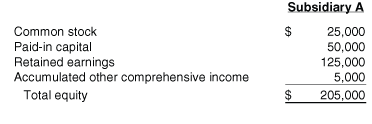 Subsidiary A Common stock " $25,000 " Paid-in capital " 50,000 " Retained earnings " 125,000 " Accumulated other comprehensive income " 5,000 " Total equity " $205,000 "
-
- k The January 1, 20X2 sale of Subsidiary A's shares by Entity ABC is accounted for as an equity transaction in the consolidated financial statements, as follows:
- 1 A noncontrolling interest is recognized in the amount of $41,000 ($205,000 × 20 percent).
- 2 Additional paid-in capital attributable to Entity ABC is increased by $9,000, calculated as the difference between the cash received ($50,000) and the carrying amount of the noncontrolling interest ($41,000).
- 3 Additional paid-in capital attributable to Entity ABC is also increased by $1,000, which represents the carrying amount of Subsidiary A's accumulated other comprehensive income related to the ownership interest sold to the noncontrolling interest ($5,000 × 20 percent = $1,000). Accumulated other comprehensive income attributable to Entity ABC is decreased by a corresponding amount.
- 4 The journal entry to record the sale of Subsidiary A's shares to the noncontrolling shareholders is as follows:
-
 Cash "50,000" Accumulated other comprehensive income (Entity ABC) "1,000" Noncontrolling interest "41,000" Additional paid-in capital (Entity ABC) "10,000"
-
- 1
- l For the year ended December 31, 20X2, the amount of Subsidiary A's net income included in the consolidated financial statements is $20,000.
- m On January 1, 20X3, Entity ABC purchases 1,000 shares in Subsidiary A from the noncontrolling shareholders (50 percent of the noncontrolling interest) for $30,000 for cash, increasing its ownership interest from 80 percent to 90 percent.
- n Immediately before the January 1, 20X3 purchase, the carrying amount of the noncontrolling interest in Subsidiary A was $48,000, which included $4,000 in accumulated other comprehensive income.
- o The January 1, 20X3 purchase of shares from the noncontrolling shareholders is accounted for as an equity transaction in the consolidated financial statements, as follows:
- 1 The noncontrolling interest balance is reduced by $24,000 ($48,000 × 50 percent interest acquired by Entity ABC).
- 2 Additional paid-in capital of Entity ABC is decreased by $6,000, calculated as the difference between the cash paid ($30,000) and the adjustment to the carrying amount of the noncontrolling interest ($24,000).
- 3 Additional paid-in capital of Entity ABC is also decreased by $2,000, which represents the carrying amount of Subsidiary A's accumulated other comprehensive income related to the ownership interest purchased from the noncontrolling shareholders ($4,000 × 50 percent = $2,000).
- 4 Accumulated comprehensive income attributable to Entity ABC is increased by a corresponding amount ($2,000).
- 5 The journal entry to record that purchase of Subsidiary A's shares from the noncontrolling shareholders is as follows:
-
 Noncontrolling interest "24,000" Additional paid-in capital (Entity ABC) "8,000" Accumulated other comprehensive income (Entity ABC) "2,000" Cash "30,000"
-
- 1
- p For the year ended December 31, 20X3, the amount of Subsidiary A's net income included in the consolidated financial statements is $15,000.
-
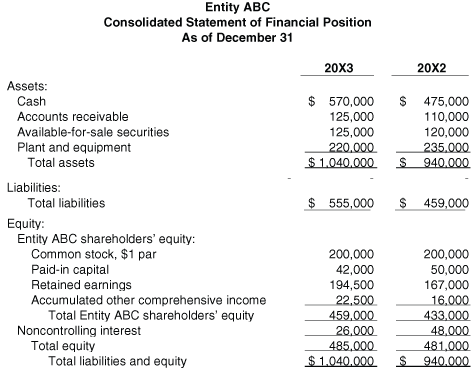 Entity ABC Consolidated Statement of Financial Position As of December 31 20X3 20X2 Assets: Cash " $570,000 " " $475,000 " Accounts receivable " 125,000 " " 110,000 " Available-for-sale securities " 125,000 " " 120,000 " Plant and equipment " 220,000 " " 235,000 " Total assets " $1,040,000 " " $940,000 " - - - Liabilities: Total liabilities " $555,000 " " $459,000 " - - - Equity: Entity ABC shareholders' equity: " Common stock, $1 par " " 200,000 " " 200,000 " Paid-in capital " 42,000 " " 50,000 " Retained earnings " 194,500 " " 167,000 " Accumulated other comprehensive income " 22,500 " " 16,000 " Total Entity ABC shareholders' equity " 459,000 " " 433,000 " Noncontrolling interest " 26,000 " " 48,000 " Total equity " 485,000 " " 481,000 " Total liabilities and equity " $1,040,000 " " $940,000 "
-
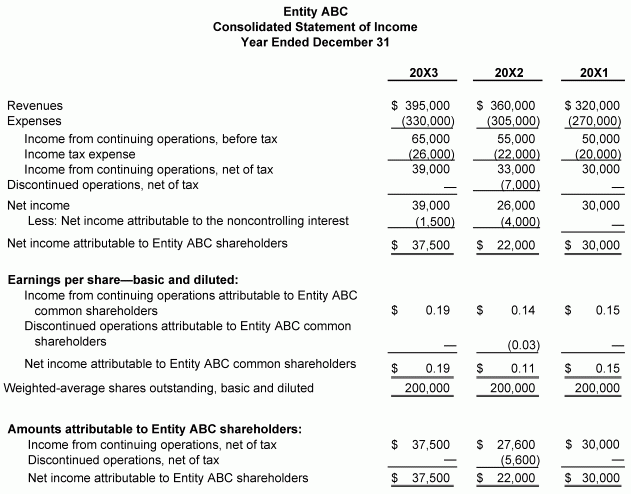 Entity ABC Consolidated Statement of Income Year Ended December 31 20X3 20X2 20X1 Revenues " $395,000 " " $360,000 " " $320,000 " Expenses " (330,000)" " (305,000)" " (270,000)" " Income from continuing operations, before tax " " 65,000 " " 55,000 " " 50,000 " Income tax expense " (26,000)" " (22,000)" " (20,000)" " Income from continuing operations, net of tax " " 39,000 " " 33,000 " " 30,000 " " Discontinued operations, net of tax " — " (7,000)" — Net income " 39,000 " " 26,000 " " 30,000 " " Less: Net income attributable to the noncontrolling interest " " (1,500)" " (4,000)" — Net income attributable to Entity ABC " $37,500 " " $22,000 " " $30,000 " Earnings per share—basic and diluted: " Income from continuing operations attributable to Entity ABC common shareholders" $0.19 $0.14 $0.15 " Discontinued operations attributable to Entity ABC common shareholders" — (0.03) — Net income attributable to Entity ABC common shareholders $0.19 $0.11 $0.15 "Weighted-average shares outstanding, basic and diluted" " 200,000 " " 200,000 " " 200,000 " Amounts attributable to Entity ABC common shareholders: " Income from continuing operations, net of tax " " $37,500 " " $27,600 " " $30,000 " " Discontinued operations, net of tax " — " (5,600)" — Net income " $37,500 " " $22,000 " " $30,000 "
-
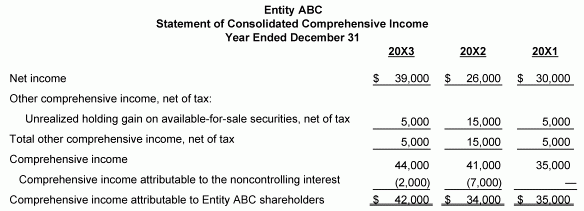 Entity ABC Statement of Consolidated Comprehensive Income Year Ended December 31 20X3 20X2 20X1 Net income " $39,000 " " $26,000 " " $30,000 " " Other comprehensive income, net of tax: " " Unrealized holding gain on available-for-sale securities, net of tax " " 5,000 " " 15,000 " " 5,000 " " Total other comprehensive income, net of tax " " 5,000 " " 15,000 " " 5,000 " Comprehensive income " 44,000 " " 41,000 " " 35,000 " Comprehensive income attributable to the noncontrolling interest " (2,000)" " (7,000)" — Comprehensive income attributable to Entity ABC " $42,000 " " $34,000 " " $35,000 "
-
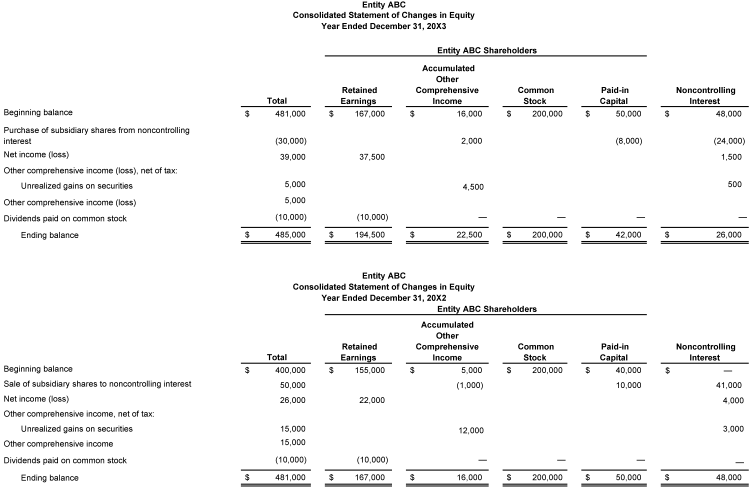 Entity ABC Consolidated Statement of Changes in Equity " Year Ended December 31, 20X3 " Entity ABC Shareholders Accumulated Other Comprehensive Income Retained Earnings " Common Stock " " Paid-in Capital " " Noncontrolling Interest " Total Beginning balance " $481,000 " " $167,000 " " $16,000 " " $200,000 " " $50,000 " " $48,000 " " Purchase of subsidiary shares from noncontrolling interest " " (30,000)" " 2,000 " " (8,000)" " (24,000)" Net income (loss) " 39,000 " " 37,500 " " 1,500 " " Other comprehensive income (loss), net of tax: " Unrealized gains on securities " 5,000 " " 4,500 " 500 Other comprehensive income (loss) " 5,000 " Dividends paid on common stock " (10,000)" " (10,000)" — — — — Ending balance " $485,000 " " $194,500 " " $22,500 " " $200,000 " " $42,000 " " $26,000 " Entity ABC Consolidated Statement of Changes in Equity " Year Ended December 31, 20X2 " Entity ABC Shareholders "Accumulated Comprehensive Income" " Retained Earnings " Common Stock " Paid-in Capital " Noncontrolling Interest Total Beginning balance " $400,000 " " $155,000 " " $5,000 " " $200,000 " " $40,000 " $ — Sale of subsidiary shares to noncontrolling interest " 50,000 " " (1,000)" " 10,000 " " 41,000 " Net income (loss) " 26,000 " " 22,000 " " 4,000 " " Other comprehensive income, net of tax: " Unrealized gains on securities " 15,000 " " 12,000 " " 3,000 " Other comprehensive income " 15,000 " Dividends paid on common stock " (10,000)" " (10,000)" — — — — Ending balance " $481,000 " " $167,000 " " $16,000 " " $200,000 " " $50,000 " " $48,000 "
-
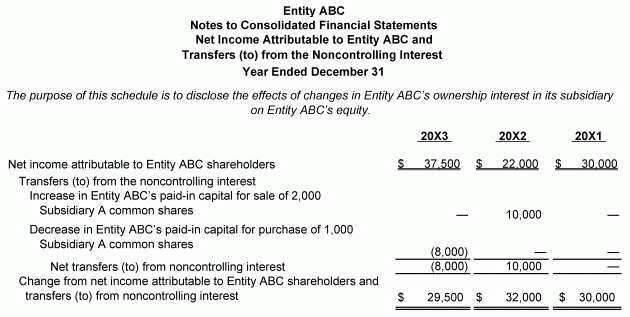 Entity ABC Notes to Consolidated Financial Statements " Net Income Attributable to Entity ABC and Transfers (to) from the Noncontrolling Interest " Year Ended December 31 The purpose of this schedule is to disclose the effects of changes in Entity ABC's ownership interest in its subsidiary on Entity ABC's equity. 20X3 20X2 20X1 Net income attributable to Entity ABC "$ 37,500" $- "$ 22,000" "$ 30,000" Transfers (to) from the noncontrolling interest " Increase in Entity ABC's paid-in capital for sale of 2,000 Subsidiary A common shares " — " 10,000 " — " Decrease in Entity ABC's paid-in capital for purchase of 1,000 Subsidiary A common shares " " (8,000)" — — Net transfers (to) from noncontrolling interest " (8,000)" " 10,000 " — " Change from net income attributable to Entity ABC and transfers (to) from noncontrolling interest " "$ 29,500" "$ 32,000" " $30,000 "
- a Three equal-interest limited partners (Case A)
- b Two equal-interest limited partners (Case B)
- c One hundred equal-interest limited partners (Case C)
- d Required limited partner voting percentages of more than a simple majority (Case D)
- e Four equal-interest limited partners with a required unanimous vote of the limited partnership's kick-out rights through voting interests (Case E)
- f Limited partner and general partner with a required simple majority percentage of the limited partnership's kick-out rights through voting interests—limited partner consolidates (Case F)
- g Four equal-interest limited partners with a required simple majority percentage of the limited partnership's kick-out rights through voting interests—no partner consolidates (Case G).
- a Equal-interest limited partners (Case D1)
- b Limited partners with unequal interests (Case D2).
Variable Interest Entities
- aCompensation for services provided and commensurate with the level of effort required to provide the services
- bPart of service arrangements that include only terms, conditions, or amounts that are customarily present in arrangements for similar services negotiated at arm's length.
- aRemove and replace the Board of Trustees
- bRemove and replace the asset management company
- cVote on the compensation of the asset management company
- dVote on changes to the fundamental investment strategy of the fund
- eApprove the sale of substantially all of the assets of the fund
- fApprove a merger and/or reorganization of the fund
- gApprove the liquidation or dissolution of the fund
- hApprove charter and bylaw amendments
- iIncrease the authorized number of shares.
- aThe power, through voting rights or similar rights, to direct the activities of a legal entity that most significantly impact the entity's economic performance
- bThe obligation to absorb the expected losses of the legal entity
- cThe right to receive the expected residual returns of the legal entity.
- aThe fees are compensation for services provided and are commensurate with the level of effort required to provide those services.
- b
- cThe decision maker or service provider does not hold other interests in the VIE that individually, or in the aggregate, would absorb more than an insignificant amount of the VIE's expected losses or receive more than an insignificant amount of the VIE's expected residual returns.
- dThe service arrangement includes only terms, conditions, or amounts that are customarily present in arrangements for similar services negotiated at arm's length.
- e
- f
- aThe fee arrangement relates to a unique or new service.
- bThe fee arrangement reflects a change in what is considered customary for the services.
- aThose related to guarantees of the value of the assets or liabilities of a VIE
- bObligations to fund operating losses
- cPayments associated with written put options on the assets of the VIE
- dSimilar obligations, such as some liquidity commitments or agreements (explicit or implicit) that protect holders of other interests from suffering losses in the VIE.
- aAn employee of the decision maker or service provider (and its other related parties), except if the employee is used in an effort to circumvent the provisions of the Variable Interest Entities Subsections of this Subtopic.
- bAn employee benefit plan of the decision maker or service provider (and its other related parties), except if the employee benefit plan is used in an effort to circumvent the provisions of the Variable Interest Entities Subsections of this Subtopic.
- aEntity A transfers financial assets to VIE B (a VIE that holds no other assets), retains a subordinated beneficial interest, and reports the transfer as a sale under the provisions of Topic 860.
- bVIE B issues all of its senior beneficial interests in the transferred assets to VIE C. VIE C issues various types of interests in return for cash and uses the cash to pay VIE B. VIE B uses the cash received from VIE C to pay Entity A.
- cEntity A's subordinated beneficial interest is a variable interest in VIE B, but neither VIE B nor Entity A has a variable interest in VIE C.
Illustrations
- aA single party holds all of the beneficial interests in the VIE, and the VIE has no liabilities.
- bThere is no decision maker because the VIE's activities are completely predetermined.
- cAll cash flows are expected to occur in one year or not to occur at all.
- dThe appropriate discount rate (the interest rate on risk-free investments) is 5 percent.
- eNo other factors affect the fair value of the assets. Thus, the present value of the expected cash flows from the pool of financial assets is assumed to be equal to the fair value of the assets.
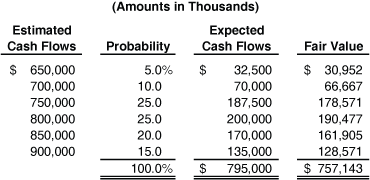 (Amounts in Thousands) Estimated Cash Flows Probability Expected Cash Flows Fair Value " $650,000 " 5.0% " $32,500 " " $30,952 " " 700,000 " 10.0 " 70,000 " " 66,667 " " 750,000 " 25.0 " 187,500 " " 178,571 " " 800,000 " 25.0 " 200,000 " " 190,477 " " 850,000 " 20.0 " 170,000 " " 161,905 " " 900,000 " 15.0 " 135,000 " " 128,571 " 100.0% " $795,000 " " $757,143 "
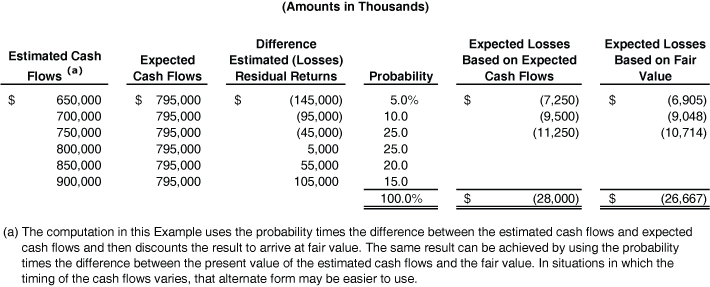 (Amounts in Thousands) Estimated Cash Flows (a) Expected Cash Flows Difference Estimated (Losses) Residual Returns Probability Expected Losses Based on Expected Cash Flows Expected Losses Based on Fair Value " $650,000 " " $795,000 " " $(145,000)" 5.0% " $(7,250)" " $(6,905)" " 700,000 " " 795,000 " " (95,000)" 10.0 " (9,500)" " (9,048)" " 750,000 " " 795,000 " " (45,000)" 25.0 " (11,250)" " (10,714)" " 800,000 " " 795,000 " " 5,000 " 25.0 " 850,000 " " 795,000 " " 55,000 " 20.0 " 900,000 " " 795,000 " " 105,000 " 15.0 100.0% " $(28,000)" " $(26,667)" (a) "The computation in this Example uses the probability times the difference between the estimated cash flows and expected cash flows and then discounts the result to arrive at fair value. The same result can be achieved by using the probability times the difference between the present value of the estimated cash flows and the fair value. In situations in which the timing of the cash flows varies, that alternate form may be easier to use."
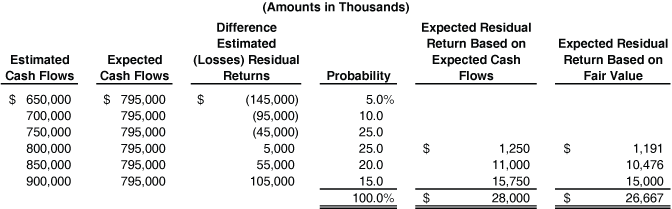 (Amounts in Thousands) Estimated Cash Flows Expected Cash Flows Difference Estimated (Losses) Residual Returns Probability Expected Residual Return Based on Expected Cash Flows Expected Residual Return Based on Fair Value " $650,000 " " $795,000 " " $(145,000)" 5.0% " 700,000 " " 795,000 " " (95,000)" 10.0 " 750,000 " " 795,000 " " (45,000)" 25.0 " 800,000 " " 795,000 " " 5,000 " 25.0 " $1,250 " " $1,191 " " 850,000 " " 795,000 " " 55,000 " 20.0 " 11,000 " " 10,476 " " 900,000 " " 795,000 " " 105,000 " 15.0 " 15,750 " " 15,000 " 100.0% " $28,000 " " $26,667 "
- aOn January 1, 2004, Entity A is formed to purchase a building, 95 percent of which is financed by debt and 5 percent by equity. The lenders will have recourse only to the building in the event that Entity A does not make the required debt payments.
- bOn the same day, Entity B enters into a five-year-market-rate lease for the building from Entity A that includes a guarantee of a portion of the building's residual value. The sum of the present value of the lease payments and the residual value guarantee is less than substantially all the fair value of the building.
- cThere are no other interests in Entity A.
- dThe appropriate discount rate is assumed to be 5 percent.
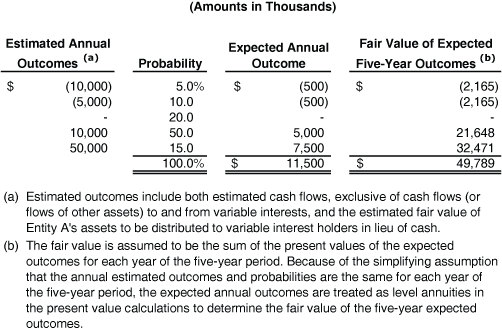 (Amounts in Thousands) Estimated Annual Outcomes (a) Probability Expected Annual Outcome Fair Value of Expected Five-Year Outcomes (b) " $(10,000)" 5.0% $(500) " $(2,165)" " (5,000)" 10.0 (500) " (2,165)" - 20.0 - - " 10,000 " 50.0 " 5,000 " " 21,648 " " 50,000 " 15.0 " 7,500 " " 32,471 " 100.0% " $11,500 " " $49,789 " (a) "Estimated outcomes include both estimated cash flows, exclusive of cash flows (or flows of other assets) to and from variable interests, and the estimated fair value of Entity A's assets to be distributed to variable interest holders in lieu of cash." (b) "The fair value is assumed to be the sum of the present values of the expected outcomes for each year of the five-year period. Because of the simplifying assumption that the annual estimated outcomes and probabilities are the same for each year of the five-year period, the expected annual outcomes are treated as level annuities in the present value calculations to determine the fair value of the five-year expected outcomes."
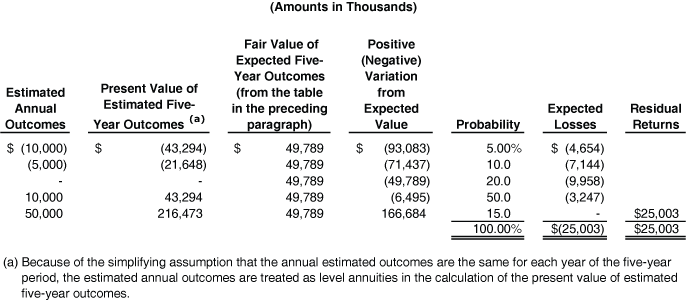 (Amounts in Thousands) Estimated Annual Outcomes Present Value of Estimated Five-Year Outcomes (a) Fair Value of Expected Five-Year Outcomes (from the table in the preceding paragraph) Positive (Negative) Variation from Expected Value Probability Expected Losses Residual Returns " $(10,000)" " $(43,294)" " $49,789 " " $(93,083)" 5.00% " $(4,654)" " (5,000)" " (21,648)" " 49,789 " " (71,437)" 10.0 " (7,144)" - - " 49,789 " " (49,789)" 20.0 " (9,958)" " 10,000 " " 43,294 " " 49,789 " " (6,495)" 50.0 " (3,247)" " 50,000 " " 216,473 " " 49,789 " " 166,684 " 15.0 - " $25,003 " 100.00% " $(25,003)" " $25,003 " (a) "Because of the simplifying assumption that the annual estimated outcomes are the same for each year of the five-year period, the estimated annual outcomes are treated as level annuities in the calculation of the present value of estimated five-year outcomes."
- aFinancial VIE primarily financed by fixed-rate debt, holding investments in longer-term fixed-rate debt (Case A)
- bFinancial VIE primarily financed by fixed-rate debt, holding investments in longer-term fixed- and variable-rate debt (with a fixed-rate swap) (Case B)
- cFinancial VIE primarily financed by fixed-rate debt, holding investments in foreign-currency-denominated debt (with a currency swap) (Case C)
- dFinancial VIE primarily financed by floating-rate debt, holding investments in fixed-rate securities (Case D)
- eFinancial VIE financed by credit-linked notes holding highly rated floating-rate investments and a credit default swap (Case E)
- fRetail-operating VIE (Case F)
- gLessor VIE (direct financing lease) with single lessee (operating lease) (Case G)
- hVIE holding both a fixed-price forward contract to buy and a fixed-price forward contract to sell electricity (Case H).
- aAll the entities are presumed to be VIEs.
- bAll variable interests are variable interests in the VIE (as a whole) rather than variable interests in specified assets of the VIE, based on the guidance in paragraphs .
- cA primary beneficiary has not been identified; however, the determination of the primary beneficiary should be made in accordance with the guidance in paragraphs .
- aStep 1: Analyze the nature of the risks in the VIE.
- bStep 2: Determine the purpose(s) for which the VIE was created and determine the variability the VIE is designed to create and pass along to its interest holders.
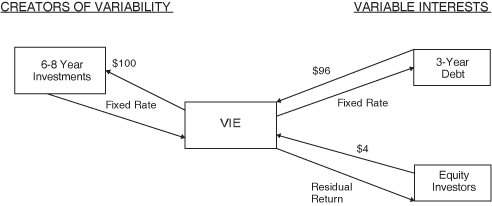
- aCredit risk associated with a possible default by the issuers of the investments in the portfolio with respect to principal and interest payments
- bInterest rate risk associated with interim changes in the fair value of the fixed-rate periodic interest payments received on the fixed-rate investment portfolio
- cInterest rate risk associated with changes in cash received upon the sale of fixed-rate investments prior to maturity.
- aThe VIE was marketed to debt investors as a VIE that will be exposed to credit risk and changes in the fair value of the investments over the three-year life of the VIE due to changes in intermediate-term interest rates, with the equity tranche negotiated to absorb the first dollar risk of loss. It has been determined that substantive subordination is present with respect to these risks.
- bThe VIE was not designed to create and pass along to its interest holders interest rate risk associated with interim changes in fair value of the periodic fixed-rate interest payments received on the investments, based on the nature and terms of the debt and equity interests issued by the VIE.
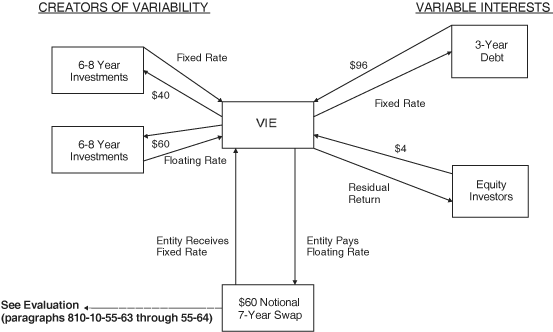
- aCredit risk associated with a possible default by the issuers of the investments in the portfolio with respect to principal or interest payments
- bCredit risk associated with a possible default by the swap counterparty with respect to interest payments and the settlement amount, if any, due to the VIE at the end of three years
- cInterest rate risk associated with changes in the fair value of the fixed-rate periodic interest payments received on the fixed-rate investment portfolio and on the fixed leg of the swap
- dInterest rate risk associated with changes in the periodic interest payments received on the floating-rate investment portfolio
- eInterest rate risk associated with changes in cash received upon the sale of fixed-rate investments before maturity
- fInterest rate risk associated with the amount received or paid upon settlement of the swap at the end of three years.
- aThe VIE was marketed to debt investors as a VIE that will be exposed to credit risk and changes in the fair value of a portfolio of intermediate-term fixed-rate investments (including floating-rate investments effectively converted to fixed-rate investments by the swap) over the three-year life of the VIE due to changes in intermediate-term interest rates, with the equity tranche negotiated to absorb the first dollar risk of loss. It has been determined that substantive subordination is present with respect to these risks.
- bThe swap counterparty is senior to the debt and equity investors, and the debt and equity investors understand that they are also exposed to the credit risk from possible default by the swap counterparty to the extent the swap is an asset to the VIE.
- cThe interest rate swap is strongly indicated as a creator of variability because its underlying is based on observable market rates and it is senior in priority to other interest holders. Although the notional amount of the swap relates to a majority of the assets of the VIE, changes in the cash flows or fair value of the swap are not expected to offset all, or essentially all, of the risk or return (or both) related to those investments because the fair value and cash flows of the VIE's investments are expected to be affected by risk factors other than changes in market interest rates (that is, credit risk).
- dThe VIE was not designed to create and pass along to its interest holders interest rate risk associated with changes in the fair value of the fixed-rate periodic interest payments received on the fixed-rate investment portfolio and on the fixed leg of the swap, based on the nature and terms of the other contracts the VIE has entered into.
- eThe VIE was not designed to create and pass along to its interest holders interest rate risk associated with changes in the periodic interest payments received on the floating-rate investment portfolio, based on the nature and terms of the debt and equity interests issued by the VIE.
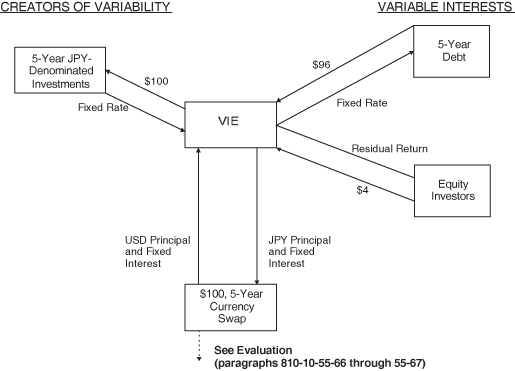
- aCredit risk associated with a possible default by the issuers of the investments in the portfolio with respect to principal and interest payments
- bCredit risk associated with a possible default by the cross-currency swap counterparty with respect to interest payments and the settlement amount, if any, due to the VIE at the end of five years
- cInterest rate risk associated with changes in the fair value of the fixed-rate periodic interest payments received on the fixed-rate investment portfolio and on the receive leg of the cross-currency swap
- dForeign currency exchange risk associated with the periodic interest payments received on the fixed-rate JPY-denominated investments and the final receipt of principal at maturity
- eForeign currency exchange risk associated with the periodic interest payments or receipts and the amount received or paid upon final settlement of the cross-currency swap at the end of five years.
- aThe VIE was marketed to debt investors as a VIE that will be exposed to credit risk from possible default by the issuers of the JPY-denominated investments (principal and interest) as well as credit risk from possible default by the cross-currency swap counterparty, with the equity tranche negotiated to absorb the first dollar risk of loss related to these risks. It has been determined that substantive subordination is present with respect to these risks.
- bThe VIE was created to provide an investment vehicle for debt and equity investors to be exposed to the credit risk of entities whose securities are denominated in JPY.
- cThe swap counterparty is senior to the debt and equity investors, and the debt and equity investors are also exposed to the credit risk from possible default by the swap counterparty to the extent the swap is an asset to the VIE.
- dThe currency swap is strongly indicated as a creator of variability because its underlying is based on observable market rates and it is senior in priority to other interest holders. Although the notional amount of the swap relates to a majority of the assets of the VIE, changes in the cash flows or fair value of the swap are not expected to offset all, or essentially all, of the risk or return (or both) related to those investments because the fair value and cash flows of the VIE's investments are expected to be affected by risk factors other than changes in foreign currency exchange rates (that is, credit risk).
- eThe VIE was not designed to create and pass along to its interest holders interest rate risk associated with changes in the fair value of the fixed-rate periodic interest payments received on the fixed-rate investment portfolio and on the receive leg of the cross-currency swap, based on the nature and terms of the debt and equity contracts issued by the VIE.
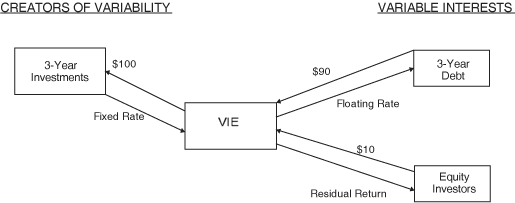
- aCredit risk associated with a possible default by the issuers of the investments in the portfolio with respect to principal or interest payments
- bInterest rate risk associated with changes in the fair value of the fixed-rate periodic interest payments received on the fixed-rate investment portfolio.
- aThe VIE was marketed to debt investors as an entity that will be exposed to changes in the fair value of periodic interest payments received on the investments due to changes in interest rates and credit risk associated with the investment portfolio, with the equity tranche negotiated to absorb the first dollar risk of loss. It has been determined that substantive subordination is present with respect to these risks.
- bThe equity investor has implicitly issued a $90 notional interest rate swap to the VIE in which that investor agrees to pay the VIE a floating rate and receive a fixed rate. However, the maximum amount payable to the VIE is limited to the equity investment. The debt holders will absorb the remaining variability caused by changes in interest rates.
- cThe VIE was created to provide an investment vehicle for debt and equity investors to be exposed to the credit risk and interest rate risk associated with a mismatch between the assets (fixed-rate) and liabilities (floating-rate).
- dThe VIE was designed to create and pass along to its interest holders interest rate risk associated with changes in fair value of the periodic fixed-rate interest payments received on the investments, based on the nature and terms of debt and equity interests issued by the VIE.
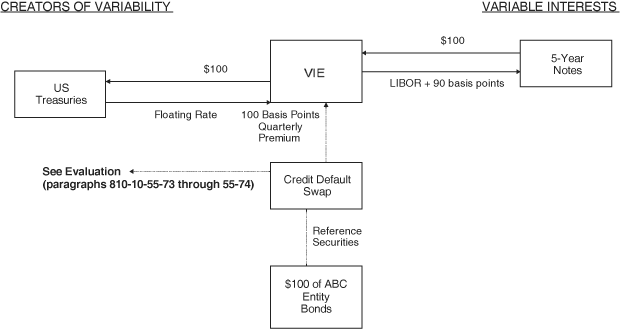
- aCredit risk associated with ABC Entity
- bCredit risk associated with the AAA-rated investments
- cCredit risk associated with possible default by Bank A with respect to premium payments made to the VIE
- dInterest rate risk associated with changes in the cash flows from the interest payments received on the floating-rate investments.
- aThe VIE was marketed to the note holders as a VIE that will be exposed to credit risk associated with ABC Entity through the credit default swap, with a small amount of credit risk from Bank A, because the notes, if there is no credit event that triggers settlement of the credit default swap, are fully collateralized by AAA-rated investments.
- bThe VIE has sold credit protection on ABC Entity to Bank A and has purchased credit protection on ABC Entity from the note holders, who are expected to receive an enhanced return over the AAA floating rate investment for assuming the credit risk of ABC Entity and (to a lesser extent) the credit risk of Bank A.
- cThe written credit default swap is strongly indicated as a creator of variability because its underlying is based on observable market variables and it is senior in priority to other interest holders.
- dThe VIE was not designed to create and pass along to its interest holders interest rate risk associated with changes in cash flows from the periodic interest payments received on the floating-rate investments, based on the nature and terms of the credit-linked notes issued by the VIE.
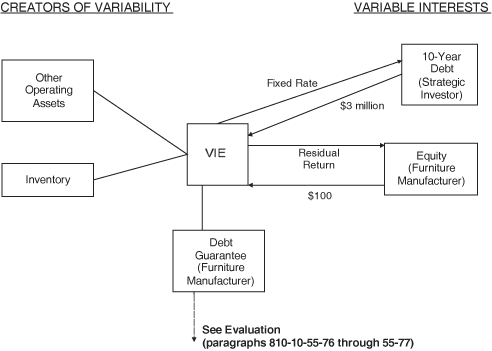
- aSales volume risk
- bRetail furniture price risk
- cInventory price risk
- dOther operating cost risk.
- aThe VIE was created to enable the furniture manufacturer to extend its existing business line into a particular geographic region that lacked a viable distribution channel.
- bThe furniture manufacturer is absorbing variability from the operations of the VIE through its guarantee of the debt.
- cThe debt interest was negotiated as a fixed-rate investment in a retail operating VIE, supported by the furniture manufacturer.
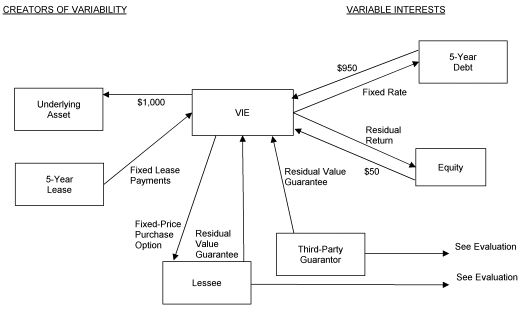
- aPrice risk with respect to changes in fair value of the underlying asset
- bCredit risk associated with possible default by the lessee of the underlying asset with respect to the lease payments
- cInterest rate risk associated with changes in the fair value of the future lease payments.
- aAlthough the lease payments are fixed, the VIE was not designed to be exposed to interim changes in fair value of those lease payments due to interest rate risk because the VIE is not expected to sell the underlying asset before maturity of the fixed-rate debt.
- bThe primary purpose for which the VIE was created was to provide the lessee with use of the underlying asset for five years with substantially all of the rights and obligations of ownership.
- cThe residual value guarantee effectively transfers substantially all of the risk associated with the underlying asset (that is, declines in value) to the lessee. Therefore, the variability that is transferred to that interest holder is strongly indicated as variability that the VIE is designed to create and pass along to its interest holders.
- dThe fixed-price purchase option effectively transfers substantially all of the rewards from the underlying asset (that is, increases in value) to the lessee.
- eThe VIE is designed to be exposed to the risks associated with a cumulative change in fair value of the underlying asset at the end of five years as well as credit risk from possible default by the lessee with regard to lease payments.
- fThe VIE was marketed to potential investors as an investment in a portfolio of AA-rated assets collateralized by an underlying asset that would provide a fixed-rate return to debt holders equivalent to AA-rated assets.
- gThe role of the residual value guarantee and fixed-price purchase option in the design of the VIE, regardless of their legal form or accounting classification, dictates whether those interests shall be treated as creating risk for the VIE or absorbing risk from the VIE. Therefore, price risk with respect to changes in fair value of the underlying asset is a relevant risk for the VIE, even though the lessor VIE records a net investment in the direct financing lease, rather than the underlying asset itself, on its balance sheet for accounting purposes.
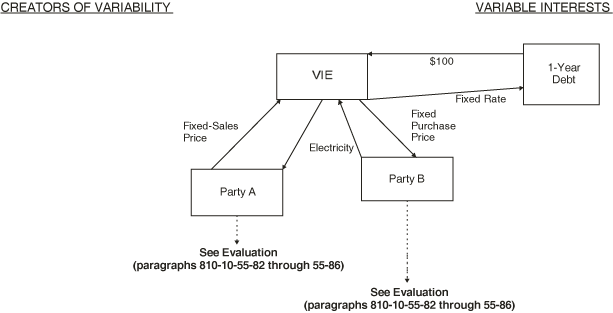
- aElectricity price risk, which affects the fair values of the fixed-price forward purchase contract and the fixed-price forward sales contract
- bCredit risk associated with possible default by the counterparty to the forward purchase contract
- cCredit risk associated with possible default by the counterparty to the forward sales contract.
- aThe VIE was designed to hold offsetting positions with respect to electricity price risk through a forward purchase contract and a forward sales contract with terms that are the same (except for fixed settlement price).
- bThe debt was marketed to the investors as a fixed-rate one-year investment with an enhanced yield due to risk of possible default by either Party A or Party B with respect to their forward contracts with the VIE.
- cTo the extent electricity prices rise and the forward purchase contract (with Party B) increases in value (from the VIE's perspective), the debt investors will be exposed to credit risk to the extent that Party B defaults on its obligation.
- dTo the extent electricity prices drop and the forward sales contract increases in value (from the VIE's perspective), the debt investors will be exposed to credit risk to the extent that Party A defaults on its obligation.
- eThe forward to buy electricity at a fixed price is strongly indicated as a creator of variability because its underlying is based on observable market prices and it is senior in priority to the debt holders.
- fThe forward to sell electricity at a fixed price is strongly indicated as a creator of variability because its underlying is based on observable market prices and is senior in priority to the debt holders.
- gChanges in fair value of each forward contract are expected to offset all, or essentially all, of the risk and return related to the other forward contract, so a further analysis of the design of the VIE is necessary in order to conclude whether each forward contract is a creator of variability or a variable interest.
- aThe debt interests in this VIE were marketed on behalf of the electricity producer as fixed-rate debt exposed to the credit risk of the counterparties to the forward agreements.
- bThe counterparties to the forward agreements did not participate significantly in the design of the VIE.
- aCommercial mortgage-backed securitization (Case A)
- bAsset-backed collateralized debt obligation (Case B)
- cStructured investment vehicle (Case C)
- dCommercial paper conduit (Case D)
- eGuaranteed mortgage-backed securitization (Case E)
- fResidential mortgage-backed securitization (Case F)
- gLease entity (Case G)
- hCollaboration—Joint venture arrangement (Case H)
- iFurniture manufacturing entity (Case I)
- jInvestment fund 1—Annual and performance-based fees and additional interests (Case J)
- kInvestment fund 2—Annual and performance-based fees and no additional interests (Case K)
- leCommerce Entity (Case L).
- aThe legal entities in Cases A-I and Case L are presumed to be VIEs.These presumptions should be understood as fact and not as conclusions based on the other facts and circumstances in each case. Case J provides an explanation as to why the legal entity is a VIE. Case K does not indicate whether the legal entity is a VIE because the decision maker does not have a variable interest in the legal entity.
- bAll variable interests are presumed to be variable interests in the VIE as a whole, rather than variable interests in specified assets of the VIE, on the basis of the guidance in paragraphs .
- aCompensation for services provided and commensurate with the level of effort required to provide the services
- bPart of a service arrangement that includes only terms, conditions, or amounts that are customarily present in arrangements for similar services negotiated at arm's length.
- aThe primary purposes for which the VIE was created were to provide liquidity to the transferor to originate additional loans and to provide investors with the ability to invest in a pool of commercial mortgage loans.
- bThe VIE was marketed to debt investors as a VIE that would be exposed to the credit risk associated with the possible default by the borrowers with respect to principal and interest payments, with the equity tranche designed to absorb the first dollar risk of loss. Additionally, the marketing of the transaction indicated that such risks would be mitigated by subordination of the equity tranche.
- cThe VIE is not exposed to prepayment risk because the commercial mortgage loans contain provisions that require the borrower to pay the full scheduled interest and principal if the loan is extinguished prior to maturity.
- aCompensation for services provided and commensurate with the level of effort required to provide the services
- bPart of a service arrangement that includes only terms, conditions, or amounts that are customarily present in arrangements for similar services negotiated at arm's length.
- aIt is the variable interest holder with the power to direct the activities of the VIE that most significantly impact the VIE's economic performance.
- bAs the equity tranche holder, it has the obligation to absorb losses of the VIE and the right to receive benefits from the VIE, either of which could potentially be significant to the VIE.
- aCompensation for services provided and commensurate with the level of effort required to provide the services
- bPart of a service arrangement that includes only terms, conditions, or amounts that are customarily present in arrangements for similar services negotiated at arm's length.
- aThe primary purposes for which the VIE was created were to provide investors with the ability to invest in a pool of asset-backed securities, to earn a positive spread between the interest that the VIE earns on its portfolio and the interest paid to the debt investors, and to generate management fees for the manager.
- bThe transaction was marketed to potential debt investors as an investment in a portfolio of asset-backed securities with exposure to the credit risk associated with the possible default by the issuers of the asset-backed securities in the portfolio and to the interest rate risk associated with the management of the portfolio. Additionally, the marketing of the transaction indicated that such risks would be mitigated by the support from the equity tranche.
- cThe equity tranche was designed to absorb the first dollar risk of loss related to credit risk and interest rate risk and to receive any residual returns from a favorable change in interest rates or credit risk that affects the proceeds received on the sale of asset-backed securities in the portfolio.
- aCompensation for services provided and commensurate with the level of effort required to provide the services
- bPart of a service arrangement that includes only terms, conditions, or amounts that are customarily present in arrangements for similar services negotiated at arm's length.
- aIt is the variable interest holder with the power to direct the activities of the VIE that most significantly impact the VIE's economic performance (and no single entity has the unilateral ability to exercise kick-out rights).
- bThrough its equity interest, it has the obligation to absorb losses of the VIE that could potentially be significant to the VIE and the right to receive benefits from the VIE that could potentially be significant to the VIE.
- aInvestment management—This management must adhere to the investment guidelines established at inception of the VIE. These guidelines include descriptions of eligible investments and requirements regarding the composition of the credit portfolio (including limits on country risk exposures, diversification limits, and ratings requirements).
- bFunding management—This function provides funding management and operational support in relation to the debt issued and the equity with the objective of minimizing the cost of borrowing, managing interest rate and liquidity risks, and managing the capital adequacy of the VIE.
- cDefeasance management—An event of defeasance occurs upon the failure of the rating agencies to maintain the ratings of the debt securities issued by the VIE at or above certain specified levels. In the event of defeasance, the sponsor is responsible for overseeing the orderly liquidation of the investment portfolio and the orderly discharge of the VIE's obligations. This includes managing the market and credit risks of the portfolio.
- aCompensation for services provided and commensurate with the level of effort required to provide the services
- bPart of a service arrangement that includes only terms, conditions, or amounts that are customarily present in arrangements for similar services negotiated at arm's length.
- aThe primary purposes for which the VIE was created were to provide investors with the ability to invest in a pool of high-quality debt, to maximize the spread it earns on its asset portfolio over its weighted-average cost of funding, and to generate management fees for the sponsor.
- bThe transaction was marketed to potential debt investors as an investment in a portfolio of high-quality debt with exposure to the credit risk associated with the possible default by the issuers of the debt in the portfolio.
- cThe equity tranche is negotiated to absorb the first dollar risk of loss related to credit, liquidity, fair value, and interest rate risk and to receive a portion of the benefit from a favorable change in credit, fair value, and interest rates.
- dThe principal risks to which the VIE is exposed include credit, interest rate, and liquidity risk.
- aCompensation for services provided and commensurate with the level of effort required to provide the services
- bPart of a service arrangement that includes only terms, conditions, or amounts that are customarily present in arrangements for similar services negotiated at arm's length.
- aIt is the variable interest holder with the power to direct the activities of the VIE that most significantly impact the VIE's economic performance.
- bThrough its implicit financial responsibility to ensure that the VIE operates as designed, it has the obligation to absorb losses of the VIE that could potentially be significant to the VIE.
- aFirst by the subordinated note holders
- bSecond by the sponsor's letter of credit
- cThird by the short-term debt holders.
- aEstablishes the terms of the VIE
- bApproves the sellers permitted to sell to the VIE
- cApproves the assets to be purchased by the VIE
- dMakes decisions regarding the funding of the VIE including determining the tenor and other features of the short-term debt issued
- eAdministers the VIE by monitoring the assets, arranging for debt placement, compiling monthly reports, and ensuring compliance with the VIE's credit and investment policies.
- aCompensation for services provided and commensurate with the level of effort required to provide the services
- bPart of a service arrangement that includes only terms, conditions, or amounts that are customarily present in arrangements for similar services negotiated at arm's length.
- aThe primary purposes for which the VIE was created were to provide investors with the ability to invest in a pool of highly rated medium-term assets, to provide the multiple sellers to the VIE with access to lower-cost funding, to earn a positive spread between the interest that the VIE earns on its asset portfolio and its weighted-average cost of funding, and to generate fees for the sponsor.
- bThe transaction was marketed to potential debt investors as an investment in a portfolio of highly rated medium-term assets with minimal exposure to the credit risk associated with the possible default by the issuers of the assets in the portfolio. The subordinated debt is designed to absorb the first dollar risk of loss related to credit and interest rate risk. The VIE is marketed to all investors as having a low probability of credit loss due to the nature of the assets obtained. Furthermore, the VIE is marketed to the short-term debt holders as having protection from liquidity risk due to the liquidity facility provided by the sponsor.
- cThe principal risks to which the VIE is exposed include credit, interest rate, and liquidity.
- aCompensation for services provided and commensurate with the level of effort required to provide the services
- bPart of a service arrangement that includes only terms, conditions, or amounts that are customarily present in arrangements for similar services negotiated at arm's length.
- aIt is the variable interest holder with the power to direct the activities of the VIE that most significantly impact the VIE's economic performance.
- bThrough its letter of credit and liquidity facility, the sponsor has the obligation to absorb losses that could potentially be significant to the VIE, and, through its fees for the letter of credit and liquidity facility, the sponsor has the right to receive benefits that could potentially be significant to the VIE.
- aThe primary purposes for which the VIE was created were to provide investors with the ability to invest in a pool of residential mortgage loans with a third-party guarantee for 100 percent of the principal and interest payments due on the mortgage loans in the VIE, to provide the transferor to the VIE with access to liquidity for its originated loans and an ongoing servicing fee, and to generate fees for the guarantor.
- bThe transaction was marketed to potential debt security holders as an investment in a portfolio of residential mortgage loans with exposure to the credit risk of the guarantor and prepayment risk associated with the underlying assets of the VIE.
- cThe principal risks to which the VIE is exposed include credit risk of the underlying assets, prepayment risk, and the risk of fluctuations in the value of the underlying real estate. The credit risk of the underlying assets and the risk of fluctuations in the value of the underlying real estate are fully absorbed by the guarantor.
- aIt is the variable interest holder with the power to direct the activities of the VIE that most significantly impact the VIE's economic performance.
- bThrough its guarantee, it has the obligation to absorb losses of the VIE that could potentially be significant to the VIE.
- aModifying the terms of loans when default is reasonably foreseeable
- bTemporary forbearance on collections of principal and interest (such amounts would be added to the unpaid balance on the loan)
- cShort sales in which the servicer allows the underlying borrower to sell the mortgaged property even if the anticipated sale price will not permit full recovery of the contractual loan amounts.
- aCompensation for services provided and commensurate with the level of effort required to provide those services
- bPart of a service arrangement that includes only terms, conditions, or amounts that are customarily present in arrangements for similar services negotiated at arm's length.
- aThe primary purposes for which the VIE was created were to provide investors with the ability to invest in a pool of residential mortgage loans and to provide the transferor to the VIE with access to liquidity for its originated loans and an ongoing servicing fee and potential residual returns.
- bThe transaction was marketed to potential senior debt security holders as an investment in a portfolio of residential mortgage loans with credit enhancement provided by the residual tranche and prepayment risk associated with the underlying assets of the VIE. The marketing of the transaction indicated that credit risk would be mitigated by the subordination of the residual tranche.
- cThe principal risks to which the VIE is exposed include credit of the underlying assets, prepayment risk, and the risk of fluctuations in the value of the underlying real estate.
- aCompensation for services provided and commensurate with the level of effort required to provide those services
- bPart of a service arrangement that includes only terms, conditions, or amounts that are customarily present in arrangements for similar services negotiated at arm's length.
- aIt is the variable interest holder with the power to direct the activities of the VIE that most significantly impact the VIE's economic performance.
- bThrough its residual tranche ownership, it has the obligation to absorb losses and the right to receive benefits, either of which could potentially be significant to the VIE.
- aThe primary purpose for which the VIE was created was to provide the lessee with use of the underlying asset for five years with substantially all of the rights and obligations of ownership, including tax benefits.
- bThe VIE was marketed to potential investors as an investment in a portfolio of AA-rated assets collateralized by an underlying asset that is leased that would provide a fixed-rate return to debt holders equivalent to AA-rated assets. The return to equity investors is expected to be slightly greater than the return to the debt investors because the equity is subordinated to the debt.
- cThe residual value guarantee effectively transfers substantially all of the risk associated with the underlying asset (that is, decreases in value) to the lessee and the fixed-price purchase option effectively transfers substantially all of the rewards from the underlying asset (that is, increases in value) to the lessee.
- dThe VIE is designed to be exposed to the risks associated with a cumulative change in fair value of the underlying asset at the end of five years as well as credit risk related to the potential default by the lessee of its contractually required lease payments.
- aIt is the variable interest holder with the power to direct the activities of the VIE that most significantly impact the VIE's economic performance.
- bThrough its residual value guarantee and purchase option, it has the obligation to absorb losses of the VIE that could potentially be significant to the VIE and the right to receive benefits from the VIE that could potentially be significant to the VIE.
- aJoint decision making, different activities (Case H1)
- bSeparate decision making, different activities (Case H2)
- cSeparate decision making, same activities (Case H3)
- dSeparate decision making, similar and different activities (Case H4).
- aReporting Entity A and Reporting Entity B form a VIE to manufacture, distribute, and sell a beverage. The VIE is funded with $95 million of 20-year fixed-rate debt and $5 million of equity. The debt is widely dispersed among third-party investors. The equity is held by Reporting Entity A and Reporting Entity B. Reporting Entity A and Reporting Entity B are not related parties.
- bReporting Entity A and Reporting Entity B each have 50 percent of the voting rights and each represents 50 percent of the board of directors.
- cReporting Entity A is a beverage manufacturer and distributor. Reporting Entity B is also a beverage manufacturer and distributor.
- aThe primary purpose for which the VIE was created was to enable the furniture manufacturer to extend its existing business line into a particular geographic region that lacked a viable distribution channel.
- bThe VIE was marketed to the financial investor as a fixed-rate investment in a retail operating entity, supported by the furniture manufacturer's expertise and guarantee.
- cThe furniture manufacturer's guarantee of the debt effectively transfers all of the operating risk of the VIE to the furniture manufacturer.
- aIt is the variable interest holder with the power to direct the activities of the VIE that most significantly impact the VIE's economic performance.
- bThrough its equity interest and debt guarantee, it has the obligation to absorb losses of the VIE that could potentially be significant to the VIE and the right to receive benefits from the VIE that could potentially be significant to the VIE.
- aThe ability to remove the general partner from its decision-making authority or to dissolve (liquidate) the fund without cause (as distinguished from with cause)
- bThe ability to block or participate in certain significant financial and operating decisions of the limited partnership that are made in the ordinary course of business.
- aCompensation for services provided and commensurate with the level of effort required to provide those services
- bPart of a compensation arrangement that includes only terms, conditions, or amounts that are customarily present in arrangements for similar services negotiated at arm's length.
- aThe fund is designed to provide limited partners with exposure to the risks and returns of the fund.
- bThe fund was marketed to potential investors as an investment in a pool of securities with exposure to specific enterprise risks, market liquidity, and general market volatility of the investments. The limited partners have granted the general partner power to direct the activities that most significantly impact the VIE's economic performance, which include management of their invested capital, on the basis of the prior performance of the general partner.
- cThe fee structure is designed to provide greater compensation to the general partner if the fund generates returns for the third-party limited partners that are above the specified profit level. The specified profit level is based on the activities of the fund and the nature of the fund's assets. While the general partner's fee structure may provide an incentive for the general partner to take additional risk to realize its performance-based fee, the annual and performance-based fees are designed to do all of the following:
- 1Provide compensation to the general partner for its services that is commensurate with the level of effort required to provide the services
- 2Include only terms, conditions, or amounts that are customarily present in arrangements for similar services negotiated at arm's length.
- 1
- aCompensation for services provided and commensurate with the level of effort required to provide those services
- bPart of a compensation arrangement that includes only terms, conditions, or amounts that are customarily present in arrangements for similar services negotiated at arm's length.
- aIt is the variable interest holder with the power to direct the activities of the VIE that most significantly impact the VIE's economic performance.
- bThrough its investment in the fund, it has the obligation to absorb losses of the VIE that could potentially be significant to the VIE and the right to receive benefits from the VIE that could potentially be significant to the VIE.
- aCompensation for services provided and commensurate with the level of effort required to provide those services
- bPart of a service arrangement that includes only terms, conditions, or amounts that are customarily present in arrangements for similar services negotiated at arm's length.
- aCompensation for services provided but not commensurate with the level of effort required to provide those services
- bPart of a service arrangement that does not include only terms, conditions, or amounts that are customarily present in arrangements for similar services negotiated at arm's length.
- aThe primary purpose for the creation of the VIE was to bypass foreign investment restrictions and enable foreign investors (through their ownership of Company A) to participate indirectly in restricted sectors in which Company B operates through a series of contractual arrangements.
- bCompany A will receive all of the net income but none of the net losses of the VIE.
- cThe equity investors, the senior management of Company A, are exposed to the net losses of the VIE through their equity investments.
- aCompensation for services provided but not commensurate with the level of effort required to provide those services
- bPart of a service arrangement that does not include only terms, conditions, or amounts that are customarily present in arrangements for similar services negotiated at arm's length.
- aIt is the variable interest holder with the power to direct the activities of the VIE that most significantly impact the VIE's economic performance.
- bThrough fee arrangements, it has the right to receive benefits from the VIE that could potentially be significant to the VIE.
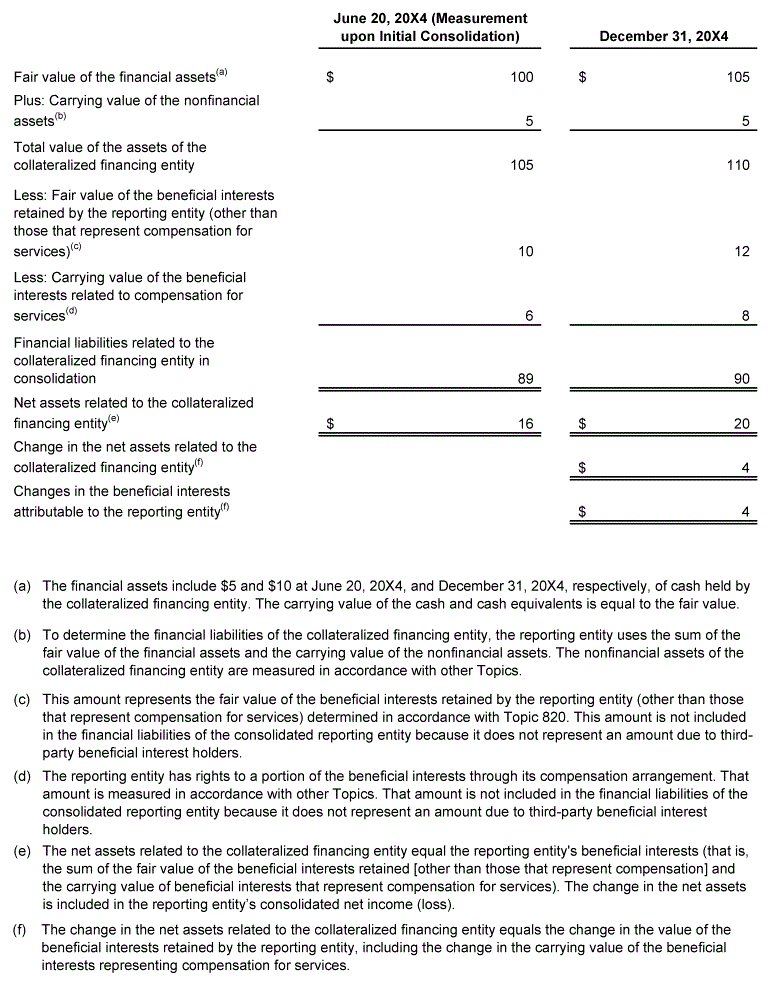 "June 20, 20X4 (Measurement upon Initial Consolidation)" "December 31, 20X4" Fair value of the financial assets(a) $100 $105 Plus: Carrying value of the nonfinancial assets(b) 5 5 assets(a) Total value of the assets of the collateralized financing entity 105 110 Less: Fair value of the beneficial interests retained by the reporting entity (other than those that represent compensation for services)(c) 10 12 Less: Carrying value of the beneficial interests related to compensation for services(d) 6 8 Financial liabilities related to the collateralized financing entity in consolidation 89 90 Net assets related to the collateralized financing entity(e) $16 $20 Change in the net assets related to the collateralized financing entity(f) $4 Changes in the beneficial interests attributable to the reporting entity(f) $4 (a) "The financial assets include $5 and $10 at June 20, 20X4, and December 31, 20X4, respectively, of cash held by the collateralized financing entity. The carrying value of the cash and cash equivalents is equal to the fair value." (b) "To determine the financial liabilities of the collateralized financing entity, the reporting entity uses the sum of the fair value of the financial assets and the carrying value of the nonfinancial assets. The nonfinancial assets of the collateralized financing entity are measured in accordance with other Topics." (c) This amount represents the fair value of the beneficial interests retained by the reporting entity (other than those that represent compensation for services) determined in accordance with Topic 820. This amount is not included in the financial liabilities of the consolidated reporting entity because it does not represent an amount due to third-party beneficial interest holders. (d) The reporting entity has rights to a portion of the beneficial interests through its compensation arrangement. That amount is measured in accordance with other Topics. That amount is not included in the financial liabilities of the consolidated reporting entity because it does not represent an amount due to third-party beneficial interest holders. (e) "The net assets related to the collateralized financing entity equal the reporting entity's beneficial interests (that is, the sum of the fair value of the beneficial interests retained [other than those that represent compensation] and the carrying value of beneficial interests that represent compensation for services). The change in the net assets is included in the reporting entity's consolidated net income (loss)." (f) "The change in the net assets related to the collateralized financing entity equals the change in the value of the beneficial interests retained by the reporting entity, including the change in the carrying value of the beneficial interests representing compensation for services."
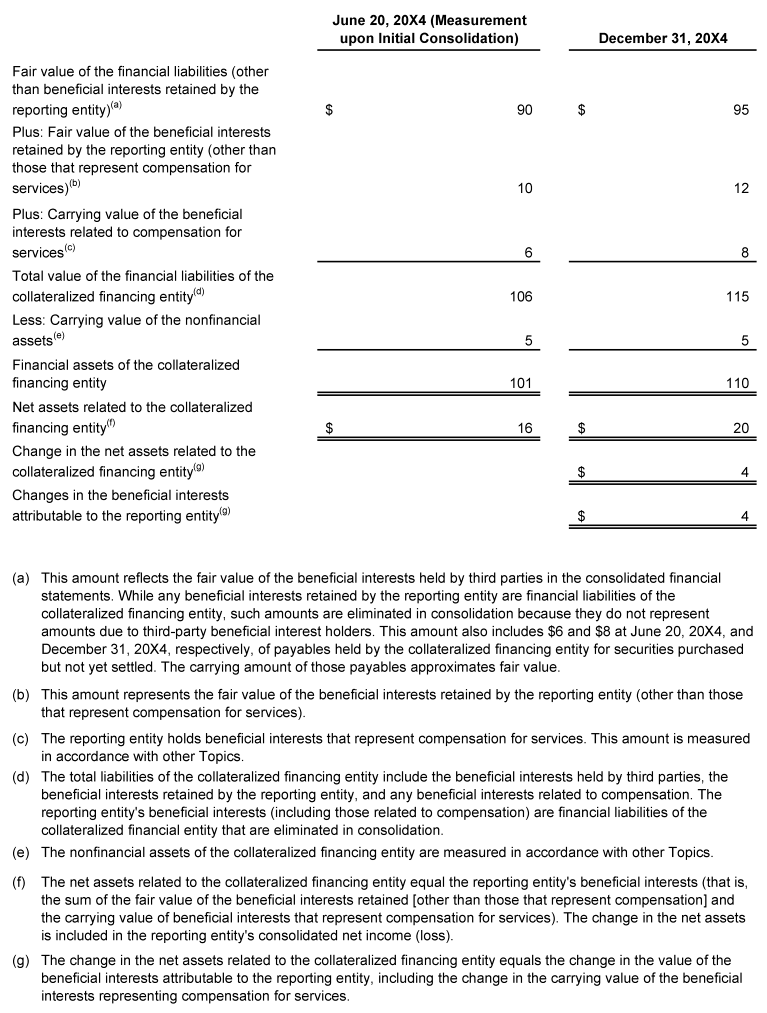 "June 20, 20X4 (Measurement upon Initial Consolidation)" "December 31, 20X4" Fair value of the financial liabilities (other than beneficial interests retained by the reporting entity)(a) $90 $95 Plus: Fair value of the beneficial interests retained by the reporting entity (other than those that represent compensation for services)(b) 10 12 Plus: Carrying value of the beneficial interests related to compensation for services(c) 6 8 Total value of the financial liabilities of the collateralized financing entity(d) 106 115 Less: Carrying value of the nonfinancial assets(e) 5 5 Financial assets of the collateralized financing entity 101 110 Net assets related to the collateralized financing entity(f) $16 $20 Change in the net assets related to the collateralized financing entity(g) $4 Changes in the beneficial interests attributable to the reporting entity(g) $4 (a) "This amount reflects the fair value of the beneficial interests held by third parties in the consolidated financial statements. While any beneficial interests retained by the reporting entity are financial liabilities of the collateralized financing entity, such amounts are eliminated in consolidation because they do not represent amounts due to third-party beneficial interest holders. This amount also includes $6 and $8 at June 20, 20X4, and December 31, 20X4, respectively, of payables held by the collateralized financing entity for securities purchased but not yet settled. The carrying amount of those payables approximates fair value." (b) This amount represents the fair value of the beneficial interests retained by the reporting entity (other than those that represent compensation for services). (c) The reporting entity holds beneficial interests that represent compensation for services. This amount is measured in accordance with other Topics. (d) "The total liabilities of the collateralized financing entity include the beneficial interests held by third parties, the beneficial interests retained by the reporting entity, and any beneficial interests related to compensation. The reporting entity's beneficial interests (including those related to compensation) are financial liabilities of the collateralized financial entity that are eliminated in consolidation." (e) The nonfinancial assets of the collateralized financing entity are measured in accordance with other Topics. (f) "The net assets related to the collateralized financing entity equal the reporting entity's beneficial interests (that is, the sum of the fair value of the beneficial interests retained [other than those that represent compensation] and the carrying value of beneficial interests that represent compensation for services). The change in the net assets is included in the reporting entity's consolidated net income (loss)." (g) "The change in the net assets related to the collateralized financing entity equals the change in the value of the beneficial interests attributable to the reporting entity, including the change in the carrying value of the beneficial interests representing compensation for services."
- aAccounting Alternative—Common Control Exists (Example 11)
- bAccounting Alternative—Common Control Does Not Exist (Example 12).
- aEntities A (Parent), B (the reporting entity), C (a legal entity), and E (a legal entity) are all private companies.
- bEntity A holds a majority of the voting shares of Entities B and C.
- cEntity C holds a majority of the voting shares of Entity E.
- aEntities A (Parent), B (the reporting entity), C (a legal entity), and E (a legal entity) are all private companies.
- bEntity A holds a majority of the voting shares of Entities B and C.
- cEntities A, B, and C do not hold any voting shares of Entity E (directly or indirectly). However, Entity A has extended subordinated financial support (in the form of debt) to Entity E.
- aCommon control leasing arrangement (Example 13)
- bCar Company (reporting entity) under common control with Engine Company, Tire Company, and Purse Company (Example 14).
- aThe sole owner (not a public business entity) of Manufacturing Entity (a private company) also is the sole owner of Lessor Entity (a private company).
- bThe reporting entity is Manufacturing Entity.
- cManufacturing Entity leases its manufacturing facility from Lessor Entity.
- dLessor Entity owns no assets other than the manufacturing facility being leased to Manufacturing Entity.
- eManufacturing Entity pays property taxes on behalf of Lessor Entity and maintains the manufacturing facility.
- fThe sole owner of both entities has provided a guarantee of Lessor Entity's mortgage as required by the external lender.
- gManufacturing Entity has elected to apply the accounting alternative described in paragraph 810-10-15-17AD.
- aManufacturing Entity (a private company) and Lessor Entity are under common control.
- bManufacturing Entity and Lessor Entity are under common control of an individual that is not a public business entity.
- cLessor Entity is not a public business entity.
- dManufacturing Entity does not directly or indirectly hold a controlling financial interest in Lessor Entity when considering only the General Subsections of this Topic.
- aReporting entity Car Company (Car Co.), a private company, produces vehicles for sale.
- bCar Co. has elected to apply the accounting alternative described in paragraph 810-10-15-17AD.
- cThe sole owner (not a public business entity) of Car Co. also is the sole owner of Engine Company (Engine Co.), Tire Company (Tire Co.), and Purse Company (Purse Co.). Therefore, Car Co., Engine Co., Tire Co., and Purse Co. are considered to be under common control. Only Purse Co. meets the definition of a public business entity.
- dAll companies under common control have third-party debt, and each respective company has pledged its assets as collateral for that debt. The third-party debt on each respective company is personally guaranteed by the owner.
- eEngine Co. assumptions:
- 1Engine Co. was created by the owner to vertically integrate the supply chain for Car Co.'s production of vehicles.
- 2Engine Co. produces engines based on Car Co.'s design specifications.
- 3Engine Co. is the sole engine supplier for Car Co., and substantially all of Engine Co.'s production is sold to Car Co.
- 4No other engines on the market could replace the engines supplied by Engine Co.
- 5During 20XX, Car Co. charged Engine Co. $225,684 for management and other services rendered.
- 6During 20XX, Car Co. purchased $9,482,513 in engines from Engine Co.
- 7Engine Co. has an outstanding loan for $600,000 due to Car Co. that is unsecured and accrues interest at 6 percent. This loan is subordinated to all other debt, and there are no specific repayment terms.
- 8Historically, Car Co. has provided funding to Engine Co. at the request of the owner even though there is no existing contractual requirement to do so.
- 9Total book value of Engine Co.'s liabilities is $2,459,127 as of December 31, 20XX.
- 1
- fTire Co. assumptions:
- 1Tire Co. was created by the owner to vertically integrate the supply chain for the Car Co.'s production of vehicles.
- 2Tire Co. sells a majority of its tires to Car Co.
- 3Many substitutes on the market could replace the tires provided by Tire Co.
- 4During 20XX, Car Co. charged Tire Co. $74,568 for management and other services rendered.
- 5During 20XX, Car Co. purchased $3,792,929 of tires from Tire Co.
- 6Tire Co. has an outstanding loan for $200,000 due to Car Co. that is unsecured and accrues interest at 6 percent. This loan is subordinated to all other debt, and there are no specific repayment terms.
- 7Other than the $200,000 loan, Car Co. has never provided any other additional funding to Tire Co. and is not contractually obligated to do so.
- 8Total book value of Tire Co.'s liabilities is $1,250,000 as of December 31, 20XX.
- 1
- gPurse Co. assumptions:
- 1Purse Co. sells high-end designer purses.
- 2No significant transactions or arrangements exist between Purse Co. and the other entities under common control.
- 3Car Co. did not provide any management services to Purse Co.
- 4Car Co. has never provided any additional funding to Purse Co. and is not contractually obligated to do so.
- 5Total book value of Purse Co.'s liabilities is $1,000,000 as of December 31, 20XX.
- 1
- aCar Co. (a private company), Engine Co., and Tire Co. are under common control.
- bCar Co., Engine Co., and Tire Co. are under common control of an individual that is not a public business entity.
- cNeither Engine Co. nor Tire Co. is a public business entity.
- dCar Co. does not directly or indirectly hold a controlling financial interest in Engine Co. or Tire Co. when considering only the General Subsections of this Topic.
- aEngine Company, Inc. (Engine Co.): Engine Co. and Car Company, Inc. (the Company) are under common control. Engine Co. was created by the owner to vertically integrate the supply chain for the Company's production of vehicles. The Company's ability to generate profits depends largely on Engine Co. Engine Co. produces engines for the Company's vehicles in accordance with the Company's design specifications for those engines. Substantially all of Engine Co.'s production is sold to the Company, and Engine Co. is the sole supplier of engines to the Company. No other engines on the market could replace the engines supplied by Engine Co. The Company provides Engine Co. with management and other services (including, but not limited to, accounting, billing, and administrative duties) for which it charged a management fee of $225,684 in 20XX. The Company purchased $9,482,513 of engines during 20XX from Engine Co. Engine Co. has an outstanding loan in the amount of $600,000 due to the Company that is unsecured and accrues interest at 6 percent. The loan is subordinated to all other debt, and no specific repayment terms exist.
- bTire Company, Inc. (Tire Co.): Tire Co. and the Company are under common control. Tire Co. was created by the owner to vertically integrate the supply chain for the Company's production of vehicles. Tire Co. produces tires for the Company's vehicles and sells a majority of those tires to the Company. The Company provides no design specifications for the tires, and many substitutes on the market could replace the tires that Tire Co. provides. The Company provides Tire Co. with management and other services (including, but not limited to, accounting, billing, and administrative duties) for which it charged a management fee of $74,568 in 20XX. Car Co. purchased $3,792,929 of tires during 20XX from Tire Co. Tire Co. has an outstanding loan in the amount of $200,000 due to the Company that is unsecured and accrues interest at 6 percent. The loan is subordinated to all other debt, and no specific repayment terms exist.
- cBoth Engine Co. and Tire Co. have third-party debt, and both companies have their assets pledged as collateral for that debt. The owner of the Company, Engine Co., and Tire Co. has personally guaranteed the third-party debt of the Company, Engine Co., and Tire Co.
- dIn addition to the $600,000 loan, the Company historically has been required to provide funds to Engine Co. at the request of the common owner. The Company believes that its maximum financial exposure to loss related to Engine Co. could equal all of Engine Co.'s liabilities. The book value of Engine Co.'s liabilities is $2,459,127 as of December 31, 20XX.
- eOther than the $200,000 loan, the Company has never provided any other additional funding to Tire Co. and is not contractually obligated to do so. The Company believes that its maximum financial exposure related to Tire Co. is limited to the $200,000 loan outstanding and any accrued interest as of December 31, 20XX.
Consolidation of Entities Controlled by Contract
Implementation Guidance
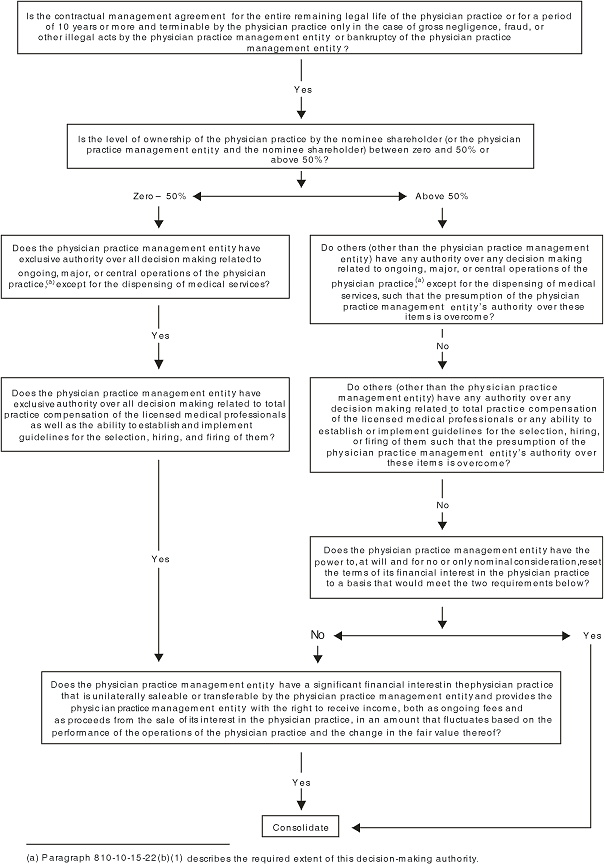
Physician Practice Management Entity Shareholder Fact Patterns
- a A physician practice management entity (Entity A) acquires all the outstanding stock of a physician practice (Entity B) directly from Entity B shareholders by issuing shares of Entity A voting common stock. Concurrent with the acquisition, the physicians who are the former owners of Entity B form a new professional corporation (Entity C), which enters into a long-term management agreement with Entity B. The physicians formerly of Entity B, who are now owners and employees of Entity C, enter into employment agreements with Entity C.
- b A physician practice management entity (Entity A) acquires all the outstanding stock of a physician practice (Entity B) directly from Entity B shareholders by issuing shares of Entity A voting common stock. Concurrent with the acquisition, the physicians and former owners of Entity B form a new professional corporation (Entity C) and enter into a long-term management agreement with Entity B. Although Entity A acquired the stock of Entity B, state law precludes contractual arrangements between physicians and hospitals and between physicians and health maintenance organizations from being held by a non-physician-owned practice (Entity B after the acquisition). Therefore, Entity B's patient contracts are transferred concurrent with the acquisition to Entity C. The physicians formerly of Entity B, who are now owners and employees of Entity C, enter into employment agreements with Entity C.
- c A physician practice management entity creates a wholly owned subsidiary (Entity A), which acquires all the net assets of a physician practice (Entity B) through the physician practice management entity's issuing some of its shares of voting common stock to Entity B. Concurrent with the transaction, Entity B enters into a long-term management agreement with Entity A. The ownership of Entity B remains the same; however, the physicians (that is, the owners of Entity B) enter into new employment agreements with Entity B.
- a At the direction of the physician practice management entity, a physician who will be the physician practice management entity's nominee shareholder incorporates a nominally capitalized new physician practice. In a subsequent exchange of shares, the physician practice management entity becomes the outright owner of the shares of the existing physician practice. The physician or physicians who were the former owners of the existing physician practice simultaneously sever their employment relationship with the existing physician practice and establish an employment relationship with the new physician practice. According to the terms of another simultaneously executed agreement, the physician who established the new physician practice becomes the physician practice management entity's nominee shareholder of that practice. A management agreement between the physician practice management entity and the new physician practice is also simultaneously executed.
- b The physician practice management entity issues its shares to the shareholders of the existing physician practice. Simultaneously, shares of the existing physician practice are delivered to a physician who is a nominee of the physician practice management entity, and a management agreement is executed between the physician practice management entity and the existing physician practice. By virtue of the terms of the management agreement that gives the rights to the residual equity of the existing physician practice to the physician practice management entity, the shares of the physician practice held by the nominee have only a nominal value. The physicians who previously owned the existing physician practice and who were employees of it execute new employment agreements with the now nominee-owned existing physician practice.
810-10-60Relationships
Source downloaded: .Record version 4287c65ba0f0. Effective date must be checked in the source.
Distinguishing Liabilities from Equity
Income Taxes
Foreign Currency Matters
Leases
Transfers and Servicing
Variable Interest Entities
810-10-65Transition and Open Effective Date Information
Source downloaded: .Record version 584bdb333a46. Effective date must be checked in the source.
Transition Related to Accounting Standards Update No. 2014-07, <em class="ph i">Consolidation (Topic 810): Applying Variable Interest Entities Guidance to Common Control Leasing Arrangements </em>
- aUpon adoption of the accounting alternative, the guidance in the Variable Interest Entities Subsections of this Subtopic shall be applied retrospectively as of the beginning of the first fiscal year in which the accounting alternative is elected and to all periods presented.
- b
- c
- dIf a reporting entity deconsolidates a variable interest entity (VIE) as a result of the application of the accounting alternative guidance in the Variable Interest Entities Subsections of this Subtopic, the reporting entity shall initially measure any retained interest in the deconsolidated VIE at its carrying amount at the date the accounting alternative guidance first applies. In this context, carrying amount refers to the amount at which any retained interest would have been carried in the reporting entity's financial statements if the accounting alternative guidance had been effective when the reporting entity became involved with the VIE. Any difference between the net amount removed from the statement of financial position of the reporting entity and the amount of any retained interest in the deconsolidated VIE shall be recognized as a cumulative-effect adjustment to retained earnings. The amount of any cumulative-effect adjustment related to deconsolidation shall be disclosed separately.
- eAn entity shall provide the disclosures in paragraphs except for the disclosure in paragraph 250-10-50-1(b)(2) in the period the entity adopts the accounting alternative guidance in the Variable Interest Entities Subsections of this Subtopic.
- fA private company that makes an accounting policy election to apply the accounting alternative guidance in the Variable Interest Entities Subsections of this Subtopic for the first time need not justify that the use of the accounting alternative is preferable as described in paragraph 250-10-45-2.
810-10-S00StatusSEC
Source downloaded: .Record version 5e6f2a7db416. Effective date must be checked in the source.
| Paragraph | Action | Accounting Standards Update | Date |
| Amended | Accounting Standards Update No. 2019-07 | 07/26/2019 | |
| 810-10-S99-2 | Amended | Accounting Standards Update No. 2010-21 | 08/02/2010 |
| 810-10-S99-4 | Amended | Accounting Standards Update No. 2018-04 | 03/09/2018 |
| 810-10-S99-4 | Amended | Accounting Standards Update No. 2009-07 | 09/15/2009 |
| 810-10-S99-5 | Amended | Accounting Standards Update No. 2012-03 | 08/27/2012 |
| 810-10-S99-5 | Amended | Accounting Standards Update No. 2010-22 | 08/19/2010 |
810-10-S25RecognitionSEC
Source downloaded: .Record version 7ccb65e6d2a0. Effective date must be checked in the source.
Consolidated Financial Statements of the Registrant and its Subsidiaries
Intercompany (Intra-entity) Items and Transactions
Accounting for Divestiture of a Subsidiary or Other Business Operations
810-10-S35Subsequent MeasurementSEC
Source downloaded: .Record version 8d0d2f0598ef. Effective date must be checked in the source.
Accounting for Divestiture of a Subsidiary or Other Business Operations
810-10-S40DerecognitionSEC
Source downloaded: .Record version 8bf54c8a5c8a. Effective date must be checked in the source.
Accounting for Divestiture of a Subsidiary or Other Business Operation
Accounting for Gain Recognition in Certain Transactions Involving the General Partner in a Master Limited Partnership
810-10-S45Other Presentation MattersSEC
Source downloaded: .Record version 861155373f08. Effective date must be checked in the source.
Classification of Subsidiary's Loan Payable in Consolidated Balance Sheet when Subsidiary's and Parent's Fiscal Years Differ
Accounting for Divestiture of a Subsidiary or Other Business Operation
810-10-S50DisclosureSEC
Source downloaded: .Record version 658c7e495532. Effective date must be checked in the source.
Disclosure of Accounting Policies
Statements as to Principles of Consolidation or Combination Followed
Intercompany (Intra-entity) Items and Transactions
810-10-S99SEC MaterialsSEC
Source downloaded: .Record version 0244c7a00e30. Effective date must be checked in the source.
SEC Rules, Regulations, and Interpretations
- [Reserved]
- In deciding upon consolidation policy, the registrant must consider what financial presentation is most meaningful in the circumstances and should follow in the consolidated financial statements principles of inclusion or exclusion which will clearly exhibit the financial position and results of operations of the registrant. There is a presumption that consolidated financial statements are more meaningful than separate financial statements and that they are usually necessary for a fair presentation when one entity directly or indirectly has a controlling financial interest in another entity. Other particular facts and circumstances may require combined financial statements, an equity method of accounting, or valuation allowances in order to achieve a fair presentation.
- (a) Majority ownership: Among the factors that the registrant should consider in determining the most meaningful presentation is majority ownership. Generally, registrants shall consolidate entities that are majority owned and shall not consolidate entities that are not majority owned. The determination of majority ownership requires a careful analysis of the facts and circumstances of a particular relationship among entities. In rare situations, consolidation of a majority owned subsidiary may not result in a fair presentation, because the registrant, in substance, does not have a controlling financial interest (for example, when the subsidiary is in legal reorganization or in bankruptcy). In other situations, consolidation of an entity, notwithstanding the lack of technical majority ownership, is necessary to present fairly the financial position and results of operations of the registrant, because of the existence of a parent-subsidiary relationship by means other than record ownership of voting stock.
- (b) [Reserved]
- [83 FR 50200, Oct. 4, 2018]
- (a) [Reserved]
- (b) As to each consolidated financial statement and as to each combined financial statement, if there has been a change in the persons included or excluded in the corresponding statement for the preceding fiscal period filed with the Commission that has a material effect on the financial statements, the persons included and the persons excluded shall be disclosed.
- [37 FR 14597, July 21, 1972. Redesignated at 45 FR 63687, Sept. 25, 1980, and 46 FR 56179, Nov. 16, 1981; 83 FR 50200, Oct. 4, 2018]
- [Reserved]
SEC Staff Guidance
- Facts: Company X transferred certain operations (including several subsidiaries) to a group of former employees who had been responsible for managing those operations. Assets and liabilities with a net book value of approximately $8 million were transferred to a newly formed entity-Company Y-wholly owned by the former employees. The consideration received consisted of $1,000 in cash and interest bearing promissory notes for $10 million, payable in equal annual installments of $1 million each, plus interest, beginning two years from the date of the transaction. The former employees possessed insufficient assets to pay the notes and Company X expected the funds for payments to come exclusively from future operations of the transferred business.
- Company X remained contingently liable for performance on existing contracts transferred and agreed to guarantee, at its discretion, performance on future contracts entered into by the newly formed entity. Company X also acted as guarantor under a line of credit established by Company Y.
- The nature of Company Y's business was such that Company X's guarantees were considered a necessary predicate to obtaining future contracts until such time as Company Y achieved profitable operations and substantial financial independence from Company X.
- Question: If deconsolidation of the subsidiaries and business operations is appropriate, can Company X recognize a gain?
- Interpretive Response: Before recognizing any gain, Company X should identify all of the elements of the divesture arrangement and allocate the consideration exchanged to each of those elements. In this regard, we believe that Company X would recognize the guarantees at fair value in accordance with FASB ASC Topic 460, Guarantees; the contingent liability for performance on existing contracts in accordance with FASB ASC Topic 450, Contingencies; and the promissory notes in accordance with FASB ASC Topic 310, Receivables, and FASB ASC Topic 835, Interest.
- The SEC staff has objected to immediate gain recognition when the general partner in a Master Limited Partnership has continuing exposure in forms such as debt guarantees, financing commitments, or restrictions on the sale of MLP units. The SEC staff also will not accept immediate gain recognition in transactions when the general partner (who will continue to act in that capacity and exercise significant influence but not control over the MLP) sponsors the rollup of several limited partnerships into a MLP and receives tradable limited partnership units in exchange for relinquishing the rights to certain future fees from the limited partnerships.
Related subtopics
- 810-954 Health Care EntitiesConsolidation
- 810-958 Not-for-Profit EntitiesConsolidation
- 805-50 Related IssuesBusiness Combinations
- 815-40 Contracts in Entity's Own EquityDerivatives and Hedging
- 810-970 Real Estate—GeneralConsolidation
- 805-20 Identifiable Assets and Liabilities, and Any Noncontrolling InterestBusiness Combinations