ASC 326-20
Measured at Amortized Cost
326 Financial Instruments—Credit Losses
Source downloaded: .Record version b68e8a34397a. Effective date must be checked in the source.
ASC 326-20 is the CECL (current expected credit loss) model for financial assets measured at amortized cost, net investments in leases, off-balance-sheet credit exposures, and reinsurance recoverables. At every reporting date an entity records an allowance (a valuation account deducted from amortized cost) equal to management's current estimate of all credit losses expected over the contractual term, based on past events, current conditions, and reasonable and supportable forecasts, with a reversion to historical loss information beyond the forecastable period (326-20-30-1, 30-6, 30-9). Assets are pooled when they share similar risk characteristics and evaluated individually only when they do not (326-20-30-2).
Key points (7)
- The allowance for credit losses is a valuation account deducted from (or added to) amortized cost to present the net amount expected to be collected, and expected recoveries of amounts previously written off may be included but cannot exceed amounts written off or expected to be written off (326-20-30-1).
- Expected credit losses are measured collectively when similar risk characteristics exist and individually when they do not; an asset may never be in both a pool and an individual assessment (326-20-30-2; risk characteristics listed at 326-20-55-5).
- No single method is required—discounted cash flow, loss-rate, roll-rate, probability-of-default, or aging schedule methods are all permitted; if DCF is used, expected cash flows are discounted at the asset's effective interest rate and the allowance equals amortized cost less the present value of expected cash flows (326-20-30-3 through 30-4).
- Losses are estimated over the contractual term, adjusted for prepayments, and the term is not extended for expected extensions, renewals, or modifications unless the option is in the contract and is not unconditionally cancellable by the entity (326-20-30-6); for a lessor's net investment in a lease, the lease term is the contractual term (326-20-30-6A).
- An entity must use historical loss experience adjusted for current conditions and reasonable and supportable forecasts, may not rely solely on past events, and must revert to historical loss information (immediately, straight-line, or another rational and systematic basis) for periods beyond which it can make reasonable and supportable forecasts (326-20-30-8 through 30-9).
- The estimate must include a measure of credit loss risk even if remote, but zero loss is permitted when historical information adjusted for current conditions and forecasts supports an expectation of zero nonpayment; collateral value alone is not sufficient support (326-20-30-10); credit enhancements are considered but freestanding contracts such as purchased credit default swaps may not offset the estimate (326-20-30-12).
- Practical expedients: measure losses at fair value of collateral when foreclosure is probable (326-20-35-4), for collateral-dependent financial assets when the borrower is in financial difficulty (326-20-35-5), and for continually replenished collateral (326-20-35-6); off-balance-sheet exposures are recorded as a liability over the period of the present contractual obligation unless unconditionally cancellable (326-20-30-11, 326-20-45-2).
For students. CECL replaced the old "incurred loss" trigger: a day-one allowance is required for lifetime expected losses even on a brand-new, performing loan, and even when the risk of loss is remote. The most common misunderstanding is thinking a discounted cash flow model is required (it is not) or that collateral value alone justifies a zero allowance (326-20-30-10).
Machine-generated study aid for ASC 326-20. Check the source paragraphs below.
326-20-00Status
Source downloaded: .Record version 3f551dc37927. Effective date must be checked in the source.
326-20-05Overview and Background
Source downloaded: .Record version ec77823410d5. Effective date must be checked in the source.
326-20-15Scope and Scope Exceptions
Source downloaded: .Record version 3dc08e97e2df. Effective date must be checked in the source.
Entities
Instruments
- aFinancial assets measured at amortized cost basis, including the following:
- 1
- 2Held-to-maturity debt securities
- 3
- 4
- 5Receivables that relate to repurchase agreements and securities lending agreements within the scope of Topic 860.
- bNet investments in leases recognized by a lessor in accordance with Topic 842 on leases.
- cOff-balance-sheet credit exposures not accounted for as insurance. Off-balance-sheet credit exposure refers to credit exposures on off-balance-sheet loan commitments, standby letters of credit, financial guarantees not accounted for as insurance, and other similar instruments, except for instruments within the scope of Topic 815 on derivatives and hedging.
- dReinsurance recoverables that result from insurance transactions within the scope of Topic 944 on insurance.
- aFinancial assets measured at fair value through net income
- bAvailable-for-sale debt securities
- cLoans made to participants by defined contribution employee benefit plans
- dPolicy loan receivables of an insurance entity
- ePromises to give (pledges receivable) of a not-for-profit entity
- fLoans and receivables between entities under common control.
- gReceivables arising from operating leases accounted for in accordance with Topic 842.
326-20-30Initial Measurement
Source downloaded: .Record version 6dbe635f9ea8. Effective date must be checked in the source.
Developing an Estimate of Expected Credit Losses
- aAmortized cost basis, excluding applicable accrued interest, premiums, discounts (including net deferred fees and costs), foreign exchange, and fair value hedge accounting adjustments (that is, the face amount or unpaid principal balance).
- bPremiums or discounts, including net deferred fees and costs, foreign exchange, and fair value hedge accounting adjustments. See paragraph 815-25-35-10 for guidance on the treatment of a basis adjustment related to an existing portfolio layer method hedge.
- cApplicable accrued interest. See paragraph 326-20-30-5A for guidance on excluding accrued interest from the calculation of the allowance for credit losses.
- a
- bThe extension or renewal options (excluding those that are accounted for as derivatives in accordance with Topic 815) are included in the original or modified contract at the reporting date and are not unconditionally cancellable by the entity.
- aThe entity shall first consider subsequent collections of those asset balances described in paragraph 326-20-30-10A that were outstanding as of the balance sheet date. No credit loss allowance shall be recorded for asset balances that have been collected before the financial statements are available to be issued (or before the alternative date selected by the entity).
- bThe entity shall then evaluate any remaining uncollected amounts as of the date that the financial statements are available to be issued (or as of the alternative date selected by the entity) using the practical expedient in paragraphs . That evaluation shall be based on the delinquency status of those uncollected balances as of the date that the financial statements are available to be issued (or the alternative date selected by the entity). See paragraphs for an illustrative Example.
Purchased Financial Assets with Credit Deterioration
| Editor's Note: The content of paragraph 326-20-30-13 will change upon transition, together with a change in the heading noted below. |
| > Purchased Financial Assets with Credit Deterioration and Purchased Seasoned Loans |
- aIf the entity estimates expected credit losses using a method other than a discounted cash flow method in accordance with paragraph 326-20-30-4, expected recoveries shall not include any amounts that result in an acceleration of the noncredit discount.
- bThe entity may include increases in expected cash flows after acquisition.
- aThe loan is obtained through a business combination accounted for using the acquisition method in accordance with Subtopic 805-20.
- bThe loan is (i) obtained through a transfer that is not a business combination accounted for using the acquisition method in accordance with Subtopic 805-20 or (ii) initially recognized through the consolidation of a variable interest entity in accordance with paragraph 810-10-30-3. In addition, the loan must meet both of the following criteria:
- 1The loan is obtained more than 90 days after its origination date.
- 2The transferee was not involved with the origination of the loan. See paragraph 326-20-30-17 for guidance on how to assess whether the transferee was involved with the origination of the loan.
- 1
- aWithin 90 days after the loan origination date, the transferee has direct or indirect exposure to the economic risks and rewards of ownership.
- bThe transferee has substantive influence on the offering, arranging, underwriting, or other nonadministrative lending activity performed by the originator (the transferor) related to the initial extension of credit to a debtor.
- aCredit cards
- b
- cTrade receivables arising from transactions accounted for under Topic 606 on revenue from contracts with customers.
326-20-35Subsequent Measurement
Source downloaded: .Record version dd625ee83fbd. Effective date must be checked in the source.
Reporting Changes in Expected Credit Losses
Financial Assets Secured by Collateral
Loans Subsequently Identified for Sale
Writeoffs of Financial Assets
Interest Income on Purchased Financial Assets with Credit Deterioration
| Editor's Note: The content of paragraph 326-20-35-10 will change upon transition, together with a change in the heading noted below. |
| > Interest Income on Purchased Financial Assets with Credit Deterioration and Purchased Seasoned Loans |
326-20-45Other Presentation Matters
Source downloaded: .Record version eca63ac5ec12. Effective date must be checked in the source.
326-20-50Disclosure
Source downloaded: .Record version d62153f38e30. Effective date must be checked in the source.
- aCredit quality information
- bAllowance for credit losses
- cPast-due status
- dNonaccrual status
- e
- fCollateral-dependent financial assets
- gOff-balance-sheet credit exposures.
- aThe credit risk inherent in a portfolio and how management monitors the credit quality of the portfolio
- bManagement's estimate of expected credit losses
- cChanges in the estimate of expected credit losses that have taken place during the period.
Credit Quality Information
- aUnderstand how management monitors the credit quality of its financial assets
- bAssess the quantitative and qualitative risks arising from the credit quality of its financial assets.
- aUnderstand how management monitors the credit quality of its financial assets
- bAssess the quantitative and qualitative risks arising from the credit quality of its financial assets.
- aA description of the credit quality indicator(s)
- bThe amortized cost basis, by credit quality indicator
- cFor each credit quality indicator, the date or range of dates in which the information was last updated for that credit quality indicator.
- aA description of the credit quality indicator(s)
- bThe amortized cost basis, by credit quality indicator
- cFor each credit quality indicator, the date or range of dates in which the information was last updated for that credit quality indicator.
Allowance for Credit Losses
- aUnderstand management's method for developing its allowance for credit losses
- bUnderstand the information that management used in developing its current estimate of expected credit losses
- cUnderstand the circumstances that caused changes to the allowance for credit losses, thereby affecting the related credit loss expense (or reversal) reported for the period.
- aUnderstand management's method for developing its allowance for credit losses
- bUnderstand the information that management used in developing its current estimate of expected credit losses
- cUnderstand the circumstances that caused changes to the allowance for credit losses, thereby affecting the related credit loss expense (or reversal) reported for the period.
- aA description of how expected loss estimates are developed
- bA description of the entity's accounting policies and methodology to estimate the allowance for credit losses, as well as a discussion of the factors that influenced management's current estimate of expected credit losses, including:
- 1Past events
- 2Current conditions
- 3Reasonable and supportable forecasts about the future.
- 1
- cA discussion of risk characteristics relevant to each portfolio segment
- dA discussion of the changes in the factors that influenced management's current estimate of expected credit losses and the reasons for those changes (for example, changes in portfolio composition, underwriting practices, and significant events or conditions that affect the current estimate but were not contemplated or relevant during a previous period)
- eIdentification of changes to the entity's accounting policies, changes to the methodology from the prior period, its rationale for those changes, and the quantitative effect of those changes
- fReasons for significant changes in the amount of writeoffs, if applicable
- gA discussion of the reversion method applied for periods beyond the reasonable and supportable forecast period
- hThe amount of any significant purchases of financial assets during each reporting period
- iThe amount of any significant sales of financial assets or reclassifications of loans held for sale during each reporting period.
- aA description of how expected loss estimates are developed
- bA description of the entity's accounting policies and methodology to estimate the allowance for credit losses, as well as a discussion of the factors that influenced management's current estimate of expected credit losses, including:
- 1Past events
- 2Current conditions
- 3Reasonable and supportable forecasts about the future.
- 1
- cA discussion of risk characteristics relevant to each portfolio segment
- dA discussion of the changes in the factors that influenced management's current estimate of expected credit losses and the reasons for those changes (for example, changes in portfolio composition, underwriting practices, and significant events or conditions that affect the current estimate but were not contemplated or relevant during a previous period)
- eIdentification of changes to the entity's accounting policies, changes to the methodology from the prior period, its rationale for those changes, and the quantitative effect of those changes
- fReasons for significant changes in the amount of writeoffs, if applicable
- gA discussion of the reversion method applied for periods beyond the reasonable and supportable forecast period
- hThe amount of any significant purchases of financial assets during each reporting period
- iThe amount of any significant sales of financial assets or reclassifications of loans held for sale during each reporting period.
- aThe beginning balance in the allowance for credit losses
- bCurrent-period provision for expected credit losses
- cThe initial allowance for credit losses recognized on financial assets accounted for as purchased financial assets with credit deterioration (including beneficial interests that meet the criteria in paragraph 325-40-30-1A), if applicable
- dWriteoffs charged against the allowance
- eRecoveries collected
- fThe ending balance in the allowance for credit losses.
- aThe beginning balance in the allowance for credit losses
- bCurrent-period provision for expected credit losses
- cThe initial allowance for credit losses recognized on financial assets accounted for as purchased financial assets with credit deterioration (including beneficial interests that meet the criteria in paragraph 325-40-30-1A), if applicable
- dWriteoffs charged against the allowance
- eRecoveries collected
- fThe ending balance in the allowance for credit losses.
- aThe beginning balance in the allowance for credit losses
- bCurrent-period provision for expected credit losses
- cThe initial allowance for credit losses recognized on financial assets accounted for as purchased financial assets with credit deterioration (including beneficial interests that meet the criteria in paragraph 325-40-30-1A), if applicable
- dWriteoffs charged against the allowance
- eRecoveries collected
- fThe ending balance in the allowance for credit losses.
Past Due Status
Nonaccrual Status
- aThe amortized cost basis of financial assets on nonaccrual status as of the beginning of the reporting period and the end of the reporting period
- bThe amount of interest income recognized during the period on nonaccrual financial assets
- cThe amortized cost basis of financial assets that are 90 days or more past due, but are not on nonaccrual status as of the reporting date
- dThe amortized cost basis of financial assets on nonaccrual status for which there is no related allowance for credit losses as of the reporting date.
- aThe amortized cost basis of financial assets on nonaccrual status as of the beginning of the reporting period and the end of the reporting period
- bThe amount of interest income recognized during the period on nonaccrual financial assets
- cThe amortized cost basis of financial assets that are 90 days or more past due, but are not on nonaccrual status as of the reporting date
- dThe amortized cost basis of financial assets on nonaccrual status for which there is no related allowance for credit losses as of the reporting date.
- aNonaccrual policies, including the policies for discontinuing accrual of interest, recording payments received on nonaccrual assets (including the cost recovery method, cash basis method, or some combination of those methods), and resuming accrual of interest, if applicable
- bThe policy for determining past-due or delinquency status
- cThe policy for recognizing writeoffs within the allowance for credit losses.
- aNonaccrual policies, including the policies for discontinuing accrual of interest, recording payments received on nonaccrual assets (including the cost recovery method, cash basis method, or some combination of those methods), and resuming accrual of interest, if applicable
- bThe policy for determining past-due or delinquency status
- cThe policy for recognizing writeoffs within the allowance for credit losses.
Purchased Financial Assets with Credit Deterioration
- aThe purchase price
- bThe allowance for credit losses at the acquisition date based on the acquirer's assessment
- cThe discount (or premium) attributable to other factors
- dThe par value.
Collateral-Dependent Financial Assets
Off-Balance-Sheet Credit Exposures
326-20-55Implementation Guidance and Illustrations
Source downloaded: .Record version 89d488399911. Effective date must be checked in the source.
Implementation Guidance
- aInformation considered when estimating expected credit losses
- bDeveloping an estimate of expected credit losses
- cNet investment in leases
- dEffect of a fair value hedge on the discount rate when using a discounted cash flow model.
- aThe borrower's financial condition, credit rating, credit score, asset quality, or business prospects
- bThe borrower's ability to make scheduled interest or principal payments
- cThe remaining payment terms of the financial asset(s)
- dThe remaining time to maturity and the timing and extent of prepayments on the financial asset(s)
- eThe nature and volume of the entity's financial asset(s)
- fThe volume and severity of past due financial asset(s) and the volume and severity of adversely classified or rated financial asset(s)
- gThe value of underlying collateral on financial assets in which the collateral-dependent practical expedient has not been utilized
- hThe entity's lending policies and procedures, including changes in lending strategies, underwriting standards, collection, writeoff, and recovery practices, as well as knowledge of the borrower's operations or the borrower's standing in the community
- iThe quality of the entity's credit review system
- jThe experience, ability, and depth of the entity's management, lending staff, and other relevant staff
- kThe environmental factors of a borrower and the areas in which the entity's credit is concentrated, such as:
- 1Regulatory, legal, or technological environment to which the entity has exposure
- 2Changes and expected changes in the general market condition of either the geographical area or the industry to which the entity has exposure
- 3Changes and expected changes in international, national, regional, and local economic and business conditions and developments in which the entity operates, including the condition and expected condition of various market segments.
- 1
- aInternal or external (third-party) credit score or credit ratings
- bRisk ratings or classification
- cFinancial asset type
- dCollateral type
- eSize
- f
- gTerm
- hGeographical location
- iIndustry of the borrower
- jVintage
- kHistorical or expected credit loss patterns
- lReasonable and supportable forecast periods.
- aThe definition of default for default-based statistics
- bThe approach to measuring the historical loss amount for loss-rate statistics, including whether the amount is simply based on the amortized cost amount written off and whether there should be adjustments to historical credit losses (if any) to reflect the entity's policies for recognizing accrued interest
- cThe approach to determine the appropriate historical period for estimating expected credit loss statistics
- dThe approach to adjusting historical credit loss information to reflect current conditions and reasonable and supportable forecasts that are different from conditions existing in the historical period
- eThe methods of utilizing historical experience
- fThe method of adjusting loss statistics for recoveries
- gHow expected prepayments affect the estimate of expected credit losses
- hHow the entity plans to revert to historical credit loss information for periods beyond which the entity is able to make or obtain reasonable and supportable forecasts of expected credit losses
- iThe assessment of whether a financial asset exhibits risk characteristics similar to other financial assets.
- aType of financing receivable
- bIndustry sector of the borrower
- cRisk rating.
- aCategorization of borrowers, such as any of the following:
- 1Commercial loan borrowers
- 2Consumer loan borrowers
- 3Related party borrowers.
- 1
- bType of financing receivable, such as any of the following:
- 1Mortgage loans
- 2Credit card loans
- 3Interest-only loans
- 4Finance leases.
- 1
- cIndustry sector, such as either of the following:
- 1Real estate
- 2Mining.
- 1
- dType of collateral, such as any of the following:
- 1Residential property
- 2Commercial property
- 3Government-guaranteed collateral
- 4Uncollateralized (unsecured) financing receivables.
- 1
- eGeographic distribution, including both of the following:
- 1Domestic
- 2International.
- 1
- aConsumer credit risk scores
- bCredit-rating-agency ratings
- cAn entity's internal credit risk grades
- dDebt-to-value ratios
- eCollateral
- fCollection experience
- gOther internal metrics.
Illustrations
- aExample 1: Estimating expected credit losses using a loss-rate approach (collective evaluation)
- bExample 2: Estimating expected credit losses using a loss-rate approach (individual evaluation)
- cExample 3: Estimating expected credit losses on a vintage-year basis
- dExample 4: Estimating expected credit losses using both a collective method and an individual asset method
- eExample 5: Estimating expected credit losses for trade receivables using an aging schedule
- fExample 6: Estimating expected credit losses—practical expedient for collateral-dependent financial assets
- gExample 7: Estimating expected credit losses—practical expedient for financial assets with collateral maintenance provisions
- hExample 8: Estimating expected credit losses when potential default is greater than zero, but expected nonpayment is zero
- iExample 9: Recognizing writeoffs and recoveries
- jExample 10: Applying expected credit losses to unconditionally cancellable loan commitments
- kExample 11: Identifying purchased financial assets with credit deterioration
- lExample 12: Recognizing purchased financial assets with credit deterioration
- mExample 13: Using a loss-rate approach for determining expected credit losses and the discount rate on a purchased financial asset with credit deterioration
- nExample 14: Using a discounted cash flow approach for determining expected credit losses and the discount rate on a purchased financial asset with credit deterioration
- oExample 15: Disclosing credit quality indicators of financing receivables by amortized cost basis
- pExample 16: Disclosing past-due status
- qExample 17: Identifying similar risk characteristics in reinsurance recoverables
- rExample 18: Determining the negative allowance for purchased financial assets with credit deterioration with no change in credit conditions
- sExample 19: Determining the negative allowance for purchased financial assets with credit deterioration after a change in credit conditions.
- aExample 1: Estimating expected credit losses using a loss-rate approach (collective evaluation)
- bExample 2: Estimating expected credit losses using a loss-rate approach (individual evaluation)
- cExample 3: Estimating expected credit losses on a vintage-year basis
- dExample 4: Estimating expected credit losses using both a collective method and an individual asset method
- eExample 5: Estimating expected credit losses for trade receivables using an aging schedule
- eeExample 5A: Practical expedient and accounting policy election for estimating expected credit losses on current accounts receivable and current contract assets
- fExample 6: Estimating expected credit losses—practical expedient for collateral-dependent financial assets
- gExample 7: Estimating expected credit losses—practical expedient for financial assets with collateral maintenance provisions
- hExample 8: Estimating expected credit losses when potential default is greater than zero, but expected nonpayment is zero
- iExample 9: Recognizing writeoffs and recoveries
- jExample 10: Applying expected credit losses to unconditionally cancellable loan commitments
- kExample 11: Identifying purchased financial assets with credit deterioration
- lExample 12: Recognizing purchased financial assets with credit deterioration
- mExample 13: Using a loss-rate approach for determining expected credit losses and the discount rate on a purchased financial asset with credit deterioration
- nExample 14: Using a discounted cash flow approach for determining expected credit losses and the discount rate on a purchased financial asset with credit deterioration
- oExample 15: Disclosing credit quality indicators of financing receivables by amortized cost basis
- pExample 16: Disclosing past-due status
- qExample 17: Identifying similar risk characteristics in reinsurance recoverables
- rExample 18: Determining the negative allowance for purchased financial assets with credit deterioration with no change in credit conditions
- sExample 19: Determining the negative allowance for purchased financial assets with credit deterioration after a change in credit conditions.
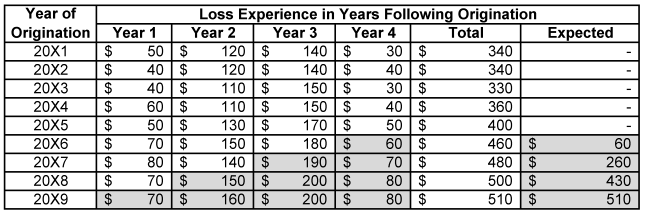 Year of Origination Loss Experience in Years Following Origination Year 1 Year 2 Year 3 Year 4 Total Expected 20X1 $50 $120 $140 $30 $340 - 20X2 $40 $120 $140 $40 $340 - 20X3 $40 $110 $150 $30 $330 - 20X4 $60 $110 $150 $40 $360 - 20X5 $50 $130 $170 $50 $400 - 20X6 $70 $150 $180 $60 $460 $60 20X7 $80 $140 $190 $70 $480 $260 20X8 $70 $150 $200 $80 $500 $430 20X9 $70 $160 $200 $80 $510 $510
- a0.3 percent for receivables that are current
- b8 percent for receivables that are 1-30 days past due
- c26 percent for receivables that are 31-60 days past due
- d58 percent for receivables that are 61-90 days past due
- e82 percent for receivables that are more than 90 days past due.
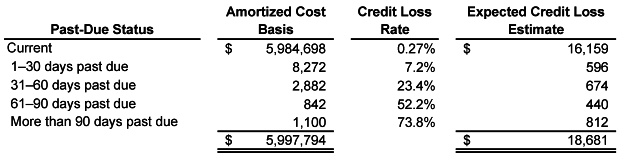 Past-Due Status Amortized Cost Basis Credit Loss Rate Expected Credit Loss Estimate Current " $5,984,698 " 0.27% " $16,159 " 1-30 days past due " 8,272 " 7.2% 596 31-60 days past due " 2,882 " 23.4% 674 61-90 days past due 842 52.2% 440 More than 90 days past due " 1,100 " 73.8% 812 " $5,997,794 " " $18,681 "
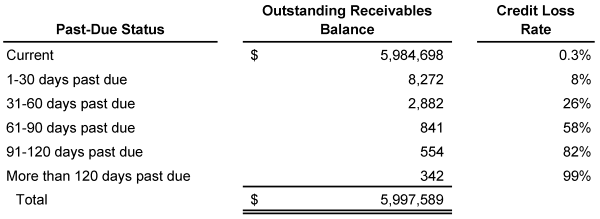 Past-Due Status Outstanding Receivables Balance Credit Loss Rate Current " $5,984,698 " 0.3% 1-30 days past due " 8,272 " 8% 31-60 days past due " 2,882 " 26% 61-90 days past due 841 58% 91-120 days past due 554 82% More than 120 days past due 342 99% Total " $5,997,589 "
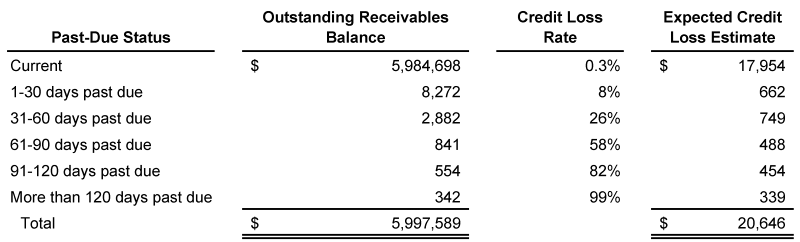 Past-Due Status Outstanding Receivables Balance Credit Loss Rate Expected Credit Loss Estimate Current " $5,984,698 " 0.3% " $17,954 " 1-30 days past due " 8,272 " 8% 662 31-60 days past due " 2,882 " 26% 749 61-90 days past due 841 58% 488 91-120 days past due 554 82% 454 More than 120 days past due 342 99% 339 Total " $5,997,589 " " $20,646 "
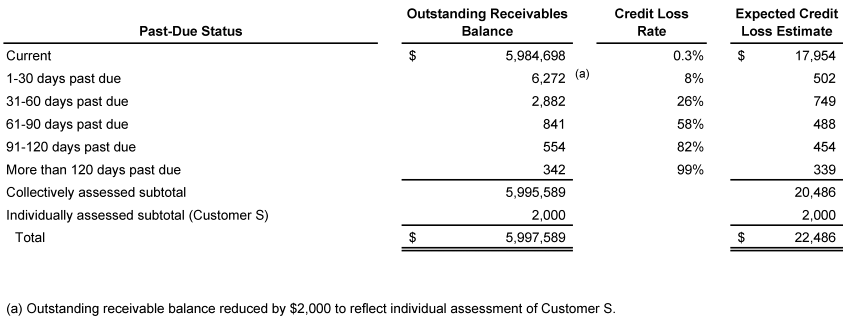 Past-Due Status Outstanding Receivables Balance Credit Loss Rate Expected Credit Loss Estimate Current " $5,984,698 " 0.3% " $17,954 " 1-30 days past due " 6,272 " (a) 8% 502 31-60 days past due " 2,882 " 26% 749 61-90 days past due 841 58% 488 91-120 days past due 554 82% 454 More than 120 days past due 342 99% 339 Collectively assessed subtotal " 5,995,589 " " 20,486 " Individually assessed subtotal (Customer S) " 2,000 " " 2,000 " Total " $5,997,589 " " $22,486 " "(a) Outstanding receivable balance reduced by $2,000 to reflect individual assessment of Customer S."
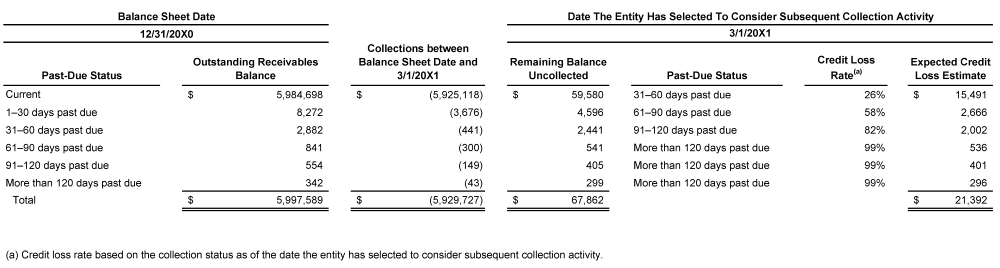 Balance Sheet Date Date The Entity Has Selected To Consider Subsequent Collection Activity 12/31/20X0 3/1/20X1 Past-Due Status Outstanding Receivables Balance Collections between Balance Sheet Date and 3/1/20X1 Remaining Balance Uncollected Past-Due Status Credit Loss Rate " (a)" Expected Credit Loss Estimate Current " $5,984,698 " " $(5,925,118)" " $59,580 " 31-60 days past due 26% " $15,491 " 1-30 days past due " 8,272 " " (3,676)" " 4,596 " 61-90 days past due 58% " 2,666 " 31-60 days past due " 2,882 " (441) " 2,441 " 91-120 days past due 82% " 2,002 " 61-90 days past due 841 (300) 541 More than 120 days past due 99% 536 91-120 days past due 554 (149) 405 More than 120 days past due 99% 401 More than 120 days past due 342 (43) 299 More than 120 days past due 99% 296 Total " $5,997,589 " " $(5,929,727)" " $67,862 " " $21,392 " (a) Credit loss rate based on the collection status as of the date the entity has selected to consider subsequent collection activity.
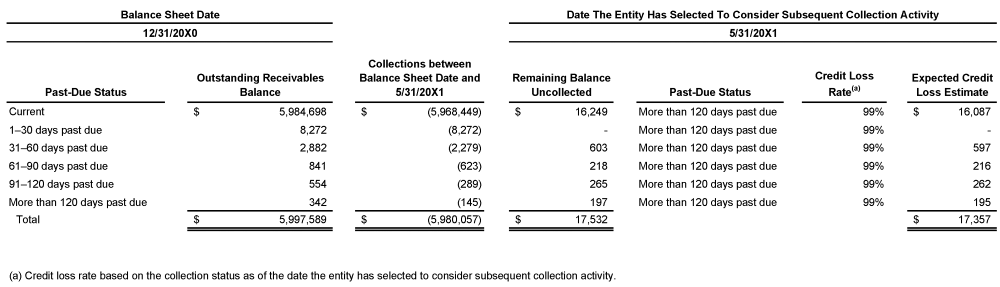 Balance Sheet Date Date The Entity Has Selected To Consider Subsequent Collection Activity 12/31/20X0 5/31/20X1 Past-Due Status Outstanding Receivables Balance Collections between Balance Sheet Date and 5/31/20X1 Remaining Balance Uncollected Past-Due Status Credit Loss Rate " (a) " Expected Credit Loss Estimate Current " $5,984,698 " " $(5,968,449)" " $16,249 " More than 120 days past due 99% " $16,087 " 1-30 days past due " 8,272 " " (8,272)" - More than 120 days past due 99% - 31-60 days past due " 2,882 " " (2,279)" 603 More than 120 days past due 99% 597 61-90 days past due 841 (623) 218 More than 120 days past due 99% 216 91-120 days past due 554 (289) 265 More than 120 days past due 99% 262 More than 120 days past due 342 (145) 197 More than 120 days past due 99% 195 Total " $5,997,589 " " $(5,980,057)" " $17,532 " " $17,357 " (a) Credit loss rate based on the collection status as of the date the entity has selected to consider subsequent collection activity.
 Credit loss expense "$125,000 " Allowance for credit losses "$125,000 " Allowance for credit losses "$500,000 " Loan receivable "$500,000 "
 Cash "$50,000 " Allowance for credit losses (recovery) "$50,000
 Allowance for credit losses "$50,000 " Credit loss expense "$50,000 "
- aFinancial assets that are delinquent as of the acquisition date
- bFinancial assets that have been downgraded since origination
- cFinancial assets that have been placed on nonaccrual status
- dFinancial assets for which, after origination, credit spreads have widened beyond the threshold specified in its policy.
 Loan—par amount "$1,000,000 " Loan—noncredit discount " $75,000 " Allowance for credit losses " 175,000 " Cash " 750,000 "
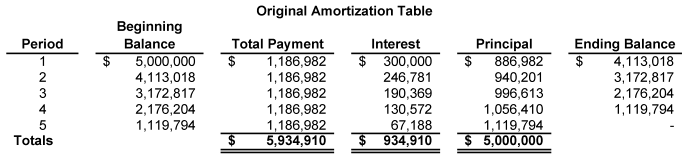 " 5,000,000 " 6% 5 "$1,186,982 " Original Amortization Table Period Beginning Balance Total Payment Interest Principal Ending Balance 1 " $5,000,000 " " $1,186,982 " " $300,000 " " $886,982 " " $4,113,018 " 2 " 4,113,018 " " 1,186,982 " " 246,781 " " 940,201 " " 3,172,817 " 3 " 3,172,817 " " 1,186,982 " " 190,369 " " 996,613 " " 2,176,204 " 4 " 2,176,204 " " 1,186,982 " " 130,572 " " 1,056,410 " " 1,119,794 " 5 " 1,119,794 " " 1,186,982 " " 67,188 " " 1,119,794 " - Totals " $5,934,910 " " $934,910 " " $5,000,000 "
 Loan " $2,176,204 " Loan—noncredit discount " $40,025 " Allowance for credit losses " 217,620 " Cash " 1,918,559 "
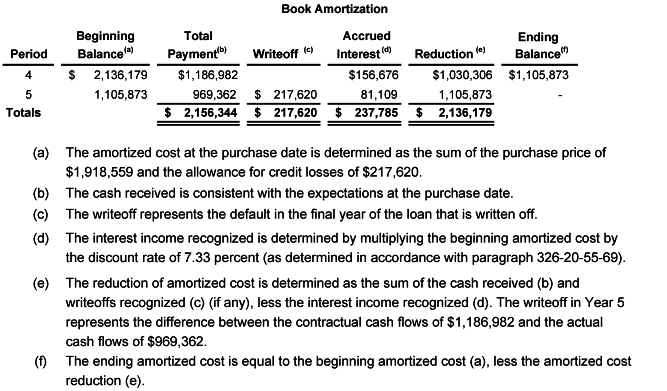 Book Amortization Period Beginning Balance (a) Total Payment (b) Writeoff (c) Accrued Interest (d) Reduction (e) Ending Balance (f) 4 " $2,136,179 " "$1,186,982 " "$156,676 " "$1,030,306 " "$1,105,873 " 5 " 1,105,873 " " 969,362 " " $217,620 " " 81,109 " " 1,105,873 " - Totals " $2,156,344 " " $217,620 " " $237,785 " " $2,136,179 " (a) "The amortized cost at the purchase date is determined as the sum of the purchase price of $1,918,559 and the allowance for credit losses of $217,620." (b) The cash received is consistent with the expectations at the purchase date. (c) The writeoff represents the default in the final year of the loan that is written off. (d) The interest income recognized is determined by multiplying the beginning amortized cost by the discount rate of 7.33 percent (as determined in accordance with paragraph 326-20-55-69). (e) "The reduction of amortized cost is determined as the sum of the cash received (b) and writeoffs recognized (c) (if any), less the interest income recognized (d). The writeoff in Year 5 represents the difference between the contractual cash flows of $1,186,982 and the actual cash flows of $969,362." (f) "The ending amortized cost is equal to the beginning amortized cost (a), less the amortized cost reduction (e).
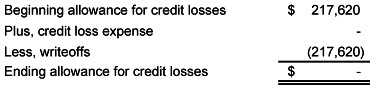 Beginning allowance for credit losses " $217,620 " " Plus, credit loss expense " - " Less, writeoffs " " (217,620)" Ending allowance for credit losses $-
 Loan " $2,176,204 " Loan—noncredit discount " $72,633 " Allowance for credit losses " 185,012 " Cash " 1,918,559 "
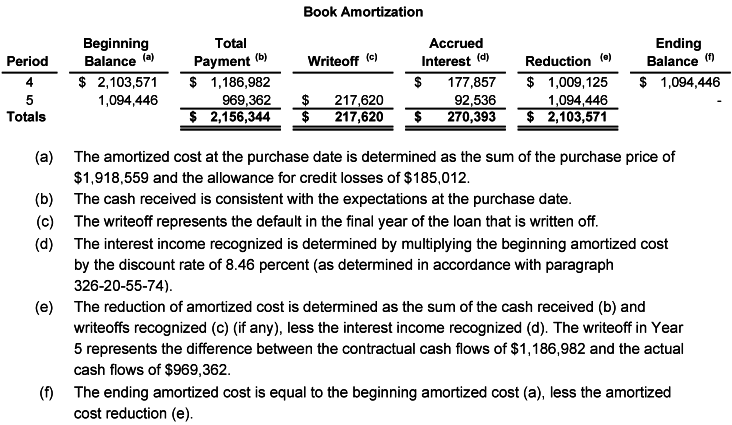 Book Amortization Period Beginning Balance (a) Total Payment (b) Writeoff (c) Accrued Interest (d) Reduction (e) Ending Balance (f) 4 " $2,103,571 " " $1,186,982 " " $177,857 " " $1,009,125 " " $1,094,446 " 5 " 1,094,446 " " 969,362 " " $217,620 " " 92,536 " " 1,094,446 " - Totals " $2,156,344 " " $217,620 " " $270,393 " " $2,103,571 " (a) "The amortized cost at the purchase date is determined as the sum of the purchase price of $1,918,559 and the allowance for credit losses of $185,012." (b) The cash received is consistent with the expectations at the purchase date. (c) The writeoff represents the default in the final year of the loan that is written off. (d) "The interest income recognized is determined by multiplying the beginning amortized cost by the discount rate of 8.46 percent (as determined in accordance with paragraph 326-20-55-74)." (e) "The reduction of amortized cost is determined as the sum of the cash received (b) and writeoffs recognized (c) (if any), less the interest income recognized (d). The writeoff in Year 5 represents the difference between the contractual cash flows of $1,186,982 and the actual cash flows of $969,362." (f) "The ending amortized cost is equal to the beginning amortized cost (a), less the amortized cost reduction (e)."
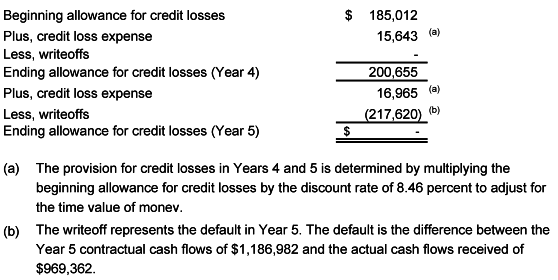 Beginning allowance for credit losses " $185,012 " "Plus, credit loss expense" " 15,643 " (a) "Less, writeoffs" - Ending allowance for credit losses (Year 4) " 200,655 " "Plus, credit loss expense" " 16,965 " (a) "Less, writeoffs" " (217,620)" (b) Ending allowance for credit losses (Year 5) $- (a) The provision for credit losses in Years 4 and 5 is determined by multiplying the beginning allowance for credit losses by the discount rate of 8.46 percent to adjust for the time value of money. (b) "The writeoff represents the default in Year 5. The default is the difference between the Year 5 contractual cash flows of $1,186,982 and the actual cash flows received of $969,362.
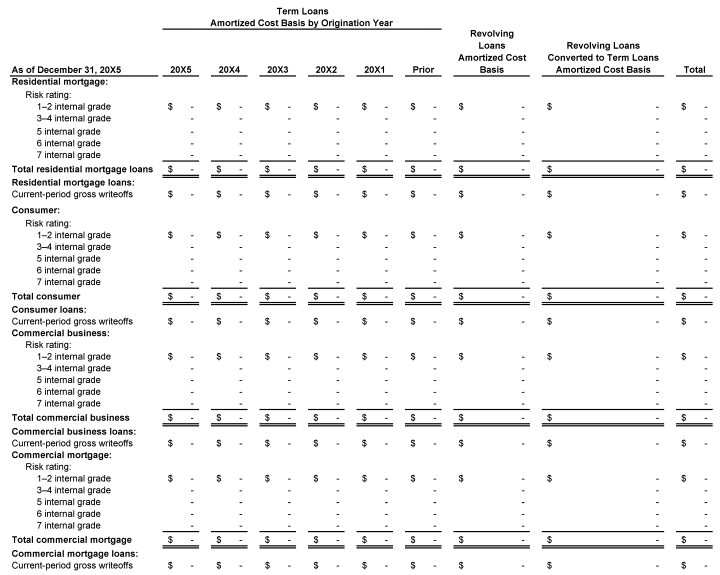 Term Loans Amortized Cost Basis by Origination Year "As of December 31, 20X5" 20X5 20X4 20X3 20X2 20X1 Prior Revolving Loans Amortized Cost Basis Revolving Loans Converted to Term Loans Amortized Cost Basis Total Residential mortgage: Risk rating: 1–2 internal grade $- $- $- $- $- $- $- $- $- 3–4 internal grade - - - - - - - - - 5 internal grade - - - - - - - - - 6 internal grade - - - - - - - - - - 7 internal grade - - - - - - - - - Total residential mortgage loans $- $- $- $- $- $- $- $- $- Residential mortgage loans: Current-period gross writeoffs $- $- $- $- $- $- $- $- $- Consumer: Risk rating: 1–2 internal grade $- $- $- $- $- $- $- $- $- 3–4 internal grade - - - - - - - - - 5 internal grade - - - - - - - - - 6 internal grade - - - - - - - - - 7 internal grade - - - - - - - - - Total consumer $- $- $- $- $- $- $- $- $- Consumer loans: Current-period gross writeoffs $- $- $- $- $- $- $- $- $- Commercial business: Risk rating: 1–2 internal grade $- $- $- $- $- $- $- $- $- 3–4 internal grade - - - - - - - - - 5 internal grade - - - - - - - - - 6 internal grade - - - - - - - - - 7 internal grade - - - - - - - - - Total commercial business $- $- $- $- $- $- $- $- $- Commercial business loans: Current-period gross writeoffs $- $- $- $- $- $- $- $- $- Commercial mortgage: Risk rating: 1–2 internal grade $- $- $- $- $- $- $- $- $- 3–4 internal grade - - - - - - - - - 5 internal grade - - - - - - - - - 6 internal grade - - - - - - - - - 7 internal grade - - - - - - - - - Total commercial mortgage $- $- $- $- $- $- $- $- $- Commercial mortgage loans: Current-period gross writeoffs $- $- $- $- $- $- $- $- $- -
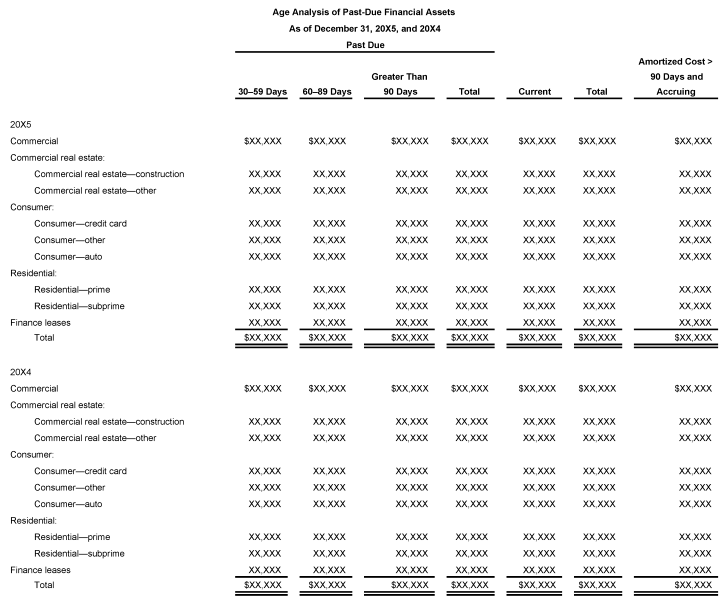 Age Analysis of Past-Due Financial Assets "As of December 31, 20X5, and 20X4" Past Due 30-59 Days 60-89 Days Greater Than 90 Days Total Current Total Amortized Cost > 90 Days and Accruing 20X5 Commercial " $XX,XXX " " $XX,XXX " " $XX,XXX " " $XX,XXX " " $XX,XXX " " $XX,XXX " " $XX,XXX " Commercial real estate: Commercial real estate construction " XX,XXX " " XX,XXX " " XX,XXX " " XX,XXX " " XX,XXX " " XX,XXX " " XX,XXX " Commercial real estate—other " XX,XXX " " XX,XXX " " XX,XXX " " XX,XXX " " XX,XXX " " XX,XXX " " XX,XXX " Consumer: Consumer—credit card " XX,XXX " " XX,XXX " " XX,XXX " " XX,XXX " " XX,XXX " " XX,XXX " " XX,XXX " Consumer—other " XX,XXX " " XX,XXX " " XX,XXX " " XX,XXX " " XX,XXX " " XX,XXX " " XX,XXX " Consumer—auto " XX,XXX " " XX,XXX " " XX,XXX " " XX,XXX " " XX,XXX " " XX,XXX " " XX,XXX " Residential: Residential—prime " XX,XXX " " XX,XXX " " XX,XXX " " XX,XXX " " XX,XXX " " XX,XXX " " XX,XXX " Residential—subprime " XX,XXX " " XX,XXX " " XX,XXX " " XX,XXX " " XX,XXX " " XX,XXX " " XX,XXX " Finance leases " XX,XXX " " XX,XXX " " XX,XXX " " XX,XXX " " XX,XXX " " XX,XXX " " XX,XXX " Total " $XX,XXX " " $XX,XXX " " $XX,XXX " " $XX,XXX " " $XX,XXX " " $XX,XXX " " $XX,XXX " 20X4 Commercial " $XX,XXX " " $XX,XXX " " $XX,XXX " " $XX,XXX " " $XX,XXX " " $XX,XXX " " $XX,XXX " Commercial real estate: Commercial real estate construction " XX,XXX " " XX,XXX " " XX,XXX " " XX,XXX " " XX,XXX " " XX,XXX " " XX,XXX " Commercial real estate—other " XX,XXX " " XX,XXX " " XX,XXX " " XX,XXX " " XX,XXX " " XX,XXX " " XX,XXX " Consumer: Consumer—credit card " XX,XXX " " XX,XXX " " XX,XXX " " XX,XXX " " XX,XXX " " XX,XXX " " XX,XXX " Consumer—other " XX,XXX " " XX,XXX " " XX,XXX " " XX,XXX " " XX,XXX " " XX,XXX " " XX,XXX " Consumer—auto " XX,XXX " " XX,XXX " " XX,XXX " " XX,XXX " " XX,XXX " " XX,XXX " " XX,XXX " Residential: Residential—prime " XX,XXX " " XX,XXX " " XX,XXX " " XX,XXX " " XX,XXX " " XX,XXX " " XX,XXX " Residential—subprime " XX,XXX " " XX,XXX " " XX,XXX " " XX,XXX " " XX,XXX " " XX,XXX " " XX,XXX " Finance leases
- aCredit risk of the reinsurer/assuming company
- bContractual coverage disputes between the reinsurer/assuming company and the insurer/ceding company including contract administration issues
- cOther noncontractual, noncoverage issues including reinsurance billing and allocation issues.
- aCustomized reinsurance agreements associated with individual risk geographies
- bDifferent size and financial conditions of reinsurers that may be either domestic or international
- cDifferent attachment points among reinsurance agreements
- dDifferent collateral terms of the reinsurance agreements (such as collateral trusts or letters of credit)
- eThe existence of state-sponsored reinsurance programs.
- aReinsurance agreements that have standardized terms
- bReinsurance agreements that involve similar insured risks and underwriting practices
- cReinsurance counterparties that have similar financial characteristics and face similar economic conditions.
 Loan—par amount " $10,000,000 " Loan—noncredit discount " $500,000 " Allowance for credit losses " 7,500,000 " Cash " 2,000,000 "
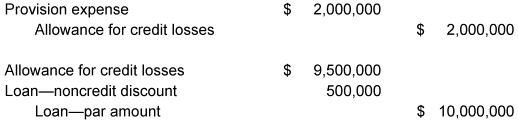 Provision expense " $2,000,000 " Allowance for credit losses " $2,000,000 " Allowance for credit losses " $9,500,000 " Loan—noncredit discount " 500,000 " Loan—par amount " $10,000,000 "
 Allowance for credit losses " $2,000,000 " Provision expense " $2,000,000 "
 Allowance for credit losses " $600,000 " Provision expense " $600,000 "
326-20-S00StatusSEC
Source downloaded: .Record version bb4489e46a03. Effective date must be checked in the source.
| Paragraph | Action | Accounting Standards Update | Date |
| 326-20-S99-1 | Added | Accounting Standards Update No. 2020-02 | 02/06/2020 |
326-20-S99SEC MaterialsSEC
Source downloaded: .Record version 3b59183ccf7a. Effective date must be checked in the source.
SEC Staff Guidance
- 1. Measuring current expected credit losses
- General: This staff interpretation applies to all registrants that are creditors in loan transactions that, individually or in the aggregate, have a material effect on the registrant's financial condition.FN74
- FASB ASC Subtopic 326-20 addresses the measurement of current expected credit losses for financial assets measured at amortized cost basis, net investments in leases recognized by lessors, reinsurance recoverables, and certain off-balance-sheet credit exposures.FN75
- At each reporting date, an entity shall record an allowance for credit losses on financial assets measured at amortized cost basis and net investments in leases recognized by lessors and shall record a liability for credit losses on certain off-balance-sheet exposures not accounted for as insurance or derivatives, including loan commitments, standby letters of credit, and financial guarantees.FN76
- For financial asset(s), the allowance for credit losses is a valuation account that is deducted from, or added to, the amortized cost basis of the financial asset(s) to present the net amount expected to be collected on the financial asset(s).FN77
- The allowance for credit losses is an estimate of current expected credit losses considering available information relevant to assessing collectibility of cash flows over the contractual term of the financial asset(s).FN78
- Information relevant to establishing an estimate of current expected credit losses includes historical credit loss experience on financial assets with similar risk characteristics, current conditions, and reasonable and supportable forecasts that affect the collectability of the remaining cash flows over the contractual term of the financial assets. An entity shall report in net income (as a credit loss expense) the amount necessary to adjust the allowance for credit losses and liabilities for credit losses on off-balance-sheet credit exposures for management's current estimate of expected credit losses.FN79
- This staff guidance is applicable upon a registrant's adoption of FASB ASC Topic 326.FN80 Upon a registrant's adoption of FASB ASC Topic 326, the staff guidance in SAB Topic 6, Section L: Financial Reporting Release No. 28 - Accounting for Loan Losses by Registrants Engaged in Lending ActivitiesFN81 will no longer be applicable.
- On November 15, 2019, the FASB delayed the effective date of FASB ASC Topic 326 for certain small public companies and other private companies. As amended, the effective date of ASC Topic 326 was delayed until fiscal years beginning after December 15, 2022 for SEC filers that are eligible to be smaller reporting companies under the SEC's definition, as well as private companies and not-for-profit entities. Nothing in this staff interpretation should be read to accelerate or delay the effective dates of the standard as modified by the FASB.
- FN74 This staff interpretation relates to Financial Reporting Release No. 28 - Accounting for Loan Losses by Registrants Engaged in Lending Activities, Release No. 33-6679 (Dec. 1, 1986), (hereinafter “FRR 28”).
- FN75 See ASC paragraphs 326-20-15-2 and 326-20-15-3.
- FN76 Ibid.
- FN77 See ASC paragraph 326-20-30-1.
- FN78 As indicated in ASC paragraph 326-20-30-11, the liability for expected credit losses for off-balance-sheet credit exposures shall be based on the contractual period in which the entity is exposed to credit risk via a present obligation to extend credit, unless the obligation is unconditionally cancellable by the issuer.
- FN79 See ASC paragraphs 326-20-30-1, 326-20-30-6, 326-20-30-7 and 326-20-30-11.
- FN80 See ASC paragraphs 326-10-65-1, 326-10-65-2, and 326-10-65-3.
- FN81 Originally added to the Codification of SABs in Topic 6, Section L, by SAB No. 102 - Selected Loan Loss Allowance Methodology and Documentation Issues, 66 FR 36457 (July 12, 2001).
- 2. Development, governance, and documentation of a systematic methodology
- Facts: Registrant A is developing (or subsequently reviewing) its allowance for credit losses methodology for its loan portfolio.
- Question 1: What are some of the factors or elements that the staff normally would expect Registrant A to consider when developing (or subsequently performing an assessment of) its methodology for determining its allowance for credit losses under GAAP?
- Interpretive Response: The staff normally would expect a registrant to have a systematic methodology to address the development, governance, and documentation to determine its provision and allowance for credit losses.
- It is critical that allowance for credit losses methodologies incorporate management's current judgments about the credit losses expected from the existing loan portfolio, including reasonable and supportable forecasts about changes in credit quality of these portfolios, on a disciplined and consistently-applied basis.
- A registrant's allowance for credit losses methodology is influenced by entity-specific factors, such as an entity's size, organizational structure, access to information, business environment and strategy, management's risk assessment, complexity of the loan portfolio, loan administration procedures, and management information systems. Management is responsible for the estimate of expected credit losses, and therefore also responsible for determining whether any allowance methodologies developed by third parties are consistent with GAAP.
- While different registrants may use different methods,FN82 there are certain common elements that the staff would expect in any methodology:
- • Identify relevant risk characteristics and pool loans on the basis of similar risk characteristics;FN83
- • Consider available information relevant to assessing the collectibility of cash flows;FN84
- • Consider expected credit losses over the contractual termFN85 of all existing loans (whether on an individual or group basis), and measure expected credit losses on loans on a collective (pool) basis when similar risk characteristics exist;FN86
- • Require that analyses, estimates, reviews, and other allowance for credit losses methodology functions be performed by competent and well-trained personnel;
- • Be based on reliable and relevant data and an analysis of current conditions and reasonable and supportable forecasts;
- • Include a systematic and logical method to consolidate the loss estimates that allows for the allowance for credit losses balance to be recorded in accordance with GAAP.
- The staff believes an entity's management should review, on a periodic basis, whether its methodology for determining its allowance for credit losses is appropriate. Additionally, for registrants that have audit committees, the staff believes that oversight of the financial reporting and auditing of the allowance for credit losses by the audit committee can strengthen the registrant's process for determining its allowance for credit losses.
- A systematic methodology that is properly designed and implemented should result in a registrant's best estimate of its allowance for credit losses.FN87 Accordingly, the staff normally would expect registrants to adjust their allowance for credit losses balance, either upward or downward, in each period for differences between the results of the systematic methodology and the unadjusted allowance for credit losses balance in the general ledger.FN88
- Question 2: In the staff's view, what aspects of a registrant's allowance for credit losses internal accounting controls would need to be appropriately addressed in its written policies and procedures?
- Interpretive Response: Registrants may utilize a wide range of policies, procedures, and control systems in their allowance for credit losses processes, and these policies, procedures, and systems are tailored to the size and complexity of the registrant and its loan portfolio.
- However, the staff believes that, in order for a registrant's allowance for credit losses methodology to be effective, the registrant's written policies and procedures for the systems and controls that maintain an appropriate allowance for credit losses would likely address the following:
- • The roles and responsibilities of the registrant's departments and personnel (including the lending function, credit review, financial reporting, internal audit, senior management, audit committee, board of directors, and others, as applicable) who determine or review, as applicable, the allowance for credit losses to be reported in the financial statements;
- • The registrant's selected methods and policies for developing the allowance for credit losses and determining significant judgments;
- • The description of the registrant's systematic methodology, which should be consistent with the registrant's accounting policies for determining its allowance for credit losses (see Question 4 below for further discussion); and
- • How the system of internal controls related to the allowance for credit losses process provides reasonable assurance that the allowance for credit losses is in accordance with GAAP.
- The staff normally would expect internal accounting controlsFN89 for the allowance for credit losses estimation process to:
- • Include measures to provide reasonable assurance regarding the reliability and integrity of information and compliance with laws, regulations, and internal policies and procedures;FN90 and
- • Operate at a level of precision sufficient to provide reasonable assurance that the registrant's financial statements are prepared in accordance with GAAP.
- Question 3: Assume the same facts as in Question 1. What would the staff normally expect Registrant A to include in its documentation of its allowance for credit losses methodology?
- Interpretive Response: In FRR 28, the Commission provided guidance for documentation of loan loss provisions and allowances for registrants engaged in lending activities. The staff believes that appropriate written supporting documentation for the provision and allowance for credit losses facilitates review of the allowance for credit losses process and reported amounts, builds discipline and consistency into the allowance for credit losses methodology, and helps to evaluate whether relevant factors are appropriately considered in the allowance analysis.
- The staff, therefore, normally would expect a registrant to document the relationship between its detailed analysis of the characteristics and credit quality of the portfolio and the amount of the allowance for credit losses reported in each period.FN91
- The staff normally would expect registrants to maintain written supporting documentation for the following decisions and processes:
- • Policies and procedures over the systems and controls that maintain an appropriate allowance for credit losses;
- • Allowance for credit losses methodology and key judgments, including the data used, assessment of risk, and identification of significant assumptions in the allowance estimation process;
- • Summary or consolidation of the allowance for credit losses balance;
- • Validation of the allowance for credit losses methodology; and
- • Periodic adjustments to the allowance for credit losses.
- Question 4: What elements of a registrant's allowance for credit losses methodology would the staff normally expect to be described in the registrant's written policies and procedures?
- Interpretive Response: The staff normally would expect a registrant's written policies and procedures to describe the primary elements of its allowance for credit losses methodology. The staff normally would expect that, in order for a registrant's allowance for credit losses methodology to be effective, the registrant's written policies and procedures would describe all primary elements needed to support a disciplined and consistently-applied methodology, which may include, but is not limited to:FN92
- • How portfolio segments are determined (e.g., by loan type, industry, risk rating, etc.)FN93 and the methodology used for each portfolio segment;FN94
- • The approach used to pool loans based on similar risk characteristics;
- • For accounting policy or practical expedient elections set forth in FASB ASC Subtopic 326-20, documentation of the elections made;
- • The method(s) used to determine the contractual term of the financial assets, including consideration of prepayments and when the contractual term is extended;FN95
- • If a loss-rate method is used, the historical data used to develop the components of the loss rate and how that rate is applied to the amortized cost basis of the financial asset as of the reporting date;FN96
- • The method for estimating expected recoveries when measuring the allowance for credit losses;FN97
- • The approach used to determine the appropriate historical period for estimating expected credit loss statistics;
- • The approach used to determine the reasonable and supportable period;
- • The approach used to adjust historical information for current conditions and reasonable and supportable forecasts;FN98
- • How the entity plans to revert to historical credit loss information for periods beyond which the entity is able to make or obtain reasonable and supportable forecasts of expected credit losses;FN99 and
- • The approach used to determine when a purchased financial asset would qualify to be accounted for as a purchased financial asset with credit deterioration.FN100
- FN82 ASC paragraph 326-20-30-3 states that “the allowance for credit losses may be determined using various methods. For example, an entity may use discounted cash flow methods, loss-rate methods, roll-rate methods, probability-of-default methods, or methods that utilize an aging schedule.”
- FN83 See ASC paragraph 326-20-55-5 for a list of risk characteristics that may be applicable.
- FN84 See ASC paragraph 326-20-30-7.
- FN85 See ASC paragraph 326-20-30-6.
- FN86 See ASC paragraph 326-20-30-2.
- FN87 ASU 2016-13, BC63 states that “the Board decided that an entity should determine at the reporting date an estimate of credit loss that best reflects its expectations (or its best estimate of expected credit loss).”
- FN88 See ASC paragraph 326-20-35-1 and 326-20-35-3. Registrants should also refer to the guidance on materiality in SAB Topic 1.M.
- FN89 Public companies are required to comply with the books and records and internal controls provisions of the Exchange Act. See Sections 13(b)(2) - (7) of the Exchange Act.
- FN90 Section 13(b)(2) - (7) of the Exchange Act.
- FN91 FRR 28, Section II states that “the specific rationale upon which the loan loss allowance and provision amount actually reported in each individual period is based — i.e., the bridge between the findings of the detailed review of the loan portfolio and the amount actually reported in each period — would be documented to help ensure the adequacy of the reported amount, to improve auditability, and to serve as a benchmark for exercise of prudent judgment in future periods.”
- FN92 See also, ASC paragraph 326-20-55-6 for additional judgments a registrant may make.
- FN93 FASB ASC Subtopic 326-20-20 defines a portfolio segment as the “level at which an entity develops and documents a systematic methodology to determine its allowance for credit losses.”
- FN94 See ASC paragraph 326-20-30-3 for examples of expected loss estimation methods that may be used.
- FN95 See ASC paragraph 326-20-30-6.
- FN96 See ASC paragraph 326-20-30-5.
- FN97 See ASC paragraph 326-20-30-1.
- FN98 See ASC paragraph 326-20-30-8 and 326-20-30-9.
- FN99 See ASC paragraph 326-20-30-9.
- FN100 See ASC paragraph .
- 3. Documenting the results of a systematic methodology
- Question 5: What documentation would the staff normally expect a registrant to prepare to support its allowance for credit losses for its loans under FASB ASC Subtopic 326-20?
- Interpretive Response:
- Regardless of the method used to determine the allowance for credit losses under FASB ASC Subtopic 326-20, the staff normally would expect a registrant to demonstrate in its documentation that the loss measurement methods and assumptions used to estimate the allowance for credit losses for its loan portfolio are determined in accordance with GAAP as of the financial statement date.
- The staff normally would expect a registrant to maintain as sufficient evidence written documentation to support its measurement of expected credit losses under FASB ASC Subtopic 326-20. That documentation should reflect the method(s) used to estimate expected credit losses for each portfolio segment.FN101
- The staff normally would expect registrants to follow a systematic and consistently-applied approach to select the most appropriate expected credit loss measurement methods and support its conclusions and rationale with written documentation. Typically, registrants decide the methods to use based on many factors, which vary with their business strategies as well as their information system capabilities.
- As economic and other business conditions change, registrants often modify their business strategies, which may necessitate adjustments to the methods used to estimate expected credit losses. The staff normally would expect a registrant to maintain a process to evaluate whether adjustments to the methodology are necessary and, if so, maintain documentation to support adjustments to the methodology used.
- A registrant's methodology should produce an estimate that is consistent with GAAP. The staff normally would expect that, before employing an expected loss method, a registrant would evaluate and modify, as needed, the method's assumptions related to the current estimate of expected credit losses. Also, the staff expects that registrants would typically document the evaluation, the conclusions regarding the appropriateness of estimating expected credit losses with that method, and the objective support for adjustments to the method or its results.
- A registrant shall measure expected credit losses on a collective (pool) basis when similar risk characteristic(s) exist.FN102 The staff normally would expect a registrant to maintain documentation to support its conclusion that the loans in each pool have similar characteristics.
- One method of estimating expected credit losses for a pool of loans is through the application of loss rates to the pool's aggregate loan balances.FN103 Such loss rates should generally reflect the registrant's historical credit loss experience consistent with the remaining contractual termsFN104 for each pool of loans, adjusted to reflect the extent to which management expects current conditions and reasonable and supportable forecasts to differ from the conditions that existed for the period over which historical information was evaluated.FN105
- If a registrant utilizes external data, the staff normally would expect that the registrant would demonstrate in its documentation the relevance and reliability of the external data. The registrant should consider whether the external loss experience data comes from loans with credit attributes similar to those of the loans included in the registrant's portfolio and is consistent with the registrant's assumptions regarding current and forecasted economic conditions.FN106 The staff normally would expect a registrant to maintain supporting documentation for assumptions and data used to develop its loss rates, including its evaluation of the relevance and reliability of any external data.
- If a registrant uses the present value of expected future cash flows to measure expected credit losses,FN107 the staff normally would expect supporting documentation for the assumptions and data used to develop the amount and timing of expected cash flows and the effective interest rate used to discount expected cash flows.
- If a registrant uses the fair value of collateral to measure expected credit losses, the staff normally would expect the registrant to document:
- • The basis for its conclusion that the loan qualifies under GAAP for measurement of expected credit losses based on the fair value of the collateral;FN108
- • How it determined the fair value of the collateral, including policies relating to the use of appraisals, valuation assumptions and calculations, the supporting rationale for adjustments to appraised values, if any, and the determination of costs to sell, if applicable; and
- • The recency and reliability of the appraisal or other valuation.
- Regardless of the method used, the underlying assumptions used by registrants to develop expected credit loss measurements should consider current conditions and reasonable and supportable forecasts. The staff normally would expect a registrant to document the factors used in the development of the assumptions and how those factors affected the expected credit loss measurements.FN109 Factors to be considered include the following:
- • Levels of and trends in delinquencies and performance of loans;
- • Levels of and trends in write-offs and recoveries collected;
- • Trends in volume and terms of loans;
- • Effects of any changes in reasonable and supportable economic forecasts;
- • Effects of any changes in risk selection and underwriting standards, and other changes in lending policies, procedures, and practices;
- • Experience, ability, and depth of lending management and other relevant staff;
- • Available relevant information sources that support or contradict the registrant's own forecast;
- • Effects of changes in prepayment expectations or other factors affecting assessments of loan contractual term;
- • Industry conditions; and
- • Effects of changes in credit concentrations.
- Factors affecting collectibility that are not reflected in the registrant's historical loss information should be evaluated to determine whether an adjustment is necessary so that the expected credit loss measurement considers those factors.FN110 For any adjustment of loss measurements based on current conditions and reasonable and supportable forecasts, the staff normally would expect a registrant to maintain sufficient evidence to (a) support the amount of the adjustment and (b) explain why the adjustment is necessary to reflect current conditions and reasonable and supportable forecasts in the expected credit loss measurements. Supporting documentation for adjustments may include relevant economic reports, economic data, and information from individual borrowers.
- The staff normally would expect that, as part of the registrant's allowance for credit losses methodology, it would create a summary of the amount and rationale for the adjustment factor for review by management prior to the issuance of the financial statements. The staff normally would expect the nature of the adjustments, how they were measured or determined, and the underlying rationale for making the changes to the allowance for credit losses balance to be documented. The staff also normally would expect appropriate documentation of the adjustments to be provided to management for review of the final allowance for credit losses amount to be reported in the financial statements.
- Similarly, the staff normally would expect that registrants would maintain documentation to support the identified range and the rationale used for determining which estimate is the best estimate within the range of expected credit losses and that this documentation would also be made available to the registrant's independent accountants. If changes frequently occur during management or credit committee reviews of the allowance for credit losses, management may find it appropriate to analyze the reasons for the frequent changes and to reassess the methodology the registrant uses.
- Facts: Registrant H has completed its estimation of its allowance for credit losses for the current reporting period, in accordance with GAAP, using its established systematic methodology.
- Question 6: What summary documentation would the staff normally expect Registrant H to prepare to support the amount of its allowance for credit losses to be reported in its financial statements?
- Interpretive Response: The staff normally would expect that, to verify that the allowance for credit losses balances are presented fairly in accordance with GAAP and are auditable, management would prepare a document that summarizes the amount to be reported in the financial statements for the allowance for credit losses,FN111 and that such documentation also include sufficient evidence to support the allowance and internal controls over the allowance. Common elements that the staff normally would expect to find documented in allowance for credit losses summaries include:
- • The reasonable and supportable economic forecasts used;
- • The estimate of the expected credit losses using the registrant's methodology or methodologies;
- • A summary of the current allowance for credit losses balance;
- • The amount, if any, by which the allowance for credit losses balance is to be adjusted; and
- • Depending on the level of detail that supports the allowance for credit losses analysis, detailed subschedules of loss estimates that reconcile to the summary schedule.
- Generally, a registrant's review and approval process for the allowance for credit losses relies upon the data provided in these consolidated summaries. There may be instances in which individuals or committees that review the allowance for credit losses methodology and resulting allowance balance identify adjustments that need to be made to the loss estimates to provide a better estimate of expected credit losses. These changes may occur as a result of holistically evaluating the individual components of the estimation process and considering the overall estimate of the allowance for credit losses as a whole or due to information not known at the time of the initial loss estimate. It would be important that these adjustments be consistent with GAAP and be reviewed and approved by appropriate personnel. Additionally, it would typically be appropriate for the summary to provide each subsequent reviewer with an understanding of the support behind these adjustments. Therefore, the staff normally would expect management to document the nature of any adjustments and the underlying rationale for making the changes.
- The staff also normally would expect this documentation to be provided to those among management making the final determination of the allowance for credit losses amount.
- FN101 See supra note 20.
- FN102 See ASC paragraph 326-20-30-2. Also refer to ASC paragraph 326-20-55-5 for a list of risk characteristics that may be applicable.
- FN103 See ASC paragraph for an example illustrating one way an entity may estimate expected credit losses on a portfolio of loans with similar risk characteristics using a loss-rate approach.
- FN104 See ASC paragraph 326-20-30-6 for guidance on determining the contractual term.
- FN105 See ASC paragraph 326-20-30-9 for guidance related to adjusting historical loss information.
- FN106 See ASC paragraph 326-20-30-8.
- FN107 See ASC paragraph 326-20-30-4.
- FN108 See ASC paragraph for guidance regarding when it is appropriate to measure expected credit losses based on the fair value of the collateral as of the reporting date.
- FN109 See ASC paragraph 326-20-55-4 for examples of factors to consider.
- FN110 See ASC paragraph 326-20-30-9 for guidance on when it is not appropriate to make adjustments to historical loss information for forecasted economic conditions.
- FN111 See supra note 16.
- 4. Validating a systematic methodology.
- Question 7: What is the staff's guidance to a registrant on validating, and documenting the validation of, its systematic methodology used to estimate allowance for credit losses?
- Interpretive Response: The staff believes that a registrant's allowance for credit losses methodology is considered reasonable when it results in a valuation account that adjusts the net amount of its existing portfolio to cash flows expected to be collected.FN112
- The staff normally would expect the registrant's systematic methodology to include procedures to assess the continued relevance and reliability of methods, data, and assumptions used to estimate expected cash flows.
- To verify that the allowance for credit losses methodology is reasonable and conforms to GAAP, the staff believes it would be appropriate for management to establish internal control policies, appropriate for the size of the registrant and the type and complexity of its loan products and modeling methods.
- These policies may include procedures for a review, by a party who is independent of the allowance for expected credit losses estimation process, of the allowance methodology and its application in order to confirm its effectiveness.
- While registrants may employ many different procedures when assessing the reasonableness of the design and performance of its allowance for credit losses methodology and appropriateness of the data and assumptions used, the procedures should allow management to determine whether there may be deficiencies in its overall methodology. Examples of procedures may include:
- • A review of how management's prior assumptions (including expectations regarding loan delinquencies, troubled debt restructurings, write-offs, and recoveries) have compared to actual loan performance;
- • A review of the allowance for credit losses process by a party that is independent and possesses competencies on the subject matter. This often involves the independent party reviewing, on a test basis, source documents and underlying data and assumptions to determine that the established methodology develops reasonable loss estimates;
- • A retrospective analysis of whether the models used performed in a manner consistent with the intended purpose of developing an estimate of expected credit losses; and
- • When the fair value of collateral is used, an evaluation of the appraisal process of the underlying collateral. This may be accomplished by periodically comparing the appraised value to the actual sales price on selected properties sold.
- The staff believes that management should support its validation process with documentation of the specific validation procedures performed, including any findings of an independent reviewer. The staff normally would expect that, if the methodology is changed based upon the findings of the validation process, documentation that describes and supports the changes would be maintained.
- FN112 See ASC paragraph 326-20-30-1.
Related subtopics
- 326-10 OverallFinancial Instruments—Credit Losses
- 326-30 Available-for-Sale Debt SecuritiesFinancial Instruments—Credit Losses
- 325-40 Beneficial Interests in Securitized Financial AssetsInvestments—Other
- 310-10 OverallReceivables
- 860-30 Secured Borrowing and CollateralTransfers and Servicing
- 310-20 Nonrefundable Fees and Other CostsReceivables