ASC 323-740
Income Taxes—Proportional Amortization Method
323 Investments—Equity Method and Joint Ventures
Source downloaded: .Record version 2ca5724f2ee6. Effective date must be checked in the source.
ASC 323-740 provides standalone guidance on the proportional amortization method for equity investments in flow-through limited liability entities made primarily to receive income tax credits and other income tax benefits (e.g., LIHTC and other tax credit programs). If the conditions in 323-740-25-1 are met and the method is elected on a tax-credit-program-by-tax-credit-program basis (323-740-25-4), the investor amortizes the initial cost of the investment in proportion to the income tax credits and other income tax benefits allocated to it, and reports that amortization within income tax expense (benefit) (323-740-35-2; 323-740-45-2).
Key points (7)
- Election conditions (323-740-25-1): it is probable the allocable income tax credits will be available; the investor cannot exercise significant influence over the underlying project's operating and financial policies; substantially all projected benefits (on a discounted basis) are from income tax credits and other income tax benefits; the projected yield based solely on tax credit and tax benefit cash flows is positive; and the investor is a limited liability investor for both legal and tax purposes.
- The proportional amortization method is an accounting policy election made on a tax-credit-program-by-tax-credit-program basis and applied consistently to all qualifying investments within the elected program, not investment by investment (323-740-25-4).
- Amortization equals the initial investment balance less expected residual value, multiplied by the ratio of current-period allocated income tax credits and other income tax benefits to total estimated credits and benefits over the life of the investment (323-740-35-2), with a practical expedient to use only income tax credits if substantially similar (323-740-35-4).
- Income tax credits are recognized in the period they are allocated to the investor for tax purposes; immediate recognition of all future credits at initial investment is prohibited (323-740-25-5; 323-740-30-1).
- Amortization is presented as a component of income tax expense (benefit), while non-income-tax-related benefits are included in pretax earnings when realized or realizable and gains or losses on sale go to pretax earnings (323-740-45-2; 323-740-35-5).
- Impairment is tested when events or circumstances indicate it is more likely than not that the carrying amount will not be realized; the loss equals carrying amount less fair value and may not be reversed (323-740-35-6); a liability is recognized for unconditional delayed equity contributions and for contingent contributions when probable (323-740-25-3).
- Disclosures under 323-740-50-1 and 50-1A apply to all investments in an elected tax credit program (even those failing the 25-1 conditions) and cover the nature of investments, credits and benefits recognized, investment balances and line items, amortization in tax expense, non-income-tax-related activity, and significant changes in the investment or the relationship with the project.
For students. This is the "tax equity" accounting model expanded by ASU 2023-02 beyond affordable housing to all qualifying tax credit programs; the classic mistakes are treating the election as investment-by-investment (it is by tax credit program) and recognizing the full stream of future tax credits at the date of investment, which 323-740-25-5 forbids.
Machine-generated study aid for ASC 323-740. Check the source paragraphs below.
323-740-00Status
Source downloaded: .Record version 43a37ef4ad4c. Effective date must be checked in the source.
323-740-05Overview and Background
Source downloaded: .Record version cc82ffa7efa1. Effective date must be checked in the source.
Proportional Amortization Method
323-740-15Scope and Scope Exceptions
Source downloaded: .Record version c8d3832d2707. Effective date must be checked in the source.
Proportional Amortization Method
Overall Guidance
323-740-25Recognition
Source downloaded: .Record version f1df001e7248. Effective date must be checked in the source.
Proportional Amortization Method
- a
- aaThe investor does not have the ability to exercise significant influence over the operating and financial policies of the underlying project.
- aaaSubstantially all of the projected benefits are from income tax credits and other income tax benefits (for example, tax benefits generated from the operating losses of the investment). Projected benefits include, but are not limited to, income tax credits, other income tax benefits, and other non-income-tax-related benefits, including refundable tax credits (that is, those tax credits not dependent upon an investor’s income tax liability). Tax credits accounted for outside of the scope of Topic 740 (for example, refundable tax credits) shall be included in total projected benefits, but not in income tax credits and other income tax benefits when evaluating this condition. This condition shall be determined on a discounted basis using a discount rate that is consistent with the cash flow assumptions utilized by the investor for the purpose of making a decision to invest in the project.
- bThe investor's projected yield based solely on the cash flows from the income tax credits and other income tax benefits is positive.
- cThe investor is a limited liability investor in the limited liability entity for both legal and tax purposes, and the investor's liability is limited to its capital investment.
- aThe reporting entity is in the business of entering into those other transactions (for example, a financial institution that regularly extends loans to other projects).
- bThe terms of those other transactions are consistent with the terms of arm's-length transactions.
- cThe reporting entity does not acquire the ability to exercise significant influence over the operating and financial policies of the underlying project as a result of those other transactions.
- aA change in the nature of the investment (for example, if the investment is no longer in a flow-through entity for tax purposes)
- bA change in the relationship with the underlying project that could result in the reporting entity no longer meeting the conditions in paragraphs 323-740-25-1 through 25-1B.
323-740-30Initial Measurement
Source downloaded: .Record version af46f9daad62. Effective date must be checked in the source.
Proportional Amortization Method
323-740-35Subsequent Measurement
Source downloaded: .Record version 400f40279df2. Effective date must be checked in the source.
Proportional Amortization Method
- aThe initial investment balance less any expected residual value of the investment, multiplied by
- bThe percentage of actual income tax credits and other income tax benefits allocated to the investor in the current period divided by the total estimated income tax credits and other income tax benefits expected to be received by the investor over the life of the investment.
323-740-45Other Presentation Matters
Source downloaded: .Record version aa3c56486247. Effective date must be checked in the source.
Proportional Amortization Method
323-740-50Disclosure
Source downloaded: .Record version cdc2d67a11e6. Effective date must be checked in the source.
Proportional Amortization Method
- aThe nature of its investments
- bThe effect of the recognition and measurement of its investments and the related income tax credits and other income tax benefits on its financial position and results of operations.
- aThe amount of income tax credits and other income tax benefits recognized during the period, including the line item in the statement of operations and statement of cash flows in which it has been recognized
- bThe amount of investments and the line item in which the investments are recognized in the statement of financial position
- cFor investments accounted for using the proportional amortization method, the amount of investment amortization recognized as a component of income tax expense (benefit)
- dFor investments accounted for using the proportional amortization method, the amount of non-income-tax-related activity and other returns received that is recognized outside of income tax expense (benefit) and the line item in the statement of operations and statement of cash flows in which it has been recognized
- eFor investments accounted for using the proportional amortization method, significant modifications or events that resulted in a change in the nature of the investment or a change in the relationship with the underlying project.
- aThe amount of income tax credits and other income tax benefits recognized during the period, including the line item in the statement of operations and statement of cash flows in which it has been recognized
- bThe amount of investments and the line item in which the investments are recognized in the statement of financial position
- cFor investments accounted for using the proportional amortization method, the amount of investment amortization recognized as a component of income tax expense (benefit)
- dFor investments accounted for using the proportional amortization method, the amount of non-income-tax-related activity and other returns received that is recognized outside of income tax expense (benefit) and the line item in the statement of operations and statement of cash flows in which it has been recognized
- eFor investments accounted for using the proportional amortization method, significant modifications or events that resulted in a change in the nature of the investment or a change in the relationship with the underlying project.
- a
- b
- c
- dFor investments accounted for using the equity method, the amount of investment income or loss included in pretax income
- eAny commitments or contingent commitments (for example, guarantees or commitments to provide additional capital contributions), including the amount of delayed equity contributions and the year or years in which contingent commitments are expected to be paid
- fThe amount and nature of impairment losses during the year resulting from the forfeiture or ineligibility of income tax credits or other circumstances. For example, in a qualified affordable housing project investment, those impairment losses may be based on actual property-level foreclosures, loss of qualification due to occupancy levels, compliance issues with tax code provisions, or other issues.
- a
- b
- c
- dFor investments accounted for using the equity method, the amount of investment income or loss included in pretax income
- eAny commitments or contingent commitments (for example, guarantees or commitments to provide additional capital contributions), including the amount of delayed equity contributions and the year or years in which contingent commitments are expected to be paid
- fThe amount and nature of impairment losses during the year resulting from the forfeiture or ineligibility of income tax credits or other circumstances. For example, in a qualified affordable housing project investment, those impairment losses may be based on actual property-level foreclosures, loss of qualification due to occupancy levels, compliance issues with tax code provisions, or other issues.
323-740-55Implementation Guidance and Illustrations
Source downloaded: .Record version e74190859775. Effective date must be checked in the source.
Proportional Amortization Method
Illustrations
 Date of investment "January 1, 20X1" Purchase Price of Investment " $100,000 "
- aAll cash flows (except initial investment) occur at the end of each year.
- bDepreciation expense is computed, for book and tax purposes, using the straight-line method with a 27.5 year life (the same method is used for simplicity).
- cThe investor made a $100,000 investment for a 5 percent limited partnership interest in the project at the beginning of the first year of eligibility for the tax credit.
- dThe partnership finances the project cost of $4,000,000 with 50 percent equity and 50 percent debt.
- eThe annual tax credit allocation (equal to 4 percent of the project's original cost) will be received for a period of 10 years.
- fThe investor's tax rate is 40 percent.
- gThe project will operate with break-even pretax cash flows including debt service during the first 15 years of operations.
- hThe project's taxable loss will be equal to depreciation expense. The cumulative book loss (and thus the cumulative depreciation expense) recognized by the investor is limited to the $100,000 investment.
- i
- jIt is assumed that all requirements are met to retain allocable tax credits so there will be no recapture of tax credits.
- kThe investor expects that the estimated residual value of the investment will be zero.
- lAll of the conditions described in paragraph 323-740-25-1 are met to apply the proportional amortization method, and the entity has elected to use the proportional amortization method to account for its tax equity investments in this tax credit program in accordance with paragraph 323-740-25-4.
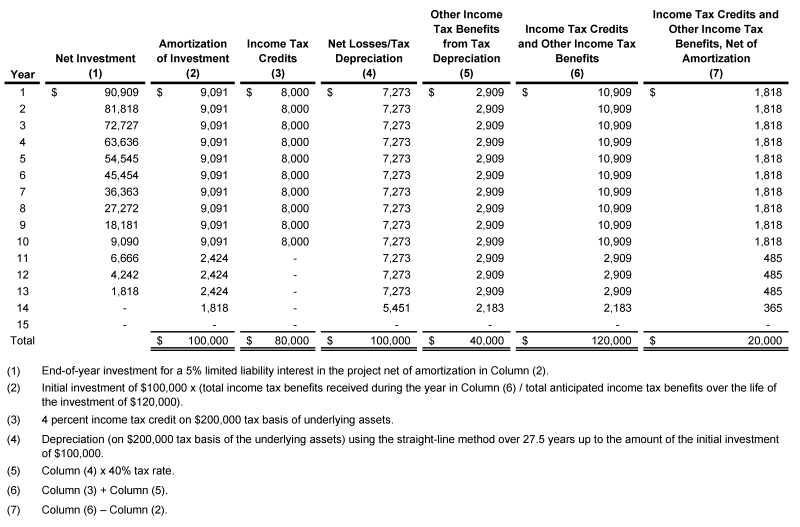 EITF 13-B Examples: Comparison of Effecftive Yield and Proportional Amortization Methods Effective Yield Method Year "Net Investment (1)" After Tax Effective Yield (2) "Amortization of Investment (3)" "Pre-tax Amortization of Investment (4)" "Tax Credits (5)" "Net losses/Tax Depreciation (6)" Tax Savings (7) "Total Tax Benefit (8)" "Current Tax Benefit (9)" "Deferred Tax Benefit (Expense) (10)" "Impact on Net Income (11)" 0 " $(100,000)" 1 " $95,289 " " $14,198 " " $4,711 " " $3,004 " " $16,000 " " $7,273 " " $2,909 " " $18,909 " " $15,905 " " $(1,708)" " $14,198 " 2 " 89,909 " " 13,529 " " 5,380 " " 4,118 " " 16,000 " " 7,273 " " 2,909 " " 18,909 " " 14,791 " " (1,262)" " 13,529 " 3 " 83,764 " " 12,765 " " 6,144 " " 5,392 " " 16,000 " " 7,273 " " 2,909 " " 18,909 " " 13,517 " (752) " 12,765 " 4 " 76,748 " " 11,893 " " 7,016 " " 6,845 " " 16,000 " " 7,273 " " 2,909 " " 18,909 " " 12,064 " (171) " 11,893 " 5 " 68,736 " " 10,897 " " 8,013 " " 8,506 " " 16,000 " " 7,273 " " 2,909 " " 18,909 " " 10,403 " 493 " 10,897 " 6 " 59,585 " " 9,759 " " 9,150 " " 10,402 " " 16,000 " " 7,273 " " 2,909 " " 18,909 " " 8,507 " " 1,252 " " 9,759 " 7 " 49,136 " " 8,460 " " 10,449 " " 12,567 " " 16,000 " " 7,273 " " 2,909 " " 18,909 " " 6,342 " " 2,118 " " 8,460 " 8 " 37,203 " " 6,976 " " 11,933 " " 15,040 " " 16,000 " " 7,273 " " 2,909 " " 18,909 " " 3,869 " " 3,107 " " 6,976 " 9 " 23,576 " " 5,282 " " 13,627 " " 17,863 " " 16,000 " " 7,273 " " 2,909 " " 18,909 " " 1,046 " " 4,236 " " 5,282 " 10 " 8,014 " " 3,347 " " 15,562 " " 21,088 " " 16,000 " " 7,273 " " 2,909 " " 18,909 " " (2,179)" " 5,526 " " 3,347 " 11 " 6,243 " " 1,138 " " 1,771 " " (1,896)" - " 7,273 " " 2,909 " " 2,909 " " 4,806 " " (3,668)" " 1,138 " 12 " 4,220 " 886 " 2,023 " " (1,477)" - " 7,273 " " 2,909 " " 2,909 " " 4,386 " " (3,500)" 886 13 " 1,911 " 599 " 2,310 " (999) - " 7,273 " " 2,909 " " 2,909 " " 3,908 " " (3,309)" 599 14 - 271 " 1,911 " (452) - " 5,455 " " 2,182 " " 2,182 " " 2,634 " " (2,363)" 271 15 - - - - - - - - - - - Total " $100,000 " " $100,000 " " $100,000 " " $160,000 " " $100,000 " " $40,000 " " $200,000 " " $100,000 " $(0) " $100,000 " internal rate of return based on tax credits and other tax benefits 14.20% (1) End-of-year investment for a 5% limited partnership interest in the project net of amortization in Column (3) (2) Beginning investment x 14.20% (3) Column (5) + (Column (6) x 40% tax rate) - Column (2) (4) (Column (5) - Column (2)) / (1 - 40% tax rate) (5) "8 percent tax credit on $200,000 tax basis of underlying assets" (6) "Depreciation (on $200,000 tax basis of the underlying assets) using the straight-line method over 27.5 years." (7) Column (6) x 40% tax rate (8) Column (5) + Column (7) (9) Column (5) - Column (4) + (Column (6) x 40% tax rate). (10) "The change in deferred taxes resulting from the difference between the book and tax bases of the investment. In this Example, that amount can be determined as follows: (Column (4) - Column (6)) x 40% tax rate." (11) Column (9) + Column (10) STAFF RECOMMENDATION Proportional Amortization Method - Amortization in proportion to tax credits only Year "Net Investment (1)" "Tax Basis of Investment (2)" "Amortization of Investment (3)" "Tax Credits (4)" "Net losses/Tax Depreciation (5)" Tax Savings (6) "Total Tax Benefit (7)" "Deductible Temporary Difference (8)" Deferred Tax Asset (9) "Current Tax Benefit (10)" "Deferred Tax Benefit (Expense) (11)" "Impact on Net Income (12)" 0 " $(100,000)" 1 " $90,000 " " $92,727 " " $10,000 " " $16,000 " " $7,273 " " $2,909 " " $18,909 " " $2,727 " " $1,091 " " $8,909 " " $1,091 " " $10,000 " 2 " 80,000 " " 85,455 " " 10,000 " " 16,000 " " 7,273 " " 2,909 " " 18,909 " " 5,455 " " 2,182 " " 8,909 " " 1,091 " " 10,000 " 3 " 70,000 " " 78,182 " " 10,000 " " 16,000 " " 7,273 " " 2,909 " " 18,909 " " 8,182 " " 3,273 " " 8,909 " " 1,091 " " 10,000 " 4 " 60,000 " " 70,909 " " 10,000 " " 16,000 " " 7,273 " " 2,909 " " 18,909 " " 10,909 " " 4,364 " " 8,909 " " 1,091 " " 10,000 " 5 " 50,000 " " 63,636 " " 10,000 " " 16,000 " " 7,273 " " 2,909 " " 18,909 " " 13,636 " " 5,455 " " 8,909 " " 1,091 " " 10,000 " 6 " 40,000 " " 56,364 " " 10,000 " " 16,000 " " 7,273 " " 2,909 " " 18,909 " " 16,364 " " 6,545 " " 8,909 " " 1,091 " " 10,000 " 7 " 30,000 " " 49,091 " " 10,000 " " 16,000 " " 7,273 " " 2,909 " " 18,909 " " 19,091 " " 7,636 " " 8,909 " " 1,091 " " 10,000 " 8 " 20,000 " " 41,818 " " 10,000 " " 16,000 " " 7,273 " " 2,909 " " 18,909 " " 21,818 " " 8,727 " " 8,909 " " 1,091 " " 10,000 " 9 " 10,000 " " 34,545 " " 10,000 " " 16,000 " " 7,273 " " 2,909 " " 18,909 " " 24,545 " " 9,818 " " 8,909 " " 1,091 " " 10,000 " 10 - " 27,273 " " 10,000 " " 16,000 " " 7,273 " " 2,909 " " 18,909 " " 27,273 " " 10,909 " " 8,909 " " 1,091 " " 10,000 " 11 - " 20,000 " - - " 7,273 " " 2,909 " " 2,909 " " 20,000 " " 8,000 " " 2,909 " " (2,909)" - 12 - " 12,727 " - - " 7,273 " " 2,909 " " 2,909 " " 12,727 " " 5,091 " " 2,909 " " (2,909)" - 13 - " 5,455 " - - " 7,273 " " 2,909 " " 2,909 " " 5,455 " " 2,182 " " 2,909 " " (2,909)" - 14 - - - - " 5,455 " " 2,182 " " 2,182 " - - " 2,182 " " (2,182)" - 15 - - - - - - - - - - - - Total " $100,000 " " $160,000 " " $100,000 " " $40,000 " " $200,000 " " $100,000 " $- " $100,000 " (1) End-of-year investment for a 5% limited partnership interest in the project net of amortization in Column (3) (2) Beginning investment - Column (5) (3) "Initial investment of $100,000 x (Tax credits received during the year in Column (4) / Total anticipated tax credits in Column (4))" (4) "8 percent tax credit on $200,000 tax basis of underlying assets" (5) "Depreciation (on $200,000 tax basis of the underlying assets) using the straight-line method over 27.5 years." (6) Column (5) x 40% tax rate (7) Column (4) + Column (6) (8) Column (2) - Column (1) (9) Coulumn (8) x 40% tax rate (10) Column (7) - Column (3) (11) "The change in deferred taxes resulting from the difference between the book and tax bases of the investment. In this Example, that amount can be determined as follows: Difference between the current year amount in Column (9) - the prior year amount in Column (9)" (12) Column (10) + Column (11) Proportional Amortization Method - Amortization in proportion to tax credits and other tax benefits Year "Net Investment (1)" "Tax Basis of Investment (2)" "Amortization of Investment (2)" "Income Tax Credits (3)" "Net Losses/Tax Depreciation (4)" Other Income Tax Benefits from Tax Depreciation (5) "Income Tax Credits and Other Income Tax Benefits (6)" "Deductible Temporary Difference (8)" Deferred Tax Asset (9) "Current Tax Benefit (8)" "Deferred Tax Benefit (Expense) (11)" "Impact on Net Income (12)" "Income Tax Credits and Other Income Tax Benefits, Net of Amortization (7)" 0 " $(100,000)" 1 " $90,909 " " $92,727 " " $9,091 " " $8,000 " " $7,273 " " $2,909 " " $10,909 " " $2,182 " $873 " $9,454 " $873 " $10,327 " " $1,818 " 2 " 81,818 " " 85,454 " " 9,091 " " 8,000 " " 7,273 " " 2,909 " " 10,909 " " 4,364 " " 1,746 " " 9,454 " 873 " 10,327 " " 1,818 " 3 " 72,727 " " 78,181 " " 9,091 " " 8,000 " " 7,273 " " 2,909 " " 10,909 " " 6,546 " " 2,618 " " 9,454 " 873 " 10,327 " " 1,818 " 4 " 63,636 " " 70,908 " " 9,091 " " 8,000 " " 7,273 " " 2,909 " " 10,909 " " 8,728 " " 3,491 " " 9,454 " 873 " 10,327 " " 1,818 " 5 " 54,545 " " 63,635 " " 9,091 " " 8,000 " " 7,273 " " 2,909 " " 10,909 " " 10,910 " " 4,364 " " 9,454 " 873 " 10,327 " " 1,818 " 6 " 45,454 " " 56,362 " " 9,091 " " 8,000 " " 7,273 " " 2,909 " " 10,909 " " 13,092 " " 5,237 " " 9,454 " 873 " 10,327 " " 1,818 " 7 " 36,363 " " 49,089 " " 9,091 " " 8,000 " " 7,273 " " 2,909 " " 10,909 " " 15,274 " " 6,110 " " 9,454 " 873 " 10,327 " " 1,818 " 8 " 27,272 " " 41,816 " " 9,091 " " 8,000 " " 7,273 " " 2,909 " " 10,909 " " 17,456 " " 6,982 " " 9,454 " 873 " 10,327 " " 1,818 " 9 " 18,181 " " 34,543 " " 9,091 " " 8,000 " " 7,273 " " 2,909 " " 10,909 " " 19,638 " " 7,855 " " 9,454 " 873 " 10,327 " " 1,818 " 10 " 9,090 " " 27,270 " " 9,091 " " 8,000 " " 7,273 " " 2,909 " " 10,909 " " 21,820 " " 8,728 " " 9,454 " 873 " 10,327 " " 1,818 " 11 " 6,666 " " 19,997 " " 2,424 " - " 7,273 " " 2,909 " " 2,909 " " 16,002 " " 6,401 " " 1,454 " " (2,327)" (873) 485 12 " 4,242 " " 12,724 " " 2,424 " - " 7,273 " " 2,909 " " 2,909 " " 10,184 " " 4,074 " " 1,454 " " (2,327)" (873) 485 13 " 1,818 " " 5,451 " " 2,424 " - " 7,273 " " 2,909 " " 2,909 " " 4,366 " " 1,746 " " 1,454 " " (2,327)" (873) 485 14 - 0 " 1,818 " - " 5,451 " " 2,183 " " 2,183 " 0 0 " 1,098 " " (1,746)" (648) 365 15 - - - - - - - - - - - - - Total " $100,000 " " $80,000 " " $100,000 " " $40,000 " " $120,000 " " $100,000 " $0 " $100,000 " " $20,000 " (1) End-of-year investment for a 5% limited liability interest in the project net of amortization in Column (2). (2) "Initial investment of $100,000 x (total income tax benefits received during the year in Column (6) / total anticipated income tax benefits over the life of the investment of $120,000)." (3) "4 percent income tax credit on $200,000 tax basis of underlying assets." (4) "Depreciation (on $200,000 tax basis of the underlying assets) using the straight-line method over 27.5 years up to the amount of the initial investment of $100,000." (5) Column (4) x 40% tax rate. (6) Column (3) + Column (5). (8) Column (2) - Column (1) (9) Coulumn (8) x 40% tax rate (8) Column (7) - Column (3) (11) "The change in deferred taxes resulting from the difference between the book and tax bases of the investment. In this Example, that amount can be determined as follows: Difference between the current year amount in Column (9) - the prior year amount in Column (9)" (12) Column (10) + Column (11) (7) Column (6) – Column (2).
 Date of investment: "January 1, 20X1" Purchase price of investment: "$102,000"
- aAll cash flows (except the initial investment) occur at the end of each year.
- bDepreciation expense is computed, for book and tax purposes, using the straight-line method with a 10-year life (the same method is used for simplicity).
- cThe investor contributed $102,000, or 5 percent of the equity capital, for an interest in the limited partnership at the beginning of the first year of eligibility for the income tax credit.
- dThe partnership will receive income tax credits from an income tax credit program. The income tax credits will be received over a four-year period.
- eThere is no reduction of tax basis as a result of the income tax credits.
- fThe investor will receive cash proceeds based on a fixed percentage of the project’s cash generated during the life of the project.
- gThe investor’s tax rate is 40 percent.
- hThe income tax credits are not subject to recapture.
- iThe investor expects that the estimated residual investment will be nominal (zero is assumed for simplicity).
- jAll of the conditions described in paragraph 323-740-25-1 are met to apply the proportional amortization method, and the entity has elected to use the proportional amortization method to account for its tax equity investments in this tax credit program in accordance with paragraph 323-740-25-4.
- kAfter 10 years, the investor has a right to require that the project sponsor purchase the investor’s equity interest for a nominal amount (zero is assumed for simplicity). It is assumed that the option will be exercised.
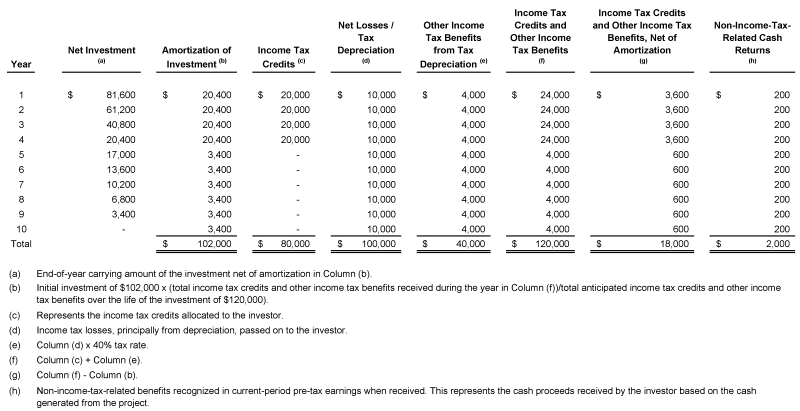 Year "Net Investment (a)" Amortization of Investment (b) Income Tax Credits (c) Net Losses / Tax Depreciation (d) Other Income Tax Benefits from Tax Depreciation (e) "Income Tax Credits and Other Income Tax Benefits (f)" "Income Tax Credits and Other Income Tax Benefits, Net of Amortization (g)" "Non-Income-Tax-Related Cash Returns (h)" 1 " $81,600 " " $20,400 " " $20,000 " " $10,000 " " $4,000 " " $24,000 " " $3,600 " $200 2 " 61,200 " " 20,400 " " 20,000 " " 10,000 " " 4,000 " " 24,000 " " 3,600 " 200 3 " 40,800 " " 20,400 " " 20,000 " " 10,000 " " 4,000 " " 24,000 " " 3,600 " 200 4 " 20,400 " " 20,400 " " 20,000 " " 10,000 " " 4,000 " " 24,000 " " 3,600 " 200 5 " 17,000 " " 3,400 " - " 10,000 " " 4,000 " " 4,000 " 600 200 6 " 13,600 " " 3,400 " - " 10,000 " " 4,000 " " 4,000 " 600 200 7 " 10,200 " " 3,400 " - " 10,000 " " 4,000 " " 4,000 " 600 200 8 " 6,800 " " 3,400 " - " 10,000 " " 4,000 " " 4,000 " 600 200 9 " 3,400 " " 3,400 " - " 10,000 " " 4,000 " " 4,000 " 600 200 10 - " 3,400 " - " 10,000 " " 4,000 " " 4,000 " 600 200 Total " $102,000 " " $80,000 " " $100,000 " " $40,000 " " $120,000 " " $18,000 " " $2,000 " (a) End-of-year carrying amount of the investment net of amortization in Column (b). (b) "Initial investment of $102,000 x (total income tax credits and other income tax benefits received during the year in Column (f))/total anticipated income tax credits and other income tax benefits over the life of the investment of $120,000)." (c) Represents the income tax credits allocated to the investor. (d) "Income tax losses, principally from depreciation, passed on to the investor." (e) Column (d) x 40% tax rate. (f) Column (c) + Column (e). (g) Column (f) - Column (b). (h) Non-income-tax-related benefits recognized in current-period pre-tax earnings when received. This represents the cash proceeds received by the investor based on the cash generated from the project.
323-740-65Transition and Open Effective Date Information
Source downloaded: .Record version 8ad71781a35d. Effective date must be checked in the source.
323-740-S00StatusSEC
Source downloaded: .Record version c3facc28f074. Effective date must be checked in the source.
| Paragraph | Action | Accounting Standards Update | Date |
| 323-740-S99-1 | Amended | Accounting Standards Update No. 2009-07 | 09/15/2009 |
| 323-740-S99-2 | Amended | Accounting Standards Update No. 2017-03 | 01/23/2017 |
323-740-S25RecognitionSEC
Source downloaded: .Record version 71eb21e46978. Effective date must be checked in the source.
Qualified Affordable Housing Project Investments
323-740-S50DisclosureSEC
Source downloaded: .Record version 51ff1efd04f5. Effective date must be checked in the source.
Income Taxes of Equity Method Investee
323-740-S99SEC MaterialsSEC
Source downloaded: .Record version 7aa35ba7a808. Effective date must be checked in the source.
SEC Staff Guidance
- Question: If a registrant records its share of earnings or losses of a 50% or less owned person on the equity basis and such person has an effective tax rate which differs by more than 5% from the applicable statutory Federal income tax rate, is a reconciliation as required by Rule 4-08(g) [paragraph 235-10-S99-1] necessary?
- Interpretive Response: Whenever the tax components are known and material to the investor's (registrant's) financial position or results of operations, appropriate disclosure should be made. In some instances where 50% or less owned persons are accounted for by the equity method of accounting in the financial statements of the registrant, the registrant may not know the rate at which the various components of income are taxed and it may not be practicable to provide disclosure concerning such components.
- It should also be noted that it is generally necessary to disclose the aggregate dollar and per-share effect of situations where temporary tax exemptions or "tax holidays" exist, and that such disclosures are also applicable to 50% or less owned persons. Such disclosures should include a brief description of the factual circumstances and give the date on which the special tax status will terminate. See Topic 11.C [paragraph 740-10-S99-2].
Qualified Affordable Housing Project Investments
- It has been observed that the decision to apply the proportional amortizationmethod of accounting is an accounting policy decision to be applied consistently to all investments in qualified affordable housing projects that meet the conditions in paragraph 323-740-25-1 rather than a decision to be applied to individual investments that qualify for use of the proportional amortization method. The SEC staff believes that it would be inappropriate to extend the proportional amortization method of accounting to situations analogous to those described in paragraph 323-740-05-3.
Related subtopics
- 842-50 Leveraged Lease ArrangementsLeases
- 323-970 Real Estate—GeneralInvestments—Equity Method and Joint Ventures
- 323-30 Partnerships, Joint Ventures, and Limited Liability EntitiesInvestments—Equity Method and Joint Ventures
- 505-10 OverallEquity
- 810-958 Not-for-Profit EntitiesConsolidation
- 835-30 Imputation of InterestInterest