ASC 205-20
Discontinued Operations
205 Presentation of Financial Statements
Source downloaded: .Record version b93aa0921f4a. Effective date must be checked in the source.
ASC 205-20 governs when a disposal must be reported as a discontinued operation and how it is presented and disclosed. A disposal of a component (or group of components) qualifies only if it represents a strategic shift that has (or will have) a major effect on the entity's operations and financial results, triggered when the component is classified as held for sale, disposed of by sale, or disposed of other than by sale (e.g., abandonment or spinoff) (205-20-45-1B). Results of discontinued operations, net of tax, are presented as a separate component of income for current and prior periods, held-for-sale assets and liabilities are presented separately (not offset) on the balance sheet, and extensive note disclosures are required.
Key points (7)
- Scope covers a component or group of components disposed of or classified as held for sale, and a business or nonprofit activity classified as held for sale on acquisition or upon formation of a joint venture; full-cost-method oil and gas properties are excluded (205-20-15-2 through 15-3).
- Discontinued operations reporting requires a strategic shift with a major effect — e.g., disposal of a major geographical area, major line of business, or major equity method investment — upon held-for-sale classification, sale, or disposal other than by sale (205-20-45-1B through 45-1C).
- Held-for-sale classification requires all six criteria in 205-20-45-1E (management commitment, available for immediate sale, active program to locate a buyer, sale probable within one year, active marketing at a price reasonable to fair value, and unlikely significant plan changes), with limited one-year exceptions in 205-20-45-1G; if criteria cease to be met, the asset is reclassified as held and used under 360-10-35-44 (205-20-45-1F).
- Results of all discontinued operations, less applicable income taxes, are reported as a separate component of income for current and prior periods, and any gain or loss on disposal (or loss on held-for-sale classification), computed under other Subtopics such as Topic 360, is presented on the face or disclosed in the notes (205-20-45-3 through 45-3C).
- Interest on debt assumed by the buyer or required to be repaid must be allocated to discontinued operations; allocation of other consolidated interest is permitted but not required and must be applied consistently, while general corporate overhead shall never be allocated (205-20-45-6 through 45-9).
- Assets and liabilities of a discontinued operation classified as held for sale are presented separately in the asset and liability sections of the balance sheet for all periods presented and shall not be offset as a single amount; major classes must be presented on the face or disclosed (205-20-45-10 through 45-11).
- Required disclosures include facts and circumstances of the disposal, segment(s) involved, pretax profit or loss and its major line items, cash flow data, major classes of held-for-sale assets and liabilities with reconciliations, and significant continuing involvement after disposal; an equity method investment disposal gets only the limited disclosure in 205-20-50-7 (205-20-50-1, 50-4A through 50-5D).
For students. Post-ASU 2014-08 the bar is high: not every disposal of a component is a discontinued operation \u2014 it must be a strategic shift with a major effect (major line of business, geography, or equity method investment). A common exam trap is assuming continuing involvement or retained interest disqualifies discontinued operations treatment; it does not, it just triggers the extra disclosures in 205-20-50-4A through 50-4B.
Machine-generated study aid for ASC 205-20. Check the source paragraphs below.
205-20-00Status
Source downloaded: .Record version de952b0532eb. Effective date must be checked in the source.
205-20-05Overview and Background
Source downloaded: .Record version f3dbdd4120b0. Effective date must be checked in the source.
205-20-15Scope and Scope Exceptions
Source downloaded: .Record version 599fe054a021. Effective date must be checked in the source.
Overall Guidance
Transactions
- aA component of an entity or a group of components of an entity that is disposed of or is classified as held for sale
- bA business or nonprofit activity that, on acquisition or upon formation of a joint venture, is classified as held for sale.
Entities
205-20-45Other Presentation Matters
Source downloaded: .Record version 98bac54cd6b9. Effective date must be checked in the source.
What Is a Discontinued Operation?
- aThe component of an entity or group of components of an entity meets the criteria in paragraph 205-20-45-1E to be classified as held for sale.
- bThe component of an entity or group of components of an entity is disposed of by sale.
- cThe component of an entity or group of components of an entity is disposed of other than by sale in accordance with paragraph 360-10-45-15 (for example, by abandonment or in a distribution to owners in a spinoff).
- aManagement, having the authority to approve the action, commits to a plan to sell the entity to be sold.
- bThe entity to be sold is available for immediate sale in its present condition subject only to terms that are usual and customary for sales of such entities to be sold. (See Examples 5 through 7 [paragraphs ], which illustrate when that criterion would be met.)
- cAn active program to locate a buyer or buyers and other actions required to complete the plan to sell the entity to be sold have been initiated.
- dThe sale of the entity to be sold is probable, and transfer of the entity to be sold is expected to qualify for recognition as a completed sale, within one year, except as permitted by paragraph 205-20-45-1G. (See Example 8 [paragraph 360-10-55-43], which illustrates when that criterion would be met.)
- eThe entity to be sold is being actively marketed for sale at a price that is reasonable in relation to its current fair value. The price at which an entity to be sold is being marketed is indicative of whether the entity currently has the intent and ability to sell the entity to be sold. A market price that is reasonable in relation to fair value indicates that the entity to be sold is available for immediate sale, whereas a market price in excess of fair value indicates that the entity to be sold is not available for immediate sale.
- fActions required to complete the plan indicate that it is unlikely that significant changes to the plan will be made or that the plan will be withdrawn.
- aIf at the date that an entity commits to a plan to sell an entity to be sold, the entity reasonably expects that others (not a buyer) will impose conditions on the transfer of the entity to be sold that will extend the period required to complete the sale and both of the following conditions are met:
- 1Actions necessary to respond to those conditions cannot be initiated until after a firm purchase commitment is obtained.
- 2A firm purchase commitment is probable within one year. (See Example 9 [paragraph 360-10-55-44], which illustrates that situation.)
- 1
- bIf an entity obtains a firm purchase commitment and, as a result, a buyer or others unexpectedly impose conditions on the transfer of an entity to be sold previously classified as held for sale that will extend the period required to complete the sale and both of the following conditions are met:
- 1Actions necessary to respond to the conditions have been or will be timely initiated.
- 2A favorable resolution of the delaying factors is expected. (See Example 10 [paragraph 360-10-55-46], which illustrates that situation.)
- 1
- cIf during the initial one-year period, circumstances arise that previously were considered unlikely and, as a result, an entity to be sold previously classified as held for sale is not sold by the end of that period and all of the following conditions are met:
- 1During the initial one-year period, the entity initiated actions necessary to respond to the change in circumstances.
- 2The entity to be sold is being actively marketed at a price that is reasonable given the change in circumstances.
- 3The criteria in paragraph 205-20-45-1E are met. (See Example 11 [paragraph 360-10-55-48], which illustrates that situation.)
- 1
Statement in Which Net Income Is Reported
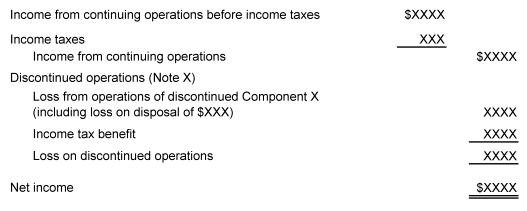 Income from continuing operations before income taxes $XXXX Income taxes XXX Income from continuing operations $XXXX Discontinued operations (Note X) Loss from operations of discontinued Component X (including loss on disposal of $XXX) XXXX Income tax benefit XXXX Loss on discontinued operations XXXX Net income $XXXX
- aThe resolution of contingencies that arise pursuant to the terms of the disposal transaction, such as the resolution of purchase price adjustments and indemnification issues with the purchaser
- bThe resolution of contingencies that arise from and that are directly related to the operations of the discontinued operation before its disposal, such as environmental and product warranty obligations retained by the seller
- cThe settlement of employee benefit plan obligations (pension, postemployment benefits other than pensions, and other postemployment benefits), provided that the settlement is directly related to the disposal transaction. A settlement is directly related to the disposal transaction if there is a demonstrated direct cause-and-effect relationship and the settlement occurs no later than one year following the disposal transaction, unless it is delayed by events or circumstances beyond an entity's control (see paragraph 205-20-45-1G).
- aDebt of the discontinued operation that will be assumed by the buyer
- bDebt that is required to be paid as a result of the disposal transaction
- cDebt that can be directly attributed to other operations of the entity.
Statement of Financial Position
205-20-50Disclosure
Source downloaded: .Record version b4332a5b83d6. Effective date must be checked in the source.
Disclosures Required for All Types of Discontinued Operations
- aA description of both of the following:
- 1The facts and circumstances leading to the disposal or expected disposal
- 2The expected manner and timing of that disposal.
- 1
- bIf not separately presented on the face of the statement where net income is reported (or statement of activities for a not-for-profit entity) as part of discontinued operations (see paragraph 205-20-45-3B), the gain or loss recognized in accordance with paragraph 205-20-45-3C.
- c
- dIf applicable, the segment(s) in which the discontinued operation is reported under Topic 280 on segment reporting.
- aA description of both of the following:
- 1The facts and circumstances leading to the disposal or expected disposal
- 2The expected manner and timing of that disposal.
- 1
- bIf not separately presented on the face of the statement where net income is reported (or statement of activities for a not-for-profit entity) as part of discontinued operations (see paragraph 205-20-45-3B), the gain or loss recognized in accordance with paragraph 205-20-45-3C.
- c
- dIf applicable, the segment(s) in which the discontinued operation is reported under Topic 280 on segment reporting.
Change to a Plan of Sale
Continuing Involvement
- aA description of the nature of the activities that give rise to the continuing involvement.
- bThe period of time during which the involvement is expected to continue.
- cFor all periods presented, both of the following:
- 1The amount of any cash inflows or outflows from or to the discontinued operation after the disposal transaction
- 2Revenues or expenses presented, if any, in continuing operations after the disposal transaction that before the disposal transaction were eliminated in consolidated financial statements as intra-entity transactions.
- 1
- dFor a discontinued operation in which an entity retains an equity method investment after the disposal (the investee), information that enables users of financial statements to compare the financial performance of the entity from period to period assuming that the entity held the same equity method investment in all periods presented in the statement where net income is reported (or statement of activities for a not-for-profit entity). The disclosure shall include all of the following until the discontinued operation is no longer reported separately in discontinued operations:
- 1For each period presented in the statement where net income is reported (or statement of activities for a not-for-profit entity) after the period in which the discontinued operation was disposed of, the pretax income of the investee in which the entity retains an equity method investment
- 2The entity's ownership interest in the discontinued operation before the disposal transaction
- 3The entity's ownership interest in the investee after the disposal transaction
- 4The entity's share of the income or loss of the investee in the period(s) after the disposal transaction and the line item in the statement where net income is reported (or statement of activities for a not-for-profit entity) that includes the income or loss.
- 1
- aA description of the nature of the activities that give rise to the continuing involvement.
- bThe period of time during which the involvement is expected to continue.
- cFor all periods presented, both of the following:
- 1The amount of any cash inflows or outflows from or to the discontinued operation after the disposal transaction
- 2Revenues or expenses presented, if any, in continuing operations after the disposal transaction that before the disposal transaction were eliminated in consolidated financial statements as intra-entity transactions.
- 1
- dFor a discontinued operation in which an entity retains an equity method investment after the disposal (the investee), information that enables users of financial statements to compare the financial performance of the entity from period to period assuming that the entity held the same equity method investment in all periods presented in the statement where net income is reported (or statement of activities for a not-for-profit entity). The disclosure shall include all of the following until the discontinued operation is no longer reported separately in discontinued operations:
- 1For each period presented in the statement where net income is reported (or statement of activities for a not-for-profit entity) after the period in which the discontinued operation was disposed of, the pretax income of the investee in which the entity retains an equity method investment
- 2The entity's ownership interest in the discontinued operation before the disposal transaction
- 3The entity's ownership interest in the investee after the disposal transaction
- 4The entity's share of the income or loss of the investee in the period(s) after the disposal transaction and the line item in the statement where net income is reported (or statement of activities for a not-for-profit entity) that includes the income or loss.
- 1
Disclosures Required for a Discontinued Operation Comprising a Component or Group of Components of an Entity
- aThe pretax profit or loss (or change in net assets for a not-for-profit entity) of the discontinued operation for the periods in which the results of operations of the discontinued operation are presented in the statement where net income is reported (or statement of activities for a not-for-profit entity).
- bThe major classes of line items constituting the pretax profit or loss (or change in net assets for a not-for-profit entity) of the discontinued operation (for example, revenue, cost of sales, depreciation and amortization, and interest expense) for the periods in which the results of operations of the discontinued operation are presented in the statement where net income is reported (or statement of activities for a not-for-profit entity).
- cEither of the following:
- 1The total operating and investing cash flows of the discontinued operation for the periods in which the results of operations of the discontinued operation are presented in the statement where net income is reported (or statement of activities for a not-for-profit entity)
- 2The depreciation, amortization, capital expenditures, and significant operating and investing noncash items of the discontinued operation for the periods in which the results of operations of the discontinued operation are presented in the statement where net income is reported (or statement of activities for a not-for-profit entity).
- 1
- dIf the discontinued operation includes a noncontrolling interest, the pretax profit or loss (or change in net assets for a not-for-profit entity) attributable to the parent for the periods in which the results of operations of the discontinued operation are presented in the statement where net income is reported (or statement of activities for a not-for-profit entity).
- eThe carrying amount(s) of the major classes of assets and liabilities included as part of a discontinued operation classified as held for sale for the period in which the discontinued operation is classified as held for sale and all prior periods presented in the statement of financial position. Any loss recognized on the discontinued operation classified as held for sale in accordance with paragraphs shall not be allocated to the major classes of assets and liabilities of the discontinued operation.
- aThe pretax profit or loss (or change in net assets for a not-for-profit entity) of the discontinued operation for the periods in which the results of operations of the discontinued operation are presented in the statement where net income is reported (or statement of activities for a not-for-profit entity).
- bThe major classes of line items constituting the pretax profit or loss (or change in net assets for a not-for-profit entity) of the discontinued operation (for example, revenue, cost of sales, depreciation and amortization, and interest expense) for the periods in which the results of operations of the discontinued operation are presented in the statement where net income is reported (or statement of activities for a not-for-profit entity).
- cEither of the following:
- 1The total operating and investing cash flows of the discontinued operation for the periods in which the results of operations of the discontinued operation are presented in the statement where net income is reported (or statement of activities for a not-for-profit entity)
- 2The depreciation, amortization, capital expenditures, and significant operating and investing noncash items of the discontinued operation for the periods in which the results of operations of the discontinued operation are presented in the statement where net income is reported (or statement of activities for a not-for-profit entity).
- 1
- dIf the discontinued operation includes a noncontrolling interest, the pretax profit or loss (or change in net assets for a not-for-profit entity) attributable to the parent for the periods in which the results of operations of the discontinued operation are presented in the statement where net income is reported (or statement of activities for a not-for-profit entity).
- eThe carrying amount(s) of the major classes of assets and liabilities included as part of a discontinued operation classified as held for sale for the period in which the discontinued operation is classified as held for sale and all prior periods presented in the statement of financial position. Any loss recognized on the discontinued operation classified as held for sale in accordance with paragraphs shall not be allocated to the major classes of assets and liabilities of the discontinued operation.
- aFor the initial period in which the disposal group is classified as held for sale and for all prior periods presented in the statement of financial position, a reconciliation of both of the following:
- 1The amounts disclosed in paragraph 205-20-50-5B(e)
- 2Total assets and total liabilities of the disposal group classified as held for sale that are presented separately on the face of the statement of financial position. If the disposal group includes assets and liabilities that are not part of the discontinued operation, an entity shall present those assets and liabilities in line items in the reconciliations that are separate from the assets and liabilities of the discontinued operation (see paragraph 205-20-55-102 for an Example).
- 1
- bFor the periods in which the results of operations of the discontinued operation are reported in the statement where net income is reported (or statement of activities for a not-for-profit entity), a reconciliation of both of the following:
- 1The amounts disclosed in paragraph 205-20-50-5B(a) and (b)
- 2The after-tax profit or loss from discontinued operations presented on the face of the statement where net income is reported (or statement of activities for a not-for-profit entity) (see paragraph 205-20-55-103 for an Example).
- 1
- aFor the initial period in which the disposal group is classified as held for sale and for all prior periods presented in the statement of financial position, a reconciliation of both of the following:
- 1The amounts disclosed in paragraph 205-20-50-5B(e)
- 2Total assets and total liabilities of the disposal group classified as held for sale that are presented separately on the face of the statement of financial position. If the disposal group includes assets and liabilities that are not part of the discontinued operation, an entity shall present those assets and liabilities in line items in the reconciliations that are separate from the assets and liabilities of the discontinued operation (see paragraph 205-20-55-102 for an Example).
- 1
- bFor the periods in which the results of operations of the discontinued operation are reported in the statement where net income is reported (or statement of activities for a not-for-profit entity), a reconciliation of both of the following:
- 1The amounts disclosed in paragraph 205-20-50-5B(a) and (b)
- 2The after-tax profit or loss from discontinued operations presented on the face of the statement where net income is reported (or statement of activities for a not-for-profit entity) (see paragraph 205-20-55-103 for an Example).
- 1
Disclosures Required for a Discontinued Operation Comprising an Equity Method Investment
205-20-55Implementation Guidance and Illustrations
Source downloaded: .Record version 76dbc76bb1ba. Effective date must be checked in the source.
Implementation Guidance
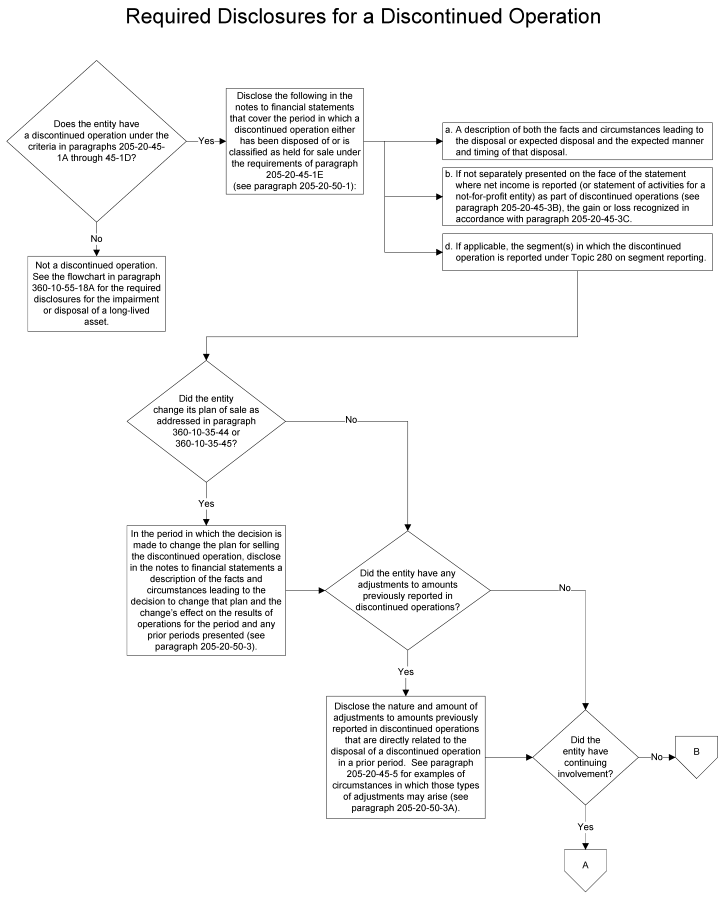 "Does the entity have a discontinued operation under the criteria in paragraphs 205-20-45-1A through 45-1D?" Not a discontinued operation. See the flowchart in paragraph 360-10-55-18A for the required disclosures for the impairment or disposal of a long-lived asset. No "Disclose the following in the notes to financial statements that cover the period in which a discontinued operation either has been disposed of or is classified as held for sale under the requirements of paragraph 205-20-45-1E (see paragraph 205-20-50-1):" Yes a. A description of both the facts and circumstances leading to the disposal or expected disposal and the expected manner and timing of that disposal. "b. If not separately presented on the face of the statement where net income is reported (or statement of activities for a not-for-profit entity) as part of discontinued operations (see paragraph 205-20-45-3B), the gain or loss recognized in accordance with paragraph 205-20-45-3C." "d. If applicable, the segment(s) in which the discontinued operation is reported under Topic 280 on segment reporting." Required Disclosures for a Discontinued Operation "Did the entity change its plan of sale as addressed in paragraph 360-10-35-44 or 360-10-35-45?" "In the period in which the decision is made to change the plan for selling the discontinued operation, disclose in the notes to financial statements a description of the facts and circumstances leading to the decision to change that plan and the change's effect on the results of operations for the period and any prior periods presented (see paragraph 205-20-50-3)." Yes No Did the entity have any adjustments to amounts previously reported in discontinued operations? Disclose the nature and amount of adjustments to amounts previously reported in discontinued operations that are directly related to the disposal of a discontinued operation in a prior period. See paragraph 205-20-45-5 for examples of circumstances in which those types of adjustments may arise (see paragraph 205-20-50-3A). Yes "Did the entity have continuing involvement?" No A Yes B No
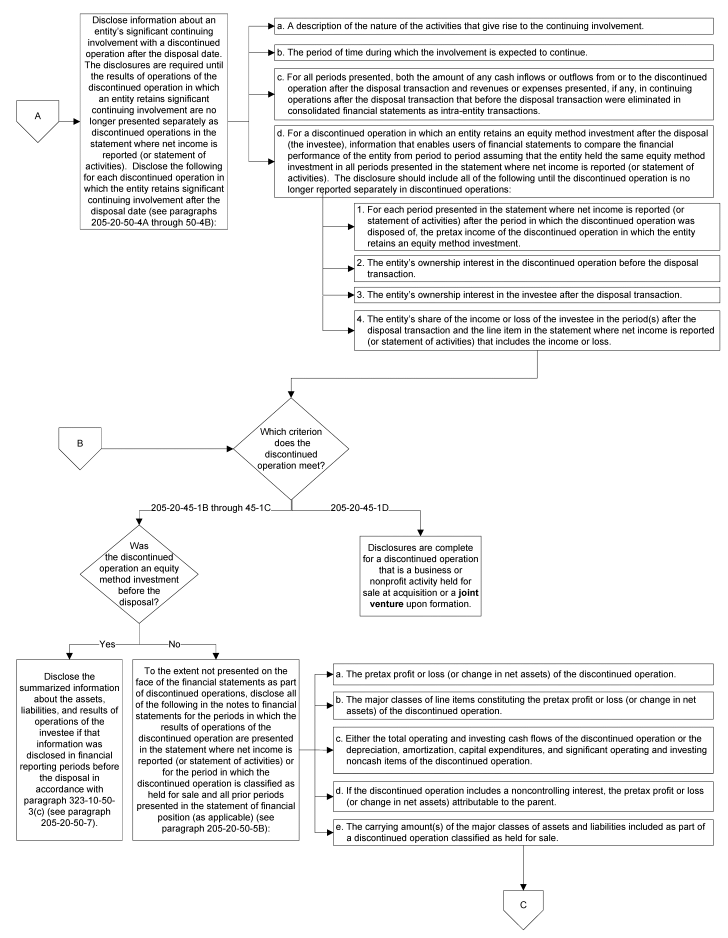 Disclosures are complete for a discontinued operation that is a business or nonprofit activity held for sale at acquisition or a joint venture upon formation. "Disclose the summarized information about the assets, liabilities, and results of operations of the investee if that information was disclosed in financial reporting periods before the disposal in accordance with paragraph 323-10-50-3(c) (see paragraph 205-20-50-7)." a. The pretax profit or loss (or change in net assets) of the discontinued operation. b. The major classes of line items constituting the pretax profit or loss (or change in net assets) of the discontinued operation. "Was the discontinued operation an equity method investment before the disposal?" "To the extent not presented on the face of the financial statements as part of discontinued operations, disclose all of the following in the notes to financial statements for the periods in which the results of operations of the discontinued operation are presented in the statement where net income is reported (or statement of activities) or for the period in which the discontinued operation is classified as held for sale and all prior periods presented in the statement of financial position (as applicable) (see paragraph 205-20-50-5B):" "d. If the discontinued operation includes a noncontrolling interest, the pretax profit or loss (or change in net assets) attributable to the parent." e. The carrying amount(s) of the major classes of assets and liabilities included as part of a discontinued operation classified as held for sale. "Which criterion does the discontinued operation meet?" 205-20-45-1D 205-20-45-1B through 45-1C C "c. Either the total operating and investing cash flows of the discontinued operation or the depreciation, amortization, capital expenditures, and significant operating and investing noncash items of the discontinued operation." Disclose information about an entity's significant continuing involvement with a discontinued operation after the disposal date. The disclosures are required until the results of operations of the discontinued operation in which an entity retains significant continuing involvement are no longer presented separately as discontinued operations in the statement where net income is reported (or statement of activities). Disclose the following for each discontinued operation in which the entity retains significant continuing involvement after the disposal date (see paragraphs 205-20-50-4A through 50-4B): a. A description of the nature of the activities that give rise to the continuing involvement. b. The period of time during which the involvement is expected to continue. "c. For all periods presented, both the amount of any cash inflows or outflows from or to the discontinued operation after the disposal transaction and revenues or expenses presented, if any, in continuing operations after the disposal transaction that before the disposal transaction were eliminated in consolidated financial statements as intra-entity transactions." "d. For a discontinued operation in which an entity retains an equity method investment after the disposal (the investee), information that enables users of financial statements to compare the financial performance of the entity from period to period assuming that the entity held the same equity method investment in all periods presented in the statement where net income is reported (or statement of activities). The disclosure should include all of the following until the discontinued operation is no longer reported separately in discontinued operations:" "1. For each period presented in the statement where net income is reported (or statement of activities) after the period in which the discontinued operation was disposed of, the pretax income of the discontinued operation in which the entity retains an equity method investment." 2. The entity's ownership interest in the discontinued operation before the disposal transaction. 3. The entity's ownership interest in the investee after the disposal transaction. 4. The entity's share of the income or loss of the investee in the period(s) after the disposal transaction and the line item in the statement where net income is reported (or statement of activities) that includes the income or loss. A B No Yes
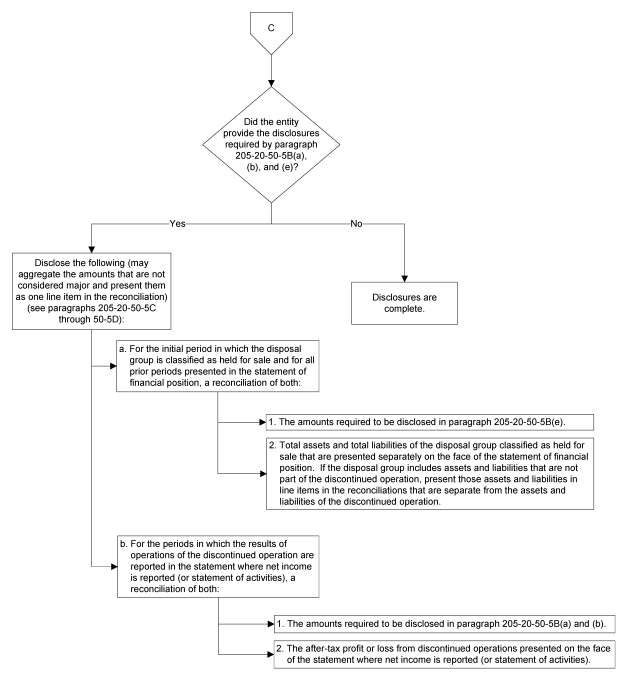 "Did the entity provide the disclosures required by paragraph 205-20-50-5B(a), (b), and (e)?" "Disclose the following (may aggregate the amounts that are not considered major and present them as one line item in the reconciliation) (see paragraphs 205-20-50-5C through 50-5D):" Disclosures are complete. Yes No 1. The amounts required to be disclosed in paragraph 205-20-50-5B(e). "2. Total assets and total liabilities of the disposal group classified as held for sale that are presented separately on the face of the statement of financial position. If the disposal group includes assets and liabilities that are not part of the discontinued operation, present those assets and liabilities in line items in the reconciliations that are separate from the assets and liabilities of the discontinued operation." "a. For the initial period in which the disposal group is classified as held for sale and for all prior periods presented in the statement of financial position, a reconciliation of both:" "b. For the periods in which the results of operations of the discontinued operation are reported in the statement where net income is reported (or statement of activities), a reconciliation of both:" 1. The amounts required to be disclosed in paragraph 205-20-50-5B(a) and (b). 2. The after-tax profit or loss from discontinued operations presented on the face of the statement where net income is reported (or statement of activities). C
Illustrations
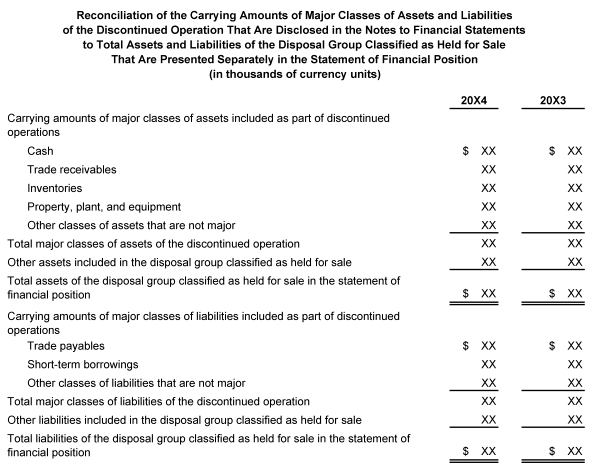 "Reconciliation of the Carrying Amounts of Major Classes of Assets and Liabilities of the Discontinued Operation That Are Disclosed in the Notes to Financial Statements to Total Assets and Liabilities of the Disposal Group Classified as Held for Sale That Are Presented Separately in the Statement of Financial Position (in thousands of currency units)" 20X4 20X3 Carrying amounts of major classes of assets included as part of discontinued operations Cash $ XX $ XX Trade receivables XX XX Inventories XX XX "Property, plant, and equipment" XX XX Other classes of assets that are not major XX XX Total major classes of assets of the discontinued operation XX XX Other assets included in the disposal group classified as held for sale XX XX Total assets of the disposal group classified as held for sale in the statement of financial position $ XX $ XX Carrying amounts of major classes of liabilities included as part of discontinued operations Trade payables $ XX $ XX Short-term borrowings XX XX Other classes of liabilities that are not major XX XX Total major classes of liabilities of the discontinued operation XX XX Other liabilities included in the disposal group classified as held for sale XX XX Total liabilities of the disposal group classified as held for sale in the statement of financial position $ XX $ XX
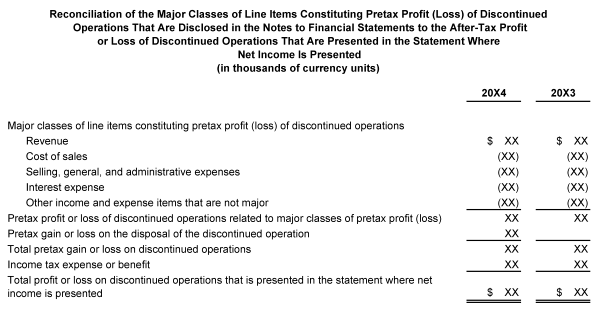 "Reconciliation of the Major Classes of Line Items Constituting Pretax Profit (Loss) of Discontinued Operations That Are Disclosed in the Notes to Financial Statements to the After-Tax Profit or Loss of Discontinued Operations That Are Presented in the Statement Where Net Income Is Presented (in thousands of currency units)" 20X4 20X3 Major classes of line items constituting pretax profit (loss) of discontinued operations Revenue $ XX $ XX Cost of sales (XX) (XX) "Selling, general, and administrative expenses" (XX) (XX) Interest expense (XX) (XX) Other income and expense items that are not major (XX) (XX) Pretax profit or loss of discontinued operations related to major classes of pretax profit (loss) XX XX Pretax gain or loss on the disposal of the discontinued operation XX Total pretax gain or loss on discontinued operations XX XX Income tax expense or benefit XX XX Total profit or loss on discontinued operations that is presented in the statement where net income is presented $ XX $ XX
205-20-60Relationships
Source downloaded: .Record version c18472464f8f. Effective date must be checked in the source.
Earnings Per Share
Segment Reporting
Intangibles—Goodwill and Other
Compensation—Retirement Benefits
205-20-65Transition and Open Effective Date Information
Source downloaded: .Record version 213803f79d61. Effective date must be checked in the source.
205-20-S00StatusSEC
Source downloaded: .Record version 0c1e86ab98b9. Effective date must be checked in the source.
| Paragraph Number | Action | Accounting Standards Update | Date |
| 205-20-S99-1 | Amended | Accounting Standards Update No. 2012-03 | 08/27/2012 |
| 205-20-S99-2 | Amended | Accounting Standards Update No. 2012-03 | 08/27/2012 |
205-20-S45Other Presentation MattersSEC
Source downloaded: .Record version d4e131597588. Effective date must be checked in the source.
Reporting Discontinued Operations
Disposal of a Component of an Entity
205-20-S50DisclosureSEC
Source downloaded: .Record version 60d73590e2b2. Effective date must be checked in the source.
Allocation of Interest to Discontinued Operations
Reporting Discontinued Operations
205-20-S99SEC MaterialsSEC
Source downloaded: .Record version 2e012fa7ef56. Effective date must be checked in the source.
SEC Staff Guidance
- Facts: A Company disposes of its controlling interest in a component of an entity as defined by FASB ASC Master Glossary. The Company retains a minority voting interest directly in the component or it holds a minority voting interest in the buyer of the component. Controlling interest includes those controlling interests established through other means, such as variable interests. Because the Company's voting interest enables it to exert significant influence over the operating and financial policies of the investee, the Company is required by FASB ASC Subtopic 323-10, Investments—Equity Method and Joint Ventures—Overall, to account for its residual investment using the equity method. FN54
- FN54 In some circumstances, the seller's continuing interest may be so great that divestiture accounting is inappropriate.
- Question: May the historical operating results of the component and the gain or loss on the sale of the majority interest in the component be classified in the Company's statement of operations as "discontinued operations" pursuant to FASB ASC Subtopic 205-20, Presentation of Financial Statements—Discontinued Operations?
- Interpretive Response: No. A condition necessary for discontinued operations reporting, as indicated in FASB ASC paragraph 205-20-45-1 is that an entity "not have any significant continuing involvement in the operations of the component after the disposal transaction." In these circumstances, the transaction should be accounted for as the disposal of a group of assets that is not a component of an entity and classified within continuing operations pursuant to FASB ASC paragraph 360-10-45-5 (Property, Plant, and Equipment Topic). FN55
- FN55 However, a plan of disposal that contemplates the transfer of assets to a limited-life entity created for the single purpose of liquidating the assets of a component of an entity would not necessitate classification within continuing operations solely because the registrant retains control or significant influence over the liquidating entity.
- Facts: A company disposed of a component of an entity in a previous accounting period. The Company received debt and/or equity securities of the buyer of the component or of the disposed component as consideration in the sale, but this financial interest is not sufficient to enable the Company to apply the equity method with respect to its investment in the buyer. The Company made certain warranties to the buyer with respect to the discontinued business, or remains liable under environmental or other laws with respect to certain facilities or operations transferred to the buyer. The disposition satisfied the criteria of FASB ASC Subtopic 205-20 for presentation as "discontinued operations." The Company estimated the fair value of the securities received in the transaction for purposes of calculating the gain or loss on disposal that was recognized in its financial statements. The results of discontinued operations prior to the date of disposal or classification as held for sale included provisions for the Company's existing obligations under environmental laws, product warranties, or other contingencies. The calculation of gain or loss on disposal included estimates of the Company's obligations arising as a direct result of its decision to dispose of the component, under its warranties to the buyer, and under environmental or other laws. In a period subsequent to the disposal date, the Company records a charge to income with respect to the securities because their fair value declined materially and the Company determined that the decline was other than temporary. The Company also records adjustments of its previously estimated liabilities arising under the warranties and under environmental or other laws.
- Question 1: Should the writedown of the carrying value of the securities and the adjustments of the contingent liabilities be classified in the current period's statement of operations within continuing operations or as an element of discontinued operations?
- Interpretive Response: Adjustments of estimates of contingent liabilities or contingent assets that remain after disposal of a component of an entity or that arose pursuant to the terms of the disposal generally should be classified within discontinued operations. FN56 However, the staff believes that changes in the carrying value of assets received as consideration in the disposal or of residual interests in the business should be classified within continuing operations.
- FN56 Registrants are reminded that FASB ASC Topic 460, Guarantees requires recognition and disclosure of certain guarantees which may impose accounting and disclosure requirements in addition to those discussed in this SAB Topic.
- FASB ASC paragraph 205-20-45-4 requires that "adjustments to amounts previously reported in discontinued operations that are directly related to the disposal of a component of an entity in a prior period shall be classified separately in the current period in discontinued operations." The staff believes that the provisions of FASB ASC paragraph 205-20-45-4 apply only to adjustments that are necessary to reflect new information about events that have occurred that becomes available prior to disposal of the component of the entity, to reflect the actual timing and terms of the disposal when it is consummated, and to reflect the resolution of contingencies associated with that component, such as warranties and environmental liabilities retained by the seller.
- Developments subsequent to the disposal date that are not directly related to the disposal of the component or the operations of the component prior to disposal are not "directly related to the disposal" as contemplated by FASB ASC paragraph 205-20-45-4. Subsequent changes in the carrying value of assets received upon disposition of a component do not affect the determination of gain or loss at the disposal date, but represent the consequences of management's subsequent decisions to hold or sell those assets. Gains and losses, dividend and interest income, and portfolio management expenses associated with assets received as consideration for discontinued operations should be reported within continuing operations.
- Question 2: What disclosures would the staff expect regarding discontinued operations prior to the disposal date and with respect to risks retained subsequent to the disposal date?
- Interpretive Response: MD&A FN57 should include disclosure of known trends, events, and uncertainties involving discontinued operations that may materially affect the Company's liquidity, financial condition, and results of operations (including net income) between the date when a component of an entity is classified as discontinued and the date when the risks of those operations will be transferred or otherwise terminated. Disclosure should include discussion of the impact on the Company's liquidity, financial condition, and results of operations of changes in the plan of disposal or changes in circumstances related to the plan. Material contingent liabilities, FN58 such as product or environmental liabilities or litigation, that may remain with the Company notwithstanding disposal of the underlying business should be identified in notes to the financial statements and any reasonably likely range of possible loss should be disclosed pursuant to FASB ASC Topic 450, Contingencies. MD&A should include discussion of the reasonably likely effects of these contingencies on reported results and liquidity. If the Company retains a financial interest in the discontinued component or in the buyer of that component that is material to the Company, MD&A should include discussion of known trends, events, and uncertainties, such as the financial condition and operating results of the issuer of the security, that may be reasonably expected to affect the amounts ultimately realized on the investments.
- FN57 Item 303 of Regulation S-K.
- FN58 Registrants also should consider the disclosure requirements of FASB ASC Topic 460.
- The SEC staff will expect registrants electing to allocate interest in accordance with paragraph 205-20-45-6 to clearly disclose the accounting policy (including the method of allocation) and the amount allocated to and included in discontinued operations for all periods presented.
Related subtopics
- 220-10 OverallIncome Statement—Reporting Comprehensive Income
- 605-978 Real Estate—Time-Sharing ActivitiesRevenue Recognition
- 805-50 Related IssuesBusiness Combinations
- 270-10 OverallInterim Reporting
- 805-20 Identifiable Assets and Liabilities, and Any Noncontrolling InterestBusiness Combinations
- 275-10 OverallRisks and Uncertainties