ASC 270-740
Income Taxes
270 Interim Reporting
Source downloaded: .Record version 3a890e226128. Effective date must be checked in the source.
This subtopic governs how income tax expense (or benefit) is computed and presented in interim financial statements. The core rule is a hybrid model: tax on "ordinary income (or loss)" is measured by applying a best-estimate annual effective tax rate to year-to-date ordinary income, while items excluded from that rate — significant unusual or infrequently occurring items, discontinued operations, changes in tax law or rates on deferred taxes, changes in beginning-of-year valuation allowances, and certain share-based payment tax effects — are computed individually and recognized discretely in the interim period in which they occur (740-270-25-2; 740-270-30-11 through 30-13). Recognition of interim tax benefits from losses is limited to amounts expected to be realized during the year or recognizable as a deferred tax asset at year-end (740-270-25-9).
Key points (7)
- Tax on ordinary income (loss) is computed at an estimated annual effective tax rate applied to year-to-date ordinary income, with the interim period amount equal to the year-to-date amount less amounts reported in prior interim periods; all other items are computed individually and recognized when they occur (740-270-25-2; 740-270-30-5; 740-270-35-4).
- The annual effective rate must be re-estimated at the end of each successive interim period and reflects anticipated credits, foreign rates, depletion, capital gains rates, tax planning, and any valuation allowance for originating deductible temporary differences (740-270-30-6 through 30-8; 740-270-35-3).
- Excluded from the estimated annual effective tax rate: effects of changes in judgment about beginning-of-year valuation allowances, effects of tax law/rate changes on deferred taxes and on prior-year taxes payable/refundable, significant unusual or infrequently occurring items reported separately, items reported net of tax, and share-based payment tax effects where the tax deduction differs from cumulative book compensation cost (740-270-30-11 through 30-13; 740-270-25-7).
- New tax legislation may not be recognized before enactment; its effect on current-year taxes payable is reflected in the annual effective rate beginning in the interim period that includes the enactment date, while its effect on deferred taxes (and on prior-year taxes) is recognized discretely as of the enactment date (740-270-25-5; 25-6).
- Tax benefits of losses arising early in the year are recognized only if expected to be realized during the year or recognizable as a year-end deferred tax asset; an established seasonal pattern of early losses offset by later income is evidence that realization is more likely than not, and unrecognized early-period benefits absorb later-period income before any tax is provided (740-270-25-9 through 25-11; 740-270-35-5).
- Four year-to-date/full-year income-loss combinations drive the computation, with the year-to-date benefit and the estimated annual benefit each capped by the limitations in 740-270-30-30 through 30-33, which permit reversal of existing taxable temporary differences as a source of realization (740-270-30-22 through 30-28; 30-32).
- For multiple jurisdictions, one overall estimated annual effective rate is used, except that a jurisdiction with an unrecognizable loss benefit, or one for which a reliable estimate cannot be made, is excluded and computed separately or discretely (740-270-30-36; 30-19), and significant variations in the customary relationship between tax expense and pretax income must be disclosed (740-270-50-1).
For students. Interim tax provisions are a favorite exam and practice trap: the split between the annual-effective-rate approach for ordinary income and discrete recognition for everything else drives most errors. The most common misunderstanding is thinking a tax law change or a change in a beginning-of-year valuation allowance gets spread through the annual rate — it does not; only the effect on current-year taxes payable enters the rate, and only from the interim period containing the enactment date.
Machine-generated study aid for ASC 270-740. Check the source paragraphs below.
270-740-00Status
Source downloaded: .Record version 019a3a995150. Effective date must be checked in the source.
270-740-05Overview and Background
Source downloaded: .Record version 38d2119f01b2. Effective date must be checked in the source.
- a The general computation of interim period income taxes (see paragraphs )
- b The application of the general computation to specific situations (see paragraphs )
- c The interim period income taxes requirements applicable to significant unusual or infrequently occurring items and discontinued operations (see Section 740-270-45)
- d Special computations applicable to operations taxable in multiple jurisdictions (see paragraph 740-270-30-36)
- e Guidelines for reflecting the effects of new tax legislation in interim period income tax provisions (see paragraphs )
- f Disclosure requirements (see paragraph 740-270-50-1).
270-740-15Scope and Scope Exceptions
Source downloaded: .Record version 216c3906b7f4. Effective date must be checked in the source.
Overall Guidance
270-740-25Recognition
Source downloaded: .Record version 906c54aea211. Effective date must be checked in the source.
General Recognition Approach
Recognition of the Tax Benefit of a Loss in Interim Periods
- a Realized during the year
- b Recognizable as a deferred tax asset at the end of the year in accordance with the provisions of Subtopic 740-10.
- a Realized during the year
- b Recognizable as a deferred tax asset at the end of the year in accordance with the provisions of Subtopic 740-10.
270-740-30Initial Measurement
Source downloaded: .Record version 42619c8857a6. Effective date must be checked in the source.
General Methodology and Use of Estimated Annual Effective Tax Rate
Exclusion of Items from Estimated Annual Effective Tax Rate
Ability to Make Estimates
Effect of Operating Losses
Determining Income Tax Benefit Limitations
- aRealized during the year
- bRecognizable as a deferred tax asset at the end of the year in accordance with the requirements established in Subtopic 740-10. Paragraph 740-10-30-5(e) requires that a valuation allowance be recognized if it is more likely than not that the tax benefit of some portion or all of a deferred tax asset will not be realized.
- aAn entity anticipates an ordinary loss for the fiscal year or has a year-to-date ordinary loss in excess of the anticipated ordinary loss for the fiscal year.
- bThe tax benefit of that loss is not expected to be realized during the year.
- cRecognition of a deferred tax asset for that loss at the end of the fiscal year is expected to depend on taxable income from the reversal of existing taxable temporary differences (that is, a higher deferred tax asset valuation allowance would be necessary absent the existing taxable temporary differences).
Multiple Tax Jurisdictions
- aIf in a separate jurisdiction an entity anticipates an ordinary loss for the fiscal year or has an ordinary loss for the year to date for which, in accordance with paragraphs , no tax benefit can be recognized, the entity shall exclude ordinary income (or loss) in that jurisdiction and the related tax (or benefit) from the overall computations of the estimated annual effective tax rate and interim period tax (or benefit). A separate estimated annual effective tax rate shall be computed for that jurisdiction and applied to ordinary income (or loss) in that jurisdiction in accordance with the methodology otherwise required by this Subtopic.
- bIf an entity is unable to estimate an annual effective tax rate in a foreign jurisdiction in dollars or is otherwise unable to make a reliable estimate of its ordinary income (or loss) or of the related tax (or benefit) for the fiscal year in a jurisdiction, the entity shall exclude ordinary income (or loss) in that jurisdiction and the related tax (or benefit) from the overall computations of the estimated annual effective tax rate and interim period tax (or benefit). The tax (or benefit) related to ordinary income (or loss) in that jurisdiction shall be recognized in the interim period in which the ordinary income (or loss) is reported. The tax (or benefit) related to ordinary income (or loss) in a jurisdiction may not be limited to tax (or benefit) in that jurisdiction. It might also include tax (or benefit) in another jurisdiction that results from providing taxes on unremitted earnings, foreign tax credits, and so forth.
Accounting for Income Taxes Applicable to the Cumulative Effect of a Change in Accounting Principle
270-740-35Subsequent Measurement
Source downloaded: .Record version 024ceefa0e6e. Effective date must be checked in the source.
270-740-45Other Presentation Matters
Source downloaded: .Record version 7387dbff7173. Effective date must be checked in the source.
Specific Requirements Applicable to Discontinued Operations
- a The difference between the tax (or benefit) originally computed for ordinary income (or loss) and the recomputed amount for the remaining ordinary income (or loss)
- b The tax computed in accordance with paragraphs ; ; and for any unusual or infrequently occurring items of the discontinued operation.
270-740-50Disclosure
Source downloaded: .Record version 0d812bc71a97. Effective date must be checked in the source.
Variations in Customary Income Tax Expense Relationships
270-740-55Implementation Guidance and Illustrations
Source downloaded: .Record version 4080864efab7. Effective date must be checked in the source.
Illustrations
- aOrdinary income in all interim periods (Case A)
- bOrdinary income and losses in interim periods (Case B)
- cChanges in estimates (Case C).
- aFor the full fiscal year, an entity anticipates ordinary income of $100,000. All income is taxable in one jurisdiction at a 50 percent rate. Anticipated tax credits for the fiscal year total $10,000. No events that do not have tax consequences are anticipated. No changes in estimated ordinary income, tax rates, or tax credits occur during the year.
- bComputation of the estimated annual effective tax rate applicable to ordinary income is as follows.
 "Tax at statutory rate ($100,000 at 50%)" " $50,000 " Less anticipated tax credits " (10,000)" Net tax to be provided " $40,000 " "Estimated annual effective tax rate ($40,000 ÷ $100,000)" 40%
- cTax credits are generally subject to limitations, usually based on the amount of tax payable before the credits. In computing the estimated annual effective tax rate, anticipated tax credits are limited to the amounts that are expected to be realized or are expected to be recognizable at the end of the current year in accordance with the provisions of Subtopic 740-10. If an entity is unable to estimate the amount of its tax credits for the year, see paragraphs .
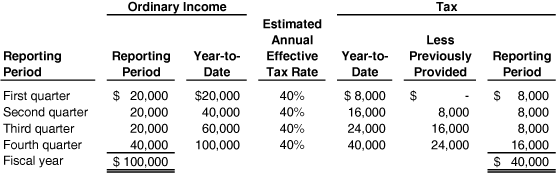 Ordinary Income Tax Reporting Period Reporting Period Year-to-Date Estimated Annual Effective Tax Rate Year-to-Date Less Previously Provided Reporting Period First quarter " $20,000 " " $20,000 " 40% " $8,000 " $- " $8,000 " Second quarter " 20,000 " " 40,000 " 40% " 16,000 " " 8,000 " " 8,000 " Third quarter " 20,000 " " 60,000 " 40% " 24,000 " " 16,000 " " 8,000 " Fourth quarter " 40,000 " " 100,000 " 40% " 40,000 " " 24,000 " " 16,000 " Fiscal year " $100,000 " " $40,000 "
- aYear-to-date ordinary income (Case B1)
- bYear-to-date ordinary losses, realization more likely than not (Case B2)
- cYear-to-date ordinary losses, realization not more likely than not (Case B3).
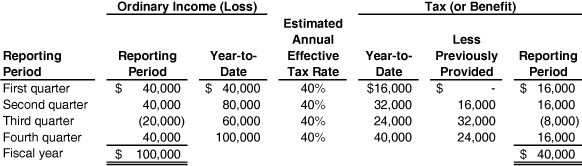 Ordinary Income (Loss) Tax (or Benefit) Reporting Period Reporting Period Year-to-Date Estimated Annual Effective Tax Rate Year-to-Date Less Previously Provided Reporting Period First quarter " $40,000 " " $40,000 " 40% " $16,000 " $- " $16,000 " Second quarter " 40,000 " " 80,000 " 40% " 32,000 " " 16,000 " " 16,000 " Third quarter " (20,000)" " 60,000 " 40% " 24,000 " " 32,000 " " (8,000)" Fourth quarter " 40,000 " " 100,000 " 40% " 40,000 " " 24,000 " " 16,000 " Fiscal year " $100,000 " " $40,000 "
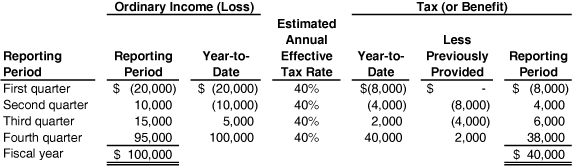 Ordinary Income (Loss) Tax (or Benefit) Reporting Period Reporting Period Year-to-Date Estimated Annual Effective Tax Rate Year-to-Date Less Previously Provided Reporting Period First quarter " $(20,000)" " $(20,000)" 40% " $(8,000)" $- " $(8,000)" Second quarter " 10,000 " " (10,000)" 40% " (4,000)" " (8,000)" " 4,000 " Third quarter " 15,000 " " 5,000 " 40% " 2,000 " " (4,000)" " 6,000 " Fourth quarter " 95,000 " " 100,000 " 40% " 40,000 " " 2,000 " " 38,000 " Fiscal year " $100,000 " " $40,000 "
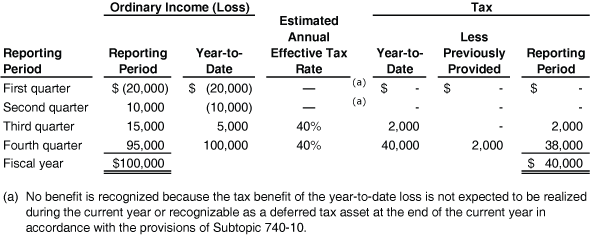 Ordinary Income (Loss) Tax Reporting Period Reporting Period Year-to-Date Estimated Annual Effective Tax Rate Year-to-Date Less Previously Provided Reporting Period First quarter " $(20,000)" " $(20,000)" — (a) $- $- $- Second quarter " 10,000 " " (10,000)" — (a) - - - Third quarter " 15,000 " " 5,000 " 40% " 2,000 " - " 2,000 " Fourth quarter " 95,000 " " 100,000 " 40% " 40,000 " " 2,000 " " 38,000 " Fiscal year " $100,000 " " $40,000 " (a) No benefit is recognized because the tax benefit of the year-to-date loss is not expected to be realized during the current year or recognizable as a deferred tax asset at the end of the current year in accordance with the provisions of Subtopic 740-10.
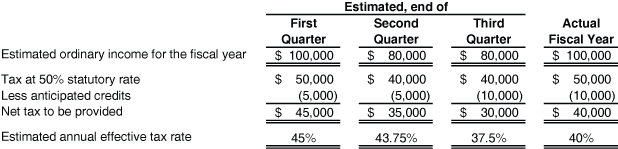 + "Estimated, end of" First Quarter Second Quarter Third Quarter Actual Fiscal Year Estimated ordinary income for the fiscal year " $100,000 " " $80,000 " " $80,000 " " $100,000 " Tax at 50% statutory rate " $50,000 " " $40,000 " " $40,000 " " $50,000 " Less anticipated credits " (5,000)" " (5,000)" " (10,000)" " (10,000)" Net tax to be provided " $45,000 " " $35,000 " " $30,000 " " $40,000 " Estimated annual effective tax rate 45% 43.75% 37.5% 40%
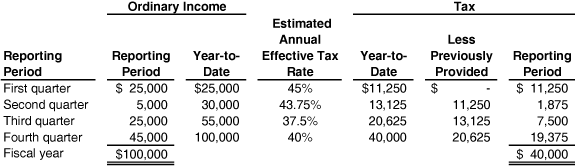 Ordinary Income Tax Reporting Period Reporting Period Year-to-Date Estimated Annual Effective Tax Rate Year-to-Date Less Previously Provided Reporting Period First quarter " $25,000 " " $25,000 " 45% " $11,250 " $- " $11,250 " Second quarter " 5,000 " " 30,000 " 43.75% " 13,125 " " 11,250 " " 1,875 " Third quarter " 25,000 " " 55,000 " 37.5% " 20,625 " " 13,125 " " 7,500 " Fourth quarter " 45,000 " " 100,000 " 40% " 40,000 " " 20,625 " " 19,375 " Fiscal year " $100,000 " " $40,000 "
- aRealization of the tax benefit of the loss is more likely than not (Case A)
- bRealization of the tax benefit of the loss is not more likely than not (Case B)
- cPartial realization of the tax benefit of the loss is more likely than not (Case C)
- dReversal of net deferred tax credits (Case D).
- aFor the full fiscal year, an entity anticipates an ordinary loss of $100,000. The entity operates entirely in one jurisdiction where the tax rate is 50 percent. Anticipated tax credits for the fiscal year total $10,000. No events that do not have tax consequences are anticipated.
- bIf there is a recognizable tax benefit for the loss and the tax credits pursuant to the requirements of Subtopic 740-10, computation of the estimated annual effective tax rate applicable to the ordinary loss would be as follows.
 "Tax benefit at statutory rate ($100,000 at 50%)" " $(50,000)" Tax credits " (10,000)" Net tax benefit " $(60,000)" "Estimated annual effective tax rate ($60,000 ÷ $100,000)" 60%
- aOrdinary losses in all interim periods (Case A1)
- bOrdinary income and losses in interim periods (Case A2).
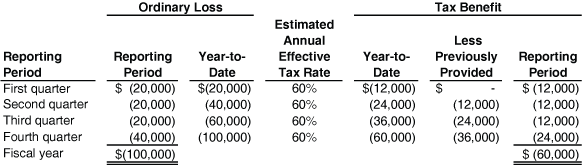 Ordinary Loss Tax Benefit Reporting Period Reporting Period Year-to-Date Estimated Annual Effective Tax Rate Year-to-Date Less Previously Provided Reporting Period First quarter " $(20,000)" " $(20,000)" 60% " $(12,000)" $- " $(12,000)" Second quarter " (20,000)" " (40,000)" 60% " (24,000)" " (12,000)" " (12,000)" Third quarter " (20,000)" " (60,000)" 60% " (36,000)" " (24,000)" " (12,000)" Fourth quarter " (40,000)" " (100,000)" 60% " (60,000)" " (36,000)" " (24,000)" Fiscal year " $(100,000)" " $(60,000)"
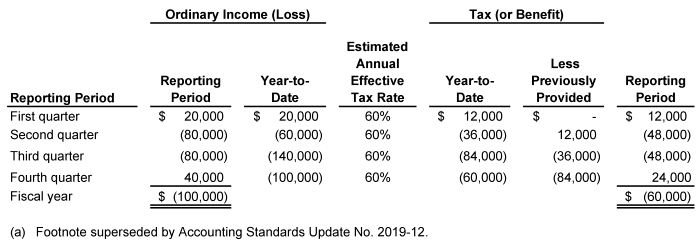 Ordinary Income (Loss) Tax (or Benefit) Reporting Period Reporting Period Year-to-Date Estimated Annual Effective Tax Rate Year-to-Date Less Previously Provided Reporting Period First quarter " $20,000 " " $20,000 " 60% " $12,000 " $- " $12,000 " Second quarter " (80,000)" " (60,000)" 60% " (36,000)" " 12,000 " " (48,000)" Third quarter " (80,000)" " (140,000)" 60% " (84,000)" " (36,000)" "(48,000)" Fourth quarter " 40,000 " " (100,000)" 60% " (60,000)" "(84,000)" "24,000" Fiscal year " $(100,000)" " $(60,000)" (a) Footnote superseded by Accounting Standards Update No. 2019-12.
- aOrdinary losses in all interim periods (Case C1)
- bOrdinary income and losses in interim periods (Case C2).
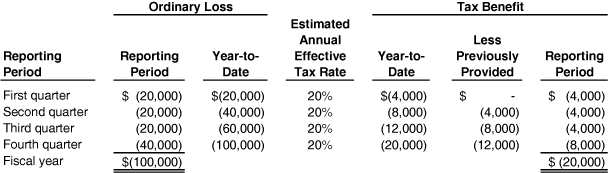 Ordinary Loss Tax Benefit Reporting Period Reporting Period Year-to-Date Estimated Annual Effective Tax Rate Year-to-Date Less Previously Provided Reporting Period First quarter " $(20,000)" " $(20,000)" 20% " $(4,000)" $- " $(4,000)" Second quarter " (20,000)" " (40,000)" 20% " (8,000)" " (4,000)" " (4,000)" Third quarter " (20,000)" " (60,000)" 20% " (12,000)" " (8,000)" " (4,000)" Fourth quarter " (40,000)" " (100,000)" 20% " (20,000)" " (12,000)" " (8,000)" Fiscal year " $(100,000)" " $(20,000)"
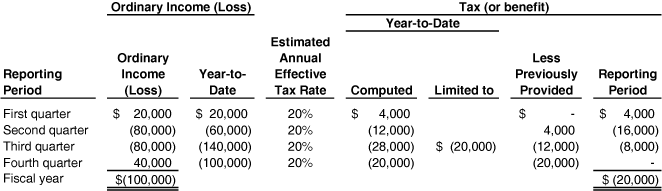 Ordinary Income (Loss) Tax (or benefit) Year-to-Date Reporting Period Ordinary Income (Loss) Year-to-Date Estimated Annual Effective Tax Rate Computed Limited to Less Previously Provided Reporting Period First quarter " $20,000 " " $20,000 " 20% " $4,000 " $- " $4,000 " Second quarter " (80,000)" " (60,000)" 20% " (12,000)" " 4,000 " " (16,000)" Third quarter " (80,000)" " (140,000)" 20% " (28,000)" " $(20,000)" " (12,000)" " (8,000)" Fourth quarter " 40,000 " " (100,000)" 20% " (20,000)" " (20,000)" - Fiscal year " $(100,000)" " $(20,000)"
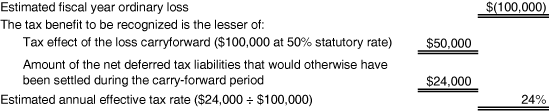 Estimated fiscal year ordinary loss " $(100,000)" The tax benefit to be recognized is the lesser of: "Tax effect of the loss carryforward ($100,000 at 50% statutory rate)" " $50,000 " Amount of the net deferred tax liabilities that would otherwise have been settled during the carry-forward period " $24,000 " "Estimated annual effective tax rate ($24,000 ÷ $100,000)" 24%
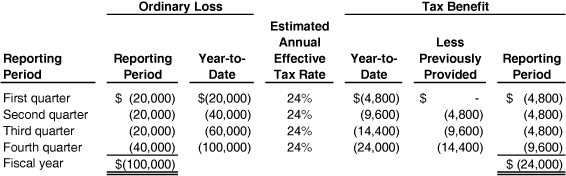 Ordinary Loss Tax Benefit Reporting Period Reporting Period Year-to-Date Estimated Annual Effective Tax Rate Year-to-Date Less Previously Provided Reporting Period First quarter " $(20,000)" " $(20,000)" 24% " $(4,800)" $- " $(4,800)" Second quarter " (20,000)" " (40,000)" 24% " (9,600)" " (4,800)" " (4,800)" Third quarter " (20,000)" " (60,000)" 24% " (14,400)" " (9,600)" " (4,800)" Fourth quarter " (40,000)" " (100,000)" 24% " (24,000)" " (14,400)" " (9,600)" Fiscal year " $(100,000)" " $(24,000)"
- aRealization of the tax benefit is more likely than not at date of occurrence (Case A)
- bRealization of the tax benefit not more likely than not at date of occurrence (Case B).
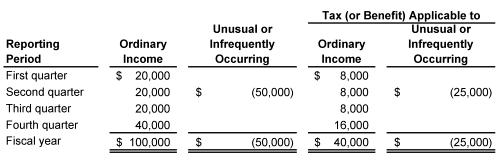 Tax (or Benefit) Applicable to Reporting Period Ordinary Income "Unusual, Infrequently Occurring, or Extraordinary Loss" Ordinary Income "Unusual, Infrequently Occurring, or Extraordinary Loss" First quarter " $20,000 " " $8,000 " Second quarter " 20,000 " " $(50,000)" " 8,000 " " $(25,000)" Third quarter " 20,000 " " 8,000 " Fourth quarter " 40,000 " " 16,000 " Fiscal year " $100,000 " " $(50,000)" " $40,000 " " $(25,000)"
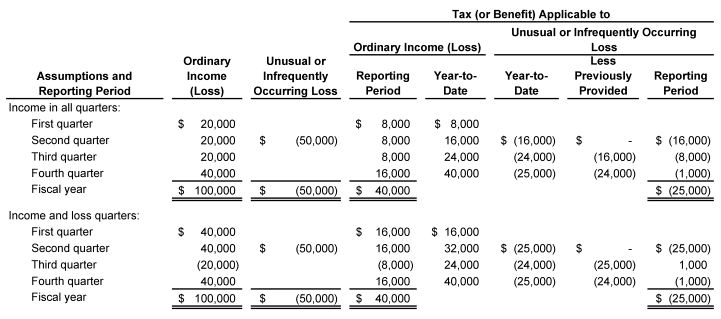 Tax (or Benefit) Applicable to Assumptions and Reporting Period Ordinary Income (Loss) "Unusual, Infrequently Occurring, or Extraordinary Loss" Ordinary Income (Loss) "Unusual, Infrequently Occurring, or Extraordinary Loss" Reporting Period Year-to-Date Year-to-Date Less Previously Provided Reporting Period Income in all quarters: First quarter " $20,000 " " $8,000 " " $8,000 " Second quarter " 20,000 " " $(50,000)" " 8,000 " " 16,000 " " $(16,000)" $- " $(16,000)" Third quarter " 20,000 " " 8,000 " " 24,000 " " (24,000)" " (16,000)" " (8,000)" Fourth quarter " 40,000 " " 16,000 " " 40,000 " " (25,000)" " (24,000)" " (1,000)" Fiscal year " $100,000 " " $(50,000)" " $40,000 " " $(25,000)" Income and loss quarters: First quarter " $40,000 " " $16,000 " " $16,000 " Second quarter " 40,000 " " $(50,000)" " 16,000 " " 32,000 " " $(25,000)" $- " $(25,000)" Third quarter " (20,000)" " (8,000)" " 24,000 " " (24,000)" " (25,000)" " 1,000 " Fourth quarter " 40,000 " " 16,000 " " 40,000 " " (25,000)" " (24,000)" " (1,000)" Fiscal year " $100,000 " " $(50,000)" " $40,000 " " $(25,000)"
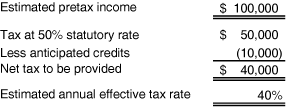 Estimated pretax income " $100,000 " Tax at 50% statutory rate " $50,000 " Less anticipated credits " (10,000)" Net tax to be provided " $40,000 " Estimated annual effective tax rate 40%
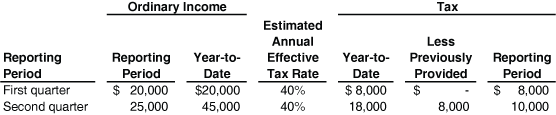 Ordinary Income Tax Reporting Period Reporting Period Year-to-Date Estimated Annual Effective Tax Rate Year-to-Date Less Previously Provided Reporting Period First quarter " $20,000 " " $20,000 " 40% " $8,000 " $- " $8,000 " Second quarter " 25,000 " " 45,000 " 40% " 18,000 " " 8,000 " " 10,000 "
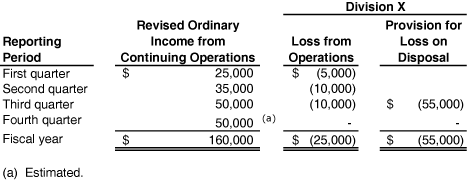 Division X Reporting Period Revised Ordinary Income from Continuing Operations Loss from Operations Provision for Loss on Disposal First quarter " $25,000 " " $(5,000)" Second quarter " 35,000 " " (10,000)" Third quarter " 50,000 " " (10,000)" " $(55,000)" Fourth quarter " 50,000 " (a) - - Fiscal year " $160,000 " " $(25,000)" " $(55,000)" (a) Estimated.
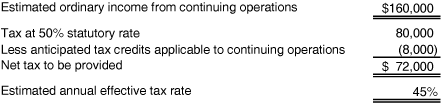 Estimated ordinary income from continuing operations " $160,000 " Tax at 50% statutory rate " 80,000 " Less anticipated tax credits applicable to continuing operations " (8,000)" Net tax to be provided " $72,000 " Estimated annual effective tax rate 45%
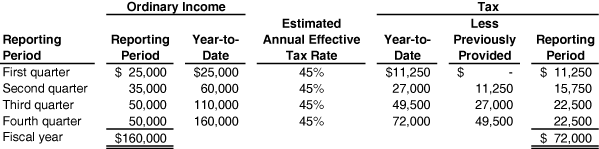 Ordinary Income Tax Reporting Period Reporting Period Year-to-Date Estimated Annual Effective Tax Rate Year-to-Date Less Previously Provided Reporting Period First quarter " $25,000 " " $25,000 " 45% " $11,250 " $- " $11,250 " Second quarter " 35,000 " " 60,000 " 45% " 27,000 " " 11,250 " " 15,750 " Third quarter " 50,000 " " 110,000 " 45% " 49,500 " " 27,000 " " 22,500 " Fourth quarter " 50,000 " " 160,000 " 45% " 72,000 " " 49,500 " " 22,500 " Fiscal year " $160,000 " " $72,000 "
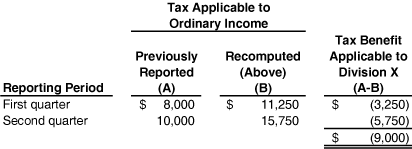 Tax Applicable to Ordinary Income Previously Reported Recomputed (Above) Tax Benefit Applicable to Division X Reporting Period (A) (B) (A-B) First quarter " $8,000 " " $11,250 " " $(3,250)" Second quarter " 10,000 " " 15,750 " " (5,750)" " $(9,000)"
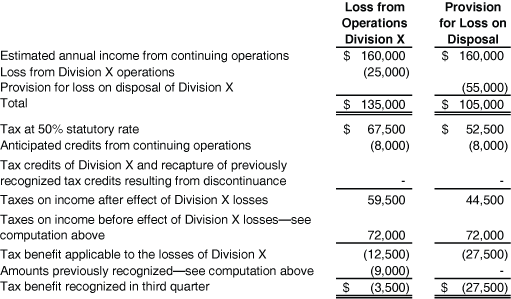 Loss from Operations Division X Provision for Loss on Disposal Estimated annual income from continuing operations " $160,000 " " $160,000 " Loss from Division X operations " (25,000)" Provision for loss on disposal of Division X " (55,000)" Total " $135,000 " " $105,000 " Tax at 50% statutory rate " $67,500 " " $52,500 " Anticipated credits from continuing operations " (8,000)" " (8,000)" Tax credits of Division X and recapture of previously recognized tax credits resulting from discontinuance - - Taxes on income after effect of Division X losses " 59,500 " " 44,500 " Taxes on income before effect of Division X losses—see computation above " 72,000 " " 72,000 " Tax benefit applicable to the losses of Division X " (12,500)" " (27,500)" Amounts previously recognized—see computation above " (9,000)" - Tax benefit recognized in third quarter " $(3,500)" " $(27,500)"
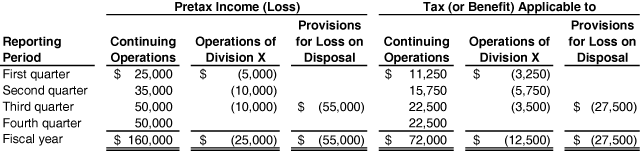 Pretax Income (Loss) Tax (or Benefit) Applicable to Reporting Period Continuing Operations Operations of Division X Provisions for Loss on Disposal Continuing Operations Operations of Division X Provisions for Loss on Disposal First quarter " $25,000 " " $(5,000)" " $11,250 " " $(3,250)" Second quarter " 35,000 " " (10,000)" " 15,750 " " (5,750)" Third quarter " 50,000 " " (10,000)" " $(55,000)" " 22,500 " " (3,500)" " $(27,500)" Fourth quarter " 50,000 " " 22,500 " Fiscal year " $160,000 " " $(25,000)" " $(55,000)" " $72,000 " " $(12,500)" " $(27,500)"
- aOrdinary income in all jurisdictions (Case A)
- bOrdinary loss in a jurisdiction; realization of the tax benefit not more likely than not (Case B)
- cOrdinary income or tax cannot be estimated in one jurisdiction (Case C).
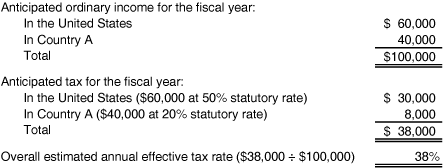 Anticipated ordinary income for the fiscal year: In the United States " $60,000 " In Country A " 40,000 " Total " $100,000 " Anticipated tax for the fiscal year: "In the United States ($60,000 at 50% statutory rate)" " $30,000 " "In Country A ($40,000 at 20% statutory rate)" " 8,000 " Total " $38,000 " "Overall estimated annual effective tax rate ($38,000 ÷ $100,000)" 38%
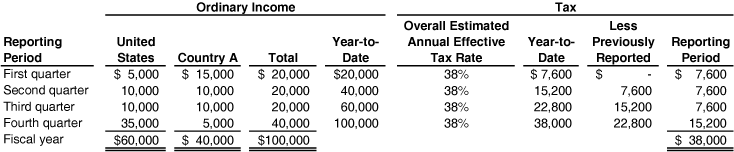 Ordinary Income Tax Reporting Period United States Country A Total Year-to-Date Overall Estimated Annual Effective Tax Rate Year-to-Date Less Previously Reported Reporting Period First quarter " $5,000 " " $15,000 " " $20,000 " " $20,000 " 38% " $7,600 " $- " $7,600 " Second quarter " 10,000 " " 10,000 " " 20,000 " " 40,000 " 38% " 15,200 " " 7,600 " " 7,600 " Third quarter " 10,000 " " 10,000 " " 20,000 " " 60,000 " 38% " 22,800 " " 15,200 " " 7,600 " Fourth quarter " 35,000 " " 5,000 " " 40,000 " " 100,000 " 38% " 38,000 " " 22,800 " " 15,200 " Fiscal year " $60,000 " " $40,000 " " $100,000 " " $38,000 "
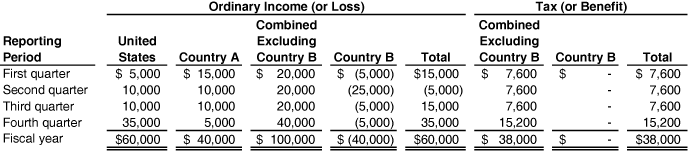 Ordinary Income (or Loss) Tax (or Benefit) Reporting Period United States Country A Combined Excluding Country B Country B Total Combined Excluding Country B Country B Total First quarter " $5,000 " " $15,000 " " $20,000 " " $(5,000)" " $15,000 " " $7,600 " $- " $7,600 " Second quarter " 10,000 " " 10,000 " " 20,000 " " (25,000)" " (5,000)" " 7,600 " - " 7,600 " Third quarter " 10,000 " " 10,000 " " 20,000 " " (5,000)" " 15,000 " " 7,600 " - " 7,600 " Fourth quarter " 35,000 " " 5,000 " " 40,000 " " (5,000)" " 35,000 " " 15,200 " - " 15,200 " Fiscal year " $60,000 " " $40,000 " " $100,000 " " $(40,000)" " $60,000 " " $38,000 " $- " $38,000 "
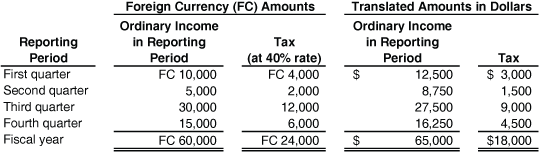 Foreign Currency (FC) Amounts Translated Amounts in Dollars Reporting Period Ordinary Income in Reporting Period Tax (at 40% rate) Ordinary Income in Reporting Period Tax First quarter " FC 10,000 " " FC 4,000 " " $12,500 " " $3,000 " Second quarter " 5,000 " " 2,000 " " 8,750 " " 1,500 " Third quarter " 30,000 " " 12,000 " " 27,500 " " 9,000 " Fourth quarter " 15,000 " " 6,000 " " 16,250 " " 4,500 " Fiscal year " FC 60,000 " " FC 24,000 " " $65,000 " " $18,000 "
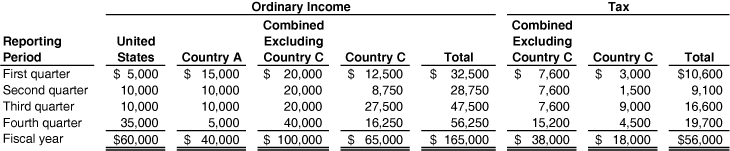 Ordinary Income Tax Reporting Period United States Country A Combined Excluding Country C Country C Total Combined Excluding Country C Country C Total First quarter " $5,000 " " $15,000 " " $20,000 " " $12,500 " " $32,500 " " $7,600 " " $3,000 " " $10,600 " Second quarter " 10,000 " " 10,000 " " 20,000 " " 8,750 " " 28,750 " " 7,600 " " 1,500 " " 9,100 " Third quarter " 10,000 " " 10,000 " " 20,000 " " 27,500 " " 47,500 " " 7,600 " " 9,000 " " 16,600 " Fourth quarter " 35,000 " " 5,000 " " 40,000 " " 16,250 " " 56,250 " " 15,200 " " 4,500 " " 19,700 " Fiscal year " $60,000 " " $40,000 " " $100,000 " " $65,000 " " $165,000 " " $38,000 " " $18,000 " " $56,000 "
- a
- b
 "Tax at statutory rate ($100,000 at 50%)" " $50,000 " Less anticipated tax credits " (10,000)" Net tax to be provided " $40,000 " "Estimated annual effective tax rate ($40,000 ÷ $100,000)" 40%
 "Tax at statutory rate ($100,000 at 50%)" " $50,000 " Less anticipated tax credits " (12,000)" Net tax to be provided " $38,000 " "Estimated annual effective tax rate ($38,000 ÷ $100,000)" 38%
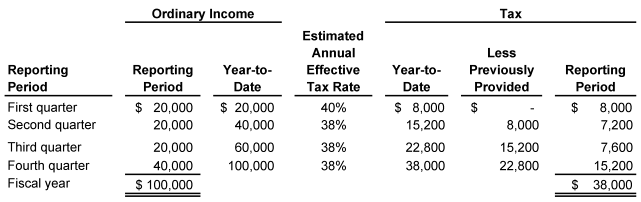 Ordinary Income Tax Reporting Period Reporting Period Year-to-Date Estimated Annual Effective Tax Rate Year-to-Date Less Previously Provided Reporting Period First quarter " $20,000 " " $20,000 " 40% "$ 8,000" $- "$ 8,000" Second quarter " 20,000 " " 40,000 " 38% "15,200" "8,000" "7,200" Third quarter " 20,000 " " 60,000 " 38% "22,800" "15,200" "7,600" Fourth quarter " 40,000 " " 100,000 " 38% "38,000" "22,800" "15,200" Fiscal year " $100,000 " "$ 38,000"
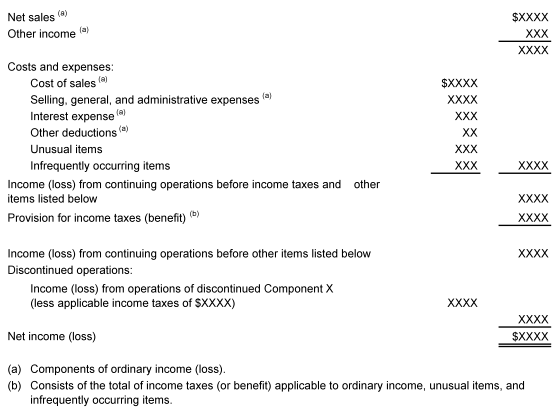 Net sales (a) $XXXX Other income (a) XXX XXXX Costs and expenses: Cost of sales (a) $XXXX "Selling, general, and administrative expenses (a)" XXXX Interest expense (a) XXX Other deductions (a) XX Unusual items XXX Infrequently occurring items XXX XXXX Income (loss) from continuing operations before income taxes and other items listed below XXXX Provision for income taxes (benefit) (b) XXXX Income (loss) from continuing operations before other items listed below XXXX Discontinued operations: "Income (loss) from operations of discontinued Component X (less applicable income taxes of $XXXX)" XXXX XXXX Income (loss) before extraordinary items XXXX Extraordinary items (less applicable income taxes of $XXXX) XXXX Net income (loss) $XXXX (a) Components of ordinary income (loss). (b) "Consists of the total of income taxes (or benefit) applicable to ordinary income, unusual items, and infrequently occurring items."