ASC 852-10
Overall
852 Reorganizations
Source downloaded: .Record version 1458adcd4207. Effective date must be checked in the source.
ASC 852-10 governs financial reporting by entities that have filed a Chapter 11 petition and expect to reorganize as going concerns, plus their reporting upon emergence under a confirmed plan. During the case, GAAP continues to apply but the statements must separate reorganization-related transactions from ongoing operations: prepetition liabilities subject to compromise are segregated on the balance sheet at expected allowed amounts, and reorganization items are shown separately in the income statement and cash flow statement. On emergence, an entity adopts fresh-start reporting only if reorganization value is less than postpetition liabilities plus allowed claims and pre-confirmation voting shareholders receive less than 50% of the emerging entity's voting shares.
Key points (7)
- Entering Chapter 11 does not change the GAAP an entity applies, but financial statements for periods including and after the filing must distinguish transactions and events directly associated with the reorganization from ongoing operations (852-10-45-1 through 45-2).
- The balance sheet must separate prepetition liabilities subject to compromise from those not subject to compromise and from postpetition liabilities; liabilities that may be affected by the plan are reported at expected allowed amounts under Subtopic 450-20, and doubtful secured claims stay in the subject-to-compromise category (852-10-45-4 through 45-5).
- Revenues, expenses (including professional fees), realized gains and losses, and loss provisions resulting from the reorganization are reported separately as reorganization items; professional fees are expensed as incurred, not deferred or accrued at filing (852-10-45-9 through 45-10).
- Interest expense is reported only to the extent it will be paid or is probable to be an allowed priority, secured, or unsecured claim and is not a reorganization item, while interest income earned only because of the proceeding is a reorganization item; the difference between reported and contractual interest must be disclosed (852-10-45-11, 45-12, 852-10-50-3).
- Reorganization items are presented separately within operating, investing, and financing categories of the statement of cash flows (direct method preferred); if the indirect method is used, related operating receipts and payments go in a supplementary schedule or the notes (852-10-45-13, 852-10-50-6A).
- Fresh-start reporting is required upon emergence only if reorganization value of the assets immediately before confirmation is less than total postpetition liabilities and allowed claims and pre-confirmation voting shareholders receive less than 50% of the emerging entity's voting shares, with the loss of control substantive and not temporary (852-10-45-19).
- Under fresh-start reporting the reorganization value is assigned to assets and liabilities using Subtopic 805-20 procedures with any residual reported as goodwill, the new entity starts with no retained earnings or deficit, debt forgiveness is reported as extinguishment under Subtopic 220-20, and comparative statements straddling the confirmation date are prohibited (852-10-45-20, 45-21, 45-26).
For students. Exam questions almost always hinge on the two-part fresh-start test in 852-10-45-19 (reorganization value < postpetition liabilities plus allowed claims AND old shareholders get <50% of new voting shares) — both must be met, and failing them means the emerging entity merely restates compromised liabilities at present value instead of resetting its balance sheet. A common misunderstanding is treating interest expense as a reorganization item; it is not, and interest is only recorded to the extent it will be paid or is probably an allowed claim.
Machine-generated study aid for ASC 852-10. Check the source paragraphs below.
852-10-00Status
Source downloaded: .Record version d15f6ca0be54. Effective date must be checked in the source.
852-10-05Overview and Background
Source downloaded: .Record version cb16dfa6a7b1. Effective date must be checked in the source.
- aOverall
- bQuasi-Reorganizations
- cIncome Taxes.
- aThe plan and the plan proponent have complied with various technical requirements of the Bankruptcy Code.
- bDisclosures made in soliciting acceptance of the plan have been adequate.
- cDissenting members of consenting classes of impaired claims would receive under the plan at least the amount they would have received under a Chapter 7 proceeding.
- dClaims entitled to priority under the Bankruptcy Code will be paid in cash.
- eConfirmation of the plan is not likely to be followed by liquidation or further reorganization.
- fAt least one class of impaired claims, apart from insiders, has accepted the plan.
- gThe plan proponent has obtained the consent of all impaired classes of claims or equity securities, or the plan proponent can comply with the cram-down provisions of the Bankruptcy Code. Under the cram-down provisions, the court may confirm a plan even if one or more classes of holders of impaired claims or equity securities do not accept it, as long as the court finds the plan does not discriminate unfairly and is fair and equitable to each nonconsenting class impaired by the plan.
Reorganization Value
The Disclosure Statement
The Financial Reporting Consequences of the Absolute Priority Doctrine
Terms
- a
- b
- c
852-10-10Objectives
Source downloaded: .Record version e2828a2048c3. Effective date must be checked in the source.
852-10-15Scope and Scope Exceptions
Source downloaded: .Record version fa37945d1089. Effective date must be checked in the source.
Entities
Transactions
- aReorganizations by entities that expect to reorganize as a going concern under Chapter 11
- bReorganizations by entities upon emergence from Chapter 11 under confirmed plans.
- aDebt restructurings outside of Chapter 11
- bReorganization activities consisting of liquidation or adoption of plans of liquidation under the Bankruptcy Code.
852-10-25Recognition
Source downloaded: .Record version c216638c7cb6. Effective date must be checked in the source.
852-10-30Initial Measurement
Source downloaded: .Record version b28dfde92568. Effective date must be checked in the source.
852-10-45Other Presentation Matters
Source downloaded: .Record version 3667eaf103b7. Effective date must be checked in the source.
Financial Reporting during Reorganization Proceedings
Financial Reporting When Entities Emerge from Chapter 11 Reorganization
- a The reorganization value of the entity shall be assigned to the entity's assets and liabilities in conformity with the procedures specified by Subtopic 805-20. If any portion of the reorganization value cannot be attributed to specific tangible or identified intangible assets of the emerging entity, such amounts shall be reported as goodwill in accordance with paragraph 350-20-25-2.
- b
- c Deferred taxes shall be determined under the requirements of paragraph 852-740-45-1.
- d
852-10-50Disclosure
Source downloaded: .Record version fc66a2919fa9. Effective date must be checked in the source.
Financial Reporting during Reorganization Proceedings
Financial Reporting When Entities Emerge from Chapter 11 Reorganization and Adopt Fresh-Start Reporting
- aAdjustments to the historical amounts of individual assets and liabilities
- bThe amount of debt forgiveness
- cSignificant matters relating to the determination of reorganization value, including all of the following:
- 1The method or methods used to determine reorganization value and factors such as discount rates, tax rates, the number of years for which cash flows are projected, and the method of determining terminal value
- 2Sensitive assumptions—that is, assumptions about which there is a reasonable possibility of the occurrence of a variation that would have significantly affected measurement of reorganization value
- 3Assumptions about anticipated conditions that are expected to be different from current conditions, unless otherwise apparent.
- 1
852-10-55Implementation Guidance and Illustrations
Source downloaded: .Record version 9e749e4676c3. Effective date must be checked in the source.
Illustrations
- Illustrative Financial Statements and Notes to Financial Statements for an Entity Operating Under Chapter 11
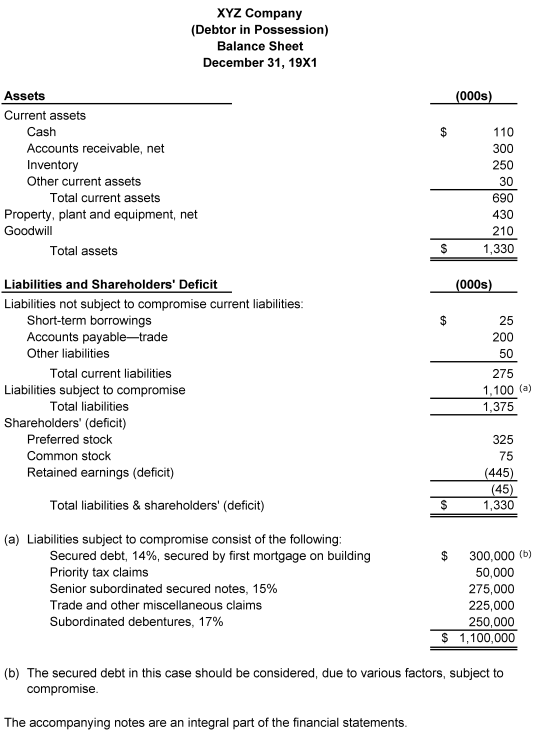 XYZ Company (Debtor in Possession) Balance Sheet "December 31, 19X1" Assets (000s) Current assets Cash $110 "Accounts receivable, net" 300 Inventory 250 Other current assets 30 Total current assets 690 "Property, plant and equipment, net" 430 Goodwill 210 Total assets " $1,330 " Liabilities and Shareholders' Deficit (000s) Liabilities not subject to compromise current liabilities: Short-term borrowings $25 Accounts payable—trade 200 Other liabilities 50 Total current liabilities 275 Liabilities subject to compromise " 1,100 " (a) Total liabilities " 1,375 " shareholders' (deficit) Preferred stock 325 Common stock 75 Retained earnings (deficit) (445) (45) Total Liabilities & Shareholders' (Deficit) " $1,330 " (a) Liabilities subject to compromise consist of the following: "Secured debt, 14%, secured by first mortgage on building" " $300,000 " (b) Priority tax claims " 50,000 " "Senior subordinated secured notes, 15%" " 275,000 " Trade and other miscellaneous claims " 225,000 " "Subordinated debentures, 17%" " 250,000 " " $1,100,000 " (b) "The secured debt in this case should be considered, due to various factors, subject to compromise." The accompanying notes are an integral part of the financial statements.
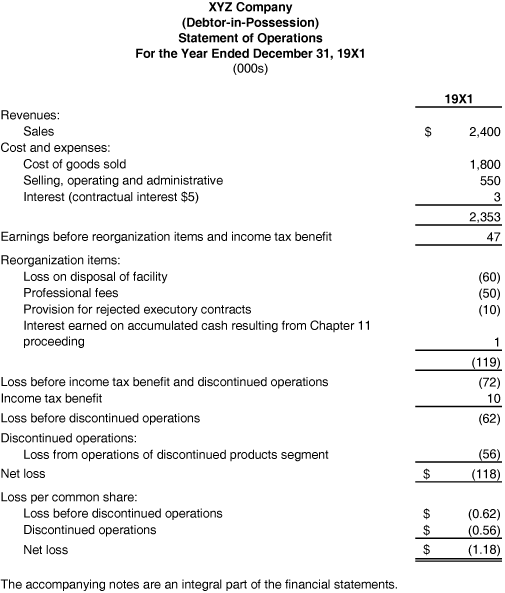 XYZ Company (Debtor-in-Possession) Statement of Operations "For the Year Ended December 31, 19X1" (000s) 19X1 Revenues: Sales " $2,400 " Cost and expenses: Cost of goods sold " 1,800 " "Selling, operating and administrative" 550 Interest (contractual interest $5) 3 " 2,353 " Earnings before reorganization items and income tax benefit 47 Reorganization items: Loss on disposal of facility (60) Professional fees (50) Provision for rejected executory contracts (10) Interest earned on accumulated cash resulting from Chapter 11 proceeding 1 (119) Loss before income tax benefit and discontinued operations (72) Income tax benefit 10 Loss before discontinued operations (62) Discontinued operations: Loss from operations of discontinued products segment (56) Net loss $(118) Loss per common share: Loss before discontinued operations $(0.62) Discontinued operations $(0.56) Net loss $(1.18) The accompanying notes are an integral part of the financial statements.
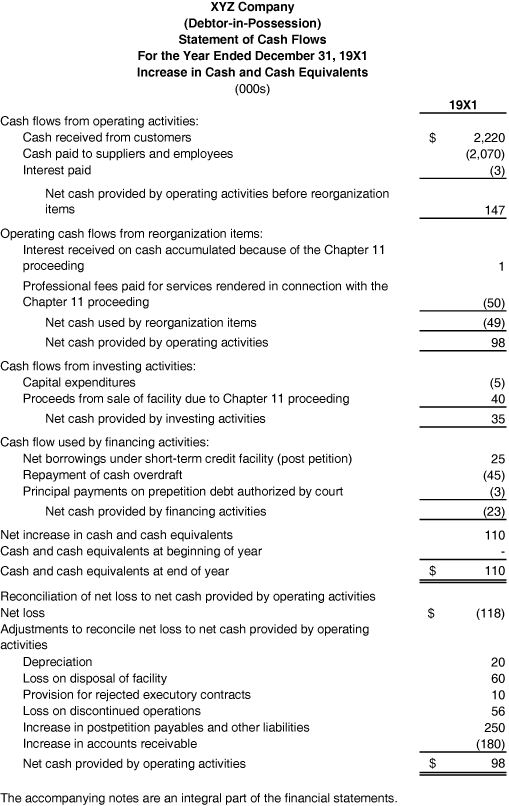 XYZ Company (Debtor-in-Possession) Statement of Cash Flows "For the Year Ended December 31, 19X1" Increase in Cash and Cash Equivalents (000s) 19X1 Cash flows from operating activities: Cash received from customers " $2,220 " Cash paid to suppliers and employees " (2,070)" Interest paid (3) Net cash provided by operating activities before reorganization items 147 Operating cash flows from reorganization items: Interest received on cash accumulated because of the Chapter 11 proceeding 1 Professional fees paid for services rendered in connection with the Chapter 11 proceeding (50) Net cash used by reorganization items (49) Net cash provided by operating activities 98 Cash flows from investing activities: Capital expenditures (5) Proceeds from sale of facility due to Chapter 11 proceeding 40 Net cash provided by investing activities 35 Cash flow used by financing activities: Net borrowings under short-term credit facility (post petition) 25 Repayment of cash overdraft (45) Principal payments on prepetition debt authorized by court (3) Net cash provided by financing activities (23) Net increase in cash and cash equivalents 110 Cash and cash equivalents at beginning of year - Cash and cash equivalents at end of year $110 Reconciliation of net loss to net cash provided by operating activities Net loss $(118) Adjustments to reconcile net loss to net cash provided by operating activities Depreciation 20 Loss on disposal of facility 60 Provision for rejected executory contracts 10 Loss on discontinued operations 56 Increase in postpetition payables and other liabilities 250 Increase in accounts receivable (180) Net cash provided by operating activities $98 The accompanying notes are an integral part of the financial statements.
- XYZ Company Notes to Financial Statements December 31, 19X1
- Note X—Petition for Relief Under Chapter 11
- On January 10, 19X1, XYZ Company (the Debtor) filed petitions for relief under Chapter 11 of the federal bankruptcy laws in the United States Bankruptcy Court for the Western District of Tennessee. Under Chapter 11, certain claims against the Debtor in existence before the filing of the petitions for relief under the federal bankruptcy laws are stayed while the Debtor continues business operations as Debtor-in-possession. These claims are reflected in the December 31, 19X1, balance sheet as liabilities subject to compromise. Additional claims (liabilities subject to compromise) may arise after the filing date resulting from rejection of executory contracts, including leases, and from the determination by the court (or agreed to by parties in interest) of allowed claims for contingencies and other disputed amounts. Claims secured against the Debtor's assets (secured claims) also are stayed, although the holders of such claims have the right to move the court for relief from the stay. Secured claims are secured primarily by liens on the Debtor's property, plant, and equipment.
- The Debtor received approval from the Bankruptcy Court to pay or otherwise honor certain of its prepetition obligations, including employee wages and product warranties. The Debtor has determined that there is insufficient collateral to cover the interest portion of scheduled payments on its prepetition debt obligations. Contractual interest on those obligations amounts to $5,000, which is $2,000 in excess of reported interest expense; therefore, the debtor has discontinued accruing interest on these obligations. See Note X in Example 2 (paragraph 852-10-55-11) for a discussion of the credit arrangements entered into after the Chapter 11 filings.
- Illustrative Financial Statements and Notes to Financial Statements for an Entity Operating Under Chapter 11
- XYZ Company (Debtor in Possession) Balance Sheet "December 31, 19X1" Assets (000s) Current assets Cash $110 "Accounts receivable, net" 300 Inventory 250 Other current assets 30 Total current assets 690 "Property, plant and equipment, net" 430 Goodwill 210 Total assets " $1,330 " Liabilities and Shareholders' Deficit (000s) Liabilities not subject to compromise current liabilities: Short-term borrowings $25 Accounts payable—trade 200 Other liabilities 50 Total current liabilities 275 Liabilities subject to compromise " 1,100 " (a) Total liabilities " 1,375 " shareholders' (deficit) Preferred stock 325 Common stock 75 Retained earnings (deficit) (445) (45) Total Liabilities & Shareholders' (Deficit) " $1,330 " (a) Liabilities subject to compromise consist of the following: "Secured debt, 14%, secured by first mortgage on building" " $300,000 " (b) Priority tax claims " 50,000 " "Senior subordinated secured notes, 15%" " 275,000 " Trade and other miscellaneous claims " 225,000 " "Subordinated debentures, 17%" " 250,000 " " $1,100,000 " (b) "The secured debt in this case should be considered, due to various factors, subject to compromise." The accompanying notes are an integral part of the financial statements.
- XYZ Company (Debtor-in-Possession) Statement of Operations "For the Year Ended December 31, 19X1" (000s) 19X1 Revenues: Sales " $2,400 " Cost and expenses: Cost of goods sold " 1,800 " "Selling, operating and administrative" 550 Interest (contractual interest $5) 3 " 2,353 " Earnings before reorganization items and income tax benefit 47 Reorganization items: Loss on disposal of facility (60) Professional fees (50) Provision for rejected executory contracts (10) Interest earned on accumulated cash resulting from Chapter 11 proceeding 1 (119) Loss before income tax benefit and discontinued operations (72) Income tax benefit 10 Loss before discontinued operations (62) Discontinued operations: Loss from operations of discontinued products segment (56) Net loss $(118) Loss per common share: Loss before discontinued operations $(0.62) Discontinued operations $(0.56) Net loss $(1.18) The accompanying notes are an integral part of the financial statements.
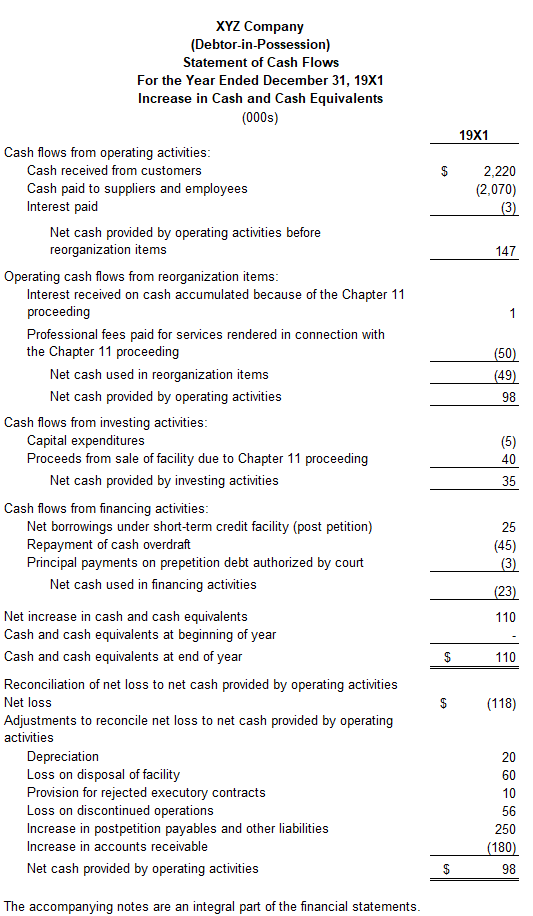 XYZ Company (Debtor-in-Possession) Statement of Cash Flows "For the Year Ended December 31, 19X1" Increase in Cash and Cash Equivalents (000s) 19X1 Cash flows from operating activities: Cash received from customers " $2,220 " Cash paid to suppliers and employees " (2,070)" Interest paid (3) Net cash provided by operating activities before reorganization items 147 Operating cash flows from reorganization items: Interest received on cash accumulated because of the Chapter 11 proceeding 1 Professional fees paid for services rendered in connection with the Chapter 11 proceeding (50) Net cash used in reorganization items (49) Net cash provided by operating activities 98 Cash flows from investing activities: Capital expenditures (5) Proceeds from sale of facility due to Chapter 11 proceeding 40 Net cash provided by investing activities 35 Cash flows from financing activities: Net borrowings under short-term credit facility (post petition) 25 Repayment of cash overdraft (45) Principal payments on prepetition debt authorized by court (3) Net cash used in financing activities (23) Net increase in cash and cash equivalents 110 Cash and cash equivalents at beginning of year - Cash and cash equivalents at end of year $110 Reconciliation of net loss to net cash provided by operating activities Net loss $(118) Adjustments to reconcile net loss to net cash provided by operating activities Depreciation 20 Loss on disposal of facility 60 Provision for rejected executory contracts 10 Loss on discontinued operations 56 Increase in postpetition payables and other liabilities 250 Increase in accounts receivable (180) Net cash provided by operating activities $98 The accompanying notes are an integral part of the financial statements.
- XYZ Company Notes to Financial Statements December 31, 19X1
- Note X—Petition for Relief Under Chapter 11
- On January 10, 19X1, XYZ Company (the Debtor) filed petitions for relief under Chapter 11 of the federal bankruptcy laws in the United States Bankruptcy Court for the Western District of Tennessee. Under Chapter 11, certain claims against the Debtor in existence before the filing of the petitions for relief under the federal bankruptcy laws are stayed while the Debtor continues business operations as Debtor-in-possession. These claims are reflected in the December 31, 19X1, balance sheet as liabilities subject to compromise. Additional claims (liabilities subject to compromise) may arise after the filing date resulting from rejection of executory contracts, including leases, and from the determination by the court (or agreed to by parties in interest) of allowed claims for contingencies and other disputed amounts. Claims secured against the Debtor's assets (secured claims) also are stayed, although the holders of such claims have the right to move the court for relief from the stay. Secured claims are secured primarily by liens on the Debtor's property, plant, and equipment.
- The Debtor received approval from the Bankruptcy Court to pay or otherwise honor certain of its prepetition obligations, including employee wages and product warranties. The Debtor has determined that there is insufficient collateral to cover the interest portion of scheduled payments on its prepetition debt obligations. Contractual interest on those obligations amounts to $5,000, which is $2,000 in excess of reported interest expense; therefore, the debtor has discontinued accruing interest on these obligations. See Note X in Example 2 (paragraph 852-10-55-11) for a discussion of the credit arrangements entered into after the Chapter 11 filings.
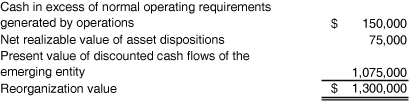 Cash in excess of normal operating requirements generated by operations " $150,000 " Net realizable value of asset dispositions " 75,000 " Present value of discounted cash flows of the emerging entity " 1,075,000 " Reorganization value " $1,300,000 "
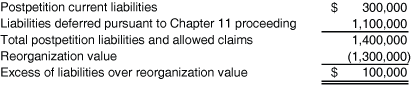 Postpetition current liabilities " $300,000 " Liabilities deferred pursuant to Chapter 11 proceeding " 1,100,000 " Total postpetition liabilities and allowed claims " 1,400,000 " Reorganization value " (1,300,000)" Excess of liabilities over reorganization value " $100,000 "
- aForecasted operating and cash flow results that gave effect to the estimated impact of both of the following:
- 1Corporate restructuring and other operating program changes
- 2Limitations on the use of available net operating loss carryovers and other tax attributes resulting from the plan of reorganization and other events.
- 1
- bThe discounted residual value at the end of the forecast period based on the capitalized cash flows for the last year of that period
- cMarket share and position
- dCompetition and general economic considerations
- eProjected sales growth
- fPotential profitability
- gSeasonality and working capital requirements.
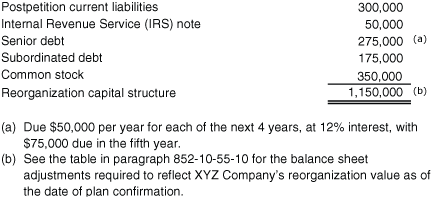 Postpetition current liabilities " $300,000 " Internal Revenue Service (IRS) note " 50,000 " Senior debt " 275,000 " (a) Subordinated debt " 175,000 " Common stock " 350,000 " Reorganization capital structure " $1,150,000 " (b) (a) "Due $50,000 per year for each of the next 4 years, at 12% interest, with $75,000 due in the fifth year." (b) See the table in paragraph 852-10-55-10 for the balance sheet adjustments required to reflect XYZ Company's reorganization value as of the date of plan confirmation.
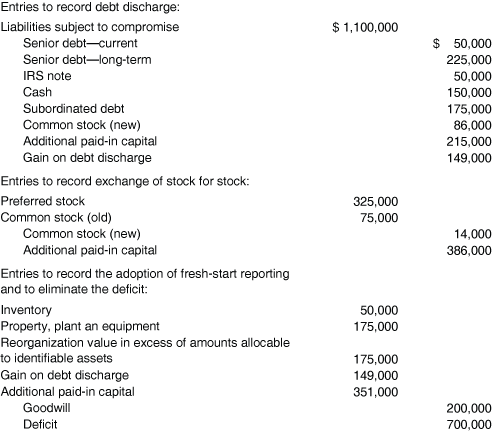 Entries to record debt discharge: Liabilities subject to compromise " $1,100,000 " Senior debt—current " $50,000 " Senior debt—long-term " 225,000 " IRS note " 50,000 " Cash " 150,000 " Subordinated debt " 175,000 " Common stock (new) " 86,000 " Additional paid-in capital " 215,000 " Gain on debt discharge " 149,000 " Entries to record exchange of stock for stock: Preferred stock " 325,000 " Common stock (old) " 75,000 " Common stock (new) " 14,000 " Additional paid-in capital " 386,000 " Entries to record the adoption of fresh-start reporting and to eliminate the deficit: Inventory " 50,000 " "Property, plant an equipment" " 175,000 " Reorganization value in excess of amounts allocable to identifiable assets " 175,000 " Gain on debt discharge " 149,000 " Additional paid-in capital " 351,000 " Goodwill " 200,000 " Deficit " 700,000 "
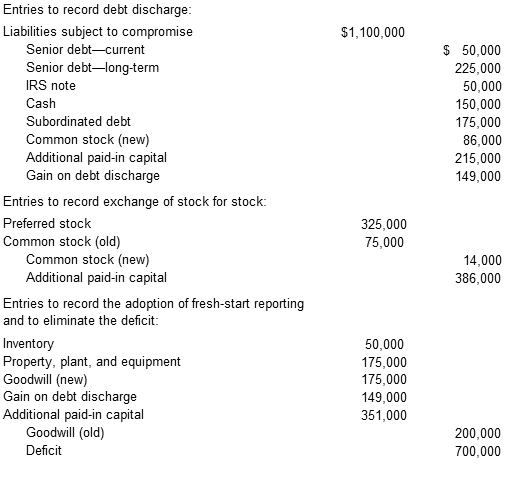 Entries to record debt discharge: Liabilities subject to compromise " $1,100,000 " Senior debt—current " $50,000 " Senior debt—long-term " 225,000 " IRS note " 50,000 " Cash " 150,000 " Subordinated debt " 175,000 " Common stock (new) " 86,000 " Additional paid-in capital " 215,000 " Gain on debt discharge " 149,000 " Entries to record exchange of stock for stock: Preferred stock " 325,000 " Common stock (old) " 75,000 " Common stock (new) " 14,000 " Additional paid-in capital " 386,000 " Entries to record the adoption of fresh-start reporting and to eliminate the deficit: Inventory " 50,000 " "Property, plant, and equipment" " 175,000 " Goodwill (new) " 175,000 " Gain on debt discharge " 149,000 " Additional paid-in capital " 351,000 " Goodwill (old) " 200,000 " Deficit " 700,000 "
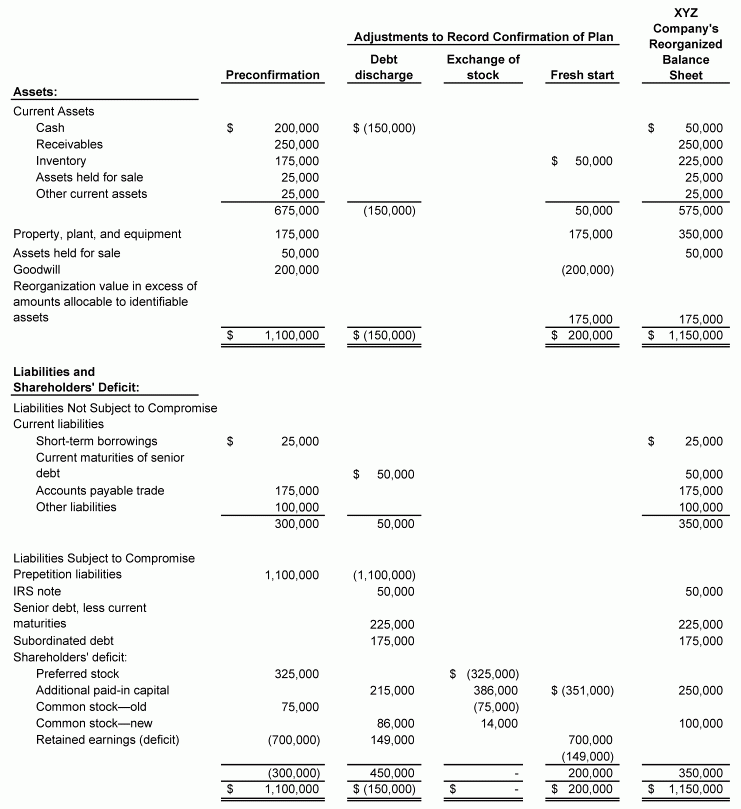 Adjustments to Record Confirmation of Plan XYZ Company's Reorganized Balance Sheet Preconfirmation Debt discharge Exchange of stock Fresh start Assets: Current Assets Cash " $200,000 " " $(150,000)" " $50,000 " Receivables " 250,000 " " 250,000 " Inventory " 175,000 " " $50,000 " " 225,000 " "Assets to be disposed of valued at market, which is lower than cost" " 25,000 " " 25,000 " Other current assets " 25,000 " " 25,000 " " 675,000 " " (150,000)" " 50,000 " " 575,000 " "Property, plant, and equipment" " 175,000 " " 175,000 " " 350,000 " "Assets to be disposed of valued at market, which is lower than cost" " 50,000 " " 50,000 " Goodwill " 200,000 " " (200,000)" Reorganization value in excess of amounts allocable to identifiable assets " 175,000 " " 175,000 " " $1,100,000 " " $(150,000)" " $200,000 " " $1,150,000 " "Liabilities and Shareholders' Deficit:" Liabilities Not Subject to Compromise Current liabilities Short-term borrowings " $25,000 " " $25,000 " Current maturities of senior debt " $50,000 " " 50,000 " Accounts payable trade " 175,000 " " 175,000 " Other liabilities " 100,000 " " 100,000 " " 300,000 " " 50,000 " " 350,000 " Liabilities Subject to Compromise Prepetition liabilities " 1,100,000 " " (1,100,000)" IRS note " 50,000 " " 50,000 " "Senior debt, less current maturities" " 225,000 " " 225,000 " Subordinated debt " 175,000 " " 175,000 " Shareholders' deficit: Preferred stock " 325,000 " " $(325,000)" Additional paid-in capital " 215,000 " " 386,000 " " $(351,000)" " 250,000 " Common stock—old " 75,000 " " (75,000)" Common stock—new " 86,000 " " 14,000 " " 100,000 " Retained earnings (deficit) " (700,000)" " 149,000 " " 700,000 " " (149,000)" " (300,000)" " 450,000 " - " 200,000 " " 350,000 " " $1,100,000 " " $(150,000)" $- " $200,000 " " $1,150,000 "
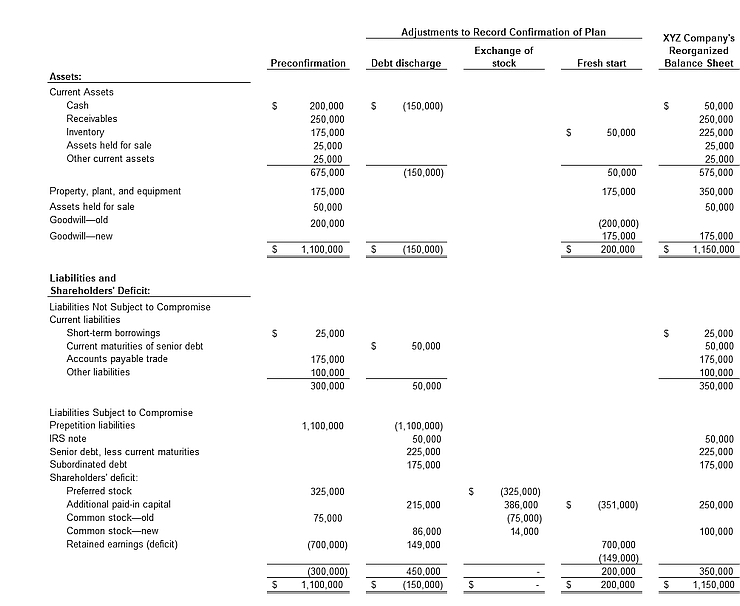 Adjustments to Record Confirmation of Plan XYZ Company's Reorganized Balance Sheet Preconfirmation Debt discharge Exchange of stock Fresh start Assets: Current Assets Cash " $200,000 " " $(150,000)" " $50,000 " Receivables " 250,000 " " 250,000 " Inventory " 175,000 " " $50,000 " " 225,000 " "Assets to be disposed of valued at market, which is lower than cost" " 25,000 " " 25,000 " Other current assets " 25,000 " " 25,000 " " 675,000 " " (150,000)" " 50,000 " " 575,000 " "Property, plant, and equipment" " 175,000 " " 175,000 " " 350,000 " "Assets to be disposed of valued at market, which is lower than cost" " 50,000 " " 50,000 " Goodwill—old " 200,000 " " (200,000)" Goodwill—new " 175,000 " " 175,000 " " $1,100,000 " " $(150,000)" " $200,000 " " $1,150,000 " "Liabilities and Shareholders' Deficit:" Liabilities Not Subject to Compromise Current liabilities Short-term borrowings " $25,000 " " $25,000 " Current maturities of senior debt " $50,000 " " 50,000 " Accounts payable trade " 175,000 " " 175,000 " Other liabilities " 100,000 " " 100,000 " " 300,000 " " 50,000 " " 350,000 " Liabilities Subject to Compromise Prepetition liabilities " 1,100,000 " " (1,100,000)" IRS note " 50,000 " " 50,000 " "Senior debt, less current maturities" " 225,000 " " 225,000 " Subordinated debt " 175,000 " " 175,000 " Shareholders' deficit: Preferred stock " 325,000 " " $(325,000)" Additional paid-in capital " 215,000 " " 386,000 " " $(351,000)" " 250,000 " Common stock—old " 75,000 " " (75,000)" Common stock—new " 86,000 " " 14,000 " " 100,000 " Retained earnings (deficit) " (700,000)" " 149,000 " " 700,000 " " (149,000)" " (300,000)" " 450,000 " - " 200,000 " " 350,000 " " $1,100,000 " " $(150,000)" $- " $200,000 " " $1,150,000 "
- Note X - Plan of Reorganization
- On June 30, 19X2, the Bankruptcy Court confirmed the Company's plan of reorganization. The Company accounted for the reorganization using fresh-start reporting. Accordingly, all assets and liabilities are adjusted to fair value in accordance with accounting requirements for business combinations under ASC Topic 805. The excess of reorganization value over the fair value of tangible and intangible assets was recorded as "reorganization value in excess of amounts allocable to identifiable assets." The confirmed plan provided for the following:
- Secured Debt—The Company's $300,000 of secured debt (secured by a first mortgage lien on a building located in Nashville, Tennessee) was exchanged for $150,000 in cash and a $150,000 secured note, payable in annual installments of $27,300 commencing on June 1, 19X3, through June 1, 19X6, with interest at 12% per annum, with the balance due on June 1, 19X7.
- Priority Tax Claims—Payroll and withholding taxes of $50,000 are payable in equal annual installments commencing on July 1, 19X3, through July 1, 19X8, with interest at 11% per annum.
- Senior Debt—The holders of approximately $275,000 of senior subordinated secured notes received the following instruments in exchange for their notes: $87,000 in new senior secured debt, payable in annual installments of $15,800 commencing March 1, 19X3, through March 1, 19X6, with interest at 12% per annum, secured by first liens on certain property, plants, and equipment, with the balance due on March 1, 19X7; $123,000 of subordinated debt with interest at 14% per annum due in equal annual installments commencing on October 1, 19X3, through October 1, 19X9, secured by second liens on certain property, plant, and equipment; and 11.4% of the new issue of outstanding voting common stock of the Company.
- Trade and Other Miscellaneous Claims—The holders of approximately $225,000 of trade and other miscellaneous claims received the following for their claims: $38,000 in senior secured debt, payable in annual installments of $6,900 commencing March 1, 19X3, through March 1, 19X6, with interest at 12% per annum, secured by first liens on certain property, plants, and equipment, with the balance due on March 1, 19X7; $52,000 of subordinated debt, payable in equal annual installments commencing October 1, 19X3, through October 1, 19X8, with interest at 14% per annum; and 25.7% of the new issue of outstanding voting common stock of the Company.
- Subordinated Debentures—The holders of approximately $250,000 of subordinated unsecured debt received, in exchange for the debentures, 48.9% of the new issue outstanding voting common stock of the Company.
- Preferred Stock—The holders of 3,250 shares of preferred stock received 12% of the outstanding voting common stock of the new issue of the Company in exchange for their preferred stock.
- Common Stock—The holders of approximately 75,000 outstanding shares of the Company's existing common stock received, in exchange for their shares, 2% of the new outstanding voting common stock of the Company.
- The following table (Plan of Reorganization Recovery Analysis) summarizes the adjustments required to record the reorganization and the issuance of the various securities in connection with the implementation of the plan.
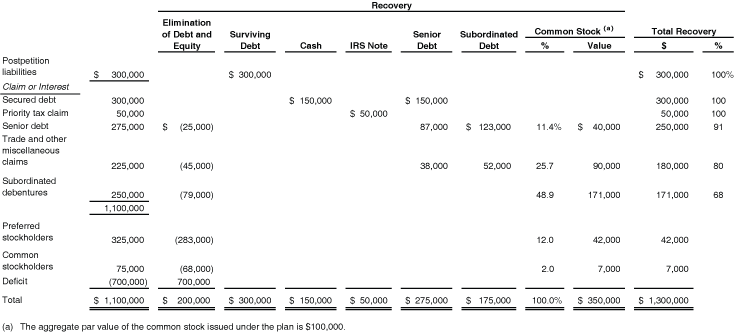 Recovery "Elimination of Debt and Equity" Surviving Debt Senior Debt Subordinated Debt Common Stock (a) Total Recovery Cash IRS Note % Value $ % Postpetition liabilities " $300,000 " " $300,000 " " $300,000 " 100% Claim or Interest Secured debt " 300,000 " " $150,000 " " $150,000 " " 300,000 " 100 Priority tax claim " 50,000 " " $50,000 " " 50,000 " 100 Senior debt " 275,000 " " $(25,000)" " 87,000 " " $123,000 " 11.4% " $40,000 " " 250,000 " 91 Trade and other miscellaneous claims " 225,000 " " (45,000)" " 38,000 " " 52,000 " 25.7 " 90,000 " " 180,000 " 80 Subordinated debentures " 250,000 " " (79,000)" 48.9 " 171,000 " " 171,000 " 68 " 1,100,000 " Preferred stockholders " 325,000 " " (283,000)" 12.0 " 42,000 " " 42,000 " Common stockholders " 75,000 " " (68,000)" 2.0 " 7,000 " " 7,000 " Deficit " (700,000)" " 700,000 " Total " $1,100,000 " " $200,000 " " $300,000 " " $150,000 " " $50,000 " " $275,000 " " $175,000 " 100.0% " $350,000 " " $1,300,000 " (a) "The aggregate par value of the common stock issued under the plan is $100,000."
- Note X - Plan of Reorganization
- On June 30, 19X2, the Bankruptcy Court confirmed the Company's plan of reorganization. The Company accounted for the reorganization using fresh-start reporting. Accordingly, all assets and liabilities are adjusted to fair value in accordance with accounting requirements for business combinations under ASC Topic 805. The excess of reorganization value over the fair value of tangible and intangible assets was recorded as “Goodwill (new)." The confirmed plan provided for the following:
- Secured Debt—The Company's $300,000 of secured debt (secured by a first mortgage lien on a building located in Nashville, Tennessee) was exchanged for $150,000 in cash and a $150,000 secured note, payable in annual installments of $27,300 commencing on June 1, 19X3, through June 1, 19X6, with interest at 12% per annum, with the balance due on June 1, 19X7.
- Priority Tax Claims—Payroll and withholding taxes of $50,000 are payable in equal annual installments commencing on July 1, 19X3, through July 1, 19X8, with interest at 11% per annum.
- Senior Debt—The holders of approximately $275,000 of senior subordinated secured notes received the following instruments in exchange for their notes: $87,000 in new senior secured debt, payable in annual installments of $15,800 commencing March 1, 19X3, through March 1, 19X6, with interest at 12% per annum, secured by first liens on certain property, plants, and equipment, with the balance due on March 1, 19X7; $123,000 of subordinated debt with interest at 14% per annum due in equal annual installments commencing on October 1, 19X3, through October 1, 19X9, secured by second liens on certain property, plant, and equipment; and 11.4% of the new issue of outstanding voting common stock of the Company.
- Trade and Other Miscellaneous Claims—The holders of approximately $225,000 of trade and other miscellaneous claims received the following for their claims: $38,000 in senior secured debt, payable in annual installments of $6,900 commencing March 1, 19X3, through March 1, 19X6, with interest at 12% per annum, secured by first liens on certain property, plants, and equipment, with the balance due on March 1, 19X7; $52,000 of subordinated debt, payable in equal annual installments commencing October 1, 19X3, through October 1, 19X8, with interest at 14% per annum; and 25.7% of the new issue of outstanding voting common stock of the Company.
- Subordinated Debentures—The holders of approximately $250,000 of subordinated unsecured debt received, in exchange for the debentures, 48.9% of the new issue outstanding voting common stock of the Company.
- Preferred Stock—The holders of 3,250 shares of preferred stock received 12% of the outstanding voting common stock of the new issue of the Company in exchange for their preferred stock.
- Common Stock—The holders of approximately 75,000 outstanding shares of the Company's existing common stock received, in exchange for their shares, 2% of the new outstanding voting common stock of the Company.
- The following table (Plan of Reorganization Recovery Analysis) summarizes the adjustments required to record the reorganization and the issuance of the various securities in connection with the implementation of the plan.
- Recovery "Elimination of Debt and Equity" Surviving Debt Senior Debt Subordinated Debt Common Stock (a) Total Recovery Cash IRS Note % Value $ % Postpetition liabilities " $300,000 " " $300,000 " " $300,000 " 100% Claim or Interest Secured debt " 300,000 " " $150,000 " " $150,000 " " 300,000 " 100 Priority tax claim " 50,000 " " $50,000 " " 50,000 " 100 Senior debt " 275,000 " " $(25,000)" " 87,000 " " $123,000 " 11.4% " $40,000 " " 250,000 " 91 Trade and other miscellaneous claims " 225,000 " " (45,000)" " 38,000 " " 52,000 " 25.7 " 90,000 " " 180,000 " 80 Subordinated debentures " 250,000 " " (79,000)" 48.9 " 171,000 " " 171,000 " 68 " 1,100,000 " Preferred stockholders " 325,000 " " (283,000)" 12.0 " 42,000 " " 42,000 " Common stockholders " 75,000 " " (68,000)" 2.0 " 7,000 " " 7,000 " Deficit " (700,000)" " 700,000 " Total " $1,100,000 " " $200,000 " " $300,000 " " $150,000 " " $50,000 " " $275,000 " " $175,000 " 100.0% " $350,000 " " $1,300,000 " (a) "The aggregate par value of the common stock issued under the plan is $100,000."
852-10-60Relationships
Source downloaded: .Record version d2f464834464. Effective date must be checked in the source.
Financial Services—Depository and Lending
Related subtopics
- 220-10 OverallIncome Statement—Reporting Comprehensive Income
- 470-10 OverallDebt
- 325-962 Plan Accounting—Defined Contribution Pension PlansInvestments—Other
- 420-10 OverallExit or Disposal Cost Obligations
- 205-10 OverallPresentation of Financial Statements
- 205-20 Discontinued OperationsPresentation of Financial Statements