ASC 815-20
Hedging—General
815 Derivatives and Hedging
Source downloaded: .Record version af457e7f721c. Effective date must be checked in the source.
ASC 815-20 sets the general "gatekeeping" rules for hedge accounting that apply to all three hedge types — fair value, cash flow, and net investment hedges. It requires formal designation and documentation at hedge inception (risk management objective, hedging instrument, hedged item, hedged risk, and the effectiveness assessment method), and it specifies which items and transactions may be designated as hedged items, which risks may be designated as the hedged risk, which instruments may be hedging instruments, and how effectiveness must be assessed. Items outside those criteria (e.g., equity method investments, most intra-entity transactions, an entity's own equity) simply cannot be hedged for accounting purposes.
Key points (7)
- Hedge accounting requires concurrent, formal documentation at inception of the hedging relationship, the risk management objective and strategy, the hedging instrument, the hedged item or transaction, the nature of the hedged risk, and the method of assessing effectiveness (815-20-25-3(b)); without it an entity could retroactively engineer a desired accounting result.
- An initial prospective effectiveness assessment must be quantitative (dollar-offset or regression) unless an exception applies — e.g., shortcut method, matched critical terms, the private-company simplified approach, or spot/forward-rate net investment methods (815-20-25-3(b)(2)(iv)(01)) — and is deemed concurrent if completed by the earliest of the dates listed in (02).
- For fair value hedges the hedged item must be a specifically identified recognized asset or liability, unrecognized firm commitment, or portfolio of similar items sharing the hedged risk, and must present an exposure that could affect earnings (815-20-25-12); a 'specific portion' may be a percentage, selected contractual cash flows, an embedded put/call, or a lessor's residual value.
- For financial items the hedged risk may be overall fair value, benchmark interest rate risk, foreign exchange risk, or credit risk (or combinations), while for nonfinancial items generally only overall fair value or FX may be hedged — crude oil price cannot be the hedged risk for gasoline (815-20-25-12(e)–(f)).
- Cash flow hedges require the forecasted transaction to be specifically identified, probable, with an external party (limited intra-entity FX exceptions), and to present cash flow variability that could affect earnings (815-20-25-15); 'probable' requires significantly greater likelihood than 'more likely than not' (815-20-25-16(e)).
- The portfolio layer method permits designating a hedged layer of a closed portfolio of financial assets or beneficial interests if the entity documents an analysis supporting that the layer will be outstanding for the hedge period, assuming prepayments and defaults are applied first to the unhedged portion (815-20-25-12A).
- Certain items are specifically ineligible as hedged items: equity method investments, noncontrolling interests, transactions with stockholders as stockholders (treasury stock purchases, dividends), most intra-entity transactions, the entity's own equity instruments, and interest rate risk on held-to-maturity securities (815-20-25-43).
For students. This is the qualification checklist for hedge accounting — most failures in practice are documentation failures, not economic ones, because documentation must be complete and concurrent at inception and cannot be created after the fact. A common misunderstanding is that any economic hedge qualifies: the hedged risk must be one the Codification specifically permits (for nonfinancial items, generally total price or FX risk, not an ingredient's price), and some items (equity method investees, own equity, dividends, most intra-entity transactions) are flatly ineligible.
Machine-generated study aid for ASC 815-20. Check the source paragraphs below.
815-20-00Status
Source downloaded: .Record version 2d2861da5a04. Effective date must be checked in the source.
815-20-05Overview and Background
Source downloaded: .Record version 5e9fc7b0585d. Effective date must be checked in the source.
815-20-10Objectives
Source downloaded: .Record version 6c1ba0f71948. Effective date must be checked in the source.
815-20-15Scope and Scope Exceptions
Source downloaded: .Record version e6a000772007. Effective date must be checked in the source.
Entities
- aEntities that do not report earnings separately are not permitted to use cash flow hedge accounting as described in this Subtopic or Subtopic 815-30 on cash flow hedges.
- bEntities that do not report earnings separately are not permitted to elect the amortization approach for amounts excluded from the assessment of effectiveness under fair value hedge accounting in accordance with paragraphs 815-20-25-83A and 815-25-35-1(a).
815-20-25Recognition
Source downloaded: .Record version e3998752a097. Effective date must be checked in the source.
- aFormal designation and documentation at hedge inception
- bEligibility of hedged items and transactions
- cEligibility of hedging instruments
- dHedge effectiveness.
- eHedge accounting provisions applicable to certain private companies
- fHedge accounting provisions applicable to certain not-for-profit entities.
Formal Designation and Documentation at Hedge Inception
- a
- bDocumentation requirement applicable to fair value hedges, cash flow hedges, and net investment hedges:
- 1The hedging relationship
- 2The entity's risk management objective and strategy for undertaking the hedge, including identification of all of the following:
- iThe hedging instrument.
- iiThe hedged item or transaction.
- iiiThe nature of the risk being hedged.
- ivThe method that will be used to retrospectively and prospectively assess the hedging instrument's effectiveness in offsetting the exposure to changes in the hedged item's fair value (if a fair value hedge) or hedged transaction's variability in cash flows (if a cash flow hedge) attributable to the hedged risk. There shall be a reasonable basis for how the entity plans to assess the hedging instrument's effectiveness.
- 01An entity shall perform an initial prospective assessment of hedge effectiveness on a quantitative basis (using either a dollar-offset test or a statistical method such as regression analysis) unless one of the following applies:
- AIn a cash flow or fair value hedge, the entity applies the shortcut method in accordance with paragraphs
- BIn a cash flow or fair value hedge, the entity determines that the critical terms of the hedging instrument and the hedged item match in accordance with paragraphs .
- CIn a cash flow hedge, the hedging instrument is an option, and the conditions in paragraphs 815-20-25-126 and 815-20-25-129 through 25-129A are met.
- DIn a cash flow hedge, a private company that is not a financial institution as described in paragraph 942-320-50-1 applies the simplified hedge accounting approach in paragraphs .
- EIn a cash flow hedge, the entity assesses hedge effectiveness under the change in variable cash flows method in accordance with paragraphs , and all of the conditions in paragraph 815-30-35-22 are met.
- FIn a cash flow hedge, the entity assesses hedge effectiveness under the hypothetical derivative method in accordance with paragraphs , and all of the critical terms of the hypothetical derivative and hedging instrument are the same.
- GIn a net investment hedge, the entity assesses hedge effectiveness using a method based on changes in spot exchange rates, and the conditions in paragraph 815-35-35-5 (for derivative instruments) or 815-35-35-12 (for nonderivative instruments) are met.
- HIn a net investment hedge, the entity assesses hedge effectiveness using a method based on changes in forward exchange rates, and the conditions in paragraph 815-35-35-17A are met.
- A
- 02The initial prospective quantitative hedge effectiveness assessment using information applicable as of the date of hedge inception is considered to be performed concurrently at hedge inception if it is completed by the earliest of the following:
- AThe first quarterly hedge effectiveness assessment date
- BThe date that financial statements that include the hedged transaction are available to be issued
- CThe date that any criterion in Section 815-20-25 no longer is met
- DThe date of expiration, sale, termination, or exercise of the hedging instrument
- EThe date of dedesignation of the hedging relationship
- FFor a cash flow hedge of a forecasted transaction (in accordance with paragraph 815-20-25-13(b)), the date that the forecasted transaction occurs.
- A
- 03An entity also shall document at hedge inception whether it elects to perform subsequent retrospective and prospective hedge effectiveness assessments on a qualitative basis and how it intends to carry out that qualitative assessment. See paragraphs for additional guidance on qualitative assessments of effectiveness. In addition, the entity shall document which quantitative method it will use if facts and circumstances of the hedging relationship change and the entity must quantitatively assess hedge effectiveness in accordance with paragraph 815-20-35-2D. An entity must document that it will perform the same quantitative assessment method for both initial and subsequent prospective hedge effectiveness assessments. The guidance in paragraphs applies if the entity wants to change its quantitative method of assessing effectiveness after the initial quantitative effectiveness assessment.
- 04An entity that applies the shortcut method in paragraphs may elect to document at hedge inception a quantitative method to assess hedge effectiveness and measure hedge results if the entity determines at some point during the term of the hedging relationship that the use of the shortcut method was not or no longer is appropriate. See paragraphs .
- 01
- v
- viIf the entity is hedging foreign currency risk on an after-tax basis, that the assessment of effectiveness will be on an after-tax basis (rather than on a pretax basis).
- i
- 1
- cDocumentation requirement applicable to fair value hedges only:
- 1For a fair value hedge of a firm commitment, a reasonable method for recognizing in earnings the asset or liability representing the gain or loss on the hedged firm commitment.
- 2For one or more interest rate risk hedging relationships designated under the portfolio layer method, an analysis to support the entity's expectation that the hedged layer or layers is anticipated to be outstanding for the designated hedge period (see paragraph 815-20-25-12A for additional guidance).
- 1
- dDocumentation requirement applicable to cash flow hedges only:
- 1For a cash flow hedge of a forecasted transaction, documentation shall include all relevant details, including all of the following:
- iThe date on or period within which the forecasted transaction is expected to occur.
- iiThe specific nature of asset or liability involved (if any).
- iiiEither of the following:
- 01The expected currency amount for hedges of foreign currency exchange risk; that is, specification of the exact amount of foreign currency being hedged
- 02The quantity of the forecasted transaction for hedges of other risks; that is, specification of the physical quantity (that is, the number of items or units of measure) encompassed by the hedged forecasted transaction.
- 01
- ivIf a forecasted sale or purchase is being hedged for price risk, the hedged transaction shall not be specified in either of the following ways:
- 01Solely in terms of expected currency amounts
- 02As a percentage of sales or purchases during a period.
- 01
- vThe current price of a forecasted transaction shall be identified to satisfy the criterion in paragraph 815-20-25-75(b) for offsetting cash flows.
- viThe hedged forecasted transaction shall be described with sufficient specificity so that when a transaction occurs, it is clear whether that transaction is or is not the hedged transaction. Thus, a forecasted transaction could be identified as the sale of either the first 15,000 units of a specific product sold during a specified 3-month period or the first 5,000 units of a specific product sold in each of 3 specific months, but it could not be identified as the sale of the last 15,000 units of that product sold during a 3-month period (because the last 15,000 units cannot be identified when they occur, but only when the period has ended).
- viiIf the hedged risk is the variability in cash flows attributable to changes in a contractually specified component in a forecasted purchase or sale of a nonfinancial asset, identification of the contractually specified component.
- viiiIf the hedged risk is the variability in cash flows attributable to changes in a contractually specified interest rate for forecasted interest receipts or payments on a variable-rate financial asset or liability, identification of the contractually specified interest rate.
- i
- 1
- a
- bDocumentation requirement applicable to fair value hedges, cash flow hedges, and net investment hedges:
- 1The hedging relationship
- 2The entity's risk management objective and strategy for undertaking the hedge, including identification of all of the following:
- iThe hedging instrument.
- iiThe hedged item or transaction.
- iiiThe nature of the risk being hedged (also see the requirements in (d)(1)(viii)).
- ivThe method that will be used to retrospectively and prospectively assess the hedging instrument's effectiveness in offsetting the exposure to changes in the hedged item's fair value (if a fair value hedge) or hedged transaction's variability in cash flows (if a cash flow hedge) attributable to the hedged risk. There shall be a reasonable basis for how the entity plans to assess the hedging instrument's effectiveness.
- 01An entity shall perform an initial prospective assessment of hedge effectiveness on a quantitative basis (using either a dollar-offset test or a statistical method such as regression analysis) unless one of the following applies:
- AIn a cash flow or fair value hedge, the entity applies the shortcut method in accordance with paragraphs
- BIn a cash flow or fair value hedge, the entity determines that the critical terms of the hedging instrument and the hedged item match in accordance with paragraphs .
- CIn a cash flow hedge, the hedging instrument is an option, and the conditions in paragraphs 815-20-25-126 and 815-20-25-129 through 25-129A are met.
- DIn a cash flow hedge, a private company that is not a financial institution as described in paragraph 942-320-50-1 applies the simplified hedge accounting approach in paragraphs .
- EIn a cash flow hedge, the entity assesses hedge effectiveness under the change in variable cash flows method in accordance with paragraphs , and all of the conditions in paragraph 815-30-35-22 are met.
- FIn a cash flow hedge, the entity assesses hedge effectiveness under the hypothetical derivative method in accordance with paragraphs , and all of the critical terms of the hypothetical derivative and hedging instrument are the same.
- GIn a net investment hedge, the entity assesses hedge effectiveness using a method based on changes in spot exchange rates, and the conditions in paragraph 815-35-35-5 (for derivative instruments) or 815-35-35-12 (for nonderivative instruments) are met.
- HIn a net investment hedge, the entity assesses hedge effectiveness using a method based on changes in forward exchange rates, and the conditions in paragraph 815-35-35-17A are met.
- A
- 02The initial prospective quantitative hedge effectiveness assessment using information applicable as of the date of hedge inception is considered to be performed concurrently at hedge inception if it is completed by the earliest of the following:
- AThe first quarterly hedge effectiveness assessment date
- BThe date that financial statements that include the hedged transaction are available to be issued
- CThe date that any criterion in Section 815-20-25 no longer is met
- DThe date of expiration, sale, termination, or exercise of the hedging instrument
- EThe date of dedesignation of the hedging relationship
- FFor a cash flow hedge of a forecasted transaction (in accordance with paragraph 815-20-25-13(b)), the date that the forecasted transaction occurs.
- A
- 03An entity also shall document at hedge inception whether it elects to perform subsequent retrospective and prospective hedge effectiveness assessments on a qualitative basis and how it intends to carry out that qualitative assessment. See paragraphs for additional guidance on qualitative assessments of effectiveness. In addition, the entity shall document which quantitative method it will use if facts and circumstances of the hedging relationship change and the entity must quantitatively assess hedge effectiveness in accordance with paragraph 815-20-35-2D. An entity must document that it will perform the same quantitative assessment method for both initial and subsequent prospective hedge effectiveness assessments. The guidance in paragraphs applies if the entity wants to change its quantitative method of assessing effectiveness after the initial quantitative effectiveness assessment.
- 04An entity that applies the shortcut method in paragraphs may elect to document at hedge inception a quantitative method to assess hedge effectiveness and measure hedge results if the entity determines at some point during the term of the hedging relationship that the use of the shortcut method was not or no longer is appropriate. See paragraphs .
- 01
- v
- viIf the entity is hedging foreign currency risk on an after-tax basis, that the assessment of effectiveness will be on an after-tax basis (rather than on a pretax basis).
- i
- 1
- cDocumentation requirement applicable to fair value hedges only:
- 1For a fair value hedge of a firm commitment, a reasonable method for recognizing in earnings the asset or liability representing the gain or loss on the hedged firm commitment.
- 2For one or more interest rate risk hedging relationships designated under the portfolio layer method, an analysis to support the entity's expectation that the hedged layer or layers is anticipated to be outstanding for the designated hedge period (see paragraph 815-20-25-12A for additional guidance).
- 1
- dDocumentation requirement applicable to cash flow hedges only:
- 1For a cash flow hedge of a forecasted transaction, documentation shall include all relevant details, including all of the following:
- iThe date on or period within which the forecasted transaction is expected to occur.
- iiThe specific nature of asset or liability involved (if any).
- iiiEither of the following:
- 01The expected currency amount for hedges of foreign currency exchange risk; that is, specification of the exact amount of foreign currency being hedged
- 02The quantity of the forecasted transaction for hedges of other risks; that is, specification of the physical quantity (that is, the number of items or units of measure) encompassed by the hedged forecasted transaction.
- 01
- ivIf a forecasted sale or purchase is being hedged for price risk, the hedged transaction shall not be specified in either of the following ways:
- 01Solely in terms of expected currency amounts
- 02As a percentage of sales or purchases during a period.
- 01
- vThe current price of a forecasted transaction shall be identified to satisfy the criterion in paragraph 815-20-25-75(b) for offsetting cash flows.
- viThe hedged forecasted transaction shall be described with sufficient specificity so that when a transaction occurs, it is clear whether that transaction is or is not the hedged transaction. Thus, a forecasted transaction could be identified as the sale of either the first 15,000 units of a specific product sold during a specified 3-month period or the first 5,000 units of a specific product sold in each of 3 specific months, but it could not be identified as the sale of the last 15,000 units of that product sold during a 3-month period (because the last 15,000 units cannot be identified when they occur, but only when the period has ended).
- viiIf the hedged risk is the variability in cash flows attributable to changes in a component of the price of a nonfinancial asset (or a subcomponent as described in paragraph 815-20-25-22C(b)(2))in a forecasted purchase or sale of a nonfinancial asset that meets the criterion in paragraph 815-20-25-15(i)(3), identification of the component (or subcomponent).
- viiiIf the hedged risk is the variability in cash flows attributable to changes in a contractually specified interest rate for forecasted interest receipts or payments on a variable-rate financial asset or liability, identification of the contractually specified interest rate. See paragraphs for guidance on changing the contractually specified interest rate for a hedge of forecasted interest payments on a variable-rate debt instrument that permits the borrower to select at each reset period the interest rate index from a list of contractual options (including the interest rate tenor) upon which interest is accrued (this debt instrument is referred to throughout Topic 815 as “choose-your-rate” debt).
- i
- 2For a cash flow hedge of a group of forecasted transactions, the method that will be used to determine whether a group of individual forecasted transactions have a similar risk exposure in accordance with paragraph 815-20-55-23A.
- 1
Eligibility of Hedged Items and Transactions
- aHedged item and transaction criteria applicable to both fair value hedges and cash flow hedges
- bHedged item criteria applicable to fair value hedges only
- cHedged transaction criteria applicable to cash flow hedges only
- dHedged items involving foreign exchange risk
- eItems specifically ineligible for designation as a hedged item or transaction.
- aHedged items involving interest rate risk
- bNormal purchase or normal sale contract as a hedged item or transaction
- cDifferent proportions of the same asset as a hedged item.
- aThe hedged item is specifically identified as either all or a specific portion of a recognized asset or liability or of an unrecognized firm commitment.
- bThe hedged item is a single asset or liability (or a specific portion thereof) or is a portfolio of similar assets or a portfolio of similar liabilities (or a specific portion thereof), in which circumstance:
- 1If similar assets or similar liabilities are aggregated and hedged as a portfolio, the individual assets or individual liabilities shall share the risk exposure for which they are designated as being hedged. The change in fair value attributable to the hedged risk for each individual item in a hedged portfolio shall be expected to respond in a generally proportionate manner to the overall change in fair value of the aggregate portfolio attributable to the hedged risk. See the discussion beginning in paragraph 815-20-55-14 for related implementation guidance. An entity may use different stratification criteria for the purposes of impairment testing and for the purposes of grouping similar assets to be designated as a hedged portfolio in a fair value hedge.
- 2If the hedged item is a specific portion of an asset or liability (or of a portfolio of similar assets or a portfolio of similar liabilities), the hedged item is one of the following:
- iA percentage of the entire asset or liability (or of the entire portfolio). An entity shall not express the hedged item as multiple percentages of a recognized asset or liability and then retroactively determine the hedged item based on an independent matrix of those multiple percentages and the actual scenario that occurred during the period for which hedge effectiveness is being assessed.
- iiOne or more selected contractual cash flows, including one or more individual interest payments during a selected portion of the term of a debt instrument (such as the portion of the asset or liability representing the present value of the interest payments in any consecutive two years of a four-year debt instrument). Paragraph 815-25-35-13B discusses the measurement of the change in fair value of the hedged item in partial-term hedges of interest rate risk using an assumed term.
- iiiA put option or call option (including an interest rate cap or price cap or an interest rate floor or price floor) embedded in an existing asset or liability that is not an embedded derivative accounted for separately pursuant to paragraph 815-15-25-1.
- ivThe residual value in a lessor's net investment in a direct financing or sales-type lease.
- i
- 1
- cThe hedged item presents an exposure to changes in fair value attributable to the hedged risk that could affect reported earnings. The reference to affecting reported earnings does not apply to an entity that does not report earnings as a separate caption in a statement of financial performance, such as a not-for-profit entity (NFP), in accordance with paragraph 815-20-15-1.
- dIf the hedged item is all or a portion of a debt security (or a portfolio of similar debt securities) that is classified as held to maturity in accordance with Topic 320, the designated risk being hedged is the risk of changes in its fair value attributable to credit risk, foreign exchange risk, or both. If the hedged item is an option component of a held-to-maturity security that permits its prepayment, the designated risk being hedged is the risk of changes in the entire fair value of that option component. If the hedged item is other than an option component of a held-to-maturity security that permits its prepayment, the designated hedged risk also shall not be the risk of changes in its overall fair value.
- eIf the hedged item is a nonfinancial asset or liability (other than a recognized loan servicing right or a nonfinancial firm commitment with financial components), the designated risk being hedged is the risk of changes in the fair value of the entire hedged asset or liability (reflecting its actual location if a physical asset). That is, the price risk of a similar asset in a different location or of a major ingredient shall not be the hedged risk. Thus, in hedging the exposure to changes in the fair value of gasoline, an entity may not designate the risk of changes in the price of crude oil as the risk being hedged for purposes of determining effectiveness of the fair value hedge of gasoline.
- fIf the hedged item is a financial asset or liability, a recognized loan servicing right, or a nonfinancial firm commitment with financial components, the designated risk being hedged is any of the following:
- 1The risk of changes in the overall fair value of the entire hedged item
- 2The risk of changes in its fair value attributable to changes in the designated benchmark interest rate (referred to as interest rate risk)
- 3The risk of changes in its fair value attributable to changes in the related foreign currency exchange rates (referred to as foreign exchange risk)
- 4The risk of changes in its fair value attributable to both of the following (referred to as credit risk):
- iChanges in the obligor's creditworthiness
- iiChanges in the spread over the benchmark interest rate with respect to the hedged item's credit sector at inception of the hedge.
- i
- 5If the risk designated as being hedged is not the risk in paragraph 815-20-25-12(f)(1), two or more of the other risks (interest rate risk, foreign currency exchange risk, and credit risk) may simultaneously be designated as being hedged.
- 1
- gThe item is not otherwise specifically ineligible for designation (see paragraph 815-20-25-43).
- aAs part of the initial hedge documentation, an analysis is completed and documented to support the entity's expectation that the hedged item or items (that is, the hedged layer or layers in aggregate) is anticipated to be outstanding for the designated hedge period. That analysis shall incorporate the entity's current expectations of prepayments, defaults, and other factors affecting the timing and amount of cash flows associated with the closed portfolio.
- bFor purposes of its analysis in (a), the entity assumes that as prepayments, defaults, and other factors affecting the timing and amount of cash flows occur, they first will be applied to the portion of the closed portfolio that is not hedged.
- cThe entity applies the partial-term hedging guidance in paragraph 815-20-25-12(b)(2)(ii) to the assets or beneficial interest used to support the entity’s expectation in (a). An asset that matures on a hedged layer’s assumed maturity date meets this requirement.
- aAn existing recognized asset or liability (such as all or certain future interest payments on variable-rate debt)
- bA forecasted transaction (such as a forecasted purchase or sale).
- aThe forecasted transaction is specifically identified as either of the following:
- 1A single transaction
- 2A group of individual transactions that share the same risk exposure for which they are designated as being hedged. A forecasted purchase and a forecasted sale shall not both be included in the same group of individual transactions that constitute the hedged transaction.
- 1
- bThe occurrence of the forecasted transaction is probable.
- cThe forecasted transaction meets both of the following conditions:
- 1It is a transaction with a party external to the reporting entity (except as permitted by paragraphs 815-20-25-30 and ).
- 2It presents an exposure to variations in cash flows for the hedged risk that could affect reported earnings.
- 1
- dThe forecasted transaction is not the acquisition of an asset or incurrence of a liability that will subsequently be remeasured with changes in fair value attributable to the hedged risk reported currently in earnings.
- eIf the forecasted transaction relates to a recognized asset or liability, the asset or liability is not remeasured with changes in fair value attributable to the hedged risk reported currently in earnings.
- fIf the variable cash flows of the forecasted transaction relate to a debt security that is classified as held to maturity under Topic 320, the risk being hedged is the risk of changes in its cash flows attributable to any of the following risks:
- 1Credit risk
- 2Foreign exchange risk.
- 1
- g
- hThe forecasted transaction is not a transaction (such as a forecasted purchase, sale, or dividend) involving either of the following:
- 1A parent entity's interests in consolidated subsidiaries
- 2An entity's own equity instruments.
- 1
- iIf the hedged transaction is the forecasted purchase or sale of a nonfinancial asset, the designated risk being hedged is any of the following:
- 1The risk of changes in the functional-currency-equivalent cash flows attributable to changes in the related foreign currency exchange rates
- 2The risk of changes in the cash flows relating to all changes in the purchase price or sales price of the asset reflecting its actual location if a physical asset (regardless of whether that price and the related cash flows are stated in the entity's functional currency or a foreign currency), not the risk of changes in the cash flows relating to the purchase or sale of a similar asset in a different location.
- 3The risk of variability in cash flows attributable to changes in a contractually specified component. (See additional criteria in paragraphs for designating the variability in cash flows attributable to changes in a contractually specified component as the hedged risk.)
- 1
- jIf the hedged transaction is the forecasted purchase or sale of a financial asset or liability (or the interest payments on that financial asset or liability) or the variable cash inflow or outflow of an existing financial asset or liability, the designated risk being hedged is any of the following:
- 1The risk of overall changes in the hedged cash flows related to the asset or liability, such as those relating to all changes in the purchase price or sales price (regardless of whether that price and the related cash flows are stated in the entity's functional currency or a foreign currency)
- 2For forecasted interest receipts or payments on an existing variable-rate financial instrument, the risk of changes in its cash flows attributable to changes in the contractually specified interest rate (referred to as interest rate risk). For a forecasted issuance or purchase of a debt instrument (or the forecasted interest payments on a debt instrument), the risk of changes in cash flows attributable to changes in the benchmark interest rate or the expected contractually specified interest rate. See paragraphs for further guidance on the designation of interest rate risk in the forecasted issuance or purchase of a debt instrument.
- 3The risk of changes in the functional-currency-equivalent cash flows attributable to changes in the related foreign currency exchange rates (referred to as foreign exchange risk)
- 4The risk of changes in its cash flows attributable to all of the following (referred to as credit risk):
- iDefault
- iiChanges in the obligor's creditworthiness
- iiiChanges in the spread over the contractually specified interest rate or benchmark interest rate with respect to the related financial asset's or liability's credit sector at inception of the hedge.
- i
If the risk designated as being hedged is not the risk in paragraph 815-20-25-15(j)(1), two or more of the other risks (interest rate risk, foreign exchange risk, and credit risk) simultaneously may be designated as being hedged. - 1
- kThe item is not otherwise specifically ineligible for designation (see paragraph 815-20-25-43).
- aThe forecasted transaction is specifically identified as either of the following:
- 1A single transaction
- 2A group of individual transactions that have a similar risk exposure for which they are designated as being hedged. A forecasted purchase and a forecasted sale shall not both be included in the same group of individual transactions that constitute the hedged transaction.
- 1
- bThe occurrence of the forecasted transaction is probable.
- cThe forecasted transaction meets both of the following conditions:
- 1It is a transaction with a party external to the reporting entity (except as permitted by paragraphs 815-20-25-30 and ).
- 2It presents an exposure to variations in cash flows for the hedged risk that could affect reported earnings.
- 1
- dThe forecasted transaction is not the acquisition of an asset or incurrence of a liability that will subsequently be remeasured with changes in fair value attributable to the hedged risk reported currently in earnings.
- eIf the forecasted transaction relates to a recognized asset or liability, the asset or liability is not remeasured with changes in fair value attributable to the hedged risk reported currently in earnings. For example, if the forecasted transaction relates to the purchase or sale of a nonfinancial item under a contract that is accounted for as a derivative under Topic 815 (that is, a recognized asset or liability), an entity may designate the variable price component (or subcomponent) in the contract as the hedged risk if all other hedge criteria are satisfied.
- fIf the variable cash flows of the forecasted transaction relate to a debt security that is classified as held to maturity under Topic 320, the risk being hedged is the risk of changes in its cash flows attributable to any of the following risks:
- 1Credit risk
- 2Foreign exchange risk.
- 1
- g
- hThe forecasted transaction is not a transaction (such as a forecasted purchase, sale, or dividend) involving either of the following:
- 1A parent entity's interests in consolidated subsidiaries
- 2An entity's own equity instruments.
- 1
- iIf the hedged transaction is the forecasted purchase or sale of a nonfinancial asset, the designated risk being hedged is any of the following:
- 1The risk of changes in the functional-currency-equivalent cash flows attributable to changes in the related foreign currency exchange rates
- 2The risk of changes in the cash flows relating to all changes in the purchase price or sales price of the asset reflecting its actual location if a physical asset (regardless of whether that price and the related cash flows are stated in the entity's functional currency or a foreign currency), not the risk of changes in the cash flows relating to the purchase or sale of a similar asset in a different location.
- 3The risk of changes in cash flows relating to a variable component (or subcomponent) of the purchase or sales price of a nonfinancial asset that meets the criteria in paragraph 815-20-25-22C.
- 1
- jIf the hedged transaction is the forecasted purchase or sale of a financial asset or liability (or the interest payments on that financial asset or liability) or the variable cash inflow or outflow of an existing financial asset or liability, the designated risk being hedged is any of the following:
- 1The risk of overall changes in the hedged cash flows related to the asset or liability, such as those relating to all changes in the purchase price or sales price (regardless of whether that price and the related cash flows are stated in the entity's functional currency or a foreign currency)
- 2For forecasted interest receipts or payments on an existing variable-rate financial instrument, the risk of changes in its cash flows attributable to changes in the contractually specified interest rate (referred to as interest rate risk). For a forecasted issuance or purchase of a debt instrument (or the forecasted interest payments on a debt instrument), the risk of changes in cash flows attributable to changes in the benchmark interest rate or the expected contractually specified interest rate. See paragraphs for further guidance on the designation of interest rate risk in the forecasted issuance or purchase of a debt instrument.
- 3The risk of changes in the functional-currency-equivalent cash flows attributable to changes in the related foreign currency exchange rates (referred to as foreign exchange risk)
- 4The risk of changes in its cash flows attributable to all of the following (referred to as credit risk):
- iDefault
- iiChanges in the obligor's creditworthiness
- iiiChanges in the spread over the contractually specified interest rate or benchmark interest rate with respect to the related financial asset's or liability's credit sector at inception of the hedge.
- i
If the risk designated as being hedged is not the risk in paragraph 815-20-25-15(j)(1), two or more of the other risks (interest rate risk, foreign exchange risk, and credit risk) simultaneously may be designated as being hedged. - 1
- kThe item is not otherwise specifically ineligible for designation (see paragraph 815-20-25-43).
- aEffect of counterparty creditworthiness on probability. An entity using a cash flow hedge shall assess the creditworthiness of the counterparty to the hedged forecasted transaction in determining whether the forecasted transaction is probable, particularly if the hedged transaction involves payments pursuant to a contractual obligation of the counterparty.
- bProbability of forecasted acquisition of a marketable debt security. To qualify for cash flow hedge accounting for an option designated as a hedge of the forecasted acquisition of a marketable debt security, an entity must be able to establish at the inception of the hedging relationship that the acquisition of the marketable debt security is probable, without regard to the means of acquiring it. In documenting the hedging relationship, the entity shall specify the date on or period within which the forecasted acquisition of the security will occur. The evaluation of whether the forecasted acquisition of a marketable debt security is probable of occurring shall be independent of the terms and nature of the derivative instrument designated as the hedging instrument. Specifically, in determining whether an option designated as a hedge of the forecasted acquisition of a marketable debt security may qualify for cash flow hedge accounting, the probability of the forecasted transaction being consummated shall be evaluated without consideration of whether the option designated as the hedging instrument has an intrinsic value other than zero.
- cUncertainty of timing within a range. For forecasted transactions whose timing involves some uncertainty within a range, that range could be documented as the originally specified time period if the hedged forecasted transaction is described with sufficient specificity so that when a transaction occurs, it is clear whether that transaction is or is not the hedged transaction. As long as it remains probable that a forecasted transaction will occur by the end of the originally specified time period, cash flow hedge accounting for that hedging relationship would continue. See paragraph 815-30-40-4 for related guidance and Example 5 (see paragraph 815-20-55-100), which illustrates the application of this paragraph.
- dImportance of timing in both documentation and hedge effectiveness. Although documenting only the period within which the forecasted transaction will occur is sufficient to comply with the requirements of paragraph 815-20-25-3, compliance with Section 815-20-35 and paragraph 815-20-25-75(b) requires that the best estimate of the forecasted transaction's timing be both documented and used in assessing hedge effectiveness. As explained in paragraphs 815-20-25-84 and , the time value of money is likely to be important in the assessment of cash flow hedge effectiveness, especially if the entity plans to use a rollover or tailing strategy to hedge its forecasted transaction. The use of time value of money requires information about the timing of cash flows.
- eThe term probable requires a significantly greater likelihood of occurrence than the phrase more likely than not.
- fThe cash flow hedging model does not require that it be probable that any variability in the hedged transaction will actually occur—that is, in a cash flow hedge, the variability in future cash flows must be a possibility, but not necessarily a probability. However, the hedging derivative must be highly effective at achieving offsetting cash flows whenever that variability in future interest does occur.
- aThe coupon payments (or the interest element of the final cash flow if interest is paid only at maturity) related to the forecasted issuance of fixed-rate debt
- bThe total proceeds attributable to changes in the benchmark interest rate related to the forecasted issuance of fixed-rate debt.
- aIf an entity expects that it will issue or purchase a fixed-rate debt instrument, the entity shall designate the variability in cash flows attributable to changes in the benchmark interest rate as the hedged risk.
- bIf an entity expects that it will issue or purchase a variable-rate debt instrument, the entity shall designate the variability in cash flows attributable to changes in the contractually specified interest rate as the hedged risk.
- aThe forecasted transaction and the derivative instrument used to hedge it are with the same counterparty.
- bThe derivative instrument is the same contract under which the entity executes the forecasted transaction.
- aIf the contract to purchase or sell a nonfinancial asset is a derivative in its entirety and an entity applies the normal purchases and normal sales scope exception in accordance with Subtopic 815-10, any contractually specified component in the contract is eligible to be designated as the hedged risk. If the entity does not apply the normal purchases and normal sales scope exception, no pricing component is eligible to be designated as the hedged risk.
- bIf the contract to purchase or sell a nonfinancial asset is not a derivative in its entirety, any contractually specified component remaining in the host contract (that is, the contract to purchase or sell a nonfinancial asset after any embedded derivatives have been bifurcated in accordance with Subtopic 815-15) is eligible to be designated as the hedged risk.
| Editor's Note: The heading that precedes paragraph 815-20-25-22A will be amended upon transition as shown below, and the content of the paragraph will be superseded. |
| • • > Eligibility Criteria for Designating the Variability in Cash Flows Attributable to Changes in a Component (or Subcomponent) of the Purchase Price or Sales Price of a Nonfinancial Asset as the Hedged Risk |
- aIf the purchase price or sales price of the nonfinancial asset is not determined in accordance with a pricing formula in an agreement, the hedged variable component is clearly and closely related (as described in paragraph 815-10-15-32(a) through (b)) to the nonfinancial asset being purchased or sold.
- bIf the purchase price or sales price of the nonfinancial asset is determined in accordance with a pricing formula in an agreement, the hedged variable component is either of the following:
- 1Explicitly referenced in the agreement’s pricing formula and clearly and closely related (as described in paragraph 815-10-15-32(a) through (b)) to the nonfinancial asset being purchased or sold
- 2Clearly and closely related (as described in paragraph 815-10-15-32(a) through (b)) to a variable component that meets the conditions in (b)(1) (that is, a “subcomponent”). (Throughout Subtopic 815-20, reference to a subcomponent refers only to the designation guidance in this subparagraph.)
- 1
- aAn unrecognized foreign-currency-denominated firm commitment
- bA recognized foreign-currency-denominated asset or liability
- cA foreign-currency-denominated forecasted transaction
- dThe forecasted functional-currency-equivalent cash flows associated with a recognized asset or liability
- eA net investment in a foreign operation.
- aA fair value hedge of an unrecognized firm commitment or a recognized asset or liability (including an available-for-sale debt security)
- bA cash flow hedge of any of the following:
- 1A forecasted transaction
- 2An unrecognized firm commitment
- 3The forecasted functional-currency-equivalent cash flows associated with a recognized asset or liability
- 4A forecasted intra-entity transaction.
- 1
- cA hedge of a net investment in a foreign operation.
- aA foreign currency fair value or cash flow hedge of such a foreign-currency-denominated asset or liability
- bA foreign currency cash flow hedge of the forecasted acquisition or incurrence of a foreign-currency-denominated asset or liability whose carrying amount will be remeasured at spot exchange rates under paragraph 830-20-35-1.
- aFor consolidated financial statements, either of the following conditions is met:
- 1The operating unit that has the foreign currency exposure is a party to the hedging instrument.
- 2Another member of the consolidated group that has the same functional currency as that operating unit is a party to the hedging instrument and there is no intervening subsidiary with a different functional currency. See guidance beginning in paragraph 815-20-25-52 for conditions under which an intra-entity foreign currency derivative can be the hedging instrument in a cash flow hedge of foreign exchange risk.
- 1
- bThe hedged transaction is denominated in a currency other than the hedging unit's functional currency.
- aA single cash flow hedge that encompasses the variability of functional currency cash flows attributable to foreign exchange risk related to the settlement of the foreign-currency-denominated receivable or payable resulting from a forecasted sale or purchase on credit
- bBoth of the following separate hedges:
- 1A cash flow hedge of the variability of functional currency cash flows attributable to foreign exchange risk related to a forecasted foreign-currency-denominated sale or purchase on credit
- 2A foreign currency fair value hedge of the resulting recognized foreign-currency-denominated receivable or payable.
- 1
- aRecognized asset or liability. A derivative instrument can be designated as hedging the changes in the fair value of a recognized asset or liability (or a specific portion thereof) for which a foreign currency transaction gain or loss is recognized in earnings under the provisions of paragraph 830-20-35-1. All recognized foreign-currency-denominated assets or liabilities for which a foreign currency transaction gain or loss is recorded in earnings shall qualify for the accounting specified in Subtopic 815-25 if all the fair value hedge criteria in this Section (including the conditions in paragraph 815-20-25-30(a) through (b)) are met.
- bAvailable-for-sale debt security. A derivative instrument can be designated as hedging the changes in the fair value of an available-for-sale debt security (or a specific portion thereof) attributable to changes in foreign currency exchange rates. The designated hedging relationship qualifies for the accounting specified in Subtopic 815-25 if all the fair value hedge criteria in this Section (including the conditions in paragraph 815-20-25-30(a) through (b)) are met.
- c
- dUnrecognized firm commitment. Paragraph 815-20-25-58 states that a derivative instrument or a nonderivative financial instrument that may give rise to a foreign currency transaction gain or loss under Topic 830 can be designated as hedging changes in the fair value of an unrecognized firm commitment, or a specific portion thereof, attributable to foreign currency exchange rates.
- aA forecasted transaction (for example, a forecasted export sale to an unaffiliated entity with the price to be denominated in a foreign currency)
- bA recognized asset or liability
- cAn unrecognized firm commitment
- dA forecasted intra-entity transaction (for example, a forecasted sale to a foreign subsidiary or a forecasted royalty from a foreign subsidiary).
- aThe criteria in paragraph 815-20-25-30(a) through (b) are met.
- bAll of the cash flow hedge criteria in this Section otherwise are met, except for the criterion in paragraph 815-20-25-15(c) that requires that the forecasted transaction be with a party external to the reporting entity.
- cIf the hedged transaction is a group of individual forecasted foreign-currency-denominated transactions, a forecasted inflow of a foreign currency and a forecasted outflow of the foreign currency cannot both be included in the same group.
- dIf the hedged item is a recognized foreign-currency-denominated asset or liability, all the variability in the hedged item's functional-currency-equivalent cash flows shall be eliminated by the effect of the hedge.
- aAll of the payments of both principal and interest of a foreign-currency-denominated asset or liability
- bAll of the payments of principal of a foreign-currency-denominated asset or liability
- cAll or a fixed portion of selected payments of either principal or interest of a foreign-currency-denominated asset or liability
- dSelected payments of both principal and interest of a foreign-currency-denominated asset or liability (for example, principal and interest payments on December 31, 20X1, and December 31, 20X3).
- a
- bWith respect to both fair value hedges and cash flow hedges:
- 1
- 2A noncontrolling interest in one or more consolidated subsidiaries
- 3Transactions with stockholders as stockholders, such as either of the following:
- iProjected purchases of treasury stock
- iiPayments of dividends.
- i
- 4Intra-entity transactions (except for foreign-currency-denominated forecasted intra-entity transactions) between entities included in consolidated financial statements
- 5The price of stock expected to be issued pursuant to a stock option plan for which recognized compensation expense is not based on changes in stock prices after the date of grant.
- cWith respect to fair value hedges only:
- 1If the entire asset or liability is an instrument with variable cash flows, an implicit fixed-to-variable swap (or similar instrument) perceived to be embedded in a host contract with fixed cash flows
- 2For a held-to-maturity debt security, the risk of changes in its fair value attributable to interest rate risk
- 3An asset or liability that is remeasured with the changes in fair value attributable to the hedged risk reported currently in earnings
- 4An equity investment in a consolidated subsidiary
- 5A firm commitment either to enter into a business combination or to acquire or dispose of a subsidiary, a noncontrolling interest, or an equity method investee
- 6An equity instrument issued by the entity and classified in stockholders' equity in the statement of financial position
- 7A component of an embedded derivative in a hybrid instrument—for example, embedded options in a hybrid instrument that are required to be considered a single forward contract under paragraph 815-10-25-10 cannot be designated as items hedged individually in a fair value hedge in which the hedging instrument is a separate, unrelated freestanding option.
- 1
- dWith respect to cash flow hedges only:
- 1
- 2If variable cash flows of the forecasted transaction relate to a debt security that is classified as held-to-maturity under Topic 320, the risk of changes in its cash flows attributable to interest rate risk
- 3
Eligibility of Hedging Instruments
- a
- b
- cHedging instrument in a cash flow hedge of basis risk
- dHedging instruments in hedges of foreign exchange risk
- eInstruments specifically ineligible for designation as hedging instruments.
- aThe risk of changes in the overall fair value or cash flows of the entire hedged item or transaction
- bThe risk of changes in hedged item's or transaction's fair value attributable to changes in the designated benchmark interest rate or cash flows attributable to changes in the contractually specified interest rate or designated benchmark interest rate
- cThe risk of changes in hedged item's or transaction's fair value or cash flows attributable to changes in credit risk.
- dThe risk of variability in cash flows attributable to changes in a contractually specified component to purchase or sell a nonfinancial asset.
- aThe risk of changes in the overall fair value or cash flows of the entire hedged item or transaction
- bThe risk of changes in hedged item's or transaction's fair value attributable to changes in the designated benchmark interest rate or cash flows attributable to changes in the contractually specified interest rate or designated benchmark interest rate
- cThe risk of changes in hedged item's or transaction's fair value or cash flows attributable to changes in credit risk.
- dThe risk of variability in cash flows attributable to changes in a component (or subcomponent) of the price to purchase or sell a nonfinancial asset that meets the conditions in paragraph 815-20-25-22C.
- aIt is a link between both of the following:
- 1An existing designated asset (or group of similar assets) with variable cash flows
- 2An existing designated liability (or group of similar liabilities) with variable cash flows.
- 1
- bIt is highly effective at achieving offsetting cash flows.
- aThe basis (that is, the rate index on which the interest rate is based) of one leg of an interest rate swap is the same as the basis of the contractually specified interest receipts for the designated asset.
- bThe basis of the other leg of the swap is the same as the basis of the contractually specified interest payments for the designated liability.
- aIntra-entity derivatives
- bHedging instruments in fair value hedges involving foreign exchange risk
- cInternal derivatives as hedging instruments in cash flow hedges of foreign exchange risk
- dHedging instruments in net investment hedges.
- aA fair value hedge
- bA cash flow hedge of a recognized foreign-currency-denominated asset or liability
- cA net investment hedge in the consolidated financial statements.
- aThe hedged risk is either of the following:
- 1The risk of changes in fair value or cash flows attributable to changes in a foreign currency exchange rate
- 2The foreign exchange risk for a net investment in a foreign operation.
- 1
- bIn a fair value hedge or in a cash flow hedge of a recognized foreign-currency-denominated asset or liability or in a net investment hedge in the consolidated financial statements the counterparty (that is, the other member of the consolidated group) has entered into a contract with an unrelated third party that offsets the intra-entity derivative completely, thereby hedging the exposure it acquired from issuing the intra-entity derivative to the affiliate that designated the hedge.
- cIn a foreign currency cash flow hedge of a forecasted borrowing, purchase, or sale or an unrecognized firm commitment the counterparty has entered into a derivative instrument with an unrelated third party to offset the exposure that results from that internal derivative or, if the conditions in paragraphs are met, entered into derivative instruments with unrelated third parties that would offset, on a net basis for each foreign currency, the foreign exchange risk arising from multiple internal derivative instruments.
- aFrom the perspective of the member of the consolidated group using the derivative instrument as a hedging instrument (the hedging affiliate), the criteria for foreign currency cash flow hedge accounting otherwise specified in this Section are satisfied.
- bThe member of the consolidated group not using the derivative instrument as a hedging instrument (the issuing affiliate) either:
- 1Enters into a derivative instrument with an unrelated third party to offset the exposure that results from that internal derivative
- 2If the conditions in paragraphs are met, enters into derivative instruments with unrelated third parties that would offset, on a net basis for each foreign currency, the foreign exchange risk arising from multiple internal derivative instruments. In complying with this guidance the issuing affiliate could enter into a third-party position with neither leg of the third-party position being the issuing affiliate's functional currency to offset its exposure if the amount of the respective currencies of each leg are equivalent with respect to each other based on forward exchange rates.
- 1
- aThe issuing affiliate enters into a derivative instrument with an unrelated third party to offset, on a net basis for each foreign currency, the foreign exchange risk arising from multiple internal derivatives.
- bThe derivative instrument with the unrelated third party generates equal or closely approximating gains and losses when compared with the aggregate or net losses and gains generated by the derivative instruments issued to affiliates.
- cInternal derivatives that are not designated as hedging instruments are excluded from the determination of the foreign currency exposure on a net basis that is offset by the third-party derivative instrument. Nonderivative contracts shall not be used as hedging instruments to offset exposures arising from internal derivatives.
- dForeign currency exposure that is offset by a single net third-party contract arises from internal derivatives that mature within the same 31-day period and that involve the same currency exposure as the net third-party derivative instrument. The offsetting net third-party derivative instrument related to that group of contracts shall meet all of the following criteria:
- 1It offsets the aggregate or net exposure to that currency.
- 2It matures within the same 31-day period.
- 3It is entered into within three business days after the designation of the internal derivatives as hedging instruments.
- 1
- eThe issuing affiliate meets both of the following conditions:
- 1It tracks the exposure that it acquires from each hedging affiliate.
- 2It maintains documentation supporting linkage of each internal derivative and the offsetting aggregate or net derivative instrument with an unrelated third party.
- 1
- fThe issuing affiliate does not alter or terminate the offsetting derivative instrument with an unrelated third party unless the hedging affiliate initiates that action.
- aA receive-variable-rate, pay-variable-rate cross-currency interest rate swap, provided both of the following conditions are met:
- 1The interest rates are based on the same currencies contained in the swap.
- 2Both legs of the swap have the same repricing intervals and dates.
- 1
- bA receive-fixed-rate, pay-fixed-rate cross-currency interest rate swap. A cross-currency interest rate swap that has two fixed legs is not a compound derivative instrument and, therefore, is not subject to the criteria in (a).
- aWith respect to fair value hedges, cash flow hedges, and net investment hedges:
- 1A nonderivative instrument, such as a U.S. Treasury note, except as provided in paragraphs and 815-20-25-66
- 2Components of a compound derivative instrument representing different risks
- 3A hybrid financial instrument that an entity irrevocably elects under paragraph 815-15-25-4 to initially and subsequently measure in its entirety at fair value (with changes in fair value recognized in earnings)
- 4A hybrid instrument for which an entity cannot reliably identify and measure the embedded derivative instrument that paragraph 815-15-25-1 requires be separated from the host contract
- 5Any of the individual components of a compound embedded derivative that is separated from the host contract.
- 1
- bWith respect to fair value hedges only:
- 1A nonderivative financial instrument as the hedging instrument in a fair value hedge of the foreign currency exposure of a recognized asset or liability.
- 2A nonderivative financial instrument as the hedging instrument in a fair value hedge of the foreign currency exposure of an available-for-sale debt security.
- 1
- cWith respect to cash flow hedges only:
- 1A nonderivative financial instrument as a hedging instrument in a foreign currency cash flow hedge.
- 1
- dWith respect to net investment hedges only:
- 1A compound derivative instrument that has multiple underlyings—one based on foreign exchange risk and one or more not based on foreign exchange (for example, the price of gold or the price of an S&P 500 contract), except as indicated in paragraph 815-20-25-67 for certain cross-currency interest rate swaps
- 2A derivative instrument and a cash instrument in combination as a single hedging instrument (that is, an entity shall not consider a separate derivative instrument and a cash instrument as a single synthetic instrument for accounting purposes)
- 3
- 1
Hedge Effectiveness
- aHedge effectiveness criteria applicable to both fair value hedges and cash flow hedges
- bHedge effectiveness criterion applicable to fair value hedges only
- cHedge effectiveness criteria applicable to cash flow hedges only
- d
- aOffsetting changes in fair value attributable to the hedged risk during the period that the hedge is designated (if a fair value hedge)
- bOffsetting cash flows attributable to the hedged risk during the term of the hedge (if a cash flow hedge), except as indicated in paragraph 815-20-25-50.
- aThe increases (or decreases) in the fair value of the hedging instrument are expected to be highly effective in offsetting the decreases (or increases) in the fair value of the hedged item (if a fair value hedge).
- bThe cash inflows (outflows) from the hedging instrument are expected to be highly effective in offsetting the corresponding change in the cash outflows or inflows of the hedged transaction (if a cash flow hedge).
- aA difference between the basis of the hedging instrument and the hedged item or hedged transaction, to the extent that those bases do not move in tandem
- bDifferences in critical terms of the hedging instrument and hedged item or hedged transaction, such as differences in any of the following:
- 1Notional amounts
- 2Maturities
- 3Quantity
- 4Location (not applicable for hedging relationships in which the variability in cash flows attributable to changes in a contractually specified component is designated as the hedged risk)
- 5Delivery dates.
- 1
- cA change in the counterparty's creditworthiness.
- aA difference between the basis of the hedging instrument and the hedged item or hedged transaction, to the extent that those bases do not move in tandem
- bDifferences in critical terms of the hedging instrument and hedged item or hedged transaction, such as differences in any of the following:
- 1Notional amounts
- 2Maturities
- 3Quantity
- 4Location (not applicable if the hedging instrument’s underlying and the designated hedged risk are the same)
- 5Delivery dates.
- 1
- cA change in the counterparty's creditworthiness.
- aProspective considerations. The entity's expectation that the relationship will be highly effective over future periods in achieving offsetting changes in fair value or cash flows, which is forward looking, must be assessed on a quantitative basis at hedge inception unless one of the exceptions in paragraph 815-20-25-3(b)(2)(iv)(01) is met. Prospective assessments shall be subsequently performed whenever financial statements or earnings are reported and at least every three months. The entity shall elect at hedge inception in accordance with paragraph 815-20-25-3(b)(2)(iv)(03) whether to perform subsequent assessments on a quantitative or qualitative basis. See paragraphs for additional guidance on qualitative assessments of hedge effectiveness. A quantitative assessment can be based on regression or other statistical analysis of past changes in fair values or cash flows as well as on other relevant information. The quantitative prospective assessment of hedge effectiveness shall consider all reasonably possible changes in fair value (if a fair value hedge) or in fair value or cash flows (if a cash flow hedge) of the derivative instrument and the hedged items for the period used to assess whether the requirement for expectation of highly effective offset is satisfied. The quantitative prospective assessment may not be limited only to the likely or expected changes in fair value (if a fair value hedge) or in fair value or cash flows (if a cash flow hedge) of the derivative instrument or the hedged items. Generally, the process of formulating an expectation regarding the effectiveness of a proposed hedging relationship involves a probability-weighted analysis of the possible changes in fair value (if a fair value hedge) or in fair value or cash flows (if a cash flow hedge) of the derivative instrument and the hedged items for the hedge period. Therefore, a probable future change in fair value will be more heavily weighted than a reasonably possible future change. That calculation technique is consistent with the definition of the term expected cash flow in FASB Concepts Statement No. 7, Using Cash Flow Information and Present Value in Accounting Measurements.
- bRetrospective evaluations. An assessment of effectiveness may be performed on a quantitative or qualitative basis on the basis of the entity's election at hedge inception in accordance with paragraph 815-20-25-3(b)(2)(iv)(03). That assessment shall be performed whenever financial statements or earnings are reported, and at least every three months. See paragraphs for further guidance. At inception of the hedge, an entity electing a dollar-offset approach to perform retrospective evaluations on a quantitative basis may choose either a period-by-period approach or a cumulative approach in designating how effectiveness of a fair value hedge or of a cash flow hedge will be assessed retrospectively under that approach, depending on the nature of the hedge documented in accordance with paragraph 815-20-25-3. For example, an entity may decide that the cumulative approach is generally preferred, yet may wish to use the period-by-period approach in certain circumstances. See paragraphs for further guidance.
- aProspective considerations. The entity's expectation that the relationship will be highly effective over future periods in achieving offsetting changes in fair value or cash flows, which is forward looking, must be assessed on a quantitative basis at hedge inception unless one of the exceptions in paragraph 815-20-25-3(b)(2)(iv)(01) is met. Prospective assessments shall be subsequently performed whenever financial statements or earnings are reported and at least every three months. The entity shall elect at hedge inception in accordance with paragraph 815-20-25-3(b)(2)(iv)(03) whether to perform subsequent assessments on a quantitative or qualitative basis. See paragraphs for additional guidance on qualitative assessments of hedge effectiveness. A quantitative assessment can be based on regression or other statistical analysis of past changes in fair values or cash flows as well as on other relevant information. The quantitative prospective assessment of hedge effectiveness shall consider all reasonably possible changes in fair value (if a fair value hedge) or in fair value or cash flows (if a cash flow hedge) of the derivative instrument and the hedged items for the period used to assess whether the requirement for expectation of highly effective offset is satisfied. The quantitative prospective assessment may not be limited only to the likely or expected changes in fair value (if a fair value hedge) or in fair value or cash flows (if a cash flow hedge) of the derivative instrument or the hedged items. Generally, the process of formulating an expectation regarding the effectiveness of a proposed hedging relationship involves a probability-weighted analysis of the possible changes in fair value (if a fair value hedge) or in fair value or cash flows (if a cash flow hedge) of the derivative instrument and the hedged items for the hedge period. Therefore, a probable future change in fair value will be more heavily weighted than a reasonably possible future change. That calculation technique is consistent with the definition of the term expected cash flow.
- bRetrospective evaluations. An assessment of effectiveness may be performed on a quantitative or qualitative basis on the basis of the entity's election at hedge inception in accordance with paragraph 815-20-25-3(b)(2)(iv)(03). That assessment shall be performed whenever financial statements or earnings are reported, and at least every three months. See paragraphs for further guidance. At inception of the hedge, an entity electing a dollar-offset approach to perform retrospective evaluations on a quantitative basis may choose either a period-by-period approach or a cumulative approach in designating how effectiveness of a fair value hedge or of a cash flow hedge will be assessed retrospectively under that approach, depending on the nature of the hedge documented in accordance with paragraph 815-20-25-3. For example, an entity may decide that the cumulative approach is generally preferred, yet may wish to use the period-by-period approach in certain circumstances. See paragraphs for further guidance.
- aProspective considerations. The entity's expectation that the relationship will be highly effective over future periods in achieving offsetting changes in fair value or cash flows, which is forward looking, must be assessed on a quantitative basis at hedge inception unless one of the exceptions in paragraph 815-20-25-3(b)(2)(iv)(01) is met. Prospective assessments shall be subsequently performed whenever financial statements or earnings are reported and at least every three months. The entity shall elect at hedge inception in accordance with paragraph 815-20-25-3(b)(2)(iv)(03) whether to perform subsequent assessments on a quantitative or qualitative basis. See paragraphs for additional guidance on qualitative assessments of hedge effectiveness. A quantitative assessment can be based on regression or other statistical analysis of past changes in fair values or cash flows as well as on other relevant information. Except as described in paragraph 815-20-25-79B, the quantitative prospective assessment of hedge effectiveness shall consider all reasonably possible changes in fair value (if a fair value hedge) or in fair value or cash flows (if a cash flow hedge) of the derivative instrument and the hedged items for the period used to assess whether the requirement for expectation of highly effective offset is satisfied. The quantitative prospective assessment may not be limited only to the likely or expected changes in fair value (if a fair value hedge) or in fair value or cash flows (if a cash flow hedge) of the derivative instrument or the hedged items. Generally, the process of formulating an expectation regarding the effectiveness of a proposed hedging relationship involves a probability-weighted analysis of the possible changes in fair value (if a fair value hedge) or in fair value or cash flows (if a cash flow hedge) of the derivative instrument and the hedged items for the hedge period. Therefore, a probable future change in fair value will be more heavily weighted than a reasonably possible future change. That calculation technique is consistent with the definition of the term expected cash flow.
- bRetrospective evaluations. An assessment of effectiveness may be performed on a quantitative or qualitative basis on the basis of the entity's election at hedge inception in accordance with paragraph 815-20-25-3(b)(2)(iv)(03). That assessment shall be performed whenever financial statements or earnings are reported, and at least every three months. See paragraphs for further guidance. At inception of the hedge, an entity electing a dollar-offset approach to perform retrospective evaluations on a quantitative basis may choose either a period-by-period approach or a cumulative approach in designating how effectiveness of a fair value hedge or of a cash flow hedge will be assessed retrospectively under that approach, depending on the nature of the hedge documented in accordance with paragraph 815-20-25-3. For example, an entity may decide that the cumulative approach is generally preferred, yet may wish to use the period-by-period approach in certain circumstances. See paragraphs for further guidance. See paragraphs 815-30-35-37F and for guidance on the retrospective effectiveness assessment for a cash flow hedge within the scope of paragraph 815-30-35-37B related to choose-your-rate debt.
- a
- b
- aIf the effectiveness of a hedge with an option is assessed based on changes in the option's intrinsic value, the change in the time value of the option would be excluded from the assessment of hedge effectiveness.
- bIf the effectiveness of a hedge with an option is assessed based on changes in the option's minimum value, that is, its intrinsic value plus the effect of discounting, the change in the volatility value of the contract shall be excluded from the assessment of hedge effectiveness.
- cAn entity may exclude any of the following components of the change in an option's time value from the assessment of hedge effectiveness:
- 1The portion of the change in time value attributable to the passage of time (theta)
- 2The portion of the change in time value attributable to changes due to volatility (vega)
- 3The portion of the change in time value attributable to changes due to interest rates (rho).
- 1
- dIf the effectiveness of a hedge with a forward contract or futures contract is assessed based on changes in fair value attributable to changes in spot prices, the change in the fair value of the contract related to the changes in the difference between the spot price and the forward or futures price shall be excluded from the assessment of hedge effectiveness.
- eAn entity may exclude the portion of the change in fair value of a currency swap attributable to a cross-currency basis spread.
- aThe forward contract is for purchase of the same quantity of the same commodity at the same time and location as the hedged forecasted purchase. Location differences do not need to be considered if an entity designates the variability in cash flows attributable to changes in a contractually specified component as the hedged risk and the requirements in paragraphs are met.
- bThe fair value of the forward contract at inception is zero.
- cEither of the following criteria is met:
- 1The change in the discount or premium on the forward contract is excluded from the assessment of effectiveness pursuant to paragraphs .
- 2The change in expected cash flows on the forecasted transaction is based on the forward price for the commodity.
- 1
- aThe forward contract is for purchase of the same quantity of the same commodity at the same time and location as the hedged forecasted purchase. Location differences do not need to be considered if the forward contract’s underlying and the designated hedged risk are the same.
- bThe fair value of the forward contract at inception is zero.
- cEither of the following criteria is met:
- 1The change in the discount or premium on the forward contract is excluded from the assessment of effectiveness pursuant to paragraphs .
- 2The change in expected cash flows on the forecasted transaction is based on the forward price for the commodity.
- 1
- aHedge effectiveness when the hedging instrument is an option or combination of options
- bHedge effectiveness when hedged exposure is more limited than hedging instrument
- cHedge effectiveness during designated hedge period
- dAssuming perfect effectiveness in a hedge with an interest rate swap (the shortcut method).
- aDetermining whether a combination of options is net written
- bHedge effectiveness of written options
- cHedge effectiveness of options in general.
| Editor's Note: Paragraph 815-20-25-88 will be amended upon transition, together with the preceding headings: |
| • • > Hedge Effectiveness When the Hedging Instrument Is an Option or Combination of Instruments |
| • • • > Determining Whether a Combination of Instruments Is Net Written |
- aThe derivative is designated as the hedging instrument in a cash flow hedge or fair value hedge of interest rate risk (including the interest rate risk portion of a hedge of both interest rate risk and foreign exchange risk).
- bThe hedging instrument is a combination of a written option and a swap.
- cThe notional amount of the written option matches the notional amount of the swap.
- aNo net premium is received.
- bThe components of the combination of options are based on the same underlying.
- cThe components of the combination of options have the same maturity date.
- dThe notional amount of the written option component is not greater than the notional amount of the purchased option component.
- aIf strike prices fluctuate over the life of a combination of options and no net premium is received at inception, a net premium will typically be received as a favorable term in one or more reporting periods within the contractual term from inception to maturity.
- bIf notional amounts fluctuate over the life of a combination of options and no net premium is received at inception, a net premium or a favorable term will typically be received in one or more periods within the contractual term from inception to maturity.
- aAt least as much potential for gains as a result of a favorable change in the fair value of the combined instruments (that is, the written option and the hedged item, such as an embedded purchased option) as exposure to losses from an unfavorable change in their combined fair value (if a fair value hedge)
- bAt least as much potential for favorable cash flows as exposure to unfavorable cash flows (if a cash flow hedge).
- aAt least as much gain as the loss that would be incurred from an unfavorable change in the underlying of the same percentage (if a fair value hedge)
- bAt least as much favorable cash flows as the unfavorable cash flows that would be incurred from an unfavorable change in the underlying of the same percentage (if a cash flow hedge).
- aThe notional amount of the interest rate swap matches the principal amount of the interest-bearing asset or liability being hedged.
- bIf the hedging instrument is solely an interest rate swap, the fair value of that interest rate swap at the inception of the hedging relationship must be zero,with one exception. The fair value of the swap may be other than zero at the inception of the hedging relationship only if the swap was entered into at the relationship's inception, the transaction price of the swap was zero in the entity's principal market (or most advantageous market), and the difference between transaction price and fair value is attributable solely to differing prices within the bid-ask spread between the entry transaction and a hypothetical exit transaction. The guidance in the preceding sentence is applicable only to transactions considered at market (that is, transaction price is zero exclusive of commissions and other transaction costs, as discussed in paragraph 820-10-35-9B). If the hedging instrument is solely an interest rate swap that at the inception of the hedging relationship has a positive or negative fair value, but does not meet the one exception specified in this paragraph, the shortcut method shall not be used even if all the other conditions are met.
- cIf the hedging instrument is a compound derivative composed of an interest rate swap and mirror-image call or put option as discussed in (e), the premium for the mirror-image call or put option shall be paid or received in the same manner as the premium on the call or put option embedded in the hedged item based on the following:
- 1If the implicit premium for the call or put option embedded in the hedged item is being paid principally over the life of the hedged item (through an adjustment of the interest rate), the fair value of the hedging instrument at the inception of the hedging relationship shall be zero (except as discussed previously in (b) regarding differing prices due to the existence of a bid-ask spread).
- 2If the implicit premium for the call or put option embedded in the hedged item was principally paid at inception-acquisition (through an original issue discount or premium), the fair value of the hedging instrument at the inception of the hedging relationship shall be equal to the fair value of the mirror-image call or put option.
- 1
- dThe formula for computing net settlements under the interest rate swap is the same for each net settlement. That is, both of the following conditions are met:
- 1The fixed rate is the same throughout the term.
- 2The variable rate is based on the same index and includes the same constant adjustment or no adjustment. The existence of a stub period and stub rate is not a violation of the criterion in (d) that would preclude application of the shortcut method if the stub rate is the variable rate that corresponds to the length of the stub period.
- 1
- eThe interest-bearing asset or liability is not prepayable, that is, able to be settled by either party before its scheduled maturity, or the assumed maturity date if the hedged item is measured in accordance with paragraph 815-25-35-13B, with the following qualifications:
- 1This criterion does not apply to an interest-bearing asset or liability that is prepayable solely due to an embedded call option (put option) if the hedging instrument is a compound derivative composed of an interest rate swap and a mirror-image call option (put option).
- 2The call option embedded in the interest rate swap is considered a mirror image of the call option embedded in the hedged item if all of the following conditions are met:
- iThe terms of the two call options match exactly, including all of the following:
- 01Maturities
- 02Strike price (that is, the actual amount for which the debt instrument could be called) and there is no termination payment equal to the deferred debt issuance costs that remain unamortized on the date the debt is called
- 03Related notional amounts
- 04Timing and frequency of payments
- 05Dates on which the instruments may be called.
- 01
- iiThe entity is the writer of one call option and the holder (purchaser) of the other call option.
- iii
- i
- 1
- f
- gAny other terms in the interest-bearing financial instruments or interest rate swaps meet both of the following conditions:
- 1The terms are typical of those instruments.
- 2The terms do not invalidate the assumption of perfect effectiveness.
- 1
- aThe expiration date of the interest rate swap matches the maturity date of the interest-bearing asset or liability or the assumed maturity date if the hedged item is measured in accordance with paragraph 815-25-35-13B.
- bThere is no floor or cap on the variable interest rate of the interest rate swap.
- cThe interval between repricings of the variable interest rate in the interest rate swap is frequent enough to justify an assumption that the variable payment or receipt is at a market rate (generally three to six months or less).
- dFor fair value hedges of a proportion of the principal amount of the interest-bearing asset or liability, the notional amount of the interest rate swap designated as the hedging instrument (see (a) in paragraph 815-20-25-104) matches the portion of the asset or liability being hedged.
- eFor fair value hedges of portfolios (or proportions thereof) of similar interest-bearing assets or liabilities, both of the following criteria are met:
- 1The notional amount of the interest rate swap designated as the hedging instrument matches the aggregate notional amount of the hedged item (whether it is all or a proportion of the total portfolio).
- 2The remaining criteria for the shortcut method are met with respect to the interest rate swap and the individual assets or liabilities in the portfolio.
- 1
- fThe index on which the variable leg of the interest rate swap is based matches the benchmark interest rate designated as the interest rate risk being hedged for that hedging relationship.
- aAll interest receipts or payments on the variable-rate asset or liability during the term of the interest rate swap are designated as hedged.
- bNo interest payments beyond the term of the interest rate swap are designated as hedged.
- cEither of the following conditions is met:
- 1There is no floor or cap on the variable interest rate of the interest rate swap.
- 2The variable-rate asset or liability has a floor or cap and the interest rate swap has a floor or cap on the variable interest rate that is comparable to the floor or cap on the variable-rate asset or liability. For purposes of this paragraph, comparable does not necessarily mean equal. For example, if an interest rate swap's variable rate is based on LIBOR and an asset's variable rate is LIBOR plus 2 percent, a 10 percent cap on the interest rate swap would be comparable to a 12 percent cap on the asset.
- 1
- dThe repricing dates of the variable-rate asset or liability and the hedging instrument must occur on the same dates and be calculated the same way (that is, both shall be either prospective or retrospective). If the repricing dates of the hedged item occur on the same dates as the repricing dates of the hedging instrument but the repricing calculation for the hedged item is prospective whereas the repricing calculation for the hedging instrument is retrospective, those repricing dates do not match.
- eFor cash flow hedges of the interest payments on only a portion of the principal amount of the interest-bearing asset or liability, the notional amount of the interest rate swap designated as the hedging instrument (see paragraph 815-20-25-104(a)) matches the principal amount of the portion of the asset or liability on which the hedged interest payments are based.
- fFor a cash flow hedge in which the hedged forecasted transaction is a group of individual transactions (as permitted by paragraph 815-20-25-15(a)), if both of the following criteria are met:
- 1The notional amount of the interest rate swap designated as the hedging instrument (see paragraph 815-20-25-104(a)) matches the notional amount of the aggregate group of hedged transactions.
- 2The remaining criteria for the shortcut method are met with respect to the interest rate swap and the individual transactions that make up the group. For example, the interest rate repricing dates for the variable-rate assets or liabilities whose interest payments are included in the group of forecasted transactions shall match (that is, be exactly the same as) the reset dates for the interest rate swap.
- 1
- gThe index on which the variable leg of the interest rate swap is based matches the contractually specified interest rate designated as the interest rate being hedged for that hedging relationship.
- aThe debtor has the right to cause settlement of the entire contract before its stated maturity at an amount that is always greater than the then fair value of the contract absent that right.
- bThe creditor has the right to cause settlement of the entire contract before its stated maturity at an amount that is always less than the then fair value of the contract absent that right.
- aAny term, clause, or other provision in a debt instrument that gives the debtor or creditor the right to cause prepayment of the debt contingent upon the occurrence of a specific event related to the debtor's credit deterioration or other change in the debtor's credit risk, such as any of the following:
- 1The debtor's failure to make timely payment, thus making it delinquent
- 2The debtor's failure to meet specific covenant ratios
- 3The debtor's disposition of specific significant assets (such as a factory)
- 4A declaration of cross-default
- 5A restructuring by the debtor.
- 1
- bAny term, clause, or other provision in a debt instrument that gives the debtor or creditor the right to cause prepayment of the debt contingent upon the occurrence of a specific event that meets all of the following conditions:
- 1It is not probable at the time of debt issuance.
- 2It is unrelated to changes in benchmark interest rates, contractually specified interest rates, or any other market variable.
- 3It is related either to the debtor's or creditor's death or to regulatory actions, legislative actions, or other similar events that are beyond the control of the debtor or creditor.
- 1
- cContingent acceleration clauses that permit the debtor to accelerate the maturity of an outstanding note only upon the occurrence of a specified event that meets all of the following conditions:
- 1It is not probable at the time of debt issuance.
- 2It is unrelated to changes in benchmark interest rates, contractually specified interest rates, or any other market variable.
- 3It is related to regulatory actions, legislative actions, or other similar events that are beyond the control of the debtor or creditor.
- 1
- aThe entity documented at hedge inception in accordance with paragraph 815-20-25-3(b)(2)(iv)(04) which quantitative method it would use to assess hedge effectiveness and measure hedge results if the shortcut method was not or no longer is appropriate during the life of the hedging relationship.
- bThe hedging relationship was highly effective on a prospective and retrospective basis in achieving offsetting changes in fair value or cash flows attributable to the hedged risk for the periods in which the shortcut method criteria were not met.
- aConsideration of the time value of money
- bConsideration of counterparty credit risk
- cAdditional considerations for options in cash flow hedges
- dAssuming perfect hedge effectiveness in a cash flow hedge of a variable-rate borrowing with a receive-variable, pay-fixed interest rate swap recorded under the simplified hedge accounting approach.
- aThe hedging instrument is a purchased option or a combination of only options that comprise either a net purchased option or a zero-cost collar.
- bThe exposure being hedged is the variability in expected future cash flows attributed to a particular rate or price beyond (or within) a specified level (or levels).
- cThe assessment of effectiveness is documented as being based on total changes in the option's cash flows (that is, the assessment will include the hedging instrument's entire change in fair value, not just changes in intrinsic value).
- aThe critical terms of the hedging instrument (such as its notional amount, underlying, maturity date, and so forth) completely match the related terms of the hedged forecasted transaction (such as the notional amount, the variable that determines the variability in cash flows, the expected date of the hedged transaction, and so forth).
- bThe strike price (or prices) of the hedging option (or combination of options) matches the specified level (or levels) beyond (or within) which the entity's exposure is being hedged.
- cThe hedging instrument's inflows (outflows) at its maturity date completely offset the change in the hedged transaction's cash flows for the risk being hedged.
- dThe hedging instrument can be exercised only on a single date—its contractual maturity date.
- aA combination of options (deemed to be a net purchased option) is designated as the hedging instrument.
- bThe effectiveness of the hedge is assessed based only on changes in intrinsic value of the hedging instrument (the combination of options).
Hedge Accounting Provisions Applicable to Certain Private Companies
- aBoth the variable rate on the swap and the borrowing are based on the same index and reset period (for example, both the swap and borrowing are based on one-month London Interbank Offered Rate [LIBOR] or both the swap and borrowing are based on three-month LIBOR).
- bThe terms of the swap are typical (in other words, the swap is what is generally considered to be a “plain-vanilla” swap), and there is no floor or cap on the variable interest rate of the swap unless the borrowing has a comparable floor or cap.
- cThe repricing and settlement dates for the swap and the borrowing match or differ by no more than a few days.
- dThe swap's fair value at inception (that is, at the time the derivative was executed to hedge the interest rate risk of the borrowing) is at or near zero.
- eThe notional amount of the swap matches the principal amount of the borrowing being hedged. In complying with this condition, the amount of the borrowing being hedged may be less than the total principal amount of the borrowing.
- fAll interest payments occurring on the borrowing during the term of the swap (or the effective term of the swap underlying the forward starting swap) are designated as hedged whether in total or in proportion to the principal amount of the borrowing being hedged.
- aThe hedging relationship in accordance with paragraph 815-20-25-3(b)(1)
- bThe hedging instrument in accordance with paragraph 815-20-25-3(b)(2)(i)
- cThe hedged item in accordance with paragraph 815-20-25-3(b)(2)(ii), including (if applicable) firm commitments or the analysis supporting a portfolio layer method designation in paragraph 815-20-25-3(c), or forecasted transactions in paragraph 815-20-25-3(d)
- dThe nature of the risk being hedged in accordance with paragraph 815-20-25-3(b)(2)(iii).
- aThe method of assessing hedge effectiveness at inception and on an ongoing basis in accordance with paragraph 815-20-25-3(b)(2)(iv) and (vi)
- bInitial hedge effectiveness assessments in accordance with paragraph 815-20-25-3(b)(2)(iv)(01) through (04).
Hedge Accounting Provisions Applicable to Certain Not-for-Profit Entities
815-20-35Subsequent Measurement
Source downloaded: .Record version 497d74ad8022. Effective date must be checked in the source.
- a No hedging designation. Paragraph 815-10-35-2 requires that the gain or loss on a derivative instrument not designated as a hedging instrument be recognized currently in earnings.
- b Fair value hedge. The gain or loss on a derivative instrument designated and qualifying as a fair value hedging instrument as well as the offsetting loss or gain on the hedged item attributable to the hedged risk shall be recognized currently in earnings in the same accounting period, as provided in paragraphs . If an entity excludes a portion of the hedging instrument from the assessment of hedge effectiveness in accordance with paragraph 815-20-25-82, the initial value of the excluded component shall be recognized in earnings using a systematic and rational method over the life of the hedging instrument with any difference between the change in fair value of the excluded component and amounts recognized in earnings under that systematic and rational method recognized in other comprehensive income in accordance with paragraph 815-20-25-83A. An entity also may elect to recognize the excluded component of the gain or loss currently in earnings in accordance with paragraph 815-20-25-83B. The gain or loss on the hedging derivative or nonderivative instrument in a hedge of a foreign-currency-denominated firm commitment and the offsetting loss or gain on the hedged firm commitment shall be recognized currently in earnings in the same accounting period. The gain or loss on the hedging derivative instrument in a hedge of an available-for-sale debt security and the offsetting loss or gain on the hedged available-for-sale debt security shall be recognized currently in earnings in the same accounting period.
- c Cash flow hedge. The gain or loss on a derivative instrument designated and qualifying as a cash flow hedging instrument shall be reported as a component of other comprehensive income (outside earnings) and reclassified into earnings in the same period or periods during which the hedged forecasted transaction affects earnings, as provided in paragraphs 815-30-35-3 and . If an entity excludes a portion of the hedging instrument from the assessment of hedge effectiveness in accordance with paragraph 815-20-25-82, the initial value of the excluded component shall be recognized in earnings using a systematic and rational method over the life of the hedging instrument with any difference between the change in fair value of the excluded component and amounts recognized in earnings under that systematic and rational method recognized in other comprehensive income in accordance with paragraph 815-20-25-83A. An entity also may elect to recognize the excluded component of the gain or loss currently in earnings in accordance with paragraph 815-20-25-83B. The gain or loss on the hedging derivative instrument in a hedge of a forecasted foreign-currency-denominated transaction shall be reported as a component of other comprehensive income (outside earnings) and reclassified into earnings in the same period or periods during which the hedged forecasted transaction affects earnings, as provided in paragraph 815-20-25-65.
- d Net investment hedge. The gain or loss on the hedging derivative or nonderivative hedging instrument in a hedge of a net investment in a foreign operation shall be reported in other comprehensive income (outside earnings) as part of the cumulative translation adjustment, as provided in paragraph 815-20-25-66. If an entity excludes a portion of the hedging instrument from the assessment of hedge effectiveness in accordance with paragraphs 815-35-35-5 through 35-5B, the initial value of the excluded component shall be recognized in earnings using a systematic and rational method over the life of the hedging instrument. Any difference between the change in fair value of the excluded component and the amounts recognized in earnings under that systematic and rational method shall be recognized in the same manner as a translation adjustment (that is, reported in the cumulative translation adjustment section of other comprehensive income) in accordance with paragraph 815-35-35-5A. An entity also may elect to recognize the excluded component of the gain or loss currently in earnings in accordance with paragraph 815-35-35-5B.
Hedge Effectiveness—After Designation
- a An entity performs an initial quantitative test of hedge effectiveness on a prospective basis (that is, it is not assuming that the hedging relationship is perfectly effective at hedge inception as described in paragraph 815-20-25-3(b)(2)(iv)(01)(A) through (H)), and the results of that quantitative test demonstrate highly effective offset.
- b At hedge inception, an entity can reasonably support an expectation of high effectiveness on a qualitative basis in subsequent periods.
- a An assessment of the factors that enabled the entity to reasonably support an expectation of high effectiveness on a qualitative basis has not changed such that the entity can continue to assert qualitatively that the hedging relationship was and continues to be highly effective. This shall include an assessment of the guidance in paragraph 815-20-25-100 when applicable.
- b There have been no adverse developments regarding the risk of counterparty default.
- a Those regression analysis calculations shall generally incorporate the same number of data points.
- b That entity must periodically update its regression analysis (or other statistical analysis).
- a Period-by-period approach. The period-by-period approach involves comparing the changes in the hedging instrument's fair values (or cash flows) that have occurred during the period being assessed to the changes in the hedged item's fair value (or hedged transaction's cash flows) attributable to the risk hedged that have occurred during the same period. If an entity elects to base its comparison of changes in fair value (or cash flows) on a period-by-period approach, the period cannot exceed three months. Fair value (or cash flow) patterns of the hedging instrument or the hedged item (or hedged transaction) in periods before the period being assessed are not relevant.
- b Cumulative approach. The cumulative approach involves comparing the cumulative changes (to date from inception of the hedge) in the hedging instrument's fair values (or cash flows) to the cumulative changes in the hedged item's fair value (or hedged transaction's cash flows) attributable to the risk hedged.
- aAssessing effectiveness based on whether the critical terms of the hedging instrument and hedged item match
- bPossibility of default by the counterparty to hedging derivative
- cChange in hedge effectiveness method when hedge effectiveness is assessed on a quantitative basis.
- a The critical terms of the hedging instrument or the hedged forecasted transaction have changed.
- b There have been adverse developments regarding the risk of counterparty default.
- a The assessment of whether the relationship qualifies for hedge accounting
- b The amount of mismatch between the change in the fair value of the hedging instrument and the hedged item attributable to the hedged risk recognized in earnings under fair value hedge accounting.
- a Discontinue the existing hedging relationship
- b Designate the relationship anew using the improved method.
815-20-45Other Presentation Matters
Source downloaded: .Record version 2c3f8568c0aa. Effective date must be checked in the source.
Income Statement Classification
- aThe change in the fair value of the hedging instrument that is included in the assessment of hedge effectiveness
- bAmounts excluded from the assessment of hedge effectiveness in accordance with paragraphs .
Statement of Cash Flows
Other Comprehensive Income
Balance Sheet Classification
815-20-50Disclosure
Source downloaded: .Record version 3c76b746bf7a. Effective date must be checked in the source.
815-20-55Implementation Guidance and Illustrations
Source downloaded: .Record version 8edd2719d01b. Effective date must be checked in the source.
Implementation Guidance
- aEligibility of hedged items
- bEligibility of hedging instruments
- cHedge effectiveness.
- a
- b
- cHedged items in fair value hedges only
- dHedged items in cash flow hedges only
- eHedged items involving foreign exchange risk
- fStrategic risk ineligible as hedged risk.
- a
- bApplication of the definition of firm commitment
- cDetermining whether risk exposure is shared within a portfolio
- dServicing rights as a hedged item.
- eHedged layer in a portfolio layer method hedge.
- aThe hedged item is a hedged layer in a portfolio layer hedge designated in accordance with paragraph 815-20-25-12A.
- bAn entity measures the change in fair value of the hedged item based on the benchmark rate component of the contractual coupon cash flows in accordance with paragraph 815-25-35-13.
- aLoan type
- bLoan size
- cNature and location of collateral
- dInterest rate type (fixed or variable)
- eCoupon interest rate or the benchmark rate component of the contractual coupon cash flows (if fixed)
- fScheduled maturity or the assumed maturity if the hedged item is measured in accordance with paragraph 815-25-35-13B
- gPrepayment history of the loans (if seasoned)
- hExpected prepayment performance in varying interest rate scenarios.
- aA hedged layer representing $20 million of assets in the closed portfolio that is not expected to be affected by prepayments, defaults, or other factors affecting the timing or amount of cash flows for the hedge period of Years 1–3
- bA hedged layer representing $10 million of assets in the closed portfolio that is not expected to be affected by prepayments, defaults, or other factors affecting the timing or amount of cash flows for the hedge period of Years 1–5.
- aExposure to variability in cash flows
- bVariable price component of a purchase contract as hedged item
- cGrouping individual transactions
- dProbability of a forecasted transaction
- eSpecificity of timing of a forecasted transaction
- eeDetermining if a contractually specified component exists
- eeeContractually specified component in a not-yet-existing contract
- fForecasted acquisition of a marketable debt security
- gStock-appreciation-right obligation as a hedged item
- hFirst-payments-received technique in hedging variable nonbenchmark interest payments on a group of loans.
- aExposure to variability in cash flows
- bVariable price component (or subcomponent) of a forecasted transaction to purchase or sell a nonfinancial asset as hedged risk
- cGrouping individual transactions
- dProbability of a forecasted transaction
- eSpecificity of timing of a forecasted transaction
- ee
- eee
- fForecasted acquisition of a marketable debt security
- gStock-appreciation-right obligation as a hedged item
- hFirst-payments-received technique in hedging variable interest payments on a group of loans.
| Editor's Note: Paragraph 815-20-55-18A will be added upon transition, and the preceding heading will be amended as shown below. |
| • • • > Variable Price Component (or Subcomponent) of a Forecasted Transaction to Purchase or Sell a Nonfinancial Asset as Hedged Risk |
- aForecasted sales of a particular product to numerous customers within a specified time period, such as a month, a quarter, or a year
- bForecasted purchases of a particular product from the same or different vendors at different dates within a specified time period
- cForecasted interest payments on several variable-rate debt instruments within a specified time period.
- aThe entity determines whether the designated hedging instrument is highly effective in achieving offsetting changes in cash flows attributable to each hedged risk in the group, assessed on an individual basis, by applying the guidance in paragraph 815-20-25-79 and paragraphs for assessing hedge effectiveness.
- bThe entity determines whether each hedged risk related to a forecasted transaction hedged in a group is similar to each other hedged risk in the group. In that assessment, an entity should use the same threshold applied to determine whether a relationship is highly effective. When assessing whether hedged risks in a group of forecasted transactions are similar, an entity should consider the guidance in paragraph 815-20-25-79 as well as the guidance in paragraphs for hedges of interest rate risk.
- aThe frequency of similar past transactions
- bThe financial and operational ability of the entity to carry out the transaction
- cSubstantial commitments of resources to a particular activity (for example, a manufacturing facility that can be used in the short run only to process a particular type of commodity)
- dThe extent of loss or disruption of operations that could result if the transaction does not occur
- eThe likelihood that transactions with substantially different characteristics might be used to achieve the same business purpose (for example, an entity that intends to raise cash may have several ways of doing so, ranging from a short-term bank loan to a common stock offering).
| Editor's Note: Paragraph 815-20-55-26A will be superseded upon transition, together with the heading shown below. |
| • • • > Determining Whether a Contractually Specified Component Exists |
| Editor's Note: Paragraph 815-20-55-26B will be superseded upon transition, together with the heading shown below. |
| • • • > Contractually Specified Component in a Not-Yet-Existing Contract |
- aExercising the option designated as the hedging instrument if it is in the money
- bPurchasing the security in the marketplace at its prevailing market price if the option is out of the money.
- aForeign-currency-denominated interest payments
- bForeign-currency-denominated debt instrument as both hedging instrument and hedged item.
Eligibility of Hedging Instruments
- aContingent designation of a hedging instrument
- bNo hedge accounting for covered call strategies
- cMixed-attribute derivative commodity contracts as cash flow hedging instruments
- d
- eSynthetic foreign currency borrowing ineligible as a hedging instrument.
Hedge Effectiveness
- aChanges in quantitative assessment methods
- bComponents of option time value
- cEffect of interest rate indexes
- dProhibition of preset hedge coverage ratios
- eMethodologies to assess effectiveness of fair value and cash flow hedges
- fApplicability of the shortcut method
- gApplication of the prepayable criterion under the shortcut method
- hDetermining whether a mirror-image call provision exists in application of the shortcut method
- iSimplified hedge accounting approach.
- jTiming of initial quantitative prospective effectiveness assessment
- kEligibility of hedging relationships for subsequent qualitative effectiveness assessments
- lChange in facts and circumstances in qualitative effectiveness assessments
- mIncome statement presentation of hedging instruments.
- aA change from the dollar-offset method to the use of regression analysis or vice versa
- bA change between any one of the three methods discussed beginning in paragraph 815-30-35-10 (for example, a change from the change in variable cash flows method to either the hypothetical derivative method or the change in fair value method)
- cA change from excluding certain components of a derivative instrument gain or loss to including such components or vice versa (for example, a change from assessing effectiveness based on changes in intrinsic value to the entire change in an option's fair value)
- dA change from assessing hedge effectiveness on a period-by-period basis to a cumulative basis or vice versa.
- aThose hedging interest rate risk that involve hedging instruments other than interest rate swaps.
- bFor fair value hedges, those that involve hedged risks other than the risk of changes in fair value attributable to changes in the designated benchmark interest rate.
- bbFor cash flow hedges, those that involve hedging relationships in which the contractually specified interest rate of a recognized interest-bearing asset or liability does not match the interest rate index of the variable leg of the interest rate swap.
- cThose that do not involve a recognized interest-bearing asset or liability.
- aIllustrative debt instrument 1. Some fixed-rate debt instruments include a typical call option that permits the debt instrument to be called for prepayment by the debtor at a fixed amount, for example, at par or at a specified premium over par. In some instruments, the prepayment amount varies based on when the call option is exercised. Fixed-rate debt instruments that provide the borrower with the option to prepay at a fixed amount are considered prepayable under paragraph 815-20-25-104(e), because those contracts permit settlement at an amount that is potentially below the contract's fair value (absent the effect of the call provision) as of the date of settlement. Such clauses can be exercised based on an economic advantage related to changes in the designated benchmark interest rate.
- bIllustrative debt instrument 2. Some debt instruments include contingent acceleration clauses that permit the lender to accelerate the maturity of an outstanding note only if a specified event related to the debtor's credit deterioration or other change in the debtor's credit risk occurs (for example, the debtor's failure to make timely payment, thus making it delinquent; its failure to meet specific covenant ratios; its disposition of specific significant assets, such as a factory; a declaration of cross-default; or a restructuring by the debtor). A common example is a clause in a mortgage note secured by certain property that permits the lender to accelerate the maturity of the note if the borrower sells the property. Debt instruments that include contingent acceleration clauses that permit the lender to accelerate the maturity of an outstanding note only upon the occurrence of a specified event related to the debtor's credit deterioration or other changes in the debtor's credit risk are not considered prepayable under paragraph 815-20-25-104(e).
- cIllustrative debt instrument 3. Some fixed-rate debt instruments include a call option that permits the debtor to repurchase the debt instrument from the creditor at an amount equal to its then fair value. Fixed-rate debt instruments that provide the debtor with the option to repurchase from the creditor the debt at an amount equal to the then fair value of the contract are not considered prepayable under paragraph 815-20-25-104(e), because that right would have a fair value of zero at all times. Such clauses, which provide the debtor with the discretionary opportunity to settle its obligation before maturity, are not exercised based on an economic advantage related to changes in the designated benchmark interest rate because the repurchases are done at fair value.
- dIllustrative debt instrument 4. Some fixed-rate debt instruments, typically issued in private markets, include a make-whole provision. A make-whole provision differs from a typical call option, which enables the issuer to benefit by prepaying the debt if market interest rates decline. In a declining interest rate market, the settlement amount of a typical call option is less than what the fair value of the debt would have been absent the call option. In contrast, a make-whole provision involves settlement at a variable amount typically determined by discounting the debt's remaining contractual cash flows at a specified small spread over the current Treasury rate. That calculation results in a settlement amount significantly above the debt's current fair value based on the issuer's current spread over the current Treasury rate. The make-whole provision contains a premium settlement amount to penalize the debtor for prepaying the debt and to compensate the investor (that is, to approximately make the investor whole) for its being forced to recognize a taxable gain on the settlement of the debt investment. In some debt instruments, the prepayment option under a make-whole provision will not be exercisable during an initial lock-out period. (For example, Private Entity A borrows from Insurance Entity B under a 10-year loan with fixed periodic coupon payments. The spread over the Treasury rate for Entity A at issuance of the debt is 275 basis points. The loan agreement contains a make-whole provision that if Entity A prepays the debt, it will pay Insurance Entity B an amount equal to all the future contractual cash flows discounted at the current Treasury rate plus 50 basis points.) Fixed-rate debt instruments that include a make-whole provision (as previously described) are not considered prepayable under paragraph 815-20-25-104(e), because it involves settlement of the entire contract by the debtor before its stated maturity at an amount greater than (rather than an amount less than) the then fair value of the contract.
- eIllustrative debt instrument 5. Some variable-rate debt instruments include a call option that permits the debtor to repurchase the debt instrument from the creditor at each interest reset date at an amount equal to par. Although illustrative debt instrument 5, a variable-rate debt instrument, does have a fair value exposure between the date of a change in the contractually specified interest rate and the reset date, a swap would not be an appropriate hedging instrument to hedge that fair value exposure. Thus, a fair value hedge of illustrative debt instrument 5 could not qualify for the shortcut method discussed in paragraph 815-20-25-102, which requires the hedging instrument to be an interest rate swap. In cash flow hedges, if the reset provisions always result in the instrument's par amount being equal to its fair value at a reset date, then an option for the debtor to prepay the variable-rate debt instrument at par at that reset date would not be considered prepayable under paragraph 815-20-25-104(e). However, if the reset provisions can result in the instrument's par amount not being equal to its fair value at those reset dates, then an option for the debtor to prepay the variable-rate debt instrument at par at a reset date would be considered prepayable under that paragraph. (Because the reset provisions typically do not adjust the variable interest rate for changes in credit sector spreads and changes in the debtor's creditworthiness, the variable-rate debt instrument's par amount could seldom be expected to be equal to its fair value at each reset date.) Furthermore, to qualify for cash flow hedge accounting, the hedging relationship must meet the applicable conditions in this Subtopic and the entity designating the hedge (that is, the debtor or creditor) must conclude it is probable that future interest payments will be made during the term of the interest rate swap. If the creditor's counterparty (that is, the debtor) on a recognized variable-rate asset related to the hedged forecasted interest payments can cause that asset to be prepaid, then that creditor would likely be unable to conclude that all the forecasted interest payments on its recognized interest-bearing asset are probable and, thus, the cash flow hedging relationship would not qualify for the shortcut method. (Even though the creditor believes it could immediately obtain a replacement variable-rate asset if prepayment occurs and thus could conclude that the forecasted variable interest inflows are probable, the only hedged forecasted interest inflows that are eligible for application of the shortcut method are those related to a recognized interest-bearing asset at the inception of the hedge.) However, paragraph 815-20-25-104(e) indicates that its criterion that prohibits a prepayment option in the interest-bearing asset or liability does not apply to a hedging relationship if the hedging interest rate swap contains an embedded mirror-image option. In that latter case, if both the prepayment option and the mirror-image option in the swap were exercised, there would be no future hedged interest cash flows related to the recognized interest-bearing asset or liability and no future cash flows under the swap and, thus, the existence of the prepayment option would not preclude the use of the shortcut method.
- fIllustrative debt instrument 6. Some fixed-rate debt instruments include both a call option as described in illustrative debt instrument 1 and a contingent acceleration clause as described in illustrative debt instrument 2. The same conclusions reached relative to illustrative debt instrument 1 also apply to illustrative debt instrument 6.
- gIllustrative debt instrument 7. Some debt instruments contain an investor protection clause (which is standard in substantially all debt issued in Europe) that provides that, in the event of a change in tax law that would subject the investor to additional incremental taxation by tax jurisdictions other than those entitled to tax the investor at the time of debt issuance, the coupon interest rate of the debt increases so that the investor's yield, net of the incremental taxation effect, is equal to the investor's yield before the tax law change. The debt issuance also contains an issuer protection clause (which is standard in substantially all debt issued in Europe) that provides that, in the event of a tax law change that triggers an increase in the coupon interest rate, the issuer has the right to call the debt obligation at par. There would be no market for the debt were it not for the prepayment and interest rate adjustment clauses that protect the issuer and investors. Illustrative debt instrument 7 is not considered prepayable under paragraph 815-20-25-104(e) because it meets the exclusion criteria under paragraph 815-20-25-113(c).
- aImpute the yield to maturity at a price equal to the call price for a noncallable-nonputtable debt instrument that is otherwise identical to the hedged debt instrument
- bCompare that yield to the call or put yield embedded in the swap.
- aResults of the quantitative assessment of effectiveness performed for the hedging relationship.
- bAlignment of the critical terms of the hedging relationship. If one or more of the critical terms of the hedging instrument and the hedged item are not aligned, an entity should consider whether changes in market conditions may cause the changes in fair values or cash flows of the hedging instrument and hedged item or hedged forecasted transaction attributable to the hedged risk to diverge as a result of those differences in terms.
- 1In cases in which the underlyings of the hedged item and hedging instrument are different, an entity should consider the extent and consistency of the correlation exhibited between the changes in the underlyings of the hedged item and hedging instrument.
- iThis may inform the entity about whether expected changes in market conditions could cause the changes in fair values or cash flows of the hedging instrument and the hedged item or hedged forecasted transaction attributable to the hedged risk to diverge. Particularly in the context of reverting to qualitative assessments of hedge effectiveness after being required to perform a quantitative assessment (as discussed in paragraph 815-20-35-2D), this may inform an entity about whether there is a reasonable expectation that the hedging relationship is expected to remain stable or whether that divergence is expected to continue or recur in the future.
- iiA specific event or circumstance may cause a temporary disruption to the market that results in an entity concluding that the facts and circumstances of the hedging relationship have changed such that it no longer can assert qualitatively that the hedging relationship was and continues to be highly effective. In those instances, if the results of the quantitative assessment of effectiveness do not significantly diverge from the results of the initial assessment of effectiveness, that market disruption should not prevent the entity from returning to qualitative testing in subsequent periods. If the results of the quantitative assessment of effectiveness do significantly diverge from the results of the initial assessment of effectiveness, the entity should continually monitor whether the temporary market disruption has been resolved when determining whether to return to qualitative testing in subsequent periods.
- i
- 1
- aThe results of the initial or most recent quantitative assessment of effectiveness performed indicate that the hedging relationship is close to achieving perfect offset.
- bAll critical terms of the hedging relationship match except for the underlyings of the hedged item and hedging instrument.
- 1The changes in the underlyings of the hedged item and hedging instrument have been consistently highly correlated such that expected changes in market conditions are not anticipated to prevent the hedging relationship from achieving highly effective offset.
- 1
- aThe results of the initial or most recent quantitative assessment of effectiveness performed indicate that the hedging relationship is close to failing the effectiveness test.
- bAll critical terms of the hedging relationship match except for the underlyings of the hedged item and the hedging instrument.
- 1The changes in the underlyings of the hedged item and the hedging instrument have not been consistently highly correlated such that expected changes in market conditions could prevent the hedging relationship from achieving highly effective offset.
- 1
- aThe results of the initial or most recent quantitative assessment of effectiveness performed indicate that the hedging relationship is neither close to achieving perfect offset nor close to failing the effectiveness test.
- bAll critical terms of the hedging relationship match except for the underlyings of the hedged item and the hedging instrument.
- 1The changes in the underlyings of the hedged item and the hedging instrument have not been consistently highly correlated such that expected changes in market conditions could prevent the hedging relationship from achieving highly effective offset.
- 1
- aThe results of the quantitative effectiveness assessment performed at hedge inception indicate that the hedging relationship is close to achieving perfect offset.
- bChanges in the value of the cottonseed meal index have been consistently highly correlated with changes in value of the soybean meal index such that expected changes in market conditions are not anticipated to prevent the hedging relationship from achieving highly effective offset.
- cAlthough the underlyings of the hedging instrument and hedged item do not match, the notional amount of the derivative and the expected quantity to be purchased do match. Based on the quantitative effectiveness assessment, Entity B also determined that the difference in timing between the maturity date of the derivative and the dates on which the group of forecasted purchases is expected to occur is insignificant.
- aEntity B determines that the event that caused the soybean meal index and cottonseed meal index to experience a lack of correlation was temporary, that it was an isolated weather event, and the effect of the weather event has passed.
- bThe changes in value of the soybean meal index and cottonseed meal index reverted to levels of correlation that were consistent with those before the storm.
- cThe results of the June 30, 20X2 quantitative assessment of effectiveness are in line with the results of the quantitative assessment of effectiveness performed at hedge inception.
- dNo further disruptions in supply are expected.
- aThe significant risk of default of Financial Institution D has not reversed and is not expected to be temporary.
- bThe results of quantitative effectiveness tests performed indicate that the hedging relationship is close to no longer being highly effective.
Illustrations
- aRisk management objective: To hedge against movements in the USD/CAD exchange rate that will affect the USD value of future CAD sales.
- bHedged forecasted transaction: The first CAD 500,000 sales in December 20X1.
- cHedging instrument: Foreign exchange forward contract to sell CAD 500,000 and receive USD 400,000 on December 31, 20X1. The fair value of the forward contract at hedge inception is zero.
- dMethod of assessing hedge effectiveness: Entity A will assess the effectiveness on a qualitative basis at hedge inception. The critical terms of the hedging instrument and hedged forecasted transaction can be considered to match because the notional amounts and underlyings of the hedging instrument and hedged forecasted transaction are the same and the forecasted sales are expected to occur in the same fiscal month as the maturity date of the hedging instrument. Therefore, the hedge is expected to be perfectly effective. Subsequent assessments of effectiveness will be performed by verifying and documenting whether the critical terms of the hedging instrument and hedged forecasted transaction have changed during the period in review and whether it remains probable that the counterparty to the hedged item and hedged forecasted transactions will not default. If there are no such changes in critical terms or counterparty credit risk, Entity A will continue to conclude that the hedging relationship is perfectly effective.
- aDesignation based on first payments received (Case A)
- bDesignation based on a specific group of individual loans (Case B).
- aDesignation based on a single interest rate index under the first-payments-received technique (Case A)
- bDesignation based on a specific group of individual loans (Case B)
- cDesignation based on multiple interest rate indexes under the first-payments-received technique (Case C).
| Editor's Note: Paragraph 815-20-55-91 will be amended upon transition, together with its heading: |
| • • > Case A: Designation Based on a Single Interest Rate Index under the First-Payments-Received Technique |
- aPurchase of a nonfinancial asset (Case A)
- bPurchase of a financial asset (Case B).
- a
- b
- aA purchased call option providing Entity B the right to purchase FC 100 million at an exchange rate of USD 0.885 per FC 1.
- bA written put option obligating Entity B to purchase FC 50 million at an exchange rate of USD 0.80 per FC 1.
- aThe foreign currency transaction gain or loss based on the spot rate change (after tax effects, if appropriate) of that nonderivative hedging instrument
- bThe transaction gain or loss based on the spot rate change (after tax effects, if appropriate) that would result from the appropriate hypothetical nonderivative instrument that has a notional amount that matches the portion of the net investment being hedged. The hypothetical nonderivative instrument also would have a maturity that matches the maturity of the actual nonderivative instrument designated as the net investment hedge.
- aEntity A may designate a fair value hedge of the risk of changes in the structured note's overall fair value. Because Entity A must have an expectation at the inception of the hedge and on an ongoing basis that the hedging relationship will be highly effective in achieving offsetting changes in fair value during the period the hedge is designated, it must obtain a derivative instrument or combination of derivative instruments that would be a highly effective hedge of changes in the structured note's overall fair value. While this strategy is permitted, it may be difficult to construct a hedging instrument that is highly effective in offsetting the interest-rate-based and equity-based components of the structured note's return while also encompassing a hedge of credit risk exposure. However, if it is expected that the embedded equity-based component of the structured note will generate de minimis changes in fair value during the hedge period, an expectation of high effectiveness may be established.
- bEntity A may designate a fair value hedge of the risk of changes in the fair value of the embedded equity derivative that is not being accounted for separately. The equity-based component of the structured note is an equity derivative that provides the holder of the structured note with potential gains resulting from increases in the S&P 500 Index. That equity derivative can be identified as the hedged item because it is a portion of a recognized liability that meets the requirements in paragraph 815-20-25-12(b)(2)(iii).
- cEntity A may designate a fair value hedge of the risk of changes in the structured note's fair value attributable to changes in the designated benchmark interest rate (for example, the U.S. Treasury rate). Similar to the hedging relationship discussed under (a), Entity A must have an expectation at the inception of the hedge and on an ongoing basis that the hedging relationship will be highly effective in achieving offsetting changes in fair value attributable to the benchmark interest rate during the period the hedge is designated. If Entity A calculates the change in the fair value of the hedged item attributable to interest rate risk based on the full contractual coupon cash flows, it is unlikely that it could establish an expectation that a derivative instrument based on the benchmark interest rate would be highly effective as a hedge of the structured note's fair value attributable to interest rate risk because of the effect of the equity-based-component on the calculation of that change in fair value attributable to interest rate risk. Therefore, in employing this measurement methodology, Entity A must incorporate into that calculation the cash flows that will be generated by both the structured note's interest-rate-based component (based on the 3 percent fixed rate) and an estimation of the cash flows that will be generated by the equity-based component (based on expected increases in the S&P 500 Index). While this hedging relationship would typically be expected not to qualify as a fair value hedge of interest rate risk, if it is expected that the embedded equity-based component of the structured note will have a de minimis effect on the changes in fair value of the structured note during the hedge period, an expectation that the hedging relationship will be highly effective in achieving offsetting changes in fair value attributable to interest rate risk may be established. Alternatively, Entity A may calculate the change in the fair value of the hedged item attributable to interest rate risk using the benchmark interest rate component of the contractual coupon cash flows determined at hedge inception. In employing this measurement methodology, Entity A should not estimate the hedged item's cash flows expected to be generated by the equity-based component.
- dEntity A may designate a cash flow hedge of the risk of changes in the structured note's total quarterly cash flows. To be highly effective, the entity would be required to designate as the hedging instrument a derivative instrument that is expected to produce offsetting cash flows as the S&P 500 Index increases.
- eEntity A may not designate a cash flow hedge of interest rate risk of the structured note because it does not have a contractually specified interest rate.
- aDifference in optionality (Case A)
- bDifference in reset dates (Case B)
- cDifference in notional amounts (Case C).
- aFirm commitment (Case A)
- bFixed-price agreement (Case B).
- aForeign-currency-denominated fixed-rate debt (Case A)
- bForeign-currency-denominated variable-rate debt (Case B).
- aAll of the payments of both principal and interest of the debt
- bAll of the payments of principal of the debt
- cAll or a fixed portion of selected payments of either principal or interest of the debt (such as either principal or interest payments on December 31, 2001, and December 31, 2003)
- dSelected payments of both principal and interest of the debt (such as principal and interest payments on December 31, 2001, and December 31, 2003).
- aForward contract to purchase FC 5,000 on December 31, 20X1, at a forward rate of 1.05061019
- bForward contract to purchase FC 5,000 on December 31, 20X2, at a forward rate of 1.06061601
- cForward contract to purchase FC 5,000 on December 31, 20X3, at a forward rate of 1.07066924
- dForward contract to purchase FC 5,000 on December 31, 20X4, at a forward rate of 1.08076989
- eForward contract to purchase FC 25,000 December 31, 20X5, at a forward rate of 1.090871.
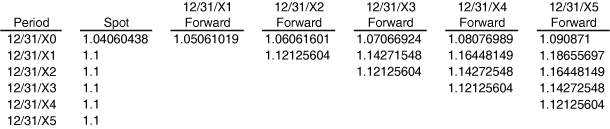 Period Spot 12/31/X1 Forward 12/31/X2 Forward 12/31/X3 Forward 12/31/X4 Forward 12/31/X5 Forward 12/31/X0 1.04060438 1.05061019 1.06061601 1.07066924 1.08076989 1.090871 12/31/X1 1.1 1.12125604 1.14271548 1.16448149 1.18655697 12/31/X2 1.1 1.12125604 1.14272548 1.16448149 12/31/X3 1.1 1.12125604 1.14272548 12/31/X4 1.1 1.12125604 12/31/X5 1.1
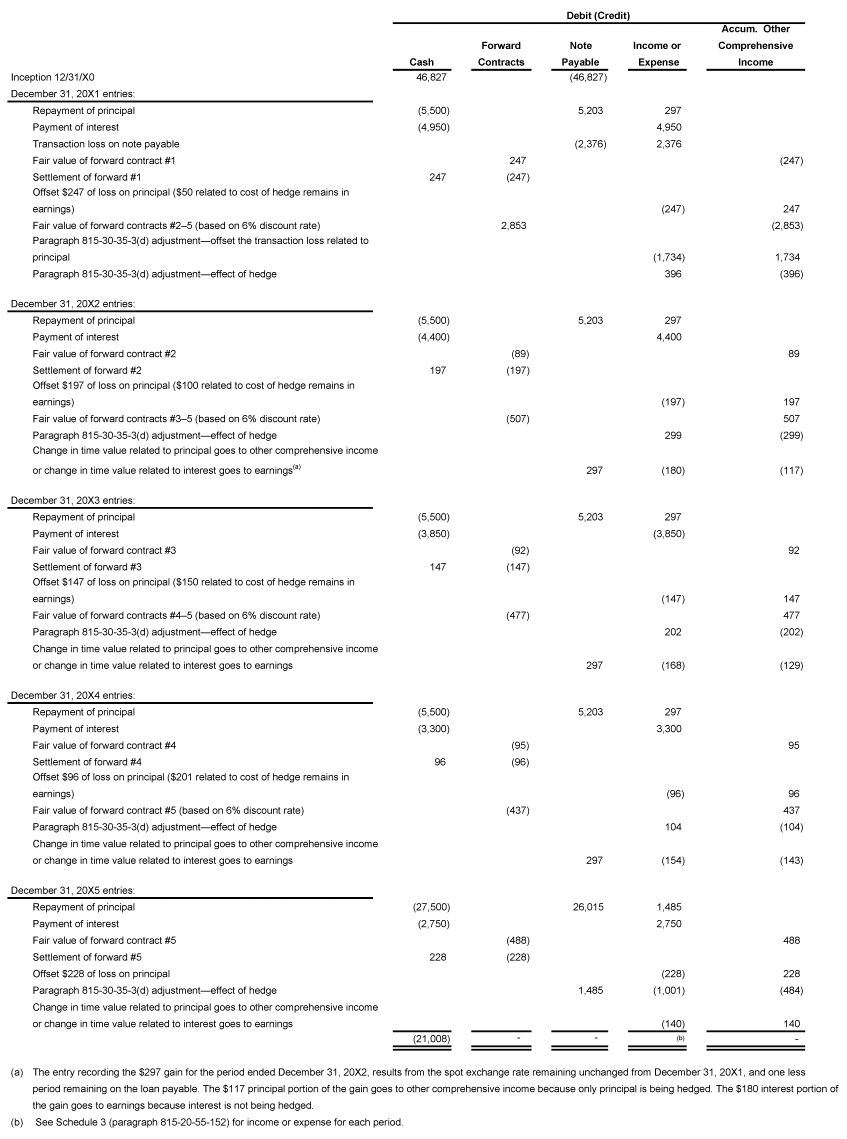 Debit (Credit) Cash Forward Contracts Note Payable Income or Expense Accum. Other Comprehensive Income Inception 12/31/X0 " 46,827 " " (46,827)" "December 31, 20X1 entries:" Repayment of principal " (5,500)" " 5,203 " 297 Payment of interest " (4,950)" " 4,950 " Transaction loss on note payable " (2,376)" " 2,376 " Fair value of forward contract #1 247 (247) Settlement of forward #1 247 (247) Offset $247 of loss on principal ($50 related to cost of hedge remains in earnings) (247) 247 Fair value of forward contracts #2-5 (based on 6% discount rate) " 2,853 " " (2,853)" Paragraph 815-30-35-3(d) adjustment—offset the transaction loss related to principal " (1,734)" " 1,734 " Paragraph 815-30-35-3(d) adjustment—effect of hedge 396 (396) "December 31, 20X2 entries:" Repayment of principal " (5,500)" " 5,203 " 297 Payment of interest " (4,400)" " 4,400 " Fair value of forward contract #2 (89) 89 Settlement of forward #2 197 (197) Offset $197 of loss on principal ($100 related to cost of hedge remains in earnings) (197) 197 Fair value of forward contracts #3-5 (based on 6% discount rate) (507) 507 Paragraph 815-30-35-3(d) adjustment—effect of hedge 299 (299) Change in time value related to principal goes to other comprehensive income or change in time value related to interest goes to earnings (a) 297 (180) (117) "December 31, 20X3 entries:" Repayment of principal " (5,500)" " 5,203 " 297 Payment of interest " (3,850)" " (3,850)" Fair value of forward contract #3 (92) 92 Settlement of forward #3 147 (147) Offset $147 of loss on principal ($150 related to cost of hedge remains in earnings) (147) 147 Fair value of forward contracts #4-5 (based on 6% discount rate) (477) 477 Paragraph 815-30-35-3(d) adjustment—effect of hedge 202 (202) Change in time value related to principal goes to other comprehensive income or change in time value related to interest goes to earnings 297 (168) (129) "December 31, 20X4 entries:" Repayment of principal " (5,500)" " 5,203 " 297 Payment of interest " (3,300)" " 3,300 " Fair value of forward contract #4 (95) 95 Settlement of forward #4 96 (96) Offset $96 of loss on principal ($201 related to cost of hedge remains in earnings) (96) 96 Fair value of forward contract #5 (based on 6% discount rate) (437) 437 Paragraph 815-30-35-3(d) adjustment—effect of hedge 104 (104) Change in time value related to principal goes to other comprehensive income or change in time value related to interest goes to earnings 297 (154) (143) "December 31, 20X5 entries:" Repayment of principal " (27,500)" " 26,015 " " 1,485 " Payment of interest " (2,750)" " 2,750 " Fair value of forward contract #5 (488) 488 Settlement of forward #5 228 (228) Offset $228 of loss on principal (228) 228 Paragraph 815-30-35-3(d) adjustment—effect of hedge " 1,485 " " (1,001)" (484) Change in time value related to principal goes to other comprehensive income or change in time value related to interest goes to earnings (140) 140 " (21,008)" - - (b) - (a) "The entry recording the $297 gain for the period ended December 31, 20X2, results from the spot exchange rate remaining unchanged from December 31, 20X1, and one less period remaining on the loan payable. The $117 principal portion of the gain goes to other comprehensive income because only principal is being hedged. The $180 interest portion of the gain goes to earnings because interest is not being hedged." (b) See Schedule 3 (paragraph 815-20-55-152) for income or expense for each period.
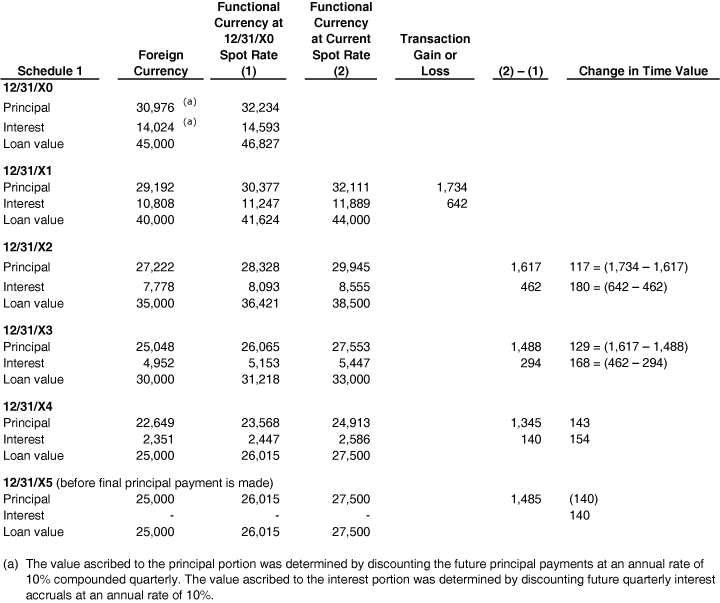 Schedule 1 Foreign Currency Functional Currency at 12/31/X0 Spot Rate (1) Functional Currency at Current Spot Rate (2) Transaction Gain or Loss (2) - (1) Change in Time Value 12/31/X0 Principal " 30,976 " (a) " 32,234 " Interest " 14,024 " (a) " 14,593 " Loan value " 45,000 " " 46,827 " 12/31/X1 Principal " 29,192 " " 30,377 " " 32,111 " " 1,734 " Interest " 10,808 " " 11,247 " " 11,889 " 642 Loan value " 40,000 " " 41,624 " " 44,000 " 12/31/X2 Principal " 27,222 " " 28,328 " " 29,945 " " 1,617 " "117 = (1,734 - 1,617) " Interest " 7,778 " " 8,093 " " 8,555 " 462 180 = (642 - 462) Loan value " 35,000 " " 36,421 " " 38,500 " 12/31/X3 Principal " 25,048 " " 26,065 " " 27,553 " " 1,488 " "129 = (1,617 - 1,488)" Interest " 4,952 " " 5,153 " " 5,447 " 294 168 = (462 - 294) Loan value " 30,000 " " 31,218 " " 33,000 " 12/31/X4 Principal " 22,649 " " 23,568 " " 24,913 " " 1,345 " 143 Interest " 2,351 " " 2,447 " " 2,586 " 140 154 Loan value " 25,000 " " 26,015 " " 27,500 " 12/31/X5 (before final principal payment is made) Principal " 25,000 " " 26,015 " " 27,500 " " 1,485 " (140) Interest - - - 140 Loan value " 25,000 " " 26,015 " " 27,500 " (a) The value ascribed to the principal portion was determined by discounting the future principal payments at an annual rate of 10% compounded quarterly. The value ascribed to the interest portion was determined by discounting future quarterly interest accruals at an annual rate of 10%.
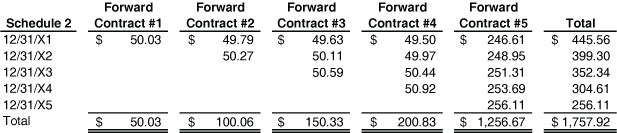 Schedule 2 Forward Contract #1 Forward Contract #2 Forward Contract #3 Forward Contract #4 Forward Contract #5 Total 12/31/X1 $50.03 $49.79 $49.63 $49.50 $246.61 $445.56 12/31/X2 50.27 50.11 49.97 248.95 399.30 12/31/X3 50.59 50.44 251.31 352.34 12/31/X4 50.92 253.69 304.61 12/31/X5 256.11 256.11 Total $50.03 $100.06 $150.33 $200.83 " $1,256.67 " " $1,757.92 "
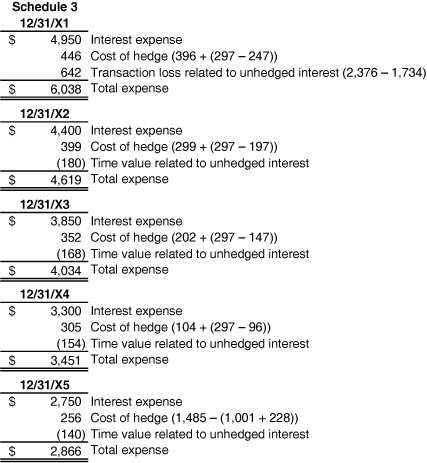 Schedule 3 12/31/X1 " $4,950 " Interest expense 446 Cost of hedge (396 + (297 - 247)) 642 "Transaction loss related to unhedged interest (2,376 - 1,734)" " $6,038 " Total expense 12/31/X2 " $4,400 " Interest expense 399 Cost of hedge (299 + (297 - 197)) (180) Time value related to unhedged interest " $4,619 " Total expense 12/31/X3 " $3,850 " Interest expense 352 Cost of hedge (202 + (297 - 147)) (168) Time value related to unhedged interest " $4,034 " Total expense 12/31/X4 " $3,300 " Interest expense 305 Cost of hedge (104 + (297 - 96)) (154) Time value related to unhedged interest " $3,451 " Total expense 12/31/X5 " $2,750 " Interest expense 256 "Cost of hedge (1,485 - (1,001 + 228))" (140) Time value related to unhedged interest " $2,866 " Total expense
- aAll of the payments of both principal and interest of the debt
- bAll of the payments of principal of the debt
- cAll or a fixed portion of selected payments of either principal or interest of the debt
- dSelected payments of both principal and interest of the debt (such as principal and interest payments on December 31, 2001, and December 31, 2003).
- a3-month LIBOR is greater than 7 percent
- bThe price of oil is less than $25 per barrel.
- aAssess effectiveness of the existing hedging relationship on a quantitative basis for the past three-month period
- bConsider possible changes in value of the hedging derivative and the hedged item over the next three months in deciding whether it has an expectation that the hedging relationship will continue to be highly effective at achieving offsetting changes in fair value.
- aChanges in strike prices (Case A)
- bChanges in notional amounts (Case B).
- aAn entity wishes to hedge its forecasted sales of a commodity by entering into a five-year commodity-price collar.
- bUnder the collar, the entity will do both of the following:
- 1Purchase commodity-price put option components (a floor)
- 2Write commodity-price call option components (a cap).
- 1
- cEach of the alternative collars discussed otherwise meets the criteria established in paragraphs including all of the following:
- 1No net premium is received at inception of the combination of options. Paragraph 815-20-25-94 addresses, in part, whether a net premium is received at any point during the life of the combination of options that the strike price or notional amount is changed.
- 2The components of the combination of options are based on the same underlying (that is, the same commodity price).
- 3The components of the combination of options have the same maturity date.
- 4The notional amount of the written option component is not greater than the notional amount of the purchased option component. Paragraph 815-20-25-94 addresses, in part, whether this criterion should be applied to only the entire contractual term to maturity or to some part thereof.
- 1
- aCommodity prices implied by the forward price curve based on market prices
- bThe strike prices of two alternative collars.
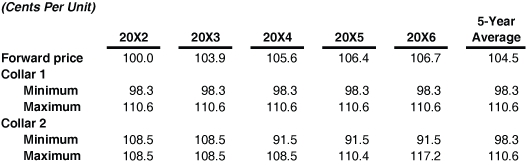 (Cents Per Unit) 20X2 20X3 20X4 20X5 20X6 5-Year Average Forward price 100.0 103.9 105.6 106.4 106.7 104.5 Collar 1 Minimum 98.3 98.3 98.3 98.3 98.3 98.3 Maximum 110.6 110.6 110.6 110.6 110.6 110.6 Collar 2 Minimum 108.5 108.5 91.5 91.5 91.5 98.3 Maximum 108.5 108.5 108.5 110.4 117.2 110.6
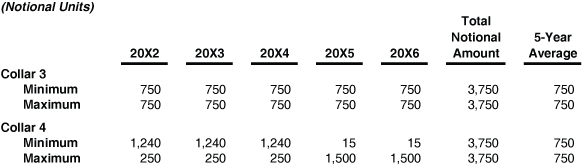 (Notional Units) 20X2 20X3 20X4 20X5 20X6 Total Notional Amount 5-Year Average Collar 3 Minimum 750 750 750 750 750 " 3,750 " 750 Maximum 750 750 750 750 750 " 3,750 " 750 Collar 4 Minimum " 1,240 " " 1,240 " " 1,240 " 15 15 " 3,750 " 750 Maximum 250 250 250 " 1,500 " " 1,500 " " 3,750 " 750
- aFair value hedge (Case A)
- bCash flow hedge (Case B).
- aEntity A acquires Entity B in a business combination. A business combination is accounted for as the acquisition of one entity by another entity. The acquiring entity, Entity A, records the assets acquired and liabilities assumed at fair value.
- b
- cAt the date of the business combination, Entity A and Entity B both have certain hedging relationships that have met the requirements as discussed beginning in paragraph 815-20-25-102 and that are being accounted for by the respective entities under the shortcut method of accounting.
- dAt the date of the business combination, the fair value of the hedging swaps in Entity B's hedging relationships is other than zero.
- aIt will assess the effectiveness of the existing hedging relationship for the past three-month period.
- bIt intends to consider possible changes in value of the hedging derivative and the hedged item over the next three months in deciding whether it has an expectation that the hedging relationship will continue to be highly effective at achieving offsetting changes in fair value.
- aChanges in the option's intrinsic value
- bChanges in the option's entire fair value.
- aAll the critical terms of the hedging derivative completely match the hedged forecasted transaction.
- bThe strike price of the hedging instrument matches the specified level ($275) beyond which the entity's exposure is being hedged.
- cThe hedging derivative's inflows at expiration completely offset the hedged transaction's outflows for any increase in the price of gold above $275 per ounce.
- dThe hedging option cannot be exercised before its contractual maturity date.
- aEntity JPN has met the qualifying criteria regarding forecasted transactions eligible for designation as hedged transactions pursuant to paragraph 815-20-25-15 and the options are entered into contemporaneously with the same counterparty and can be transferred independently of each other.
- bThe combination of foreign currency option contracts meets all of the conditions in paragraphs to be considered a net purchased option (that is, considered not to be a net written option subject to the requirements of paragraph 815-20-25-94).
- aThe forecasted transaction is estimated at USD 150,000,000. The at-the-money forward rate is JPY 120 per USD 1.
- bEntity JPN's documented hedge objective is to offset the foreign exchange risk to the functional currency equivalent cash flows at levels above JPY 125/USD 1 and in the range from JPY 113/USD 1 to JPY 108/USD 1. In the range JPY 113/USD 1 to JPY 125/USD 1 and at levels below JPY 108/USD 1, Entity JPN chooses not to offset the foreign exchange risk to the functional currency equivalent cash flows.
- cTo implement this hedge objective, Entity JPN enters into all three of the following option contracts and jointly designates them as the hedging instrument:
- 1Option 1. One purchased option that gives Entity JPN the right to purchase USD 150,000,000 at an exchange rate of JPY 125/USD 1. Premium paid: USD 1,536,885.
- 2Option 2. One sold (written) option that, if exercised, obligates Entity JPN to purchase USD 150,000,000 at an exchange rate of JPY 113/USD 1. Premium received: USD 1,536,885.
- 3Option 3. One purchased option that gives Entity JPN the right to sell USD 150,000,000 at an exchange rate of JPY 108/USD 1. Premium paid: USD 737,705.
- 1
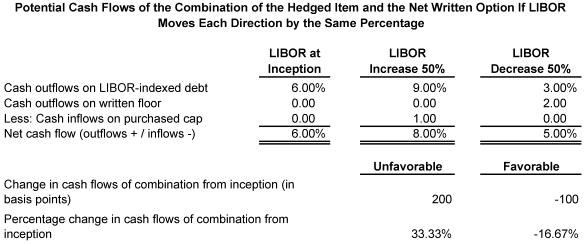 Potential Cash Flows of the Combination of the Hedged Item and the Net Written Option If LIBOR Moves Each Direction by the Same Percentage LIBOR at Inception LIBOR Increase 50% "LIBOR Decrease 50%" Cash outflows on LIBOR-indexed debt 6.00% 9.00% 3.00% Cash outflows on written floor 0.00 0.00 2.00 Less: Cash inflows on purchased cap 0.00 1.00 0.00 Net cash flow (outflows + / inflows -) 6.00% 8.00% 5.00% Unfavorable Favorable Change in cash flows of combination from inception (in basis points) 200 -100 "Percentage change in cash flows of combination from inception" 33.33% -16.67%
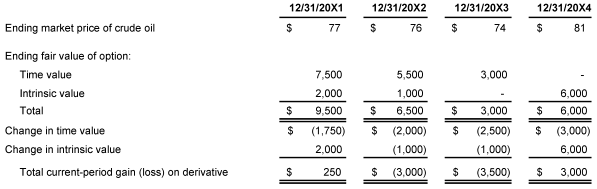 12/31/20X1 12/31/20X2 12/31/20X3 12/31/20X4 Ending market price of crude oil $77 $76 $74 $81 Ending fair value of option: Time value " 7,500 " " 5,500 " " 3,000 " - Intrinsic value " 2,000 " " 1,000 " - " 6,000 " Total " $9,500 " " $6,500 " " $3,000 " " $6,000 " Change in time value " $(1,750)" " $(2,000)" " $(2,500)" " $(3,000)" Change in intrinsic value " 2,000 " " (1,000)" " (1,000)" " 6,000 " Total current-period gain (loss) on derivative $250 " $(3,000)" " $(3,500)" " $3,000 "
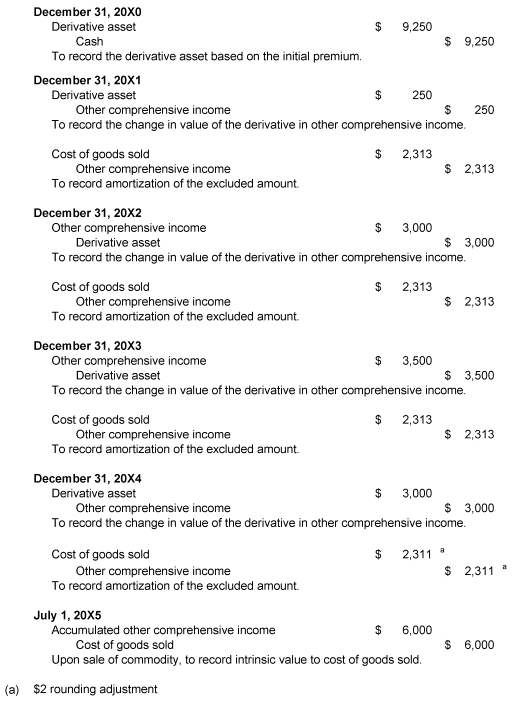 "December 31, 20X0" Derivative asset " $9,250 " Cash " $9,250 " To record the derivative asset based on the initial premium. "December 31, 20X1" Derivative asset $250 Other comprehensive income $250 To record the change in value of the derivative in other comprehensive income. Cost of goods sold " $2,313 " Other comprehensive income " $2,313 " To record amortization of the excluded amount. "December 31, 20X2" Other comprehensive income " $3,000 " Derivative asset " $3,000 " To record the change in value of the derivative in other comprehensive income. Cost of goods sold " $2,313 " Other comprehensive income " $2,313 " To record amortization of the excluded amount. "December 31, 20X3" Other comprehensive income " $3,500 " Derivative asset " $3,500 " To record the change in value of the derivative in other comprehensive income. Cost of goods sold " $2,313 " Other comprehensive income " $2,313 " To record amortization of the excluded amount. "December 31, 20X4" Derivative asset " $3,000 " Other comprehensive income " $3,000 " To record the change in value of the derivative in other comprehensive income. Cost of goods sold " $2,311 " a Other comprehensive income " $2,311 " a To record amortization of the excluded amount. "July 1, 20X5" Other comprehensive income " $6,000 " Cost of goods sold " $6,000 " "Upon sale of commodity, to record intrinsic value to cost of goods sold." (a) $2 rounding adjustment
815-20-65Transition and Open Effective Date Information
Source downloaded: .Record version a6082909f388. Effective date must be checked in the source.
Transition Related to Accounting Standards Update No. 2025-09, <em class="ph i">Derivatives and Hedging (Topic 815): Hedge Accounting Improvements</em>
- aFor public business entities, the pending content that links to this paragraph shall be effective for annual reporting periods beginning after December 15, 2026, and interim reporting periods within those annual reporting periods.
- bFor entities other than public business entities, the pending content that links to this paragraph shall be effective for annual reporting periods beginning after December 15, 2027, and interim reporting periods within those annual reporting periods.
- cEarly adoption of the pending content that links to this paragraph is permitted for all entities on any date on or after November 25, 2025.
- dAn entity shall apply the pending content that links to this paragraph on a prospective basis, including the guidance described in (e) for existing hedging relationships (that is, the hedging instrument has not expired, been sold, terminated, or exercised, or the entity has not removed the designation of the hedging relationship) beginning on or after the date of adoption.
- eFor cash flow hedges existing as of the date of adoption, without dedesignating the hedging relationship, an entity may:
- 1For hedges of variability in cash flows attributable to a group of individual forecasted transactions, modify its method for assessing similar risk exposure to a method described in paragraph 815-20-55-23A. If an entity is applying one of the methods described in paragraph 815-20-55-23A, it may elect to change to the other method. If an entity modifies its method of assessing similar risk exposure to the method described in paragraph 815-20-55-23A(a), the entity also may change its method of assessing hedge effectiveness if the revised method leverages the similar risk assessment in determining that the hedging relationship is highly effective. An entity is not required to apply the guidance in paragraph 815-20-25-81 when comparing hedging relationships executed before and after the date of adoption in relation to the guidance in (e)(1).
- 2For hedges of variability in cash flows attributable to changes in the overall price or the contractually specified component of the price in a forecasted purchase or sale of a nonfinancial asset, modify the fhedging relationship to designate the hedged risk as variability in cash flows attributable to changes in a component (or subcomponent) of the forecasted purchase price or sales price of a nonfinancial asset in accordance with paragraph 815-20-25-22C. The entity is not required to amend its hedge documentation for hedges of a contractually specified component to reflect amendments in accordance with paragraph 815-20-25-22C if the hedged risk is unchanged.
- 3For hedges of variability in cash flows attributable to a group of individual forecasted transactions:
- iModify the hedging relationship to add an additional hedged risk or risks to an existing portfolio if the hedging relationship continues to meet all other requirements to apply cash flow hedge accounting.
- iiMigrate some or all of the individual forecasted transactions from one existing pool or pools to a new pool or pools, an existing pool or pools, or a combination of new and existing pools.
- iiiReassign and reorder existing hedging instruments to a new or existing pool.
- i
- 4For hedges of forecasted interest payments on an existing choose-your-rate debt instrument:
- iAmend the hedging relationship to include interest payments on replacement debt.
- iiSpecify the quantitative method that an entity will use in the event that it must assess hedge effectiveness on a quantitative basis in subsequent periods (for entities assessing hedge effectiveness on a qualitative basis).
- i
- 5For hedges of forecasted interest payments that may include interest payments on an existing choose-your-rate debt instrument designated as part of a group of forecasted transactions under the first-payments-received technique:
- iAmend the hedging relationship to include only interest payments on the individual existing choose-your-rate debt instrument and replacement debt.
- iiSpecify the quantitative method that an entity will use in the event that it must assess hedge effectiveness on a quantitative basis in subsequent periods (for entities assessing hedge effectiveness on a qualitative basis).
- i
- 1
- fFor hedges that were discontinued before the date of adoption for which amounts are still reported in accumulated other comprehensive income at the date of adoption, an entity may migrate the individual forecasted transactions to align with the pools of existing hedges considering the migration described in (e)(3)(ii).
- gGains or losses on hedging instruments that are reported in accumulated other comprehensive income at the date of adoption shall be reassigned using a systematic and rational manner to align with the pool or pools after the migrations described in (e)(3)(ii) and (f) and reassignments and reorderings described in (e)(3)(iii). Amounts from accumulated other comprehensive income shall be reclassified to earnings when the hedged forecasted transaction affects earnings in accordance with paragraphs .
- hIf adoption of the pending content that links to this paragraph in (e) changes the designated hedged risk, an entity shall create the terms of the instrument used to estimate the change in value of the hedged risk (under the originally designated method, for example, the hypothetical derivative method, or another acceptable method in Subtopic 815-30) in the assessment of hedge effectiveness and the similar risk assessment, if applicable, on the basis of market data as of the inception of the hedging relationship. Furthermore, an entity shall amend hedge documentation upon adoption, including documentation of critical terms, the hedged forecasted transactions, hedge effectiveness assessments, and similar risk assessments, as needed to apply the pending content in (e) through (g) for all existing and discontinued hedging relationships.
- iAn entity shall disclose the nature of and reason for the change in accounting principle, as well as the method of applying the change, in both the interim reporting period and the annual reporting period that the entity adopts the pending content that links to this paragraph.