ASC 815-30
Cash Flow Hedges
815 Derivatives and Hedging
Source downloaded: .Record version 9bcf01c13272. Effective date must be checked in the source.
ASC 815-30 provides the incremental accounting for cash flow hedges — derivatives designated as hedging the variability in expected future cash flows of a forecasted transaction or of a recognized variable-cash-flow asset/liability. The entire change in fair value of the hedging instrument that is included in the assessment of effectiveness is recorded in other comprehensive income and reclassified into earnings in the same period(s) the hedged forecasted transaction affects earnings, presented in the same income statement line item as the hedged item. The Subtopic also governs excluded components, quantitative effectiveness methods for interest rate hedges, and discontinuation/dedesignation (including immediate reclassification when the forecasted transaction is probable of not occurring).
Key points (7)
- When a hedging relationship is highly effective, the entire change in fair value of the designated hedging instrument that is included in the assessment of effectiveness is recorded in other comprehensive income (815-30-35-3), and is later reclassified to earnings in the same period(s) the hedged forecasted transaction (or the asset acquired/liability incurred) affects earnings, in the same income statement line item as the hedged item (815-30-35-3(b), 35-38, 35-39).
- Components excluded from the assessment of effectiveness (e.g., an option's time value, a forward's spot-forward difference) are recognized in earnings under either the amortization approach (815-20-25-83A) or the mark-to-market approach (815-20-25-83B), presented in the same line item as the hedged item's earnings effect (815-30-35-3(a)).
- Entities that do not report earnings are not permitted to use cash flow hedge accounting (815-30-15-2(a)).
- Three quantitative effectiveness methods are available for interest rate swap cash flow hedges — change-in-variable-cash-flows, hypothetical-derivative, and change-in-fair-value — but the change-in-variable-cash-flows method may not be used if the swap's fair value is not somewhat near zero at inception (815-30-35-10, 35-13, 35-14).
- A loss must be reclassified immediately from AOCI into earnings to the extent continued deferral would result in recognizing a net loss on the combination of the hedging instrument and the hedged transaction (815-30-35-40 through 35-41); recognition of impairment or credit losses on the related asset or liability likewise triggers immediate reclassification of an offsetting net gain (815-30-35-43).
- Hedge accounting is discontinued prospectively if a criterion is no longer met, the derivative expires or is sold/terminated/exercised, or the designation is removed; the existing net gain or loss remains in AOCI and is reclassified as the forecasted transaction affects earnings (815-30-40-1, 40-2).
- If it becomes probable the forecasted transaction will not occur by the end of the originally specified period or within an additional two months (absent rare extenuating circumstances), the AOCI amount is reclassified into earnings immediately and may not later be returned to AOCI (815-30-40-4 through 40-6); disclosures include the estimated net amount expected to be reclassified within the next 12 months (815-30-50-1(c)).
For students. Cash flow hedges are heavily tested because of the OCI-then-reclassify mechanic: the entire effective change in fair value goes to OCI (no separate ineffectiveness recognition after ASU 2017-12) and leaves AOCI only when the hedged transaction hits earnings. The classic trap is the two-month rule — a discontinued hedge keeps its gain or loss in AOCI unless the forecasted transaction becomes probable of not occurring by the original date plus two months, which forces immediate reclassification to earnings.
Machine-generated study aid for ASC 815-30. Check the source paragraphs below.
815-30-00Status
Source downloaded: .Record version 042e3f0eff97. Effective date must be checked in the source.
815-30-05Overview and Background
Source downloaded: .Record version 4327e1cac2a9. Effective date must be checked in the source.
815-30-15Scope and Scope Exceptions
Source downloaded: .Record version 0ee6f638a874. Effective date must be checked in the source.
Overall Guidance
Entities
- aEntities that do not report earnings. Those entities are not permitted to use cash flow hedge accounting because they do not report earnings separately.
815-30-25Recognition
Source downloaded: .Record version d2570e40e001. Effective date must be checked in the source.
815-30-35Subsequent Measurement
Source downloaded: .Record version 7c31b10cb91a. Effective date must be checked in the source.
- aSubsequent recognition and measurement of gains and losses on hedging instrument
- bReclassifications from accumulated other comprehensive income into earnings
- cHedging relationship's timing that involves uncertainty within a range
- d
Subsequent Recognition and Measurement of Gains and Losses on Hedging Instrument
- aAn entity's defined risk management strategy for a particular hedging relationship may exclude a specific component of the gain or loss, or related cash flows, on the hedging derivative from the assessment of hedge effectiveness (as discussed in paragraphs 815-20-25-81 through 25-83B). That excluded component of the gain or loss shall be recognized in earnings either through an amortization approach in accordance with paragraph 815-20-25-83A or through a mark-to-market approach in accordance with paragraph 815-20-25-83B. Under either approach, the amount recognized in earnings for an excluded component shall be presented in the same income statement line item as the earnings effect of the hedged item in accordance with paragraph 815-20-45-1A. For example, if the effectiveness of a hedging relationship with an option is assessed based on changes in the option's intrinsic value, the changes in the option's time value would be excluded from the assessment of hedge effectiveness and either may be recognized in earnings through an amortization approach in accordance with paragraph 815-20-25-83A or currently in earnings in accordance with paragraph 815-20-25-83B.
- bAmounts in accumulated other comprehensive income related to the derivative designated as a hedging instrument included in the assessment of hedge effectiveness are reclassified to earnings in the same period or periods during which the hedged forecasted transaction affects earnings in accordance with paragraphs and presented in the same income statement line item as the earnings effect of the hedged item in accordance with paragraph 815-20-45-1A. The balance in accumulated other comprehensive income associated with the hedged transaction shall be the cumulative gain or loss on the derivative instrument from inception of the hedge less all of the following:
- 1
- 1aThe derivative instrument's gains or losses previously reclassified from accumulated other comprehensive income into earnings pursuant to paragraphs .
- 1bThe cumulative amount amortized to earnings related to excluded components accounted for through an amortization approach in accordance with paragraph 815-20-25-83A.
- 1cThe cumulative change in fair value of an excluded component for which changes in fair value are recorded currently in earnings in accordance with paragraph 815-20-25-83B.
- 2
If hedge accounting has not been applied to a cash flow hedging relationship in a previous effectiveness assessment period because the entity's retrospective evaluation indicated that the relationship had not been highly effective in achieving offsetting changes in cash flows in that period, the cumulative gain or loss on the derivative referenced in (b) would exclude the gains or losses occurring during that period. That situation may arise if the entity had previously determined, for example, under a regression analysis or other appropriate statistical analysis approach used for prospective assessments of hedge effectiveness, that there was an expectation in which the hedging relationship would be highly effective in future periods. Consequently, the hedging relationship continued even though hedge accounting was not permitted for a specific previous effectiveness assessment period. - c
- dIf a non-option-based contract is the hedging instrument in a cash flow hedge of the variability of the functional-currency-equivalent cash flows for a recognized foreign-currency-denominated asset or liability that is remeasured at spot exchange rates under paragraph 830-20-35-1, an amount that will both offset the related transaction gain or loss arising from that remeasurement and adjust earnings for that period's allocable portion of the initial spot-forward difference associated with the hedging instrument (cost to the purchaser or income to the seller of the hedging instrument) shall be reclassified each period from other comprehensive income to earnings if the assessment of effectiveness is based on total changes in the non-option-based instrument's cash flows.If an option contract is used as the hedging instrument in a cash flow hedge of the variability of the functional-currency-equivalent cash flows for a recognized foreign-currency-denominated asset or liability that is remeasured at spot exchange rates under paragraph 830-20-35-1 to provide only one-sided offset against the hedged foreign exchange risk, an amount shall be reclassified each period to or from other comprehensive income with respect to the changes in the underlying that result in a change in the hedging option's intrinsic value. In addition, if the assessment of effectiveness is based on total changes in the option's cash flows (that is, the assessment will include the hedging instrument's entire change in fair value—its entire gain or loss), an amount that adjusts earnings for the amortization of the cost of the option on a rational basis shall be reclassified each period from other comprehensive income to earnings. This guidance is limited to foreign currency hedging relationships because of their unique attributes and is an exception for foreign currency hedging relationships.
- e
- f
- aApplication to single cash flow hedge of a forecasted sale or purchase on credit for foreign exchange risk
- bAssessing hedge effectiveness in certain cash flow hedges involving interest rate risk when effectiveness is assessed on a quantitative basis
- cHedging relationship in which hedge effectiveness is based on an option's terminal value.
- dChange in the designated hedged risk.
- aApplication to single cash flow hedge of a forecasted sale or purchase on credit for foreign exchange risk
- bAssessing hedge effectiveness in certain cash flow hedges involving interest rate risk when effectiveness is assessed on a quantitative basis
- cHedging relationship in which hedge effectiveness is based on an option's terminal value
- dChange in the contractually specified interest rate for forecasted interest payments on choose-your-rate debt.
- aThe gain or loss on the derivative instrument that is included in the assessment of hedge effectiveness is reported in other comprehensive income during the period before the forecasted purchase or sale.
- bThe functional currency interest rate implicit in the hedging relationship as a result of entering into the forward contract is used to determine the amount of cost or income to be ascribed to each period of the hedging relationship. The cash flow hedging model for recognized foreign-currency-denominated assets and liabilities requires use of the interest method at the inception of the hedging relationship to determine the amount of cost or income to be ascribed to each relevant period of the hedging relationship. However, for simplicity, in hedging relationships in which the hedged item is a short-term non-interest-bearing account receivable or account payable, the amount of cost or income to be ascribed each period can also be determined using a pro rata method based on the number of days or months of the hedging relationship. In addition, in a short-term single cash flow hedging relationship that encompasses the variability of functional-currency-equivalent cash flows attributable to foreign exchange risk related to the settlement of a foreign-currency-denominated receivable or payable resulting from a forecasted sale or purchase on credit, the amount of cost or income to be ascribed each period can also be determined using a pro rata method or a method that uses two foreign currency forward exchange rates. The first foreign currency forward exchange rate would be based on the maturity date of the forecasted purchase or sale transaction. The second foreign currency forward exchange rate would be based on the settlement date of the resulting account receivable or account payable.
- cFor forecasted sales on credit, the amount of cost or income ascribed to each forecasted period is reclassified from other comprehensive income to earnings on the date of the sale. For forecasted purchases on credit, the amount of cost or income ascribed to each forecasted period is reclassified from other comprehensive income to earnings in the same period or periods during which the asset acquired affects earnings. The reclassification from other comprehensive income to earnings of the amount of cost or income ascribed to each forecasted period is based on the guidance in paragraphs .
- dThe income or cost ascribed to each period encompassed within the periods of the recognized foreign-currency-denominated receivable or payable is reclassified from other comprehensive income to earnings at the end of each reporting period.
- aChange-in-variable-cash-flows method
- bHypothetical-derivative method
- cChange-in-fair-value method.
- aA receive-variable, pay-fixed interest rate swap designated as a hedge of the variable interest payments on an existing floating-rate liability
- bA receive-fixed, pay-variable interest rate swap designated as a hedge of the variable interest receipts on an existing variable-rate asset
- cCash flow hedges of the variability of future interest payments on interest-bearing assets to be acquired or interest-bearing liabilities to be incurred (such as the rollover of an entity's short-term debt as described in Example 9 [see paragraph 815-30-55-52]).
- aHedges of interest rate risk (pursuant to paragraph 815-20-25-15(j)(2)) that do not qualify for the shortcut method
- bHedges of the risk of overall changes in the hedged cash flows related to the asset or liability (pursuant to paragraph 815-20-25-15(j)(1)).
- aThe variable leg of the interest rate swap
- bThe hedged variable-rate cash flows on the asset or liability.
- aThe present value of the cumulative change in the expected future cash flows on the variable leg of the interest rate swap
- bThe present value of the cumulative change in the expected future interest cash flows on the variable-rate asset or liability.
- aThe variable-rate leg of the interest rate swap and the hedged variable cash flows of the asset or liability are based on the same interest rate index (for example, three-month London Interbank Offered Rate (LIBOR) swap rate).
- bThe interest rate reset dates applicable to the variable-rate leg of the interest rate swap and to the hedged variable cash flows of the asset or liability are the same.
- cThe hedging relationship does not contain any other basis differences (for example, if the variable leg of the interest rate swap contains a cap and the variable-rate asset or liability does not).
- dThe likelihood of the obligor not defaulting is assessed as being probable.
- aA difference in the indexes used to determine cash flows on the variable leg of the interest rate swap (for example, the three-month U.S. Treasury rate) and the hedged variable cash flows of the asset or liability (for example, three-month LIBOR)
- bA mismatch between the interest rate reset dates applicable to the variable leg of the interest rate swap and the hedged variable cash flows of the hedged asset or liability.
- aThe change in fair value of the actual interest rate swap designated as the hedging instrument
- bThe change in fair value of a hypothetical interest rate swap having terms that identically match the critical terms of the floating-rate asset or liability, including all of the following:
- 1The same notional amount
- 2The same repricing dates
- 3The same index (that is, the index on which the hypothetical interest rate swap's variable rate is based matches the index on which the asset or liability's variable rate is based)
- 4Mirror image caps and floors
- 5A zero fair value at the inception of the hedging relationship.
- 1
- aThe present value of the cumulative change in expected variable future interest cash flows that are designated as the hedged transactions
- bThe cumulative change in the fair value of the interest rate swap designated as the hedging instrument.
- aThe change in fair value of the actual hedging instrument
- bThe change in fair value of a perfectly effective hypothetical hedging instrument. That hypothetical hedging instrument shall have terms that meet the four conditions listed in paragraphs 815-20-25-129 through 25-129A.
| Editor's Note: The heading that precedes paragraph 815-30-35-37A will be amended upon transition as shown below, and the content of the paragraph will be superseded. |
| • > Change in the Contractually Specified Interest Rate for Forecasted Interest Payments on Choose-Your-Rate Debt |
- aWith respect to the forecasted issuance of a choose-your-rate debt instrument, an entity may choose to apply the guidance in paragraphs on a hedge-by-hedge basis if both of the following conditions are satisfied:
- 1The forecasted interest payments designated as being hedged relate to the forecasted issuance of a choose-your-rate debt instrument that will be classified as a liability.
- 2The entity designates the hedged risk as the variability in cash flows attributable to changes in a contractually specified interest rate in accordance with paragraph 815-20-25-19A(b).
- 1
- bWith respect to an existing choose-your-rate debt instrument or replacement debt, an entity may choose to apply the guidance in paragraphs on a hedge-by-hedge basis if both of the following conditions are satisfied:
- 1The forecasted interest payments designated as being hedged have begun to accrue and relate to an existing choose-your-rate debt or replacement debt (see paragraph 815-30-35-37K for additional guidance on replacement debt) instrument classified as a liability.
- 2The entity designates the hedged risk as the variability in cash flows attributable to changes in a contractually specified interest rate.
- 1
Reclassifications from Accumulated Other Comprehensive Income into Earnings
Hedging Relationship's Timing Involves Uncertainty within a Range
815-30-40Derecognition
Source downloaded: .Record version 039b5efa84d0. Effective date must be checked in the source.
Discontinuing Hedge Accounting
- a Any criterion in Section 815-30-25 is no longer met.
- b The derivative instrument expires or is sold, terminated, or exercised.
- c The entity removes the designation of the cash flow hedge.
Alterations or Terminations of Offsetting Third-Party Derivative Instruments
815-30-45Other Presentation Matters
Source downloaded: .Record version 45fba36b6356. Effective date must be checked in the source.
815-30-50Disclosure
Source downloaded: .Record version 7d73a1fa95d0. Effective date must be checked in the source.
- a
- bA description of the transactions or other events that will result in the reclassification into earnings of gains and losses that are reported in accumulated other comprehensive income
- cThe estimated net amount of the existing gains or losses that are reported in accumulated other comprehensive income at the reporting date that is expected to be reclassified into earnings within the next 12 months
- dThe maximum length of time over which the entity is hedging its exposure to the variability in future cash flows for forecasted transactions excluding those forecasted transactions related to the payment of variable interest on existing financial instruments
- e
- aThe beginning and ending accumulated derivative instrument gain or loss
- bThe related net change associated with current period hedging transactions
- cThe net amount of any reclassification into earnings
- dThe difference between the change in fair value of an excluded component and the initial value of that excluded component recognized in earnings under a systematic and rational method in accordance with paragraph 815-20-25-83A.
- aThe beginning and ending accumulated derivative instrument gain or loss
- bThe related net change associated with current period hedging transactions
- cThe net amount of any reclassification into earnings
- dThe difference between the change in fair value of an excluded component and the initial value of that excluded component recognized in earnings under a systematic and rational method in accordance with paragraph 815-20-25-83A.
Disclosed Amount to Be Reclassified into Earnings
815-30-55Implementation Guidance and Illustrations
Source downloaded: .Record version 54e232a1c1a1. Effective date must be checked in the source.
Implementation Guidance
Illustrations
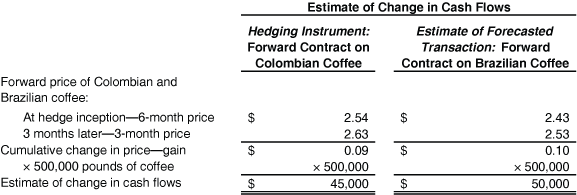 Estimate of Change in Cash Flows Hedging Instrument: Forward Contract on Colombian Coffee Estimate of Forecasted Transaction: Forward Contract on Brazilian Coffee Forward price of Colombian and Brazilian coffee: At hedge inception—6-month price $2.54 $2.43 3 months later—3-month price 2.63 2.53 Cumulative change in price—gain $0.09 $0.10 "× 500,000 pounds of coffee" " × 500,000 " " × 500,000 " Estimate of change in cash flows " $45,000 " " $50,000 "
- a
- b
- aChanges in the fair value of the forward contract attributable to changes in the USD-EUR spot rate
- bChanges in the present value of the current USD equivalent of the forecasted receipt of EUR 500,000.
- aThe notional amount of Derivative Z is 100,000 bushels and the forecasted sale is for 100,000 bushels.
- bThe underlying of Derivative Z is the price of the same variety and grade of Commodity A that Entity ABC expects to sell (assuming delivery to Entity ABC's selling point).
- cThe settlement date of Derivative Z is the last day of Period 1 and the forecasted sale is expected to occur on the last day of Period 1.
- aThe notional amount of Derivative DEF is 100,000 bushels and the forecasted sale is for 100,000 bushels.
- bThe underlying of Derivative DEF is the same as the designated price component of Commodity A that Entity ABC expects to sell.
- cThe settlement date of Derivative DEF is the last day of Period 1 and the forecasted sale is expected to occur on the last day of Period 1.
- dEntity ABC neither pays nor receives a premium on Derivative DEF (that is, its fair value is zero).
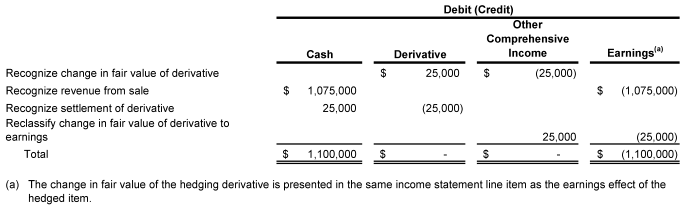 Debit (Credit) Cash Derivative Other Comprehensive Income Earnings(a) Recognize change in fair value of derivative " $25,000 " " $(25,000)" Recognize revenue from sale " $1,075,000 " " $(1,075,000)" Recognize settlement of derivative "25,000 " " (25,000)" Reclassify change in fair value of derivative to earnings "25,000" " (25,000)" Total " $1,100,000 " $- $- " $(1,100,000)" (a) The change in fair value of the hedging derivative is presented in the same income statement line item as the earnings effect of the hedged item.
- Debit (Credit) Cash Derivative Other Comprehensive Income Earnings(a) Recognize change in fair value of derivative " $25,000 " " $(25,000)" Recognize revenue from sale " $1,075,000 " " $(1,075,000)" Recognize settlement of derivative "25,000 " " (25,000)" Reclassify change in fair value of derivative to earnings "25,000" " (25,000)" Total " $1,100,000 " $- $- " $(1,100,000)" (a) The change in fair value of the hedging derivative is presented in the same income statement line item as the earnings effect of the hedged item.
- aDetermine the difference between the variable rate to be paid on the interest rate swap and the variable rate to be received on the bonds.
- bCombine that difference with the fixed rate to be received on the interest rate swap.
- cCompute and recognize interest income using that combined rate and the variable-rate asset's principal amount. (Amortization of any purchase premium or discount on the asset must also be considered, although that complication is not incorporated in this Example.)
- dDetermine the fair value of the interest rate swap.
- eAdjust the carrying amount of the interest rate swap to its fair value and adjust other comprehensive income by an offsetting amount.
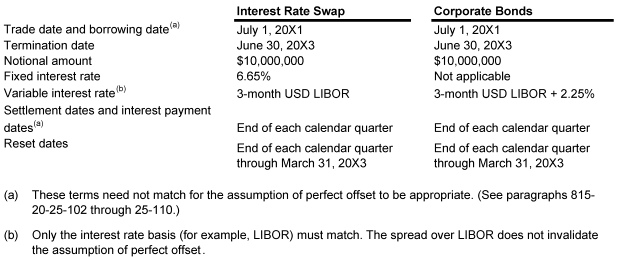 Interest Rate Swap Corporate Bonds Trade date and borrowing date(a) "July 1, 20X1" "July 1, 20X1" Termination date "June 30, 20X3" "June 30, 20X3" Notional amount "$10,000,000 " "$10,000,000 " Fixed interest rate 6.65% Not applicable Variable interest rate(b) 3-month USD LIBOR 3-month USD LIBOR + 2.25% Settlement dates and interest payment dates(a) End of each calendar quarter End of each calendar quarter Reset dates "End of each calendar quarter through March 31, 20X3" "End of each calendar quarter through March 31, 20X3" (a) These terms need not match for the assumption of perfect offset to be appropriate. (See paragraphs 815-20-25-102 through 25-110.) (b) "Only the interest rate basis (for example, LIBOR) must match. The spread over LIBOR does not invalidate the assumption of perfect offset. "
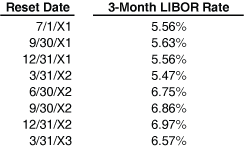 Reset Date 3-Month LIBOR Rate 7/1/X1 5.56% 9/30/X1 5.63% 12/31/X1 5.56% 3/31/X2 5.47% 6/30/X2 6.75% 9/30/X2 6.86% 12/31/X2 6.97% 3/31/X3 6.57%
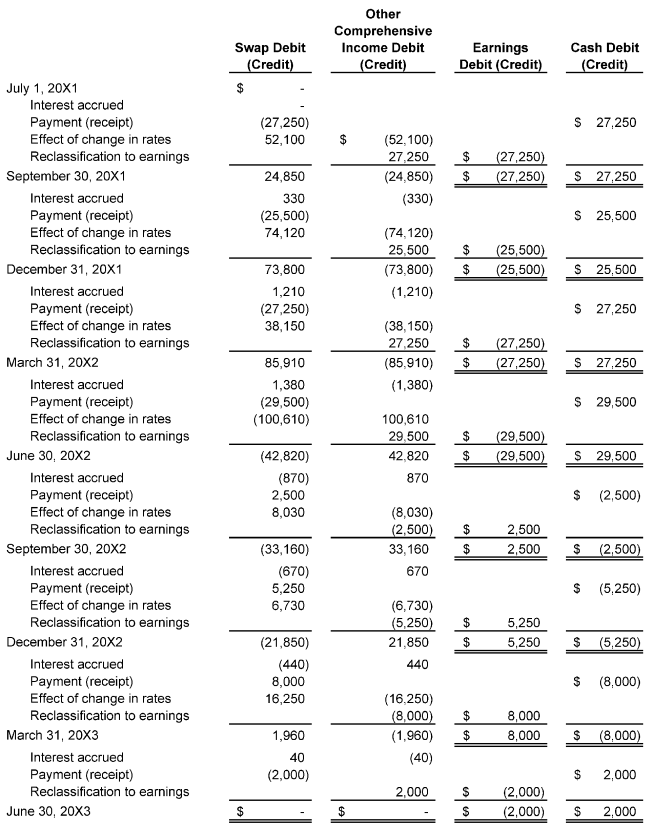 Swap Debit (Credit) Other Comprehensive Income Debit (Credit) Earnings Debit (Credit) Cash Debit (Credit) "July 1, 20X1" $- Interest accrued - Payment (receipt) " (27,250)" " $27,250 " Effect of change in rates " 52,100 " " $(52,100)" Reclassification to earnings " 27,250 " " $(27,250)" "September 30, 20X1" " 24,850 " " (24,850)" " $(27,250)" " $27,250 " Interest accrued 330 (330) Payment (receipt) " (25,500)" " $25,500 " Effect of change in rates " 74,120 " " (74,120)" Reclassification to earnings " 25,500 " " $(25,500)" "December 31, 20X1" " 73,800 " " (73,800)" " $(25,500)" " $25,500 " Interest accrued " 1,210 " " (1,210)" Payment receipt " (27,250)" " $27,250 " Effect of change in rates " 38,150 " " (38,150)" Reclassification to earnings " 27,250 " " $(27,250)" "March 31, 20X2" " 85,910 " " (85,910)" " $(27,250)" " $27,250 " Interest accrued " 1,380 " " (1,380)" Payment (receipt) " (29,500)" " $29,500 " Effect of change in rates " (100,610)" " 100,610 " Reclassification to earnings " 29,500 " " $(29,500)" "June 30, 20X2" " (42,820)" " 42,820 " " $(29,500)" " $29,500 " Interest accrued (870) 870 Payment (receipt) " 2,500 " " $(2,500)" Effect of change in rates " 8,030 " " (8,030)" Reclassification to earnings " (2,500)" " $2,500 " "September 30, 20X2" " (33,160)" " 33,160 " " $2,500 " " $(2,500)" Interest accrued (670) 670 Payment (receipt) " 5,250 " " $(5,250)" Effect of change in rates " 6,730 " " (6,730)" Reclassification to earnings " (5,250)" " $5,250 " "December 31, 20X2" " (21,850)" " 21,850 " " $5,250 " " $(5,250)" Interest accrued (440) 440 Payment (receipt) " 8,000 " " $(8,000)" Effect of change in rates " 16,250 " " (16,250)" Reclassification to earnings " (8,000)" " $8,000 " "March 31, 20X3" " 1,960 " " (1,960)" " $8,000 " " $(8,000)" Interest accrued 40 (40) Payment (receipt) " (2,000)" " $2,000 " Reclassification to earnings " 2,000 " " $(2,000)" "June 30, 20X3" $- $- " $(2,000)" " $2,000 "
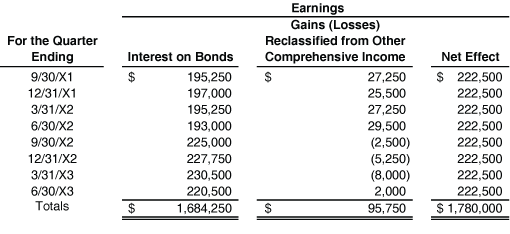 Earnings For the Quarter Ending Interest on Bonds Gains (Losses) Reclassified from Other Comprehensive Income Net Effect 9/30/X1 " $195,250 " " $27,250 " " $222,500 " 12/31/X1 " 197,000 " " 25,500 " " 222,500 " 3/31/X2 " 195,250 " " 27,250 " " 222,500 " 6/30/X2 " 193,000 " " 29,500 " " 222,500 " 9/30/X2 " 225,000 " " (2,500)" " 222,500 " 12/31/X2 " 227,750 " " (5,250)" " 222,500 " 3/31/X3 " 230,500 " " (8,000)" " 222,500 " 6/30/X3 " 220,500 " " 2,000 " " 222,500 " Totals " $1,684,250 " " $95,750 " " $1,780,000 "
- aThe futures contracts are for the same variety and grade of corn that Entity JKL plans to purchase.
- bOn May 20, 20X1, the futures price for delivery on May 20, 20X1 will be equal to the spot price (because futures prices and spot prices converge as the delivery date approaches).
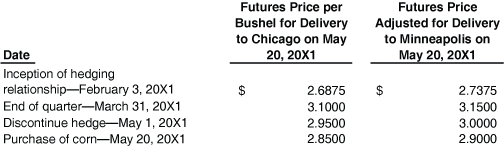 Date "Futures Price per Bushel for Delivery to Chicago on May 20, 20X1" "Futures Price Adjusted for Delivery to Minneapolis on May 20, 20X1" "Inception of hedging relationship—February 3, 20X1" $2.6875 $2.7375 "End of quarter—March 31, 20X1" 3.1000 3.1500 "Discontinue hedge—May 1, 20X1" 2.9500 3.0000 "Purchase of corn—May 20, 20X1" 2.8500 2.9000
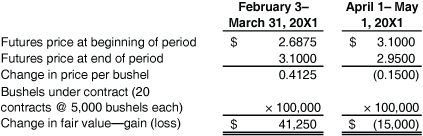 "February 3- March 31, 20X1" "April 1- May 1, 20X1" Futures price at beginning of period $2.6875 $3.1000 Futures price at end of period 3.1000 2.9500 Change in price per bushel 0.4125 (0.1500) "Bushels under contract (20 contracts @ 5,000 bushels each)" "× 100,000" "× 100,000" Change in fair value—gain (loss) " $41,250 " " $(15,000)"
- aEntering into futures contracts as a hedge of the forecasted purchase of corn
- bDedesignating and closing out the futures contracts
- cCompleting the forecasted purchase of corn
- dSelling the finished products produced from the corn.
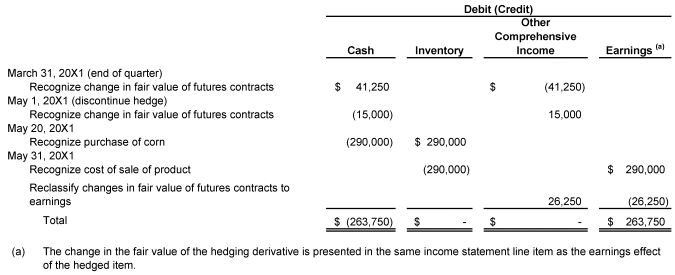 Debit (Credit) Cash Inventory Other Comprehensive Income Earnings (a) "March 31, 20X1 (end of quarter)" Recognize change in fair value of futures contracts " $41,250 " " $(41,250)" "May 1, 20X1 (discontinue hedge)" Recognize change in fair value of futures contracts " (15,000)" " 15,000 " "May 20, 20X1" Recognize purchase of corn " (290,000)" " $290,000 " "May 31, 20X1" Recognize cost of sale of product " (290,000)" " $290,000 " Reclassify changes in fair value of futures contracts to earnings " 26,250 " " (26,250)" Total " $(263,750)" $- $- " $263,750 " (a) The change in the fair value of the hedging derivative is presented in the same income statement line item as the earnings effect of the hedged item.
- aThe variability of the hedged interest payments is eliminated before the hedging derivative expires (Case A).
- bThe interest rate index that is the basis for the hedged interest payments is changed to a different index before the hedging derivative expires (Case B).
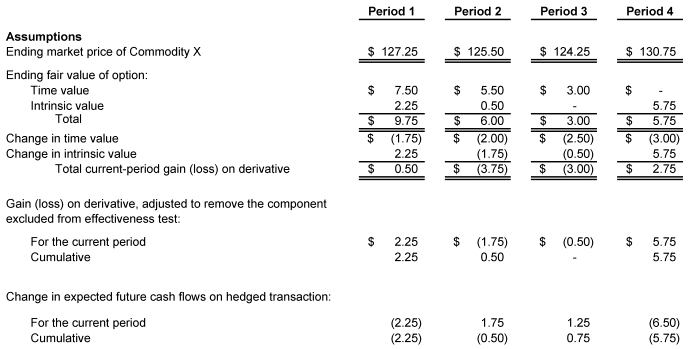 Period 1 Period 2 Period 3 Period 4 Assumptions Ending market price of Commodity X $127.25 $125.50 $124.25 $130.75 Ending fair value of option: Time value $7.50 $5.50 $3.00 $- Intrinsic value 2.25 0.50 - 5.75 Total $9.75 $6.00 $3.00 $5.75 Change in time value $(1.75) $(2.00) $(2.50) $(3.00) Change in intrinsic value 2.25 (1.75) (0.50) 5.75 Total current-period gain (loss) on derivative $0.50 $(3.75) $(3.00) $2.75 "Gain (loss) on derivative, adjusted to remove the component excluded from effectiveness test:" For the current period $2.25 $(1.75) $(0.50) $5.75 Cumulative 2.25 0.50 - 5.75 Change in expected future cash flows on hedged transaction: For the current period (2.25) 1.75 1.25 (6.50) Cumulative (2.25) (0.50) 0.75 (5.75)
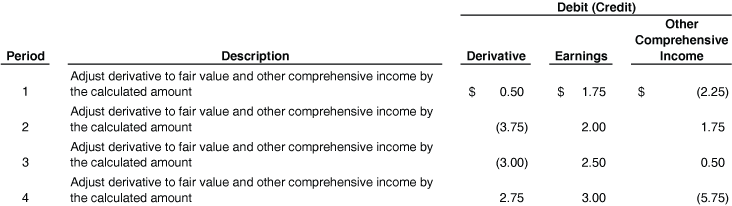 Debit (Credit) Period Description Derivative Earnings Other Comprehensive Income 1 Adjust derivative to fair value and other comprehensive income by the calculated amount $0.50 $1.75 $(2.25) 2 Adjust derivative to fair value and other comprehensive income by the calculated amount (3.75) 2.00 1.75 3 Adjust derivative to fair value and other comprehensive income by the calculated amount (3.00) 2.50 0.50 4 Adjust derivative to fair value and other comprehensive income by the calculated amount 2.75 3.00 (5.75)
 "Prices at January 1, 20X1" USD per EUR "USD Equivalent of EUR 3 Million" Spot price USD 0.6019 USD " 1,805,700 " 4-month forward price 0.6057 " 1,817,100 "
- aChanges in the fair value of the forward contract attributable to changes in the USD spot price of EUR
- bChanges in the present value of the forecasted cash flows based on the current spot exchange rate.
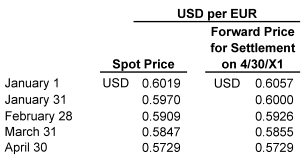 USD per EUR Spot Price Forward Price for Settlement on 4/30/X1 January 1 USD 0.6019 USD 0.6057 January 31 0.5970 0.6000 February 28 0.5909 0.5926 March 31 0.5847 0.5855 April 30 0.5729 0.5729
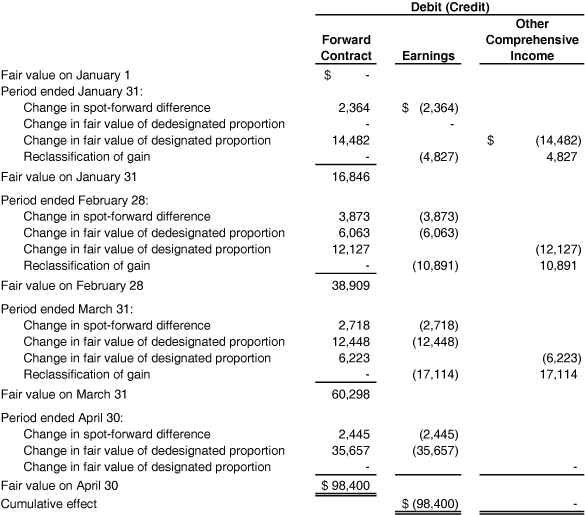 Debit (Credit) Forward Contract Earnings Other Comprehensive Income Fair value on January 1 $- Period ended January 31: Change in spot-forward difference " 2,364 " " $(2,364)" Change in fair value of dedesignated proportion - - Change in fair value of designated proportion " 14,482 " " $(14,482)" Reclassification of gain - " (4,827)" " 4,827 " Fair value on January 31 " 16,846 " Period ended February 28: Change in spot-forward difference " 3,873 " " (3,873)" Change in fair value of dedesignated proportion " 6,063 " " (6,063)" Change in fair value of designated proportion " 12,127 " " (12,127)" Reclassification of gain - " (10,891)" " 10,891 " Fair value on February 28 " 38,909 " Period ended March 31: Change in spot-forward difference " 2,718 " " (2,718)" Change in fair value of dedesignated proportion " 12,448 " " (12,448)" Change in fair value of designated proportion " 6,223 " " (6,223)" Reclassification of gain - " (17,114)" " 17,114 " Fair value on March 31 " 60,298 " Period ended April 30: Change in spot-forward difference " 2,445 " " (2,445)" Change in fair value of dedesignated proportion " 35,657 " " (35,657)" Change in fair value of designated proportion - - Fair value on April 30 " $98,400 " Cumulative effect " $(98,400)" -
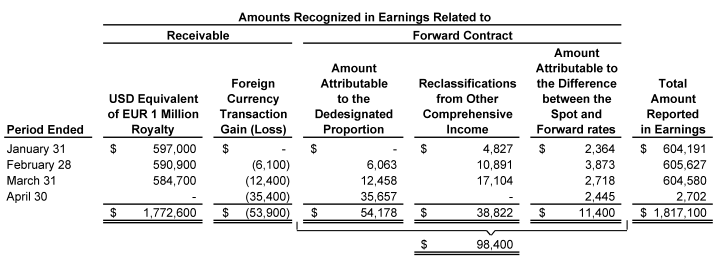 Amounts Recognized in Earnings Related to Receivable Forward Contract Period Ended USD Equivalent of EUR 1 Million Royalty Foreign Currency Transaction Gain (Loss) "Amount Attributable to the Dedesignated Proportion" Reclassifications from Other Comprehensive Income "Amount Attributable to the Difference between the Spot and Forward rates" "Total Amount Reported in Earnings" January 31 " $597,000 " $- $- " $4,827 " " $2,364 " " $604,191 " February 28 " 590,900 " " (6,100)" " 6,063 " " 10,891 " " 3,873 " " 605,627 " March 31 " 584,700 " " (12,400)" " 12,458 " " 17,104 " " 2,718 " " 604,580 " April 30 - " (35,400)" " 35,657 " - " 2,445 " " 2,702 " " $1,772,600 " " $(53,900)" " $54,178 " " $38,822 " " $11,400 " " $1,817,100 " " $98,400 "
- aIt continually purchases pork belly futures contracts to hedge its anticipated purchases of pork belly inventory.
- bIn 20X2, it entered into a Euro (EUR) forward exchange contract to hedge the foreign currency risk associated with the expected purchase of a pork belly processing machine with a five-year life that it bought from a vendor in Germany at the end of 20X2.
- cIn 20X2, it entered into a 10-year interest rate swap concurrent with the issuance of 10-year variable rate debt (cash flow hedge of future variable interest payments).
- dIn January 20X4, it entered into a two-year Swiss franc (CHF) forward exchange contract to hedge a forecasted export sale (denominated in CHF, expected to occur in December 20X5) of hot dogs to a large customer in Switzerland. In June 20X4, it closed the forward contract, but the forecasted transaction is still expected to occur.
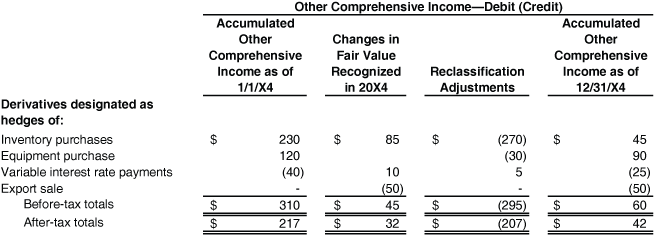 Other Comprehensive Income—Debit (Credit) Accumulated Other Comprehensive Income as of 1/1/X4 Changes in Fair Value Recognized in 20X4 Reclassification Adjustments Accumulated Other Comprehensive Income as of 12/31/X4 Derivatives designated as hedges of: Inventory purchases $230 $85 $(270) $45 Equipment purchase 120 (30) 90 Variable interest rate payments (40) 10 5 (25) Export sale - (50) - (50) Before-tax totals $310 $45 $(295) $60 After-tax totals $217 $32 $(207) $42
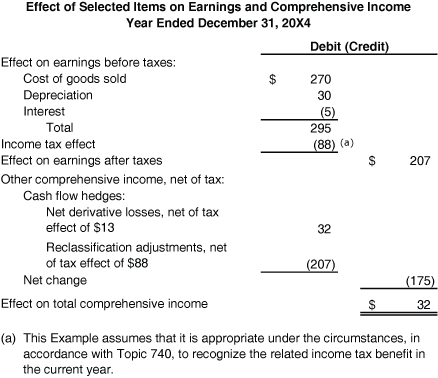 "Effect of Selected Items on Earnings and Comprehensive Income Year Ended December 31, 20X4" Debit (Credit) Effect on earnings before taxes: Cost of goods sold $270 Depreciation 30 Interest (5) Total 295 Income tax effect (88) (a) Effect on earnings after taxes $207 "Other comprehensive income, net of tax:" Cash flow hedges: "Net derivative losses, net of tax effect of $13" 32 "Reclassification adjustments, net of tax effect of $88" (207) Net change (175) Effect on total comprehensive income $32 (a) "This Example assumes that it is appropriate under the circumstances, in accordance with Topic 740, to recognize the related income tax benefit in the current year."
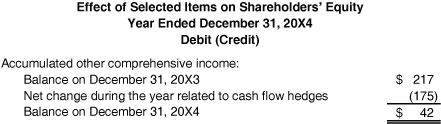 Effect of Selected Items on Shareholders' Equity "Year Ended December 31, 20X4 " Debit (Credit) Accumulated other comprehensive income: "Balance on December 31, 20X3" $217 Net change during the year related to cash flow hedges (175) "Balance on December 31, 20X4" $42
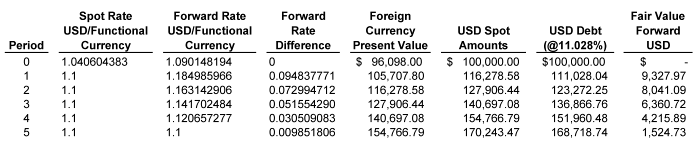 Period Spot Rate USD/Functional Currency Forward Rate USD/Functional Currency Forward Rate Difference Foreign Currency Present Value USD Spot Amounts USD Debt (@11.028%) Fair Value Forward USD 0 1.040604383 1.090148194 0 " $96,098.00 " " $100,000.00 " " $100,000.00 " $- 1 1.1 1.184985966 0.094837771 " 105,707.80 " " 116,278.58 " " 111,028.04 " " 9,327.97 " 2 1.1 1.163142906 0.072994712 " 116,278.58 " " 127,906.44 " " 123,272.25 " " 8,041.09 " 3 1.1 1.141702484 0.051554290 " 127,906.44 " " 140,697.08 " " 136,866.76 " " 6,360.72 " 4 1.1 1.120657277 0.030509083 " 140,697.08 " " 154,766.79 " " 151,960.48 " " 4,215.89 " 5 1.1 1.1 0.009851806 " 154,766.79 "
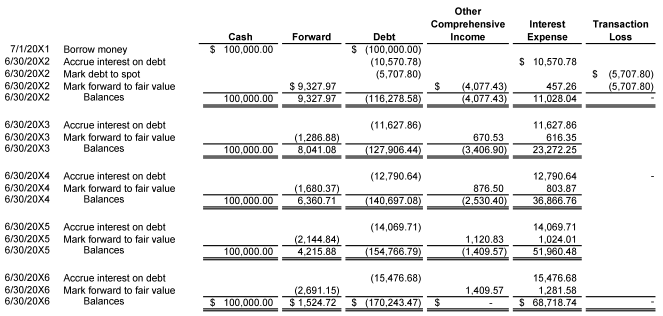 Cash Forward Debt Other Comprehensive Income Interest Expense Transaction Loss 7/1/20X1 Borrow money " $100,000.00 " " $(100,000.00)" 6/30/20X2 Accrue interest on debt " (10,570.78)" " $10,570.78 " 6/30/20X2 Mark debt to spot " (5,707.80)" " $(5,707.80)" 6/30/20X2 Mark forward to fair value " $9,327.97 " " $(4,077.43)" 457.26 " (5,707.80)" 6/30/20X2 Balances " 100,000.00 " " 9,327.97 " " (116,278.58)" " (4,077.43)" " 11,028.04 " - 6/30/20X3 Accrue interest on debt " (11,627.86)" " 11,627.86 " 6/30/20X3 Mark forward to fair value " (1,286.88)" 670.53 616.35 6/30/20X3 Balances " 100,000.00 " " 8,041.08 " " (127,906.44)" " (3,406.90)" " 23,272.25 " 6/30/20X4 Accrue interest on debt " (12,790.64)" " 12,790.64 " - 6/30/20X4 Mark forward to fair value " (1,680.37)" 876.50 803.87 6/30/20X4 Balances " 100,000.00 " " 6,360.71 " " (140,697.08)" " (2,530.40)" " 36,866.76 " 6/30/20X5 Accrue interest on debt " (14,069.71)" " 14,069.71 " 6/30/20X5 Mark forward to fair value " (2,144.84)" " 1,120.83 " " 1,024.01 " 6/30/20X5 Balances " 100,000.00 " " 4,215.88 " " (154,766.79)" " (1,409.57)" " 51,960.48 " 6/30/20X6 Accrue interest on debt " (15,476.68)" " 15,476.68 " 6/30/20X6 Mark forward to fair value " (2,691.15)" " 1,409.57 " " 1,281.58 " 6/30/20X6 Balances " $100,000.00 " " $1,524.72 " " $(170,243.47)" $- " $68,718.74 " -
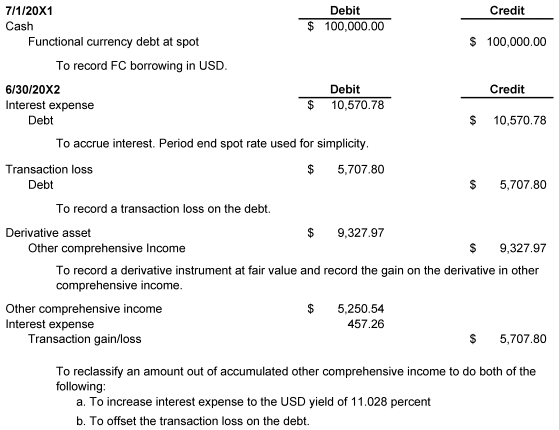 7/1/20X1 Debit Credit Cash " $100,000.00 " Functional currency debt at spot " $100,000.00 " To record FC borrowing in USD. 6/30/20X2 Debit Credit Interest expense " $10,570.78 " Debt " $10,570.78 " To accrue interest. Period end spot rate used for simplicity. Transaction loss " $5,707.80 " Debt " $5,707.80 " To record a transaction loss on the debt. Derivative asset " $9,327.97 " Other comprehensive Income " $9,327.97 " To record a derivative instrument at fair value and record the gain on the derivative in other comprehensive income. Other comprehensive income " $5,250.54 " Interest expense 457.26 Transaction gain/loss " $5,707.80 " To reclassify an amount out of accumulated other comprehensive income to do both of the following: a. To increase interest expense to the USD yield of 11.028 percent b. To offset the transaction loss on the debt.
- aParent A is a multinational corporation that has the U.S. dollar (USD) as its functional currency.
- bParent A has the following two subsidiaries:
- 1Subsidiary B, which has the Euro (EUR) as its functional currency
- 2Subsidiary C, which has the Japanese yen (JPY) as its functional currency.
- 1
- cSubsidiary B manufactures a product and has a forecasted sale of the product to Subsidiary C that will be transacted in JPY.
- aIt enters into a derivative instrument (for example, a forward-starting interest rate swap).
- bIt documents that it is hedging the variability in the 40 future quarterly interest payments, attributable to changes in the benchmark interest rate, over the next 10 years related to its 10-year $100 million borrowing program that begins in 6 months.
- cIt documents that it will assess the effectiveness of the hedging relationship semimonthly on a quantitative basis.
- aTransactions to occur within two months of end of originally specified time period (Case A)
- bTransactions not to occur within two months of end of originally specified time period (Case B).
- aEntity A, a U.S. dollar (USD) functional currency entity, forecasts the purchase of inventory on credit for FC 100,000 in 182 days with settlement of the payable in 227 days. The purchase will occur July 15 on credit; the resulting payable will settle August 29.
- bEntity A enters into a forward contract to purchase FC 100,000 in 227 days at the forward rate of USD .6614 = FC 1.
- cEntity A designates a single cash flow hedge that encompasses the variability of functional-currency-equivalent cash flows attributable to foreign exchange risk related to the settlement of the foreign-currency-denominated payable resulting from the forecasted purchase on credit.
- dAfter the initial quantitative effectiveness test, Entity A elects to assess effectiveness on a quantitative basis based on forward rates.
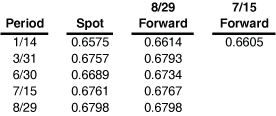 Period Spot 8/29 Forward 7/15 Forward 1/14 0.6575 0.6614 0.6605 3/31 0.6757 0.6793 6/30 0.6689 0.6734 7/15 0.6761 0.6767 8/29 0.6798 0.6798
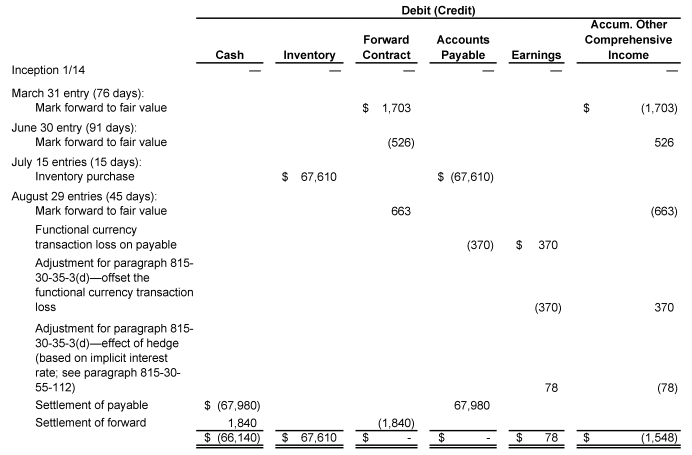 Debit (Credit) Cash Inventory Forward Contract Accounts Payable Earnings Accum. Other Comprehensive Income Inception 1/14 — — — — — — March 31 entry (76 days): Mark forward to fair value " $1,703 " " $(1,703)" June 30 entry (91 days): Mark forward to fair value (526) 526 July 15 entries (15 days): Inventory purchase " $67,610 " " $(67,610)" August 29 entries (45 days): Mark forward to fair value 663 (663) Functional currency transaction loss on payable (370) $370 Adjustment for paragraph 815-30-35-3(d)—offset the functional currency transaction loss (370) 370 Adjustment for paragraph 815-30-35-3(d)—effect of hedge (based on implicit interest rate; see paragraph 815-30-55-112) 78 (78) Settlement of payable " $(67,980)" " 67,980 " Settlement of forward " 1,840 " " (1,840)" " $(66,140)" " $67,610 " $- $- $78 " $(1,548)"
- Daily interest rate implicit in the hedging relationship as a result of the forward contract: $65,750 PV, $66,140 FV, 227n, i = 0.0026053%
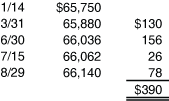 1/14 " $65,750 " 3/31 " 65,880 " $130 6/30 " 66,036 " 156 7/15 " 66,062 " 26 8/29 " 66,140 " 78 $390
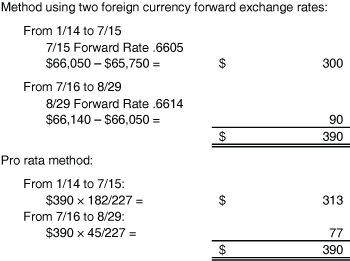 Method using two foreign currency forward exchange rates: From 1/14 to 7/15 "7/15 Forward Rate .6605 $66,050 - $65,750 =" $300 From 7/16 to 8/29 "8/29 Forward Rate .6614 $66,140 - $66,050 =" 90 $390 Pro rata method: From 1/14 to 7/15: $390 × 182/227 = $313 From 7/16 to 8/29: $390 × 45/227 = 77 $390
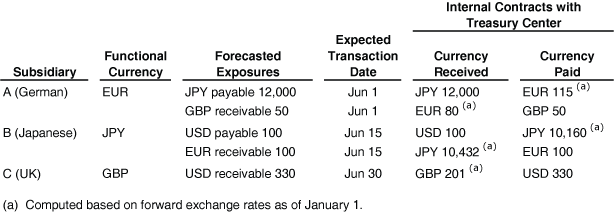 "Internal Contracts with Treasury Center" Subsidiary Functional Currency "Forecasted Exposures" Expected Transaction Date Currency Received Currency Paid A (German) EUR "JPY payable 12,000" Jun 1 "JPY 12,000" EUR 115 (a) GBP receivable 50 Jun 1 EUR 80 (a) GBP 50 B (Japanese) JPY USD payable 100 Jun 15 USD 100 "JPY 10,160 (a) " EUR receivable 100 Jun 15 "JPY 10,432 (a)" EUR 100 C (UK) GBP USD receivable 330 Jun 30 GBP 201 (a) USD 330 (a) Computed based on forward exchange rates as of January 1.
- aFrom the perspective of the hedging affiliate, the hedging relationship must meet the requirements of paragraphs 815-20-25-30 and for cash flow hedge accounting. Subsidiaries A, B, and C meet those requirements. In each hedging relationship, the forecasted transaction being hedged is denominated in a currency other than the subsidiary's functional currency, and the individual subsidiary that has the foreign currency exposure relative to its functional currency is a party to the hedging instrument. In addition, the criteria in Section 815-20-25 are met. Specifically, each subsidiary prepares formal documentation of the hedging relationships, including the date on which the forecasted transactions are expected to occur and the amount of foreign currency being hedged. The forecasted transactions being hedged are specifically identified, are probable of occurring, and are transactions with external third parties that create cash flow exposure that would affect reported earnings. Each subsidiary also documents its expectation of high effectiveness based on the internal derivatives designated as hedging instruments.
- bThe affiliate that issues the hedge must offset the internal derivative either individually or on a net basis. The Treasury Center determines that it will offset the exposure arising from the internal derivatives with Subsidiaries A, B, and C on a net basis with third-party contracts. Each currency for which a net exposure exists at the Treasury Center is offset by a third-party contract based on that currency.
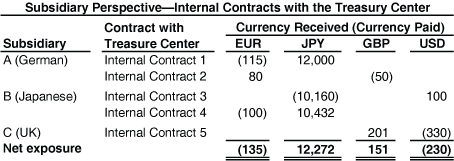 Subsidiary Perspective—Internal Contracts with the Treasury Center Contract with Treasure Center Currency Received (Currency Paid) Subsidiary EUR JPY GBP USD A (German) Internal Contract 1 (115) " 12,000 " Internal Contract 2 80 (50) B (Japanese) Internal Contract 3 " (10,160)" 100 Internal Contract 4 (100) " 10,432 " C (UK) Internal Contract 5 201 (330) Net exposure (135) " 12,272 " 151 (230)
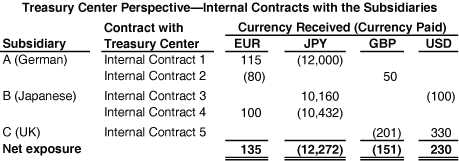 Treasury Center Perspective—Internal Contracts with the Subsidiaries Contract with Treasury Center Currency Received (Currency Paid) Subsidiary EUR JPY GBP USD A (German) Internal Contract 1 115 " (12,000)" Internal Contract 2 (80) 50 B (Japanese) Internal Contract 3 " 10,160 " (100) Internal Contract 4 100 " (10,432)" C (UK) Internal Contract 5 (201) 330 Net exposure 135 " (12,272)" (151) 230
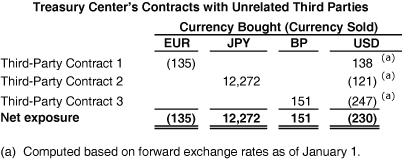 Treasury Center's Contracts with Unrelated Third Parties Currency Bought (Currency Sold) EUR JPY BP USD Third-Party Contract 1 (135) 138 (a) Third-Party Contract 2 " 12,272 " (121) (a) Third-Party Contract 3 151 (247) (a) Net exposure (135) " 12,272 " 151 (230) (a) Computed based on forward exchange rates as of January 1.
- aThe issuing affiliate enters into a derivative instrument with an unrelated third party to offset, on a net basis for each foreign currency, the foreign exchange risk arising from multiple internal derivatives, and the derivative instrument with the unrelated third party generates equal or closely approximating gains and losses when compared with the aggregate or net losses and gains generated by the derivative instruments issued to affiliates. The Treasury Center enters into third-party derivative instruments to offset the exposure of each foreign currency on a net basis. The Treasury Center offsets 100 percent of the net exposure to each currency; that is, the Treasury Center does not selectively keep any portion of that exposure. In this Example, the Treasury Center's third-party contracts generate losses that are equal to the losses on internal contracts designated as hedging instruments by Subsidiaries A, B, and C (see analysis beginning in the following paragraph).
- bInternal derivatives that are not designated as hedging instruments and all nonderivative instruments are excluded from the determination of the foreign currency exposure on a net basis that is offset by the third-party derivative instrument. The Treasury Center does not include in the determination of net exposure any internal derivatives not designated as hedging instruments or any nonderivative instruments.
- cForeign currency exposure that is offset by a single net third-party contract arises from internal derivatives that involve the same currency and that mature within the same 31-day period. The offsetting net third-party derivative instrument related to that group of contracts must offset the aggregate or net exposure to that currency, must mature within the same 31-day period, and must be entered into within 3 business days after the designation of the internal derivatives as hedging instruments. The Treasury Center's third-party net contracts involve the same currency (that is, not a tandem currency) as the net exposure arising from the internal derivatives issued to Subsidiaries A, B, and C. The Treasury Center's third-party derivative instruments mature within the same 31-day period as the internal contracts that involve currencies that are offset on a net basis. In this Example, for simplicity, all internal contracts and third-party derivative instruments are entered into on the same date.
- dThe issuing affiliate tracks the exposure that it acquires from each hedging affiliate and maintains documentation supporting linkage of each derivative instrument and the offsetting aggregate or net derivative instrument with an unrelated third party. The Treasury Center maintains documentation supporting linkage of third-party contracts and internal contracts throughout the hedge period.
- eThe issuing affiliate does not alter or terminate the offsetting derivative instrument with an unrelated third party unless the hedging affiliate initiates that action. If the issuing affiliate does alter or terminate the offsetting third-party derivative (which should be rare), the hedging affiliate must prospectively cease hedge accounting for the internal derivatives that are offset by that third-party derivative. Based on Entity XYZ's policy, the Treasury Center may not alter or terminate the offsetting derivative instrument with an unrelated third party unless the hedging affiliate initiates that action.
- fIf an internal derivative that is included in determining the foreign currency exposure on a net basis is modified or dedesignated as a hedging instrument, compliance must be reassessed. For simplicity, this Example does not involve a modification or dedesignation of an internal derivative.
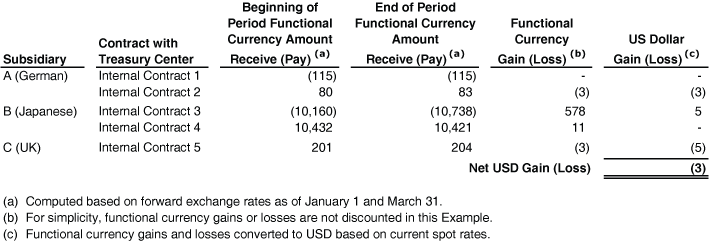 Subsidiary Contract with Treasury Center Beginning of Period Functional Currency Amount Receive (Pay) (a) "End of Period Functional Currency Amount Receive (Pay) (a)" "Functional Currency Gain (Loss) (b)" "US Dollar Gain (Loss) (c)" A (German) Internal Contract 1 (115) (115) - - Internal Contract 2 80 83 (3) (3) B (Japanese) Internal Contract 3 " (10,160)" " (10,738)" 578 5 Internal Contract 4 " 10,432 " " 10,421 " 11 - C (UK) Internal Contract 5 201 204 (3) (5) Net USD Gain (Loss) (3) (a) Computed based on forward exchange rates as of January 1 and March 31. (b) "For simplicity, functional currency gains or losses are not discounted in this Example." (c) Functional currency gains and losses converted to USD based on current spot rates.
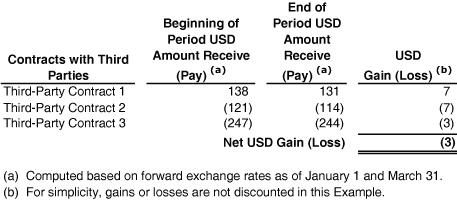 Contracts with Third Parties Beginning of Period USD Amount Receive (Pay) (a) End of Period USD Amount Receive (Pay) (a) "USD Gain (Loss) (b)" Third-Party Contract 1 138 131 7 Third-Party Contract 2 (121) (114) (7) Third-Party Contract 3 (247) (244) (3) Net USD Gain (Loss) (3) (a) Computed based on forward exchange rates as of January 1 and March 31. (b) "For simplicity, gains or losses are not discounted in this Example."
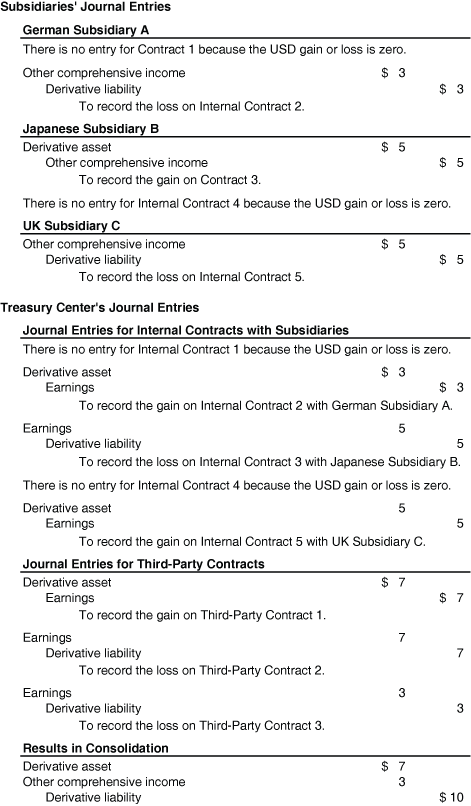 Subsidiaries' Journal Entries German Subsidiary A There is no entry for Contract 1 because the USD gain or loss is zero. Other comprehensive income $3 Derivative liability $3 To record the loss on Internal Contract 2. Japanese Subsidiary B Derivative asset $5 Other comprehensive income $5 To record the gain on Contract 3. There is no entry for Internal Contract 4 because the USD gain or loss is zero. UK Subsidiary C Other comprehensive income $5 Derivative liability $5 To record the loss on Internal Contract 5. Treasury Center's Journal Entries Journal Entries for Internal Contracts with Subsidiaries There is no entry for Internal Contract 1 because the USD gain or loss is zero. Derivative asset $3 Earnings $3 To record the gain on Internal Contract 2 with German Subsidiary A. Earnings 5 Derivative liability 5 To record the loss on Internal Contract 3 with Japanese Subsidiary B. There is no entry for Internal Contract 4 because the USD gain or loss is zero. Derivative asset 5 Earnings 5 To record the gain on Internal Contract 5 with UK Subsidiary C. Journal Entries for Third-Party Contracts Derivative asset $7 Earnings $7 To record the gain on Third-Party Contract 1. Earnings 7 Derivative liability 7 To record the loss on Third-Party Contract 2. Earnings 3 Derivative liability 3 To record the loss on Third-Party Contract 3. Results in Consolidation Derivative asset $7 Other comprehensive income 3 Derivative liability $10
- aAmounts are not reclassified immediately into earnings (Case A).
- bAmounts are reclassified immediately into earnings (Case B).
- aEntity A expects to borrow $100 million over a 10-year period beginning in 6 months.
- bEntity A initially plans to issue $100 million of 10-year fixed-rate debt at or near par at the then-current market interest rate.
- cEntity A will be exposed to variability in cash flows for the future quarterly interest payments on the debt due to changes in credit risk and interest rate risk that occur during this six-month period before issuance.
- dTo hedge the risk of changes in these 40 quarterly interest payments attributable to changes in the benchmark interest rate for the 6-month period, Entity A does both of the following:
- 1Enters into a derivative instrument (for example, a forward-starting interest rate swap)
- 2Documents that it is hedging the variability in the 40 future quarterly interest payments, attributable to changes in the benchmark interest rate, over the next 10 years related to its 10-year $100 million borrowing program that begins in 6 months.
- 1
- eEntity A documents that it will assess the effectiveness of the hedging relationship semimonthly on a quantitative basis.
- fSix months after inception of the hedging relationship, Entity A decides to delay the issuance of the 10-year debt for 3 months.
- aEntity B expects to issue $100 million of 10-year, 9 percent debt in 6 months.
- bBecause the debt will have a fixed interest rate of 9 percent, Entity B will not be exposed to variability in the future quarterly interest payments at 9 percent, but it will be exposed to variability in the cash flows received as proceeds on the debt due to changes in credit risk and interest rate risk that occur during the 6-month period before issuance.
- cTo hedge the risk of changes in the total proceeds attributable to changes in the benchmark interest rate, Entity B does both of the following:
- 1Enters into a derivative instrument (for example, a short position in U.S. Treasury note futures contracts)
- 2Documents that it is hedging the variability in the cash proceeds attributable to changes in the benchmark interest rate to be received from the 9 percent fixed-rate debt it will issue in 6 months and that it will assess effectiveness on a quantitative basis.
- 1
- dBecause Entity B plans to issue $100 million of 10-year, 9 percent debt regardless of the then-current interest rate environment, the effect of increases or decreases in interest rates will be reflected in issuing the debt at a discount or a premium, respectively.
- eSix months after inception of the hedging relationship, Entity B decides to delay the issuance of the debt for three months.
| Editor's Note: Paragraph 815-30-55-134 will be amended upon transition, together with its heading: |
| • > Example 22: Assessing Effectiveness of a Cash Flow Hedge of a Forecasted Purchase of Inventory with a Forward Contract |
- aSpot price of COMEX Zinc per pound × 0.2 pounds, plus
- bSpot price of COMEX Copper per pound × 0.1 pounds, plus
- cThe current cost of refining copper and zinc into key plates, plus
- dThe current cost of transporting the key plates to Entity J.
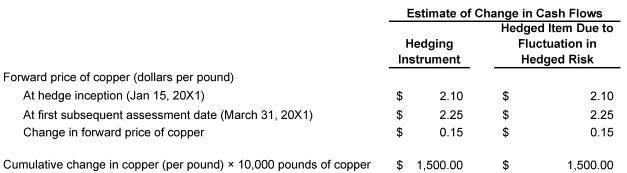 Estimate of Change in Cash Flows Hedging Instrument Hedged Item Due to Fluctuation in Hedged Risk Forward price of copper (dollars per pound) "At hedge inception (Jan 15, 20X1)" $2.10 $2.10 "At first subsequent assessment date (March 31, 20X1)" $2.25 $2.25 Change in forward price of copper $0.15 $0.15 "Cumulative change in copper (per pound) × 10,000 pounds of copper" " $1,500.00 " " $1,500.00 "
- aThe grade of the plastic purchased
- bThe distance between the plant location and supplier location.
 Grade 1 Grade 2 Grade 3 Grade 4 Grade 5 Plant A JP + $0.14 JP + $0.11 JP + $0.09 JP + $0.05 JP - $0.02 Plant B JP + $0.16 JP + $0.12 JP + $0.07 JP + $0.06 JP - $0.03
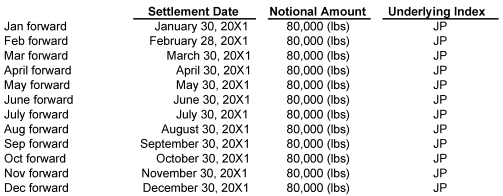 Settlement Date Notional Amount Underlying Index Jan forward "January 30, 20X1" "80,000 (lbs)" JP Feb forward "February 28, 20X1" "80,000 (lbs)" JP Mar forward "March 30, 20X1" "80,000 (lbs)" JP April forward "April 30, 20X1" "80,000 (lbs)" JP May forward "May 30, 20X1" "80,000 (lbs)" JP June forward "June 30, 20X1" "80,000 (lbs)" JP July forward "July 30, 20X1" "80,000 (lbs)" JP Aug forward "August 30, 20X1" "80,000 (lbs)" JP Sep forward "September 30, 20X1" "80,000 (lbs)" JP Oct forward "October 30, 20X1" "80,000 (lbs)" JP Nov forward "November 30, 20X1" "80,000 (lbs)" JP Dec forward "December 30, 20X1" "80,000 (lbs)" JP
- aThe hedging instrument's underlying matches the index upon which plastic purchases will be determined (that is, the JP Index).
- bThe notional of the hedging instrument matches the forecasted quantity designated as the hedged item.
- cThe date on which the derivatives mature matches the timing in which the forecasted purchases are expected to be made. That is, the quantity of the hedged item, 80,000 pounds, is an aggregate amount expected to be purchased over the course of the respective month (that is, the same 31-day period) in which the derivative matures.
- dEach hedging instrument was traded with at-market terms (that is, it has an initial fair value of zero).
- eAssessment of effectiveness will be performed on the basis of the total change in the fair value of the hedging instrument.
- fAlthough the amount of plastic being hedged each period is a cumulative amount across multiple grades of plastic, the basis differentials between grades of plastic and location are not required to be included in assessments of effectiveness because Entity Q has designated the variability in cash flows attributable to changes in the JP index (the contractually specified component) as the hedged risk within its purchases of plastics.
- aThe hedging instrument's underlying matches the index upon which plastic purchases will be determined (that is, the JP index).
- bThe notional of the hedging instrument matches the forecasted quantity designated as the hedged item.
- cThe date on which the derivatives mature matches the timing in which the forecasted purchases are expected to be made. That is, the quantity of the hedged item (80,000 pounds) is an aggregate amount expected to be purchased over the course of the respective month (that is, the same 31-day period) in which the derivative matures.
- dEach hedging instrument was traded with at-market terms (that is, it has an initial fair value of zero).
- eAssessment of effectiveness will be performed on the basis of the total change in the fair value of the hedging instrument.
- fAlthough the amount of plastic being hedged each period is a cumulative amount across multiple grades of plastic, the basis differentials between grades of plastic and location are not required to be included in assessments of effectiveness because Entity Q has designated the variability in cash flows attributable to changes in the JP index (the explicitly referenced variable component of the forecasted purchase price) as the hedged risk.
- aABC Regional NatGas index price + Fixed Spread
- bXYZ National NatGas index price + Cost to Transport + Fixed Spread.
- aYet to be issued
- bIssued and outstanding
- cReplaced during the hedge period.
- a1-Month Term SOFR (paid every 30 days)
- b3-Month Term SOFR (paid every 90 days)
- c6-Month Term SOFR (paid every 6 months)
- d1-Month U.S. Treasury Rate (paid every 30 days)
- ePrime (paid every 30 days).
- a1-Month Term SOFR (paid every 30 days)
- b3-Month Term SOFR (paid every 90 days)
- c6-Month Term SOFR (paid every 6 months)
- d1-Month U.S. Treasury Rate (paid every 30 days)
- ePrime (paid every 30 days)
- fEffective Federal Funds Rate (paid every 30 days).
- aEntity A changes the variable interest rate on the choose-your-rate debt instrument to 3-Month Term SOFR, payable every 90 days, with the rate resetting immediately following each payment (Scenario A).
- bEntity A changes the variable interest rate on the choose-your-rate debt instrument to Prime, payable every 30 days, with the rate resetting immediately following each payment (Scenario B).
- cEntity A replaces the choose-your-rate debt instrument with a 1-year, $30 million 3-Month Term SOFR note, payable every 90 days, with the rate resetting immediately following each payment, with the principal due at maturity (Scenario C).
- dEntity A replaces the choose-your-rate debt instrument with a 2-year, $20 million 12-Month Term SOFR note, payable annually, with the rate resetting immediately following each payment, with the principal due at maturity (Scenario D).
815-30-S00StatusSEC
Source downloaded: .Record version 813756b8e5b6. Effective date must be checked in the source.
| Paragraph | Action | Accounting Standards Update | Date |
| 815-30-S45-1 | Superseded | Accounting Standards Update No. 2010-04 | 01/15/2010 |
815-30-S45Other Presentation MattersSEC
Source downloaded: .Record version 81988c14bc9f. Effective date must be checked in the source.
Related subtopics
- 815-35 Net Investment HedgesDerivatives and Hedging
- 815-20 Hedging—GeneralDerivatives and Hedging
- 815-25 Fair Value HedgesDerivatives and Hedging
- 325-40 Beneficial Interests in Securitized Financial AssetsInvestments—Other
- 860-30 Secured Borrowing and CollateralTransfers and Servicing
- 326-20 Measured at Amortized CostFinancial Instruments—Credit Losses