ASC 825-10
Overall
825 Financial Instruments
Source downloaded: .Record version b4f4f5714b9d. Effective date must be checked in the source.
ASC 825-10 provides the overall guidance for financial instruments, containing two sets of rules: the fair value option (FVO), which lets any entity irrevocably elect, at specified election dates, to measure eligible financial assets, financial liabilities, firm commitments, and written loan commitments at fair value with changes in earnings; and incremental disclosures about the fair value of financial instruments, concentrations of credit risk, and market risk. The FVO is elected instrument by instrument, only for an entire instrument (not specific risks or cash flows), and is intended to mitigate earnings volatility from measuring related assets and liabilities differently without applying hedge accounting.
Key points (7)
- Eligible items for the fair value option include recognized financial assets and liabilities, firm commitments involving only financial instruments, written loan commitments, certain insurance contracts and warranties settleable by paying a third party, and host financial instruments from bifurcated nonfinancial hybrids (825-10-15-4).
- The fair value option may never be elected for consolidated subsidiaries or consolidated VIE interests, pension/postretirement and other deferred compensation obligations, lease-related financial assets and liabilities, demand deposit liabilities, or instruments classified in shareholders' equity including temporary equity (825-10-15-5).
- The election is instrument by instrument, irrevocable absent a new election date, and must apply to an entire instrument rather than specified risks, cash flows, or portions (825-10-25-2); upfront costs and fees are expensed as incurred (825-10-25-3).
- Election dates are limited to first recognition of the item, entering an eligible firm commitment, loss of specialized fair value accounting, a change to equity method accounting, or an event requiring one-time fair value remeasurement such as a business combination, consolidation/deconsolidation, or significant debt modification (825-10-25-4 through 25-5).
- Exceptions to instrument-by-instrument election require applying the option to the whole loan balance for multiple advances, to all financial interests in an equity-method investee, to all claims and obligations under an insurance/reinsurance contract, and to a base insurance contract's features or riders (825-10-25-7).
- Fair value amounts must be presented separately from similar items measured on another basis, parenthetically or as separate line items (825-10-45-1B through 45-2); business entities report unrealized gains and losses in earnings (825-10-45-4), but the portion of a liability's fair value change from instrument-specific credit risk goes to OCI and is recognized in net income at derecognition (825-10-45-5, 45-6).
- Public business entities must disclose the fair value of financial instruments and their hierarchy level (825-10-50-10), all entities must disclose significant concentrations of credit risk (825-10-50-20 through 50-21), and FVO users must provide the disclosures in 825-10-50-28 through 50-32, including reasons for election, fair value versus unpaid principal balance, and credit-risk-related gains and losses.
For students. Exam questions usually test which items are eligible or ineligible for the fair value option, the limited election dates, and the fact that the election is irrevocable and applies to a whole instrument; the most common mistake is forgetting that for elected financial liabilities the instrument-specific credit risk portion of the fair value change goes to OCI, not net income, until derecognition.
Machine-generated study aid for ASC 825-10. Check the source paragraphs below.
825-10-00Status
Source downloaded: .Record version 9d301663753a. Effective date must be checked in the source.
825-10-05Overview and Background
Source downloaded: .Record version 81dc44b5be07. Effective date must be checked in the source.
- aOverall
- b
- aGeneral
- bFair Value Option.
- aCash and Cash Equivalents
- bReceivables
- cInvestments—Debt Securities
- ccInvestments—Equity Securities
- dInvestments—Equity Method and Joint Ventures
- eLiabilities
- fCommitments
- gContingencies
- hGuarantees
- iDebt
- jDistinguishing Liabilities from Equity
- kEquity
- lDerivatives and Hedging
- mLeases
- nTransfers and Servicing
- oEach of the Financial Services Industry Topics.
Fair Value Option
- aCircumstances in which entities may choose, at specified election dates, to measure eligible items at fair value (the fair value option)
- bPresentation and disclosure requirements designed to facilitate comparisons between entities that choose different measurement attributes for similar types of assets and liabilities.
825-10-10Objectives
Source downloaded: .Record version fecd3176e843. Effective date must be checked in the source.
Fair Value Option
825-10-15Scope and Scope Exceptions
Source downloaded: .Record version 8067e2a6be50. Effective date must be checked in the source.
Overall Guidance
Entities
Fair Value Option
Overall Guidance
Instruments
- aA recognized financial asset and financial liability, except any listed in the following paragraph
- bA firm commitment that would otherwise not be recognized at inception and that involves only financial instruments (for example, a forward purchase contract for a loan that is not readily convertible to cash—that commitment involves only financial instruments—a loan and cash—and would not otherwise be recognized because it is not a derivative instrument)
- cA written loan commitment
- dThe rights and obligations under an insurance contract that has both of the following characteristics:
- 1The insurance contract is not a financial instrument (because it requires or permits the insurer to provide goods or services rather than a cash settlement).
- 2The insurance contract's terms permit the insurer to settle by paying a third party to provide those goods or services.
- 1
- eThe rights and obligations under a warranty that has both of the following characteristics:
- 1The warranty is not a financial instrument (because it requires or permits the warrantor to provide goods or services rather than a cash settlement).
- 2The warranty's terms permit the warrantor to settle by paying a third party to provide those goods or services.
- 1
- fA host financial instrument resulting from the separation of an embedded nonfinancial derivative from a nonfinancial hybrid instrument under paragraph 815-15-25-1, subject to the scope exceptions in the following paragraph (for example, an instrument in which the value of the bifurcated embedded derivative is payable in cash, services, or merchandise but the debt host is payable only in cash).
- aAn investment in a subsidiary that the entity is required to consolidate.
- bAn interest in a variable interest entity (VIE) that the entity is required to consolidate.
- cEmployers' and plans' obligations (or assets representing net overfunded positions) for pension benefits, other postretirement benefits (including health care and life insurance benefits), postemployment benefits, employee stock option and stock purchase plans, and other forms of deferred compensation arrangements, as defined in Topics 420; 710; 712; 715; 718; and 960.
- dFinancial assets and financial liabilities recognized under leases as defined in Subtopic 842-10. (This exception does not apply to a guarantee of a third-party lease obligation or a contingent obligation arising from a cancelled lease.)
- eDeposit liabilities, withdrawable on demand, of banks, savings and loan associations, credit unions, and other similar depository institutions.
- fFinancial instruments that are, in whole or in part, classified by the issuer as a component of shareholders' equity (including temporary equity).
- aAn investment in a subsidiary that the entity is required to consolidate.
- bAn interest in a variable interest entity (VIE) that the entity is required to consolidate.
- cEmployers' and plans' obligations (or assets representing net overfunded positions) for pension benefits, other postretirement benefits (including health care and life insurance benefits), postemployment benefits, employee stock option and stock purchase plans, and other forms of deferred compensation arrangements, as defined in Topics 420; 710; 712; 715; 718; and 960.
- dFinancial assets and financial liabilities recognized under leases as defined in Subtopic 842-10. (This exception does not apply to a guarantee of a third-party lease obligation or a contingent obligation arising from a cancelled lease.)
- eDeposit liabilities, withdrawable on demand, of banks, savings and loan associations, credit unions, and other similar depository institutions.
- fFinancial instruments that are, in whole or in part, classified by the issuer as a component of shareholders' equity (including temporary equity).
- gEnvironmental credit obligation liabilities that can be settled in cash that are accounted for in accordance with Topic 818.
Other Considerations
- aDo not affect any existing accounting literature that requires certain assets and liabilities to be carried at fair value
- bDo not establish requirements for recognizing and measuring dividend income, interest income, or interest expense
- cDo not eliminate disclosure requirements included in other Subtopics, including requirements for disclosures about fair value measurements included in Topic 820.
- aReferences to an income statement shall be replaced with references to a statement of activities, statement of changes in net assets, or statement of operations.
- bReferences to earnings shall be replaced with references to changes in net assets, except as indicated in (c).
- cParagraph 954-825-45-1 explains that health care entities subject to Topic 954 shall report unrealized gains and losses on items for which the fair value option has been elected within the performance indicator or as a part of discontinued operations, as appropriate. Unlike other NFPs, health care entities subject to that Topic present performance indicators analogous to income from continuing operations. Consistent with the provisions of Subtopic 958-10, NFPs may present such gains and losses either within or outside of other intermediate measures of operations unless such gains or losses are part of discontinued operations. This includes intermediate measures of operations presented by NFPs other than health care entities and any additional intermediate measures of operations presented within the performance indicator by not-for-profit health care entities.
- dThe disclosure requirements in paragraph 825-10-50-30 shall apply not only with respect to the effect on performance indicators or other intermediate measures of operations, if presented, but also with respect to the effect on the change in each of the net asset classes (without donor restrictions or with donor restrictions), as applicable.
- aReferences to an income statement shall be replaced with references to a statement of activities, statement of changes in net assets, or statement of operations.
- bReferences to earnings shall be replaced with references to changes in net assets, except as indicated in (c).
- cParagraph 954-825-45-1 explains that health care entities subject to Topic 954 shall report unrealized gains and losses on items for which the fair value option has been elected within the performance indicator or as a part of discontinued operations, as appropriate. Unlike other NFPs, health care entities subject to that Topic present performance indicators analogous to income from continuing operations. Consistent with the provisions of paragraphs , NFPs may present such gains and losses either within or outside of other intermediate measures of operations unless such gains or losses are part of discontinued operations. This includes intermediate measures of operations presented by NFPs other than health care entities and any additional intermediate measures of operations presented within the performance indicator by not-for-profit health care entities.
- dThe disclosure requirements in paragraph 825-10-50-30 shall apply not only with respect to the effect on performance indicators or other intermediate measures of operations, if presented, but also with respect to the effect on the change in each of the net asset classes (without donor restrictions or with donor restrictions), as applicable.
825-10-25Recognition
Source downloaded: .Record version 504372e91eba. Effective date must be checked in the source.
Fair Value Option
Overall Guidance
- aShall be applied instrument by instrument, except as discussed in paragraph 825-10-25-7
- bShall be irrevocable (unless a new election date occurs, as discussed in paragraph 825-10-25-4)
- cShall be applied only to an entire instrument and not to only specified risks, specific cash flows, or portions of that instrument.
- aThe entity first recognizes the eligible item.
- bThe entity enters into an eligible firm commitment.
- cFinancial assets that have been reported at fair value with unrealized gains and losses included in earnings because of specialized accounting principles cease to qualify for that specialized accounting (for example, a transfer of assets from a subsidiary subject to Subtopic 946-10 to another entity within the consolidated reporting entity not subject to that Subtopic).
- dThe accounting treatment for an investment in another entity changes because the investment becomes subject to the equity method of accounting.
- 1
- 2
- eAn event that requires an eligible item to be measured at fair value at the time of the event but does not require fair value measurement at each reporting date after that, excluding the recognition of impairment under lower-of-cost-or-market accounting or accounting for securities in accordance with either Topic 321 on investments—equity securities or Topic 326 on measurement of credit losses.
- aThe entity first recognizes the eligible item.
- bThe entity enters into an eligible firm commitment.
- cFinancial assets that have been reported at fair value with unrealized gains and losses included in earnings because of specialized accounting principles cease to qualify for that specialized accounting (for example, a transfer of assets from a subsidiary subject to Subtopic 946-10 to another entity within the consolidated reporting entity not subject to that Subtopic).
- dThe accounting treatment for an investment in another entity changes because the investment becomes subject to the equity method of accounting.
- 1
- 2
- eAn event that requires an eligible item to be measured at fair value at the time of the event but does not require fair value measurement at each reporting date after that, excluding the recognition of impairment under lower-of-cost-or-market accounting, the recognition of other-than-temporary impairment for equity method investments in accordance with Topic 323 on investments—equity method and joint ventures, or accounting for securities in accordance with either Topic 321 on investments—equity securities or Topic 326 on measurement of credit losses.
- aIf multiple advances are made to one borrower pursuant to a single contract (such as a line of credit or a construction loan) and the individual advances lose their identity and become part of a larger loan balance, the fair value option shall be applied only to the larger balance and not to each advance individually.
- bIf the fair value option is applied to an investment that would otherwise be accounted for under the equity method of accounting, it shall be applied to all of the investor's financial interests in the same entity (equity and debt, including guarantees) that are eligible items.
- cIf the fair value option is applied to an eligible insurance or reinsurance contract, it shall be applied to all claims and obligations under the contract.
- dIf the fair value option is elected for an insurance contract (base contract) for which integrated or nonintegrated contract features or coverages (some of which are called riders) are issued either concurrently or subsequently, the fair value option also must be applied to those features or coverages. The fair value option cannot be elected for only the nonintegrated contract features or coverages, even though those features or coverages are accounted for separately under Subtopic 944-30. Paragraph 944-30-35-30 defines a nonintegrated contract feature in an insurance contract. For purposes of applying this Subtopic, neither an integrated contract feature or coverage nor a nonintegrated contract feature or coverage qualifies as a separate instrument.
- aA credit enhancement granted to the issuer of the liability (for example, deposit insurance provided by a government or government agency)
- bA credit enhancement provided between reporting entities within a consolidated or combined group (for example, between a parent and its subsidiary or between entities under common control).
825-10-35Subsequent Measurement
Source downloaded: .Record version 9432cbeae336. Effective date must be checked in the source.
Fair Value Option
825-10-45Other Presentation Matters
Source downloaded: .Record version 445e4330bc37. Effective date must be checked in the source.
Statement of Financial Position
Fair Value Option
- a Present the aggregate of fair value and non-fair-value amounts in the same line item in the statement of financial position and parenthetically disclose the amount measured at fair value included in the aggregate amount
- b Present two separate line items to display the fair value and non-fair-value carrying amounts.
Statement of Cash Flows
Statement of Comprehensive Income
825-10-50Disclosure
Source downloaded: .Record version dd65139eb4ac. Effective date must be checked in the source.
- aFair value of financial instruments
- bConcentrations of credit risk of all financial instruments
- cMarket risk of all financial instruments.
Applicability of This Subsection
- aEmployers' and plans' obligations for pension benefits, other postretirement benefits including health care and life insurance benefits, postemployment benefits, employee stock option and stock purchase plans, and other forms of deferred compensation arrangements (see Topics 710, 712, 715, 718, and 960)
- bSubstantively extinguished debt subject to the disclosure requirements of Subtopic 405-20
- c
- dLease contracts as defined in Topic 842 (a contingent obligation arising out of a cancelled lease and a guarantee of a third-party lease obligation are not lease contracts and are subject to the disclosure requirements in this Subsection)
- e
- fUnconditional purchase obligations as defined in paragraph 440-10-50-2
- gInvestments accounted for under the equity method in accordance with the requirements of Topic 323
- hNoncontrolling interests and equity investments in consolidated subsidiaries (see Topic 810)
- iEquity instruments issued by the entity and classified in stockholders' equity in the statement of financial position (see Topic 505)
- jReceive-variable, pay-fixed interest rate swaps for which the simplified hedge accounting approach is applied (see Topic 815)
- kFully benefit-responsive investment contracts held by an employee benefit plan.
- lInvestments in equity securities accounted for under the measurement guidance for equity securities without readily determinable fair values (see Topic 321)
- mTrade receivables and payables due in one year or less
- nDeposit liabilities with no defined or contractual maturities.
- oLiabilities resulting from the sale of prepaid stored-value products within the scope of paragraph 405-20-40-3.
Fair Value of Financial Instruments
- a
- b
- c
- d
- a
- b
- c
- d
- aWhether the fair value and carrying amount represent assets or liabilities
- bHow the carrying amounts relate to what is reported in the statement of financial position.
- aWhether the fair value and carrying amount represent assets or liabilities
- bHow the carrying amounts relate to what is reported in the statement of financial position.
- aThe general principle in paragraph 210-20-45-1
- bThe exceptions for master netting arrangements in paragraph 815-10-45-5 and for amounts related to certain repurchase and reverse repurchase agreements in paragraphs .
Concentrations of Credit Risk of All Financial Instruments
- aInformation about the (shared) activity, region, or economic characteristic that identifies the concentration
- bThe maximum amount of loss due to credit risk that, based on the gross fair value of the financial instrument, the entity would incur if parties to the financial instruments that make up the concentration failed completely to perform according to the terms of the contracts and the collateral or other security, if any, for the amount due proved to be of no value to the entity
- cWith respect to collateral, all of the following:
- 1The entity's policy of requiring collateral or other security to support financial instruments subject to credit risk
- 2Information about the entity's access to that collateral or other security
- 3The nature and a brief description of the collateral or other security supporting those financial instruments.
- 1
- dWith respect to master netting arrangements, all of the following:
- 1The entity's policy of entering into master netting arrangements to mitigate the credit risk of financial instruments
- 2Information about the arrangements for which the entity is a party
- 3A brief description of the terms of those arrangements, including the extent to which they would reduce the entity's maximum amount of loss due to credit risk.
- 1
- aInformation about the (shared) activity, region, or economic characteristic that identifies the concentration
- bThe maximum amount of loss due to credit risk that, based on the gross fair value of the financial instrument, the entity would incur if parties to the financial instruments that make up the concentration failed completely to perform according to the terms of the contracts and the collateral or other security, if any, for the amount due proved to be of no value to the entity
- cWith respect to collateral, all of the following:
- 1The entity's policy of requiring collateral or other security to support financial instruments subject to credit risk
- 2Information about the entity's access to that collateral or other security
- 3The nature and a brief description of the collateral or other security supporting those financial instruments.
- 1
- dWith respect to master netting arrangements, all of the following:
- 1The entity's policy of entering into master netting arrangements to mitigate the credit risk of financial instruments
- 2Information about the arrangements for which the entity is a party
- 3A brief description of the terms of those arrangements, including the extent to which they would reduce the entity's maximum amount of loss due to credit risk.
- 1
- aThe financial instruments described in paragraph 825-10-50-8(a); (c); (e); and (f), except for reinsurance recoverables and prepaid reinsurance premiums
- bFinancial instruments of a pension plan, including plan assets, if subject to the accounting and reporting requirements of Topic 715.
Market Risk of All Financial Instruments
- aMore details about current positions and perhaps activity during the period
- bThe hypothetical effects on comprehensive income (or net assets), or annual income, of several possible changes in market prices
- cA gap analysis of interest rate repricing or maturity dates
- dThe duration of the financial instruments
- eThe entity's value at risk from derivatives and from other positions at the end of the reporting period and the average value at risk during the year.
Fair Value Option
Applicability of This Subsection
- aComparisons between entities that choose different measurement attributes for similar assets and liabilities
- bComparisons between assets and liabilities in the financial statements of an entity that selects different measurement attributes for similar assets and liabilities.
- aInformation to enable users of its financial statements to understand management's reasons for electing or partially electing the fair value option
- bInformation to enable users to understand how changes in fair values affect earnings for the period
- cThe same information about certain items (such as equity investments and nonperforming loans) that would have been disclosed if the fair value option had not been elected
- dInformation to enable users to understand the differences between fair values and contractual cash flows for certain items.
Required Disclosures as of Each Date for Which an Interim or Annual Statement of Financial Position Is Presented
- aManagement's reasons for electing a fair value option for each eligible item or group of similar eligible items
- bIf the fair value option is elected for some but not all eligible items within a group of similar eligible items, both of the following:
- 1A description of those similar items and the reasons for partial election
- 2Information to enable users to understand how the group of similar items relates to individual line items on the statement of financial position.
- 1
- cFor each line item in the statement of financial position that includes an item or items for which the fair value option has been elected, both of the following:
- 1Information to enable users to understand how each line item in the statement of financial position relates to major classes of assets and liabilities presented in accordance with the fair value disclosure requirements of Topic 820. (Paragraph 825-10-50-11 also requires an entity to relate carrying amounts that are disclosed in accordance with that paragraph to what is reported in the statement of financial position.)
- 2The aggregate carrying amount of items included in each line item in the statement of financial position that are not eligible for the fair value option, if any.
- 1
- dThe difference between the aggregate fair value and the aggregate unpaid principal balance of each of the following:
- 1Loans and long-term receivables (other than securities subject to Topic 320) that have contractual principal amounts and for which the fair value option has been elected
- 2Long-term debt instruments that have contractual principal amounts and for which the fair value option has been elected.
- 1
- eFor loans held as assets for which the fair value option has been elected, all of the following:
- 1The aggregate fair value of loans that are 90 days or more past due
- 2If the entity's policy is to recognize interest income separately from other changes in fair value, the aggregate fair value of loans in nonaccrual status
- 3The difference between the aggregate fair value and the aggregate unpaid principal balance for loans that are 90 days or more past due, in nonaccrual status, or both.
- 1
- fFor investments that would have been accounted for under the equity method if the entity had not chosen to apply the fair value option, the information required by paragraph 323-10-50-3 (excluding the disclosures in paragraph 323-10-50-3(a)(3); (b); and (d)).
- aManagement's reasons for electing a fair value option for each eligible item or group of similar eligible items
- bIf the fair value option is elected for some but not all eligible items within a group of similar eligible items, both of the following:
- 1A description of those similar items and the reasons for partial election
- 2Information to enable users to understand how the group of similar items relates to individual line items on the statement of financial position.
- 1
- cFor each line item in the statement of financial position that includes an item or items for which the fair value option has been elected, both of the following:
- 1Information to enable users to understand how each line item in the statement of financial position relates to major classes of assets and liabilities presented in accordance with the fair value disclosure requirements of Topic 820. (Paragraph 825-10-50-11 also requires an entity to relate carrying amounts that are disclosed in accordance with that paragraph to what is reported in the statement of financial position.)
- 2The aggregate carrying amount of items included in each line item in the statement of financial position that are not eligible for the fair value option, if any.
- 1
- dThe difference between the aggregate fair value and the aggregate unpaid principal balance of each of the following:
- 1Loans and long-term receivables (other than securities subject to Topic 320) that have contractual principal amounts and for which the fair value option has been elected
- 2Long-term debt instruments that have contractual principal amounts and for which the fair value option has been elected.
- 1
- eFor loans held as assets for which the fair value option has been elected, all of the following:
- 1The aggregate fair value of loans that are 90 days or more past due
- 2If the entity's policy is to recognize interest income separately from other changes in fair value, the aggregate fair value of loans in nonaccrual status
- 3The difference between the aggregate fair value and the aggregate unpaid principal balance for loans that are 90 days or more past due, in nonaccrual status, or both.
- 1
- fFor investments that would have been accounted for under the equity method if the entity had not chosen to apply the fair value option, the information required by paragraph 323-10-50-3 (excluding the disclosures in paragraph 323-10-50-3(a)(3); (b); and (d)).
- aWould otherwise be required to be accounted for under the equity method under other generally accepted accounting principles (GAAP)
- bWould be required to satisfy the disclosure requirements of paragraph 323-10-50-3.
Required Disclosures for Each Period for Which an Interim or Annual Income Statement Is Presented
- aFor each line item in the statement of financial position, the amounts of gains and losses from fair value changes included in earnings during the period and in which line in the income statement those gains and losses are reported. This Subtopic does not preclude an entity from meeting this requirement by disclosing amounts of gains and losses that include amounts of gains and losses for other items measured at fair value, such as items required to be measured at fair value.
- bA description of how interest and dividends are measured and where they are reported in the income statement. This Subtopic does not address the methods used for recognizing and measuring the amount of dividend income, interest income, and interest expense for items for which the fair value option has been elected.
- cFor loans and other receivables held as assets, both of the following:
- 1The estimated amount of gains or losses included in earnings during the period attributable to changes in instrument-specific credit risk
- 2How the gains or losses attributable to changes in instrument-specific credit risk were determined.
- 1
- dFor liabilities, all of the following about the effects of the instrument-specific credit risk and changes in it:
- 1The amount of change, during the period and cumulatively, of the fair value of the liability that is attributable to changes in the instrument-specific credit risk
- 2
- 3How the gains and losses attributable to changes in instrument-specific credit risk were determined.
- 4If a liability is settled during the period, the amount, if any, recognized in other comprehensive income that was recognized in net income at settlement.
- 1
- aFor each line item in the statement of financial position, the amounts of gains and losses from fair value changes included in earnings during the period and in which line in the income statement those gains and losses are reported. This Subtopic does not preclude an entity from meeting this requirement by disclosing amounts of gains and losses that include amounts of gains and losses for other items measured at fair value, such as items required to be measured at fair value.
- bA description of how interest and dividends are measured and where they are reported in the income statement. This Subtopic does not address the methods used for recognizing and measuring the amount of dividend income, interest income, and interest expense for items for which the fair value option has been elected.
- cFor loans and other receivables held as assets, both of the following:
- 1The estimated amount of gains or losses included in earnings during the period attributable to changes in instrument-specific credit risk
- 2How the gains or losses attributable to changes in instrument-specific credit risk were determined.
- 1
- dFor liabilities, all of the following about the effects of the instrument-specific credit risk and changes in it:
- 1The amount of change, during the period and cumulatively, of the fair value of the liability that is attributable to changes in the instrument-specific credit risk
- 2
- 3How the gains and losses attributable to changes in instrument-specific credit risk were determined.
- 4If a liability is settled during the period, the amount, if any, recognized in other comprehensive income that was recognized in net income at settlement.
- 1
Other Required Disclosures
- aQualitative information about the nature of the event
- bQuantitative information by line item in the statement of financial position indicating which line items in the income statement include the effect on earnings of initially electing the fair value option for an item.
- aQualitative information about the nature of the event
- bQuantitative information by line item in the statement of financial position indicating which line items in the income statement include the effect on earnings of initially electing the fair value option for an item.
825-10-55Implementation Guidance and Illustrations
Source downloaded: .Record version 9e6588212da0. Effective date must be checked in the source.
Implementation Guidance
- aBorrowers subject to significant payment increases
- bLoans with terms that permit negative amortization
- cLoans with high loan-to-value ratios.
Fair Value Option
Illustrations
- aThe Fair Value Option Subsection of 825-10-50 disclosures with voluntary integration of the General Subsection of 825-10-50 disclosures (Case A)
- bThe Fair Value Option Subsection of 825-10-50 disclosures without voluntary integration of the General Subsection of 825-10-50 disclosures (Case B).
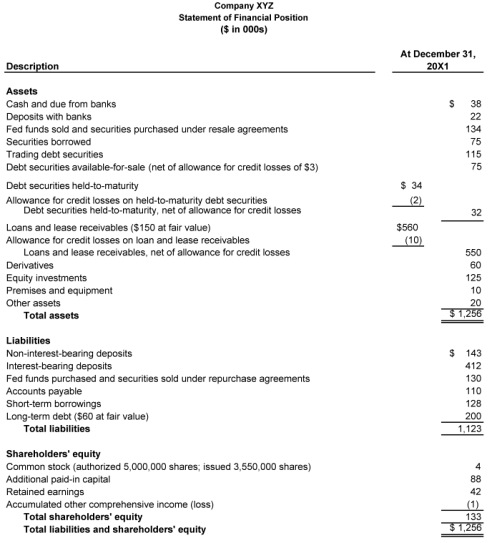 ($ in 000s) Description "At December 31, 20X1" Assets Cash and due from banks $38 Deposits with banks 22 Fed funds sold and securities purchased under resale agreements 134 Securities borrowed 75 Trading debt securities 115 Debt securities available-for-sale (net of allowance for credit losses of $3) 75 Debt securities held-to-maturity $34 Allowance for credit losses on held-to-maturity debt securities (2) "Debt securities held-to-maturity, net of allowance for credit losses" 32 Loans and lease receivables ($150 at fair value) $560 Allowance for credit losses on loan and lease receivables (10) "Loans and lease receivables, net of allowance for credit losses" 550 Derivatives 60 Equity investments 125 Premises and equipment 10 Other assets 20 Total assets " $1,256 " Liabilities Non-interest-bearing deposits $143 Interest-bearing deposits 412 Fed funds purchased and securities sold under repurchase agreements 130 Accounts payable 110 Short-term borrowings 128 Long-term debt ($60 at fair value) 200 Total liabilities " 1,123 " Shareholders' equity "Common stock (authorized 5,000,000 shares; issued 3,550,000 shares)" 4 Capital surplus 88 Retained earnings 42 Accumulated other comprehensive income (loss) (1) Total shareholders' equity 133 Total liabilities and shareholders' equity " $1,256 "
- aAssets and liabilities measured at fair value on a recurring basis (as required by Subtopic 820-10)
- bChanges in fair values of assets and liabilities for which the fair value option has been elected in a manner that relates to the statement of financial position (as required by this Subtopic)
- cFair value estimates and corresponding carrying amounts for major categories of assets and liabilities that include items measured at fair value on a recurring basis (in accordance with the General Subsection of 825-10-50).
- aProvide information about where in the income statement changes in fair values of assets and liabilities reported at fair value are included in earnings
- bVoluntarily integrate selected disclosures required annually by the General Subsection of 825-10-50.
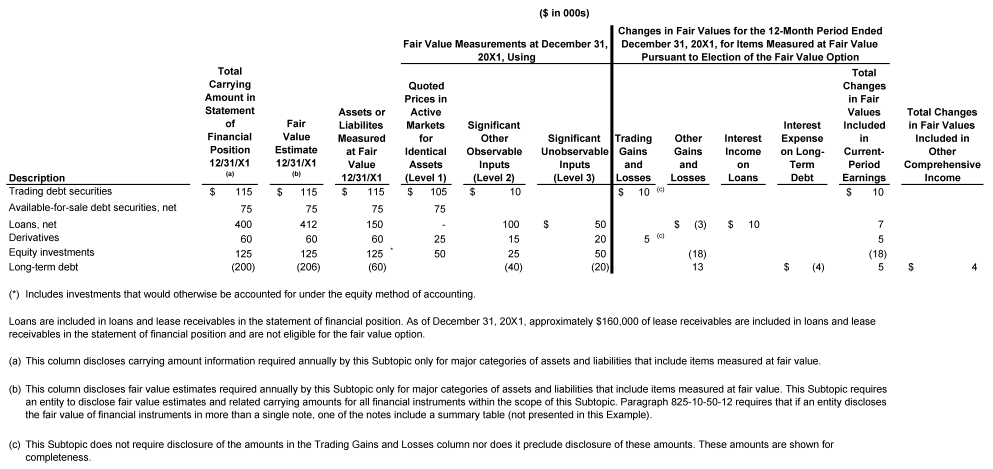 ($ in 000s) "Fair Value Measurements at December 31, 20X1, Using" "Changes in Fair Values for the 12-Month Period Ended December 31, 20X1, for Items Measured at Fair Value Pursuant to Election of the Fair Value Option" Description Total Carrying Amount in Statement of Financial Position 12/31/X1 (a) Fair Value Estimate 12/31/X1 (b) Assets or Liabilites Measured at Fair Value 12/31/X1 Quoted Prices in Active Markets for Identical Assets (Level 1) "Significant Other Observable Inputs (Level 2)" "Significant Unobservable Inputs (Level 3)" Trading Gains and Losses Other Gains and Losses Interest lncome on Loans Interest Expense on Long-Term Debt Total Changes in Fair Values Included in Current-Period Earnings Total Changes in Fair Values Included in Other Comprehensive Income Trading debt securities $115 $115 $115 $105 $10 $10 (c) $10 Available-for-sale debt securities, net 75 75 75 75 "Loans, net" 400 412 150 - 100 $50 $(3) $10 7 Derivatives 60 60 60 25 15 20 5 (c) 5 Equity investments 125 125 125 * 50 25 50 (18) (18) Long-term debt (200) (206) (60) (40) (20) 13 $(4) 5 4 (*) Includes investments that would otherwise be accounted for under the equity method of accounting. "Loans are included in loans and lease receivables in the statement of financial position. As of December 31, 20X1, approximately $160,000 of lease receivables are included in loans and lease receivables in the statement of financial position and are not eligible for the fair value option." (a) This column discloses carrying amount information required annually by this Subtopic only for major categories of assets and liabilities that include items measured at fair value. (b) "This column discloses fair value estimates required annually by this Subtopic only for major categories of assets and liabilities that include items measured at fair value. This Subtopic requires an entity to disclose fair value estimates and related carrying amounts for all financial instruments within the scope of this Subtopic. Paragraph 825-10-50-12 requires that if an entity discloses the fair value of financial instruments in more than a single note, one of the notes include a summary table (not presented in this Example)." (c) This Subtopic does not require disclosure of the amounts in the Trading Gains and Losses column nor does it preclude disclosure of these amounts. These amounts are shown for completeness.
- aManagement's reasons for electing a fair value option for each eligible item or group of similar eligible items
- bIf the fair value option is elected for some but not all eligible items within a group of similar eligible items, both of the following:
- 1A description of those similar items and the reasons for partial election
- 2Information to enable users to understand how the group of similar items relates to individual line items on the statement of financial position.
- 1
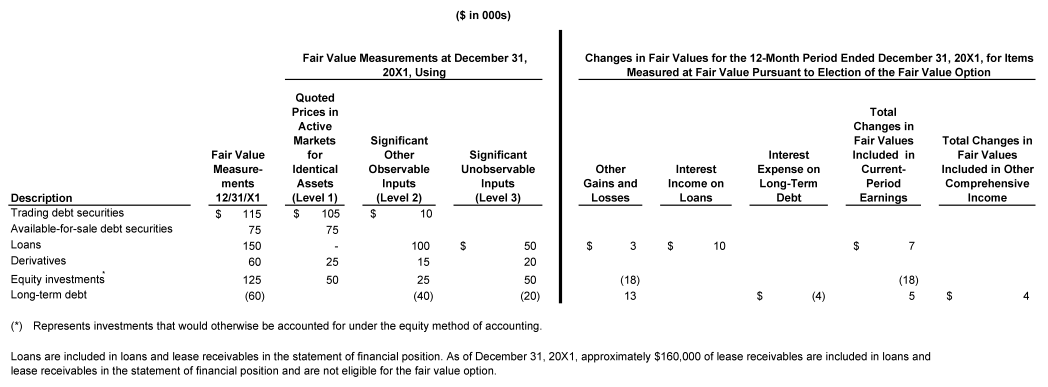 ($ in 000s) "Fair Value Measurements at December 31, 20X1, Using" "Changes in Fair Values for the 12-Month Period Ended December 31, 20X1, for Items Measured at Fair Value Pursuant to Election of the Fair Value Option" Description Fair Value Measure-ments 12/31/X1 "Quoted Prices in Active Markets for Identical Assets (Level 1)" "Significant Other Observable Inputs (Level 2)" "Significant Unobservable Inputs (Level 3)" Other Gains and Losses Interest Income on Loans Interest Expense on Long-Term Debt Total Changes in Fair Values Included in Current- Period Earnings Total Changes in Fair Values Included in Other Comprehensive Income Trading debt securities $115 $105 $10 Available-for-sale debt securities 75 75 Loans 150 - 100 $50 $3 $10 $7 Derivatives 60 25 15 20 Equity investments* 125 50 25 50 (18) (18) Long-term debt (60) (40) (20) 13 $(4) 5 4 (*) Represents investments that would otherwise be accounted for under the equity method of accounting. "Loans are included in loans and lease receivables in the statement of financial position. As of December 31, 20X1, approximately $160,000 of lease receivables are included in loans and lease receivables in the statement of financial position and are not eligible for the fair value option."
- aManagement's reasons for electing a fair value option for each eligible item or group of similar eligible items
- bIf the fair value option is elected for some but not all eligible items within a group of similar eligible items, both of the following:
- 1A description of those similar items and the reasons for partial election
- 2Information to enable users to understand how the group of similar items relates to individual line items on the statement of financial position.
- 1
825-10-60Relationships
Source downloaded: .Record version d1c60ee2d066. Effective date must be checked in the source.
Financial Services—Depository and Lending
825-10-65Transition and Open Effective Date Information
Source downloaded: .Record version 3cbca4d81c88. Effective date must be checked in the source.