ASC 255-10
Overall
255 Changing Prices
Source downloaded: .Record version 21ed36072751. Effective date must be checked in the source.
ASC 255-10 governs supplementary disclosure of the effects of changing prices (inflation) on financial statements. Business entities reporting in U.S. dollars under GAAP are *encouraged but not required* to disclose a five-year summary of current cost-constant purchasing power data — including income from continuing operations on a current cost basis, purchasing power gain or loss on net monetary items, and the inflation-adjusted change in the current cost of inventory and PP&E. The Subtopic also supplies the measurement rules for current cost and lower recoverable amount, the CPI-U restatement mechanics, the translate-restate vs. restate-translate methods for foreign functional currency operations, and guidance on classifying balance sheet items as monetary or nonmonetary.
Key points (7)
- Disclosure of the effects of changing prices is encouraged but not required (255-10-15-3; 255-10-50-1), and entities may experiment with other forms of disclosure.
- If provided, the five-year summary must show net sales, income from continuing operations on a current cost basis, purchasing power gain or loss on net monetary items, the increase/decrease in current cost or lower recoverable amount of inventory and PP&E net of inflation, any current cost translation adjustment, year-end net assets, per-share income, dividends declared per share, and year-end market price per share (255-10-50-3), plus the CPI-U levels used (255-10-50-8).
- Inventory is measured at current cost or lower recoverable amount at the measurement date and PP&E at the current cost or lower recoverable amount of the assets' remaining service potential (255-10-50-20); current cost may be estimated by indexation or direct pricing (255-10-50-23).
- Only cost of goods sold and depreciation, depletion, and amortization must be restated to current cost; other revenues, expenses, gains, and losses may be taken from the primary income statement (255-10-50-39 through 50-40), and income tax expense is not adjusted or allocated (255-10-50-41).
- Recoverable amount is measured by value in use unless the asset is about to be sold, in which case fair value less costs to sell is used; a materially and permanently lower recoverable amount for a group of assets must be used as the measure (255-10-50-36 through 50-37).
- For operations in a foreign functional currency, general inflation effects are measured either after translation using CPI-U (translate-restate) or before translation using a functional currency general price level index (restate-translate), applied consistently to all such operations and periods (255-10-50-45 through 50-46); the restate-translate method requires a parity adjustment (255-10-50-49).
- The purchasing power gain or loss on net monetary items is the net gain or loss from restating opening and closing balances of, and transactions in, monetary assets and liabilities into units of constant purchasing power (255-10-50-50); classification guidance for monetary vs. nonmonetary items appears in 255-10-55-1 through 55-13 (e.g., a sales-type lease receivable is monetary, an unguaranteed residual asset is nonmonetary).
For students. The single most important takeaway is that all of this inflation reporting is voluntary — an exam trap is treating the detailed five-year summary in 255-10-50-3 as a mandatory disclosure. The monetary/nonmonetary classification guidance in 255-10-55-1 through 55-13 is the piece most often cited elsewhere in GAAP (e.g., highly inflationary economies and nonmonetary exchanges).
Machine-generated study aid for ASC 255-10. Check the source paragraphs below.
255-10-00Status
Source downloaded: .Record version d745702cf563. Effective date must be checked in the source.
255-10-05Overview and Background
Source downloaded: .Record version a1b1c9604db2. Effective date must be checked in the source.
255-10-15Scope and Scope Exceptions
Source downloaded: .Record version b7dd34536c15. Effective date must be checked in the source.
Overall Guidance
Entities
- aBusiness entities that prepare their financial statements in U.S. dollars and in accordance with U.S. generally accepted accounting principles (GAAP)
- bForeign entities that prepare financial statements in the currency of the country in which the operations reported on are conducted and that operate in countries with hyperinflationary economies.
255-10-30Initial Measurement
Source downloaded: .Record version 4613c27ae3af. Effective date must be checked in the source.
255-10-35Subsequent Measurement
Source downloaded: .Record version 6d2f7b6a3acb. Effective date must be checked in the source.
255-10-45Other Presentation Matters
Source downloaded: .Record version cb05a719c41e. Effective date must be checked in the source.
Price-Level Adjusted Financial Statements for Certain Entities in Highly Inflationary Economies
255-10-50Disclosure
Source downloaded: .Record version 7cefba46a36b. Effective date must be checked in the source.
Introduction
Presentation
- aNet sales and other operating revenues
- bIncome from continuing operations on a current cost basis
- cPurchasing power gain or loss on net monetary items
- dIncrease or decrease in the current cost or lower recoverable amount of inventory and property, plant, and equipment, net of inflation
- eThe aggregate foreign currency translation adjustment on a current cost basis, if applicable
- fNet assets at year-end on a current cost basis
- gIncome per common share from continuing operations on a current cost basis
- hCash dividends declared per common share
- iMarket price per common share at year-end.
- aIn average-for-the-year or end-of-year units of constant purchasing power
- bIn dollars having a purchasing power equal to that of dollars of the base period used by the Bureau of Labor Statistics in calculating the Consumer Price Index for All Urban Consumers. As a practical matter, this option is not available to entities that measure a significant part of their operations in one or more functional currencies other than the U.S. dollar and that elect to use the restate-translate method for measuring inflation-adjusted current cost information.
- aIn a statement format (disclosing revenues, expenses, gains, and losses)
- bIn a reconciliation format (disclosing adjustments to the income from continuing operations that is shown in the primary income statement)
- cIn notes to the five-year summary required by paragraph 255-10-50-3.
- aCost of goods sold and depreciation
- bDepletion
- cAmortization expense.
- aThe purchasing power gain or loss on net monetary items
- bThe increase or decrease in the current cost or lower recoverable amount of inventory and property, plant, and equipment, net of inflation
- cThe translation adjustment.
- aSeparate amounts for the current cost or lower recoverable amount at the end of the current year of inventory and property, plant, and equipment (see paragraphs and )
- bThe increase or decrease in current cost or lower recoverable amount before and after adjusting for the effects of inflation of inventory and property, plant, and equipment for the current year (see paragraphs )
- cThe principal types of information used to calculate the current cost of inventory; property, plant, and equipment; cost of goods sold; and depreciation, depletion, and amortization expense (see paragraphs )
- dAny differences between:
- 1The depreciation methods, estimates of useful lives, and salvage values of assets used for calculations of current cost-constant purchasing power depreciation
- 2The methods and estimates used for calculations of depreciation in the primary financial statements (see paragraph 255-10-50-29).
- 1
- aEstimates of significant quantities of proved mineral reserves or proved and probable mineral reserves (whichever is used for cost amortization purposes) at the end of the year or at the most recent date during the year for which estimates can be made (if estimates are not made as of the end of the year, the disclosures shall indicate the dates of the estimates)
- bThe estimated quantity, expressed in physical units or in percentages of reserves, of each mineral product that is recoverable in significant commercial quantities if the mineral reserves included under (a) include deposits containing one or more significant mineral products
- cThe quantities of each significant mineral produced during the year (if the mineral reserves included under (a) are ones that are milled or similarly processed, the quantity of each significant mineral product produced by the milling or similar process shall also be disclosed)
- dThe quantity of significant proved, or proved and probable, mineral reserves purchased or sold in place during the year
- eFor each significant mineral product, the average market price or, for mineral products transferred within the entity, the equivalent market price prior to use in a manufacturing process.
- aIf the entity issues consolidated financial statements, 100 percent of the quantities attributable to the parent entity and 100 percent of the quantities attributable to its consolidated subsidiaries (whether or not wholly owned) shall be included.
- bIf the entity's financial statements include investments that are proportionately consolidated, the entity's quantities shall include its proportionate share of the investee's quantities.
- cIf the entity's financial statements include investments that are accounted for by the equity method, the investee's quantities shall not be included in the disclosures of the entity's quantities. However, the entity's (investor's) share of the investee's quantities of reserves shall be reported separately, if significant.
Measurement
- aInventory at current cost or lower recoverable amount at the measurement date
- bProperty, plant, and equipment at the current cost or lower recoverable amount of the assets' remaining service potential at the measurement date
- cResources used on a partly completed contract at current cost or lower recoverable amount at the date of use on or commitment to the contract.
- aThe current cost of a new asset that has the same service potential as the used asset had when it was new (the current cost of the asset as if it were new) and deducting an allowance for depreciation
- bThe current cost of a used asset of the same age and in the same condition as the asset owned
- cThe current cost of a new asset with a different service potential and adjusting that cost for the value of the difference in service potential due to differences in life, output capacity, nature of service, and operating costs.
- aIndexation
- 1Externally generated price indexes for the class of goods or services being measured
- 2Internally generated price indexes for the class of goods or services being measured.
- 1
- bDirect pricing
- 1Current invoice prices
- 2Vendors' price lists or other quotations or estimates
- 3Standard manufacturing costs that reflect current costs.
- 1
- aThe purchase would be made in the United States and current cost would be estimated directly in dollars.
- bThe purchase would be made in a foreign market and the current cost in that market would be translated into dollars at the current exchange rate.
- aBe limited to the costs that are capitalized in the primary financial statements
- bInclude all costs that are directly related to reforestation and forest management, such as planting, fertilization, fire protection, property taxes, and nursery stock, whether or not those costs are capitalized in the primary financial statements.
- aCost of goods sold at current cost or lower recoverable amount at the date of sale or at the date on which resources are used on or committed to a specific contract
- bDepreciation, depletion, and amortization expense of property, plant, and equipment on the basis of the average current cost of the assets' service potential or lower recoverable amount during the period of use.
- aAfter translation and based upon the Consumer Price Index for All Urban Consumers (the translate-restate method)
- bBefore translation and based on a broad-based measure of the change in the general purchasing power of the functional currency (the restate-translate method).
- aAverage-for-the-year dollars, if income from continuing operations is measured in average-for-the-year functional currency units
- bEnd-of-year dollars, if income from continuing operations is measured in end-of-year functional currency units.
- aGoods held primarily for resale or assets held primarily for direct use in providing services for the business of the entity
- bClaims to cash in amounts dependent on future prices of specific goods or services
- cResidual rights such as goodwill or equity interests.
- aObligations to furnish goods or services in quantities that are fixed or determinable without reference to changes in prices
- bObligations to pay cash in amounts dependent on future prices of specific goods or services.
255-10-55Implementation Guidance and Illustrations
Source downloaded: .Record version 9ec5deeb4436. Effective date must be checked in the source.
Implementation Guidance
-
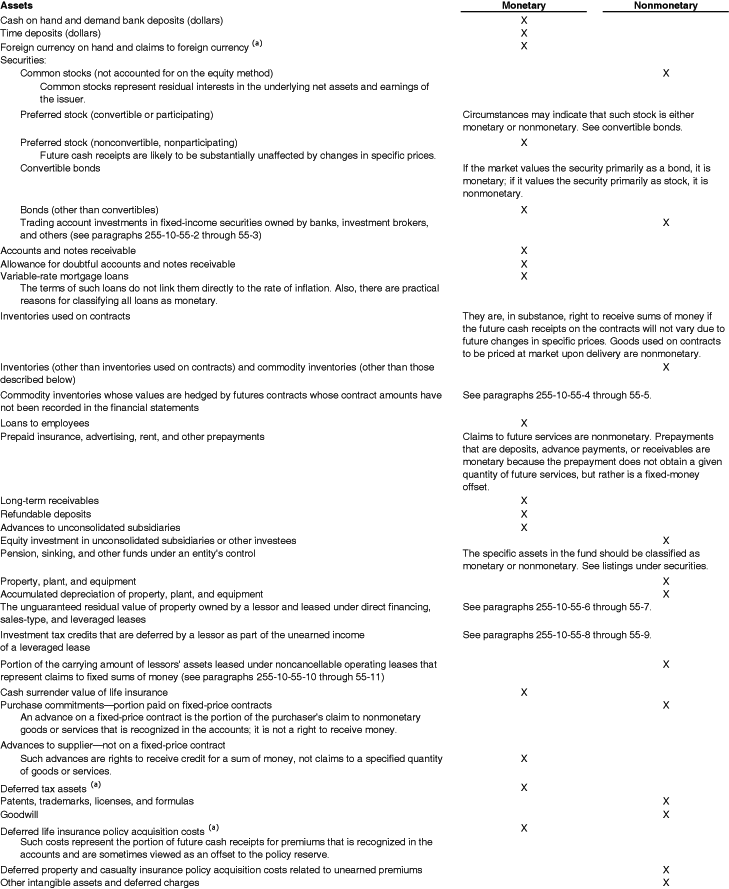 Assets Monetary Nonmonetary Cash on hand and demand bank deposits (dollars) X Time deposits (dollars) X Foreign currency on hand and claims to foreign currency (a) X Securities: Common stocks (not accounted for on the equity method) X Common stocks represent residual interests in the underlying net assets and earnings of the issuer. Preferred stock (convertible or participating) Circumstances may indicate that such stock is either monetary or nonmonetary. See convertible bonds. "Preferred stock (nonconvertible, nonparticipating)" X Future cash receipts are likely to be substantially unaffected by changes in specific prices. Convertible bonds "If the market values the security primarily as a bond, it is monetary; if it values the security primarily as stock, it is nonmonetary." Bonds (other than convertibles) X "Trading account investments in fixed-income securities owned by banks, investment brokers, and others (see paragraphs 255-10-55-2 through 55-3)" X Accounts and notes receivable X Allowance for doubtful accounts and notes receivable X Variable-rate mortgage loans X "The terms of such loans do not link them directly to the rate of inflation. Also, there are practical reasons for classifying all loans as monetary." Inventories used on contracts "They are, in substance, right to receive sums of money if the future cash receipts on the contracts will not vary due to future changes in specific prices. Goods used on contracts to be priced at market upon delivery are nonmonetary." Inventories (other than inventories used on contracts) and commodity inventories (other than those described below) X Commodity inventories whose values are hedged by futures contracts whose contract amounts have not been recorded in the financial statements See paragraphs 255-10-55-4 through 55-5. Loans to employees X "Prepaid insurance, advertising, rent, and other prepayments" "Claims to future services are nonmonetary. Prepayments that are deposits, advance payments, or receivables are monetary because the prepayment does not obtain a given quantity of future services, but rather is a fixed-money offset." Long-term receivables X Refundable deposits X Advances to unconsolidated subsidiaries X Equity investment in unconsolidated subsidiaries or other investees X "Pension, sinking, and other funds under an entity's control" The specific assets in the fund should be classified as monetary or nonmonetary. See listings under securities. "Property, plant, and equipment" X "Accumulated depreciation of property, plant, and equipment" X "The unguaranteed residual value of property owned by a lessor and leased under direct financing, sales-type, and leveraged leases" See paragraphs 255-10-55-6 through 55-7. "Investment tax credits that are deferred by a lessor as part of the unearned income of a leveraged lease" See paragraphs 255-10-55-8 through 55-9. Portion of the carrying amount of lessors' assets leased under noncancellable operating leases that represent claims to fixed sums of money (see paragraphs .255-10-55-10 through 55-11) X Cash surrender value of life insurance X Purchase commitments—portion paid on fixed-price contracts X An advance on a fixed-price contract is the portion of the purchaser's claim to nonmonetary goods or services that is recognized in the accounts; it is not a right to receive money. Advances to supplier—not on a fixed-price contract "Such advances are rights to receive credit for a sum of money, not claims to a specified quantity of goods or services." X Deferred tax assets (a) X "Patents, trademarks, licenses, and formulas" X Goodwill X Deferred life insurance policy acquisition costs (a) X Such costs represent the portion of future cash receipts for premiums that is recognized in the accounts and are sometimes viewed as an offset to the policy reserve. Deferred property and casualty insurance policy acquisition costs related to unearned premiums X Other intangible assets and deferred charges X
 -
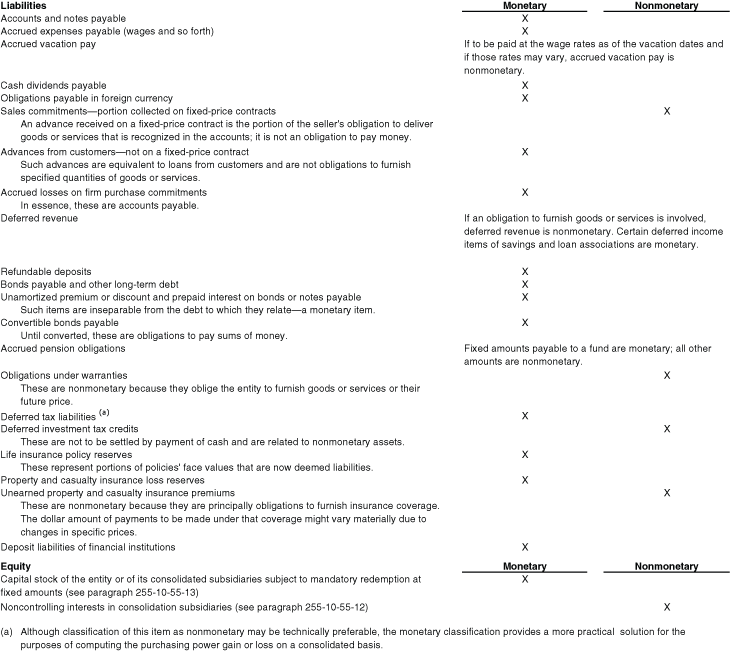 Liabilities Monetary Nonmonetary Accounts and notes payable X Accrued expenses payable (wages and so forth) X Accrued vacation pay "If to be paid at the wage rates as of the vacation dates and if those rates may vary, accrued vacation pay is nonmonetary." Cash dividends payable X Obligations payable in foreign currency X Sales commitments—portion collected on fixed-price contracts X An advance received on a fixed-price contract is the portion of the seller's obligation to deliver goods or services that is recognized in the accounts; it is not an obligation to pay money. Advances from customers—not on a fixed-price contract X Such advances are equivalent to loans from customers and are not obligations to furnish specified quantities of goods or services. Accrued losses on firm purchase commitments X "In essence, these are accounts payable." Deferred revenue "If an obligation to furnish goods or services is involved, deferred revenue is nonmonetary. Certain deferred income items of savings and loan associations are monetary." Refundable deposits X Bonds payable and other long-term debt X Unamortized premium or discount and prepaid interest on bonds or notes payable X Such items are inseparable from the debt to which they relate—a monetary item. Convertible bonds payable X "Until converted, these are obligations to pay sums of money." Accrued pension obligations Fixed amounts payable to a fund are monetary; all other amounts are nonmonetary. Obligations under warranties X These are nonmonetary because they oblige the entity to furnish goods or services or their future price. Deferred tax liabilities (a) X Deferred investment tax credits X These are not to be settled by payment of cash and are related to nonmonetary assets. Life insurance policy reserves X These represent portions of policies' face values that are now deemed liabilities. Property and casualty insurance loss reserves X Unearned property and casualty insurance premiums X These are nonmonetary because they are principally obligations to furnish insurance coverage. The dollar amount of payments to be made under that coverage might vary materially due to changes in specific prices. Deposit liabilities of financial institutions X Equity Monetary Nonmonetary Capital stock of the entity or of its consolidated subsidiaries subject to mandatory redemption at fixed amounts (see paragraph 255-10-55-13) X Noncontrolling interests in consolidation subsidiaries (see paragraph 255-10-55-12) X (a) "Although classification of this item as nonmonetary may be technically preferable, the monetary classification provides a more practical solution for the purposes of computing the purchasing power gain or loss on a consolidated basis."
Illustrations
- a In a schedule of annual information (for example, Schedule 1 or Schedule 2), with notes to those schedules
- b In a five-year summary (for example, Schedule 3 or Schedule 4)
- c In a five-year summary with notes to that summary (for example, Schedule 5).
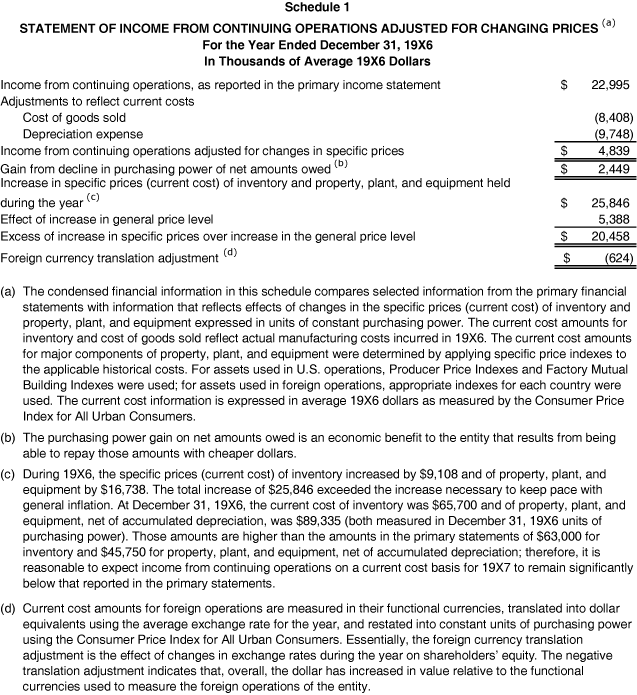 Schedule 1 STATEMENT OF INCOME FROM CONTINUING OPERATIONS ADJUSTED FOR CHANGING PRICES (a) "For the Year Ended December 31, 19X6 " In Thousands of Average 19X6 Dollars "Income from continuing operations, as reported in the primary income statement" " $22,995 " Adjustments to reflect current costs Cost of goods sold " (8,408)" Depreciation expense " (9,748)" Income from continuing operations adjusted for changes in specific prices " $4,839 " Gain from decline in purchasing power of net amounts owed (b) " $2,449 " "Increase in specific prices (current cost) of inventory and property, plant, and equipment held during the year (c)" " $25,846 " Effect of increase in general price level " 5,388 " Excess of increase in specific prices over increase in the general price level " $20,458 " Foreign currency translation adjustment (d) $(624) (a) "The condensed financial information in this schedule compares selected information from the primary financial statements with information that reflects effects of changes in the specific prices (current cost) of inventory and property, plant, and equipment expressed in units of constant purchasing power. The current cost amounts for inventory and cost of goods sold reflect actual manufacturing costs incurred in 19X6. The current cost amounts for major components of property, plant, and equipment were determined by applying specific price indexes to the applicable historical costs. For assets used in U.S. operations, Producer Price Indexes and Factory Mutual Building Indexes were used; for assets used in foreign operations, appropriate indexes for each country were used. The current cost information is expressed in average 19X6 dollars as measured by the Consumer Price Index for All Urban Consumers." (b) The purchasing power gain on net amounts owed is an economic benefit to the entity that results from being able to repay those amounts with cheaper dollars. (c) "During 19X6, the specific prices (current cost) of inventory increased by $9,108 and of property, plant, and equipment by $16,738. The total increase of $25,846 exceeded the increase necessary to keep pace with general inflation. At December 31, 19X6, the current cost of inventory was $65,700 and of property, plant, and equipment, net of accumulated depreciation, was $89,335 (both measured in December 31, 19X6 units of purchasing power). Those amounts are higher than the amounts in the primary statements of $63,000 for inventory and $45,750 for property, plant, and equipment, net of accumulated depreciation; therefore, it is reasonable to expect income from continuing operations on a current cost basis for 19X7 to remain significantly below that reported in the primary statements." (d) "Current cost amounts for foreign operations are measured in their functional currencies, translated into dollar equivalents using the average exchange rate for the year, and restated into constant units of purchasing power using the Consumer Price Index for All Urban Consumers. Essentially, the foreign currency translation adjustment is the effect of changes in exchange rates during the year on shareholders' equity. The negative translation adjustment indicates that, overall, the dollar has increased in value relative to the functional currencies used to measure the foreign operations of the entity."
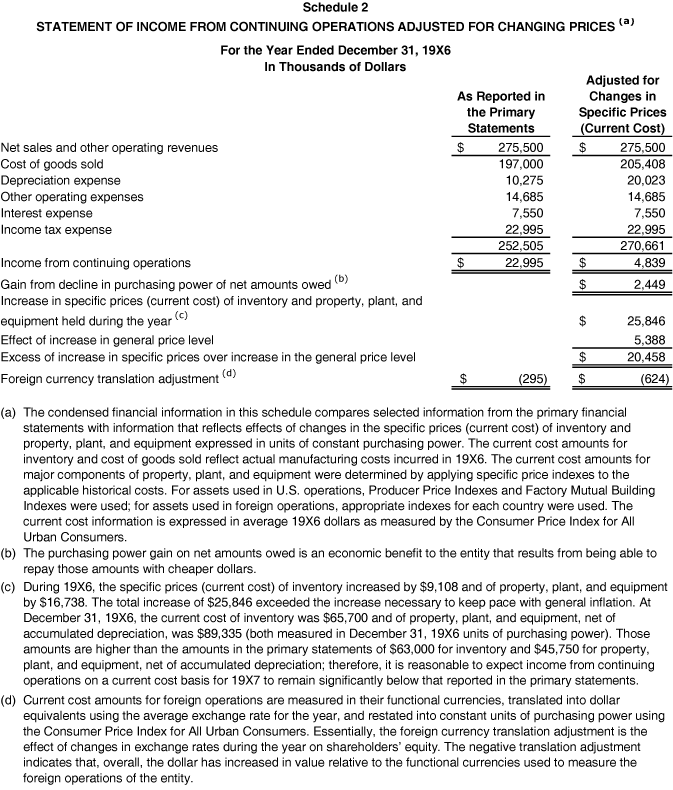 Schedule 2 STATEMENT OF INCOME FROM CONTINUING OPERATIONS ADJUSTED FOR CHANGING PRICES (a) "For the Year Ended December 31, 19X6 " In Thousands of Dollars As Reported in the Primary Statements Adjusted for Changes in Specific Prices (Current Cost) Net sales and other operating revenues " $275,500 " " $275,500 " Cost of goods sold " 197,000 " " 205,408 " Depreciation expense " 10,275 " " 20,023 " Other operating expenses " 14,685 " " 14,685 " Interest expense " 7,550 " " 7,550 " Income tax expense " 22,995 " " 22,995 " " 252,505 " " 270,661 " Income from continuing operations " $22,995 " " $4,839 " Gain from decline in purchasing power of net amounts owed (b) " $2,449 " "Increase in specific prices (current cost) of inventory and property, plant, and equipment held during the year (c)" " $25,846 " Effect of increase in general price level " 5,388 " Excess of increase in specific prices over increase in the general price level " $20,458 " Foreign currency translation adjustment (d) $(295) $(624) (a) "The condensed financial information in this schedule compares selected information from the primary financial statements with information that reflects effects of changes in the specific prices (current cost) of inventory and property, plant, and equipment expressed in units of constant purchasing power. The current cost amounts for inventory and cost of goods sold reflect actual manufacturing costs incurred in 19X6. The current cost amounts for major components of property, plant, and equipment were determined by applying specific price indexes to the applicable historical costs. For assets used in U.S. operations, Producer Price Indexes and Factory Mutual Building Indexes were used; for assets used in foreign operations, appropriate indexes for each country were used. The current cost information is expressed in average 19X6 dollars as measured by the Consumer Price Index for All Urban Consumers." (b) The purchasing power gain on net amounts owed is an economic benefit to the entity that results from being able to repay those amounts with cheaper dollars. (c) "During 19X6, the specific prices (current cost) of inventory increased by $9,108 and of property, plant, and equipment by $16,738. The total increase of $25,846 exceeded the increase necessary to keep pace with general inflation. At December 31, 19X6, the current cost of inventory was $65,700 and of property, plant, and equipment, net of accumulated depreciation, was $89,335 (both measured in December 31, 19X6 units of purchasing power). Those amounts are higher than the amounts in the primary statements of $63,000 for inventory and $45,750 for property, plant, and equipment, net of accumulated depreciation; therefore, it is reasonable to expect income from continuing operations on a current cost basis for 19X7 to remain significantly below that reported in the primary statements." (d) "Current cost amounts for foreign operations are measured in their functional currencies, translated into dollar equivalents using the average exchange rate for the year, and restated into constant units of purchasing power using the Consumer Price Index for All Urban Consumers. Essentially, the foreign currency translation adjustment is the effect of changes in exchange rates during the year on shareholders' equity. The negative translation adjustment indicates that, overall, the dollar has increased in value relative to the functional currencies used to measure the foreign operations of the entity."
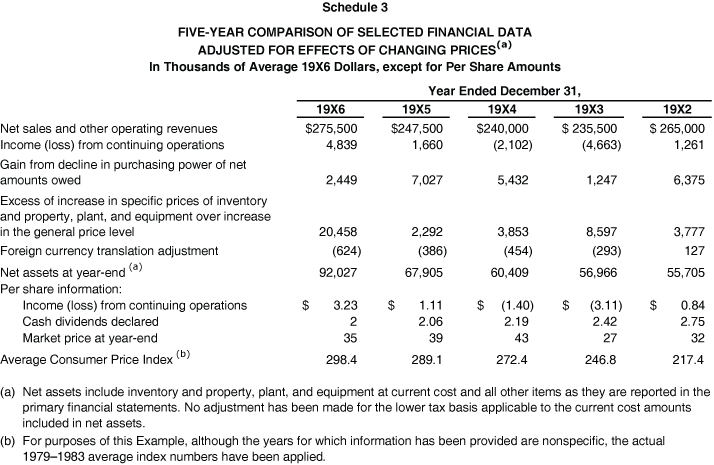 Schedule 3 FIVE-YEAR COMPARISON OF SELECTED FINANCIAL DATA ADJUSTED FOR EFFECTS OF CHANGING PRICES(a) "In Thousands of Average 19X6 Dollars, except for Per Share Amounts" "Year Ended December 31," 19X6 19X5 19X4 19X3 19X2 Net sales and other operating revenues " $275,500 " " $247,500 " " $240,000 " " $235,500 " " $265,000 " Income (loss) from continuing operations " 4,839 " " 1,660 " " (2,102)" " (4,663)" " 1,261 " Gain from decline in purchasing power of net amounts owed " 2,449 " " 7,027 " " 5,432 " " 1,247 " " 6,375 " "Excess of increase in specific prices of inventory and property, plant, and equipment over increase in the general price level" " 20,458 " " 2,292 " " 3,853 " " 8,597 " " 3,777 " Foreign currency translation adjustment (624) (386) (454) (293) 127 Net assets at year-end (a) " 92,027 " " 67,905 " " 60,409 " " 56,966 " " 55,705 " Per share information: Income (loss) from continuing operations $3.23 $1.11 $(1.40) $(3.11) $0.84 Cash dividends declared 2 2.06 2.19 2.42 2.75 Market price at year-end 35 39 43 27 32 Average Consumer Price Index (b) 298.4 289.1 272.4 246.8 217.4 (a) "Net assets include inventory and property, plant, and equipment at current cost and all other items as they are reported in the primary financial statements. No adjustment has been made for the lower tax basis applicable to the current cost amounts included in net assets." (b) "For purposes of this Example, although the years for which information has been provided are nonspecific, the actual 1979-1983 average index numbers have been applied."
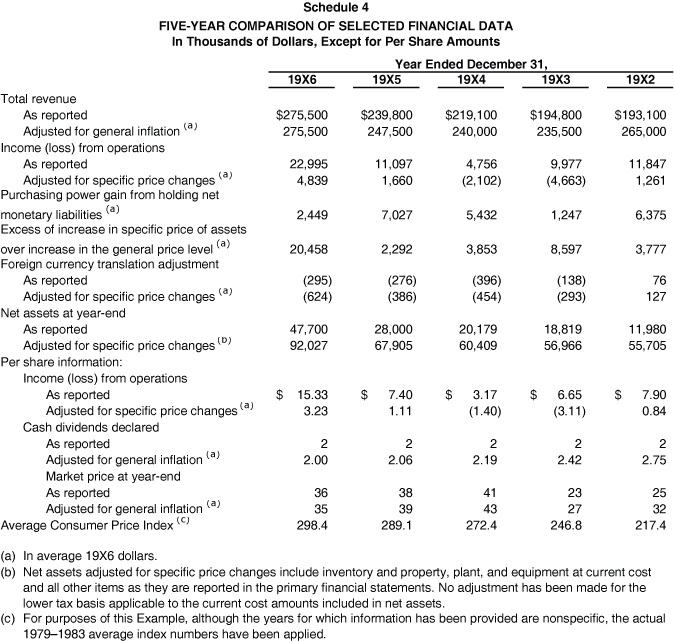 Schedule 4 FIVE-YEAR COMPARISON OF SELECTED FINANCIAL DATA "In Thousands of Dollars, Except for Per Share Amounts" "Year Ended December 31," 19X6 19X5 19X4 19X3 19X2 Total revenue As reported " $275,500 " " $239,800 " " $219,100 " " $194,800 " " $193,100 " Adjusted for general inflation (a) " 275,500 " " 247,500 " " 240,000 " " 235,500 " " 265,000 " Income (loss) from operations As reported " 22,995 " " 11,097 " " 4,756 " " 9,977 " " 11,847 " Adjusted for specific price changes (a) " 4,839 " " 1,660 " " (2,102)" " (4,663)" " 1,261 " Purchasing power gain from holding net monetary liabilities (a) " 2,449 " " 7,027 " " 5,432 " " 1,247 " " 6,375 " Excess of increase in specific price of assets over increase in the general price level (a) " 20,458 " " 2,292 " " 3,853 " " 8,597 " " 3,777 " Foreign currency translation adjustment As reported (295) (276) (396) (138) 76 Adjusted for specific price changes (a) (624) (386) (454) (293) 127 Net assets at year-end As reported " 47,700 " " 28,000 " " 20,179 " " 18,819 " " 11,980 " Adjusted for specific price changes (b) " 92,027 " " 67,905 " " 60,409 " " 56,966 " " 55,705 " Per share information: Income (loss) from operations As reported $15.33 $7.40 $3.17 $6.65 $7.90 Adjusted for specific price changes (a) 3.23 1.11 (1.40) (3.11) 0.84 Cash dividends declared As reported 2 2 2 2 2 Adjusted for general inflation (a) 2.00 2.06 2.19 2.42 2.75 Market price at year-end As reported 36 38 41 23 25 Adjusted for general inflation (a) 35 39 43 27 32 Average Consumer Price Index (c) 298.4 289.1 272.4 246.8 217.4 (a) In average 19X6 dollars. (b) "Net assets adjusted for specific price changes include inventory and property, plant, and equipment at current cost and all other items as they are reported in the primary financial statements. No adjustment has been made for the lower tax basis applicable to the current cost amounts included in net assets." (c) "For purposes of this Example, although the years for which information has been provided are nonspecific, the actual 1979-1983 average index numbers have been applied."
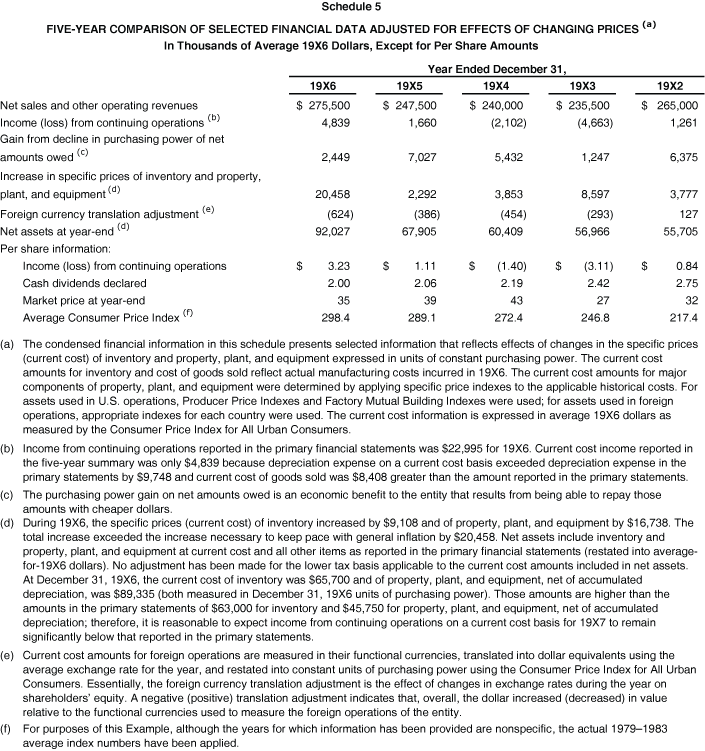 Schedule 5 FIVE-YEAR COMPARISON OF SELECTED FINANCIAL DATA ADJUSTED FOR EFFECTS OF CHANGING PRICES (a) "In Thousands of Average 19X6 Dollars, Except for Per Share Amounts" "Year Ended December 31," 19X6 19X5 19X4 19X3 19X2 Net sales and other operating revenues " $275,500 " " $247,500 " " $240,000 " " $235,500 " " $265,000 " Income (loss) from continuing operations (b) " 4,839 " " 1,660 " " (2,102)" " (4,663)" " 1,261 " Gain from decline in purchasing power of net amounts owed (c) " 2,449 " " 7,027 " " 5,432 " " 1,247 " " 6,375 " "Increase in specific prices of inventory and property, plant, and equipment (d)" " 20,458 " " 2,292 " " 3,853 " " 8,597 " " 3,777 " Foreign currency translation adjustment (e) (624) (386) (454) (293) 127 Net assets at year-end (d) " 92,027 " " 67,905 " " 60,409 " " 56,966 " " 55,705 " Per share information: Income (loss) from continuing operations $3.23 $1.11 $(1.40) $(3.11) $0.84 Cash dividends declared 2.00 2.06 2.19 2.42 2.75 Market price at year-end 35 39 43 27 32 Average Consumer Price Index (f) 298.4 289.1 272.4 246.8 217.4 (a) "The condensed financial information in this schedule presents selected information that reflects effects of changes in the specific prices (current cost) of inventory and property, plant, and equipment expressed in units of constant purchasing power. The current cost amounts for inventory and cost of goods sold reflect actual manufacturing costs incurred in 19X6. The current cost amounts for major components of property, plant, and equipment were determined by applying specific price indexes to the applicable historical costs. For assets used in U.S. operations, Producer Price Indexes and Factory Mutual Building Indexes were used; for assets used in foreign operations, appropriate indexes for each country were used. The current cost information is expressed in average 19X6 dollars as measured by the Consumer Price Index for All Urban Consumers." (b) "Income from continuing operations reported in the primary financial statements was $22,995 for 19X6. Current cost income reported in the five-year summary was only $4,839 because depreciation expense on a current cost basis exceeded depreciation expense in the primary statements by $9,748 and current cost of goods sold was $8,408 greater than the amount reported in the primary statements." (c) The purchasing power gain on net amounts owed is an economic benefit to the entity that results from being able to repay those amounts with cheaper dollars. (d) "During 19X6, the specific prices (current cost) of inventory increased by $9,108 and of property, plant, and equipment by $16,738. The total increase exceeded the increase necessary to keep pace with general inflation by $20,458. Net assets include inventory and property, plant, and equipment at current cost and all other items as reported in the primary financial statements (restated into average-for-19X6 dollars). No adjustment has been made for the lower tax basis applicable to the current cost amounts included in net assets. At December 31, 19X6, the current cost of inventory was $65,700 and of property, plant, and equipment, net of accumulated depreciation, was $89,335 (both measured in December 31, 19X6 units of purchasing power). Those amounts are higher than the amounts in the primary statements of $63,000 for inventory and $45,750 for property, plant, and equipment, net of accumulated depreciation; therefore, it is reasonable to expect income from continuing operations on a current cost basis for 19X7 to remain significantly below that reported in the primary statements." (e) "Current cost amounts for foreign operations are measured in their functional currencies, translated into dollar equivalents using the average exchange rate for the year, and restated into constant units of purchasing power using the Consumer Price Index for All Urban Consumers. Essentially, the foreign currency translation adjustment is the effect of changes in exchange rates during the year on shareholders' equity. A negative (positive) translation adjustment indicates that, overall, the dollar increased (decreased) in value relative to the functional currencies used to measure the foreign operations of the entity." (f) "For purposes of this Example, although the years for which information has been provided are nonspecific, the actual 1979-1983 average index numbers have been applied."
- a Analyze inventory (at the beginning and end of the year) and cost of goods sold to determine when the costs were incurred.
- b Restate inventory and cost of goods sold into current cost.
- c Analyze property, plant, and equipment to determine when the related assets were acquired.
- d Restate property, plant, and equipment and depreciation, depletion, and amortization expense into current cost.
- e Identify the amount of net monetary items (see paragraphs ) at the beginning and end of the period and changes during the period.
- f Compute the purchasing power gain or loss on net monetary items.
- g Compute the change in current cost of inventory and property, plant, and equipment and the related effect of the increase in the general price level.
- a Paragraphs illustrate the minimum recommended calculations for the domestic operations of Parent Company. A method of checking the arithmetic accuracy of the calculations is included in paragraph 255-10-55-51.
- b Paragraphs illustrate the translate-restate method for Sub Company, a foreign subsidiary that does not use the dollar as a functional currency. A method of checking the arithmetic accuracy of the calculations is included in paragraph 255-10-55-71.
- c The results of the calculations described in (a) and (b) are summarized in paragraph 255-10-55-75 and are reflected in the illustrative disclosures in paragraphs .
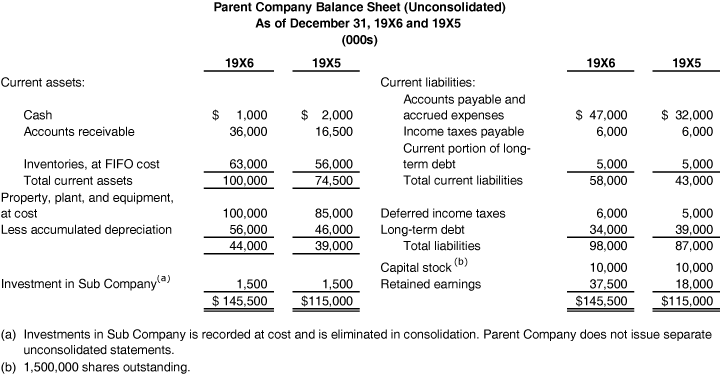 Parent Company Balance Sheet (Unconsolidated) "As of December 31, 19X6 and 19X5 " (000s) 19X6 19X5 19X6 19X5 Current assets: Current liabilities: Cash " $1,000 " " $2,000 " Accounts payable and accrued expenses " $47,000 " " $32,000 " Accounts receivable " 36,000 " " 16,500 " Income taxes payable " 6,000 " " 6,000 " "Inventories, at FIFO cost" " 63,000 " " 56,000 " Current portion of long-term debt " 5,000 " " 5,000 " Total current assets " 100,000 " " 74,500 " Total current liabilities " 58,000 " " 43,000 " "Property, plant, and equipment, at cost" " 100,000 " " 85,000 " Deferred income taxes " 6,000 " " 5,000 " Less accumulated depreciation " 56,000 " " 46,000 " Long-term debt " 34,000 " " 39,000 " " 44,000 " " 39,000 " Total liabilities " 98,000 " " 87,000 " Capital stock (b) " 10,000 " " 10,000 " Investment in Sub Company(a) " 1,500 " " 1,500 " Retained earnings " 37,500 " " 18,000 " " $145,500 " " $115,000 " " $145,500 " " $115,000 " (a) Investments in Sub Company is recorded at cost and is eliminated in consolidation. Parent Company does not issue separate unconsolidated statements. (b) "1,500,000 shares outstanding."
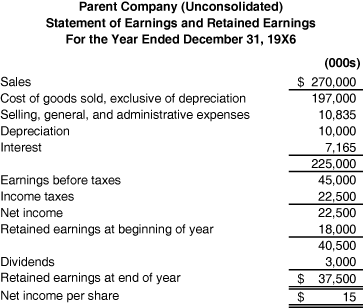 Parent Company (Unconsolidated) Statement of Earnings and Retained Earnings "For the Year Ended December 31, 19X6" (000s) Sales " $270,000 " "Cost of goods sold, exclusive of depreciation" " 197,000 " "Selling, general, and administrative expenses" " 10,835 " Depreciation " 10,000 " Interest " 7,165 " " 225,000 " Earnings before taxes " 45,000 " Income taxes " 22,500 " Net income " 22,500 " Retained earnings at beginning of year " 18,000 " " 40,500 " Dividends " 3,000 " Retained earnings at end of year " $37,500 " Net income per share $15
- a Inventory is accounted for on a first-in, first-out (FIFO) basis and turns over four times per year. There is no significant amount of work in progress or raw materials.
- b At December 31, 19X6, and 19X5, inventory consisted of 900,000 units and 1,000,000 units respectively—representing production of the immediately preceding quarter. Management has measured the current cost of inventory at $73 per unit at December 31, 19X6 ($65,700,000), and $58 per unit at December 31, 19X5 ($58,000,000).
- c Costs were incurred and goods produced as follows.
-
 (000s) 19X5 19X6 4th 1st 2nd 3rd 4th Total Historical costs " $56,000 " " $39,560 " " $59,400 " " $42,040 " " $63,000 " " $204,000 " Units produced " 1,000 " 618 900 618 900 " 3,036 " Units sold " 1,000 " 618 900 618 " 3,136 "
-
- d At December 31, 19X6, the selling price per unit was $85.
- e There were no write-downs or disposals of inventory.
- a Details of fixed assets at December 31, 19X6, are as follows.
-
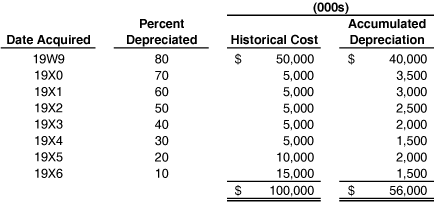 (000s) Date Acquired Percent Depreciated Historical Cost Accumulated Depreciation 19W9 80 " $50,000 " " $40,000 " 19X0 70 " 5,000 " " 3,500 " 19X1 60 " 5,000 " " 3,000 " 19X2 50 " 5,000 " " 2,500 " 19X3 40 " 5,000 " " 2,000 " 19X4 30 " 5,000 " " 1,500 " 19X5 20 " 10,000 " " 2,000 " 19X6 10 " 15,000 " " 1,500 " " $100,000 " " $56,000 "
-
- b Depreciation is calculated at 10 percent per annum, straight line. A full year's depreciation is charged in the year of acquisition.
- c There were no disposals.
- d Management has measured the current cost of property, plant, and equipment at December 31, 19X6, and 19X5, as follows.
-
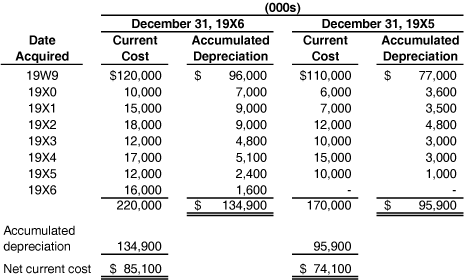 (000s) "December 31, 19X6" "December 31, 19X5" Date Acquired Current Cost Accumulated Depreciation Current Cost Accumulated Depreciation 19W9 " $120,000 " " $96,000 " " $110,000 " " $77,000 " 19X0 " 10,000 " " 7,000 " " 6,000 " " 3,600 " 19X1 " 15,000 " " 9,000 " " 7,000 " " 3,500 " 19X2 " 18,000 " " 9,000 " " 12,000 " " 4,800 " 19X3 " 12,000 " " 4,800 " " 10,000 " " 3,000 " 19X4 " 17,000 " " 5,100 " " 15,000 " " 3,000 " 19X5 " 12,000 " " 2,400 " " 10,000 " " 1,000 " 19X6 " 16,000 " " 1,600 " - - " 220,000 " " $134,900 " " 170,000 " " $95,900 " Accumulated depreciation " 134,900 " " 95,900 " Net current cost " $85,100 " " $74,100 "
-
- e The recoverable amount has been determined by management to be in excess of current cost, net of accumulated depreciation.
-
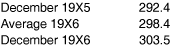 December 19X5 292.4 Average 19X6 298.4 December 19X6 303.5
-
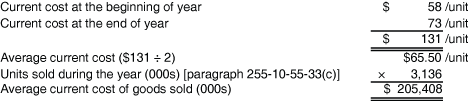 Current cost at the beginning of year $58 /unit Current cost at the end of year 73 /unit $131 /unit Average current cost ($131 ÷ 2) $65.50 /unit Units sold during the year (000s) [paragraph 255-10-55-33(c)] "× 3,136" Average current cost of goods sold (000s) " $205,408 "
-
 Market price per unit at end of year $85 Current cost per unit of inventory on hand at end of year 73 Excess—no write-down required $12
-
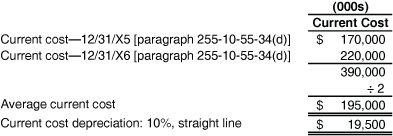 (000s) Current Cost Current cost—12/31/X5 [paragraph 255-10-55-34(d)] " $170,000 " Current cost—12/31/X6 [paragraph 255-10-55-34(d)] " 220,000 " " 390,000 " ÷ 2 Average current cost " $195,000 " "Current cost depreciation: 10%, straight line" " $19,500 "
-
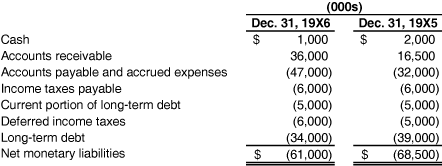 (000s) "Dec. 31, 19X6" "Dec. 31, 19X5" Cash " $1,000 " " $2,000 " Accounts receivable " 36,000 " " 16,500 " Accounts payable and accrued expenses " (47,000)" " (32,000)" Income taxes payable " (6,000)" " (6,000)" Current portion of long-term debt " (5,000)" " (5,000)" Deferred income taxes " (6,000)" " (5,000)" Long-term debt " (34,000)" " (39,000)" Net monetary liabilities " $(61,000)" " $(68,500)"
-
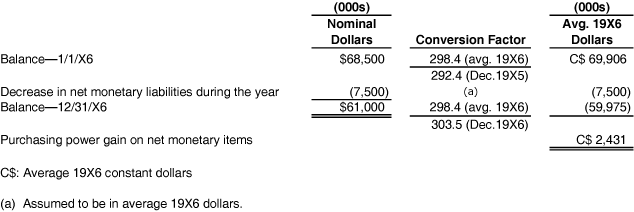 (000s) (000s) Nominal Dollars Conversion Factor Avg. 19X6 Dollars Balance—1/1/X6 " $68,500 " 298.4 (avg. 19X6) " C$ 69,906 " 292.4 (Dec.19X5) Decrease in net monetary liabilities during the year " (7,500)" (a) " (7,500)" Balance—12/31/X6 " $61,000 " 298.4 (avg. 19X6) " (59,975)" 303.5 (Dec.19X6) Purchasing power gain on net monetary items " C$ 2,431 " C$: Average 19X6 constant dollars (a) Assumed to be in average 19X6 dollars.
-
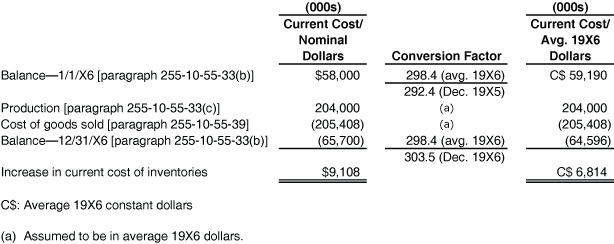 (000s) (000s) Current Cost/ Nominal Dollars Conversion Factor Current Cost/ Avg. 19X6 Dollars Balance—1/1/X6 [paragraph 255-10-55-33(b)] " $58,000 " 298.4 (avg. 19X6) " C$ 59,190 " 292.4 (Dec. 19X5) Production [paragraph 255-10-55-33(c)] " 204,000 " (a) " 204,000 " Cost of goods sold [paragraph 255-10-55-39] " (205,408)" (a) " (205,408)" Balance—12/31/X6 [paragraph 255-10-55-33(b)] " (65,700)" 298.4 (avg. 19X6) " (64,596)" 303.5 (Dec. 19X6) Increase in current cost of inventories " $9,108 " " C$ 6,814 " C$: Average 19X6 constant dollars (a) Assumed to be in average 19X6 dollars.
-
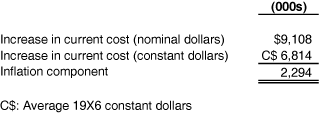 (000s) Increase in current cost (nominal dollars) " $9,108 " Increase in current cost (constant dollars) " C$ 6,814 " Inflation component " 2,294 " C$: Average 19X6 constant dollars
-
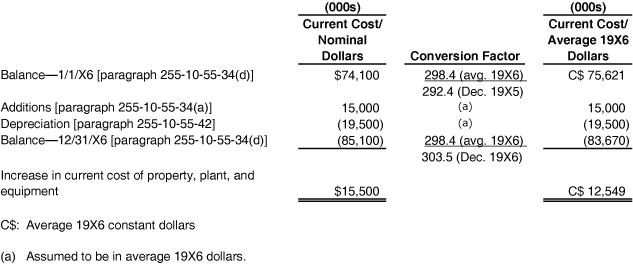 (000s) (000s) Current Cost/ Nominal Dollars Conversion Factor Current Cost/ Average 19X6 Dollars Balance—1/1/X6 [paragraph 255-10-55-34(d)] " $74,100 " 298.4 (avg. 19X6) " C$ 75,621 " 292.4 (Dec. 19X5) Additions [paragraph 255-10-55-34(a)] " 15,000 " (a) " 15,000 " Depreciation [paragraph 255-10-55-42] " (19,500)" (a) " (19,500)" Balance—12/31/X6 [paragraph 255-10-55-34(d)] " (85,100)" 298.4 (avg. 19X6) " (83,670)" 303.5 (Dec. 19X6) "Increase in current cost of property, plant, and equipment" " $15,500 " " C$ 12,549 " C$: Average 19X6 constant dollars (a) Assumed to be in average 19X6 dollars.
-
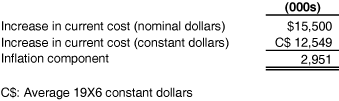 (000s) Increase in current cost (nominal dollars) " $15,500 " Increase in current cost (constant dollars) " C$ 12,549 " Inflation component " 2,951 " C$: Average 19X6 constant dollars
-
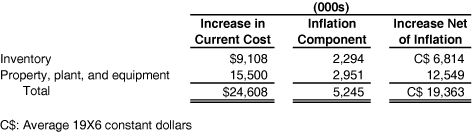 (000s) Increase in Current Cost Inflation Component Increase Net of Inflation Inventory " $9,108 " " 2,294 " " C$ 6,814 " "Property, plant, and equipment" " 15,500 " " 2,951 " " 12,549 " Total " $24,608 " " 5,245 " " C$ 19,363 " C$: Average 19X6 constant dollars
-
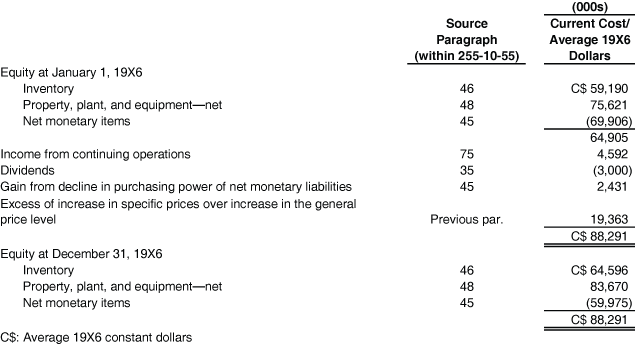 (000s) " Source Paragraph (within 255-10-55)" Current Cost/ Average 19X6 Dollars "Equity at January 1, 19X6" Inventory 46 " C$ 59,190 " "Property, plant, and equipment—net" 48 " 75,621 " Net monetary items 45 " (69,906)" " 64,905 " Income from continuing operations 75 " 4,592 " Dividends 35 " (3,000)" Gain from decline in purchasing power of net monetary liabilities 45 " 2,431 " "Excess of increase in specific prices over increase in the general price level" Previous par. " 19,363 " " C$ 88,291 " "Equity at December 31, 19X6" Inventory 46 " C$ 64,596 " "Property, plant, and equipment—net" 48 " 83,670 " Net monetary items 45 " (59,975)" " C$ 88,291 " C$: Average 19X6 constant dollars
-
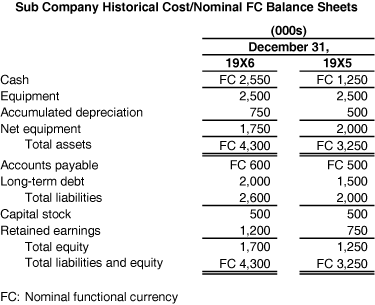 Sub Company Historical Cost/Nominal FC Balance Sheets (000s) "December 31," 19X6 19X5 Cash " FC 2,550 " " FC 1,250 " Equipment " 2,500 " " 2,500 " Accumulated depreciation 750 500 Net equipment " 1,750 " " 2,000 " Total assets " FC 4,300 " " FC 3,250 " Accounts payable FC 600 FC 500 Long-term debt " 2,000 " " 1,500 " Total liabilities " 2,600 " " 2,000 " Capital stock 500 500 Retained earnings " 1,200 " 750 Total equity " 1,700 " " 1,250 " Total liabilities and equity " FC 4,300 " " FC 3,250 " FC: Nominal functional currency
 -
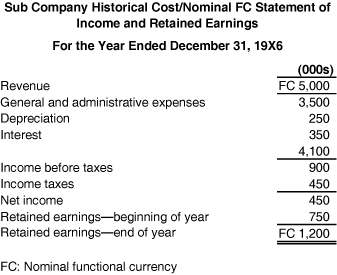 Sub Company Historical Cost/Nominal FC Statement of Income and Retained Earnings "For the Year Ended December 31, 19X6" (000s) Revenue " FC 5,000 " General and administrative expenses " 3,500 " Depreciation 250 Interest 350 " 4,100 " Income before taxes 900 Income taxes 450 Net income 450 Retained earnings—beginning of year 750 Retained earnings—end of year " FC 1,200 " FC: Nominal functional currency
-
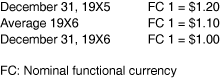 "December 31, 19X5" FC 1 = $1.20 Average 19X6 FC 1 = $1.10 "December 31, 19X6" FC 1 = $1.00 FC: Nominal functional currency
-
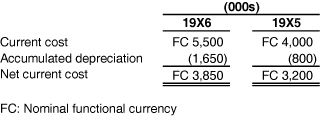 (000s) 19X6 19X5 Current cost " FC 5,500 " " FC 4,000 " Accumulated depreciation " (1,650)" (800) Net current cost " FC 3,850 " " FC 3,200 " FC: Nominal functional currency
-
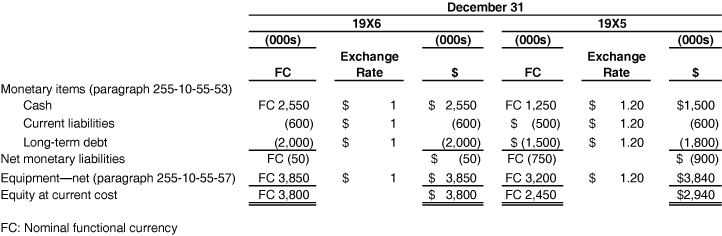 December 31 19X6 19X5 (000s) (000s) (000s) (000s) FC Exchange Rate $ FC Exchange Rate $ Monetary items (paragraph 255-10-55-53) Cash " FC 2,550 " $1 " $2,550 " " FC 1,250 " $1.20 " $1,500 " Current liabilities (600) $1 (600) $(500) $1.20 (600) Long-term debt " (2,000)" $1 " (2,000)" " $(1,500)" $1.20 " (1,800)" Net monetary liabilities FC (50) $(50) FC (750) $(900) Equipment—net (paragraph 255-10-55-57) " FC 3,850 " $1 " $3,850 " " FC 3,200 " $1.20 " $3,840 " Equity at current cost " FC 3,800 " " $3,800 " " FC 2,450 " " $2,940 " FC: Nominal functional currency
-
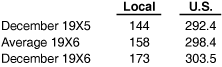 Local U.S. December 19X5 144 292.4 Average 19X6 158 298.4 December 19X6 173 303.5
-
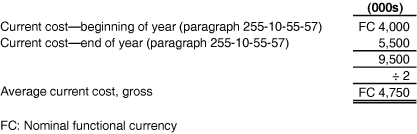 (000s) Current cost—beginning of year (paragraph 255-10-55-57) " FC 4,000 " Current cost—end of year (paragraph 255-10-55-57) " 5,500 " " 9,500 " ÷ 2 "Average current cost, gross" " FC 4,750 " FC: Nominal functional currency
-
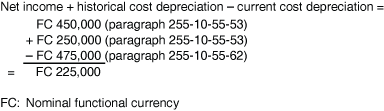 Net income + historical cost depreciation - current cost depreciation = " FC 450,000 (paragraph 255-10-55-53) + FC 250,000 (paragraph 255-10-55-53) - FC 475,000 (paragraph 255-10-55-62)" = "FC 225,000" FC: Nominal functional currency
-
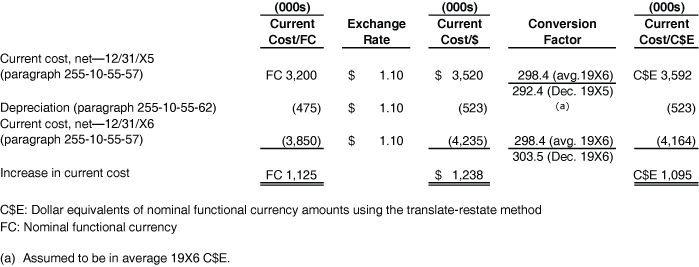 (000s) (000s) (000s) Current Cost/FC Exchange Rate Current Cost/$ Conversion Factor Current Cost/C$E "Current cost, net—12/31/X5 (paragraph 255-10-55-57)" " FC 3,200 " $1.10 " $3,520 " 298.4 (avg.19X6) " C$E 3,592 " 292.4 (Dec. 19X5) Depreciation (paragraph 255-10-55-62) (475) $1.10 (523) (a) (523) "Current cost, net—12/31/X6 (paragraph 255-10-55-57)" " (3,850)" $1.10 " (4,235)" 298.4 (avg. 19X6) " (4,164)" 303.5 (Dec. 19X6) Increase in current cost " FC 1,125 " " $1,238 " " C$E 1,095 " C$E: Dollar equivalents of nominal functional currency amounts using the translate-restate method FC: Nominal functional currency (a) Assumed to be in average 19X6 C$E.
-
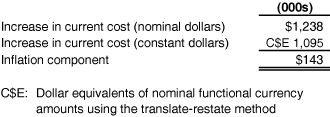 (000s) Increase in current cost (nominal dollars) " $1,238 " Increase in current cost (constant dollars) " C$E 1,095 " Inflation component $143 C$E: Dollar equivalents of nominal functional currency amounts using the translate-restate method
-
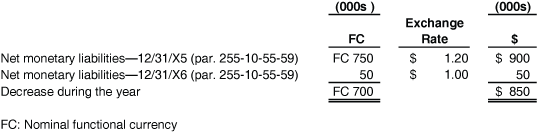 (000s ) (000s) FC Exchange Rate $ Net monetary liabilities—12/31/X5 (par. 255-10-55-59) FC 750 $1.20 $900 Net monetary liabilities—12/31/X6 (par. 255-10-55-59) 50 $1.00 50 Decrease during the year FC 700 $850 FC: Nominal functional currency
 -
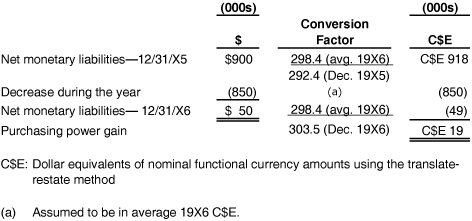 (000s) (000s) $ Conversion Factor C$E Net monetary liabilities—12/31/X5 $900 298.4 (avg. 19X6) C$E 918 292.4 (Dec. 19X5) Decrease during the year (850) (a) (850) Net monetary liabilities— 12/31/X6 $50 298.4 (avg. 19X6) (49) Purchasing power gain 303.5 (Dec. 19X6) C$E 19 C$E: Dollar equivalents of nominal functional currency amounts using the translate-restate method (a) Assumed to be in average 19X6 C$E.
-
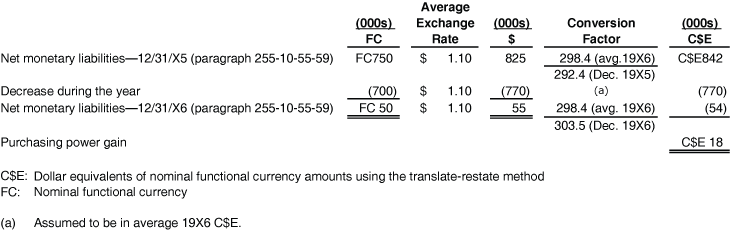 (000s) FC Average Exchange Rate (000s) $ Conversion Factor (000s) C$E Net monetary liabilities—12/31/X5 (paragraph 255-10-55-59) FC750 $1.10 825 298.4 (avg.19X6) C$E842 292.4 (Dec. 19X5) Decrease during the year (700) $1.10 (770) (a) (770) Net monetary liabilities—12/31/X6 (paragraph 255-10-55-59) FC 50 $1.10 55 298.4 (avg. 19X6) (54) 303.5 (Dec. 19X6) Purchasing power gain C$E 18 C$E: Dollar equivalents of nominal functional currency amounts using the translate-restate method FC: Nominal functional currency (a) Assumed to be in average 19X6 C$E.
-
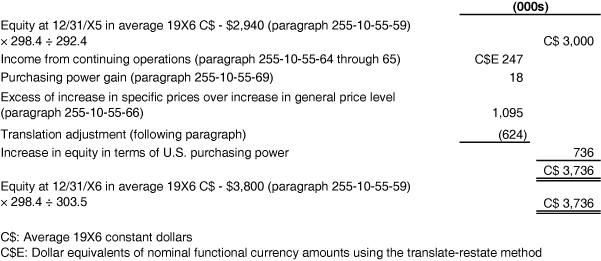 (000s) "Equity at 12/31/X5 in average 19X6 C$ - $2,940 (paragraph 255-10-55-59) × 298.4 ÷ 292.4" " C$ 3,000 " Income from continuing operations (paragraph 255-10-55-64 through 65) C$E 247 Purchasing power gain (paragraph 255-10-55-69) 18 Excess of increase in specific prices over increase in general price level (paragraph 255-10-55-66) " 1,095 " Translation adjustment (following paragraph) (624) Increase in equity in terms of U.S. purchasing power 736 " C$ 3,736 " "Equity at 12/31/X6 in average 19X6 C$ - $3,800 (paragraph 255-10-55-59) × 298.4 ÷ 303.5" " C$ 3,736 " C$: Average 19X6 constant dollars C$E: Dollar equivalents of nominal functional currency amounts using the translate-restate method
-
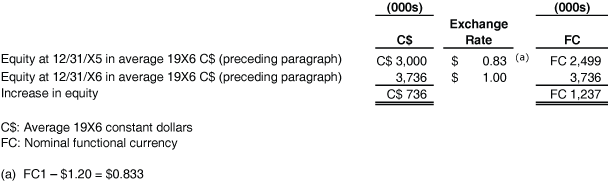 (000s) (000s) C$ Exchange Rate FC (000s) (000s) " C$" Exchange Rate " FC" Equity at 12/31/X5 in average 19X6 C$ (preceding paragraph) " C$ 3,000 " $0.83 (a) " FC 2,499 " Equity at 12/31/X6 in average 19X6 C$ (preceding paragraph) " 3,736 " $1.00 " 3,736 " Increase in equity C$ 736 " FC 1,237 " C$: Average 19X6 constant dollars FC: Nominal functional currency (a) FC1 - $1.20 = $0.833
 -
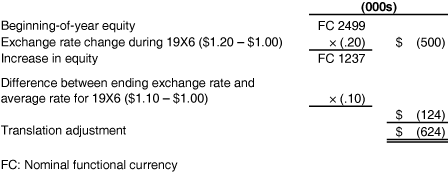 (000s) Beginning-of-year equity FC 2499 Exchange rate change during 19X6 ($1.20 - $1.00) × (.20) $(500) Increase in equity FC 1237 Difference between ending exchange rate and average rate for 19X6 ($1.10 - $1.00) × (.10) $(124) Translation adjustment $(624) FC: Nominal functional currency
-
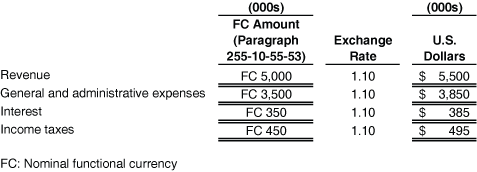 (000s) (000s) "FC Amount (Paragraph 255-10-55-53)" Exchange Rate U.S. Dollars Revenue "FC 5,000" 1.10 " $5,500 " General and administrative expenses "FC 3,500" 1.10 " $3,850 " Interest FC 350 1.10 $385 Income taxes FC 450 1.10 $495 FC: Nominal functional currency
-
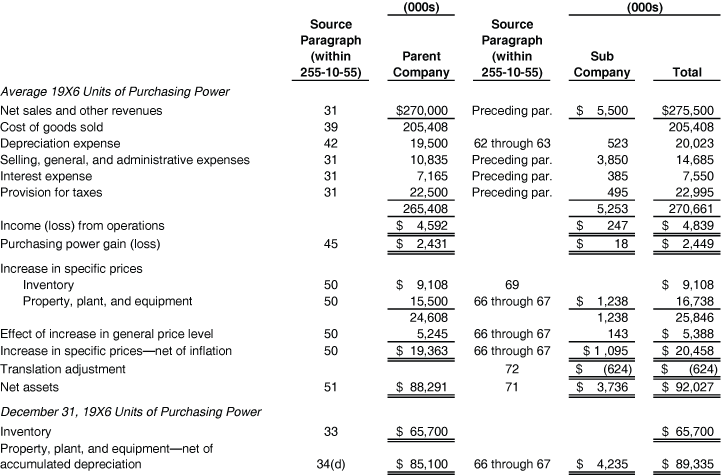 (000s) (000s) "Source Paragraph (within 255-10-55)" Parent Company "Source Paragraph (within 255-10-55)" Sub Company Total Average 19X6 Units of Purchasing Power Net sales and other revenues 31 " $270,000 " Preceding par. " $5,500 " " $275,500 " Cost of goods sold 39 " 205,408 " " 205,408 " Depreciation expense 42 " 19,500 " 62 through 63 523 " 20,023 " "Selling, general, and administrative expenses" 31 " 10,835 " Preceding par. " 3,850 " " 14,685 " Interest expense 31 " 7,165 " Preceding par. 385 " 7,550 " Provision for taxes 31 " 22,500 " Preceding par. 495 " 22,995 " " 265,408 " " 5,253 " " 270,661 " Income (loss) from operations " $4,592 " $247 " $4,839 " Purchasing power gain (loss) 45 " $2,431 " $18 " $2,449 " Increase in specific prices Inventory 50 " $9,108 " 69 " $9,108 " "Property, plant, and equipment" 50 " 15,500 " 66 through 67 " $1,238 " " 16,738 " " 24,608 " " 1,238 " " 25,846 " Effect of increase in general price level 50 " 5,245 " 66 through 67 143 " $5,388 " Increase in specific prices—net of inflation 50 " $19,363 " 66 through 67 " $ 1 ,095 " " $20,458 " Translation adjustment 72 $(624) $(624) Net assets 51 " $88,291 " 71 " $3,736 " " $92,027 " "December 31, 19X6 Units of Purchasing Power" Inventory 33 " $65,700 " " $65,700 " "Property, plant, and equipment—net of accumulated depreciation" 34(d) " $85,100 " 66 through 67 " $4,235 " " $89,335 "
-
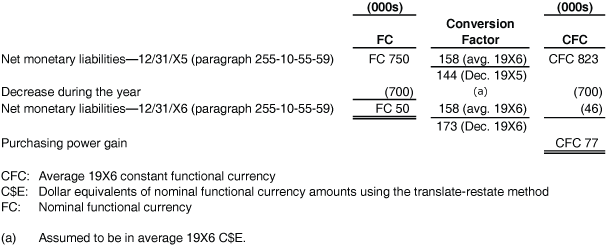 (000s) (000s) FC Conversion Factor CFC Net monetary liabilities—12/31/X5 (paragraph 255-10-55-59) FC 750 158 (avg. 19X6) CFC 823 144 (Dec. 19X5) Decrease during the year (700) (a) (700) Net monetary liabilities—12/31/X6 (paragraph 255-10-55-59) FC 50 158 (avg. 19X6) (46) 173 (Dec. 19X6) Purchasing power gain CFC 77 CFC: Average 19X6 constant functional currency C$E: Dollar equivalents of nominal functional currency amounts using the translate-restate method FC: Nominal functional currency (a) Assumed to be in average 19X6 C$E.
-
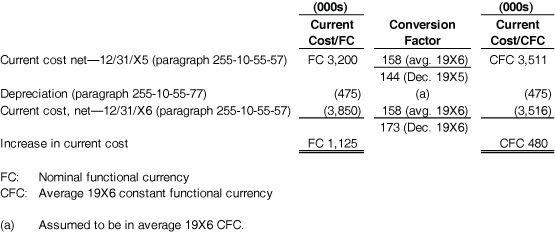 (000s) (000s) Current Cost/FC Conversion Factor Current Cost/CFC Current cost net—12/31/X5 (paragraph 255-10-55-57) " FC 3,200 " 158 (avg. 19X6) " CFC 3,511 " 144 (Dec. 19X5) Depreciation (paragraph 255-10-55-77) (475) (a) (475) "Current cost, net—12/31/X6 (paragraph 255-10-55-57)" " (3,850)" 158 (avg. 19X6) " (3,516)" 173 (Dec. 19X6) Increase in current cost " FC 1,125 " CFC 480 FC: Nominal functional currency CFC: Average 19X6 constant functional currency (a) Assumed to be in average 19X6 CFC.
-
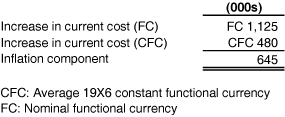 (000s) Increase in current cost (FC) " FC 1,125 " Increase in current cost (CFC) CFC 480 Inflation component 645 CFC: Average 19X6 constant functional currency FC: Nominal functional currency
-
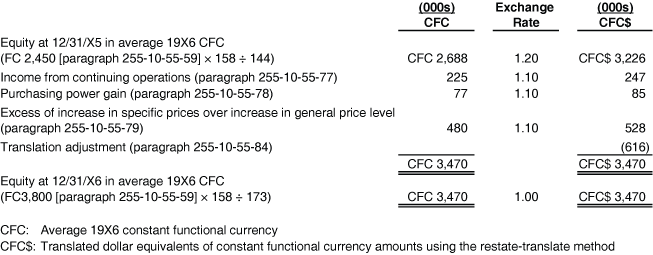 (000s) Exchange (000s) CFC Rate CFC$ "Equity at 12/31/X5 in average 19X6 CFC (FC 2,450 [paragraph 255-10-55-59] × 158 ÷ 144)" " CFC 2,688 " 1.20 " CFC$ 3,226 " Income from continuing operations (paragraph 255-10-55-77) 225 1.10 247 Purchasing power gain (paragraph 255-10-55-78) 77 1.10 85 Excess of increase in specific prices over increase in general price level (paragraph 255-10-55-79) 480 1.10 528 Translation adjustment (paragraph 255-10-55-84) (616) " CFC 3,470 " " CFC$ 3,470 " "Equity at 12/31/X6 in average 19X6 CFC (FC3,800 [paragraph 255-10-55-59] × 158 ÷ 173)" " CFC 3,470 " 1.00 " CFC$ 3,470 " CFC: Average 19X6 constant functional currency CFC$: Translated dollar equivalents of constant functional currency amounts using the restate-translate method
- a The change in exchange rates during the period multiplied by the restated amount of net assets at the beginning of the period
- b The difference between the average exchange rate for the period and the end-of-period exchange rate multiplied by the increase or decrease in restated net assets for the period.
-
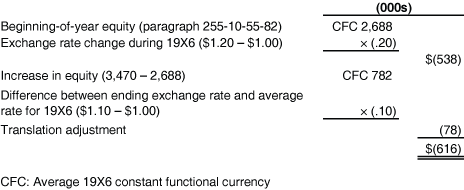 (000s) Beginning-of-year equity (paragraph 255-10-55-82) " CFC 2,688 " Exchange rate change during 19X6 ($1.20 - $1.00) × (.20) $(538) "Increase in equity (3,470 - 2,688)" CFC 782 Difference between ending exchange rate and average rate for 19X6 ($1.10 - $1.00) × (.10) Translation adjustment (78) $(616) CFC: Average 19X6 constant functional currency
- a The effect of the difference between local and U.S. inflation from December 31, 19X5, average for 19X6 on the restatement of opening equity to average units
- b The effect of the difference between local and U.S. inflation from average for 19X6 to December 31, 19X6, the restatement of ending nominal dollar equity to average units.
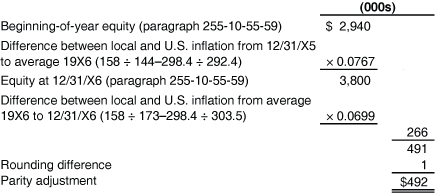 (000s) Beginning-of-year equity (paragraph 255-10-55-59) " $2,940 " Difference between local and U.S. inflation from 12/31/X5 to average 19X6 (158 ÷ 144-298.4 ÷ 292.4) × 0.0767 $225 Equity at 12/31/X6 (paragraph 255-10-55-59) " 3,800 " Difference between local and U.S. inflation from average 19X6 to 12/31/X6 (158 ÷ 173-298.4 ÷ 303.5) × 0.0699 266 491 Rounding difference 1 Parity adjustment $492
-
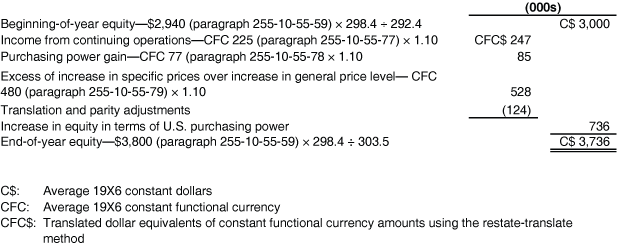 (000s) "Beginning-of-year equity—$2,940 (paragraph 255-10-55-59) × 298.4 ÷ 292.4" " C$ 3,000 " Income from continuing operations—CFC 225 (paragraph 255-10-55-77) × 1.10 CFC$ 247 Purchasing power gain—CFC 77 (paragraph 255-10-55-78 × 1.10 85 Excess of increase in specific prices over increase in general price level— CFC 480 (paragraph 255-10-55-79) × 1.10 528 Translation and parity adjustments (124) Increase in equity in terms of U.S. purchasing power 736 "End-of-year equity—$3,800 (paragraph 255-10-55-59) × 298.4 ÷ 303.5" " C$ 3,736 " C$: Average 19X6 constant dollars CFC: Average 19X6 constant functional currency CFC$: Translated dollar equivalents of constant functional currency amounts using the restate-translate method
255-10-60Relationships
Source downloaded: .Record version 8bac7ed7bab5. Effective date must be checked in the source.