ASC 944-40
Claim Costs and Liabilities for Future Policy Benefits
944 Financial Services—Insurance
Source downloaded: .Record version 433c54b1c323. Effective date must be checked in the source.
ASC 944-40 governs how insurance entities recognize and measure claim costs and liabilities for future policy benefits, with separate subsections for short-duration contracts, long-duration contracts, reinsurance contracts, and financial guarantee insurance contracts. Its core rules are that liabilities for unpaid claims (including IBNR) and claim adjustment expenses are accrued when insured events occur, and that a liability for future policy benefits—the present value of future benefits and related expenses less the present value of future net premiums—is accrued when premium revenue is recognized. Post-ASU 2018-12, cash flow assumptions are updated at least annually with remeasurement gains/losses in net income, the discount rate is an upper-medium grade (low-credit-risk) fixed-income yield updated each reporting date through OCI, and market risk benefits are measured at fair value.
Key points (7)
- A liability for unpaid claims (including IBNR) and a liability for claim adjustment expenses shall be accrued when insured events occur, measured at the estimated ultimate cost of settling claims using past experience adjusted for current trends, less estimated recoveries such as salvage and subrogation (944-40-25-1, 944-40-30-1 through 30-3).
- For long-duration contracts, the liability for future policy benefits—the present value of future benefits and related expenses less the present value of future net premiums (net premiums never exceeding gross premiums)—is accrued when premium revenue is recognized, using assumptions for mortality, morbidity, terminations, and expenses with no provision for adverse deviation (944-40-25-8, 25-11, 944-40-30-7, 30-19).
- The liability for future policy benefits is discounted at an upper-medium grade (low-credit-risk) fixed-income instrument yield reflecting the liability's duration, and contracts may not be grouped across issue years but must be grouped into quarterly or annual cohorts (944-40-30-9, 944-40-30-7).
- Cash flow assumptions are reviewed and updated annually at the same time each year (and in interim periods if evidence suggests revision); net premiums are recalculated using actual historical plus updated expected experience, producing a liability remeasurement gain or loss in net income, while discount rate changes go directly to other comprehensive income and do not change net premiums (944-40-35-5, 35-6A, 944-40-45-4).
- A contract or feature that both protects the contract holder from other-than-nominal capital market risk and exposes the insurer to other-than-nominal capital market risk is a market risk benefit, measured at fair value with changes in net income except instrument-specific credit risk changes, which go to OCI, and presented separately on the balance sheet (944-40-25-25C, 25-25D, 944-40-30-19C, 944-40-35-8A, 944-40-45-3).
- For universal life-type contracts the liability equals the accrued account balance plus amounts assessed for future services, refundable assessments, and any premium deficiency; future assessments and surrender charges may not be anticipated, and additional liabilities for annuitization or death benefits use a benefit ratio of expected excess payments to expected assessments (944-40-30-16 through 30-18, 944-40-25-27, 25-27A, 944-40-30-20, 30-26).
- A claim liability on a financial guarantee insurance contract is recognized when expected claim loss exceeds unearned premium revenue, measured at the present value of expected net cash outflows discounted at a current risk-free rate updated each reporting period (944-40-25-42, 944-40-30-31 through 30-33, 944-40-35-26).
For students. This is the heart of insurance liability accounting and was overhauled by ASU 2018-12 (LDTI): the most common misunderstanding is thinking assumptions are "locked in" at issue—cash flow assumptions are now unlocked annually (remeasurement to net income) while discount rate changes run through OCI without touching net premiums. Also remember the subtopic's split personality: short-duration contracts accrue claims when insured events occur, while long-duration contracts accrue a future policy benefit liability when premium revenue is recognized.
Machine-generated study aid for ASC 944-40. Check the source paragraphs below.
944-40-00Status
Source downloaded: .Record version a53a2b3bd8ed. Effective date must be checked in the source.
944-40-05Overview and Background
Source downloaded: .Record version b84da0102704. Effective date must be checked in the source.
- aGeneral
- bShort-Duration Contracts
- cLong-Duration Contracts
- dReinsurance Contracts
- eFinancial Guarantee Insurance Contracts.
- aLegal fees
- bOutside adjuster fees
- cCosts to record, process, and adjust claims.
Short-Duration Contracts
Long-Duration Contracts
Reinsurance Contracts
Financial Guarantee Insurance Contracts
Information about Insured Financial Obligations
944-40-15Scope and Scope Exceptions
Source downloaded: .Record version aa87efc631a7. Effective date must be checked in the source.
Overall Guidance
Entities
Short-Duration Contracts
Overall Guidance
Instruments
Long-Duration Contracts
Overall Guidance
Instruments
Reinsurance Contracts
Overall Guidance
Instruments
Financial Guarantee Insurance Contracts
944-40-25Recognition
Source downloaded: .Record version 33643539047c. Effective date must be checked in the source.
Claim Costs
- aA liability for unpaid claims (including estimates of costs for claims relating to insured events that have occurred but have not been reported to the insurer)
- bA liability for claim adjustment expenses; that is a liability for all costs expected to be incurred in connection with the settlement of unpaid claims.
- aClaims that have been reported to the insurer
- bClaims relating to insured events that have occurred but have not been reported to the insurer as of the date the liability is estimated.
Catastrophe Losses
Long-Duration Contracts
Overall
Traditional and Limited-Payment Long-Duration Contracts
- a
- b
Universal Life-Type Contracts and Nontraditional Contract Benefits
- aDeposit(s) net of withdrawals
- bPlus amounts credited pursuant to the contract
- cLess fees and charges assessed
- dPlus additional interest (for example, persistency bonus)
- eOther adjustments (for example, appreciation or depreciation recognized in accordance with paragraphs to the extent not already credited and included in [b]).
- aIt has a readily determinable fair value.
- bIt can be converted to cash without incurring significant transaction costs.
- aAn insurance entity shall first determine at contract inception whether such benefits should be accounted for under the provisions of paragraph 944-40-25-25C.
- bFor benefits that are not accounted for under the provisions of paragraph 944-40-25-25C, an insurance entity shall then determine whether such benefits should be accounted for under the provisions of Subtopic 815-10 or 815-15.
- cAll other benefits shall be accounted for under the provisions of paragraphs 944-40-25-26 through 25-27A, as applicable.
- aProtection refers to the transfer of a loss in, or shortfall (that is, the difference between the account balance and the benefit amount) of, the contract holder's account balance from the contract holder to the insurance entity, with such transfer exposing the insurance entity to capital market risk that would otherwise have been borne by the contract holder (or beneficiary).
- bProtection does not include the death benefit component of a life insurance contract (that is, the difference between the account balance and the death benefit amount). This condition does not apply to an investment contract or an annuity contract (including an annuity contract classified as an insurance contract).
- cA nominal risk, as explained in paragraph 944-20-15-21, is a risk of insignificant amount or a risk that has a remote probability of occurring. A market risk benefit is presumed to expose the insurance entity to other-than-nominal capital market risk if the benefit would vary more than an insignificant amount in response to capital market volatility.
Certain Participating Life Insurance Contracts
- aThe net level premium reserve for death and endowment policy benefits
- bThe liability for terminal dividends
- cAny probable loss (premium deficiency) as described in paragraphs .
- aPayment of the dividend is probable.
- bThe amount can be reasonably estimated.
Title Insurance Contracts
Reinsurance Contracts
Financial Guarantee Insurance Contracts
944-40-30Initial Measurement
Source downloaded: .Record version ba4814551405. Effective date must be checked in the source.
Liability for Unpaid Claims
Long-Duration Contracts
Overall
Traditional and Limited-Payment Long-Duration Contracts
- aDiscount rate
- bMortality
- cMorbidity
- dTermination
- eExpense.
Universal Life-Type Contracts and Nontraditional Contract Benefits
- aThe balance that accrues to the benefit of policyholders at the date of the financial statements
- bAny amounts that have been assessed to compensate the insurance entity for services to be performed over future periods (see Subtopic 944-605 on insurance—revenue recognition)
- cAny amounts previously assessed against policyholders that are refundable on termination of the contract
- dAny probable loss (premium deficiency) as described in paragraphs .
- aConsistent with paragraph 815-15-30-4, if a nonoption valuation approach is used, the terms of the market risk benefit shall be determined in a manner that results in its fair value generally being equal to zero at the inception of the contract.
- bConsistent with paragraph 815-15-30-6, if an option-based valuation approach is used, the terms of the market risk benefit shall not be adjusted to result in the market risk benefit being equal to zero at the inception of the contract.
- cConsistent with paragraph 815-15-25-7, if a contract contains multiple market risk benefits, those market risk benefits shall be bundled together as a single compound market risk benefit.
- aNumerator. The present value of total expected excess payments over the life of the contract, discounted at the contract rate.
- bDenominator. The present value of total expected assessments over the life of the contract, discounted at the contract rate.
- aNumerator. The present value of expected annuitization payments to be made and related incremental claim adjustment expenses, discounted at an upper-medium grade (low-credit-risk) fixed-income instrument yield applicable to the payout phase of the contract, minus the expected accrued account balance at the expected annuitization date (the excess payments). The excess of the present value payments to be made during the payout phase of the contract over the expected accrued account balance at the expected annuitization date shall be discounted at the contract rate.
- bDenominator. The present value of total expected assessments during the accumulation phase of the contract, discounted at the contract rate.
Certain Participating Life Insurance Contracts—Net Level Premium Reserve
Financial Guarantee Insurance Contracts
Expected Net Cash Outflows
944-40-35Subsequent Measurement
Source downloaded: .Record version 367d0f4ba5ea. Effective date must be checked in the source.
Claim Costs
Long-Duration Contracts
Traditional and Limited-Payment Long-Duration Contracts
- aCash flow assumptions (that is, the assumptions used to derive estimated cash flows, including the mortality, morbidity, termination, and expense assumptions referenced in paragraphs ) shall be reviewed—and if there is a change, updated—on an annual basis, at the same time every year.
- 1Cash flow assumptions shall be updated in interim reporting periods if evidence suggests that cash flow assumptions should be revised.
- 2An insurance entity may make an entity-wide election not to update the expense assumption referenced in paragraph 944-40-30-15.
- 1
- bThe discount rate assumption referenced in paragraph 944-40-30-9 shall be updated for annual and interim reporting periods, as of the reporting date.
- aCash flow assumptions. Net premiums shall be updated for cash flow changes. An insurance entity shall update its estimate of cash flows expected over the entire life of a group of contracts using actual historical experience and updated future cash flow assumptions. An insurance entity shall recalculate net premiums by comparing the present value of actual historical benefits and related actual (if applicable) historical expenses plus updated remaining expected benefits and related expenses, less the liability carryover basis (if applicable), with the present value of actual historical gross premiums plus the updated remaining expected gross premiums (see Examples 6 and 7 in paragraphs ). The revised ratio of net premiums to gross premiums shall not exceed 100 percent (see paragraph 944-40-35-7A).
- 1Liability remeasurement gain or loss. The revised net premiums shall be used to derive an updated liability for future policy benefits as of the beginning of the current reporting period, discounted at the original (that is, contract issuance) discount rate. The updated liability for future policy benefits as of the beginning of the current reporting period shall then be compared with the carrying amount of the liability as of that date (that is, before the updating of cash flow assumptions) to determine the current period change in liability estimate (that is, the liability remeasurement gain or loss) to be recognized in net income for the current reporting period (see paragraph 944-40-45-4 for presentation requirements).
- 2Current-period benefit expense. The revised net premiums shall be applied as of the beginning of the current reporting period to derive the benefit expense for the current reporting period (see paragraph 944-40-45-4 for presentation requirements).
- 3Subsequent periods. In subsequent periods, the revised net premiums shall be used to measure the liability for future policy benefits, subject to future revisions.
- 1
- bDiscount rate assumptions. Net premiums shall not be updated for discount rate assumption changes.
- 1The difference between the updated carrying amount of the liability for future policy benefits (that is, the present value of future benefits and expenses less the present value of future net premiums based on updated cash flow assumptions) measured using the updated discount rate assumption and the original discount rate assumption shall be recognized directly to other comprehensive income (that is, on an immediate basis).
- 2The interest accretion rate shall remain the original discount rate used at contract issue date.
- 1
- aSet net premiums equal to gross premiums
- bIncrease the liability for future policy benefits
- cRecognize a corresponding charge to net income for the current reporting period (see paragraph 944-40-45-4) such that net premiums are set equal to gross premiums.
Universal Life-Type Contracts and Nontraditional Contract Benefits
- aThe current benefit ratio multiplied by the cumulative assessments (cumulative assessments shall be calculated as actual cumulative assessments, including investment margins, if applicable, recorded from contract inception through the balance sheet date)
- bLess the cumulative excess payments (including amounts reflected in claims payable liabilities)
- cPlus accreted interest.
- aThe current benefit ratio multiplied by the cumulative assessments
- bAccreted interest (an addition)
- cAt time of annuitization, the cumulative excess payments determined at annuitization (a deduction).
Certain Participating Life Insurance Contracts
Financial Guarantee Insurance Contracts
944-40-45Other Presentation Matters
Source downloaded: .Record version 36e740cff588. Effective date must be checked in the source.
Long-Duration Contracts
Universal Life-Type Contracts and Nontraditional Contract Benefits
Traditional and Limited-Payment Contracts
944-40-50Disclosure
Source downloaded: .Record version 75b3f9614af7. Effective date must be checked in the source.
- aThe balance in the liability for unpaid claims and claim adjustment expenses at the beginning of each fiscal year presented in the statement of income, and the related amount of reinsurance recoverable on unpaid claims
- bYear-to-date incurred claims and claim adjustment expenses with separate disclosure of the provision for insured events of the current fiscal year and of increases or decreases in the provision for insured events of prior fiscal years
- cYear-to-date payments of claims and claim adjustment expenses with separate disclosure of payments of claims and claim adjustment expenses attributable to insured events of the current fiscal year and to insured events of prior fiscal years
- ccThe ending balance in the liability for unpaid claims and claim adjustment expenses and the related amount of reinsurance recoverable.
- d
- aClaims for toxic waste cleanup
- bAsbestos-related illnesses
- cOther environmental remediation exposures.
Short-Duration Contracts
Information about the Liability for Unpaid Claims and Claim Adjustment Expenses
- aIncurred claims and allocated claim adjustment expenses
- bPaid claims and allocated claim adjustment expenses.
- aThe total of incurred-but-not-reported liabilities plus expected development on reported claims included in the liability for unpaid claims and claim adjustment expenses
- bCumulative claim frequency information, unless it is impracticable to do so. If it is impracticable to disclose claim frequency information, where the term impracticable has the same meaning as impracticability in paragraph 250-10-45-9, an insurance entity shall disclose that fact and explain why the disclosure is impracticable.
- aIts methodologies for:
- 1Determining the presented amounts of both incurred-but-not-reported liabilities and expected development on reported claims required by paragraphs
- 2Calculating cumulative claim frequency information required by paragraph 944-40-50-4D
- 1
- bSignificant changes to those methodologies. When describing (2) above the insurance entity also shall include whether frequency is measured by claim event or individual claimant and how the insurance entity considers claims that do not result in a liability (see paragraph 944-40-55-9D).
- aFor each period presented in the statement of financial position, the carrying amount of liabilities for unpaid claims and claim adjustment expenses relating to short-duration contracts that are presented at present value
- bThe range of interest rates used to discount the liabilities disclosed in (a).
- cThe aggregate amount of discount related to the time value of money deducted to derive the liabilities disclosed in (a)
- dFor each period presented in the statement of income, the amount of interest accretion recognized
- eThe line item(s) in the statement of income in which the interest accretion is classified.
Long-Duration Contracts
Liability for Future Policy Benefits and Additional Liability for Annuitization, Death, or Other Insurance Benefits
- aA year-to-date disaggregated tabular rollforward of the beginning balance to the ending balance (see paragraph 944-40-55-13I). Amounts shall be presented gross of any related reinsurance recoverable. For the liability for future policy benefits for traditional and limited-payment contracts, the insurance entity shall present expected future net premiums separate from expected future benefits.
- bFor each disaggregated rollforward presented, either as a component of the rollforward or as accompanying information:
- 1For traditional and limited-payment contracts, the undiscounted and discounted ending balance of expected future gross premiums and expected future benefits and expenses
- 2Actual experience during the period for mortality, morbidity, and lapses, compared with what was expected for the period
- 3The amount of revenue and interest recognized in the statement of operations
- 4The amount of any related reinsurance recoverable
- 5The weighted-average duration of the liability
- 6The weighted-average interest rate, a description of the technique(s) used to determine the interest rate assumption, and information about any adjustments to observable market information.
- 1
- cA reconciliation of the disaggregated rollforwards to the aggregate ending carrying amount of the liability for future policy benefits and the additional liability in the statement of financial position and the total revenue and interest recognized in the statement of operations.
- dFor traditional and limited-payment contracts, qualitative and quantitative information about adverse development that resulted in an immediate charge to current-period net income because of net premiums exceeding gross premiums.
- aThe significant inputs, judgments, assumptions, and methods used in measuring the liability for future policy benefits and the additional liability
- bChanges in those significant inputs, judgments, and assumptions during the period, and the effect of those changes on the measurement of the liability.
- aThe significant inputs, judgments, assumptions, and methods used in measuring the liability for future policy benefits and the additional liability
- bChanges in those significant inputs, judgments, and assumptions during the period, and the effect of those changes on the measurement of the liability.
Liability for Policyholders' Account Balances
- aA year-to-date disaggregated tabular rollforward of the beginning balance to the ending balance (see paragraph 944-40-55-13J).
- bFor each disaggregated rollforward:
- 1The weighted-average crediting rate
- 2The guaranteed benefit amounts in excess of the current account balances
- 3
- 1
- cA reconciliation of the disaggregated rollforwards to the aggregate ending carrying amount of the liability for policyholders' account balances in the statement of financial position.
- dA tabular presentation of policyholders' account balances by range of guaranteed minimum crediting rates and the related range of the difference between rates being credited to policyholders and the respective guaranteed minimums.
Market Risk Benefits
- aA year-to-date disaggregated tabular rollforward of the beginning balance to the ending balance (see paragraph 944-40-55-13K)
- bFor each disaggregated rollforward, the guaranteed benefit amounts in excess of the current account balances (for example, the net amount at risk) and weighted-average attained age of contract holders
- cA reconciliation of the disaggregated rollforwards to the aggregate ending carrying amount in the statement of financial position, disaggregated between market risk benefits that are in an asset position and those that are in a liability position.
- aThe significant inputs, judgments, assumptions, and methods used in measurement
- bChanges in those significant inputs, judgments, and assumptions during the period and the effect of those changes on the measurement of market risk benefits.
- aThe significant inputs, judgments, assumptions, and methods used in measurement
- bChanges in those significant inputs, judgments, and assumptions during the period and the effect of those changes on the measurement of market risk benefits.
Participating Contracts
Financial Guarantee Insurance Contracts
- aFor the claim liability:
- 1The weighted-average risk-free rate used to discount the claim liability.
- 2The significant component(s) of the change in the claim liability for the period, including all of the following:
- iChanges in the discount rate
- iiThe accretion of the discount on the claim liability
- iiiChanges in the timing
- ivChanges in the likelihood of default.
- i
- 3The amount relating to the component(s) in item (2).
- 4The line item in the statement of income where the amount or amounts in item (2) are reported (unless separately disclosed).
- 5For each interim period, a schedule of insured financial obligations at the end of each interim period detailing, at a minimum, all of the following for each category or grouping of these financial obligations:
- iNumber of issued and outstanding financial guarantee insurance contracts
- iiRemaining weighted-average contract period
- iiiInsured contractual payments outstanding, segregating principal and interest
- ivGross claim liability
- vGross potential recoveries
- viDiscount, net (both claim liability and potential recoveries)
- viiNet claim liability
- viii
- ixUnearned premium revenue.
- i
- 1
- bA description of the insurance entity's risk-management activities used to track and monitor deteriorating insured financial obligations, including all of the following:
- 1A description of each grouping or category used to track and monitor deteriorating insured financial obligations
- 2The insurance entity's policies for placing an insured financial obligation in, and monitoring, each grouping or category
- 3The insurance entity's policies for avoiding or mitigating claim liabilities
- 4The related expense and liability reported during the period for risk mitigation activities (not including reinsurance)
- 5A description of where the risk mitigation activities expense and liability are reported in the statement of income and the statement of financial position, respectively.
- 1
944-40-55Implementation Guidance and Illustrations
Source downloaded: .Record version ffa8533ad092. Effective date must be checked in the source.
Implementation Guidance
Illustrations
- Note X. Liability for Unpaid Claims and Claim Adjustment Expenses
- Activity in the liability for unpaid claims and claim adjustment expenses is summarized as follows.
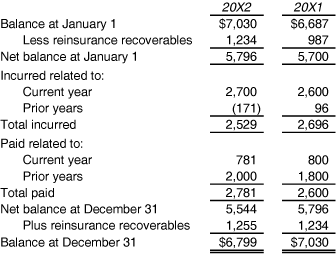 20X2 20X1 Balance at January 1 " $7,030 " " $6,687 " Less reinsurance recoverables " 1,234 " 987 Net balance at January 1 " 5,796 " " 5,700 " Incurred related to: Current year " 2,700 " " 2,600 " Prior years (171) 96 Total incurred " 2,529 " " 2,696 " Paid related to: Current year 781 800 Prior years " 2,000 " " 1,800 " Total paid " 2,781 " " 2,600 " Net balance at December 31 " 5,544 " " 5,796 " Plus reinsurance recoverables " 1,255 " " 1,234 " Balance at December 31 " $6,799 " " $7,030 "
As a result of changes in estimates of insured events in prior years, the claims and claim adjustment expenses (net of reinsurance recoveries of $X and $X in 20X2 and 20X1, respectively) decreased by $171 million in 20X2 reflecting lower-than-anticipated losses on Hurricane Howard, and increased by $96 million in 20X1 reflecting higher-than-anticipated losses and related expenses for claims for asbestos-related illnesses, toxic waste cleanup, and workers' compensation.
- Note X. Environmental-Related Claims
- In establishing the liability for unpaid claims and claim adjustment expenses related to asbestos-related illnesses and toxic waste cleanup, management considers facts currently known and the current state of the law and coverage litigation. Liabilities are recognized for known claims (including the cost of related litigation) when sufficient information has been developed to indicate the involvement of a specific insurance policy, and management can reasonably estimate its liability. In addition, liabilities have been established to cover additional exposures on both known and unasserted claims. Estimates of the liabilities are reviewed and updated continually. Developed case law and adequate claim history do not exist for such claims, especially because significant uncertainty exists about the outcome of coverage litigation and whether past claim experience will be representative of future claim experience.
Short-Duration Contracts
Implementation Guidance
- a Disclosures presented outside the financial statements (for example, in earnings releases, annual reports, statutory filings, or investor presentations)
- b Information regularly viewed by the chief operating decision maker for evaluating financial performance
- c Other information that is similar to the types of information identified in (a) and (b) and that is used by the insurance entity or users of the insurance entity's financial statements to evaluate the insurance entity's financial performance or make resource allocation decisions.
- a Type of coverage (for example, major product line)
- b Geography (for example, country or region)
- c Reportable segment as defined in Topic 280 on segment reporting
- d Market or type of customer (for example, personal or commercial lines of business)
- e Claim duration (for example, claims that have short settlement periods or claims that have long settlement periods).
Illustrations
- Note X: Liability for Unpaid Claims and Claim Adjustment Expenses
- The following is information about incurred and paid claims development as of December 31, 20Y6, net of reinsurance, as well as cumulative claim frequency and the total of incurred-but-not-reported liabilities plus expected development on reported claims included within the net incurred claims amounts.
- The information about incurred and paid claims development for the years ended December 31, 20X7, to 20Y5, is presented as supplementary information.
-
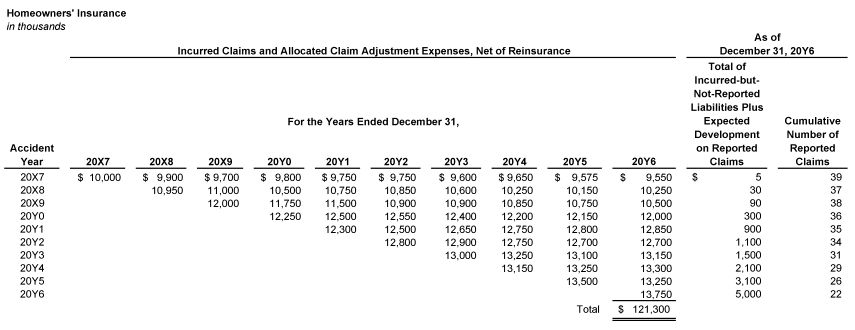 Homeowners' Insurance in thousands "Accident Year" "Incurred Claims and Allocated Claim Adjustment Expenses, Net of Reinsurance" "As of December 31, 20Y6" Total of Incurred-but-Not-Reported Liabilities Plus Expected Development on Reported Claims Cumulative Number of Reported Claims "For the Years Ended December 31," 20X7 20X8 20X9 20Y0 20Y1 20Y2 20Y3 20Y4 20Y5 20Y6 20X7 " $10,000 " " $9,900 " " $9,700 " " $9,800 " " $9,750 " " $9,750 " " $9,600 " " $9,650 " " $9,575 " " $9,550 " $5 39 20X8 " 10,950 " " 11,000 " " 10,500 " " 10,750 " " 10,850 " " 10,600 " " 10,250 " " 10,150 " " 10,250 " 30 37 20X9 " 12,000 " " 11,750 " " 11,500 " " 10,900 " " 10,900 " " 10,850 " " 10,750 " " 10,500 " 90 38 20Y0 " 12,250 " " 12,500 " " 12,550 " " 12,400 " " 12,200 " " 12,150 " " 12,000 " 300 36 20Y1 " 12,300 " " 12,500 " " 12,650 " " 12,750 " " 12,800 " " 12,850 " 900 35 20Y2 " 12,800 " " 12,900 " " 12,750 " " 12,700 " " 12,700 " " 1,100 " 34 20Y3 " 13,000 " " 13,250 " " 13,100 " " 13,150 " " 1,500 " 31 20Y4 " 13,150 " " 13,250 " " 13,300 " " 2,100 " 29 20Y5 " 13,500 " " 13,250 " " 3,100 " 26 20Y6 " 13,750 " " 5,000 " 22 Total " $121,300 "
 -
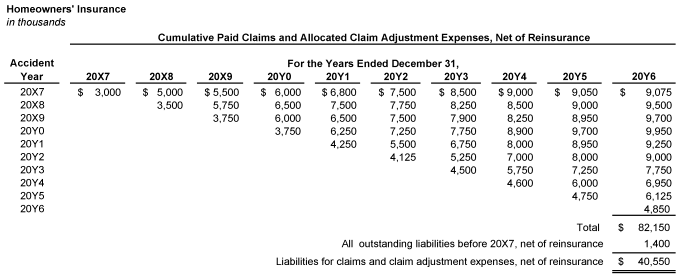 Homeowners' Insurance in thousands "Cumulative Paid Claims and Allocated Claim Adjustment Expenses, Net of Reinsurance" "Accident Year" "For the Years Ended December 31," 20X7 20X8 20X9 20Y0 20Y1 20Y2 20Y3 20Y4 20Y5 20Y6 20X7 " $3,000 " " $5,000 " " $5,500 " " $6,000 " " $6,800 " " $7,500 " " $8,500 " " $9,000 " " $9,050 " " $9,075 " 20X8 " 3,500 " " 5,750 " " 6,500 " " 7,500 " " 7,750 " " 8,250 " " 8,500 " " 9,000 " " 9,500 " 20X9 " 3,750 " " 6,000 " " 6,500 " " 7,500 " " 7,900 " " 8,250 " " 8,950 " " 9,700 " 20Y0 " 3,750 " " 6,250 " " 7,250 " " 7,750 " " 8,900 " " 9,700 " " 9,950 " 20Y1 " 4,250 " " 5,500 " " 6,750 " " 8,000 " " 8,950 " " 9,250 " 20Y2 " 4,125 " " 5,250 " " 7,000 " " 8,000 " " 9,000 " 20Y3 " 4,500 " " 5,750 " " 7,250 " " 7,750 " 20Y4 " 4,600 " " 6,000 " " 6,950 " 20Y5 " 4,750 " " 6,125 " 20Y6 " 4,850 " Total " $82,150 " "All outstanding liabilities before 20X7, net of reinsurance" " 1,400 " "Liabilities for claims and claim adjustment expenses, net of reinsurance" " $40,550 "
 - Reconciliation of the Disclosure of Incurred and Paid Claims Development to the Liability for Unpaid Claims and Claim Adjustment Expenses
- The reconciliation of the net incurred and paid claims development tables to the liability for claims and claim adjustment expenses in the consolidated statement of financial position is as follows.
-
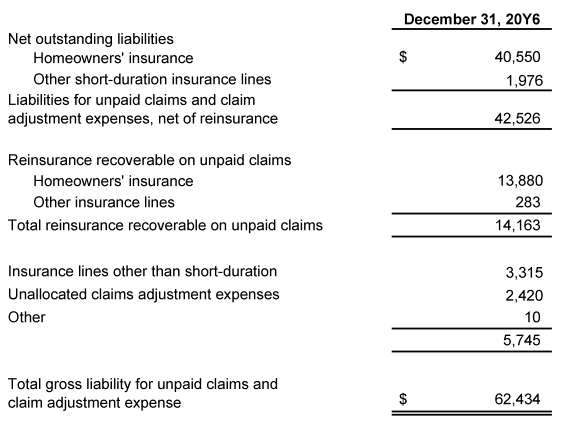 "December 31, 20Y6" 20X4 Net outstanding liabilities Homeowners' insurance " $40,550 " Other short-duration insurance lines " 1,976 " " 1,596 " 1976 "Liabilities for unpaid claims and claim adjustment expenses, net of reinsurance" " 42,526 " Reinsurance recoverable on unpaid claims Homeowners' insurance " 13,880 " Other insurance lines 283 Total reinsurance recoverable on unpaid claims " 14,163 " "14,163" Insurance lines other than short-duration " 3,315 " "3,315" Unallocated claims adjustment expenses " 2,420 " "2,420" Other 10 " 5,745 " "Total gross liability for unpaid claims and claim adjustment expense " " $62,434 "
- Note X: Liability for Unpaid Claims and Claim Adjustment Expenses
- The following is supplementary information about average historical claims duration as of December 31, 20Y6.
-
 "Average Annual Percentage Payout of Incurred Claims by Age, Net of Reinsurance" Years 1 2 3 4 5 6 7 8 9 10 Homeowners' insurance 33.8% 14.9% 8.5% 7.2% 6.6% 4.9% 5.4% 5.7% 2.7% 0.3%
-
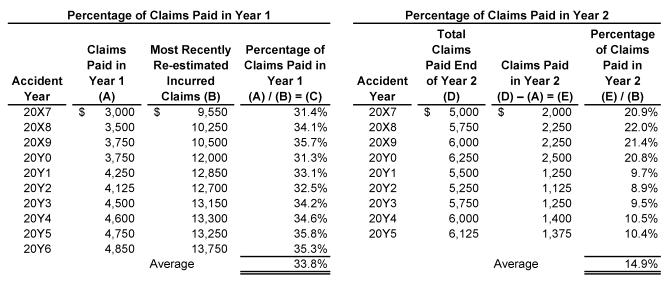 Percentage of Claims Paid in Year 1 Percentage of Claims Paid in Year 2 Accident Year "Claims Paid in Year 1 (A)" "Most Recently Re-estimated Incurred Claims (B)" "Percentage of Claims Paid in Year 1 (A) / (B) = (C) " Accident Year "Total Claims Paid End of Year 2 (D)" "Claims Paid in Year 2 (D) - (A) = (E)" "Percentage of Claims Paid in Year 2 (E) / (B)" 20X7 " $3,000 " " $9,550 " 31.4% 20X7 " $5,000 " " $2,000 " 20.9% 20X8 " 3,500 " " 10,250 " 34.1% 20X8 " 5,750 " " 2,250 " 22.0% 20X9 " 3,750 " " 10,500 " 35.7% 20X9 " 6,000 " " 2,250 " 21.4% 20Y0 " 3,750 " " 12,000 " 31.3% 20Y0 " 6,250 " " 2,500 " 20.8% 20Y1 " 4,250 " " 12,850 " 33.1% 20Y1 " 5,500 " " 1,250 " 9.7% 20Y2 " 4,125 " " 12,700 " 32.5% 20Y2 " 5,250 " " 1,125 " 8.9% 20Y3 " 4,500 " " 13,150 " 34.2% 20Y3 " 5,750 " " 1,250 " 9.5% 20Y4 " 4,600 " " 13,300 " 34.6% 20Y4 " 6,000 " " 1,400 " 10.5% 20Y5 " 4,750 " " 13,250 " 35.8% 20Y5 " 6,125 " " 1,375 " 10.4% 20Y6 " 4,850 " " 13,750 " 35.3% Average 33.8% Average 14.9%
 -
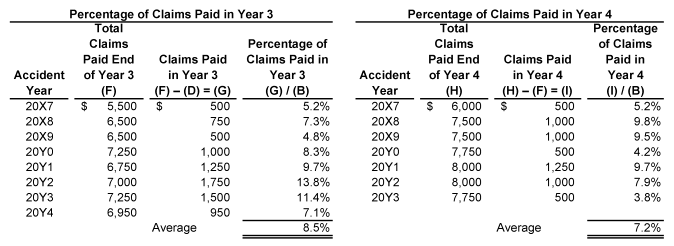 Percentage of Claims Paid in Year 3 Percentage of Claims Paid in Year 4 Accident Year "Total Claims Paid End of Year 3 (F)" "Claims Paid in Year 3 (F) - (D) = (G)" "Percentage of Claims Paid in Year 3 (G) / (B)" Accident Year "Total Claims Paid End of Year 4 (H)" "Claims Paid in Year 4 (H) - (F) = (I)" "Percentage of Claims Paid in Year 4 (I) / (B)" 20X7 " $5,500 " $500 5.2% 20X7 " $6,000 " $500 5.2% 20X8 " 6,500 " 750 7.3% 20X8 " 7,500 " " 1,000 " 9.8% 20X9 " 6,500 " 500 4.8% 20X9 " 7,500 " " 1,000 " 9.5% 20Y0 " 7,250 " " 1,000 " 8.3% 20Y0 " 7,750 " 500 4.2% 20Y1 " 6,750 " " 1,250 " 9.7% 20Y1 " 8,000 " " 1,250 " 9.7% 20Y2 " 7,000 " " 1,750 " 13.8% 20Y2 " 8,000 " " 1,000 " 7.9% 20Y3 " 7,250 " " 1,500 " 11.4% 20Y3 " 7,750 " 500 3.8% 20Y4 " 6,950 " 950 7.1% Average 8.5% Average 7.2%
 -
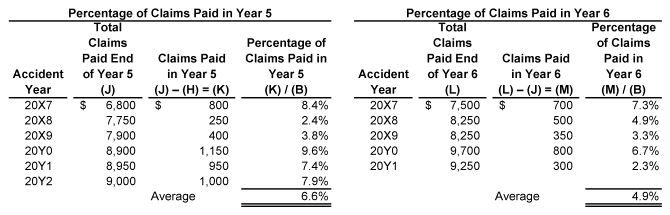 Percentage of Claims Paid in Year 5 Percentage of Claims Paid in Year 6 Accident Year "Total Claims Paid End of Year 5 (J)" "Claims Paid in Year 5 (J) - (H) = (K)" "Percentage of Claims Paid in Year 5 (K) / (B)" Accident Year "Total Claims Paid End of Year 6 (L)" "Claims Paid in Year 6 (L) - (J) = (M)" "Percentage of Claims Paid in Year 6 (M) / (B)" 20X7 " $6,800 " $800 8.4% 20X7 " $7,500 " $700 7.3% 20X8 " 7,750 " 250 2.4% 20X8 " 8,250 " 500 4.9% 20X9 " 7,900 " 400 3.8% 20X9 " 8,250 " 350 3.3% 20Y0 " 8,900 " " 1,150 " 9.6% 20Y0 " 9,700 " 800 6.7% 20Y1 " 8,950 " 950 7.4% 20Y1 " 9,250 " 300 2.3% 20Y2 " 9,000 " " 1,000 " 7.9% Average 6.6% Average 4.9%
 -
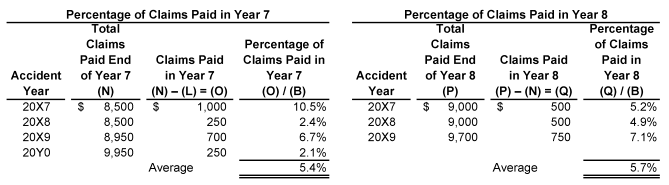 Percentage of Claims Paid in Year 7 Percentage of Claims Paid in Year 8 Accident Year "Total Claims Paid End of Year 7 (N)" "Claims Paid in Year 7 (N) - (L) = (O)" "Percentage of Claims Paid in Year 7 (O) / (B)" Accident Year "Total Claims Paid End of Year 8 (P)" "Claims Paid in Year 8 (P) - (N) = (Q)" "Percentage of Claims Paid in Year 8 (Q) / (B)" 20X7 " $8,500 " " $1,000 " 10.5% 20X7 " $9,000 " $500 5.2% 20X8 " 8,500 " 250 2.4% 20X8 " 9,000 " 500 4.9% 20X9 " 8,950 " 700 6.7% 20X9 " 9,700 " 750 7.1% 20Y0 " 9,950 " 250 2.1% Average 5.4% Average 5.7%
 -
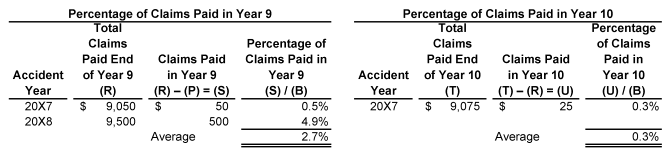 Percentage of Claims Paid in Year 9 Percentage of Claims Paid in Year 10 Accident Year "Total Claims Paid End of Year 9 (R)" "Claims Paid in Year 9 (R) - (P) = (S)" "Percentage of Claims Paid in Year 9 (S) / (B)" Accident Year "Total Claims Paid End of Year 10 (T)" "Claims Paid in Year 10 (T) - (R) = (U)" "Percentage of Claims Paid in Year 10 (U) / (B)" 20X7 " $9,050 " $50 0.5% 20X7 " $9,075 " $25 0.3% 20X8 " 9,500 " 500 4.9% Average 2.7% Average 0.3%
Long-Duration Contracts
Implementation Guidance
- aImmediate bonuses
- bPersistency bonuses
- cEnhanced crediting rate bonuses.
- aSet net premiums equal to gross premiums
- bIncrease the estimate of the liability for future policy benefits as of the beginning of the current reporting period
- cRecognize a corresponding adjustment to net income for the current reporting period (see paragraph 944-40-45-4)
- dDisclose qualitative and quantitative information related to adverse development (see paragraph 944-40-50-6(d))
- eAccrue the liability for future policy benefits with net premiums being set equal to gross premiums (that is, a ratio of net premiums to gross premiums equal to 100 percent) until assumptions are subsequently updated.
- aIncrease the estimate of the liability for future policy benefits as of the beginning of the current reporting period
- bRecognize a corresponding change in estimate adjustment to net income for the current reporting period (see paragraph 944-40-45-4)
- cAccrue the liability for future policy benefits with the revised ratio of net premiums to gross premiums until assumptions are subsequently updated.
- aDecrease the estimate of the liability for future policy benefits as of the beginning of the current reporting period
- bRecognize a corresponding change in estimate adjustment to net income for the current reporting period (see paragraph 944-40-45-4)
- cAccrue the liability for future policy benefits with the revised ratio of net premiums to gross premiums until assumptions are subsequently updated.
- aAn insurance entity should not substitute its own estimates for observable market data unless the market data reflect transactions that are not orderly (see paragraphs for additional guidance on determining whether transactions are not orderly).
- bIn determining points on the yield curve for which there are limited or no observable market data for upper-medium-grade (low-credit-risk) fixed-income instruments, an insurance entity should use an estimate that is consistent with existing guidance on fair value measurement in Topic 820, particularly for Level 3 fair value measurement.
- aDisclosures presented outside the financial statements (for example, in statutory filings)
- bInformation regularly viewed by the chief operating decision maker for evaluating financial performance
- cOther information that is similar to the types of information identified in (a) and (b) and that is used by the insurance entity or users of the insurance entity's financial statements to evaluate the insurance entity's financial performance or make resource allocation decisions.
- aType of coverage (for example, major product line)
- bGeography (for example, country or region)
- cMarket or type of customer (for example, individual or group lines of business).
- aIssuances
- bInterest accrual
- cNet premiums or assessments collected
- dBenefit payments
- eDerecognition (lapses or withdrawals)
- fEffect of actual variances from expected experience
- gEffect of changes in cash flow assumptions
- hEffect of changes in discount rate assumptions.
- aIssuances
- bPremiums received
- cPolicy charges
- dSurrenders and withdrawals
- eBenefit payments
- fTransfers from or to separate accounts
- gInterest credited.
- aIssuances
- bInterest accrual
- cAttributed fees collected
- dBenefit payments
- eEffect of changes in interest rates
- fEffect of changes in equity markets
- gEffect of changes in equity index volatility
- hActual policyholder behavior different from expected behavior
- iEffect of changes in future expected policyholder behavior
- jEffect of changes in other future expected assumptions
- kEffect of changes in the instrument-specific credit risk.
Illustrations
- aThe contracts have no front-end loads.
- bThe mortality assessments include any explicit assessments for enhanced death benefit feature.
- cThe surrender charges are calculated based on a percentage of premiums.
- dThe expense assessments are a fixed annual charge.
- eThe discount rate is 8 percent
- fThe contracts do not include market risk benefits.
- a
- bBenefit ratio
- cAdditional liability
- d
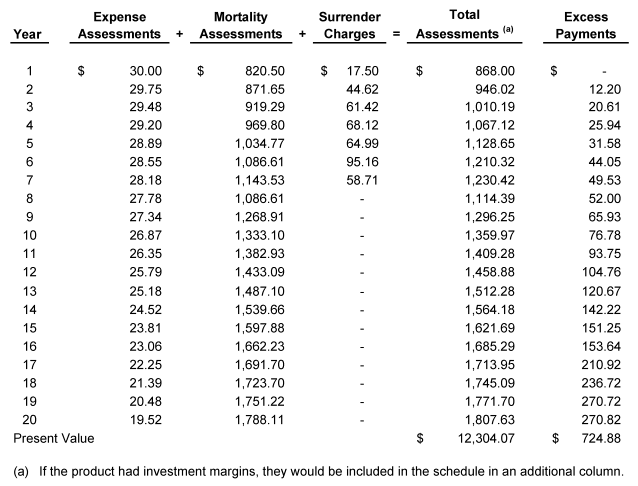 Year Expense Assessments + Mortality Assessments + "Surrender Charges" = Total Assessments (a) Excess Payments 1 $30.00 $820.50 $17.50 $868.00 $- 2 29.75 871.65 44.62 946.02 12.20 3 29.48 919.29 61.42 " 1,010.19 " 20.61 4 29.20 969.80 68.12 " 1,067.12 " 25.94 5 28.89 " 1,034.77 " 64.99 " 1,128.65 " 31.58 6 28.55 " 1,086.61 " 95.16 " 1,210.32 " 44.05 7 28.18 " 1,143.53 " 58.71 " 1,230.42 " 49.53 8 27.78 " 1,086.61 " - " 1,114.39 " 52.00 9 27.34 " 1,268.91 " - " 1,296.25 " 65.93 10 26.87 " 1,333.10 " - " 1,359.97 " 76.78 11 26.35 " 1,382.93 " - " 1,409.28 " 93.75 12 25.79 " 1,433.09 " - " 1,458.88 " 104.76 13 25.18 " 1,487.10 " - " 1,512.28 " 120.67 14 24.52 " 1,539.66 " - " 1,564.18 " 142.22 15 23.81 " 1,597.88 " - " 1,621.69 " 151.25 16 23.06 " 1,662.23 " - " 1,685.29 " 153.64 17 22.25 " 1,691.70 " - " 1,713.95 " 210.92 18 21.39 " 1,723.70 " - " 1,745.09 " 236.72 19 20.48 " 1,751.22 " - " 1,771.70 " 270.72 20 19.52 " 1,788.11 " - " 1,807.63 " 270.82 Present Value " $12,304.07 " $724.88 (a) "If the product had investment margins, they would be included in the schedule in an additional column."
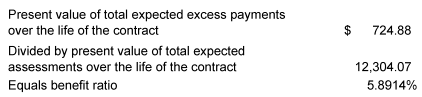 Present value of total expected excess payments over the life of the contract $724.88 Divided by present value of total expected assessments over the life of the contract " 12,304.07 " Equals benefit ratio 5.8914%
 Cumulative assessments $868.00 Multiplied by benefit ratio 5.8914% Equals Year 1 additional liability ($) 51.14
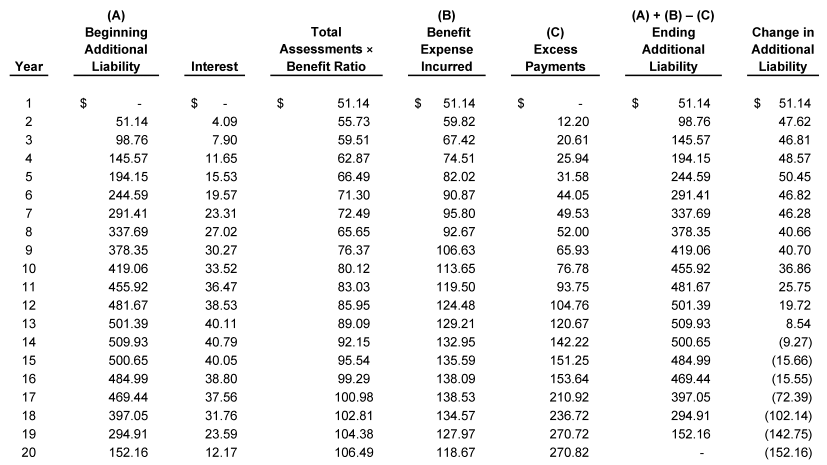 Year "(A) Beginning Additional Liability" Interest "Total Assessments × Benefit Ratio" "(B) Benefit Expense Incurred" "(C) Excess Payments" "(A) + (B) - (C) Ending Additional Liability" Change in Additional Liability 1 $- $- $51.14 $51.14 $- $51.14 $51.14 2 51.14 4.09 55.73 59.82 12.20 98.76 47.62 3 98.76 7.90 59.51 67.42 20.61 145.57 46.81 4 145.57 11.65 62.87 74.51 25.94 194.15 48.57 5 194.15 15.53 66.49 82.02 31.58 244.59 50.45 6 244.59 19.57 71.30 90.87 44.05 291.41 46.82 7 291.41 23.31 72.49 95.80 49.53 337.69 46.28 8 337.69 27.02 65.65 92.67 52.00 378.35 40.66 9 378.35 30.27 76.37 106.63 65.93 419.06 40.70 10 419.06 33.52 80.12 113.65 76.78 455.92 36.86 11 455.92 36.47 83.03 119.50 93.75 481.67 25.75 12 481.67 38.53 85.95 124.48 104.76 501.39 19.72 13 501.39 40.11 89.09 129.21 120.67 509.93 8.54 14 509.93 40.79 92.15 132.95 142.22 500.65 (9.27) 15 500.65 40.05 95.54 135.59 151.25 484.99 (15.66) 16 484.99 38.80 99.29 138.09 153.64 469.44 (15.55) 17 469.44 37.56 100.98 138.53 210.92 397.05 (72.39) 18 397.05 31.76 102.81 134.57 236.72 294.91 (102.14) 19 294.91 23.59 104.38 127.97 270.72 152.16 (142.75) 20 152.16 12.17 106.49 118.67 270.82 - (152.16)
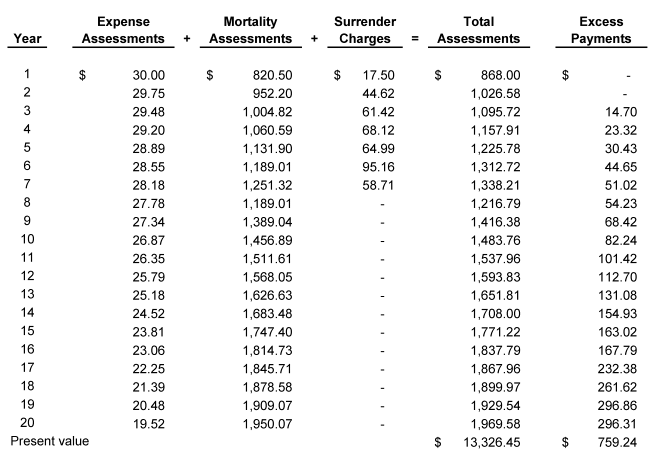 Year Expense Assessments + Mortality Assessments + Surrender Charges = Total Assessments Excess Payments 1 $30.00 $820.50 $17.50 $868.00 $- 2 29.75 952.20 44.62 " 1,026.58 " - 3 29.48 " 1,004.82 " 61.42 " 1,095.72 " 14.70 4 29.20 " 1,060.59 " 68.12 " 1,157.91 " 23.32 5 28.89 " 1,131.90 " 64.99 " 1,225.78 " 30.43 6 28.55 " 1,189.01 " 95.16 " 1,312.72 " 44.65 7 28.18 " 1,251.32 " 58.71 " 1,338.21 " 51.02 8 27.78 " 1,189.01 " - " 1,216.79 " 54.23 9 27.34 " 1,389.04 " - " 1,416.38 " 68.42 10 26.87 " 1,456.89 " - " 1,483.76 " 82.24 11 26.35 " 1,511.61 " - " 1,537.96 " 101.42 12 25.79 " 1,568.05 " - " 1,593.83 " 112.70 13 25.18 " 1,626.63 " - " 1,651.81 " 131.08 14 24.52 " 1,683.48 " - " 1,708.00 " 154.93 15 23.81 " 1,747.40 " - " 1,771.22 " 163.02 16 23.06 " 1,814.73 " - " 1,837.79 " 167.79 17 22.25 " 1,845.71 " - " 1,867.96 " 232.38 18 21.39 " 1,878.58 " - " 1,899.97 " 261.62 19 20.48 " 1,909.07 " - " 1,929.54 " 296.86 20 19.52 " 1,950.07 " - " 1,969.58 " 296.31 Present value " $13,326.45 " $759.24
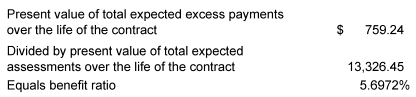 Present value of total expected excess payments over the life of the contract $759.24 Divided by present value of total expected assessments over the life of the contract " 13,326.45 " Equals benefit ratio 5.6972%
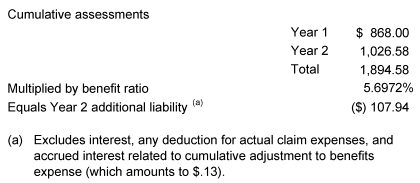 Cumulative assessments Year 1 $868.00 Year 2 " 1,026.58 " Total " 1,894.58 " Multiplied by benefit ratio 5.6972% Equals Year 2 additional liability (a) ($) 107.94 (a) "Excludes interest, any deduction for actual claim expenses, and accrued interest related to cumulative adjustment to benefits expense (which amounts to $.13)."
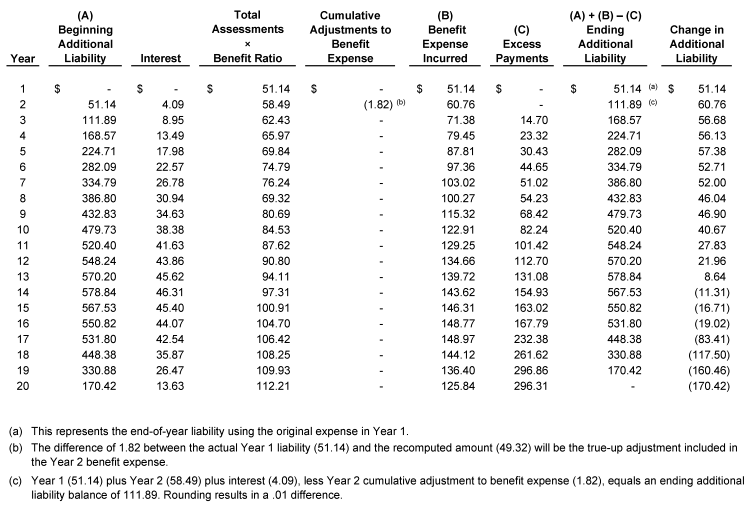 Year "(A) Beginning Additional Liability" Interest "Total Assessments × Benefit Ratio" Cumulative Adjustments to Benefit Expense "(B) Benefit Expense Incurred" "(C) Excess Payments" "(A) + (B) - (C) Ending Additional Liability" Change in Additional Liability 1 $- $- $51.14 $- $51.14 $- $51.14 (a) $51.14 2 51.14 4.09 58.49 (1.82) (b) 60.76 - 111.89 (c) 60.76 3 111.89 8.95 62.43 - 71.38 14.70 168.57 56.68 4 168.57 13.49 65.97 - 79.45 23.32 224.71 56.13 5 224.71 17.98 69.84 - 87.81 30.43 282.09 57.38 6 282.09 22.57 74.79 - 97.36 44.65 334.79 52.71 7 334.79 26.78 76.24 - 103.02 51.02 386.80 52.00 8 386.80 30.94 69.32 - 100.27 54.23 432.83 46.04 9 432.83 34.63 80.69 - 115.32 68.42 479.73 46.90 10 479.73 38.38 84.53 - 122.91 82.24 520.40 40.67 11 520.40 41.63 87.62 - 129.25 101.42 548.24 27.83 12 548.24 43.86 90.80 - 134.66 112.70 570.20 21.96 13 570.20 45.62 94.11 - 139.72 131.08 578.84 8.64 14 578.84 46.31 97.31 - 143.62 154.93 567.53 (11.31) 15 567.53 45.40 100.91 - 146.31 163.02 550.82 (16.71) 16 550.82 44.07 104.70 - 148.77 167.79 531.80 (19.02) 17 531.80 42.54 106.42 - 148.97 232.38 448.38 (83.41) 18 448.38 35.87 108.25 - 144.12 261.62 330.88 (117.50) 19 330.88 26.47 109.93 - 136.40 296.86 170.42 (160.46) 20 170.42 13.63 112.21 - 125.84 296.31 - (170.42) (a) This represents the end-of-year liability using the original expense in Year 1. (b) The difference of 1.82 between the actual Year 1 liability (51.14) and the recomputed amount (49.32) will be the true-up adjustment included in the Year 2 benefit expense. (c) "Year 1 (51.14) plus Year 2 (58.49) plus interest (4.09), less Year 2 cumulative adjustment to benefit expense (1.82), equals an ending additional liability balance of 111.89. Rounding results in a .01 difference."
- aThe account value
- bDeposits less partial withdrawals accumulated at 3 percent interest compounded annually.
- Note X: Liability for Future Policy Benefits
- The balances of and changes in the liability for future policy benefits follow.
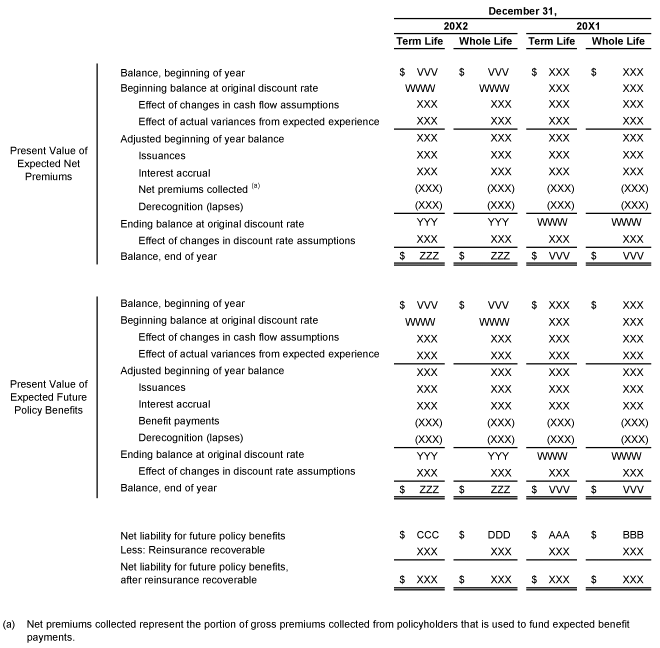 "December 31, " 20X2 20X1 Term Life Whole Life Term Life Whole Life Present Value of Expected Net Premiums "Balance, beginning of year" $VVV $VVV $XXX $XXX Beginning balance at original discount rate WWW WWW XXX XXX Effect of changes in cash flow assumptions XXX XXX XXX XXX Effect of actual variances from expected experience XXX XXX XXX XXX Adjusted beginning of year balance XXX XXX XXX XXX Issuances XXX XXX XXX XXX Interest accrual XXX XXX XXX XXX Net premiums collected (a) (XXX) (XXX) (XXX) (XXX) Derecognition (lapses) (XXX) (XXX) (XXX) (XXX) Ending balance at original discount rate YYY YYY WWW WWW Effect of changes in discount rate assumptions XXX XXX XXX XXX "Balance, end of year" $ZZZ $ZZZ $VVV $VVV Present Value of Expected Future Policy Benefits "Balance, beginning of year" $VVV $VVV $XXX $XXX Beginning balance at original discount rate WWW WWW XXX XXX Effect of changes in cash flow assumptions XXX XXX XXX XXX Effect of actual variances from expected experience XXX XXX XXX XXX Adjusted beginning of year balance XXX XXX XXX XXX Issuances XXX XXX XXX XXX Interest accrual XXX XXX XXX XXX Benefit payments (XXX) (XXX) (XXX) (XXX) Derecognition (lapses) (XXX) (XXX) (XXX) (XXX) Ending balance at original discount rate YYY YYY WWW WWW Effect of changes in discount rate assumptions XXX XXX XXX XXX "Balance, end of year" $ZZZ $ZZZ $VVV $VVV Net liability for future policy benefits $CCC $DDD $AAA $BBB Less: Reinsurance recoverable XXX XXX XXX XXX "Net liability for future policy benefits, after reinsurance recoverable " $XXX $XXX $XXX $XXX (a) Net premiums collected represent the portion of gross premiums collected from policyholders that is used to fund expected benefit payments.
- The reconciliation of the net liability for future policy benefits to the liability for future policy benefits in the consolidated statement of financial position follows.
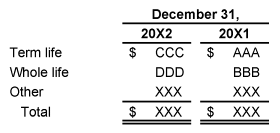 "December 31, "20X2 20X1 Term life $CCC $AAA Whole life DDD BBB Other XXX XXX Total $XXX $XXX
- The amount of undiscounted expected gross premiums and expected future benefit payments follows.
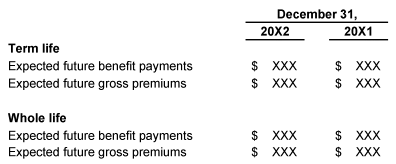 "December 31, " 20X2 20X1 Term life Expected future benefit payments $XXX $XXX Expected future gross premiums $XXX $XXX Whole life Expected future benefit payments $XXX $XXX Expected future gross premiums $XXX $XXX
- The amount of revenue and interest recognized in the statement of operations follows.
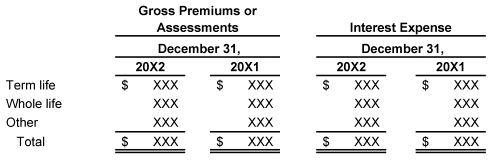 Gross Premiums or Assessments Interest Expense " December 31, " " December 31, " 20X2 20X1 20X2 20X1 Term life $XXX $XXX $XXX $XXX Whole life XXX XXX XXX XXX Other XXX XXX XXX XXX Total $XXX $XXX $XXX $XXX
- The weighted-average interest rate follows.
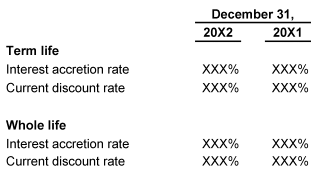 "December 31, " 20X2 20X1 Term life Interest accretion rate XXX% XXX% Current discount rate XXX% XXX% Whole life Interest accretion rate XXX% XXX% Current discount rate XXX% XXX%
- Note X: Policyholders' Account Balances
- The balance of account values by range of guaranteed minimum crediting rates and the related range of difference, in basis points, between rates being credited to policyholders and the respective guaranteed minimums follow.
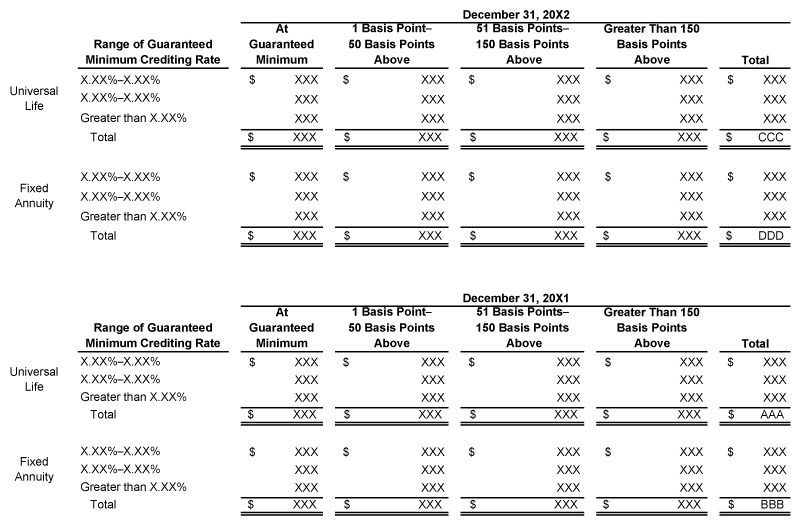 "December 31, 20X2" Range of Guaranteed Minimum Crediting Rate At Guaranteed Minimum "1 Basis Point- 50 Basis Points Above " "51 Basis Points- 150 Basis Points Above " Greater Than 150 Basis Points Above Total Universal Life X.XX%-X.XX% $XXX $XXX $XXX $XXX $XXX X.XX%-X.XX% XXX XXX XXX XXX XXX Greater than X.XX% XXX XXX XXX XXX XXX Total $XXX $XXX $XXX $XXX $CCC Fixed Annuity X.XX%-X.XX% $XXX $XXX $XXX $XXX $XXX X.XX%-X.XX% XXX XXX XXX XXX XXX Greater than X.XX% XXX XXX XXX XXX XXX Total $XXX $XXX $XXX $XXX $DDD "December 31, 20X1" Range of Guaranteed Minimum Crediting Rate At Guaranteed Minimum "1 Basis Point- 50 Basis Points Above " "51 Basis Points- 150 Basis Points Above " Greater Than 150 Basis Points Above Total Universal Life X.XX%-X.XX% $XXX $XXX $XXX $XXX $XXX X.XX%-X.XX% XXX XXX XXX XXX XXX Greater than X.XX% XXX XXX XXX XXX XXX Total $XXX $XXX $XXX $XXX $AAA Fixed Annuity X.XX%-X.XX% $XXX $XXX $XXX $XXX $XXX X.XX%-X.XX% XXX XXX XXX XXX XXX Greater than X.XX% XXX XXX XXX XXX XXX Total $XXX $XXX $XXX $XXX $BBB
- The balances of and changes in policyholders' account balances follow.
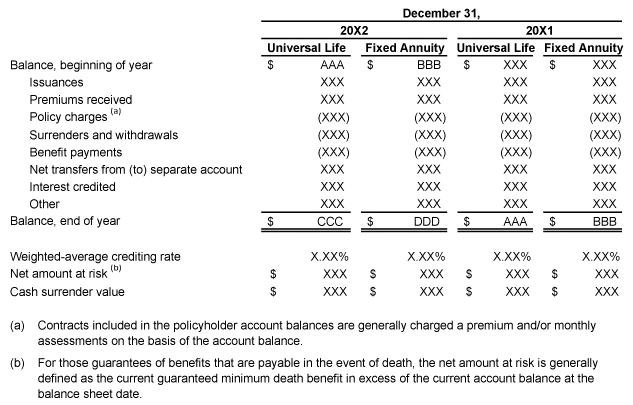 "December 31," 20X2 20X1 Universal Life Fixed Annuity Universal Life Fixed Annuity "Balance, beginning of year" $AAA $BBB $XXX $XXX Issuances XXX XXX XXX XXX Premiums received XXX XXX XXX XXX Policy charges (a) (XXX) (XXX) (XXX) (XXX) Surrenders and withdrawals (XXX) (XXX) (XXX) (XXX) Benefit payments (XXX) (XXX) (XXX) (XXX) Net transfers from (to) separate account XXX XXX XXX XXX Interest credited XXX XXX XXX XXX Other XXX XXX XXX XXX "Balance, end of year" $CCC $DDD $AAA $BBB Weighted-average crediting rate X.XX% X.XX% X.XX% X.XX% Net amount at risk (b) $XXX $XXX $XXX $XXX Cash surrender value $XXX $XXX $XXX $XXX (a) Contracts included in the policyholder account balances are generally charged a premium and/or monthly assessments on the basis of the account balance. (b) "For those guarantees of benefits that are payable in the event of death, the net amount at risk is generally defined as the current guaranteed minimum death benefit in excess of the current account balance at the balance sheet date. "
- The reconciliation of policyholders' account balances to the policyholders' account balances' liability in the consolidated statement of financial position follows.
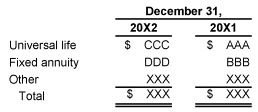 "December 31, " 20X2 20X1 Universal life $CCC $AAA Fixed annuity DDD BBB Other XXX XXX Total $XXX $XXX
- Note X: Market Risk Benefits
- The balances of and changes in guaranteed minimum withdrawal benefits associated with variable annuities and indexed annuities follow.
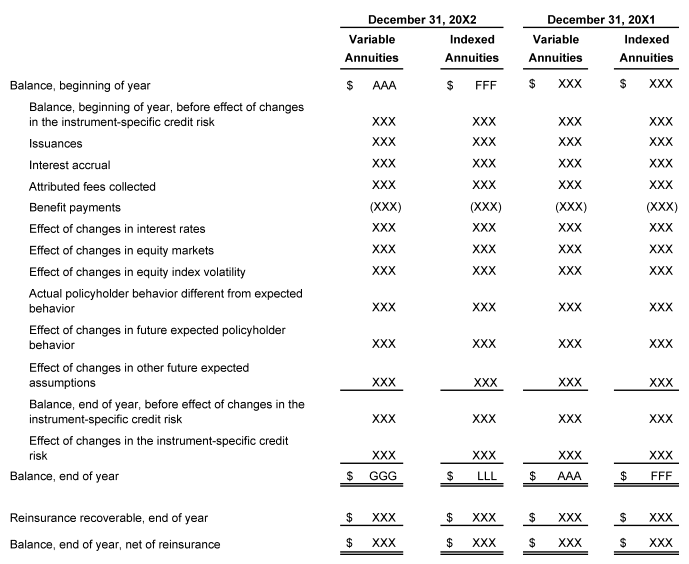 "December 31, 20X2" "December 31, 20X1" Variable Indexed Variable Indexed Annuities Annuities Annuities Annuities "Balance, beginning of year" $AAA $FFF $XXX $XXX "Balance, beginning of year, before effect of changes in the instrument-specific credit risk" XXX XXX XXX XXX Issuances XXX XXX XXX XXX Interest accrual XXX XXX XXX XXX Attributed fees collected XXX XXX XXX XXX Benefit payments (XXX) (XXX) (XXX) (XXX) Effect of changes in interest rates XXX XXX XXX XXX Effect of changes in equity markets XXX XXX XXX XXX Effect of changes in equity index volatility XXX XXX XXX XXX Actual policyholder behavior different from expected behavior XXX XXX XXX XXX Effect of changes in future expected policyholder behavior XXX XXX XXX XXX Effect of changes in other future expected assumptions XXX XXX XXX XXX "Balance, end of year, before effect of changes in the instrument-specific credit risk" XXX XXX XXX XXX Effect of changes in the instrument-specific credit risk XXX XXX XXX XXX "Balance, end of year" $GGG $LLL $AAA $FFF "Reinsurance recoverable, end of year" $XXX $XXX $XXX $XXX "Balance, end of year, net of reinsurance" $XXX $XXX $XXX $XXX
- The reconciliation of market risk benefits by amounts in an asset position and in a liability position to the market risk benefits amount in the consolidated statement of financial position follows.
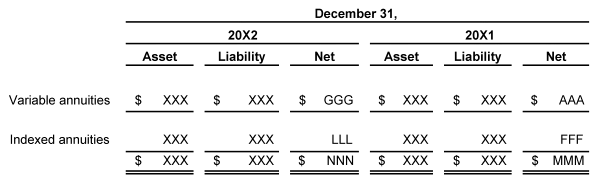 "December 31, " 20X2 20X1 Asset Liability Net Asset Liability Net Variable annuities $XXX $XXX $GGG $XXX $XXX $AAA Indexed annuities XXX XXX LLL XXX XXX FFF $XXX $XXX $NNN $XXX $XXX $MMM
- aAt contract inception:
- 1The insurance entity issues 1,000 guaranteed-renewable 20-year term life insurance contracts that are grouped into a single cohort for purposes of measuring the liability for future policy benefits.
- 2Face amount per contract: $200,000.
- 3Annual premium per contract: $500.
- 4Discount rate: 0 percent.
- 5Lapse rate: 5 percent for all years.
- 6Mortality rate: 0.1 percent in Year 1, increasing linearly to 0.29 percent in Year 20.
- 7For ease of illustration, no expenses are assumed, benefit payments and premium receipts occur at the end of the year, and annual periods are presented.
- 1
- bDuring Year 6: The insurance entity experiences unfavorable mortality that is 20 percent higher than expected. The insurance entity determines that it does not need to change its future mortality or lapse assumptions.
- cDuring Year 9: After experiencing continued unfavorable mortality (20 percent higher than expected in Years 7 through 9), the insurance entity increases its mortality assumption by 20 percent for Years 10 through 20.
- dDuring Year 10: The current upper-medium grade (low-credit-risk) fixed-income instrument yield increases from 0 percent to 2 percent. The insurance entity does not change its future mortality or lapse assumptions.
- aNet premiums
- bLiability remeasurement adjustments.
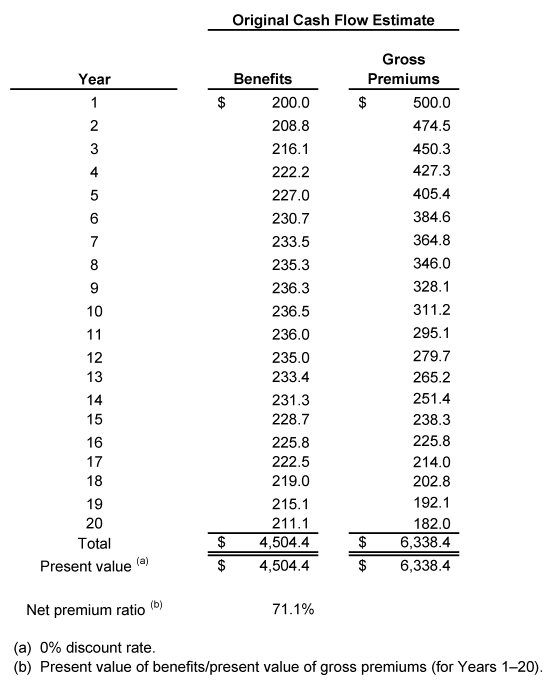 Original Cash Flow Estimate Year Benefits Gross Premiums 1 $200.0 $500.0 2 208.8 474.5 3 216.1 450.3 4 222.2 427.3 5 227.0 405.4 6 230.7 384.6 7 233.5 364.8 8 235.3 346.0 9 236.3 328.1 10 236.5 311.2 11 236.0 295.1 12 235.0 279.7 13 233.4 265.2 14 231.3 251.4 15 228.7 238.3 16 225.8 225.8 17 222.5 214.0 18 219.0 202.8 19 215.1 192.1 20 211.1 182.0 Total " $4,504.4 " " $6,338.4 " Present value (a) " $4,504.4 " " $6,338.4 " Net premium ratio (b) 71.1% (a) 0% discount rate. (b) Present value of benefits/present value of gross premiums (for Years 1-20).
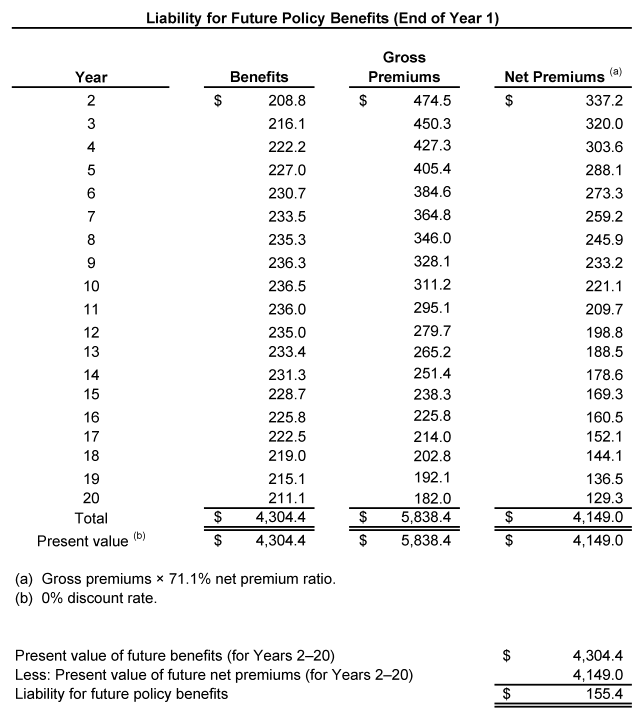 Liability for Future Policy Benefits (End of Year 1) Year Benefits Gross Premiums Net Premiums (a) 2 $208.8 $474.5 $337.2 3 216.1 450.3 320.0 4 222.2 427.3 303.6 5 227.0 405.4 288.1 6 230.7 384.6 273.3 7 233.5 364.8 259.2 8 235.3 346.0 245.9 9 236.3 328.1 233.2 10 236.5 311.2 221.1 11 236.0 295.1 209.7 12 235.0 279.7 198.8 13 233.4 265.2 188.5 14 231.3 251.4 178.6 15 228.7 238.3 169.3 16 225.8 225.8 160.5 17 222.5 214.0 152.1 18 219.0 202.8 144.1 19 215.1 192.1 136.5 20 211.1 182.0 129.3 Total " $4,304.4 " " $5,838.4 " " $4,149.0 " Present value (b) " $4,304.4 " " $5,838.4 " " $4,149.0 " (a) Gross premiums × 71.1% net premium ratio. (b) 0% discount rate. Present value of future benefits (for Years 2-20) " $4,304.4 " Less: Present value of future net premiums (for Years 2-20) " 4,149.0 " Liability for future policy benefits $155.4
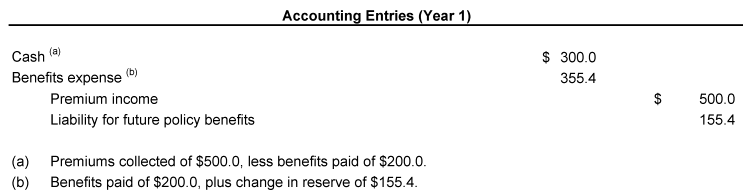 Accounting Entries (Year 1) Cash (a) $300.0 Benefits expense (b) 355.4 Premium income $500.0 Liability for future policy benefits 155.4 (a) "Premiums collected of $500.0, less benefits paid of $200.0." (b) "Benefits paid of $200.0, plus change in reserve of $155.4."
- At the end of Year 6, the Entity updates its mortality assumption to reflect the unfavorable experience in that year (that is, the true-up from expected experience to actual experience) and its effect on estimated cash flows. However, as specified in paragraph 944-40-35-5(a), the Entity reviewed its future cash flow assumptions and determined that its future mortality and lapse assumptions did not need to be adjusted.
- The following table provides information about the estimated cash flow effects of updating cash flow assumptions and the corresponding adjustment to the liability for future policy benefits and current-period benefit expense.
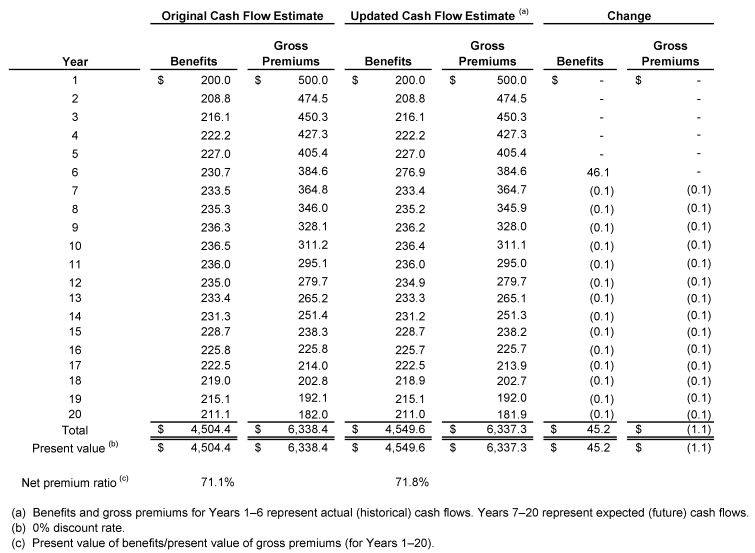 Original Cash Flow Estimate Updated Cash Flow Estimate (a) Change Year Benefits Gross Premiums Benefits Gross Premiums Benefits Gross Premiums 1 $200.0 $500.0 $200.0 $500.0 $- $- 2 208.8 474.5 208.8 474.5 - - 3 216.1 450.3 216.1 450.3 - - 4 222.2 427.3 222.2 427.3 - - 5 227.0 405.4 227.0 405.4 - - 6 230.7 384.6 276.9 384.6 46.1 - 7 233.5 364.8 233.4 364.7 (0.1) (0.1) 8 235.3 346.0 235.2 345.9 (0.1) (0.1) 9 236.3 328.1 236.2 328.0 (0.1) (0.1) 10 236.5 311.2 236.4 311.1 (0.1) (0.1) 11 236.0 295.1 236.0 295.0 (0.1) (0.1) 12 235.0 279.7 234.9 279.7 (0.1) (0.1) 13 233.4 265.2 233.3 265.1 (0.1) (0.1) 14 231.3 251.4 231.2 251.3 (0.1) (0.1) 15 228.7 238.3 228.7 238.2 (0.1) (0.1) 16 225.8 225.8 225.7 225.7 (0.1) (0.1) 17 222.5 214.0 222.5 213.9 (0.1) (0.1) 18 219.0 202.8 218.9 202.7 (0.1) (0.1) 19 215.1 192.1 215.1 192.0 (0.1) (0.1) 20 211.1 182.0 211.0 181.9 (0.1) (0.1) Total " $4,504.4 " " $6,338.4 " " $4,549.6 " " $6,337.3 " $45.2 $(1.1) Present value (b) " $4,504.4 " " $6,338.4 " " $4,549.6 " " $6,337.3 " $45.2 $(1.1) Net premium ratio (c) 71.1% 71.8% (a) Benefits and gross premiums for Years 1-6 represent actual (historical) cash flows. Years 7-20 represent expected (future) cash flows. (b) 0% discount rate. (c) Present value of benefits/present value of gross premiums (for Years 1-20).
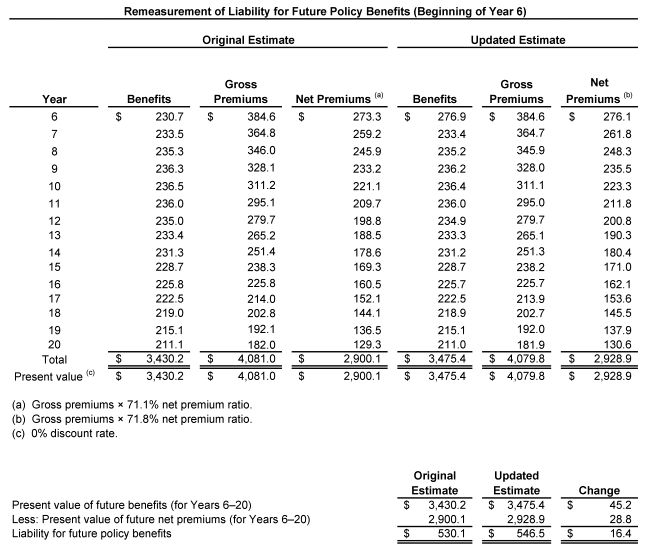 Remeasurement of Liability for Future Policy Benefits (Beginning of Year 6) Original Estimate Updated Estimate Year Benefits Gross Premiums Net Premiums (a) Benefits Gross Premiums Net Premiums (b) 6 $230.7 $384.6 $273.3 $276.9 $384.6 $276.1 7 233.5 364.8 259.2 233.4 364.7 261.8 8 235.3 346.0 245.9 235.2 345.9 248.3 9 236.3 328.1 233.2 236.2 328.0 235.5 10 236.5 311.2 221.1 236.4 311.1 223.3 11 236.0 295.1 209.7 236.0 295.0 211.8 12 235.0 279.7 198.8 234.9 279.7 200.8 13 233.4 265.2 188.5 233.3 265.1 190.3 14 231.3 251.4 178.6 231.2 251.3 180.4 15 228.7 238.3 169.3 228.7 238.2 171.0 16 225.8 225.8 160.5 225.7 225.7 162.1 17 222.5 214.0 152.1 222.5 213.9 153.6 18 219.0 202.8 144.1 218.9 202.7 145.5 19 215.1 192.1 136.5 215.1 192.0 137.9 20 211.1 182.0 129.3 211.0 181.9 130.6 Total " $3,430.2 " " $4,081.0 " " $2,900.1 " " $3,475.4 " " $4,079.8 " " $2,928.9 " Present value (c) " $3,430.2 " " $4,081.0 " " $2,900.1 " " $3,475.4 " " $4,079.8 " " $2,928.9 " (a) Gross premiums × 71.1% net premium ratio. (b) Gross premiums × 71.8% net premium ratio. (c) 0% discount rate. Original Estimate Updated Estimate Change Present value of future benefits (for Years 6-20) " $3,430.2 " " $3,475.4 " $45.2 Less: Present value of future net premiums (for Years 6-20) " 2,900.1 " " 2,928.9 " 28.8 Liability for future policy benefits $530.1 $546.5 $16.4
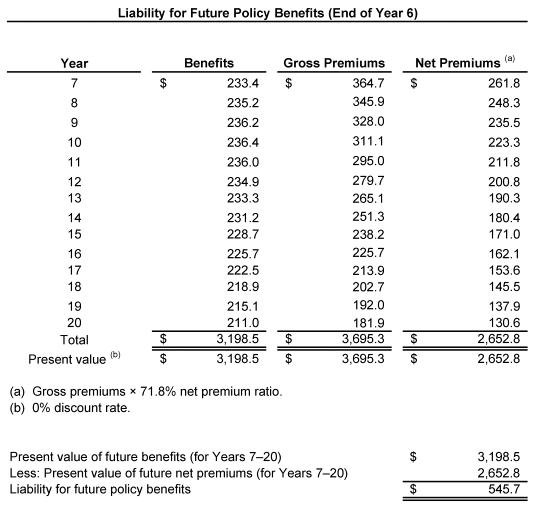 Liability for Future Policy Benefits (End of Year 6) Year Benefits Gross Premiums Net Premiums (a) 7 $233.4 $364.7 $261.8 8 235.2 345.9 248.3 9 236.2 328.0 235.5 10 236.4 311.1 223.3 11 236.0 295.0 211.8 12 234.9 279.7 200.8 13 233.3 265.1 190.3 14 231.2 251.3 180.4 15 228.7 238.2 171.0 16 225.7 225.7 162.1 17 222.5 213.9 153.6 18 218.9 202.7 145.5 19 215.1 192.0 137.9 20 211.0 181.9 130.6 Total " $3,198.5 " " $3,695.3 " " $2,652.8 " Present value (b) " $3,198.5 " " $3,695.3 " " $2,652.8 " (a) Gross premiums × 71.8% net premium ratio. (b) 0% discount rate. Present value of future benefits (for Years 7-20) " $3,198.5 " Less: Present value of future net premiums (for Years 7-20) " 2,652.8 " Liability for future policy benefits $545.7
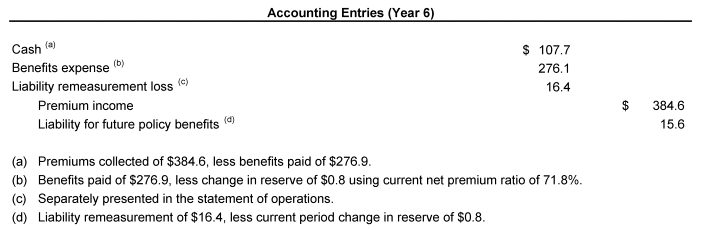 Accounting Entries (Year 6) Cash (a) $107.7 Benefits expense (b) 276.1 Liability remeasurement loss (c) 16.4 Premium income $384.6 Liability for future policy benefits (d) 15.6 (a) "Premiums collected of $384.6, less benefits paid of $276.9." (b) "Benefits paid of $276.9, less change in reserve of $0.8 using current net premium ratio of 71.8%." (c) Separately presented in the statement of operations. (d) "Liability remeasurement of $16.4, less current period change in reserve of $0.8."
- At the end of Year 9, the Entity reviews and updates its mortality assumption to reflect the unfavorable experience in that year and an increase in expected mortality in Years 10 through 20.
- The following tables provide information about the estimated cash flow effects of updating the mortality assumption and the corresponding adjustment to the liability for future policy benefits and current-period benefit expense.
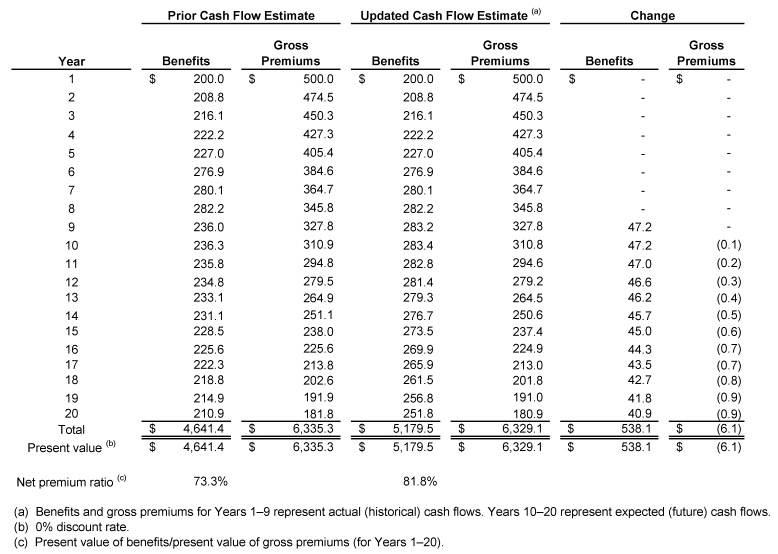 Prior Cash Flow Estimate Updated Cash Flow Estimate (a) Change Year Benefits Gross Premiums Benefits Gross Premiums Benefits Gross Premiums 1 $200.0 $500.0 $200.0 $500.0 $- $- 2 208.8 474.5 208.8 474.5 - - 3 216.1 450.3 216.1 450.3 - - 4 222.2 427.3 222.2 427.3 - - 5 227.0 405.4 227.0 405.4 - - 6 276.9 384.6 276.9 384.6 - - 7 280.1 364.7 280.1 364.7 - - 8 282.2 345.8 282.2 345.8 - - 9 236.0 327.8 283.2 327.8 47.2 - 10 236.3 310.9 283.4 310.8 47.2 (0.1) 11 235.8 294.8 282.8 294.6 47.0 (0.2) 12 234.8 279.5 281.4 279.2 46.6 (0.3) 13 233.1 264.9 279.3 264.5 46.2 (0.4) 14 231.1 251.1 276.7 250.6 45.7 (0.5) 15 228.5 238.0 273.5 237.4 45.0 (0.6) 16 225.6 225.6 269.9 224.9 44.3 (0.7) 17 222.3 213.8 265.9 213.0 43.5 (0.7) 18 218.8 202.6 261.5 201.8 42.7 (0.8) 19 214.9 191.9 256.8 191.0 41.8 (0.9) 20 210.9 181.8 251.8 180.9 40.9 (0.9) Total " $4,641.4 " " $6,335.3 " " $5,179.5 " " $6,329.1 " $538.1 $(6.1) Present value (b) " $4,641.4 " " $6,335.3 " " $5,179.5 " " $6,329.1 " $538.1 $(6.1) Net premium ratio (c) 73.3% 81.8% (a) Benefits and gross premiums for Years 1-9 represent actual (historical) cash flows. Years 10-20 represent expected (future) cash flows. (b) 0% discount rate. (c) Present value of benefits/present value of gross premiums (for Years 1-20).
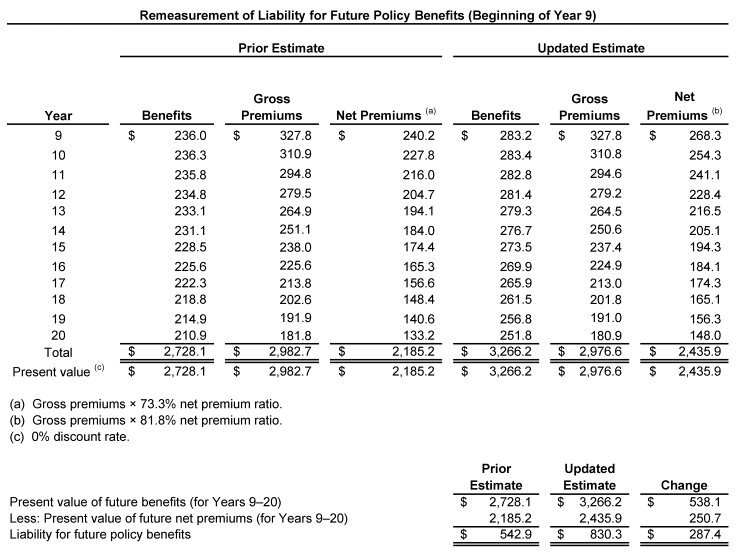 Remeasurement of Liability for Future Policy Benefits (Beginning of Year 9) Prior Estimate Updated Estimate Year Benefits Gross Premiums Net Premiums (a) Benefits Gross Premiums Net Premiums (b) 9 $236.0 $327.8 $240.2 $283.2 $327.8 $268.3 10 236.3 310.9 227.8 283.4 310.8 254.3 11 235.8 294.8 216.0 282.8 294.6 241.1 12 234.8 279.5 204.7 281.4 279.2 228.4 13 233.1 264.9 194.1 279.3 264.5 216.5 14 231.1 251.1 184.0 276.7 250.6 205.1 15 228.5 238.0 174.4 273.5 237.4 194.3 16 225.6 225.6 165.3 269.9 224.9 184.1 17 222.3 213.8 156.6 265.9 213.0 174.3 18 218.8 202.6 148.4 261.5 201.8 165.1 19 214.9 191.9 140.6 256.8 191.0 156.3 20 210.9 181.8 133.2 251.8 180.9 148.0 Total " $2,728.1 " " $2,982.7 " " $2,185.2 " " $3,266.2 " " $2,976.6 " " $2,435.9 " Present value (c) " $2,728.1 " " $2,982.7 " " $2,185.2 " " $3,266.2 " " $2,976.6 " " $2,435.9 " (a) Gross premiums × 73.3% net premium ratio. (b) Gross premiums × 81.8% net premium ratio. (c) 0% discount rate. Prior Estimate Updated Estimate Change Present value of future benefits (for Years 9-20) " $2,728.1 " " $3,266.2 " $538.1 Less: Present value of future net premiums (for Years 9-20) " 2,185.2 " " 2,435.9 " 250.7 Liability for future policy benefits $542.9 $830.3 $287.4
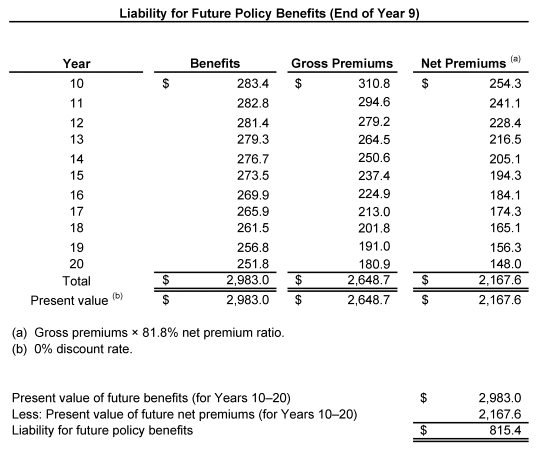 Liability for Future Policy Benefits (End of Year 9) Year Benefits Gross Premiums Net Premiums (a) 10 $283.4 $310.8 $254.3 11 282.8 294.6 241.1 12 281.4 279.2 228.4 13 279.3 264.5 216.5 14 276.7 250.6 205.1 15 273.5 237.4 194.3 16 269.9 224.9 184.1 17 265.9 213.0 174.3 18 261.5 201.8 165.1 19 256.8 191.0 156.3 20 251.8 180.9 148.0 Total " $2,983.0 " " $2,648.7 " " $2,167.6 " Present value (b) " $2,983.0 " " $2,648.7 " " $2,167.6 " (a) Gross premiums × 81.8% net premium ratio. (b) 0% discount rate. Present value of future benefits (for Years 10-20) " $2,983.0 " Less: Present value of future net premiums (for Years 10-20) " 2,167.6 " Liability for future policy benefits $815.4
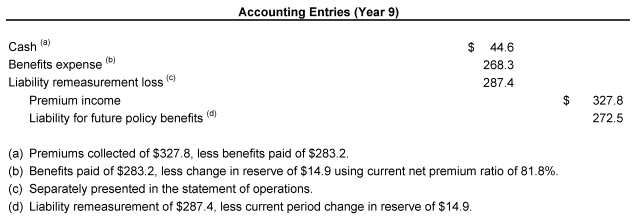 Accounting Entries (Year 9) Cash (a) $44.6 Benefits expense (b) 268.3 Liability remeasurement loss (c) 287.4 Premium income $327.8 Liability for future policy benefits (d) 272.5 (a) "Premiums collected of $327.8, less benefits paid of $283.2." (b) "Benefits paid of $283.2, less change in reserve of $14.9 using current net premium ratio of 81.8%." (c) Separately presented in the statement of operations. (d) "Liability remeasurement of $287.4, less current period change in reserve of $14.9."
- At the end of Year 10, the Entity updates its discount rate assumption from 0 percent to 2 percent.
- The following table provides information about the effect of updating the discount rate assumption and the adjustment to the liability for future policy benefits and other comprehensive income.
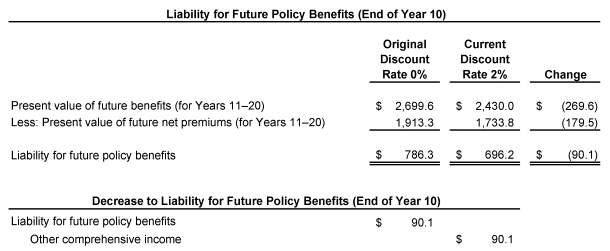 Liability for Future Policy Benefits (End of Year 10) Original Discount Rate 0% Current Discount Rate 2% Change Present value of future benefits (for Years 11-20) " $2,699.6 " " $2,430.0 " $(269.6) Less: Present value of future net premiums (for Years 11-20) " 1,913.3 " " 1,733.8 " (179.5) Liability for future policy benefits $786.3 $696.2 $(90.1) Decrease to Liability for Future Policy Benefits (End of Year 10) Liability for future policy benefits $90.1 Other comprehensive income $90.1
- aThe beginning of Year 4 carryover basis is $387.6, which will be used in subsequent recalculations of the net premium ratio.
- bAt the beginning of Year 4, the Entity updates cash flow assumptions and recalculates net premiums.
- cA discount rate of 0 percent is used to compute the net premiums and the liability for future policy benefits.
- dFor ease of illustration, no expenses are assumed, benefit payments and premium receipts are made at the end of the year, and annual periods are presented.
- aNet premiums
- bUpdates of the net premium ratio.
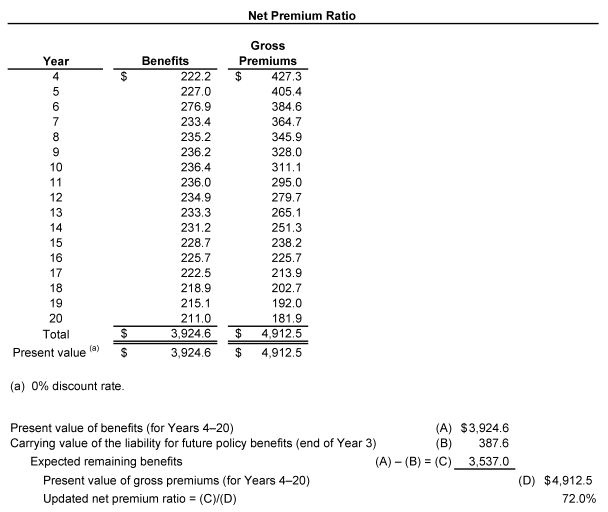 Net Premium Ratio Year Benefits Gross Premiums 4 $222.2 $427.3 5 227.0 405.4 6 276.9 384.6 7 233.4 364.7 8 235.2 345.9 9 236.2 328.0 10 236.4 311.1 11 236.0 295.0 12 234.9 279.7 13 233.3 265.1 14 231.2 251.3 15 228.7 238.2 16 225.7 225.7 17 222.5 213.9 18 218.9 202.7 19 215.1 192.0 20 211.0 181.9 Total " $3,924.6 " " $4,912.5 " Present value (a) " $3,924.6 " " $4,912.5 " (a) 0% discount rate. Present value of benefits (for Years 4-20) (A) " $3,924.6 " Carrying value of the liability for future policy benefits (end of Year 3) (B) 387.6 Expected remaining benefits (A) - (B) = (C) " 3,537.0 " Present value of gross premiums (for Years 4-20) (D) " $4,912.5 " Updated net premium ratio = (C)/(D) 72.0%
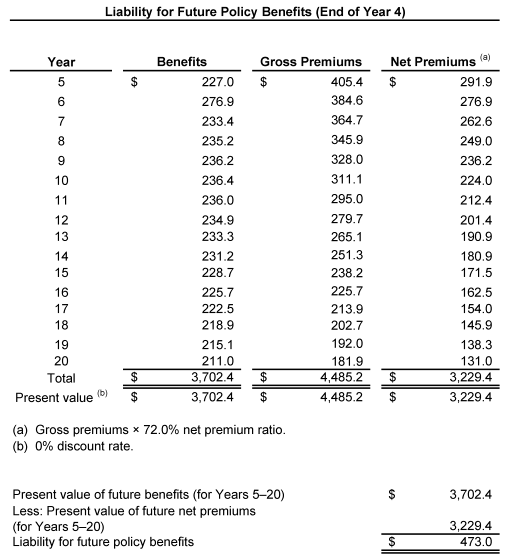 Liability for Future Policy Benefits (End of Year 4) Year Benefits Gross Premiums Net Premiums (a) 5 $227.0 $405.4 $291.9 6 276.9 384.6 276.9 7 233.4 364.7 262.6 8 235.2 345.9 249.0 9 236.2 328.0 236.2 10 236.4 311.1 224.0 11 236.0 295.0 212.4 12 234.9 279.7 201.4 13 233.3 265.1 190.9 14 231.2 251.3 180.9 15 228.7 238.2 171.5 16 225.7 225.7 162.5 17 222.5 213.9 154.0 18 218.9 202.7 145.9 19 215.1 192.0 138.3 20 211.0 181.9 131.0 Total " $3,702.4 " " $4,485.2 " " $3,229.4 " Present value (b) " $3,702.4 " " $4,485.2 " " $3,229.4 " (a) Gross premiums × 72.0% net premium ratio. (b) 0% discount rate. Present value of future benefits (for Years 5-20) " $3,702.4 " Less: Present value of future net premiums (for Years 5-20) " 3,229.4 " Liability for future policy benefits $473.0
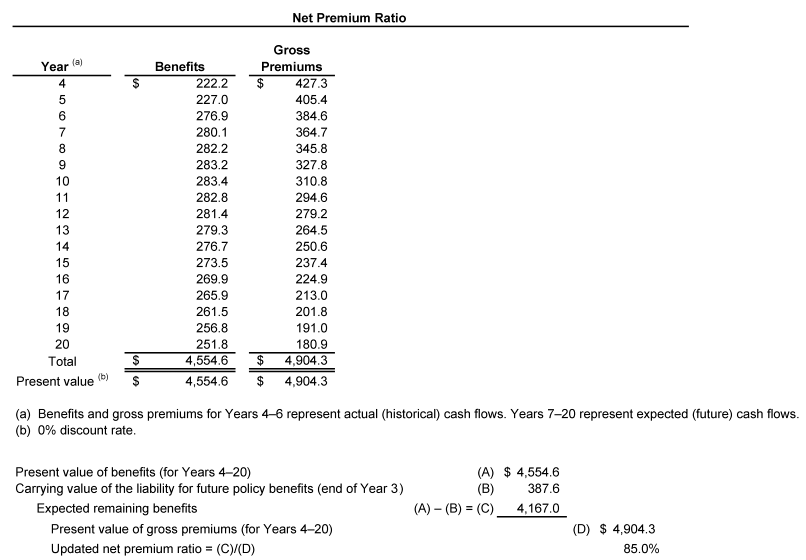 Net Premium Ratio Year (a) Benefits Gross Premiums 4 $222.2 $427.3 5 227.0 405.4 6 276.9 384.6 7 280.1 364.7 8 282.2 345.8 9 283.2 327.8 10 283.4 310.8 11 282.8 294.6 12 281.4 279.2 13 279.3 264.5 14 276.7 250.6 15 273.5 237.4 16 269.9 224.9 17 265.9 213.0 18 261.5 201.8 19 256.8 191.0 20 251.8 180.9 Total " $4,554.6 " " $4,904.3 " Present value (b) " $4,554.6 " " $4,904.3 " (a) Benefits and gross premiums for Years 4-6 represent actual (historical) cash flows. Years 7-20 represent expected (future) cash flows. (b) 0% discount rate. Present value of benefits (for Years 4-20) (A) " $4,554.6 " Carrying value of the liability for future policy benefits (end of Year 3) (B) 387.6 Expected remaining benefits (A) - (B) = (C) " 4,167.0 " Present value of gross premiums (for Years 4-20) (D) " $4,904.3 " Updated net premium ratio = (C)/(D) 85.0%
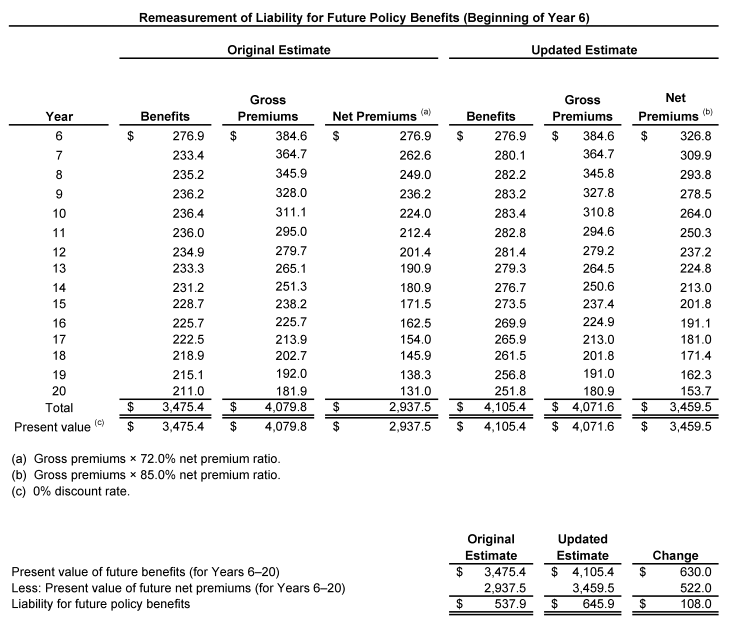 Remeasurement of Liability for Future Policy Benefits (Beginning of Year 6) Original Estimate Updated Estimate Year Benefits Gross Premiums Net Premiums (a) Benefits Gross Premiums Net Premiums (b) 6 $276.9 $384.6 $276.9 $276.9 $384.6 $326.8 7 233.4 364.7 262.6 280.1 364.7 309.9 8 235.2 345.9 249.0 282.2 345.8 293.8 9 236.2 328.0 236.2 283.2 327.8 278.5 10 236.4 311.1 224.0 283.4 310.8 264.0 11 236.0 295.0 212.4 282.8 294.6 250.3 12 234.9 279.7 201.4 281.4 279.2 237.2 13 233.3 265.1 190.9 279.3 264.5 224.8 14 231.2 251.3 180.9 276.7 250.6 213.0 15 228.7 238.2 171.5 273.5 237.4 201.8 16 225.7 225.7 162.5 269.9 224.9 191.1 17 222.5 213.9 154.0 265.9 213.0 181.0 18 218.9 202.7 145.9 261.5 201.8 171.4 19 215.1 192.0 138.3 256.8 191.0 162.3 20 211.0 181.9 131.0 251.8 180.9 153.7 Total " $3,475.4 " " $4,079.8 " " $2,937.5 " " $4,105.4 " " $4,071.6 " " $3,459.5 " Present value (c) " $3,475.4 " " $4,079.8 " " $2,937.5 " " $4,105.4 " " $4,071.6 " " $3,459.5 " (a) Gross premiums × 72.0% net premium ratio. (b) Gross premiums × 85.0% net premium ratio. (c) 0% discount rate. Original Estimate Updated Estimate Change Present value of future benefits (for Years 6-20) " $3,475.4 " " $4,105.4 " $630.0 Less: Present value of future net premiums (for Years 6-20) " 2,937.5 " " 3,459.5 " 522.0 Liability for future policy benefits $537.9 $645.9 $108.0
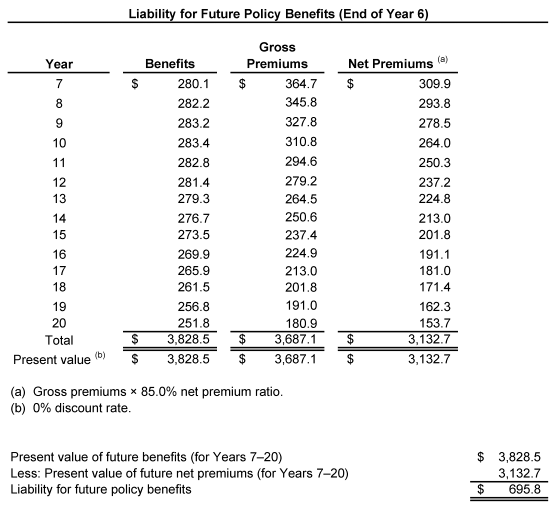 Liability for Future Policy Benefits (End of Year 6) Year Benefits Gross Premiums Net Premiums (a) 7 $280.1 $364.7 $309.9 8 282.2 345.8 293.8 9 283.2 327.8 278.5 10 283.4 310.8 264.0 11 282.8 294.6 250.3 12 281.4 279.2 237.2 13 279.3 264.5 224.8 14 276.7 250.6 213.0 15 273.5 237.4 201.8 16 269.9 224.9 191.1 17 265.9 213.0 181.0 18 261.5 201.8 171.4 19 256.8 191.0 162.3 20 251.8 180.9 153.7 Total " $3,828.5 " " $3,687.1 " " $3,132.7 " Present value (b) " $3,828.5 " " $3,687.1 " " $3,132.7 " (a) Gross premiums × 85.0% net premium ratio. (b) 0% discount rate. Present value of future benefits (for Years 7-20) " $3,828.5 " Less: Present value of future net premiums (for Years 7-20) " 3,132.7 " Liability for future policy benefits $695.8
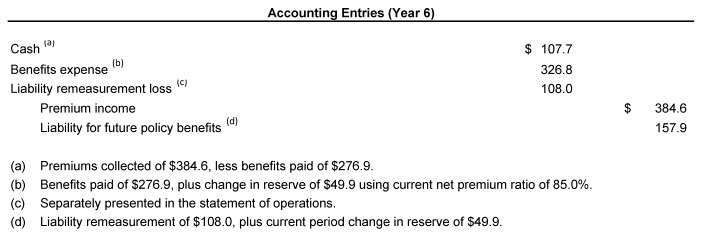 Accounting Entries (Year 6) Cash (a) $107.7 Benefits expense (b) 326.8 Liability remeasurement loss (c) 108.0 Premium income $384.6 Liability for future policy benefits (d) 157.9 (a) "Premiums collected of $384.6, less benefits paid of $276.9." (b) "Benefits paid of $276.9, plus change in reserve of $49.9 using current net premium ratio of 85.0%." (c) Separately presented in the statement of operations. (d) "Liability remeasurement of $108.0, plus current period change in reserve of $49.9."
Financial Guarantee Insurance Contracts
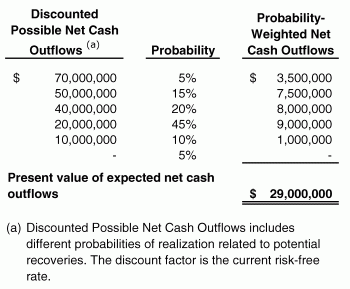 "Discounted Possible Net Cash Outflows (a)" Probability "Probability- Weighted Net Cash Outflows" " $70,000,000 " 5% " $3,500,000 " " 50,000,000 " 15% " 7,500,000 " " 40,000,000 " 20% " 8,000,000 " " 20,000,000 " 45% " 9,000,000 " " 10,000,000 " 10% " 1,000,000 " - 5% - Present value of expected net cash outflows " $29,000,000 " (a) Discounted Possible Net Cash Outflows includes different probabilities of realization related to potential recoveries. The discount factor is the current risk-free rate.
- a Category A. This category includes insured financial obligations that are still currently performing (that is, insured contractual payments are made on time but the likelihood of an event of default has increased since the financial guarantee insurance contract was first issued), but if economic conditions persist for an extended period of time, they may not be performing in the future. The issuer of the insured financial obligation may have experienced credit deterioration as a result of a general economic downturn. As a result, the present value of expected net cash outflows may exceed the unearned premium revenue of the financial guarantee insurance contract some time in the future.
- b Category B. This category includes insured financial obligations that are currently characterized as potentially nonperforming and may require action by the insurance entity to avoid or mitigate an event of default.
- c Category C. This category includes insured financial obligations that are characterized as nonperforming and for which actions to date by the insurance entity have not been successful in avoiding or mitigating an event of default. The insurance entity continues its efforts to cure the claim, but an event of default is imminent.
- d Category D. This category includes insured financial obligations in which an event of default has occurred.
-
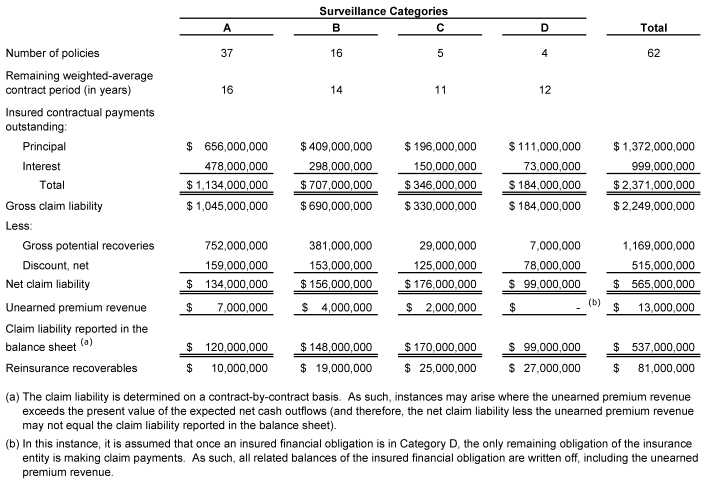 Surveillance Categories A B C D Total Number of policies 37 16 5 4 62 Remaining weighted-average contract period (in years) 16 14 11 12 Insured contractual payments outstanding: Principal " $656,000,000 " " $409,000,000 " " $196,000,000 " " $111,000,000 " " $1,372,000,000 " Interest " 478,000,000 " " 298,000,000 " " 150,000,000 " " 73,000,000 " " 999,000,000 " Total " $1,134,000,000 " " $707,000,000 " " $346,000,000 " " $184,000,000 " " $2,371,000,000 " Gross claim liability " $1,045,000,000 " " $690,000,000 " " $330,000,000 " " $184,000,000 " " $2,249,000,000 " Less: Gross potential recoveries " 752,000,000 " " 381,000,000 " " 29,000,000 " " 7,000,000 " " 1,169,000,000 " "Discount, net" " 159,000,000 " " 153,000,000 " " 125,000,000 " " 78,000,000 " " 515,000,000 " Net claim liability " $134,000,000 " " $156,000,000 " " $176,000,000 " " $99,000,000 " " $565,000,000 " Unearned premium revenue " $7,000,000 " " $4,000,000 " " $2,000,000 " $- (b) " $13,000,000 " Claim liability reported in the balance sheet (a) " $120,000,000 " " $148,000,000 " " $170,000,000 " " $99,000,000 " " $537,000,000 " Reinsurance recoverables " $10,000,000 " " $19,000,000 " " $25,000,000 " " $27,000,000 " " $81,000,000 " (a) "The claim liability is determined on a contract-by-contract basis. As such, instances may arise where the unearned premium revenue exceeds the present value of the expected net cash outflows (and therefore, the net claim liability less the unearned premium revenue may not equal the claim liability reported in the balance sheet)." (b) "In this instance, it is assumed that once an insured financial obligation is in Category D, the only remaining obligation of the insurance enterprise is making claim payments. As such, all related balances of the insured financial obligation are written off, including the unearned premium revenue."
944-40-65Transition and Open Effective Date Information
Source downloaded: .Record version ba2976605873. Effective date must be checked in the source.
944-40-S00StatusSEC
Source downloaded: .Record version 0ab404229cb5. Effective date must be checked in the source.
| Paragraph | Action | Accounting Standards Update | Date |
| 944-40-S99-1 | Amended | Accounting Standards Update No. 2012-03 | 08/27/2012 |
944-40-S30Initial MeasurementSEC
Source downloaded: .Record version e07fd25ce580. Effective date must be checked in the source.
Discounting Claims Liabilities Related to Short-Duration Contracts
944-40-S50DisclosureSEC
Source downloaded: .Record version 6c94a1fe9940. Effective date must be checked in the source.
Property-Casualty Insurance Reserves for Unpaid Claim Costs
944-40-S99SEC MaterialsSEC
Source downloaded: .Record version 72f576d767e1. Effective date must be checked in the source.
SEC Staff Guidance
- Facts: A property-casualty insurance company (the "Company") has established reserves, in accordance with FASB ASC Topic 944, Financial Services—Insurance, for unpaid claim costs, including estimates of costs relating to claims incurred but not reported ("IBNR"). FN44 The reserve estimate for IBNR claims was based on past loss experience and current trends except that the estimate has been adjusted for recent significant unfavorable claims experience that the Company considers to be nonrecurring and abnormal. The Company attributes the abnormal claims experience to a recent acquisition and accelerated claims processing; however, actuarial studies have been inconclusive and subject to varying interpretations. Although the reserve is deemed adequate to cover all probable claims, there is a reasonable possibility that the abnormal claims experience could continue, resulting in a material understatement of claim reserves.
- FN44 FASB ASC paragraph 944-40-30-1 prescribes that "[t]he liability for unpaid claims shall be based on the estimated ultimate cost of settling the claims (including the effects of inflation and other societal and economic factors), using past experience adjusted for current trends, and any other factors that would modify past experience." [Footnote reference omitted]
- FASB ASC Topic 450, Contingencies, requires, among other things, disclosure of loss contingencies. FN45 However, FASB ASC paragraph 450-10-05-6 notes that "[n]ot all uncertainties inherent in the accounting process give rise to contingencies."
- FN45 FASB ASC paragraphs provide guidance that "[i]f no accrual is made for a loss contingency because one or both of the conditions in FASB ASC paragraph 450-20-25-2 are not met, or if an exposure to loss exists in excess of the amount accrued pursuant to the provisions of FASB ASC paragraph 450-20-25-2, disclosure of the contingency shall be made when there is at least a reasonable possibility that a loss or an additional loss may have been incurred. The disclosure shall indicate the nature of the contingency and shall give an estimate of the possible loss or range of loss or state that such an estimate cannot be made." [Footnote reference omitted and emphasis added.]
- FASB ASC Topic 275, Risks and Uncertainties, FN46 also provides disclosure guidance regarding certain significant estimates.
- FN46 FASB ASC Topic 275 provides that disclosures regarding certain significant estimates should be made when certain criteria are met. The guidance provides that the disclosure shall indicate the nature of the uncertainty and include an indication that it is at least reasonably possible that a change in the estimate will occur in the near term. If the estimate involves a loss contingency covered by FASB ASC Topic 450, the disclosure also should include an estimate of the possible loss or range of loss, or state that such an estimate cannot be made. Disclosure of the factors that cause the estimate to be sensitive to change is encouraged but not required.
- FASB ASC Topic 275 requires disclosures regarding current vulnerability due to certain concentrations which may be applicable as well.
- Interpretive Response: Yes. The staff believes that specific uncertainties (conditions, situations and/or sets of circumstances) not considered to be normal and recurring because of their significance and/or nature can result in loss contingencies FN47 for purposes of applying FASB ASC Topics 450 and 275 disclosure requirements. General uncertainties, such as the amount and timing of claims, that are normal, recurring, and inherent to estimations of property-casualty insurance reserves are not considered subject to the disclosure requirements of FASB ASC Topic 450. Some specific uncertainties that may result in loss contingencies pursuant to FASB ASC Topic 450, depending on significance and/or nature, include insufficiently understood trends in claims activity; judgmental adjustments to historical experience for purposes of estimating future claim costs (other than for normal recurring general uncertainties); significant risks to an individual claim or group of related claims; or catastrophe losses. The requirements of FASB ASC Topic 275 apply when "[i]t is at least reasonably possible that the estimate of the effect on the financial statements of a condition, situation, or set of circumstances that existed at the date of the financial statements will change in the near term due to one or more future confirming events... [and] the effect of the change would be material to the financial statements."
- FN47 The loss contingency referred to in this document is the potential for a material understatement of reserves for unpaid claims.
- Interpretive Response: Yes. The staff believes the judgmental adjustments to historical experience for insufficiently understood claims activity noted above results in a loss contingency within the scope of FASB ASC Topics 450 and 275. Based on the facts presented above, at a minimum the Company's financial statements should disclose that for purposes of estimating IBNR claim reserves, past experience was adjusted for what management believes to be abnormal claims experience related to the recent acquisition of Company A and accelerated claims processing. It should also be disclosed that there is a reasonable possibility that the claims experience could be the indication of an unfavorable trend which would require additional IBNR claim reserves in the approximate range of $XX-$XX million (alternatively, if Company management is unable to estimate the possible loss or range of loss, a statement to that effect should be disclosed).
- Additionally, the staff also expects companies to disclose the nature of the loss contingency and the potential impact on trends in their loss reserve development discussions provided pursuant to Property-Casualty Industry Guides 4 and 6. Consideration should also be given to the need to provide disclosure in MD&A.
- Question 3: Does the staff have an example in which specific uncertainties involving an individual claim or group of related claims result in a loss contingency the staff believes requires disclosure?
- Interpretive Response: Yes. A property-casualty insurance company (the "Company") underwrites product liability insurance for an insured manufacturer which has produced and sold millions of units of a particular product which has been used effectively and without problems for many years. Users of the product have recently begun to report serious health problems that they attribute to long term use of the product and have asserted claims under the insurance policy underwritten and retained by the Company. To date, the number of users reporting such problems is relatively small, and there is presently no conclusive evidence that demonstrates a causal link between long term use of the product and the health problems experienced by the claimants. However, the evidence generated to date indicates that there is at least a reasonable possibility that the product is responsible for the problems and the assertion of additional claims is considered probable, and therefore the potential exposure of the Company is material. While an accrual may not be warranted since the loss exposure may not be both probable and estimable, in view of the reasonable possibility of material future claim payments, the staff believes that disclosures made in accordance with FASB ASC Topics 450 and 275 would be required under these circumstances.
- The disclosure concepts expressed in this example would also apply to an individual claim or group of claims that are related to a single catastrophic event or multiple events having a similar effect.
Related subtopics
- 605-944 Financial Services—InsuranceRevenue Recognition
- 310-944 Financial Services—InsuranceReceivables
- 944-20 Insurance ActivitiesFinancial Services—Insurance
- 405-30 Insurance-Related AssessmentsLiabilities
- 340-30 Insurance Contracts That Do Not Transfer Insurance RiskOther Assets and Deferred Costs
- 944-30 Acquisition CostsFinancial Services—Insurance